SAT Past Tests: How to Learn Without Memorizing Answers
IT Certification Practice Tests: Learn Concepts, Don't Just Memorize Answers
IT certification practice tests offer serious value when you treat them as diagnostic tools, not just answer banks. Take a practice exam or section under realistic conditions, review your score, then spend more time analyzing the questions than you spent answering them.
Here's a core rule: if you remember the correct multiple-choice letter but can't explain the underlying concept, the evidence, or the rule behind it, you haven't truly learned from that question yet. Your goal is to turn every practice question into transferable knowledge. A new exam question should feel familiar in its underlying structure, not because you've seen that exact answer before.
Use Practice Tests for Diagnosis, Not Just Score Chasing
Today's IT certification exams are almost entirely digital, often including simulations or performance-based questions. Older study materials or practice formats might not perfectly match the live exam experience. Official vendor sites—like CompTIA, AWS, or Microsoft—explain current content areas and often provide their own practice resources or lab environments to help you prepare for the specific digital format.
This doesn't make all practice tests or older materials useless. They can still help you practice core skills like interpreting scenarios, applying technical rules, understanding data, and managing your time. The mistake is using them as reliable score predictors after you've seen the questions multiple times.
Before you start a practice test, decide what you're measuring. Are you checking your endurance, your accuracy on specific topics (like subnetting or security policies), or your pacing? A full practice exam can show how your skills hold up over time, but a single section or domain-specific quiz can give cleaner feedback when you're focusing on one area of weakness.
After grading, use this simple rule: "Don't ask, 'What did I score?' first. Instead, ask, 'What did this test reveal that I can fix this week?'"
What Memorizing Answers Looks Like
Memorizing answers can feel like improvement because your score goes up. The real problem is that this "skill" won't transfer to a fresh exam question. If you're using practice tests and only see significant score gains on repeats, look for these warning signs:
| Warning sign | What it usually means | Better move |
|---|---|---|
| You remember the correct letter before reading the question | You're recalling the specific practice test, not solving the technical challenge | Cover the choices and try to solve the problem from the stem first |
| Your retake score jumps, but new questions stay flat | The retake score is inflated by familiarity with the specific questions | Drill the same underlying concept with different questions before retesting |
| You know the right answer but can't reject the wrong ones | Your review was too shallow; you didn't understand why other options are incorrect | Write one specific reason why each wrong choice fails in the context of the question |
| You finish much faster on a repeat test | You're skimming remembered content rather than deeply analyzing the scenario | Use fresh practice question sets or new sections for pacing practice |
| You only redo missed questions | You might be ignoring lucky guesses or questions you got right but weren't confident about | Review correct answers you were unsure about, not just the ones you missed |
Memorization isn't always intentional. It often happens naturally when you repeat the same study material too soon, read explanations passively, or check the answer key before you've made a real second attempt.
A Four-Pass Review Method for Certification Practice Tests
A strong review system protects your first attempt and helps any practice test teach you something new. Use four passes instead of simply taking, grading, and retaking.
| Pass | What to do | Goal | Move on when... |
|---|---|---|---|
| Timed first attempt | Take the section or full practice test closed-book with normal timing | Capture your real performance under exam conditions | You have marked every low-confidence answer |
| Blind redo | Retry missed and uncertain questions without looking at the answer key or explanations | Separate mistakes caused by rush/confidence from genuine knowledge gaps | You can commit to a new answer and a clear reason for it |
| Evidence and rule review | Compare your reasoning to the correct answer's explanation | Identify the specific skill, concept, or clue you missed | You can explain why the correct answer works and why your initial choice was wrong |
| Transfer drill | Practice 3 to 5 similar questions from the same skill area or exam objective | Build flexible technical skill, not just memory of one problem | You can solve a new version of the problem without hints |
The blind redo is often the most skipped step. It's crucial because it reveals whether you were close. If you can fix the question on a blind redo, your issue might have been pacing or confidence. If you still miss it, you likely need more instruction or targeted practice on that topic.
If you use any question bank alongside your practice tests, set rules to protect your learning from answer memory. MindMesh Academy offers a useful breakdown of quiz bank rules that prevent answer memorization, including delayed retakes, confidence tracking, and question shuffling.
How to Review Conceptual and Scenario-Based Questions Without Remembering the Answer
For conceptual and scenario-based questions (common in exams like CompTIA A+ or AWS Solutions Architect Associate), don't review by saying, "I should have picked B." Instead, focus on naming the core task of the question.
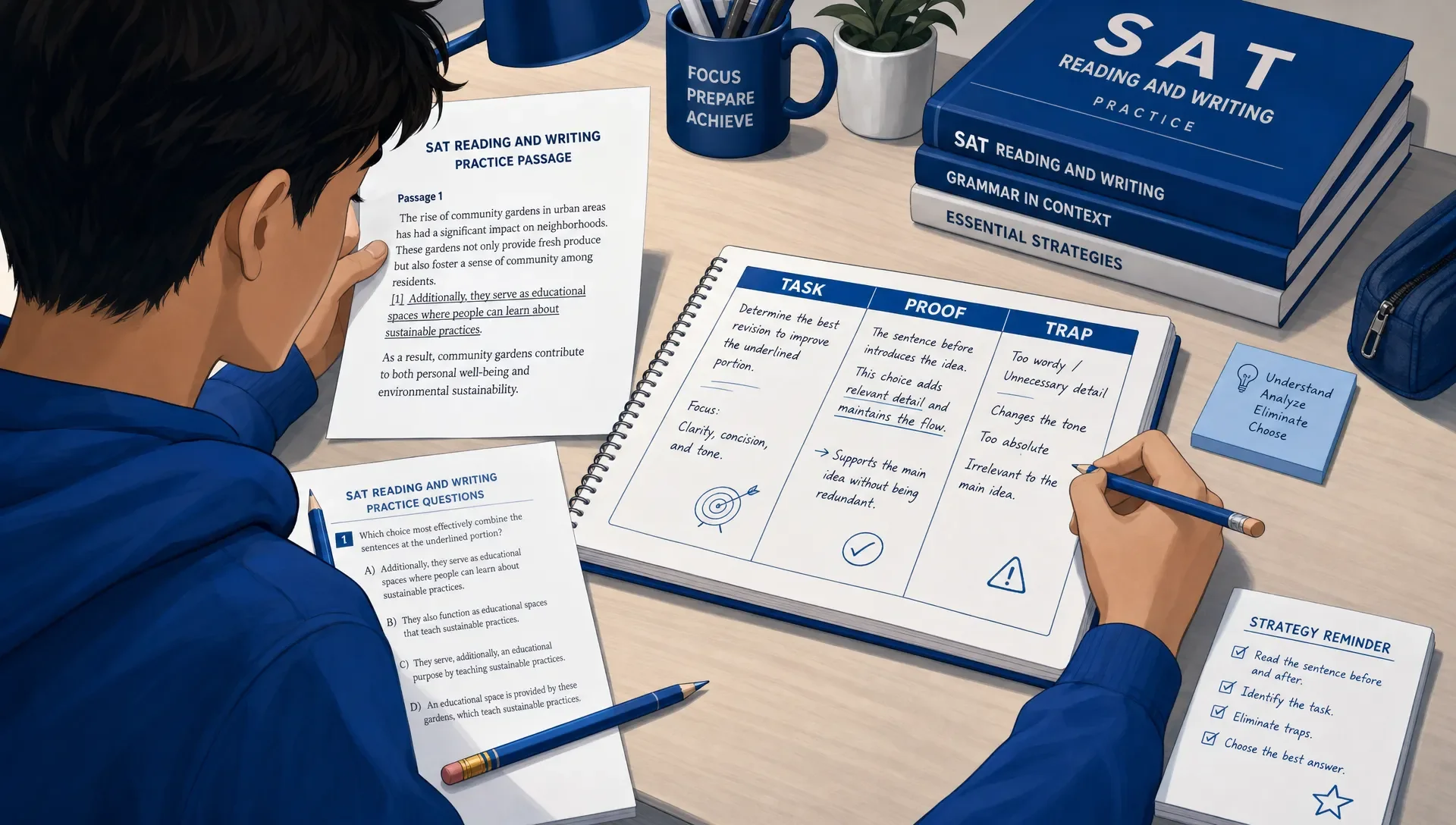
For every missed or uncertain question, write three things: the task, the proof, and the trap. The task might be identifying the correct networking protocol, interpreting a security policy, choosing the right cloud service for a requirement, or troubleshooting an error. The proof is the exact configuration detail, design principle, or command output that supports the correct answer. The trap is why your original answer looked tempting.
This process is especially useful with the precise nature of IT certification questions. For example, a question about firewall rules isn't just asking which one "looks right." It's asking which rule correctly allows or denies specific traffic based on source, destination, port, and protocol. A question on cloud service selection isn't asking what you "think" is best. It's asking which service meets specific non-functional requirements like scalability, cost-effectiveness, or latency.
When you practice with IT certification questions, cover the answer choices before reviewing a conceptual or scenario-based item. Predict the relationship, rule, or main idea first. Then uncover the choices and compare. If you can't predict anything, you haven't identified the task clearly enough.
For more targeted practice habits, MindMesh Academy's guide to SAT test prep questions that build real confidence shows how to use questions for skill building instead of passive repetition.
How to Review Technical Math and Logic Questions Without Memorizing the Setup
Technical math and logic questions (like subnetting, cloud cost calculations, or scripting logic) often trick you. A familiar equation or problem setup can make you feel fluent. The real test is whether you can solve the same underlying concept when the numbers, wording, or graph change.
After each missed question, redo it on blank paper without looking at the explanation. Then write the underlying skill in plain language. Not "question 14" or "the one about EC2 costs," but something like calculate subnet masks, interpret IAM policy effects, or troubleshoot network connectivity.
Next, change the problem. If the original question used a specific IP address range, try a different one. If it asked for the number of available hosts, ask for the broadcast address. If it presented a cloud architecture diagram, try to describe the same components in a text-based scenario. This is how you break the link between a remembered problem setup and a real method.
| If the old question tested... | Don't memorize... | Practice transferring by... |
|---|---|---|
| Linear equations (e.g., resource scaling) | The exact steps from that equation | Solving new scaling problems with different variables or constraints |
| Systems of equations (e.g., multiple network conditions) | Which answer letter matched the intersection | Solving by graphing, substitution, or elimination to understand different traffic flows |
| Quadratics (e.g., complex performance curves) | The one factored form you saw | Moving among standard, factored, and vertex form to analyze resource usage patterns |
| Ratios and percentages (e.g., storage utilization, cost breakdowns) | The final number or ratio | Rebuilding the part, whole, and percentage relationship for new scenarios |
| Functions (e.g., API calls, scripting) | The specific input and output | Explaining what a specific function call or script block means in words |
If you answered a question correctly by simply plugging in choices, review whether that method was truly efficient or just lucky. Plugging in can be a valid strategy, but you should still understand the underlying technical concept. For harder certification questions, relying only on shortcuts can often slow you down or lead to incorrect answers.
Build a Retake Schedule That Prevents Answer Memory
Retaking the same study material too quickly is one of the fastest ways to inflate your practice score. A better study schedule gives your brain time to forget the surface details of a question while keeping the underlying skill active.
Use this pacing for your IT certification practice tests:
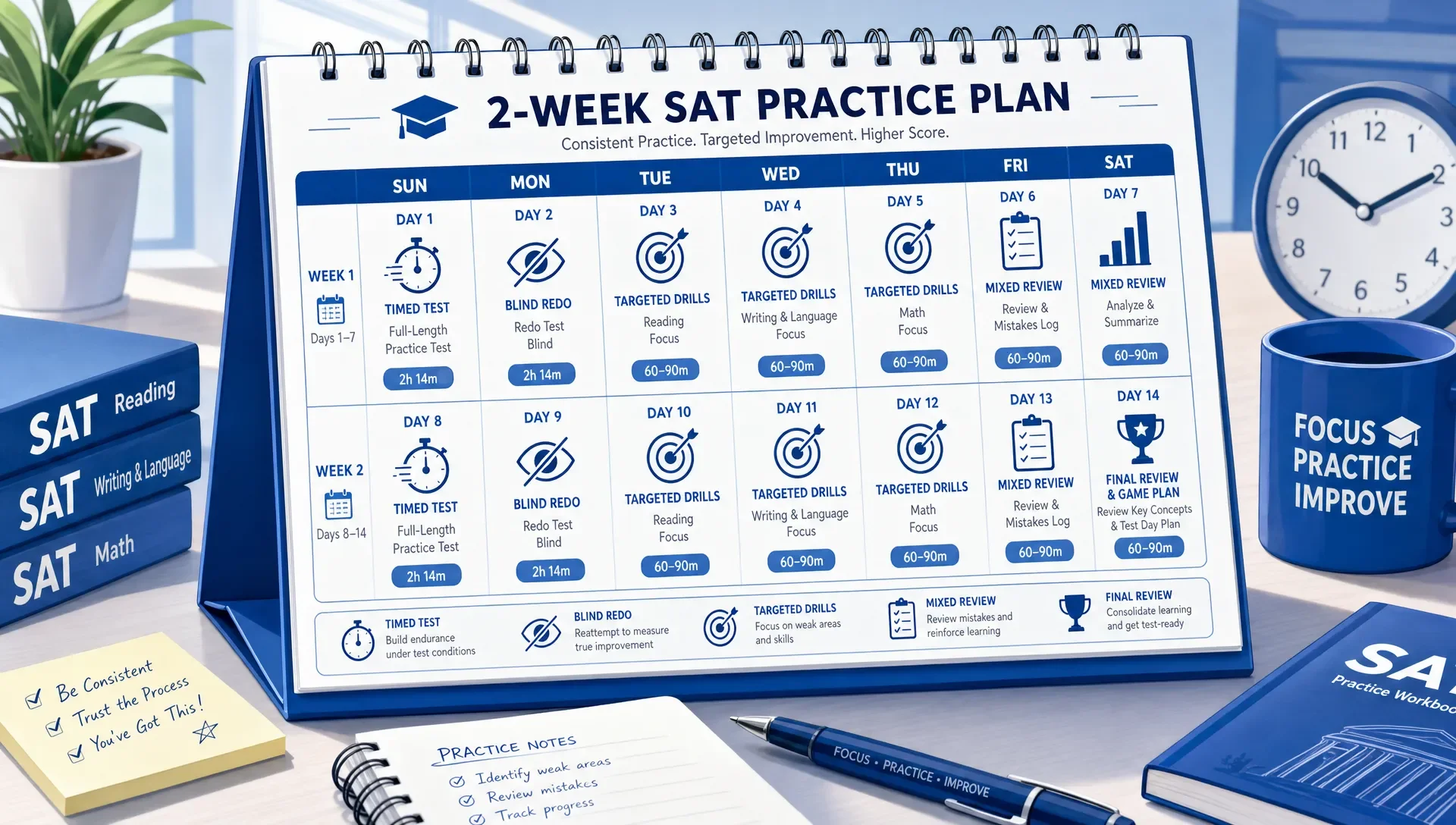
- Day 0: Take the section or test timed.
- Day 1: Do the blind redo and full review.
- Days 2 to 6: Drill the weakest skills with different questions.
- Day 7 or later: Try a mixed set that includes the same skills.
- Day 14 or later: Retake selected old questions only if you can explain your reasoning.
This schedule aligns with a core learning principle: retrieval practice works best when you have to reconstruct the answer. As seen in Roediger and Karpicke's 2006 retrieval practice experiment, students who practiced recalling material retained more over time than those who only reread. The Institute of Education Sciences also recommends spacing learning over time in its practice guide on organizing instruction and study.
For a broader study system that uses active recall, mixed practice, and spacing, see MindMesh Academy's guide to test prep methods that actually stick.
Turn Every Missed Question Into a Mini Lesson
A score report tells you what happened. An error log tells you why it happened and what to do next. Keep your log concise enough that you'll actually use it.
| Section | Question type | What went wrong | Fix for next time | Follow-up practice |
|---|---|---|---|---|
| Cloud Architect | Service Selection | Chose IaaS when PaaS was more cost-effective for a specific app | Identify managed service benefits (less admin overhead) before selecting | 5 scenario-based service selection questions |
| Networking | Firewall Rules | Mixed up inbound and outbound traffic context | Clearly define source/destination and direction for each rule | 5 firewall configuration questions |
| Security | IAM Policy | Granted too many permissions (least privilege violation) | Always start with deny-all, then add minimum necessary permissions | 5 least privilege policy questions |
| Operations | Monitoring Metrics | Misinterpreted CPU utilization spike as an immediate issue | Check other metrics (memory, network I/O) to confirm root cause | 5 performance troubleshooting scenarios |
The wording matters. If your log says "careless mistake," that won't help much. "Careless" could mean you misread the question, copied the wrong IP address, answered a different question than intended, or rushed because the clock was running low. Name the specific behavior that led to the error.
Also log questions you got right for the wrong reason. A lucky correct answer is still a study opportunity. Mark it as uncertain, redo it later, and explain why each incorrect choice fails.
How Mentors Can Use Practice Tests Ethically
Mentors should use practice exams to diagnose patterns in a student's understanding, not to train them to recognize specific question forms. If a student has already seen the answer key, avoid presenting the same questions as if they were fresh. Instead, ask for their reasoning, explore alternate methods, and analyze why incorrect answers are wrong.
A good coaching session after a practice test might focus on one narrow theme: understanding subnetting, configuring IAM roles, troubleshooting network connectivity, or interpreting cloud cost reports. This gives the student a concrete skill to improve before the next practice set.
Always use official, released, or authorized practice materials. Relying on leaked or active test content creates two problems: it's unethical, and it doesn't build durable skills. Candidates who memorize compromised questions are often less prepared for legitimate exam variations.
For most learners, one careful review session plus targeted practice on weak areas is more effective than another rushed practice test attempt.
When to Stop Using a Practice Test
A practice test has served its purpose when it no longer produces honest diagnostic thinking. Stop using a section for performance measurement if you recognize passages, remember the order of questions, or know several answers before solving them.
You can still use familiar questions for explanation practice. For example, you can explain why a specific cloud architecture decision is correct or demonstrate two methods for troubleshooting a network issue. But don't count the score from such an attempt as evidence of your readiness.
Move to fresher practice material when these signs appear:
- You recognize more than a few questions immediately.
- Your score rises only on repeated forms.
- You can't explain mistakes beyond "I forgot."
- The format no longer matches the current digital exam skills you're practicing.
- You avoid new questions because old ones feel safer.
The point of IT certification practice tests isn't to preserve a perfect practice score. It's to expose weak skills and knowledge gaps while you still have time to fix them.
Frequently Asked Questions
Can I use older practice tests for current IT certification exams? Yes, but use them carefully. Older tests can build foundational skills in areas like networking, security, or cloud concepts. However, vendor-specific official practice exams and labs are better for familiarizing yourself with the current digital format, specific question types, timing, and interface.
How many times should I retake the same certification practice test? Typically, once is enough for performance practice under timed conditions. After that, use the questions for review, in-depth explanation, and skill drills, rather than treating subsequent retake scores as fresh evidence of your preparedness.
What if I already memorized the answers to practice questions? Cover the choices, redo the reasoning, and explain why each incorrect answer is wrong. If you still remember too much, retire that specific practice test from performance scoring and use it only for explaining concepts or targeted review.
Should I review questions I answered correctly? Yes, review every question you marked as uncertain, guessed on, or solved slowly. A correct answer can sometimes hide weak reasoning, especially on multiple-choice technical questions or complex scenario-based items.
Are practice tests enough for IT certification preparation? No. Practice tests should be one component of a larger study plan. This plan should also include targeted skill review, fresh practice questions, spaced repetition, hands-on labs, and timed practice with material that reflects the current digital exam format.
How do I avoid running out of official practice test material? Use full official practice tests sparingly. Between these full attempts, drill specific skills, thoroughly review old mistakes, create parallel problems or scenarios, and save fresh practice tests for major checkpoints in your study schedule.
Keep the Skill, Lose the Answer Key
Ultimately, IT certification practice tests should leave you with clearer thinking and stronger technical skills, not just a familiar answer sheet. If you protect your first attempt, review effectively with a blind redo, categorize each mistake by skill, and strategically delay retakes, these practice exams can become one of the most powerful parts of your study prep.
MindMesh Academy builds its structured exam prep around these same learning principles: objective-based study guides, practice questions with detailed explanations, and adaptive weakness-based practice. To put these ideas into action, build your CompTIA Security+ foundation and prepare with confidence using our CompTIA Security+ practice exam, designed for genuine understanding rather than mere answer memorization.

Written by
Alvin Varughese
Founder, MindMesh Academy
Alvin Varughese is the founder of MindMesh Academy and an enterprise architecture leader. An electrical engineer by training, he moved from factory automation in South Africa to cloud architecture at GE Appliances and Humana (Fortune 50), and holds 20 professional certifications including AWS Solutions Architect Professional, Azure DevOps Engineer Expert, and Microsoft Agentic AI Business Solutions Architect. He built MindMesh Academy after interviewing too many highly certified candidates who couldn't answer basic questions: the goal is prep that makes you better at the job, not just able to pass the exam.