Quiz Bank Rules That Prevent Answer Memorization
Quiz Bank Rules That Prevent Answer Memorization
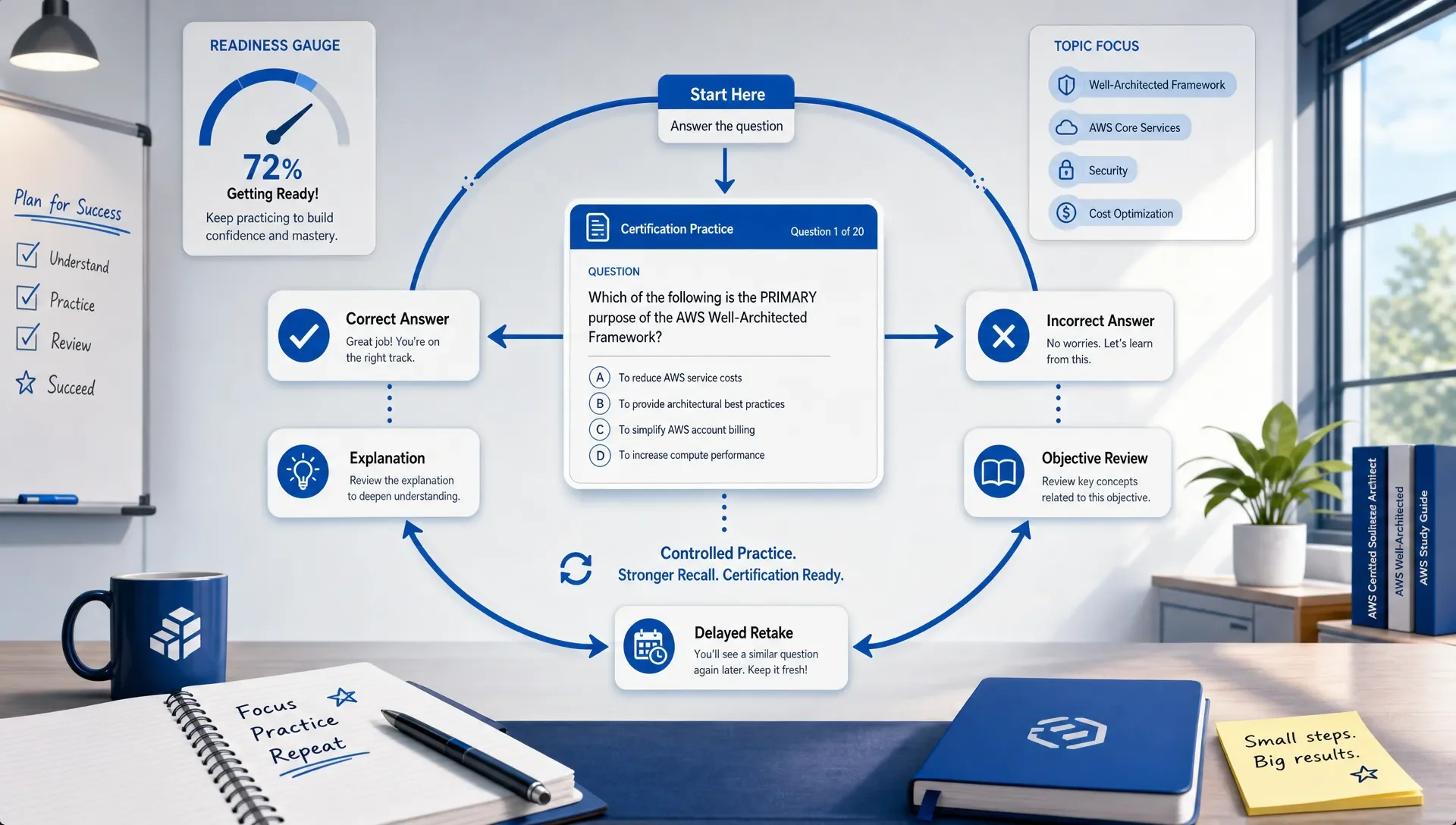
A quiz bank should function as a controlled practice system, not a shortcut to a higher score. Use it to tackle unseen questions, explain the underlying logic, and pinpoint areas where your understanding is weak. If your study routine allows you to repeat the same items in the same order until the answer feels familiar, you're likely building recognition, not true exam readiness.
The most effective anti-memorization rules are practical. They include protecting your first attempt on a question, delaying retakes, randomizing question order, tracking your confidence, reviewing why wrong options are incorrect, and measuring your progress by specific exam objective. These principles apply whether you're preparing for cloud, cybersecurity, networking, project management, or IT service management certifications.
Why Quiz Bank Memorization Hurts Exam Readiness
Answer memorization feels productive because your score often climbs quickly. The hidden problem is that this score might only measure item familiarity, not genuine comprehension. You remember that a specific wording leads to option C, or that a particular scenario had a networking answer. However, you might struggle to solve a new variation of that same concept.
Certification exams typically test applied judgment. The actual exam might change the scenario, swap out distractors, combine two objectives, or ask for the best next step instead of a simple definition. If your quiz bank habits reward only recognition, you could feel ready right up until the real exam removes the specific cues you've memorized.
Research on retrieval practice supports a different strategy. In a controlled study, Roediger and Karpicke found that actively practicing retrieval improved later retention compared with repeated study alone. For certification preparation, this means your quiz bank should make you pull knowledge from memory, apply it to a given scenario, and explain your reasoning before you see the correct answer.
Quiz Bank Rules That Force Real Retrieval
An effective quiz bank rule removes easy shortcuts. It should make guessing less rewarding, reduce repeated exposure to the same answer patterns, and direct you back to the specific objective you need to study further.
| Quiz bank rule | What it prevents | How to apply it |
|---|---|---|
| Protect the first attempt | Inflated scores from repeated exposure | Treat the first unseen attempt as your true diagnostic score |
| Hide feedback until submission | Picking answers based on immediate cues | Commit to an answer before reading any explanations |
| Track confidence before feedback | Lucky guesses masking knowledge gaps | Mark your confidence (high, medium, or low) before checking results |
| Delay retakes | Short-term answer recall | Review the concept first, then retest later to ensure genuine retrieval |
| Shuffle question order | Pattern memory from repeated sequence | Use mixed sets once you've studied the underlying objectives |
| Review wrong options | Superficial correct-answer recognition | Explain why the correct answer wins and why each distractor is incorrect |
| Score by objective | Overall score hiding specific weaknesses | Track performance by topic or domain, not just an aggregate percentage |
| Retire mastered items temporarily | Over-practicing questions you already know | Spend more time on weak and borderline objectives |
The most important rule here is confidence tracking. A correct answer with low confidence isn't mastery. It's a signal that you might have guessed well. Mark it for review, even if the platform records it as correct.
You also need a rule for explanations. If you only read the first sentence of the correct answer, you're still training memorization. Your review should answer three key questions: What concept was tested? What specific clue in the question mattered most? And why did the wrong answers seem plausible? For a deeper strategy on using practice items as learning tools, review MindMesh Academy's guide on how to use your question bank as a learning tool.
How To Set Up Retakes Without Memorizing Answers
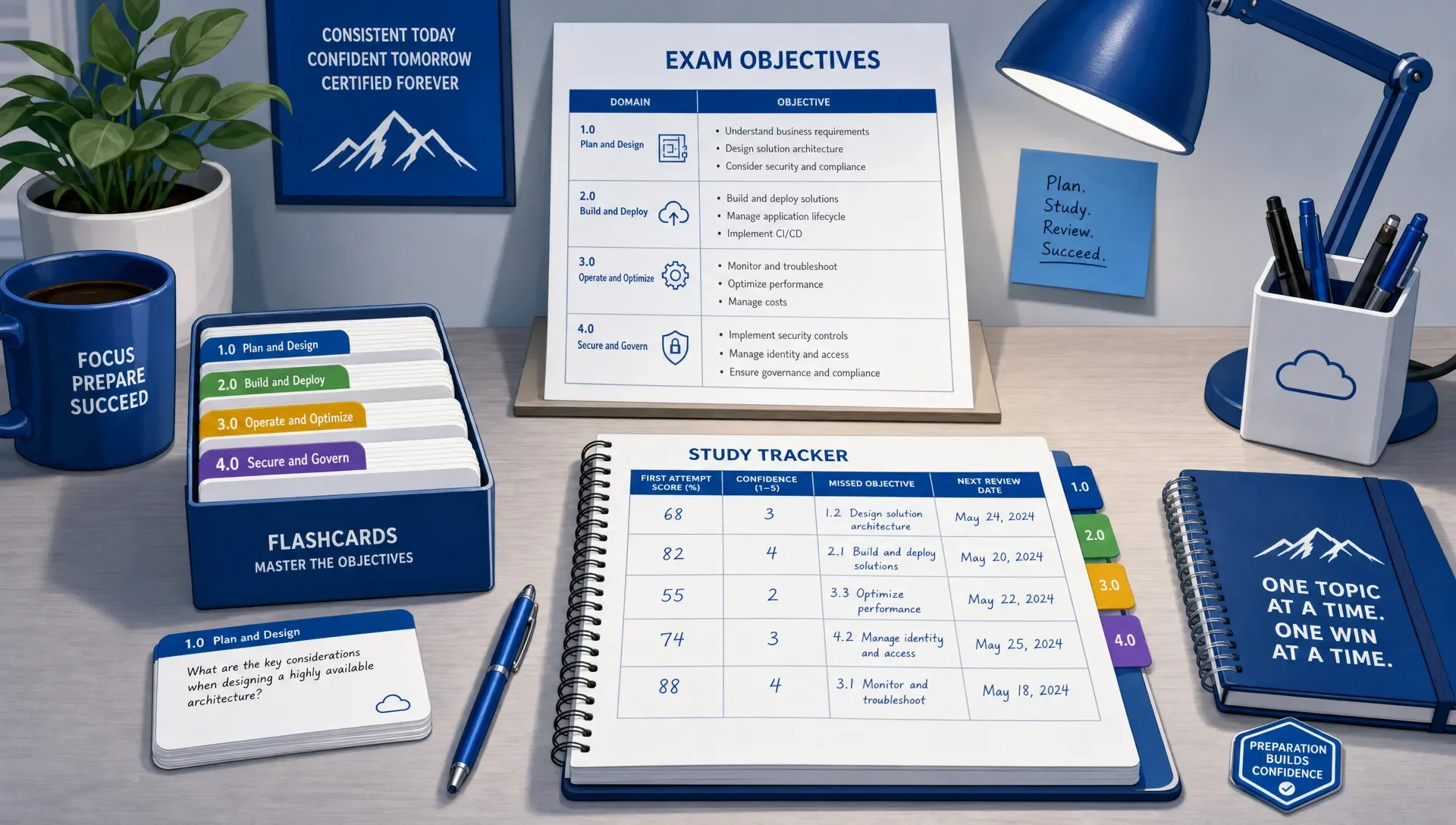
Immediate retakes are one of the quickest ways to memorize answers. You miss a question, read the explanation, click retry, and get it right because the wording is still in your working memory. That doesn't prove you can recall the concept tomorrow, or apply it to a slightly different scenario.
The Institute of Education Sciences practice guide on organizing instruction and study recommends using tests to promote learning and spacing out learning activities. Your quiz bank retake rules should reflect this. Review explanations immediately, but score retakes later.
| First-attempt result | Retake rule | What to do before the retake |
|---|---|---|
| Correct with high confidence | Retire temporarily | Revisit only in mixed practice or final readiness checks |
| Correct with low confidence | Treat as borderline | Study the objective and create a flashcard or concise concept note |
| Incorrect due to missing knowledge | Delay retake | Relearn the objective before attempting a similar item |
| Incorrect due to misreading | Delay retake | Write down the clue you missed and practice slower prompt parsing |
| Incorrect due to two close options | Delay retake | Compare the concepts side by side and explain the distinction between them |
This approach matters for all exam types. If you're preparing for an entry-level cloud exam, an AWS Certified Cloud Practitioner practice exam should help you test broad concept coverage without letting repeated questions become your main evidence of readiness. If you're studying security controls and scenario-based risk decisions, a CompTIA Security+ practice exam works best when you review the objective behind each miss before retesting.
A simple retake rule: never count a repeat question as readiness evidence unless enough time has passed that you must retrieve the idea from memory, not just remember the specific item. You can still use repeated questions for reinforcement, but label them honestly in your tracking.
How To Review Missed Questions Without Creating Answer Keys
Your notes can either prevent memorization or make it worse. If your review notes simply state which option was correct, you're essentially building a private answer key. If they explain the underlying principle, you're building knowledge that can be transferred to new problems.
Use this test: could your note help you solve a different question on the same objective? If not, rewrite it.
| Weak note that trains memorization | Better note that trains transfer |
|---|---|
| Choose B for the shared responsibility question | Identify who manages the layer being asked about (e.g., guest OS, data, physical security), then decide if responsibility belongs to the provider, the customer, or both |
| SSH question equals port 22 | SSH commonly uses TCP port 22. Scenario questions, however, might also test exposure, authentication methods, and administrative access control |
| Incident management answer was C | Incident management focuses on restoring service quickly. Problem management, in contrast, focuses on identifying root causes and preventing recurrence |
| Critical path answer was 12 | Recalculate dependencies from start to finish, because the longest single task isn't always on the critical path |
Reviewing missed questions should always end with an action. Sometimes that action is creating a flashcard. Sometimes it's a quick reread of a specific section in your study guide. Other times, it's a new mixed set of questions from the same objective. For example, if Azure Fundamentals questions keep exposing weak concept knowledge, use an AZ-900 study guide to strengthen your foundation before attempting more practice items.
Sample Quiz Bank Schedule For Certification Prep
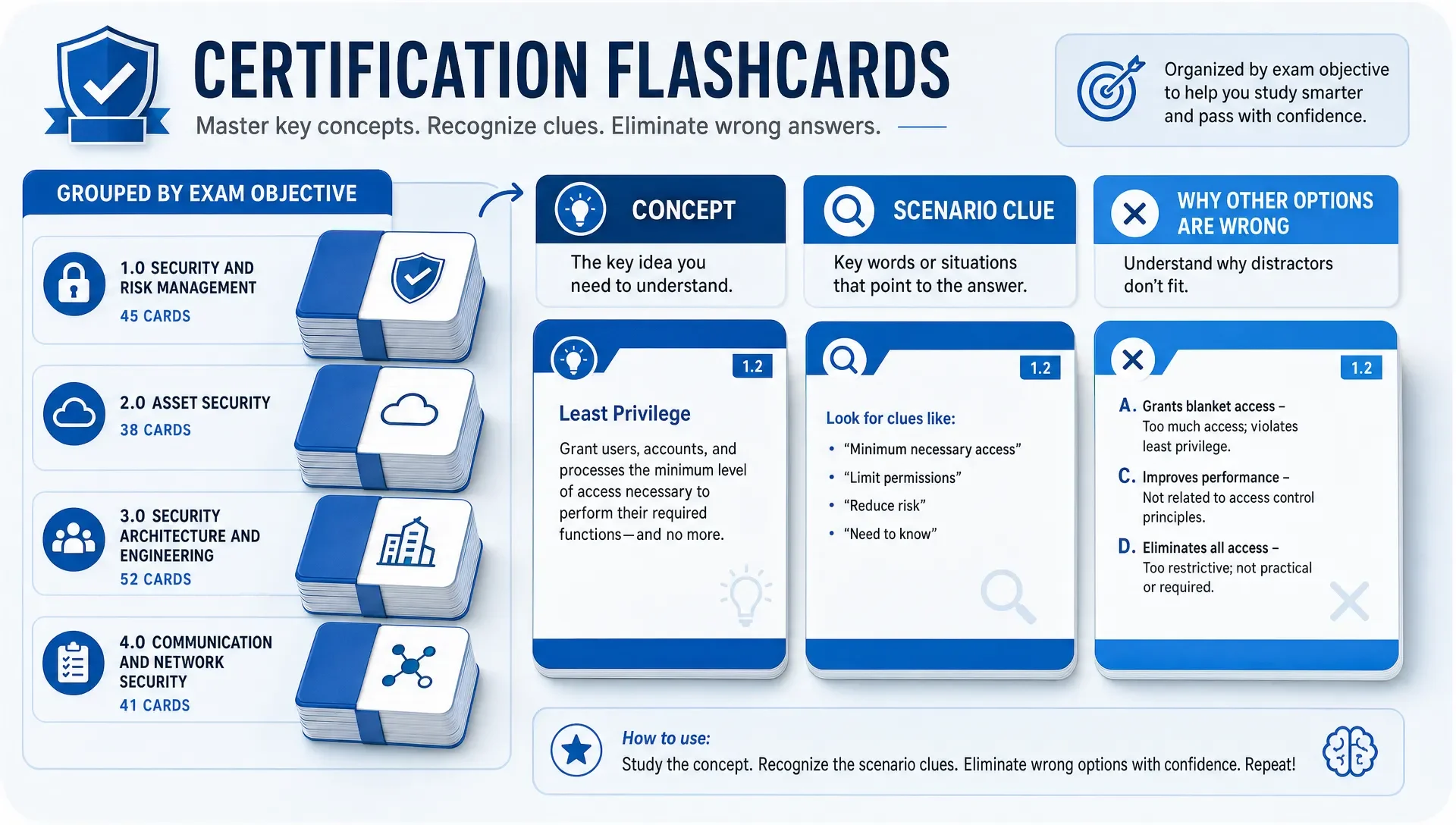
There's no universal number of questions that proves you're ready for an exam. A better schedule separates learning, retrieval, review, and final readiness checks. The goal is to protect your unseen questions and ensure every scored session provides useful insights.
| Prep stage | Main quiz bank rule | What to record |
|---|---|---|
| Baseline diagnostic | Use only unseen questions | First-attempt score, confidence level, and identified weak objectives |
| Objective learning | Practice questions after studying the objective | Concepts missed and explanations you can accurately restate |
| Weakness repair | Target low-scoring objectives | Whether errors stem from knowledge gaps, misreading prompts, or confusion between similar concepts |
| Mixed practice | Combine old and new objectives | Accuracy on mixed items and how well your confidence aligns with correctness |
| Readiness check | Prioritize unseen questions and performance-based formats | First-attempt results by domain and how well you manage time |
This schedule helps you avoid a common trap: using the same familiar questions to prove your readiness. Repeated items can reinforce learning, but they shouldn't be your primary signal of readiness. Your strongest evidence comes from first attempts on questions you haven't seen before, especially when those questions cover a mix of objectives.
Performance-based question formats deserve special attention. Don't treat them as mere bonus practice at the very end. If your exam includes hands-on or scenario-heavy formats, integrate them throughout your study plan. This ensures you practice applying knowledge under realistic constraints.
How To Measure Whether You Understand The Material
A single quiz bank percentage can easily hide significant weaknesses. You need several measurements that clearly separate understanding from mere familiarity.
| Readiness signal | What it tells you | Warning sign |
|---|---|---|
| First-attempt accuracy on unseen items | Whether you can solve new questions you encounter | Your scores on repeated items are high, but scores on new questions drop significantly |
| Objective-level performance | Which specific topics require more study | One domain consistently lowers your overall results, even if other areas are strong |
| Confidence calibration | Whether you accurately know when you know the answer | Many of your correct answers were marked with low confidence, suggesting lucky guesses |
| Explanation quality | Whether you truly understand the reasoning behind an answer | You can name the right answer but cannot clearly explain why the wrong options are incorrect |
| Transfer performance | Whether your knowledge works in new or varied scenarios | Slight wording changes in questions cause you to miss items you thought you knew |
| Time control | Whether you can reason effectively under exam pressure | You only score well when practice sessions are untimed or you take too long per question |
Mastery by topic is far more useful than a broad average. A 78% overall score can still conceal a dangerously weak domain. In a well-structured quiz bank routine, weak objectives become direct study targets, not just red marks in a score report.
This is where a connected study workflow becomes invaluable. MindMesh Academy combines study guides organized by exam objectives, practice questions with detailed explanations, spaced-repetition flashcards, adaptive weakness-based practice, performance-based question formats, and detailed progress tracking by topic. The aim isn't just to do more questions for the sake of volume. It's to tell you precisely what to study next.
Common Quiz Bank Rules To Set Before Your Next Session
Before your next practice block, write down the specific rules you intend to follow. Having clear rules removes negotiation when you're tired, rushed, or tempted to just chase a higher score.
- Score only first attempts as evidence of readiness.
- Mark your confidence before reading any explanations.
- Do not immediately retake missed questions for a new score.
- Write concept notes that explain principles, not just answer keys.
- Review why each wrong option is incorrect.
- Track weak objectives and study them before doing more random questions.
- Mix objectives in your practice sets once you have enough foundational knowledge to handle scenario switching.
These rules might slow your score growth at first. That's actually a good sign. You're replacing superficial familiarity with genuine retrieval, thorough explanation, and knowledge transfer. These are the critical skills you'll need when the real exam presents you with entirely new wording and scenarios.
Frequently Asked Questions
How do I use a quiz bank without memorizing answers? Treat first attempts as your main readiness signal, hide feedback until you've answered, delay retakes, shuffle questions, and always review the reasoning behind both correct and incorrect options. Crucially, don't write notes that simply record the right answer.
Should I repeat missed questions right away? Review the explanation immediately to understand your mistake. However, don't count an immediate retake as proof of mastery. Study the underlying objective first, then retest later when you must retrieve the concept from long-term memory.
Is a high quiz bank score enough to schedule the exam? Not by itself. Before scheduling, verify that your score comes from unseen questions, that your performance is balanced across all exam objectives, that you can explain your answers thoroughly, and that you can handle mixed and scenario-based items under timed conditions.
How many quiz bank questions should I do in one session? Aim for enough questions to identify a pattern in your understanding, but not so many that your review becomes rushed or superficial. A smaller set with careful, detailed explanations is usually more beneficial than a large set where you only check the final percentage.
What should I write down after a missed question? Note the core concept tested, the specific clue you missed in the question, why the correct answer is the best fit, and why the distractors are incorrect. Your note should be helpful for solving a different question on the same objective.
Can flashcards help if I already use practice questions? Yes. Flashcards are excellent for quickly recalling definitions, comparisons, command syntax, formulas, or short rules. Practice questions then test whether you can effectively apply those foundational facts in various contexts and scenarios.
Build A Quiz Bank Workflow That Tests Understanding
A quiz bank should make it harder to fool yourself about your knowledge. If your rules protect unseen questions, delay retakes, track confidence, and connect every miss to a specific objective, your practice scores will become both more honest and more useful.
If you want that workflow in one place, MindMesh Academy offers structured study guides, practice questions with explanations, spaced-repetition flashcards, adaptive weakness-based practice, and readiness tracking for many certification paths. Pick your certification, set your quiz bank rules before your first session, and ensure every practice question teaches you something you can apply on exam day. You can start building your foundation for the Azure Fundamentals exam with our AZ-900 practice exam.

Written by
Alvin Varughese
Founder, MindMesh Academy
Alvin Varughese is the founder of MindMesh Academy and an enterprise architecture leader. An electrical engineer by training, he moved from factory automation in South Africa to cloud architecture at GE Appliances and Humana (Fortune 50), and holds 20 professional certifications including AWS Solutions Architect Professional, Azure DevOps Engineer Expert, and Microsoft Agentic AI Business Solutions Architect. He built MindMesh Academy after interviewing too many highly certified candidates who couldn't answer basic questions: the goal is prep that makes you better at the job, not just able to pass the exam.