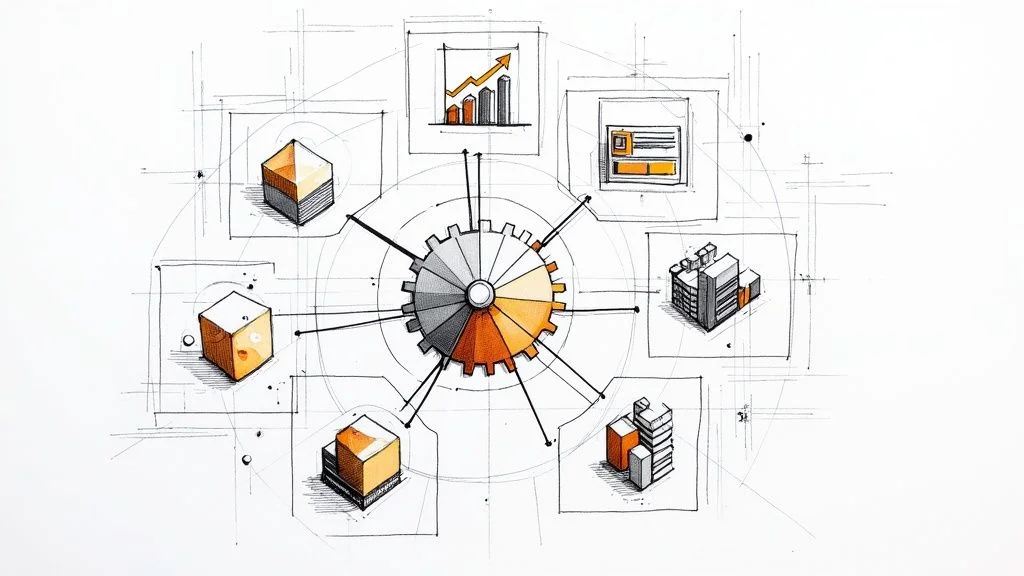
8 Real-World Project Portfolio Management Example Scenarios
Project Portfolio Management (PPM) isn't just a theoretical concept; it's the strategic backbone that ensures an organization's projects consistently align with its overarching business goals. For IT professionals aiming to excel, understanding PPM is crucial for leading high-impact initiatives and even preparing for certifications like the Project Management Professional (PMP) or PMI Agile Certified Practitioner (PMI-ACP). The core idea is simple: select and manage the right projects to maximize value, whether that's delivering a new cloud service, expanding infrastructure, or improving cybersecurity posture.
The real challenge, and where the "magic" happens, lies in applying these principles across diverse, complex environments. Different industries face unique demands, from managing multi-year software development roadmaps to orchestrating global compliance initiatives. To master this, leveraging advanced tools can provide significant advantages in tracking and optimizing investments, much like the specialized portfolio management software used by leading firms.
This article delves beyond generic advice, offering an in-depth look at how world-class organizations apply PPM principles in real-world scenarios. We will explore eight distinct project portfolio management example scenarios, dissecting the specific strategies, tools, and tactical insights that IT professionals, especially those pursuing certifications, can adapt to their own environments.
Whether you're a Solutions Architect designing a complex AWS deployment, a Project Manager overseeing an Azure migration, or an IT Director driving digital transformation, these examples provide a blueprint for turning your portfolio into a competitive advantage. You'll gain replicable strategies for resource allocation, risk mitigation, and strategic alignment, transforming abstract concepts into actionable steps for success in your career and certification exams. Each case study offers a clear, practical roadmap for mastering strategic portfolio oversight in your specific context.
1. IT/Software Development Portfolio Management
In the fast-paced world of technology, project portfolio management in an IT or software development context is a specialized discipline designed to navigate rapid change, technical debt, complex inter-project dependencies, and the perpetual need to balance ongoing maintenance with groundbreaking innovation. This approach provides a strategic framework to ensure that every development effort, from a minor bug fix to a major platform overhaul, aligns directly with business objectives. For professionals studying for certifications like AWS Certified Solutions Architect – Professional or Azure Solutions Architect Expert, understanding how to manage such a portfolio is invaluable.
A prime project portfolio management example is seen in how Microsoft manages its Azure cloud services. The Azure portfolio is not a static list of projects but a dynamic ecosystem of services, features, and infrastructure upgrades. Microsoft uses a sophisticated PPM model to strategically allocate resources between enhancing existing services, developing new AI-powered capabilities, and strengthening core infrastructure security. This ensures that both short-term customer needs and long-term strategic bets, like advancements in generative AI, are managed in a balanced, cohesive way.
Strategic Analysis & Actionable Takeaways
This model is essential for any technology-driven organization because it connects code-level activities to C-suite strategy. It provides a clear line of sight into how engineering resources are being utilized and whether the investment portfolio is appropriately balanced. For IT professionals, this means translating technical tasks into business value, a key skill tested in many project management and architecture certifications.
Key Insights:
- Balancing Act: Successfully manages the inherent tension between innovation (new features, cloud-native development), maintenance (bug fixes, system stability), and infrastructure (technical debt, cybersecurity enhancements).
- Agile Alignment: It is built to accommodate agile methodologies like Scrum and Kanban, translating team-level velocity and sprint goals into portfolio-level progress and value delivery. This is directly relevant for PMI-ACP candidates.
- Resource Visibility: Provides a centralized view of developer and operational capacity, preventing burnout and ensuring the right skills are on the right projects.
Actionable Tips:
- Implement Rolling Forecasts: Ditch rigid annual plans. Use quarterly or rolling forecasts to adapt to market changes and technological shifts quickly. This agility is a hallmark of modern IT PPM.
- Automate Dependency Tracking: Utilize advanced tools like Atlassian’s Jira Align or ServiceNow’s IT Business Management to map dependencies between teams and projects automatically, flagging potential bottlenecks before they occur. This is crucial for large-scale IT transformations.
- Establish a Technical Debt Budget: Formally allocate a percentage of your portfolio’s capacity (e.g., 15-20%) specifically to address technical debt. This prevents long-term decay of your software assets and is a critical practice for maintaining system health and security.
Reflection Prompt: How might prioritizing a new feature for your core product impact ongoing security patches or critical infrastructure upgrades within your IT portfolio? Consider the trade-offs and risks involved.
2. Pharmaceutical R&D Portfolio Management
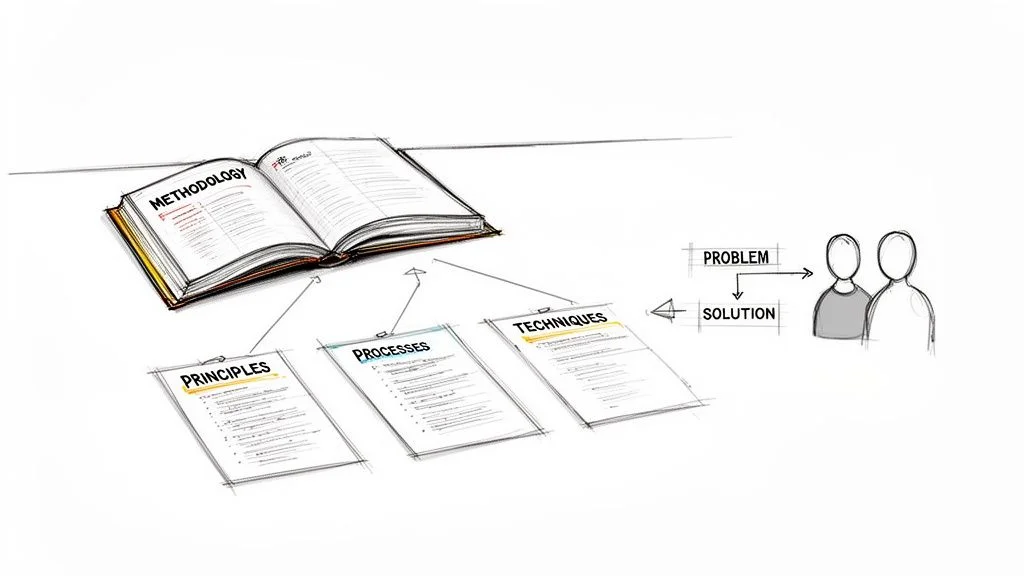
Project portfolio management in the pharmaceutical industry is an ultra-high-stakes discipline responsible for steering assets worth billions through a decade-long development pipeline. This framework is engineered to manage immense risk, staggering costs, and long timelines, from initial drug discovery to clinical trials and final regulatory approval. It provides a structured methodology for making critical go/no-go decisions on projects where the failure rate can exceed 90%. While distinct from IT, the principles of risk management and rigorous phase-gating are highly transferable to complex IT initiatives, such as developing a new enterprise-wide system or a major cybersecurity program, where PMP knowledge is highly beneficial.
A powerful project portfolio management example is how Pfizer manages its extensive pipeline. With thousands of research projects running concurrently, Pfizer uses a rigorous stage-gate process to evaluate each candidate based on scientific viability, market potential, and regulatory outlook. This system allows them to strategically terminate unpromising projects early, reallocating capital and scientific talent to assets with a higher probability of success, such as their groundbreaking vaccine development programs.
Strategic Analysis & Actionable Takeaways
This PPM model is essential for navigating the capital-intensive and highly regulated life sciences landscape. It transforms the drug development process from a series of isolated scientific experiments into a strategically managed investment portfolio, maximizing the potential return on R&D expenditure. The lessons here apply to any IT leader managing projects with long-term horizons and significant regulatory or compliance implications.
Key Insights:
- Risk Mitigation: The core function is to de-risk the portfolio by systematically eliminating weak candidates and concentrating resources on the most promising ones. This mirrors an IT security portfolio prioritizing vulnerabilities.
- Value-Based Prioritization: Decisions are driven by a complex mix of net present value (NPV) calculations, risk-adjusted forecasts, and alignment with therapeutic area strategy. In IT, this translates to ROI, strategic alignment, and technical feasibility.
- Regulatory Alignment: It deeply integrates regulatory affairs into the entire lifecycle, ensuring compliance and strategic planning for approval pathways are considered from day one. This is akin to integrating compliance (e.g., GDPR, HIPAA) into IT project planning.
Actionable Tips:
- Establish Objective Stage-Gates: Define clear, data-driven go/no-go criteria for each phase (e.g., preclinical, Phase I, II, III). This removes emotion and political influence from decision-making, a crucial aspect of PMP project integration management.
- Use Probabilistic Forecasting: Instead of deterministic timelines, use Monte Carlo simulations or similar probabilistic methods to model potential outcomes, costs, and timelines, accounting for the high degree of uncertainty. This quantitative risk analysis is highly relevant for complex IT projects.
- Segment by Therapeutic Area: Create distinct sub-portfolios for different medical fields (e.g., oncology, cardiology). This allows for specialized expertise and strategic focus in resource allocation and market analysis, mirroring how a large IT department might segment by business unit or technology stack.
Reflection Prompt: Imagine you're managing a portfolio of cutting-edge AI research projects. How would you adapt Pfizer's stage-gate approach to manage the inherent technical and market uncertainties?
3. Capital/Infrastructure Project Portfolio Management
Project portfolio management for capital and infrastructure projects deals with high-stakes, long-term initiatives that physically shape our world. This discipline manages portfolios of large-scale construction, real estate, and utility projects, where capital expenditures can run into the billions. It requires a framework that can handle decade-long timelines, complex regulatory hurdles, massive supply chains, and significant public and private stakeholder interests. This approach ensures that immense investments are strategically allocated and meticulously tracked from conception to completion. For IT professionals, this translates directly to managing large-scale data center builds, global network rollouts, or enterprise-wide cloud migration programs, where certifications like AWS Certified Advanced Networking - Specialty or Azure Solutions Architect Expert are critical.

A powerful project portfolio management example is the development portfolio for Saudi Arabia's NEOM. This futuristic city is not a single project but a massive portfolio of interconnected initiatives including The Line, Oxagon, and Trojena. Portfolio managers must coordinate logistics, funding, and resources across these mega-projects, ensuring they progress in sync while navigating immense geopolitical and environmental considerations. The PPM strategy here is crucial for phasing investments and managing dependencies between infrastructure, residential, and commercial developments.
Strategic Analysis & Actionable Takeaways
This model is indispensable for governments and large corporations undertaking physical asset development. It provides the financial controls, risk mitigation frameworks, and long-range visibility needed to prevent catastrophic budget overruns and project failures that can have national-level consequences. The robust financial and risk management techniques are highly applicable to managing massive IT infrastructure projects.
Key Insights:
- Risk and Compliance Focus: Heavily emphasizes managing external risks like regulatory changes, environmental impacts, and political shifts, which are paramount in infrastructure. For IT, this means addressing data privacy laws, environmental impact of data centers, and geopolitical considerations for global IT services.
- Long-Term Capital Planning: Excels at multi-year (often decade-plus) financial forecasting, capital budgeting, and aligning project funding with long-term economic goals. Essential for planning cloud spend or major hardware refreshes.
- Complex Procurement Management: Integrates deeply with supply chain and contract management, as vendor performance is directly tied to portfolio success. For more on this, you can explore the challenges in the management of project procurement.
Actionable Tips:
- Use Earned Value Management (EVM): Implement EVM to objectively measure project performance against scope, schedule, and cost baselines. This provides a true picture of progress, not just expenses, a core technique for PMP certification.
- Build Contingency Buffers: Formally bake in contingency buffers of 20-30% into portfolio budgets and timelines to absorb the inevitable delays and unforeseen costs common in large-scale construction. This is vital for managing risk in complex IT rollouts.
- Establish a Centralized Contract Oversight: Create a dedicated portfolio-level function to manage all major vendor contracts, ensuring consistency, compliance, and performance tracking across all projects, especially critical for cloud service providers and hardware vendors.
Reflection Prompt: Consider a large-scale cloud migration project. How would the principles of capital/infrastructure PPM, particularly contingency planning and vendor oversight, help you mitigate risks and ensure project success?
4. Marketing and Brand Portfolio Management
Project portfolio management in marketing and branding is a strategic approach for orchestrating a diverse array of campaigns, product launches, and content initiatives. This discipline is crucial for large organizations managing multiple brands or extensive product lines, ensuring that every marketing dollar contributes to overarching business goals. It transforms a collection of disparate activities into a cohesive, goal-driven engine that balances brand-building efforts with immediate demand generation. For IT professionals, understanding this domain is key to supporting marketing technology (MarTech) stacks, data analytics platforms, and digital transformation initiatives that empower marketing efforts. ITIL 4 Foundation principles, for instance, can enhance service delivery to marketing teams.
A quintessential project portfolio management example is how The Coca-Cola Company manages its global marketing efforts across more than 200 countries. Their portfolio includes everything from massive global campaigns like the FIFA World Cup sponsorship to localized digital content and regional product promotions. Coca-Cola's PPM framework ensures brand consistency worldwide while allowing for regional adaptation. It enables executives to allocate a multi-billion dollar budget effectively, prioritizing initiatives that offer the highest ROI and support long-term brand equity.
Strategic Analysis & Actionable Takeaways
This model is vital for any company with a complex marketing ecosystem, as it connects campaign execution directly to revenue targets and brand health metrics. It provides the clarity needed to make tough budget decisions, pivot quickly in response to market trends, and prove marketing’s value to the organization. For IT, this means ensuring MarTech platforms are robust, scalable, and effectively integrated to provide the data and insights marketing teams need.
Key Insights:
- Brand vs. Demand: Manages the strategic balance between long-term brand building initiatives and short-term, performance-driven campaigns that generate immediate leads or sales.
- Budget Optimization: Offers a clear view of spending across all channels and campaigns, allowing for data-driven allocation of resources to the most effective activities. This often relies on accurate data from IT-managed systems.
- Message Cohesion: Ensures that all marketing communications, regardless of the channel or region, are consistent with core brand guidelines and strategic messaging. This requires robust content management systems and digital asset management, often managed by IT.
Actionable Tips:
- Establish a Marketing Governance Council: Create a cross-functional team to review and approve major marketing initiatives, ensuring all campaigns align with strategic business objectives and brand standards. IT representation is key here for technical feasibility.
- Use Standardized Campaign Briefs: Implement templates for all new project requests. This ensures all initiatives are evaluated using consistent criteria, such as target audience, key metrics, and budget, which can inform IT requirements.
- Implement Marketing Resource Management (MRM) Tools: Use platforms like Adobe Workfront or Brandfolder to centralize campaign planning, budget tracking, and creative asset management for a single source of truth, often requiring significant IT integration and support.
Reflection Prompt: How can IT professionals, through robust system design and data integration, directly contribute to the success of a marketing portfolio focused on both brand building and demand generation?
5. Product Development Portfolio Management
Project portfolio management in a product development setting is a strategic framework for managing a company's complete lifecycle of products. It involves coordinating numerous initiatives, from conceptualizing new products and enhancing existing features to planning market launches and eventual sun-setting. This approach ensures that investments in R&D, engineering, and marketing are optimized across competing product lines, balancing high-risk innovation with the steady performance of core offerings to maximize market share and profitability. This is a core domain for IT professionals in product management, software engineering leadership, and those pursuing certifications like the Certified ScrumMaster (CSM) or PMP.
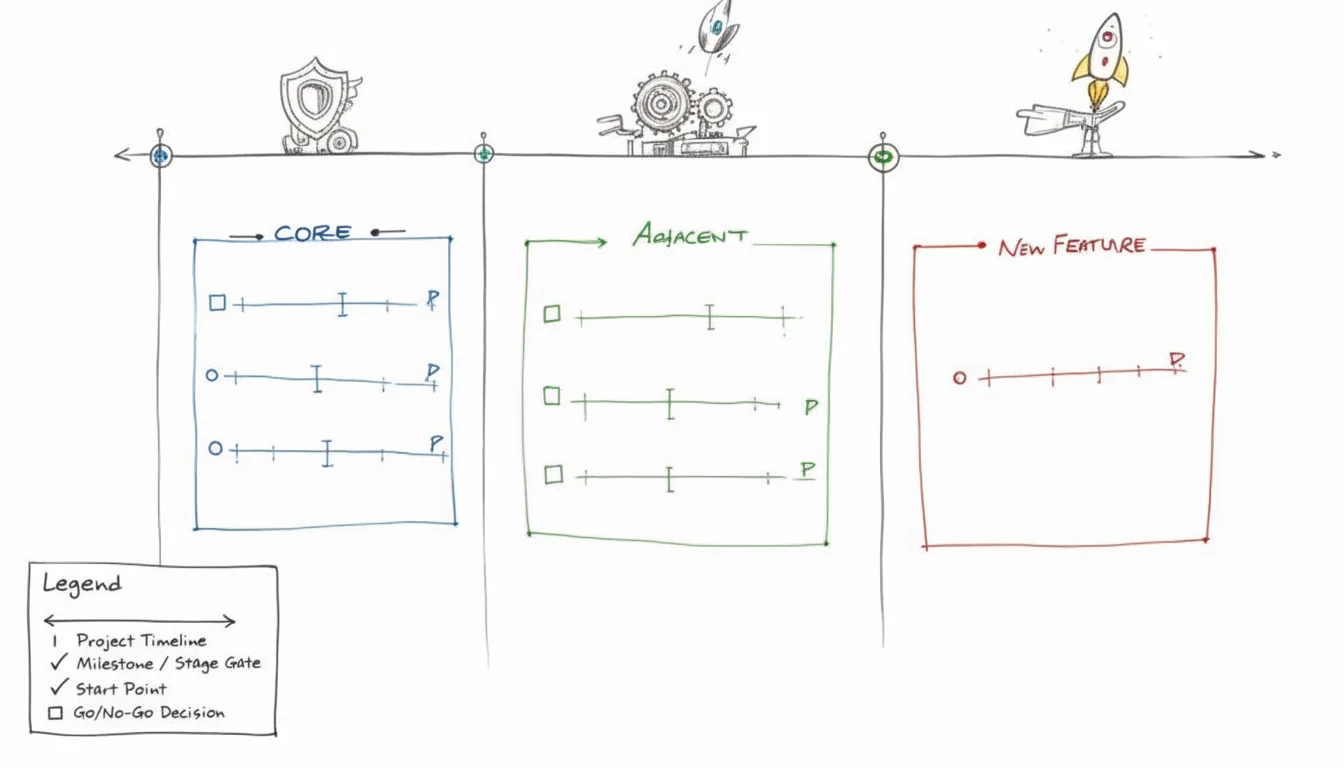
A world-class project portfolio management example is Procter & Gamble's (P&G) handling of its vast portfolio of consumer brands. P&G systematically evaluates each product line against market trends, profitability metrics, and strategic fit. This rigorous PPM process enables them to decide which brands receive investment for growth (like Tide Pods), which are maintained for cash flow, and which are divested. This discipline allows P&G to focus resources on its highest-potential products, ensuring sustained market leadership and financial strength.
Strategic Analysis & Actionable Takeaways
This model is vital for any organization with multiple products, as it provides a structured method to make high-stakes investment decisions objectively. It transforms product development from a series of disconnected projects into a unified, strategy-driven engine for growth, where each product's roadmap is clearly defined and resourced. Exploring concepts like a detailed work breakdown structure is a great next step, which you can learn more about by reviewing a comprehensive project management WBS example.
Key Insights:
- Innovation vs. Operation: Creates a clear framework for balancing investment in breakthrough innovations against the need to support and enhance core, revenue-generating products. For software, this is balancing new feature development with refactoring and maintenance.
- Market Alignment: Ensures the product portfolio is continuously adapted to meet changing customer demands, competitive pressures, and market opportunities. Requires deep understanding of market trends and user feedback.
- Cross-Functional Synchronization: Aligns R&D, marketing, sales, and supply chain teams around a common set of portfolio priorities, preventing silos and streamlining the path to market. This is where Agile principles often shine.
Actionable Tips:
- Implement a Stage-Gate Process: Introduce formal review gates at key development stages (e.g., ideation, business case, development, launch). Use these gates to make clear go/no-go decisions based on predefined criteria, similar to PMP phase gates.
- Create Product Scorecards: Develop a standardized scorecard to evaluate each product on metrics like revenue potential, strategic alignment, market risk, and resource requirements. Use this for objective, comparative analysis to prioritize features and products.
- Maintain Separate Innovation Budgets: Allocate distinct budget pools for core product enhancements and high-risk, exploratory "blue-sky" projects. This protects innovation from being starved of resources by urgent, short-term needs, fostering a culture of continuous improvement.
Reflection Prompt: How can a clear product scorecard help an IT Product Manager justify technical investments (e.g., re-platforming) against user-facing feature development in a competitive market?
6. Healthcare/Hospital Portfolio Management
Project portfolio management in a healthcare setting is a high-stakes discipline focused on balancing patient outcomes, regulatory compliance, operational efficiency, and strategic growth. It governs a diverse portfolio that can include clinical program development, facility expansions, new medical equipment acquisitions, and major technology rollouts. The complexity is magnified by the need to manage stakeholders ranging from surgeons and nurses to administrators and regulatory bodies, all while maintaining the highest standards of patient care. For IT professionals, this means managing critical Electronic Health Record (EHR) implementations, cybersecurity for sensitive patient data (HIPAA compliance), and integrating complex medical technologies, where certifications like CompTIA Security+, CISSP, or ITIL 4 are highly relevant.
A compelling project portfolio management example is how the Mayo Clinic manages its portfolio of clinical, research, and educational initiatives across its multiple campuses. The organization uses a structured PPM framework to evaluate and prioritize projects based on their potential to advance patient care, support research breakthroughs, and improve educational programs. This ensures that investments in a new cancer treatment protocol, a hospital wing expansion, or a digital health platform are all aligned with its core mission of putting patient needs first, creating a cohesive and purpose-driven portfolio.
Strategic Analysis & Actionable Takeaways
This model is vital for healthcare systems navigating the pressures of cost containment, technological disruption, and evolving patient expectations. It provides a data-driven methodology for making difficult investment decisions, ensuring that limited resources are directed toward initiatives with the greatest impact on both clinical quality and financial sustainability. For healthcare organizations, effective management of technology initiatives is particularly critical, as detailed insights on mastering healthcare IT project management can be found.
Key Insights:
- Mission-Driven Prioritization: Portfolio decisions are fundamentally tied to patient outcomes, safety, and quality of care, not just financial ROI. For IT, this means prioritizing projects like secure EHR systems over non-critical administrative tools.
- Stakeholder Integration: Success hinges on successfully integrating the perspectives of clinical staff, administrators, patients, and payers into the governance process. This requires strong communication and negotiation skills, often covered in PMP training.
- Regulatory & Compliance Focus: Every project in the portfolio must be vetted for compliance with strict healthcare regulations like HIPAA, which adds a critical layer of risk management. This is paramount for IT security and data governance teams.
Actionable Tips:
- Form Interdisciplinary Committees: Establish a portfolio governance committee with representatives from clinical, administrative, financial, and IT departments to ensure holistic decision-making. This fosters buy-in and comprehensive risk assessment.
- Use Evidence-Based Criteria: Develop a scoring model for project selection that weighs factors like clinical evidence, patient safety impact, and alignment with community health needs. For IT, this would include impact on system uptime, data integrity, and security.
- Track Clinical and Financial Metrics: Implement a balanced scorecard that tracks key performance indicators for both quality of care (e.g., patient satisfaction, infection rates) and financial health (e.g., cost per procedure). For IT, this could include system availability, data breach incidents, and operational cost savings.
Reflection Prompt: How would you, as an IT Project Manager in a hospital, balance the urgent need for a new cybersecurity system to protect patient data with a project to implement a cutting-edge, but non-critical, diagnostic imaging solution?
7. Financial Services/Banking Regulatory Compliance Portfolio Management
In the high-stakes world of finance and banking, project portfolio management takes on a critical role centered on risk and regulation. This specialized PPM framework is designed to manage a portfolio of initiatives driven not just by profit, but by stringent legal and regulatory mandates like GDPR, Basel III, and Dodd-Frank. It involves a rigorous process for prioritizing projects that mitigate risk, ensure compliance, and modernize legacy systems under the watchful eye of global regulators. For IT professionals, this is a cornerstone of cybersecurity, data governance, and infrastructure modernization, with certifications like CISSP, CISM, CompTIA CySA+, and Certified Information Systems Auditor (CISA) being highly valued.
An excellent project portfolio management example is JPMorgan Chase's enterprise-wide approach to managing its regulatory and compliance portfolio. The firm treats regulatory change as a core business driver, creating a portfolio of projects that spans cybersecurity enhancements, anti-money laundering (AML) system upgrades, and data privacy controls. This portfolio is managed with a risk-based prioritization model, ensuring that resources are first allocated to initiatives that address the most severe regulatory or operational risks, thereby protecting the bank from crippling fines and reputational damage.
Strategic Analysis & Actionable Takeaways
This model is non-negotiable for any financial institution, as it transforms compliance from a reactive, cost-centric function into a strategic, risk-aware business capability. It provides executive leadership with a clear, auditable trail demonstrating due diligence and proactive management of regulatory obligations, which is crucial during regulatory examinations. For IT professionals, understanding this framework is essential for designing and implementing compliant systems.
Key Insights:
- Risk-Based Prioritization: Unlike profit-driven portfolios, success is measured by risk reduction and compliance adherence. Projects are scored and ranked based on the severity of non-compliance consequences. This aligns with core principles of IT risk management.
- Mandatory vs. Discretionary: The portfolio clearly distinguishes between mandatory regulatory projects and discretionary strategic initiatives, preventing essential compliance work from being deprioritized. IT resources must be allocated accordingly.
- Auditability as a Deliverable: Every project within the portfolio is structured to produce comprehensive documentation and audit trails, making regulatory reporting more efficient and transparent. This is vital for CISA and other auditing certifications.
Actionable Tips:
- Create a Regulatory Requirements Database: Centralize all legal and regulatory mandates into a single, trackable database. Link each project in your portfolio directly to the specific mandate it addresses, providing clear traceability for IT systems.
- Establish a Compliance Center of Excellence (CoE): Form a dedicated team that provides standardized templates, risk assessment frameworks, and expert guidance for all compliance-related projects in the portfolio. This ensures consistency across IT security and data initiatives.
- Implement Strong Vendor Governance: For compliance projects involving third-party software (e.g., from ACI Worldwide), build rigorous vendor risk management protocols directly into your PPM framework to ensure their solutions meet all regulatory standards. This includes due diligence on their cybersecurity practices.
Reflection Prompt: As a Cybersecurity Analyst, how would understanding a financial institution's regulatory compliance portfolio impact your approach to prioritizing vulnerability remediation and system hardening projects?
8. Manufacturing and Supply Chain Portfolio Management
Project portfolio management in manufacturing and supply chain contexts is a highly structured discipline focused on optimizing physical operations, assets, and logistics networks. This approach manages a complex portfolio of initiatives, including capital equipment upgrades, lean manufacturing programs, supply chain optimizations, and facility expansions. It provides a framework to ensure that all operational improvement projects align with strategic goals like cost reduction, quality enhancement, and production efficiency, all while navigating the physical constraints of production lines and global logistics. For IT professionals, this domain encompasses managing Enterprise Resource Planning (ERP) systems, Industrial IoT (IIoT) deployments, automation projects, and supply chain management (SCM) software, where ITIL 4 and Project+ certifications can be highly valuable.
A classic project portfolio management example is Toyota's renowned production system. Their portfolio is built around the principle of Kaizen, or continuous improvement. Instead of a few large, disruptive projects, Toyota manages a vast portfolio of small, incremental improvement initiatives originating from the factory floor itself. This PPM model prioritizes projects that eliminate waste (muda), improve workflow, and enhance quality, ensuring that capital and human resources are systematically applied to the highest-impact areas across their global manufacturing footprint.
Strategic Analysis & Actionable Takeaways
This model is vital for asset-heavy industries where operational efficiency directly impacts profitability. It connects shop-floor activities with strategic objectives, ensuring that investments in machinery, processes, and people deliver measurable returns in Overall Equipment Effectiveness (OEE) and supply chain resilience. For IT, this means aligning digital solutions with tangible operational improvements.
Key Insights:
- Operational Alignment: Directly links capital expenditure and process improvement initiatives to core business metrics like production throughput, cost of goods sold, and on-time delivery. IT projects, such as ERP upgrades, must show direct impact here.
- Risk Mitigation: Manages risks associated with supply chain disruptions, equipment downtime, and quality control failures by prioritizing projects that build resilience and redundancy. This includes IT solutions for predictive maintenance and supply chain visibility.
- Capital Allocation: Provides a structured method for evaluating and prioritizing large capital investments, ensuring funds are directed toward assets that will provide the highest long-term value. This includes IT infrastructure supporting manufacturing.
Actionable Tips:
- Map Value Streams First: Before initiating projects, conduct value stream mapping to identify the biggest bottlenecks and sources of waste. This ensures your portfolio targets the most critical areas for IT automation and system enhancements.
- Use a Weighted Scoring Model: For capital equipment decisions, develop a weighted scoring model that balances factors like cost, OEE impact, maintenance requirements, and strategic fit to make objective choices. Detailed information on optimizing this process can be found in our guide on resource allocation in project management.
- Establish a Lean Program Office: Create a dedicated Program Management Office (PMO) focused on continuous improvement to standardize lean methodologies, track savings, and share best practices across different facilities, including IT-driven efficiency projects.
Reflection Prompt: How can an IT professional, through the deployment of IIoT sensors and data analytics platforms, contribute to a manufacturing portfolio's goal of continuous improvement and waste reduction (Kaizen)?
Project Portfolio Management: 8-Sector Comparison
| Approach | Implementation complexity | Resource requirements | Expected outcomes | Ideal use cases | Key advantages |
|---|---|---|---|---|---|
| IT/Software Development Portfolio Management | High — integrates Agile, DevOps, legacy systems | High technical tooling, skilled dev teams, automation | Faster releases, managed technical debt, improved visibility | Large enterprises, SaaS, fast-moving product orgs | DevOps/Agile alignment, cross-team collaboration, rapid delivery |
| Pharmaceutical R&D Portfolio Management | Very high — long timelines, regulatory gates | Very high cost, specialised scientific and regulatory expertise | Objective go/no-go decisions, regulated approvals, portfolio risk control | Pharma, biotech, medical device R&D | Regulatory compliance, stage-gate rigor, long-term ROI focus |
| Capital/Infrastructure Project Portfolio Management | High — complex contracts, permits, stakeholders | Very high capital, engineering and contractor management | Improved cost control, staged delivery, regulatory/safety compliance | Construction, utilities, government infrastructure, real estate | Capital visibility, cost controls, stakeholder coordination |
| Marketing and Brand Portfolio Management | Moderate — integrates creative and tech stacks | Moderate budget across channels, martech integrations | Better campaign ROI, consistent brand execution, faster launches | CPG, retail, tech firms, agencies | Brand governance, multi-channel coordination, ROI focus |
| Product Development Portfolio Management | High — coordinates R&D, engineering, commercial teams | High cross-functional resources, market research, tooling | Balanced product mix, faster time-to-market, prioritized roadmap | Tech companies, consumer products, automotive, electronics | Roadmap visibility, feature prioritization, market alignment |
| Healthcare/Hospital Portfolio Management | High — clinical, regulatory, and stakeholder complexity | High clinical and IT resources, capital for equipment | Improved patient outcomes, regulatory compliance, resource optimization | Hospital systems, health networks, research centers | Evidence-based selection, clinical-business alignment, quality tracking |
| Financial Services/Banking Regulatory Compliance Portfolio Management | High — evolving regulations and audits | High compliance expertise, security tools, legal support | Reduced legal risk, auditable controls, improved security posture | Banks, insurers, fintechs, payment processors | Regulatory traceability, risk reduction, audit readiness |
| Manufacturing and Supply Chain Portfolio Management | High — global coordination, operational changes | High capital for equipment, supplier collaboration, training | Improved efficiency, inventory optimization, resilience | Automotive, electronics, FMCG, industrial manufacturers | Supply chain resilience, OEE improvement, lean transformation |
Applying These Lessons to Your Own Portfolio
As we've explored across industries—from IT and pharmaceuticals to manufacturing and financial services—effective project portfolio management is not a monolithic formula. Instead, it is a dynamic and context-sensitive discipline. The specific tools and risk models used in a pharmaceutical R&D portfolio will differ vastly from those in an IT cloud services portfolio, yet the foundational principles are remarkably consistent.
The most successful organizations demonstrate a relentless commitment to strategic alignment. Each project portfolio management example we analyzed underscores the importance of ensuring every initiative, no matter how small, directly contributes to overarching business goals. This requires moving beyond gut feelings and embracing a culture of data-driven decision-making to prioritize projects, allocate resources, and manage risk intelligently—skills highly valued in certifications like the PMP and PMI-ACP.
Your Actionable Roadmap to Portfolio Mastery
The journey from understanding these examples to implementing them requires a structured approach. The core takeaway is that you don't need to reinvent the wheel; you can adapt proven strategies to fit your unique operational landscape and career aspirations.
Here are the critical next steps to translate these insights into action:
- Conduct a Strategic Alignment Audit: Review your current portfolio, whether it's a list of projects you're directly managing or organizational initiatives you influence. Can you draw a direct, unambiguous line from each project to a specific strategic objective? If not, that project is a candidate for re-evaluation or termination. This critical thinking is vital for PMP exam scenarios.
- Establish a Centralized View: Whether through sophisticated PPM software, a project management dashboard, or a well-structured Excel sheet, create a single source of truth for all project data. Visibility is the bedrock of effective governance and informed decision-making, helping you articulate portfolio status clearly.
- Define Clear Prioritization Criteria: Develop a scoring model based on factors like strategic value, ROI, risk, and resource requirements. This removes subjectivity and ensures resources flow to the highest-value initiatives, as seen in the capital infrastructure and product development examples. This systematic approach is a core competency for any aspiring project or portfolio manager.
- Implement a Governance Framework: Define roles, responsibilities, and a clear process for project intake, review, and approval. This discipline prevents resource leakage and ensures the portfolio remains aligned with shifting priorities, a key aspect of organizational project management maturity.
The Lasting Impact of Strategic Portfolio Management
Mastering these concepts is more than an academic exercise; it is a critical competitive advantage for IT professionals. A well-managed portfolio transforms an organization from a reactive entity into a strategic powerhouse, capable of navigating market uncertainty and capitalizing on emerging opportunities. It ensures that your most valuable resources—your people, time, and capital—are always focused on work that truly matters.
Ultimately, every successful project portfolio management example serves as a blueprint. By studying how leading organizations in diverse fields have tackled these challenges, you gain a powerful toolkit of replicable strategies and tactical insights. The key is to adapt these lessons, building a portfolio management practice that not only delivers projects successfully but also propels your entire organization toward its strategic vision, and propels your career forward with enhanced skills and certification readiness.
Ready to move from theory to practice and enhance your career in IT project and portfolio management? The examples discussed here highlight the complex skills needed to lead a successful portfolio. To master these methodologies and gain hands-on expertise for certifications like PMP, PMI-ACP, or specialized cloud architecture certifications, explore the comprehensive courses at MindMesh Academy. Our expert-led training is designed to equip you with the practical skills needed to implement these strategies and drive tangible results in your organization. Visit MindMesh Academy today to find your next step towards IT leadership.

Written by
Alvin Varughese
Founder, MindMesh Academy
Alvin Varughese is the founder of MindMesh Academy and an enterprise architecture leader. An electrical engineer by training, he moved from factory automation in South Africa to cloud architecture at GE Appliances and Humana (Fortune 50), and holds 20 professional certifications including AWS Solutions Architect Professional, Azure DevOps Engineer Expert, and Microsoft Agentic AI Business Solutions Architect. He built MindMesh Academy after interviewing too many highly certified candidates who couldn't answer basic questions: the goal is prep that makes you better at the job, not just able to pass the exam.