Project Management WBS Example: 6 Essential Breakdowns
Mastering the Work Breakdown Structure: 8 Essential WBS Examples for IT Professionals
A Work Breakdown Structure (WBS) serves as the basic foundation for project management by translating broad goals into a clear, functional roadmap. IT professionals studying for PMP certification, planning AWS or Azure deployments, or applying ITIL principles often find the shift from theory to practice difficult. Generic templates frequently fail to capture specific deliverables or the technical requirements of modern IT initiatives. This makes a detailed project management WBS example an essential resource, providing a concrete blueprint for project planning, resource allocation, and execution.
This guide from MindMesh Academy analyzes eight distinct WBS examples, spanning software development, system migrations, and large-scale organizational change. We look past basic diagrams to examine the logic behind each breakdown, offering a clear view of how to organize complex tasks. This approach provides tactical insights and specific methods you can apply to your current assignments right now. We want to provide the practical knowledge and tools you need to build WBS structures that improve project control and ensure successful delivery across different technical domains and various industries.
1. Software Development WBS
The Software Development Work Breakdown Structure (WBS) serves as a primary project management WBS example that divides a complex software project into smaller, functional parts. It provides a visual hierarchy of all the required work, starting with broad phases like planning and design before narrowing down to specific tasks such as writing code for individual modules or running security tests.
This organized method helps project leads estimate costs accurately and assign the right IT resources, including frontend, backend, and DevOps engineers. It also helps track progress across the Software Development Life Cycle (SDLC). By providing clear structure, it removes the ambiguity often found in technical processes. Every team member, from developers to quality assurance analysts, knows their exact role in building the final product.
Strategic Breakdown
A successful software WBS focuses on deliverables rather than just listing activities. For example, instead of a generic task like "Code Login Page," the WBS highlights a specific outcome like "User Authentication Module." This module is then split into work packages that represent specific, measurable results:
- 1.1 Frontend UI: Designers and developers build the user interface for login and registration forms. The focus is on responsiveness and the overall user experience across different devices.
- 1.2 Backend Logic: Engineers build secure API endpoints and the core logic for user authentication. This includes password hashing and token generation protocols.
- 1.3 Database Integration: This package covers designing data schemas and creating user tables. It also involves setting up secure connections to services like AWS RDS or Azure SQL Database.
- 1.4 Unit Testing: Developers write and run automated tests for every component. This verifies that the code works as intended and identifies bugs before they reach the production environment.
Focusing on deliverables ensures the team stays committed to producing functional results rather than just checking off a list of actions. Large-scale technology projects, such as building new features for cloud platforms like AWS or Microsoft Azure, depend on this structure to manage many moving parts and global teams.
Actionable Takeaways
To use this model effectively, IT project managers should focus on these specific areas:
- Separate Technical Stacks: Organizing the WBS by frontend, backend, and database layers makes ownership clear. It helps identify dependencies and ensures that experts are assigned to the right tasks.
- Prioritize Security Early: Treat security testing and compliance checks for regulations like GDPR or HIPAA as primary work packages. Do not treat security as a final step. This approach aligns with modern DevSecOps methods.
- Allocate Time for Integration: Set aside resources specifically for integration testing. This is when various modules, services, and APIs are combined. Delays often happen during this phase in complex systems, so planning is vital.
- Reflection Prompt: How would you change this deliverable-focused approach for a mobile application compared to an enterprise API project? Consider how different deployment schedules and stakeholder requirements change your planning.
For a practical guide on breaking down software projects, you might explore insights on how to create an app, which outlines the necessary steps. You can learn more about the duties of an IT project manager to see how WBS creation fits into their broader role.
2. Construction Project WBS
Construction work breakdown structures serve as a standard model for organizing building and infrastructure projects. This framework breaks down a massive undertaking into manageable segments, ranging from early design and permit acquisition to site preparation, physical building, and the final client handover. Managers use this tool to handle the high degree of complexity inherent in these projects. Coordinating dozens of specialized trades while maintaining strict safety standards is difficult without a clear map. Major efforts, such as the Burj Khalifa or global data center expansions, use this method to keep schedules, costs, and quality levels under control.
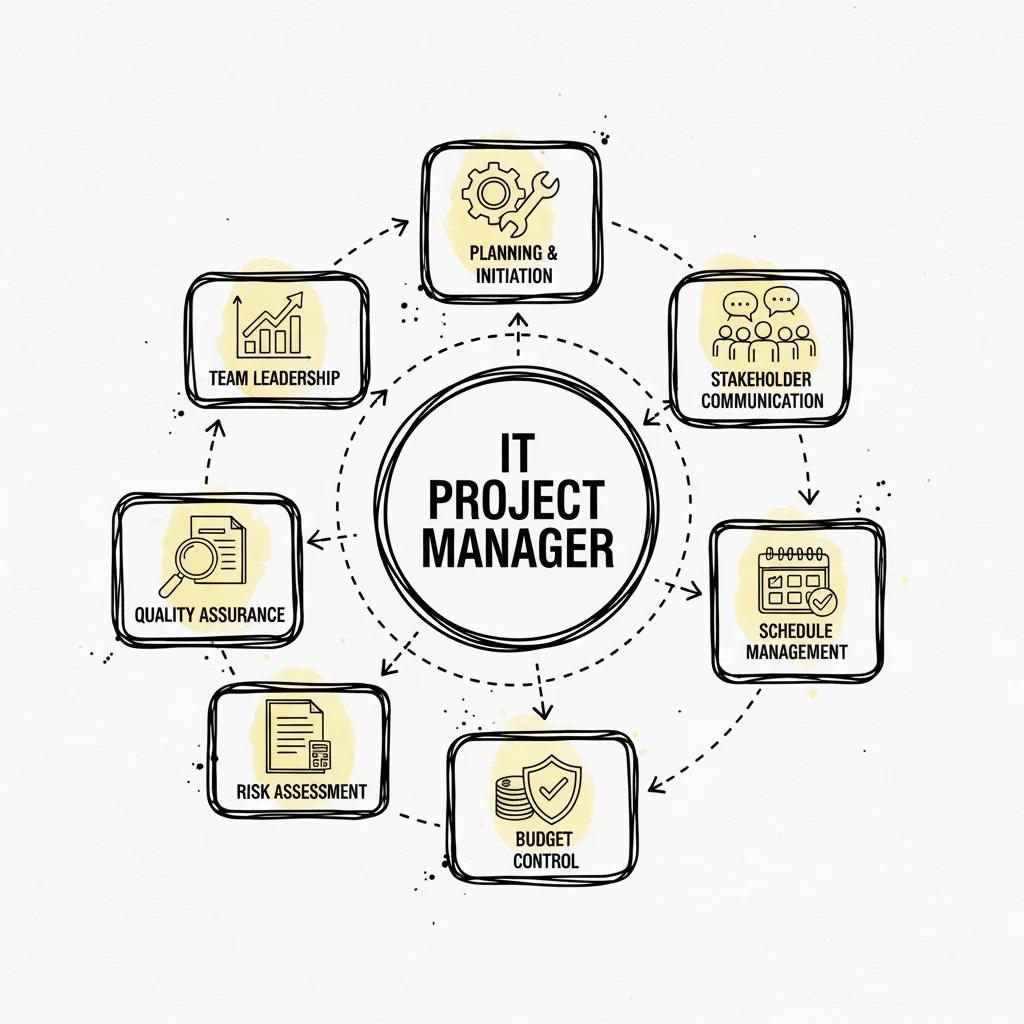 Image: An example of a Construction Project WBS hierarchy, detailing phases like excavation, foundation, and utility installation.
Strategic Breakdown
A construction WBS typically follows physical components and specific project phases rather than a simple list of tasks. For instance, a high-level deliverable like "Foundation and Substructure" is broken into specific work packages. Each package usually represents the scope assigned to a specific subcontractor or internal team. This ensures that every worker on the site knows exactly which part of the physical structure they are responsible for completing.
- 2.1 Site Excavation: Clearing land, removing debris, and grading the area based on engineering specifications.
- 2.2 Reinforced Concrete: Pouring concrete for footings, walls, and slabs, including the installation of rebar.
- 2.3 Utility Installation: Placing underground plumbing, electrical conduits, and communication lines to meet local codes.
- 2.4 Waterproofing: Installing moisture barriers and drainage systems to prevent water from damaging the substructure.
This phase-based approach requires that every major stage is finished and inspected before the next begins. Large construction firms use this systematic progression to ensure quality, and the same logic applies to building IT infrastructure, such as new server facilities or telecommunications hubs.
Actionable Takeaways
To use a WBS effectively in a construction setting, project managers can adopt these strategies:
- Integrate Procurement with Phases: Align the delivery of materials with specific WBS phases. This allows for "just-in-time" arrivals, which prevents site overcrowding and reduces the risk of material damage. Mastering the management of project procurement helps coordinate these complex timelines.
- Isolate Trades for Clarity: Assign specific work packages to individual trades like electrical, plumbing, or structural steel. This prevents overlapping responsibilities and makes handoff points between teams easier to track.
- Incorporate Quality Gates: Include mandatory inspections and compliance reviews as standalone work packages at the end of each phase. Identifying issues early prevents expensive repairs later in the project.
- Plan for Contingencies: Create specific packages for identified risks like weather delays or supply chain interruptions. Allocating specific time and budget buffers within the WBS provides a clear plan for when problems occur.
An IT Infrastructure/Systems Implementation Work Breakdown Structure (WBS) serves as a functional project management WBS example. It is designed for high-stakes technology deployments, such as moving enterprise applications to the cloud (e.g., AWS or Azure), installing new server clusters, or rolling out an Enterprise Resource Planning (ERP) system. This WBS breaks down the technical demands of hardware, software, networking, and security into a clear hierarchy. The structure helps teams maintain business continuity and system compatibility throughout the process. It ensures that no technical dependency is overlooked during the transition.
This WBS format is vital for enterprise IT projects where downtime is not an option and data integrity must be maintained. It provides the structure needed to coordinate separate technical teams, track vendor timelines, and confirm that every element—from firewalls to virtual machines and databases—operates as a secure, unified system. These practices follow the service transition standards found in ITIL.
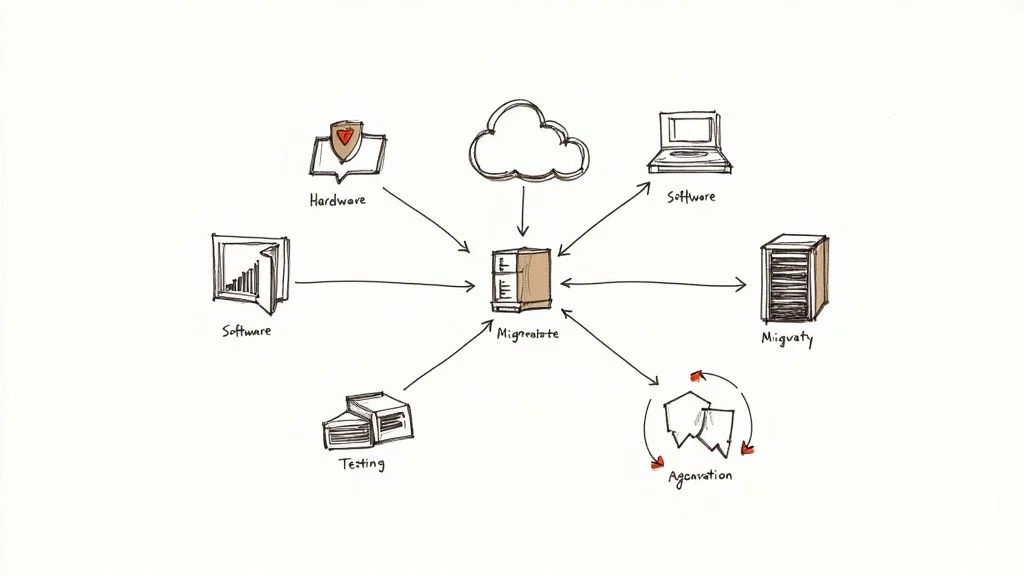 Image: A conceptual IT Infrastructure/Systems Implementation WBS, showing phases for discovery, provisioning, data migration, and cutover.
Strategic Breakdown
An IT infrastructure WBS organizes work around interdependent phases and specific deliverables rather than a simple checklist. For a project involving the migration of an on-premises data center to a Microsoft Azure cloud environment, the breakdown identifies concrete results rather than just listing activities.
- 3.1 Discovery & Assessment: Perform a thorough analysis of existing infrastructure, applications, and dependencies. This phase defines migration requirements, the target architecture, and technical risks.
- 3.2 Infrastructure Provisioning: Build virtual networks, compute resources like VMs or containers, storage accounts, and security groups within the Azure environment. All setups must follow internal compliance rules and industry standards.
- 3.3 Data Migration: Plan and carry out the secure transfer of databases, files, and application data to the new cloud environment. This include cleaning the data and validating it once the transfer is complete.
- 3.4 System Cutover & Go-Live: Finish the deployment and point user traffic toward the new systems. The team conducts final migration checks before shutting down the old on-premises hardware.
This deliverable-focused approach matches the Service Transition methodologies in the ITIL framework. It is standard for large deployments at organizations using cloud providers like Amazon AWS and IBM. To explore the overall method, this WBS example is a core part of mastering IT infrastructure project management strategies.
Actionable Takeaways
To manage an IT implementation project with this WBS model, project managers and architects should follow these steps:
- Create Parallel Technical Branches: Organize the WBS into separate branches for hardware, software, networking, and security. This helps teams track dependencies and ensures that specialized staff have clear ownership over their technical domains.
- Build a Rollback Plan: Define a "Rollback and Contingency" work package as a high-priority deliverable. This must list the exact, tested steps required to return to the previous state if the go-live or a major phase fails.
- Prioritize Security Hardening & Compliance: Set up specific work packages for firewall configuration, security patching, identity and access management (IAM), and penetration testing. These tasks must be finished before the system goes live to meet regulatory requirements.
- Schedule User Acceptance Testing (UAT) Strategically: Place UAT early in the timeline rather than saving it for the end. Early testing identifies integration problems and performance issues when they are still affordable to fix.
- Reflection Prompt: When planning a large-scale enterprise application migration to a cloud platform, what specific risks would you identify in the "Data Migration" phase, and how would your WBS mitigate them?
4. Product Development (Hardware) WBS
A Product Development Work Breakdown Structure for hardware projects divides the process of creating physical goods into sequential stages. This WBS example charts the path from initial research to market launch. It integrates engineering design, supply chain management, and manufacturing into a unified plan.
Hardware projects deal with tangible assets, global supply chains, and large upfront costs for tooling and prototypes. This is a major shift from software development. The WBS provides the oversight required to manage these physical and financial risks. Every phase, from initial R&D to the production ramp-up, needs careful planning. This is especially useful for IT professionals working on IoT devices, specialized data center hardware, or embedded systems.
Strategic Breakdown
The hardware WBS uses development milestones and physical deliverables as its foundation. Rather than just listing tasks, it groups work into phases like concept validation and pilot production runs. For example, a "Manufacturing Setup" deliverable breaks down into these specific work packages:
- 4.1 Tooling & Fixture Design: Create detailed designs for molds, dies, and specialized equipment needed for mass production.
- 4.2 Supplier Qualification: Audit and select component vendors, negotiate contracts, and confirm quality standards.
- 4.3 Production Line Setup: Install and calibrate all assembly line equipment for safe and efficient operation.
- 4.4 Quality Assurance Protocol: Set inspection criteria and testing procedures for every stage of the manufacturing process.
This structure supports methodologies like the Stage-Gate model and Lean Product Development. These approaches helped manage complex projects like the Tesla Model 3 production ramp and advanced aerospace products. Using this format ensures that manufacturing feasibility and cost are weighed during the design phase. This prevents expensive, late-stage redesigns.
Actionable Takeaways
To apply a hardware WBS effectively, project managers should follow these steps:
- Integrate Design for Manufacturability (DFM): Put DFM and Design for Assembly (DFA) reviews into the WBS as mandatory work packages. This proactive step optimizes production and prevents errors that appear during final assembly.
- Isolate Tooling & Long-Lead Items: Use a separate top-level WBS branch for tooling and components with long wait times. These items are often on the critical path and carry high costs, so they need early oversight.
- Plan for Supply Chain Resilience: Include work packages for risk assessment, buffer stock planning, and logistics. This helps teams address material shortages, geopolitical risks, and potential shipping delays before they impact the schedule.
- Establish Validation Gates: Place clear go/no-go decision points between major phases like Prototyping and Production. At these gates, review the project viability and technical requirements before spending more resources.
- Reflection Prompt: How might a WBS for a new IoT smart device differ from one for a traditional consumer electronic product, particularly regarding cybersecurity and data privacy?
5. Event Management WBS
An Event Management Work Breakdown Structure (WBS) serves as a functional tool for organizing large-scale events like IT conferences, tech summits, trade shows, or corporate training sessions into manageable work streams. This hierarchical framework covers every phase of the project, including initial concept development, venue selection, on-site logistics, marketing campaigns, and post-event analysis.
Organizing these events requires coordinating many moving parts, including multiple vendors for AV, catering, security, and IT support. Stakeholder expectations are high, and deadlines are fixed. Using a WBS changes event planning from a disorganized list into a controlled process. This systematic approach ensures that no detail—from speaker contracts and technical needs to attendee registration and reliable network connectivity—is overlooked.
Strategic Breakdown
An event management WBS is organized by major deliverables or phases of the event lifecycle rather than a simple checklist. For instance, instead of a generic task like "Book Hotel," the WBS uses a deliverable such as "Venue and Accommodation Management." Project managers break this deliverable down into specific work packages:
- 5.1 Venue Sourcing & Contracts: Research potential locations, negotiate contract terms, sign legal agreements, and confirm IT infrastructure requirements such as Wi-Fi bandwidth, backup power supply, and AV capabilities.
- 5.2 Attendee Lodging: Secure room blocks at negotiated rates and manage the booking logistics and communications for all attendees.
- 5.3 Catering & A/V: Coordinate with venue staff for food, beverages, audio-visual equipment, and technical support needed for live presentations and digital streams.
- 5.4 On-Site Logistics: Plan room layouts, seating arrangements, directional signage, registration desk setup, and staffing schedules for the actual event days.
This deliverable-focused approach means every major component of the event is planned, resourced, and integrated into the whole. Large-scale productions like the annual Consumer Electronics Show (CES) or major industry summits rely on this specific model to manage thousands of exhibitors and hundreds of thousands of attendees across complex physical and technological environments.
Actionable Takeaways
To apply this model effectively, event project managers should follow these steps:
- Establish a Long-Lead Timeline: Create high-level WBS elements for milestones like vendor selection, keynote speaker confirmations, and marketing launches at least 12 months before major events.
- Isolate Key Functions: Separate marketing, speaker management, and attendee registration into distinct top-level branches. This ensures focus, clear ownership, and specialized resource allocation, such as a dedicated IT support team for speaker presentations.
- Build in Contingency Plans: Create specific work packages for risk management. These should address potential issues like vendor no-shows, bad weather, low attendance, or critical IT system failures.
- Plan for Post-Event Analysis: Include post-event evaluation, financial reconciliation, feedback collection, and stakeholder reporting as final deliverables. This measures success and captures lessons learned to improve future planning.
- Reflection Prompt: Imagine planning a virtual IT conference with global attendees. How would your WBS adapt to address challenges like time zone differences, platform stability, and diverse technical support needs?
6. Marketing Campaign WBS
A Marketing Campaign Work Breakdown Structure (WBS) serves as an effective tool that deconstructs a complex marketing initiative into organized, manageable parts. It provides a hierarchical framework for all required activities, moving from initial strategy and market research to creative development, channel execution, and final performance analysis. This methodology is highly relevant for IT professionals who manage product launches, build brand awareness for technical solutions, or drive lead generation for SaaS offerings.
This structure is essential for coordinating different teams, including creative staff, media buyers, data analysts, sales representatives, and the IT personnel who manage the MarTech stack. It ensures a unified message reaches the audience consistently across all digital and traditional channels. For a large project like a marketing campaign, a WBS organizes the moving parts to allow for precise budget allocation, resource management, and consistent tracking of progress against key milestones and performance indicators.
Strategic Breakdown
A marketing campaign WBS is organized by key deliverables or distinct phases rather than a simple to-do list. For instance, instead of a task like "Post on social media," the WBS would feature a major deliverable like "Social Media Execution." This deliverable is then broken down into specific work packages:
- 6.1 Content Calendar Creation: Develop a detailed schedule of posts, themes, formats such as infographics or video snippets, and target platforms.
- 6.2 Creative Asset Development: Design graphics, write compelling copy, and produce high-quality video content specifically tailored for each social platform.
- 6.3 Platform-Specific Execution: Schedule and publish content on chosen social media platforms, such as LinkedIn for B2B tech or Instagram for consumer products, while following the best practices for each channel.
- 6.4 Community Management: Monitor engagement, respond to comments and messages, and manage the online reputation of the brand across all active channels.
This deliverable-focused approach keeps the team concentrated on achieving measurable campaign objectives, such as lead generation, brand awareness, or product adoption. Large global campaigns from leading tech brands rely on this specific structure to manage many moving parts across different regions, languages, and media formats.
Actionable Takeaways
To effectively implement this project management WBS example, marketing managers and IT leads supporting marketing initiatives should follow these steps:
- Structure by Channel or Target Audience: Create distinct top-level branches for each marketing channel, such as SEO, PPC, Social Media, Email Marketing, or Content Marketing. You could also organize by target persona. This clarifies who owns each area and allows for independent tracking of performance data.
- Front-Load Research and Strategy: Dedicate the initial phase of the WBS to market research, target persona development, competitive analysis, and technical readiness. This ensures the campaign starts from a solid strategic and technical base.
- Incorporate Feedback and A/B Testing: Build specific work packages for continuous A/B testing, stakeholder approval rounds, and real-time performance reporting. This creates a cycle of improvement that avoids delays and ensures data-driven optimization of marketing assets.
- Plan for MarTech Integration: Include work packages that ensure integration with CRM systems like Salesforce or HubSpot, marketing automation platforms, and analytics tools to allow data to flow and enable detailed reporting.
- Reflection Prompt: How would you integrate cybersecurity and data privacy considerations into a marketing campaign WBS, especially when the project involves handling customer data or using online tracking pixels?
7. Organizational Change Management/Transformation WBS
An Organizational Change Management (OCM) WBS is a specialized project management WBS example. It handles the human side of major business transformations, which often include large-scale IT projects. This framework breaks down the work of guiding an organization through digital shifts, mergers, ERP system implementations, or cultural changes into structured, measurable phases.
This structure moves beyond standard project metrics. It focuses on stakeholder engagement, clear communication, and the adoption of new processes. The main goal is to reduce resistance and ensure long-term success by bringing people through the transition. Companies like Microsoft, under Satya Nadella, used similar structured approaches to change their corporate culture while shifting IT strategies. This WBS directly applies ITIL's Organizational Change Management principles.
Strategic Breakdown
Unlike technical projects, an OCM WBS focuses on human-centered deliverables. This builds momentum and helps secure buy-in across the company. Instead of a simple task like "Send email updates," the WBS features a deliverable like "Stakeholder Communication & Engagement Strategy." This is then broken down into specific work packages:
- 7.1 Stakeholder Analysis: Identify and segment every group affected by the change, such as end-users, IT support teams, leadership, and external partners. Assess the influence of each group.
- 7.2 Communication Plan Development: Create messaging strategies for different audiences. Select the right channels, such as town halls, intranet posts, or webinars. Set a clear frequency for communication for each stakeholder group.
- 7.3 Leadership Alignment & Sponsorship: Secure visible executive sponsorship. Leaders must understand their role in promoting the change and answering employee questions.
- 7.4 Feedback Mechanisms: Build structured channels for two-way communication. These allow employees to voice concerns and provide input. This involvement helps reduce uncertainty.
This deliverable-focused approach draws on models like Prosci's ADKAR. It ensures that every activity helps people adopt new tools or mindsets. It is a vital tool for IT initiatives where success depends on how well employees accept new behaviors.
Actionable Takeaways
To build and use this WBS effectively, project managers should:
- Prioritize Sponsorship as a Core Deliverable: Dedicate a top-level WBS branch to "Executive Sponsorship & Alignment." Visible leadership support and active communication are the most important factors for OCM success.
- Create Tailored Training Programs: Break down training development by user group and specific skill gaps. Create work packages for curriculum design and material creation, including e-learning modules and hands-on labs. Plan for multiple delivery methods, such as in-person or virtual sessions.
- Measure Adoption, Not Just Completion: Include work packages to establish Key Performance Indicators (KPIs) for change adoption. Track system login rates, feature usage, and proficiency scores. Use dashboards to show progress over time.
- Proactively Plan for Resistance Management: Set aside specific tasks to identify where resistance might occur. Create mitigation strategies, such as coaching and extra support, to manage concerns through open dialogue.
- Reflection Prompt: When you implement a new enterprise IT system, how will your Change Management WBS address the specific needs of technical support teams compared to general business users?
You can find more about these principles in our guide to managing change within IT processes.
8. Research and Development (R&D) Project WBS
A Research and Development (R&D) Project Work Breakdown Structure serves as a specialized project management WBS example. It accounts for the uncertainty and iterative cycles inherent in innovation. Projects with predefined deliverables differ from R&D, which focuses on discovery and exploration. The structure must remain flexible to accommodate cycles of testing, technical failures, and sudden breakthroughs. IT professionals in roles related to emerging technologies, AI research, or advanced systems engineering use this format to organize work that lacks a straight path to completion.
This model decomposes the project into inquiry phases. It includes literature reviews, hypothesis development, testing, and detailed data analysis. Managing budgets and timelines in high-risk environments depends on this framework. Organizations like Pfizer for drug development, CERN for particle physics, or Google labs for AI research use these structures to organize long, complex initiatives that span several years.
Strategic Breakdown
R&D WBS designs often account for multiple potential outcomes or parallel tracks of experimentation. The focus remains on learning objectives and decision gates rather than a guaranteed final product. For example, a project to develop new battery technology for mobile devices might include these components:
- 8.1 Hypothesis Formulation: Define three potential novel chemical compositions for the battery. Outline expected performance gains and potential technical obstacles.
- 8.2 Parallel Experimentation:
- 8.2.1 Composition A Testing: Run performance, stability, and safety trials under various environmental conditions.
- 8.2.2 Composition B Testing: Run identical trials for the second chemical composition to ensure comparable results across tracks.
- 8.2.3 Composition C Testing: Run the same suite of performance and safety tests for the third composition.
- 8.3 Data Analysis & Synthesis: Collect and synthesize results from all experimental tracks. Compare the data against specific performance benchmarks and feasibility requirements defined at the start of the project.
- 8.4 Decision Gate: Review all findings to select one composition for further development. If no path proves viable, pivot the project or end it, ensuring all data and learnings are recorded.
This adaptive method acknowledges that research paths often end in dead ends. These results are not setbacks but are structured as learning outcomes. They turn potential disappointment into a planned part of the project’s knowledge base.
Actionable Takeaways
To apply this model in an R&D context, project managers should:
- Incorporate Iteration Loops: Build the WBS with recurring phases for testing, analysis, and refinement. This lets the plan evolve as new data changes the team's understanding of the technical problem.
- Establish Clear Decision Gates: Use specific milestones to assess the project's viability and strategic alignment. This prevents teams from spending resources on research avenues that show no evidence of success.
- Prioritize Documentation: Create work packages specifically for recording findings. Include methodologies, raw data, and results from both successful and failed experiments. This data is a significant asset for future organizational learning and upcoming projects.
- Manage Intellectual Property (IP): Add work packages for patent research, filing provisional applications, and developing an IP strategy. This is vital during early-stage research.
- Reflection Prompt: How would you structure an R&D WBS to explore the feasibility of a new quantum computing algorithm while managing high uncertainty and specialized resource needs?
8 WBS Examples Comparison
| Project Type | Implementation Complexity | Resource Requirements | Expected Outcomes | Ideal Use Cases | Key Advantages |
|---|---|---|---|---|---|
| Software Development WBS | Medium–High — depends on iterative integration and QA cycles within moving tech stacks | Developers (frontend, backend, mobile), QA engineers, DevOps specialists, CI/CD tools, reliable test environments | Working software increments, rigorously tested releases, extensive documentation, maintainable codebase | SaaS platforms, web/mobile applications, enterprise software solutions, API development | Clear, deliverable-based breakdown; supports Agile and Waterfall; effective for managing technical debt |
| Construction Project WBS | High — involves many trades, on-site variables, strict regulatory constraints, and heavy equipment | Heavy labor, diverse raw materials, specialized machinery, subcontractors, permits, and safety officers | Completed physical structure, passed inspections, regulatory approval, and operational infrastructure | Buildings, large-scale infrastructure, civil engineering projects, and data center physical construction | High visibility for cost and schedule; optimized trade coordination; rigorous safety risk management; compliance assurance |
| IT Infrastructure/Systems Implementation WBS | High — involves complex integrations, data migration, compatibility risks, and business continuity demands | Hardware (servers, network gear), software licenses, network and security engineers, database administrators, and cloud architects | Deployed infrastructure, migrated data, integrated systems, and optimized cloud environments | Cloud migrations (AWS, Azure), enterprise ERP/CRM rollouts, new network deployments, and virtual desktop infrastructure | Supports parallel workstreams; detailed rollback planning; effective vendor management; minimizes downtime |
| Product Development (Hardware) WBS | High — results from extensive prototyping, complex tooling, long lead times, and supply chain logistics | Mechanical and electrical engineers, prototyping facilities, specialized tooling, and global supply chain partners | Production-ready designs, quality assurance and compliance certification, and optimized manufacturing setups | Consumer electronics, automotive components, aerospace products, IoT devices, and medical devices | Strong cross-functional integration; critical stage-gates for decision-making; accurate cost and schedule forecasting |
| Event Management WBS | Medium — involves many concurrent, time-sensitive activities with high stakeholder visibility | Venue, diverse vendors (AV, catering, security, IT), logistics staff, marketing teams, and contingency budgets | Executed event (virtual or physical), high-quality attendee experience, fulfilled sponsor deliverables, and stable technical support | IT conferences, tech festivals, trade shows, corporate training events, and product launch events | Enhanced milestone clarity; streamlined vendor and sponsor coordination; effective timeline control; manages technical needs |
| Marketing Campaign WBS | Medium — requires iterative creative and approval cycles and data-driven optimization | Creative teams, media buyers, content creators, marketing automation specialists, and analytics tools | Launched campaigns, tracked performance metrics, data-driven optimizations, lead generation, and brand lift | New product launches, brand awareness campaigns, integrated digital marketing, and SaaS lead generation | Enables parallel creative and media work; measurable ROI and performance; supports A/B testing and agile adjustments |
| Organizational Change Management WBS | High — driven by human factors, stakeholder variety, long timelines, and resistance management | Change leads, trainers, communications specialists, executive sponsors, HR support, and cultural change experts | Adoption of new behaviors and processes, improved organizational capability, reduced resistance, and higher employee morale | Mergers & acquisitions (M&A), digital transformation programs, large-scale IT system implementations, and cultural shifts | Focuses on the human element; effective stakeholder engagement; proactive strategies to reduce resistance |
| Research & Development (R&D) Project WBS | High & variable — characterized by experimental uncertainty, iterative discovery, and IP management | Researchers, scientists, lab facilities, specialized equipment, dedicated funding, IP attorneys, and data analysts | Research findings, functional prototypes, scientific publications, intellectual property (patents), and commercialization pathways | Drug discovery, fundamental science research, breakthrough innovation, and advanced AI/ML research | Supports iteration and continuous learning; formal decision gates; clear path to commercialization; IP management |
Mastering the WBS: Your Path to Project Proficiency
Throughout this guide, we have examined a variety of project management WBS example scenarios. These range from the physical deliverables of a construction site to the iterative cycles of software development and the specific phases of a marketing campaign. Looking through these examples shows a clear truth: the Work Breakdown Structure is more than a simple task list or a schedule. It is the basic blueprint for project success. It provides the clarity needed to handle difficult tasks, especially within technical environments.
Each example, whether for an IT infrastructure rollout using AWS or Azure, or an R&D initiative in new technologies, shows that the WBS is a tool for strategic thinking. It requires IT project managers to look past high-level goals and define the "what" (the deliverables) before deciding on the "how" (the activities). This decomposition process helps find hidden risks, test assumptions, and create a shared understanding of the project scope among all stakeholders. This group includes everyone from the developers writing code to the executives overseeing the budget.
From Theory to Tactical Application
The value of studying these different WBS structures comes from seeing how they adapt to different fields. A phase-based WBS for a software project provides a model for managing uncertainty in Agile environments. In contrast, a deliverable-oriented WBS for a construction project gives a template for tracking physical progress and resource allocation. The goal is to learn the underlying principles so you can apply them to your own work rather than just copying a template.
Key takeaways for mastering the WBS include:
- The 100% Rule is Non-Negotiable: Your WBS must include every single project deliverable. It must also include only project deliverables. Following this rule strictly prevents scope creep and ensures the team does not overlook any part of the project. It creates a complete view of all work required.
- Focus on Deliverables, Not Actions: Every element in the WBS should be a tangible outcome, product, or result. Use nouns instead of verbs or activities. This distinction ensures the team remains focused on creating value and measuring progress through finished work.
- Tailor the Structure to the Project: Avoid a one-size-fits-all approach. The best WBS reflects the specific lifecycle and methodology of the project, such as Agile, Waterfall, or a Hybrid model. It must fit the unique deliverables of your specific initiative to be effective.
- Use the WBS as a Central Hub: A well-built WBS acts as the single source of truth. It provides the data needed for the project schedule, the budget, risk management plans, and resource allocation. It also guides the communication strategy. It serves as the link between every part of project planning and control.
Your Next Step in Project Mastery
Learning to build a WBS is a major step toward becoming a more effective project manager. In the IT sector, this skill is especially useful. It turns abstract goals into a concrete plan that gives your team direction and provides stakeholders with clear expectations. By applying the principles found in each project management WBS example, you create a system for delivering projects on time and within budget. This ensures the work meets the required quality standards every time.
This skill is a basic leadership tool. It creates clarity and helps align the team with the organization's goals. It leads to predictable results throughout your career. As a next step, try creating a WBS for your upcoming project from the ground up. Focus on the unique deliverables of that specific project and adjust the structure to provide the most clarity and control possible. Direct practice is the most effective way to improve your skills.
Ready to move beyond examples and achieve true mastery in project management? MindMesh Academy provides expert-led courses and PMP certification prep designed to turn complex theories into practical skills. Our curriculum covers core concepts like the WBS in detail, giving you the credentials to lead high-impact projects. Begin your path with MindMesh Academy today and accelerate your career.

Written by
Alvin Varughese
Founder, MindMesh Academy
Alvin Varughese is the founder of MindMesh Academy and holds 20 professional certifications including Microsoft Agentic AI Business Solutions Architect, AWS Solutions Architect Professional, and Azure DevOps Engineer Expert. He's held senior engineering and architecture roles at Humana (Fortune 50) and GE Appliances. He built MindMesh Academy to share the study methods and first-principles approach that helped him pass each exam.