
Online Certification Courses: A Pro Guide for 2026
Online Certification Courses: A Professional's Strategy
You've probably had this moment already. You're doing solid work, but your role hasn't changed in a while. A coworker updates their LinkedIn headline with a new cert, and suddenly they're interviewing for better jobs. Or you're trying to break into tech, and every “entry-level” posting still seems to expect proof that you know your way around real tools.
That's where online certification courses come in. They are not magic career tickets or simple résumé decoration. They work best when you treat them as a structured way to build a specific skill, prove it, and apply it in a role that specifically needs it.
A lot of people get stuck at the same fork in the road. They ask, “Which certification should I get?” The better question is, “What skill do I need, what job does it connect to, and what study method gives me the highest chance of finishing and remembering the material?” That's the lens that makes online certification courses worth your time.
What Are Online Certification Courses Really
Online certification courses are structured learning paths tied to a defined skill set. They usually prepare you for an assessment, a vendor exam, or a formal credential in a field like cloud, networking, security, project management, or data.
Think of a certification like a specialized driver's license. A regular license says you can operate a car. A specialized one says you've been trained for a more demanding vehicle and know how to handle it safely. In tech, that “vehicle” might be AWS, Azure, ServiceNow, CompTIA, or ITIL.
That distinction matters because employers don't just want enthusiasm. They want signals that you can work inside a real system, follow standards, and solve problems under constraints.
More than a badge
A good online certification course does three things:
- Builds skill in sequence so you aren't guessing what to study first
- Aligns learning to a real exam or job function instead of vague topic coverage
- Creates accountability through practice questions, labs, deadlines, or progress tracking
That's why people use them at different career stages. An IT support technician may use one to move into cloud administration. A project coordinator may use one to enter IT service management. A career changer may use one to create a first credible step into technical work.
Online credentials matter most when they sit on top of real practice, not just passive content consumption.
This space continues to grow for good reason. The global online education market, including certification programs, was valued at approximately $171 billion in 2020. Projections show it reaching $650 billion by 2027, with a 20.8% CAGR, according to Statistical Horizons. This growth signals two things: real demand and a crowded market. That means choosing your certification path carefully is as important as studying diligently.
What people often misunderstand
Many learners assume the course is the value. Usually, the value is the combination of:
- Clear skill targeting
- Consistent practice
- Proof of competence
- Transfer to actual work
If one of those pieces is missing, the certification may still help, but the payoff gets weaker. That's why some learners finish a course and feel more confident, while others finish and still can't explain what they know in an interview.
Calculating the True ROI of IT Certifications
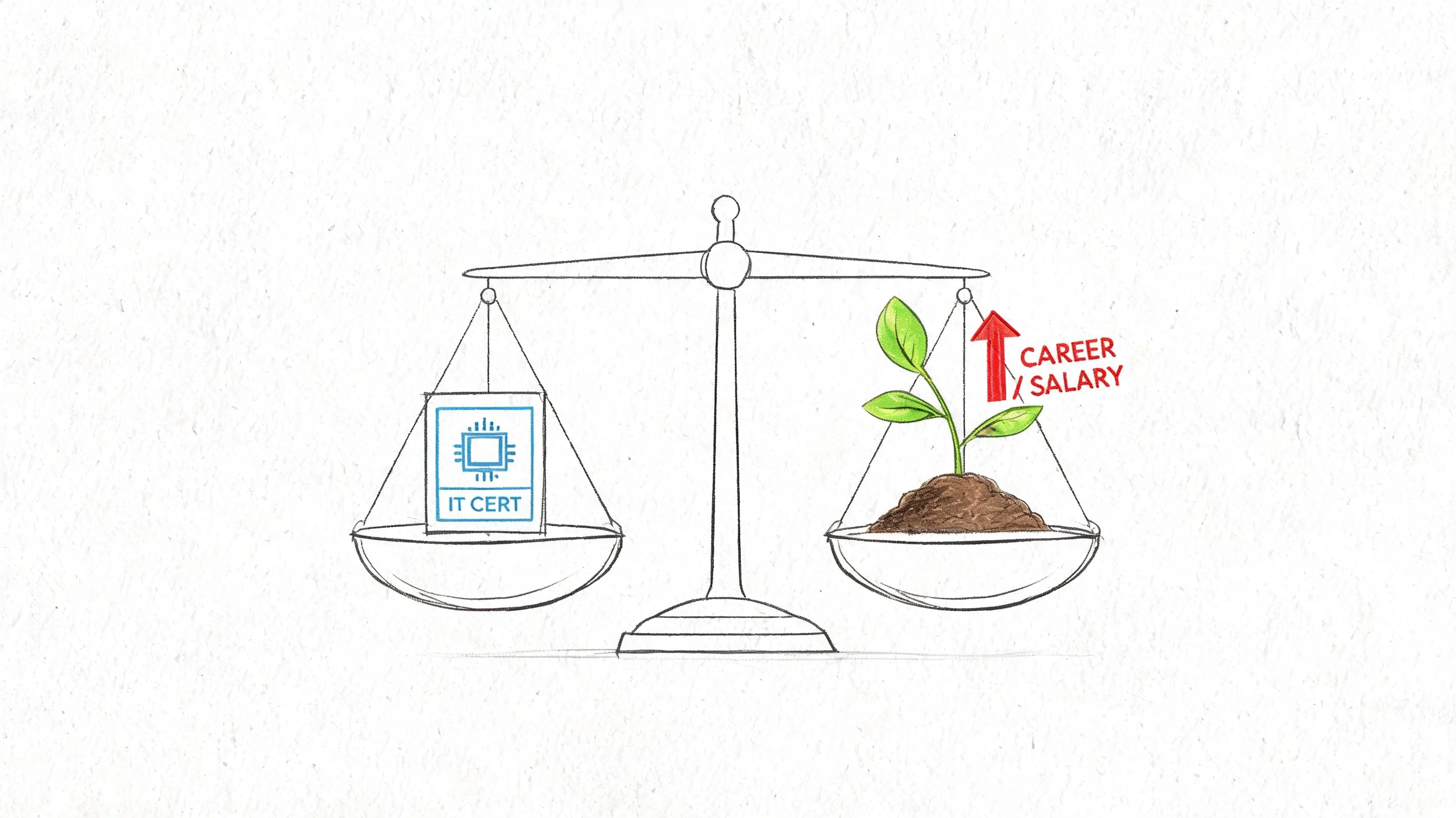
The return on a certification isn't just “Did I pass?” It's closer to: Did this move me toward better work, stronger skills, and a more defensible career path?
That answer looks different depending on whether you're already in tech or trying to enter it.
For working IT professionals
If you already work in IT, certifications often function like a career ladder. They can help you specialize, validate skills your employer doesn't formally track, and qualify you for roles with more ownership.
For example, someone in help desk might use a foundational cert to show readiness for systems, cloud, or security tasks. Someone in operations might add ITIL or vendor-specific credentials to signal process maturity or platform depth. In these cases, the ROI is often tied to mobility. Better project assignments, stronger interview credibility, and clearer promotion conversations.
Realism is key. A recent LinkedIn Workforce Report found that only 42% of online certification completers in tech fields like AWS and CompTIA reported career advancement within 6 months. The report also notes that graduates of programs with practical labs see 20% to 30% more long-term value. This underscores why simply passing isn't enough, and why hands-on practice is so crucial when you're making a decision, as summarized by US Career Institute's discussion of certificate outcomes.
For career changers
If you're coming from another field, certifications work more like a career bridge. They don't replace experience, but they can reduce uncertainty for hiring managers. A good cert tells employers, “This person has put in structured effort and can speak the language of the role.”
That bridge still needs support pillars:
- A target role such as support, junior cloud, QA, or service management
- Practical proof such as labs, portfolio tasks, or scenario-based problem solving
- Interview readiness so you can explain what you learned in plain language
Without those, a cert can become a lonely line on a résumé.
Practical rule: Never evaluate an online certification course only by its exam pass promise. Evaluate it by whether it helps you do the job, explain the job, and win the interview.
What ROI really includes
Money matters, but it's not the only return. In coaching conversations, the strongest certification ROI usually shows up in a mix of outcomes:
- Career clarity: You stop sampling random topics and commit to one path.
- Professional confidence: You can describe systems, tools, and tradeoffs with less hesitation.
- Signal strength: Recruiters and managers have an easier time placing you in a role category.
- Learning discipline: You build a repeatable way to study complex technical material.
If you're trying to compare paths, it helps to explore top-earning technology certifications. Not because the highest-paying cert is always the right move, but because role alignment matters more than chasing whatever looks impressive this month.
A realistic way to think about payoff
A certification is rarely a shortcut. It's a lever. Used effectively, it can accelerate your career. Used poorly, it becomes expensive note-taking.
The learners who get the strongest return usually do three things differently. They pick a credential connected to a real job family. They choose a course with labs or active practice. And they build a study system they can sustain for months, not just a burst of last-minute effort.
Navigating the Modern Certification Landscape
Many learners feel overwhelmed by long lists of acronyms, often assuming every certification competes with every other one. The industry doesn't work that way. Certifications make more sense when grouped by the type of work they support.
Major certification paths
Some paths are infrastructure-heavy. Others are process-heavy. Others sit close to business systems. You don't need to learn all of them. You need to identify where you want to become useful.
| Category | Example Certifications | Ideal For | Core Skill Focus |
|---|---|---|---|
| Cloud and Infrastructure | AWS, Azure | Admins, support staff, aspiring cloud engineers | Cloud services, deployment concepts, platform operations |
| Networking and Security | CompTIA, Cisco | Help desk, network support, security beginners | Connectivity, troubleshooting, device behavior, security basics |
| Project and Process Management | PMP, ITIL | Coordinators, managers, operations professionals | Delivery methods, service management, process control |
| Enterprise Platforms | ServiceNow | ITSM teams, platform admins, workflow specialists | Ticketing, workflows, platform configuration, service operations |
This framing helps cut through noise. If you like diagnosing technical problems and working directly with systems, networking or cloud might fit. If you enjoy structured workflows, service delivery, and cross-team coordination, ITIL or ServiceNow may be more natural.
A closer look at CompTIA A+
CompTIA A+ is a useful example of a foundational certification. It requires passing two exams, Core 1 and Core 2. Each exam costs $239 (verify current pricing on the vendor site), according to the CompTIA A+ exam overview referenced here.
The credential is tied to practical troubleshooting. Evidence cited in that same source says certified technicians resolve 25% more tickets per hour, and it connects that outcome to the exam's 85% hands-on labs simulating real-world failures.
That tells you something bigger about online certification courses. A strong entry-level cert isn't “basic” because it's easy. It's foundational because it teaches a way of thinking. In A+, that means systematic diagnosis, not just memorizing terms.
How to read the categories correctly
A common mistake is choosing based on brand recognition alone. A better way is to ask what kind of work each category trains you to do.
- Cloud certifications often reward learners who enjoy architecture, deployment logic, and service models.
- Networking and security certifications fit people who like root-cause analysis and system behavior.
- Process credentials appeal to learners who want to improve reliability, team coordination, and service quality.
- Enterprise platform certifications suit people who want platform-specific depth inside business operations.
Pick the category that matches the problems you want to solve every day, not the acronym you've heard most often.
A simple filter before you commit
Before you buy any course, write down answers to these three questions:
- What job title am I aiming for next?
- Which certification category appears repeatedly in those job postings?
- Do I want breadth for entry, or depth for advancement?
That little exercise clears up a surprising amount of confusion. It also prevents a pattern I see often: learners collecting disconnected certs that don't add up to a coherent story.
How to Choose the Right Online Certification Course
Choosing the right course is often harder than choosing the certification itself. Many online certification courses promise everything. Only some of them give you a realistic path from study to exam to job relevance.
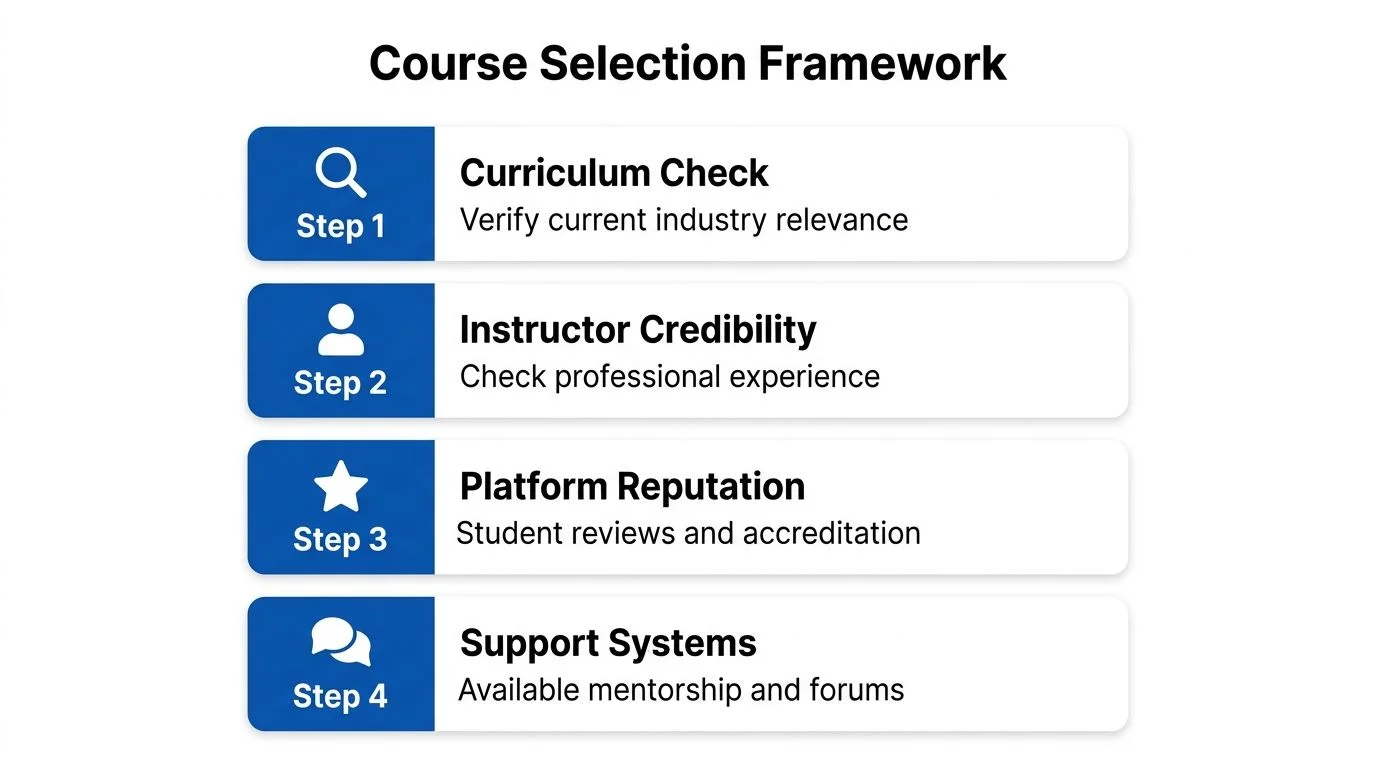
Start by separating two decisions that people often blend together. First, evaluate the course content. Then evaluate the platform that delivers it.
What to check in the course itself
A course can look polished and still leave major gaps. You want evidence that it maps to the actual demands of the exam and the role.
Use this checklist:
- Exam alignment: Does the curriculum track the official objectives, or does it wander through loosely related topics?
- Hands-on work: Are there labs, simulations, projects, or troubleshooting scenarios?
- Instructor relevance: Has the instructor worked with the tool, platform, or process in real settings?
- Update discipline: Is the material current for the active version of the exam?
If you're deciding between several options, compare them side by side rather than reading each sales page in isolation. That makes missing pieces easier to spot.
What to check in the learning platform
Even strong content can fail inside a weak learning environment. Platforms influence consistency, motivation, and support.
Look for:
- Progress visibility: Can you see weak areas, recent performance, and unfinished topics?
- Study tools: Are there flashcards, quizzes, practice tests, or review reminders?
- Community or mentorship: Can you ask questions when you hit a wall?
- Accessibility: Can different kinds of learners use the material comfortably?
Accessibility often gets overlooked, but it shapes completion. Teams supporting mixed learning needs may also want to look at resources on improving classroom accessibility with Vatis Tech, especially when captions, speech-to-text support, or comprehension aids matter in online education settings.
Free versus paid is not a moral question
A lot of learners feel pressure to choose free resources first. Sometimes that's sensible. Sometimes it becomes expensive in a different way because you lose time, structure, and momentum.
According to Inomics' summary of online statistics learning trends, 70% of learners worldwide access courses for free or via financial aid. It also reports that 40% to 50% of enrollees in structured, free statistics certification tracks finish, compared with a general MOOC average of 10% to 15%. Paid graduate certificates among committed learners reach 85% to 90% completion.
The lesson isn't “paid is always better.” It's that structure, commitment, and support often improve follow-through.
Cheap content can still be costly if it leaves you with scattered notes, no practice loop, and no reason to keep going after week two.
A practical selection framework
If you're comparing platforms, this sequence works well:
- Match the course to the job goal
- Match the platform to your study habits
- Check for active practice, not just lectures
- Confirm support before you need support
If you want examples of options built around role growth, browse these career-accelerating IT certification courses. Use that kind of comparison to sharpen your criteria, not to outsource your decision.
Smarter Studying for Better Exam Results
Most certification problems aren't content problems. They're method problems. People read, highlight, rewatch, and cram, then wonder why the information disappears under pressure.
That's why the question isn't only what to study. It's how to make the material stick long enough to use it on an exam and in a job.
Why cramming feels productive but fails later
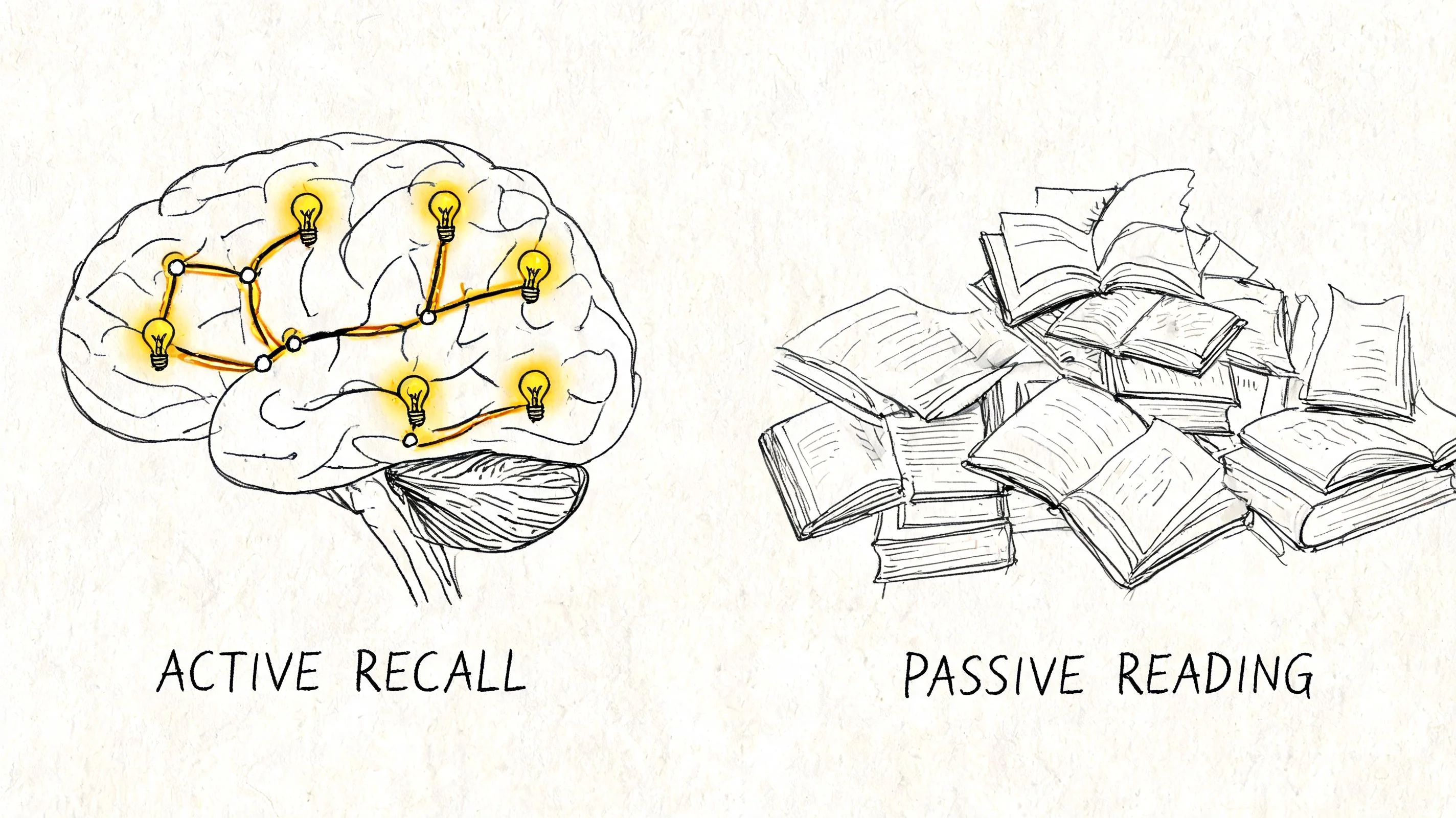
Passive study creates familiarity, and familiarity is sneaky. You reread a page on subnetting, IAM policies, incident flow, or change management and think, “I know this.” Then the practice question asks you to apply it, and your recall falls apart.
That's because recognition isn't the same as retrieval. Certification exams usually test retrieval, judgment, and scenario thinking.
A better comparison is fitness. Passive study is like walking around the gym reading machine labels. Active study is using the equipment with a trainer who notices where your form breaks down.
Two methods that change the game
Spaced repetition means reviewing material at increasing intervals instead of repeating everything every day. You revisit concepts right before you're likely to forget them. That timing helps move knowledge into longer-term memory.
Adaptive learning means your study system changes based on your performance. If you keep missing RAID concepts, identity models, or service lifecycle questions, the platform should push more of those to you instead of treating every topic as equally mastered.
A recent EdTech Review study found that adaptive learning platforms using techniques like spaced repetition can boost CompTIA and AWS pass rates by up to 35%, especially for underserved populations. This finding is summarized in this University of Michigan Online page discussing learn-for-good outcomes.
What this looks like in practice
Here's a simple way to apply those ideas without overcomplicating your routine:
- Use recall before review: Try answering from memory before opening notes.
- Break topics into small units: Study “DNS records” or “incident priority” separately before combining them.
- Review misses more than wins: Spend more time on errors than on material you already know.
- Mix question styles: Definitions, scenarios, flashcards, and labs each train a different layer of understanding.
If you want a practical companion to this approach, these effective certification study strategies align closely with how strong exam prep works.
Build a weekly loop, not a heroic sprint
Most adults studying online need a system they can repeat on busy weeks. A reliable loop might look like this:
- Learn a small chunk
- Test recall
- Review weak spots
- Revisit later
- Apply in a lab or scenario
That rhythm is more valuable than occasional marathon sessions.
This short explainer is worth watching before you redesign your study routine:
Your goal isn't to spend the most hours. Your goal is to create the most reliable memory and the clearest reasoning under exam conditions.
When learners switch from passive consumption to retrieval and adaptive review, they usually notice two changes quickly. They remember more, and they feel less panic because they can see where they're improving.
Accelerate Your Learning with MindMesh Academy
By the time most learners look for a platform, they're juggling several problems at once. They need to choose a certification path, avoid low-value content, study consistently, and figure out whether they're improving. That combination is exactly why generic video libraries often fall short.
A focused prep platform works best when it solves all four problems in one place. It should help narrow the path, organize the study process, and keep weak areas visible instead of hidden.
Where a dedicated platform helps
MindMesh Academy offers a structured option for certification preparation across paths such as AWS, Azure, CompTIA, ITIL, PMP, and ServiceNow. Its study materials, practice exams, flashcards, adaptive learning paths, and progress dashboard align with the learning principles most crucial for online certification courses.
That matters because learners don't usually fail from lack of motivation alone. They stall when they can't tell what to study next, when their review process is too broad, or when they mistake exposure for mastery.
Connecting learning psychology to career payoff
This is the bridge between study method and ROI. If your platform supports spaced repetition, targeted review, and progress tracking, you're not just preparing to pass. You're building recall and judgment that can carry into interviews and real technical work.
A useful platform should help you:
- See your weak spots clearly instead of guessing
- Revisit material intelligently rather than rereading everything
- Practice in exam-like conditions so surprises are smaller on test day
- Stay consistent over time with a manageable routine
That final point matters more than people think. Career advancement from certification rarely comes from intensity alone. It comes from steady application over enough time to build confidence and competence.
Don't stop at the exam
One more practical point. Exam prep should connect to what happens after you pass. That includes résumé positioning, interview communication, and turning technical learning into job language a hiring manager understands.
For interview prep, tools such as an AI-powered interview assistant can help you practice explaining your knowledge clearly, especially if you struggle to translate study concepts into concise answers.
The strongest learners usually combine three habits: they choose a certification tied to a realistic role, they study with methods that improve retention, and they prepare to explain what they know in human terms. That's where online certification courses stop being isolated learning projects and start becoming career tools.
If you want a more structured way to prepare, MindMesh Academy offers comprehensive resources for various certifications. Explore our certification pathways and practice exams to build mastery, not just collect another credential.

Written by
Alvin Varughese
Founder, MindMesh Academy
Alvin Varughese is the founder of MindMesh Academy and an enterprise architecture leader. An electrical engineer by training, he moved from factory automation in South Africa to cloud architecture at GE Appliances and Humana (Fortune 50), and holds 20 professional certifications including AWS Solutions Architect Professional, Azure DevOps Engineer Expert, and Microsoft Agentic AI Business Solutions Architect. He built MindMesh Academy after interviewing too many highly certified candidates who couldn't answer basic questions: the goal is prep that makes you better at the job, not just able to pass the exam.