
Your Guide to Online IT Certification Courses
Your Guide to Online IT Certification Courses
Obtaining an online IT certification validates your in-demand skills to global employers. These credentials provide clear pathways and are verified proof of expertise in high-growth fields like cloud computing, cybersecurity, and data science. Qualifications have transitioned from optional resume additions to vital requirements for career growth and higher earning potential. At MindMesh Academy, we support IT professionals in selecting the most effective courses for their specific goals, proving you have the exact knowledge required by the current tech industry. We provide all the resources you need to succeed.
Why Online IT Certifications Matter More Than Ever
Traditional four-year degrees were once the primary requirement for a tech career. While college degrees still provide worth, the industry environment has shifted. Technical tools and platforms change at a high speed. This pace often moves faster than a university can update its curriculum. Because of this, a gap exists between what students learn and what employers need. Companies often struggle to find people with the right practical experience.
Reflection Prompt: Consider your current role or career aspirations. Are there specific skills you know employers are seeking that your academic background doesn't explicitly cover? How might a certification bridge that gap for you?
Online IT certifications solve this issue. These programs focus on specific technical areas to bridge the distance between theory and practice. They connect your current knowledge to the skills required in a job. For example, earning an AWS Cloud Practitioner certification proves to a hiring manager that you understand cloud basics. This is a specific, verifiable skill for roles in cloud administration or solution architecture.
The New Gold Standard for Proving Your Skills
Many hiring managers now focus on a skills-first strategy. They want to see proof of what you can do. A degree is no longer the only factor they consider. Online certifications offer this proof in a format the industry recognizes. These credentials do more than confirm technical ability. They show that a candidate has the discipline and motivation to learn difficult topics on their own.
Imagine an experienced project manager who wants to lead a technical team. They could spend years getting another academic degree. Or, they could earn the Project Management Professional (PMP) certification. Most people can earn this credential in a few months of study. It provides the standard methods used to manage IT projects. This allows them to move into specialized roles and earn higher salaries without a long delay. These results are common for professionals who choose targeted training.
An IT certification is more than just a piece of paper. It is a clear signal to the industry that you have a specific, validated skill set. It shows your commitment to growth and your ability to keep up in a field that never stops changing.
Powering Your Career Growth and Flexibility
The rise of remote work has changed how people view education. Many professionals now prefer flexible ways to gain skills. This shift has led to massive growth in the online learning sector. The market for online education is projected to grow at a rate of 9.1% annually between 2018 and 2026 (verify current figures on the source site). This expansion happens because people need training that fits their lives. You can find more stats on the rapid expansion of online learning to see how this affects the workforce.
This growth creates many training options. You might want to get a promotion at your current job or change your career entirely. Online IT certifications give you an efficient way to reach those goals. You can improve your professional life without years in a traditional classroom. These programs provide the tools you need to enter the tech industry and stay competitive throughout your career.
Mapping Your Path Through IT Certifications
Choosing an IT certification is a tactical decision that defines your career trajectory. The variety of options often feels like looking at a complex transit map without a clear destination. To succeed, stop viewing these credentials as a generic list of courses. Instead, treat them as specific routes leading to defined professional roles. Reading this map with a clear strategy is essential to building a skill set that carries real weight in the hiring market.
The IT certification world falls into three primary categories. Each one serves a different function in a career. Understanding these distinctions helps you decide where to start and when to move to the next level of specialization.
Vendor-Specific Certifications
These credentials come directly from technology providers like Amazon Web Services (AWS), Microsoft for Azure, and Google for Google Cloud Platform. These programs validate your ability to use their specific products and services. For example, the Microsoft Certified: Azure Administrator Associate certification proves you can manage identities, oversee storage, and configure virtual networks within Microsoft Azure. An administrator with this badge has shown they can handle the AZ-104 exam requirements, which include managing Azure identities and governance.
These certifications are best if you plan to work within a specific technology stack. Many organizations invest heavily in one platform, such as AWS or Google Cloud. These companies look for candidates who hold relevant vendor-specific credentials because it means the new hire can perform tasks immediately without extensive training on the interface or internal logic of the platform. If you want to work as a Cloud Architect, you might focus on the AWS Certified Solutions Architect – Associate (SAA-C03) to prove you can design resilient and high-performing systems using Amazon’s specific tools like S3, EC2, and VPC.
Vendor-Neutral Certifications
Vendor-neutral certifications do not focus on one company. Instead, they cover the foundational principles and best practices that apply to the entire industry. CompTIA and ITIL are two of the most recognized providers of these credentials. These certifications provide the base knowledge needed to understand how hardware and software work together, regardless of the brand.
Achieving the CompTIA Network+ (N10-009) certification, for instance, verifies that you understand networking basics. This includes managing, troubleshooting, and securing networks on Cisco, Juniper, or Aruba equipment. You learn the OSI model, IP addressing, and network security protocols that apply everywhere. Similarly, the ITIL 4 Foundation certification focuses on IT service management. It teaches you how to align IT services with the needs of a business. This universal knowledge makes you an adaptable professional who can switch between different technical environments without losing your footing.
A well-chosen certification is a professional asset that aligns your capabilities with what the industry needs right now. It shows hiring managers exactly what you can do for the company starting on your first day.
The image below shows how these certifications act as a bridge to faster career growth in technical fields.
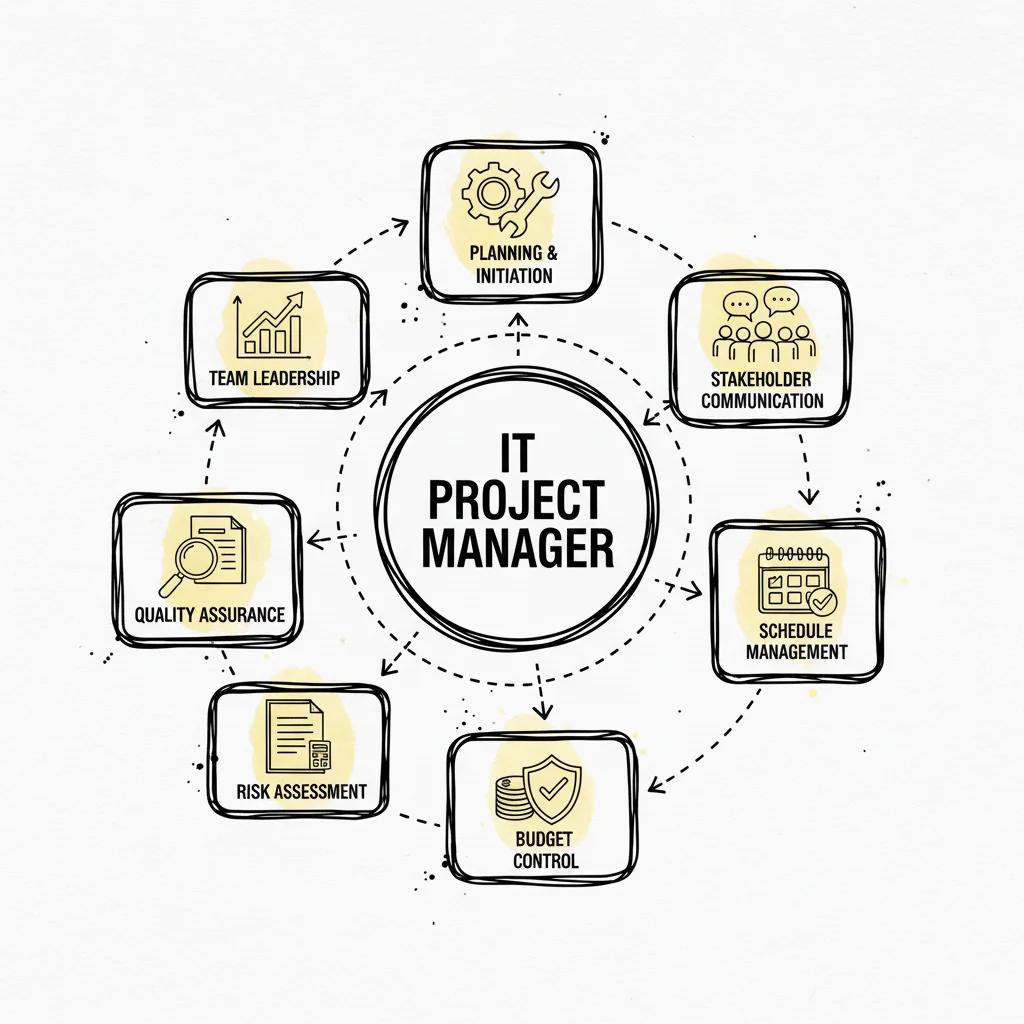
As shown in this graphic, certifications are the link between your current skills and the high-demand roles that move your career forward.
Role-Based Certifications
Role-based certifications focus on the skills needed for a specific job title. These might include cybersecurity analyst, project manager, or DevOps engineer. These credentials often combine knowledge from multiple vendors and foundational principles into a single framework that matches a job description. They are designed for professionals who have a clear career goal in mind and want to prove they can handle the responsibilities of that specific position.
The Project Management Professional (PMP) is a leading example. This certification proves you can lead projects using various methodologies, including predictive, agile, and hybrid approaches. It covers the entire project lifecycle, from initiating and planning to execution and closing. Another specialized option is the Certified Ethical Hacker (CEH). This credential focuses on the methodology of security testing. It teaches you to think like a hacker to find and fix vulnerabilities before they are exploited. You learn to use tools for sniffing, scanning, and system hacking in a controlled, legal way.
Effective professionals often use a strategy called "stacking" to combine these different certification types. You might start with a vendor-neutral base like CompTIA A+ (220-1201 and 220-1202) to learn hardware, operating systems, and basic security. After that, you could add a vendor-specific certification like the AWS Certified Cloud Practitioner (CLF-C02) to show you understand cloud basics. Finally, you might aim for a high-level role-based certification like the CISSP (Certified Information Systems Security Professional) to move into security management. The CISSP is particularly rigorous, covering eight different security domains, including Risk Management and Software Development Security.
This stacking method builds a profile that shows both broad technical literacy and deep specialized knowledge. It makes you stand out in a competitive market. Here is a breakdown of some common certifications and the paths they support.
Popular Online IT Certifications by Category and Career Path
The table below lists several high-demand certifications. It shows their category and the specific career paths they help you enter. This table serves as a reference for your own planning.
| Certification Name | Category | Focus Area | Ideal for Career Path |
|---|---|---|---|
| CompTIA A+ | Vendor-Neutral | Core IT fundamentals, hardware, software, troubleshooting | IT Support Specialist, Help Desk Technician, Junior SysAdmin |
| AWS Certified Solutions Architect - Associate | Vendor-Specific (AWS) | Designing and deploying scalable, secure cloud systems | Cloud Architect, Solutions Engineer, Cloud Consultant |
| Microsoft Certified: Azure Administrator Associate | Vendor-Specific (Azure) | Implementing, managing, and monitoring Azure environments | Azure Administrator, Cloud Engineer, System Administrator |
| Project Management Professional (PMP) | Role-Based (Vendor-Neutral) | Leading and directing projects, methodologies, and processes | Project Manager, Program Manager, Portfolio Manager |
| Certified Information Systems Security Professional (CISSP) | Role-Based (Vendor-Neutral) | Advanced cybersecurity management, governance, and policy | Cybersecurity Manager, Security Architect, CSO |
| Google IT Support Professional Certificate | Vendor-Specific (Google) | Entry-level IT support, customer service, troubleshooting | Junior Systems Administrator, IT Support Specialist |
By planning your route through these various IT certifications, you stop collecting badges and start building a career. This proactive strategy ensures that every exam you pass is a meaningful step toward your long-term goals. Focus on the skills that the market asks for and use these certifications to prove you have them. Each credential should add a specific, useful capability to your professional toolkit.
How to Choose the Right Online IT Course
Sorting through the massive selection of online IT certification courses can feel like a heavy task. It is similar to standing in a giant library without knowing which book to pull from the shelf first. Making a smart choice is vital because you are committing your time, energy, and money. You need to be certain that this commitment will result in real career progress.
The best strategy is to look past the surface-level marketing and examine the actual value a program provides. You should act like a detective. Scrutinize whether a course is respected, check if the content is current, and confirm that it actually prepares you for the specific job you want. The value of any certification depends on the practical skills it teaches and the level of respect it earns from hiring managers in the tech field.
This decision requires careful thought. The Business Certification & IT Schools sector is growing quickly. Research from IBISWorld shows it is on track to become a $6.4 billion industry in the U.S. by 2025. This large number highlights the high demand for skilled technical professionals. Your goal is to find a program that actually delivers the results it promises.
Define Your Career Destination First
Before you look at a course list, you must know where you want to go. What is your main goal? Are you looking for a promotion at your current company? Are you trying to switch careers entirely into a new part of the tech world? Perhaps you want to master a specific technology like Kubernetes or serverless systems. Your answer to these questions will be your guide.
Start by looking at job descriptions for the roles you want. Look for the specific skills, software, and certifications that appear most often. If every cloud engineer job mention the "AWS Certified Solutions Architect - Associate" or the "Microsoft Certified: Azure Solutions Architect Expert," then that is a clear signal for you. Use the current job market to plan your learning. Find a course that teaches exactly what employers are asking for right now.
Your Essential Course Evaluation Checklist
Once you have a clear goal, you can begin to evaluate specific courses. Do not be distracted by large discounts or claims that the material is "easy" to learn. Focus instead on the fundamental parts of a high-quality program:
- Accreditation and Industry Recognition: Check if the group providing the course is respected by managers and other professionals. Certificates from major organizations like CompTIA, AWS, Microsoft, PMI, or ISACA carry weight. They show that you have met a set of established industry standards. These names often act as a filter for HR departments when they review resumes.
- Curriculum Relevance and Timeliness: Review the syllabus in detail. Does it cover the newest tools and methods? Does the content match the requirements you found in job postings? Tech moves fast, and an outdated course is a waste of your resources. Ensure the course teaches the versions of software that companies are using today.
- Hands-On Learning Opportunities: Learning theory is a good start, but practical skill is what gets you a job. Look for courses that use virtual labs, real-world projects, or sandbox environments. You need to be able to practice configuration, write code, and fix errors in a safe setting. This type of practice builds the physical and mental memory required for the job.
- Instructor Expertise and Pedigree: Look into the person teaching the course. The most helpful instructors have years of experience working in the field. They can offer practical advice and share stories from their own work. This is much more useful than an instructor who only repeats what is in a textbook.
- Student Support and Community Engagement: Find out what happens when you get stuck on a difficult topic. A good program provides a support system. This might include instructors who answer emails, a forum where you can talk to other students, or live sessions where you can ask questions. Having a mentor or a community can help you stay motivated when the material gets hard.
A truly effective online IT course is more than just a list of video lessons. It functions as a complete learning environment. It should give you a clear path forward, offer many labs to build your skills, and provide a reliable way to get help when you encounter a complex problem.
Questions to Ask Before You Enroll
To make the best choice, ask yourself and the course provider these specific questions. This is your final check to ensure your money is being used wisely.
- Does this course cover every single objective listed for the official certification exam?
- Does the course include practice exams that match the format and difficulty of the real test?
- What is the total cost? You should factor in the price of the course, the exam fee, and any extra tools or books you might need to buy.
- When was this content last updated? If the material is more than a year or two old, it may not match current industry standards or the latest version of the exam.
Picking the right course also means picking the right platform. A platform with the right features can make a big difference in how well you learn. This online course platform comparison can help you see how different sites compare. If you are just starting your search, our list of the best online courses for IT certification in 2025 is a good place to look. By being careful and thinking ahead, you can create a path that leads to the career you want.
Now that you know how to pick a course, you need to decide which IT field you should enter.
Choosing the right niche is like finding a strong current in the water; it can push your career forward very quickly. The tech world is huge, but a few specific areas show more growth and offer better pay than others.
Focusing on these fields ensures that the things you learn today will still be useful in several years. It is the difference between investing in a popular city and a town that people are leaving. Your return on the time you spend studying will be much higher if you choose a field that companies are prioritize.

We will now look at three of the most active fields in IT: cloud computing, cybersecurity, and data science. Each one provides a path to a stable and well-paying career.
The Unstoppable Rise of Cloud Computing
Cloud computing is the basic foundation of our digital world. Think about the services you use every day. Streaming movies, playing games online, and the databases used by big companies all run on the cloud. Because so many things rely on it, there is a constant need for people who know how to build and secure these systems.
The growth in this area is very high. The global cloud market was valued at $587.78 billion in 2023 (verify current figures on the vendor site) and is expected to grow to $2,291.59 billion by 2032 (verify current figures on the vendor site). Because of this growth, getting a cloud certification is one of the best ways to find a high-paying job. To see how these economic changes are happening, you can [discover more insights about the global cloud and AI markets]() and see the data for yourself.
Reflection Prompt: Are you more interested in the infrastructure side, like networking and servers, or the application side, such as development and data? Which provider, like AWS, Azure, or Google Cloud, fits your current skills or the way you like to learn?
Key certifications that can help you get noticed by employers include:
- AWS Certified Solutions Architect - Associate: This is a standard for cloud professionals. It proves you can design and set up secure and reliable applications on Amazon Web Services. AWS is currently the largest player in the cloud market.
- Microsoft Certified Azure Administrator Associate: This certificate shows you know how to manage a company’s Microsoft Azure setup. This includes things like virtual networks, data storage, and user identities.
- Google Certified Professional Cloud Architect: This shows you can design and manage cloud solutions using Google’s tools. It is a highly respected credential for those working in data-heavy environments.
Cybersecurity: The Digital Gatekeepers
As more of our lives move online, the need for digital defense increases. Cybersecurity workers are the guards who protect networks and data from hackers. They keep personal information, corporate secrets, and government data safe.
The demand for these workers is much higher than the number of people who have the skills to do the job. This gap is a great opportunity for anyone who gets certified. A large data breach can cost a company millions of dollars. This makes a skilled security analyst or ethical hacker extremely valuable to any organization.
In the modern world, data is as valuable as money. Cybersecurity professionals act as the guards for the digital vault. Getting a certification in this field shows that you can be trusted with a company’s most important information.
Certifications that can help you enter this field include:
- CompTIA Security+: This is a great starting point. It covers the basics of cybersecurity and the best ways to keep data safe. It is recognized all over the world as a standard for entry-level security jobs.
- Certified Information Systems Security Professional (CISSP): This is for people with more experience. It proves you have a deep understanding of security management and how to handle risks. It is often required for management or executive jobs.
- Certified Ethical Hacker (CEH): This teaches you how to think like a hacker. By learning the methods they use, you can find weaknesses in a system and fix them before they are exploited.
Data Science and Analytics: Turning Data into Decisions
Data is one of the most important tools a business has. However, a giant list of numbers does not help much on its own. Data scientists and analysts take that raw information and turn it into clear advice that helps a business grow. They find patterns in the numbers and predict what might happen in the future.
Data scientists have a big impact on a company's success. They might predict what customers will buy or find a way to make a shipping network run more efficiently. Many people find this work to be very interesting and mentally challenging. Having a certificate shows you have the skills to help companies make better decisions based on facts. If you want to know which certifications pay the most, read our guide on the top 10 high-paying IT certifications for 2025.
Top certifications for data professionals include:
- Google Professional Data Engineer Certification: This focuses on the skills needed to build and run data systems and machine learning models on the Google Cloud Platform.
- IBM Data Science Professional Certificate: This is a series of courses that covers the whole field. You start with basic programming in Python and SQL and move on to more advanced topics like machine learning.
By choosing one of these growing fields, you are doing more than just learning. You are matching your skills with what the market needs right now. This makes your certification a tool that can help you move up in your career much faster.
When you look at the growth of these sectors, the importance of continuous learning becomes clear. The cloud market is expanding because businesses can no longer manage their own hardware as efficiently as a provider can. In the same way, the cybersecurity field is growing because the threats are becoming more common. If you have a certification that proves you can handle these challenges, you become a priority for any hiring manager.
In data science, the ability to use tools like Python or R to analyze a database is a skill that applies to almost every industry. Whether it is healthcare, finance, or retail, every company wants to understand their data better. A certification from a recognized name like Google or IBM tells these companies that you have been trained on modern tools and that you can handle the work from day one.
Ultimately, the choice of a course should be based on where you see yourself in five years. If you enjoy solving puzzles and protecting things, cybersecurity might be the right path. If you like building systems and working with infrastructure, cloud computing is a strong choice. If you enjoy finding the story hidden inside a set of numbers, data science will likely be very rewarding. Each path has its own set of challenges, but they all offer a high degree of job security and a clear path for advancement in the modern tech market.
Mastering Your Online IT Course Material

Succeeding in an online IT certification course requires more than just sitting through video lectures or skimming digital textbooks. To truly understand the material and build skills that last throughout your career, you need a deliberate and effective strategy. It is similar to preparing for a major physical challenge. You would not expect to win a race without a training schedule, the right equipment, and the discipline to practice every day.
This same logic applies when you are trying to learn complex technical topics like cloud architecture or cybersecurity. You need a personalized plan that goes beyond basic time management. You must create an environment where you can absorb information and develop skills that will actually help you in a professional role. This approach ensures you are not just memorizing facts for a test, but building a foundation for your future work.
Creating Your Ideal Study Environment
Your physical surroundings have a direct impact on how well you focus. Trying to study on a busy couch with a television on or phone notifications popping up every minute leads to poor concentration. You will likely find it harder to remember what you just learned. The first step is to set up a dedicated space that you use only for your certification work.
You do not need a large or expensive office setup to be successful. A simple, clean desk in a quiet room is often enough. Consistency is the most important factor. When you sit down in that specific spot, it sends a signal to your brain that it is time to focus. This habit makes it easier to enter a state of concentration. Before you start a session, turn off your phone, close any extra browser tabs on your computer, and minimize other potential interruptions.
A carefully built study plan serves as a map for your progress. It breaks down a large amount of information into manageable daily tasks, helping you build momentum and stay on track to reach your certification goal.
Treat your study time like a meeting you cannot skip. Mark it on your calendar and tell your family or housemates that those hours are blocked off. This creates a routine and adds a level of accountability. Having a set schedule is essential when you are trying to balance learning with a full-time job, family life, or other personal responsibilities. It prevents you from falling behind when your schedule gets busy.
Active Learning Techniques for Deeper Understanding
Simply reading notes or watching video tutorials over and over is one of the least effective ways to learn. To really master a subject and remember it for the long term, you have to engage your brain through effective study methods. You must move past just looking at information. You need to understand it, apply it to a problem, and make it part of your skill set.
Here are several active learning techniques to add to your daily routine:
- Practice with Hands-On Labs and Simulations: Understanding a theory is helpful, but you learn the most when you apply that theory to a real task. Using virtual labs or sandbox environments, such as an AWS Free Tier account, is a great way to gain experience. You should practice configuring a virtual private cloud, writing a simple script to automate a task, or setting up security rules on a server. This practical work makes abstract ideas feel real. You will find that you remember a command much better if you have actually typed it into a terminal to solve a problem rather than just reading about it.
- Teach the Concepts to Someone Else: A great test of your knowledge is trying to explain a concept to another person. Find a friend, a coworker, or even use a simple object like a rubber duck. Try to explain a technical idea as if the listener knows nothing about the subject. If you can explain a complex topic in simple, clear language, you have mastered it. Using a whiteboard or drawing a quick diagram while you talk can help clarify your own thoughts as well.
- Utilize Flashcards and Spaced Repetition Systems: Do not try to cram all the information into your head the night before the exam. Instead, use spaced repetition. This is a method where you review difficult concepts at specific intervals. You might review a new term today, again in two days, and then again in a week. This moves the information from your short-term memory into your long-term memory. Software tools like Anki or Quizlet are helpful for this. They automate the timing so you spend more time on things you find hard and less time on things you already know.
Using Community and Support Systems
Preparing for a difficult IT certification can feel lonely, but you do not have to study by yourself. Most high-quality online courses include forums or chat groups where you can talk to other students and instructors. These communities are helpful resources that can speed up your learning process. Never overlook the value of talking to others who are on the same path.
Being active in these groups offers several advantages:
- Collaborative Problem-Solving: When you get stuck on a difficult lab or an error message you do not understand, others have likely faced the same issue. Posting a question in a forum often brings a quick answer or a suggestion you had not considered. Sometimes, just reading how someone else solved a problem can help you think about the technology in a new way.
- Sustained Motivation and Accountability: It is encouraging to see other people making progress. Sharing your own milestones, like finishing a difficult module, can give you a boost of energy. Being part of a group helps you stay focused when the material gets hard or when you feel like taking a long break. That sense of working together toward a goal makes a big difference.
- Professional Networking Opportunities: The people you meet in your online course are often working toward the same career goals as you. These students might become colleagues or professional contacts later. Building these relationships now can lead to job referrals or mentorships in the future. You are all moving in a similar direction, which makes these connections natural.
Setting up these habits and using these resources takes effort at first, but the results are worth it. For more advice, you can look at our guide on best practices for online learning success. By creating a clear plan and using active study methods, you are doing more than just preparing for an exam. You are building the confidence and technical skills you need to work as a professional in the IT field. Stick to your schedule and use the tools available to you to ensure you pass with confidence.
Common Questions About Online IT Certifications
Thinking about starting an online IT certification course? Making this choice is a major career move. It is natural to ask questions about the return on your investment. You want to know if the hours spent studying and the money spent on exam fees will actually help you get a better job or a higher salary. Most people worry about whether these digital credentials carry the same weight as traditional education or if they are just a temporary trend in the hiring market.
Let's address these concerns directly with clear, practical answers. This section aims to clear up any confusion so you can move forward with your career plans. Understanding how the industry views these certificates will help you choose the right path.
Are Online IT Certifications Respected By Employers?
These credentials are more than just respected. In many tech sectors, they are expected. Most companies now use a skills-first hiring model. A certificate from a recognized authority like CompTIA, AWS, Google, Microsoft, or the Project Management Institute (PMI) serves as a verified proof of your ability. It tells a hiring manager that you have the specific skills needed for the job right now.
Look at it from the perspective of a recruiter. When a hiring manager sees a relevant certification on a resume, it works as a filter. It provides objective evidence that you have a standardized set of skills. This is why you will see specific certifications listed as requirements in job descriptions for cloud architects, cybersecurity analysts, and network engineers. Instead of guessing if you know how to configure a firewall, the employer sees your Security+ or CISSP and knows you have passed a test on that exact topic.
In a market that prioritizes what you can do over where you went to school, a specific certification often carries more weight than a general degree. It shows you can join a team and start contributing to technical projects on your first day. You aren't just talking about theory; you have proven you can handle the tools.
The value of these courses also shows up in how companies treat their own staff. Businesses want to keep their teams up to date. Research shows that 70% of employees would think about leaving their current job for a company that invests more in their training. This statistic shows how much businesses value professional growth. Companies often pay for these online IT certification courses because they know a certified workforce is more efficient and stays longer.
How Long Does It Typically Take to Complete an Online Course?
There is no single timeline for finishing a course. The duration depends on the difficulty of the exam and how much time you can spend studying each week. If you are working a full-time job, your pace will be different from someone who can study all day.
For a foundational credential like the CompTIA A+ (which consists of the 220-1201 and 220-1202 exams), a beginner might need one to three months. This assumes you are putting in about 10 to 15 hours of study time every week. Because there are two separate exams to pass, you have to manage your time across different topics like hardware, networking, and operating systems.
- Intermediate Certifications: Credentials like the AWS Certified Solutions Architect - Associate (current version SAA-C03) or the Microsoft Certified: Azure Administrator Associate usually require three to six months of preparation. You have to learn how to manage virtual servers, storage buckets, and identity management. The Project Management Professional (PMP) also takes about three to six months because you have to learn specific methodologies and earn 35 contact hours of formal education.
- Advanced Certifications: For high-level credentials like the CISSP, plan for six months to a year of study. This exam covers eight different security domains, ranging from risk management to software development security. It is a long process because the exam tests your ability to make managerial decisions, not just technical ones.
The main benefit of online platforms is that they let you set your own schedule. You can speed up when you have free time or slow down when work gets busy. The most successful students create a calendar and stick to it. Steady progress is better than trying to cram everything into a single weekend.
Do I Need a College Degree for a High-Paying IT Job?
A college degree is a great asset, but it is no longer the only way to get a high-paying job in tech. The industry has shifted toward a model where your skills matter most. Many major tech companies have officially removed degree requirements for their technical roles. They care more about your portfolio, your experience, and your certifications.
You can find many people in six-figure roles like DevOps engineer or data scientist who do not have a four-year degree. They built their careers by stacking certifications and working on real-world projects. A certification proves you have current knowledge. While a degree earned ten years ago might be outdated, a certification earned last year shows you know how the latest version of a software or cloud platform works.
Hiring managers are often under pressure to find people who can solve problems immediately. They see a certification as a sign that you need less training. This practical value often counts more than a general academic background. If you can show a recruiter a list of passed exams and a few successful projects on GitHub, you can compete with any degree holder.
What Is the Best Certification for a Beginner with No Experience?
If you are just starting your career and have no technical background, you should look for a vendor-neutral certification. These courses teach you the general principles of how computers and networks work without focusing on just one brand of software.
The CompTIA A+ is the industry standard for beginners. It is often the first step for anyone who wants to work in tech support or as a junior technician. This course covers the basics that every IT professional needs to know, including:
- How to build and fix computer hardware.
- Installing and configuring operating systems like Windows, Linux, and macOS.
- How basic networking and IP addressing work.
- Standard security practices to protect computers from malware.
Another great choice for people with zero experience is the Google IT Support Professional Certificate. Google built this program to help people get into the tech industry quickly. It uses a lot of hands-on labs where you practice things like using a command-line interface and setting up a local area network. It is accessible and breaks down hard concepts into simple steps.
Completing one of these courses gives you the base you need to move into specialized areas like cloud computing or cybersecurity later. It builds your technical vocabulary and helps you decide which part of the IT world you enjoy the most.
Ready to identify and pursue the perfect online IT certification course to propel your career forward? At MindMesh Academy, we specialize in providing expertly curated study materials, engaging interactive labs, and evidence-based learning techniques. Our goal is to help you pass your exams and master the skills you need for long-term success in your profession. Explore our diverse range of courses and start your training today!
Ready to Get Certified?
Prepare for your next exam using these study guides, practice exams, and spaced repetition flashcards at MindMesh Academy:

Written by
Alvin Varughese
Founder, MindMesh Academy
Alvin Varughese is the founder of MindMesh Academy and holds 20 professional certifications including Microsoft Agentic AI Business Solutions Architect, AWS Solutions Architect Professional, and Azure DevOps Engineer Expert. He's held senior engineering and architecture roles at Humana (Fortune 50) and GE Appliances. He built MindMesh Academy to share the study methods and first-principles approach that helped him pass each exam.