Your Guide to an MS in Cloud Computing
Does an MS in Cloud Computing offer the career growth you need? For IT professionals, this graduate degree goes beyond individual certifications. It moves you past technician roles and prepares you to become an architect of digital infrastructure. You transition from configuring single servers—skills validated by CompTIA Cloud+ or Microsoft Certified: Azure Administrator Associate—to building resilient, multi-cloud environments for global corporations. This program provides the broad perspective needed to manage large-scale operations. It builds upon your existing technical skills, offering a deeper understanding of how integrated cloud systems function at scale to support high-level business objectives.
Should You Get an MS in Cloud Computing?
Experienced IT professionals often ask why they should pursue a graduate degree when specialized certifications offer a faster way to prove their skills. It is a fair question. The tech industry moves fast, and a three-month study plan for a certificate seems more efficient than a two-year academic commitment. However, the choice depends on where you want your career to go.
To understand the difference, look at the roles each path prepares you for. A cloud certification, such as the AWS Certified Solutions Architect – Associate or the Microsoft Certified: Azure Solutions Architect Expert, turns you into a highly skilled craftsman. You become an expert with specific tools. You can execute complex blueprints and optimize particular services within a vendor's ecosystem. These are essential skills for building and maintaining systems.
An MS in Cloud Computing changes the focus. It trains you to be the architect who designs the entire structure. You are no longer just implementation-focused, handling the electrical grid or the plumbing. Instead, you plan the foundation, ensure the structural integrity of the enterprise, and prepare for future growth.
This degree builds the high-level thinking required to solve massive business problems. You move beyond vendor-specific fixes to conceptualizing and building cloud strategies from the ground up. This shift is vital for those who want leadership roles. These positions require a deep understanding of both technology and the objectives of the business, often using principles found in frameworks like ITIL or COBIT.
Beyond Certifications: The Leap to Strategic Leadership
Certifications are excellent for proving you can handle specific platforms or roles. Exams like the Google Cloud Professional Cloud Architect or AWS Certified DevOps Engineer – Professional show you know your way around a console. However, a master's program builds a foundation for leadership. It moves your mindset from following tasks to creating a vision. The curriculum focuses on several critical areas:
- Holistic System Design: You do more than just deploy services. You learn to design secure and cost-effective environments that use multiple clouds or hybrid setups. This involves connecting different systems, making sure data flows smoothly, and making the best use of resources across various platforms. This goes far beyond what a single-vendor certification covers.
- Business Transformation: This degree gives you the tools to lead digital change. You learn to link cloud strategy to business goals, such as getting products to market faster or making operations more efficient. It is about knowing the "why" behind the technology. These are the same leadership skills valued by the PMP (Project Management Professional) for managing large cloud projects.
- Future-Proofing Your Career: Graduate programs look at advanced fields that are still emerging. You will explore serverless computing with tools like AWS Lambda or Azure Functions. You will study cloud security models like zero-trust architectures and examine how AI and machine learning integrate with services like AWS SageMaker or Azure Machine Learning. These are the new frontiers of the industry. Mastering them keeps you relevant as technology changes.
This strategic knowledge is what the market requires right now. The global cloud computing market is expected to grow from an estimated $912.77 billion in 2025 to $1.614 trillion by 2030. This growth creates a massive need for leaders who can manage and scale complex systems. You can see more data on these trends at N2WS.com.
Reflection Prompt: Look at your current role. Are you mostly implementing solutions that others designed, or are you defining the strategy yourself? Think about how a broader understanding of cloud architecture could change your career trajectory.
What This Degree Really Prepares You For
An MS in Cloud Computing is a major investment in your potential as a leader. It is built to sharpen your ability to analyze problems and think critically. You learn to solve issues that go beyond basic configuration or fixing a broken connection.
If you are still starting out and building your basic knowledge, our guide on how to learn cloud computing provides a strong starting point.
This degree prepares you to be a strategist who drives innovation. You become the person who shapes the entire technology future of a company. It is about becoming the decision-maker who sees the big picture. You learn to build the powerful and resilient systems that serve as the base for modern business.
MS in Cloud Computing vs Cloud Certifications
Are you still deciding which path to take for your professional growth? This table breaks down the main differences between a master's degree and professional certifications. Use it to see which path fits your long-term goals.
| Attribute | MS in Cloud Computing | Cloud Certifications (e.g., AWS, Azure) |
|---|---|---|
| Primary Goal | Deep theoretical knowledge, leadership, and innovation | Validation of vendor skills and job readiness |
| Time Commitment | 1-2 years full-time or 2-4 years part-time | A few weeks or months of study per exam |
| Cost | $20,000 - $70,000+ (verify tuition at your school) | $150 - $300 per exam (verify pricing on vendor site) |
| Focus Area | Architecture, security, strategy, and research | Specific services, platforms, and technical roles |
| Ideal For | Aspiring architects, CTOs, and senior consultants | Engineers and admins needing immediate skill proof |
| Career Impact | Leads to executive roles and long-term resilience | Increases immediate hireability for technical roles |
Certifications are useful tactical tools for your current job. A master's degree is a strategic investment in where you will be in ten years. One is not better than the other. They serve different purposes at different points in your career. Many successful professionals choose to use both. They earn a master's degree for depth and strategy, then add key certifications to prove they have hands-on expertise with current tools.
Deciding between them requires looking at your current skills. If you already have years of hands-on experience, the degree might be the push you need to move into management. If you are trying to get your first job in the field, a certification might be the faster way to get noticed by recruiters. In the end, the most successful cloud leaders are those who never stop learning, regardless of the credentials they hold.
What You Will Actually Learn in a Cloud Master's Program
Starting an MS in Cloud Computing is a significant professional shift. It is not about memorizing basic definitions or adding another entry-level certificate to your resume. This degree is a technical exploration designed to change how you think about infrastructure. You move from being a technician who uses services to an engineer who builds them. You will acquire the skills needed to design, defend, and manage the complex digital environments that serve as the foundation of modern business.
Consider this comparison: a foundational course or an associate certification teaches you to drive a vehicle and follow a GPS. A master's program puts you in the role of the automotive engineer. You learn to design the engine, the suspension, and the safety systems to build a high-performance, resilient machine. You move beyond running cloud services. You start to understand the underlying principles that make those services scalable, highly available, and cost-effective.
This degree is structured to produce a well-rounded expert. You will prepare for technical roles like a Cloud Architect, Cloud Security Lead, or Cloud DevOps Principal. At the same time, you develop the strategic vision required to advise executive boards as a technology leader.
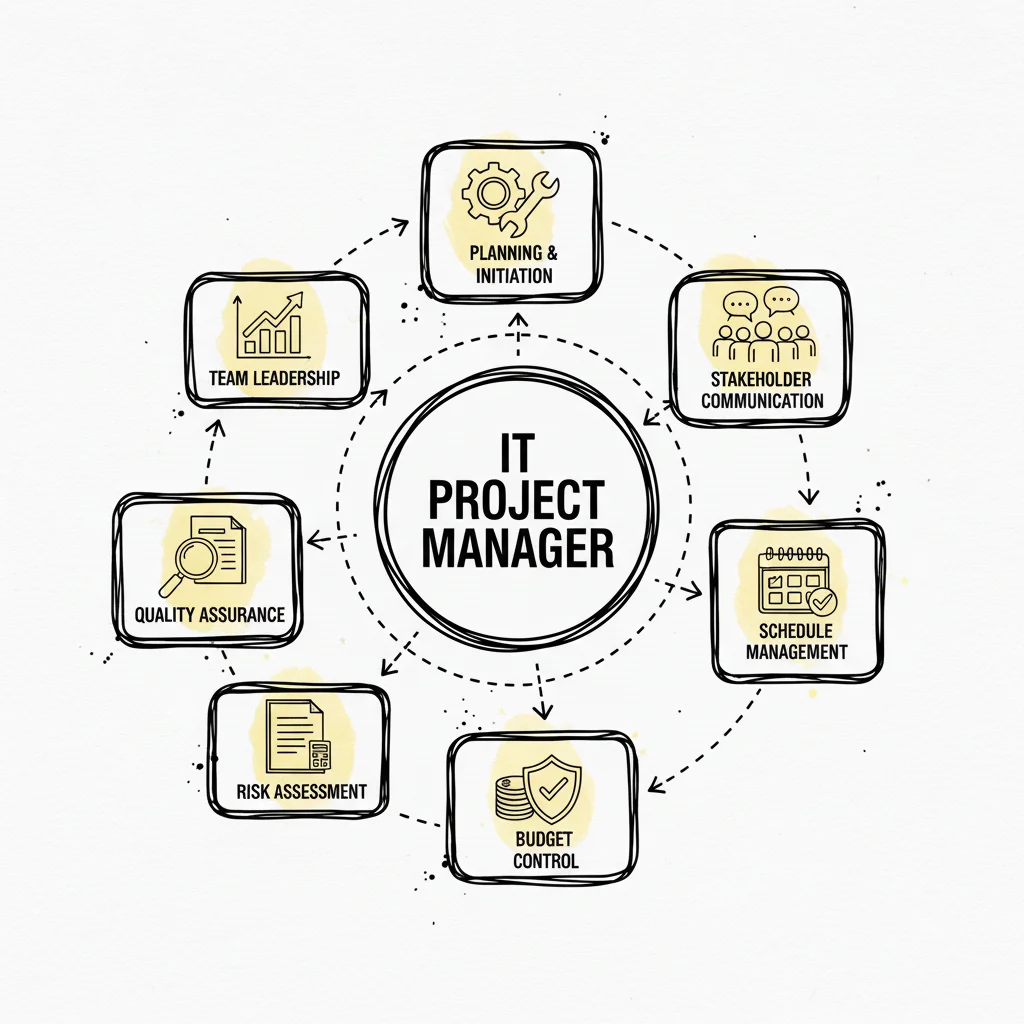
As this diagram illustrates, the curriculum goes beyond drilling specific technical tasks. It focuses on building the perspective needed to lead major technology initiatives across an entire organization. You learn to evaluate which services fit a specific business case and how those choices impact the long-term technical debt of a company.
Mastering Advanced Cloud Architecture
One of the first areas you will study is Advanced Cloud Architecture. This is much more than provisioning a few virtual machines or configuring a basic virtual private cloud. You will learn to design systems that are fault-tolerant and globally distributed. These systems must be capable of scaling elastically to meet sudden changes in demand.
You might wonder how platforms like Netflix or Spotify stream content to millions of users at the same time without failing. This reliability comes from sophisticated architectural patterns. In this program, you learn to implement these patterns yourself. The coursework challenges you to treat redundancy, load balancing, disaster recovery, and microservices as essential requirements. These are not features to be added later; they are the blueprints of the system. This training is helpful for those pursuing the AWS Certified Advanced Networking - Specialty or the Azure Solutions Architect Expert.
For a more detailed look at these core concepts, see our guide on what is cloud computing architecture.
You will gain hands-on experience with several key architectural principles:
- High Availability: You will engineer systems that have no single point of failure. This involves using multi-region deployments and automated failover mechanisms. You will study how to guarantee continuous uptime for production workloads, even if an entire data center experiences an outage.
- Elasticity & Scalability: You will build applications that automatically add or remove computing resources. This process is based on real-time user traffic or data processing needs. You will learn the difference between horizontal scaling, which adds more instances, and vertical scaling, which adds more power to existing ones, to ensure performance remains steady.
- Cost Optimization (FinOps): You will learn to architect systems that deliver high performance for the lowest price. This involves using tools to find idle resources and implementing automated lifecycle policies. Business leaders value this skill because it helps them manage tight budgets while maintaining resilience.
Building Secure and Compliant Systems
In an environment where cyber threats are always changing, cloud security is essential. A master's program spends a lot of time on Cloud Security and Compliance. You will go beyond basic firewall rules to learn how to defend against attacks targeting complex infrastructure.
You will master Identity and Access Management (IAM) across different cloud providers. This includes implementing data encryption strategies for data at rest and data in transit. You will also design monitoring and incident response systems that detect and react to threats in real time. You will study the shared responsibility model, which defines what the cloud provider secures and what the customer must protect.
The program also covers how to follow industry regulations like GDPR, HIPAA, SOC 2, ISO 27001, and PCI DSS. You will learn to build systems that are technically resilient and legally auditable. This knowledge is used in roles that require certifications like the (ISC)² CISSP, ISACA CISM, or the current AWS Certified Security - Specialty (SCS-C03).
A major part of the curriculum is practical experience. You will not only read about security theories. You will work in labs where you defend simulated cloud environments from live attacks. You will perform penetration tests and fix vulnerabilities, such as misconfigured security groups or overly permissive IAM roles, before they can be exploited.
From Virtual Machines to Modern Application Development
The way companies build and deploy software has changed. A master's program focuses on this evolution. You will move beyond traditional virtual machines to study containerization and orchestration using tools like Docker and Kubernetes.
These technologies are the building blocks for modern applications. They allow developers to package code and its dependencies into containers that run consistently in any environment. Mastering these tools allows you to manage containers at a massive scale. This is a core skill for roles that align with the Certified Kubernetes Administrator (CKA) or the Azure DevOps Engineer Expert credentials.
Beyond containers, you will explore other technical topics:
- Serverless Computing: You will learn to write and deploy code using services like AWS Lambda, Azure Functions, or Google Cloud Run. These services allow you to run applications without managing the underlying servers. This lets you focus on the business logic of the application and speeds up the development process.
- Infrastructure as Code (IaC): You will use declarative tools like Terraform, AWS CloudFormation, or Azure Resource Manager (ARM). These allow you to define and provision your entire infrastructure using code. This practice ensures that deployments are consistent and repeatable. It also reduces human error and allows you to use version control for your cloud setup.
- AI and Machine Learning Integration: You will learn to integrate cloud-based AI and ML services into your applications. This includes using platforms like AWS SageMaker, Azure Cognitive Services, or Google AI Platform. You will build applications that can analyze large datasets, provide predictive insights, and automate complex tasks to give a business a competitive advantage.
An MS in Cloud Computing provides an advanced education that connects theoretical concepts with practical application. It provides the specialized skills required to become a technical leader in a cloud-first market. You will graduate prepared to design the systems that the modern economy relies on every day.
Getting Into a Top Cloud Computing Master's Program
Securing a seat in a high-ranking Master’s in Cloud Computing program is a competitive process. Success requires more than high test scores. Admissions committees look for students who can become technical leaders. They want candidates with technical skills, a clear career vision, and a real interest in distributed systems.
Your application acts as a thorough professional summary. Every part of your file—transcripts, essays, and letters—must work together. You need to show why you are ready for a demanding career in cloud engineering. Programs move fast. You must prove you have the drive to keep up with changing technology.
Laying the Groundwork: Your Academic and Technical Profile
A strong academic record is the first requirement. While every university has its own standards, most top programs expect a solid technical background. You must show that you can handle the mathematical and logical rigor of graduate-level computer science.
- GPA and Transcripts: Most competitive universities look for an undergraduate GPA of 3.0 or higher on a 4.0 scale. This is especially true if your bachelor’s degree was in computer science, information technology, or computer engineering. Admissions officers look closely at your grades in quantitative classes. They want to see high marks in calculus, discrete mathematics, and data structures. If your early grades were lower but improved in your final years, point this out in your application.
- The Right Coursework: You must show a clear understanding of computer science foundations. Most programs require you to have finished accredited classes in these areas:
- Data Structures and Algorithms: This is the foundation for efficient software design and complex problem-solving. Cloud systems rely on these principles to manage data across vast networks.
- Operating Systems: You need to understand how computers manage resources. This knowledge helps you understand virtualization and containerization.
- Computer Networking: You must know how data moves across the internet. This includes protocols, gateways, and virtual private networks. If you come from a different field, you can bridge the gap. Take accredited classes at a community college or through recognized online platforms before you apply.
- Standardized Tests (GRE/GMAT): Many schools now use test-optional policies. However, a high GRE score can help your case. A strong score in the quantitative section proves you can handle advanced math. This is helpful if your undergraduate GPA is not as high as you want. Check each school’s requirements early to see if you need to schedule an exam.
Writing a Statement of Purpose That Stands Out
The Statement of Purpose (SOP) is your chance to speak directly to the committee. It goes beyond your resume. Use this space to explain why you want this degree and what you bring to the classroom. Do not just use a template. You need an authentic story.
Do not simply list your old jobs. Explain the reasons behind your choices. Tell the committee what made you interested in cloud technology. You might have faced a storage limit on a work project that sparked your interest in scalable systems. You could have a plan to use serverless tools to improve healthcare or finance.
The best essays connect your past work to the specific features of the graduate program. Show that you have done your research. Name a professor whose work on edge computing interests you. Identify a specific lab where you want to work. Mention a course in the syllabus that matches your career goals. This level of detail shows you are serious about that specific school, not just any program.
Getting Letters of Recommendation That Actually Matter
Strong letters of recommendation give the committee a third-party view of your potential. You should be strategic when choosing who will write for you. Help your recommenders by giving them the right information.
- Select the Right Recommenders: Focus on the depth of the relationship. A detailed letter from a professor who saw you excel in a hard technical class is very strong. A letter from a manager who saw you lead a cloud migration is also useful. These are better than a short note from a high-level executive who does not know your daily work. You want writers who can give specific examples of your skills and work ethic.
- Equip Them for Success: Make the writing process easy for them. When you ask for a letter, provide a "brag sheet." This document should include your current resume and a draft of your statement of purpose. List the specific projects you worked on with that person. Remind them of your specific contributions, such as the time you reduced latency or automated a deployment. Give them the submission deadlines and clear instructions on how to send the letters.
By building every part of your application with care, you make a strong case for your admission. Your goal is to leave the committee with no doubt. They should see that you have the skills and the focus to succeed in an MS in Cloud Computing program.
Finding the Right University for Your Cloud Career
Selecting the ideal institution for your MS in Cloud Computing is a significant professional choice that goes far beyond looking at general rankings or prestige. The most effective program is the one that aligns with your specific career goals and your preferred way of learning. You will notice that these degree paths are not identical. Every university has its own academic focus, specialized areas of study, and a specific network of industry ties that can influence your future employment options.
Think of this selection process as finding a specific tool for a technical task. You would not use a basic handheld tool for a job that requires heavy machinery. You need a program built for your specific trajectory, whether you want to be a technical architect at a major provider, a specialist in cloud security, or a business leader who manages large-scale digital transformations.
Aligning Program Strengths with Your Goals
Identifying a good fit requires looking past the surface of a course catalog. You should investigate what makes each program different from its competitors. Many universities build their curricula around close partnerships with major providers like Amazon Web Services (AWS), Microsoft Azure, and Google Cloud. Enrolling in these programs often gives you an advantage. You may get direct access to modern tools, specialized training materials, and pathways toward internships at these companies.
Other programs focus heavily on advanced research and the theoretical side of computing. If you want to help develop the next generation of cloud technology, a research-heavy school is a better choice. These institutions often have labs dedicated to niche areas like distributed consensus algorithms, quantum computing, confidential computing, or new types of serverless architecture. These programs prepare you to invent new systems rather than just managing existing ones.
Specialization Tracks: The Technical Versus the Strategic
As you look at different universities, you will likely see a split in how they teach the subject. Programs usually lean in one of two directions: a technical path focused on engineering or a strategic path focused on business management.
- For the Aspiring Architect/Engineer: If you want to become a solutions architect, a lead engineer, or a DevOps professional, look for a program that prioritizes hands-on lab work. These tracks focus on complex design projects and advanced topics like Kubernetes container orchestration, Infrastructure as Code (IaC) methods, multi-cloud networking, and system performance tuning. These curricula are built to help you become a technical problem-solver who can create stable, scalable infrastructure.
- For the Future Business Leader/Strategist: If you want to work as a cloud consultant, a FinOps specialist, or a technology executive, you should prioritize programs that combine technical knowledge with business management. These courses cover topics such as IT governance, compliance frameworks like ITIL and COBIT, cloud financial management (FinOps), and project management principles. This education prepares you to act as a link between technical engineering teams and the leadership at the executive level.
The faculty is often the most important part of a high-quality program. Look for instructors who have experience working in the industry, not just in classrooms. Professors who have spent years designing, building, or securing systems for large tech firms can offer practical insights that you will not find in a textbook. Their experience with real-world system failures and migrations provides a level of context that is essential for a career in this field.
Top University Programs at a Glance
After you have a short list of potential schools, look closely at their core philosophies. Avoid just reading the titles of the classes. Instead, try to understand how they teach and what they expect from students. The following table provides a summary of what several well-known universities offer in the cloud computing space.
University Program Feature Comparison
This table shows how several programs differ in their specializations and the specific resources they provide to students.
| University | Key Specialization | Unique Feature (e.g., Research Lab, Industry Partnership) |
|---|---|---|
| Carnegie Mellon University | Distributed Systems & Cloud Infrastructure Engineering | This school is known for its research into systems-level engineering. It maintains a large network of alumni working at the biggest tech companies in the world. |
| University of Maryland | Cloud Security & Compliance, Cyber-Physical Systems | The program is a part of the Maryland Cybersecurity Center. It focuses on building secure architectures and conducting digital forensics within cloud environments. |
| Loyola University Chicago | Enterprise Cloud Solutions & Management, FinOps | Through a partnership with AWS Academy, this curriculum emphasizes how large companies adopt cloud technology and manage their financial governance. |
| George Mason University | Cloud Native & Serverless Computing, Government Cloud | Located near the Washington, D.C. technology corridor, this program focuses on public sector solutions and secure development for government agencies. |
| Boston University | Cloud Application Development, DevOps & MLOps | This program concentrates on software development, the creation of CI/CD pipelines, and the integration of artificial intelligence and machine learning into cloud workflows. |
Use this comparison as a starting point for your own investigation. Each school has its own strengths. The best way to choose is to match those strengths to your career goals and the way you prefer to study.
Choosing an MS in Cloud Computing is a major step in your career. By looking into the specific focus of each university, their industry partnerships, and the background of their faculty, you can find a program that does more than grant a degree. It will help you move toward a leadership role where you can have a real impact on the industry.
What's the Payoff? Career Paths and Earning Potential

Pursuing a Master of Science in Cloud Computing requires a significant investment of time and money. You want to see a clear return on that effort. This degree acts as a springboard into high-demand roles that are essential to the modern tech economy. You are not just learning how to use existing software tools. You are learning to build the systems that run global business operations.
An MS degree gives you a strategic advantage in a crowded job market. You move beyond basic implementation to true system design. You learn to build environments that are stable, cost-effective, and secure from the ground up. This high-level view is what directors and hiring managers look for when they fill senior leadership and technical roles. While a technician might follow a guide to set up a server, a master's graduate understands why that server belongs in a specific region and how it affects the company's bottom line.
High-Growth Cloud Computing Careers
This degree opens doors to specialized roles that offer high pay and long-term stability. These are not just jobs; they are career tracks that put you at the center of technical progress. Graduates are well-prepared for positions that require a blend of technical skill and high-level planning.
Here are a few of the primary paths you can take:
- Cloud Architect: These professionals act as the primary designers for an organization’s cloud strategy. They do not just implement solutions; they plan the entire environment. This involves picking the right providers, such as AWS, Azure, or Google Cloud. They ensure every part of the system is secure, recovers quickly from failure, and stays within budget. Their decisions directly affect how the company meets its long-term goals. To prove their skills, many pursue the AWS Certified Solutions Architect – Professional or the Microsoft Certified: Azure Solutions Architect Expert.
- Cloud Security Engineer/Architect: Security specialists are the primary defenders of data. They protect systems from complex cyber attacks by building strong security controls and designing networks that are safe by design. They also make sure the company follows legal rules like GDPR, HIPAA, and ISO 27001. Their role is vital because one data breach can cost a company millions in fines and lost trust. Many in this field earn the (ISC)² CISSP or the current AWS Certified Security – Specialty (SCS-C03) (verify current exam codes on the vendor site).
- Cloud DevOps Engineer (or SRE): This role links software development with IT operations. A Cloud DevOps Engineer automates the way software is delivered. They create CI/CD pipelines so that new features reach customers faster and with fewer errors. They manage containers using Kubernetes and treat infrastructure like code. Infrastructure as Code allows teams to manage their cloud setups through scripts rather than manual configuration. This makes the system more consistent and easier to fix if something breaks. Professionals in this role often hold the Certified Kubernetes Administrator (CKA) or Azure DevOps Engineer Expert credentials.
These roles represent a small portion of the market. Graduates can also find many remote cloud computing jobs that offer freedom to work from anywhere while serving a global client base.
Understanding Your Earning Potential
The pay for cloud experts is high because the skills are rare. Companies want leaders who can handle the big picture, not just the technical details. A master's degree puts you in a different tier than someone who only has an undergraduate degree or basic certifications. It proves you have the discipline to finish a rigorous program and the depth of knowledge to lead others.
In the United States, you can expect starting salaries between $130,000 and $160,000 per year (verify current market rates on hiring sites). Specialized security roles often see even higher pay, usually ranging from $130,000 to $170,000 annually. These figures represent base pay and do not always include bonuses, stock options, or relocation packages that many tech firms offer to attract top talent.
An advanced degree does not just change your first paycheck. It changes your speed of promotion. You gain the leadership skills and architectural knowledge needed to move into senior roles, principal engineering positions, or executive management much faster than a standard career path.
This faster track to management is a core part of the degree's value. While a certification proves you can perform specific tasks on a specific platform, the degree proves you understand the underlying theory. This theoretical knowledge allows you to switch between providers without starting your education over.
To improve your standing, you should look at our guide to the top 10 high-paying IT certifications for 2025. Combining a master's degree with a professional certification makes you a top candidate for any senior position. You will have both the formal education that HR departments require and the specific technical skills that engineering teams need.
Shaping the Future of Cloud Technology

An MS in Cloud Computing offers much more than a way to reach a high salary. This degree acts as a rigorous training center for the professionals who will direct the next decade of technical progress. Cloud technology is not a static field; it is a shifting environment that constantly changes and grows. To succeed at a high level, you must understand the underlying mechanics that govern distributed systems rather than just the user interface of a specific cloud provider.
Consider this comparison: professional certifications give you the skills to maintain and improve existing structures within a modern digital city. They teach you how to fix the roads and manage the buildings that are already there. In contrast, a master’s degree provides the architectural blueprints required to plan and build entirely new, intelligent districts. You study how to create systems that are faster and more effective than those currently in operation.
By earning this degree, you move beyond being a participant in the industry. You become a strategist and a lead architect. This shift helps you develop a forward-thinking mindset that benefits any organization. Companies do not just need people who can follow a manual; they need leaders who can write the manual for the next generation of services.
Pioneering the Next Wave of Innovation
The advanced technical knowledge and analytical abilities developed during a master’s program are essential for those working at the forefront of change. You will likely find yourself at the center of major shifts that change how companies handle digital operations. Your expertise will be critical in at least three specific, fast-moving areas:
- Edge Computing: Computing power is moving away from central data centers toward the edge of the network. This includes smart sensors, self-driving vehicles, industrial robots, and various IoT hardware. Experts in distributed systems and network design are needed to build and manage these environments where low latency is critical. When an autonomous vehicle makes a decision in milliseconds, the processing must happen locally while remaining connected to the broader network.
- FinOps (Financial Operations): This discipline is growing rapidly as companies look for ways to control cloud costs. Many organizations struggle with wasted resources, where cloud services are left running without being used. Organizations need experts who can apply business intelligence and financial accountability to their cloud budgets. This ensures that every dollar spent results in measurable value. This specialty combines finance and operations, often verified through the FinOps Certified Practitioner credential.
- AI and Machine Learning Integration: Real transformation occurs when Artificial Intelligence uses the scale of cloud platforms. Master’s graduates often lead efforts to create intelligent software, automate difficult workflows, and find meaningful insights within massive datasets. You will be responsible for building the data pipelines and processing frameworks that allow machine learning models to train on billions of data points. These projects drive organizational growth and technical progress by turning raw data into predictive results.
An MS in Cloud Computing provides the systems-level knowledge required to go beyond just using new tools. You learn to create the underlying platforms and architectures that make these technologies function. This training places you in a position to lead and establish future directions rather than just following existing ones.
Your Role as a Future Leader
This advanced degree focuses on building long-term vision and strategic planning skills. The technical tasks you master—like managing Kubernetes environments, setting security policies, or building zero-trust networks—are your primary tools. However, the most significant benefit is learning how to apply those tools to solve difficult business problems that have not yet been identified. You are learning the logic behind the technology.
Your education prepares you to answer the major questions facing large organizations. For instance, you might determine how to build a resilient multi-cloud strategy that survives major outages by spreading workloads across different providers. You might explore how cloud-native AI can change an entire market or create new business opportunities. You will also address how to maintain data privacy and security as the world becomes more connected and threats change. This degree prepares you for a strong and influential career path.
Your Questions About Cloud Computing Degrees, Answered
Choosing to pursue a master's degree is a major commitment. It requires a significant investment of time, money, and mental effort. If you are an IT professional planning a move into senior architecture or a newcomer trying to enter the tech sector for the first time, you likely have specific questions. You need clear information before you enroll in an MS in Cloud Computing. This section addresses the most frequent questions candidates ask about these programs.
What’s the Right Background for This Degree?
Many potential students worry that their professional history isn't technical enough for a graduate program. While having a bachelor's degree in computer science or engineering is the standard path, it is not the only way to get accepted. Admissions committees are primarily interested in whether you can handle the math and logic required for the coursework. They want to see that you have a firm grasp of technical basics. You should be prepared to show experience or previous coursework in the following areas:
- Data Structures and Algorithms: These are the methods used to organize and process information. You need to understand how to write code that works efficiently when scaled across large systems. This knowledge helps you improve performance and reduce operational costs for an organization by ensuring resources are not wasted.
- Operating Systems: You must understand how software interacts with hardware. This includes managing files, memory, and security protocols. Since cloud platforms rely heavily on virtualization, you need to know how different operating systems function within a virtual environment or a container.
- Computer Networking: This covers the protocols and rules that allow systems to communicate. You will need to understand IP addressing and subnets. Cloud architecture involves building complex virtual networks, so these fundamentals are required for success in any engineering role.
If your undergraduate degree is in a different field, you can still build a strong application. Many successful students take a few prerequisite classes at a community college or through an accredited online school. This shows the admissions committee that you are ready for the rigor of the curriculum and have the necessary technical foundation to succeed in advanced courses.
Can I Really Switch Careers with This Degree?
An MS in Cloud Computing is a viable way to change careers. It provides a formal structure for learning the skills that companies need right now. While self-study and certifications are helpful, a degree provides a different level of depth and structure that can help you stand out in a competitive job market.
For those moving from a non-technical role, a master's degree provides formal proof of your skills. It tells recruiters that you have completed a difficult training program. This often helps you get past initial resume filters and shows you have the discipline to master complex systems.
Graduate programs emphasize practical application. You will spend time in labs building and troubleshooting cloud environments. Most programs include a final project where you design a solution for a real business problem. You can show this work to hiring managers during interviews. Having a portfolio of projects is often the best way to prove you can do the job, even if you do not have years of previous experience in the field.
How Much Is This Going to Cost?
The price of a master's degree varies based on the school and how long it takes you to graduate. Total costs generally range from $20,000 to over $70,000 (verify current pricing on the university website). Some private universities may charge even more for their programs.
- Public universities: These schools are often the most affordable choice. If you live in the same state as the school, you may qualify for lower tuition rates. Public programs often provide high-quality education at a lower price point than private alternatives.
- Private universities: These programs usually cost more. However, they may offer different networking opportunities or specialized career placement services. Some students find that the reputation of a specific school helps them land jobs at major tech firms.
You should also plan for other costs. This includes textbooks, fees for using cloud platforms, and any specialized software you might need. If you choose an in-person program, you must also consider rent and transportation. Many students use financial aid, such as scholarships or company tuition reimbursement, to help pay for their education. Many tech companies will cover part of the cost if the degree relates to your current job responsibilities.
Online vs. In-Person: Which Is Better?
Both online and in-person degrees lead to the same credential. The best format for you depends on how you work and what your daily life looks like. Neither version is inherently better, but they offer different advantages for different types of students.
| Feature | Online Program | In-Person Program |
|---|---|---|
| Flexibility | This is a flexible option. You can often complete your work late at night or on weekends. This makes it a great choice if you are working full-time or have a family to support while you study. | This option has a fixed schedule. You must attend classes at specific times and be physically present on campus. This requires you to live near the university and plan your day around your courses. |
| Networking | You have to be proactive to build a network. This means participating in online discussions and joining student groups. You may need to attend virtual career fairs to meet recruiters from major companies. | Networking happens more naturally. You see your peers and professors in the hallway and in class. You can talk to guest speakers after a lecture or attend job fairs held on the university grounds. |
| Cost | Online programs are often cheaper. You save money on gas, parking, and rent. Some universities also charge lower tuition for online students because they have lower overhead costs for these specific programs. | In-person programs tend to be more expensive. You have to pay for the campus facilities and often face higher living costs if the school is located in a major city or a technology hub. |
| Access | You can join a high-quality program from anywhere. If a school in another state fits your goals, you can attend without moving. This allows you to choose a program that fits your specific technical interests. | You get access to campus resources. This includes computer labs, physical libraries, and face-to-face meetings with faculty. Some students find it easier to learn when they have a dedicated physical space. |
Think about your learning style. Some people need the interaction of a classroom to stay on track. Others prefer the independence of an online environment. Choose the path that allows you to finish the program and meet your professional goals without creating unnecessary stress in your life.
Ready to expand your expertise and get certified? At MindMesh Academy, we provide expert-led study materials and learning tools that help IT professionals understand complex concepts and pass their certification exams with confidence. Explore our resources and begin your path to certification success today at AWS Cloud Practitioner Practice Exams.
Ready to Get Certified?
Study with expert-curated study guides, practice exams, and spaced repetition flashcards at MindMesh Academy to pass your exams with confidence:

Written by
Alvin Varughese
Founder, MindMesh Academy
Alvin Varughese is the founder of MindMesh Academy and an enterprise architecture leader. An electrical engineer by training, he moved from factory automation in South Africa to cloud architecture at GE Appliances and Humana (Fortune 50), and holds 20 professional certifications including AWS Solutions Architect Professional, Azure DevOps Engineer Expert, and Microsoft Agentic AI Business Solutions Architect. He built MindMesh Academy after interviewing too many highly certified candidates who couldn't answer basic questions: the goal is prep that makes you better at the job, not just able to pass the exam.