Master the Methodology for Business Analysis to Accelerate Projects
Master the Methodology for Business Analysis to Accelerate Projects
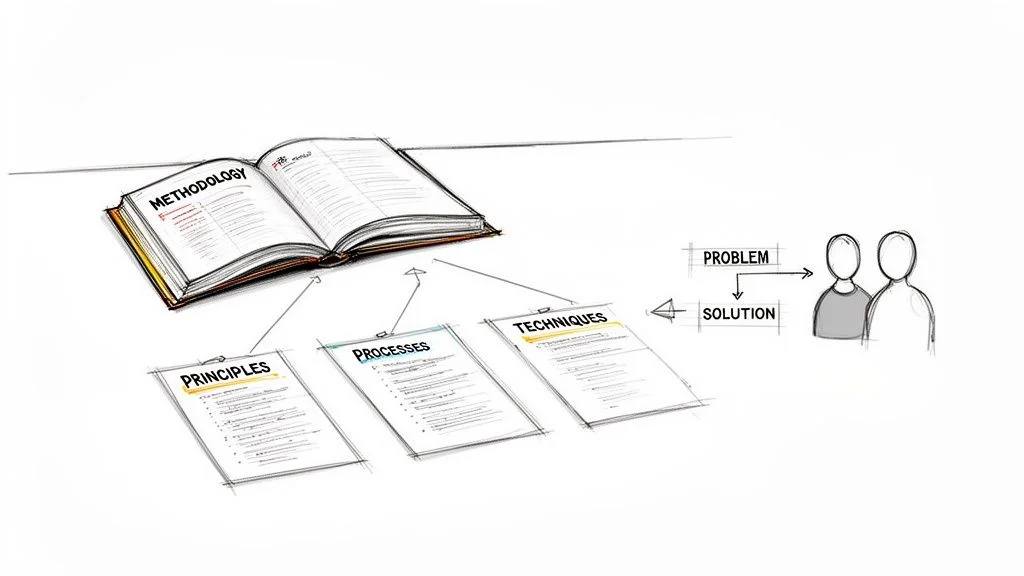
Think of a business analysis methodology as your strategic blueprint for project success. It’s a structured framework—a collection of guiding principles, systematic processes, and practical techniques—that navigates a project from an initial, often vague concept to a successful, tangible solution. For IT professionals, especially those preparing for certifications like PMP, Agile, or ITIL, understanding these methodologies isn't just academic; it’s fundamental to delivering real value, mitigating risks, and ultimately, accelerating project outcomes. This systematic approach ensures business needs are deeply understood, stakeholders remain aligned, and consistent value is delivered across the IT landscape.
Understanding the Foundation of Business Analysis
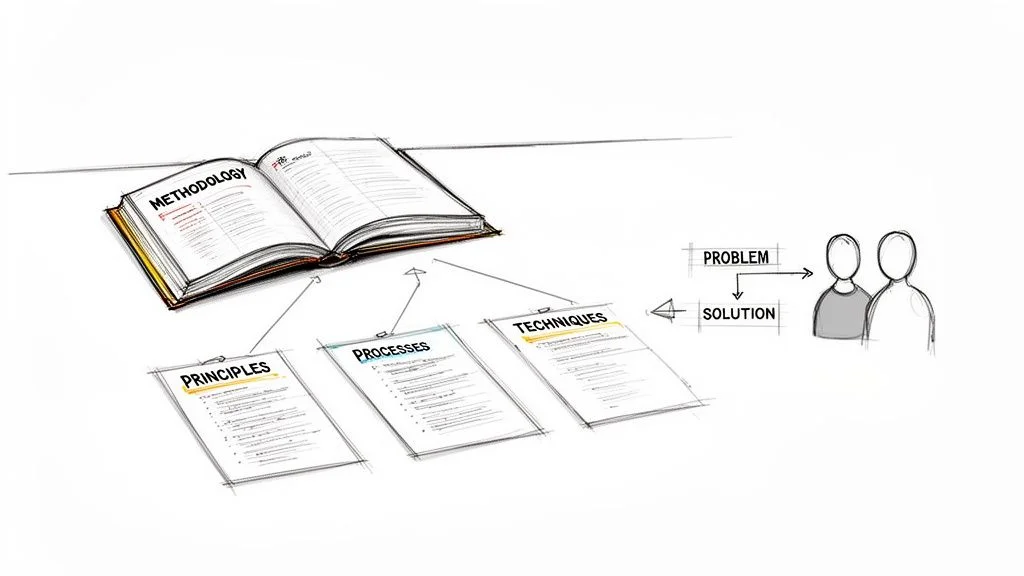
We often compare a business analysis methodology to a master chef's specialized cookbook. A chef wouldn’t use a recipe for a slow-cooked beef bourguignon when the client needs a rapid stir-fry. Similarly, a skilled business analyst selects the most appropriate methodology based on a project’s unique characteristics and objectives. There’s no single "best" approach, only the one that perfectly fits the current situation and team capabilities.
This framework is far from a rigid rulebook; it's a strategic guide designed to bring order to the inherent complexity and potential chaos of significant IT initiatives. It empowers you to answer crucial questions like: "What underlying business problem are we truly attempting to solve with this new cloud platform?" and "How will we objectively measure success for this new software release, beyond just technical completion?"
Why a Structured Approach Matters
Without a robust methodology, project teams often operate on unspoken assumptions, leading to classic IT project pitfalls: uncontrollable scope creep, missed deadlines, and a final product that fails to address the initial business challenge. This lack of direction can be particularly costly in complex environments like large-scale AWS migrations or multi-team Azure DevOps implementations.
A formal methodology for business analysis provides a common language and a shared set of expectations, keeping everyone—from software developers and network engineers to project managers and executive sponsors—in perfect sync. This structure is what transforms abstract business requirements into concrete, measurable IT outcomes.
The strategic value of this structured approach is increasingly recognized across industries. According to the 2025 Global State of Business Analysis Report, a significant 76% of respondents perceive business analysis as having a growing impact on organizational strategy. Moreover, 81% of professionals work in organizations where the business analyst role is formally recognized, underscoring its evolution from a mere support function to a critical driver of success in modern enterprises.
A methodology translates intuitive insights into a repeatable, auditable process. It ensures that every IT project leverages past lessons and is built upon a foundation of proven practices, not merely ad-hoc guesswork. This is especially vital for maintaining compliance and achieving consistent project quality, a key tenet for certifications like PMP or ITIL.
The Core Components of Any Methodology
Regardless of whether you’re examining Agile, Waterfall, or Six Sigma, they all share fundamental building blocks. These components are meticulously designed to guide the analysis process from initial conceptualization to final solution validation. Mastering them is essential for any IT professional seeking to lead projects or earn respected certifications.
- Principles: These are the foundational beliefs and ethical guidelines that inform your decisions throughout the project lifecycle. A prime example is Agile's principle of "customer collaboration over contract negotiation," which guides interactions in Scrum teams. For a PMP candidate, understanding ethical principles is paramount.
- Processes: This refers to the defined sequence of steps you follow. Examples include requirements elicitation, comprehensive stakeholder analysis, and rigorous solution validation. In ITIL, processes define how IT services are delivered and managed.
- Techniques: These are the specific tools and methods you employ to execute tasks. Consider techniques like SWOT analysis for strategic planning, process modeling for optimizing workflows, or writing detailed user stories for software development. These are skills directly tested in many certification exams.
Getting a firm handle on these components is your essential first step toward mastering any methodology for business analysis. It’s not just theoretical knowledge; it's the practical foundation required for professional certifications and the adaptability needed to tackle any project challenge that arises in the fast-evolving IT landscape.
Consider this: Think about a complex problem you’ve faced in a previous IT project. How might clearly defined principles, processes, and specific techniques have helped streamline your approach or prevented issues?
Now that we’ve established the basics, let’s take a closer look at some of the most common methodologies you'll encounter in the IT world.
Quick Overview of Key Business Analysis Methodologies
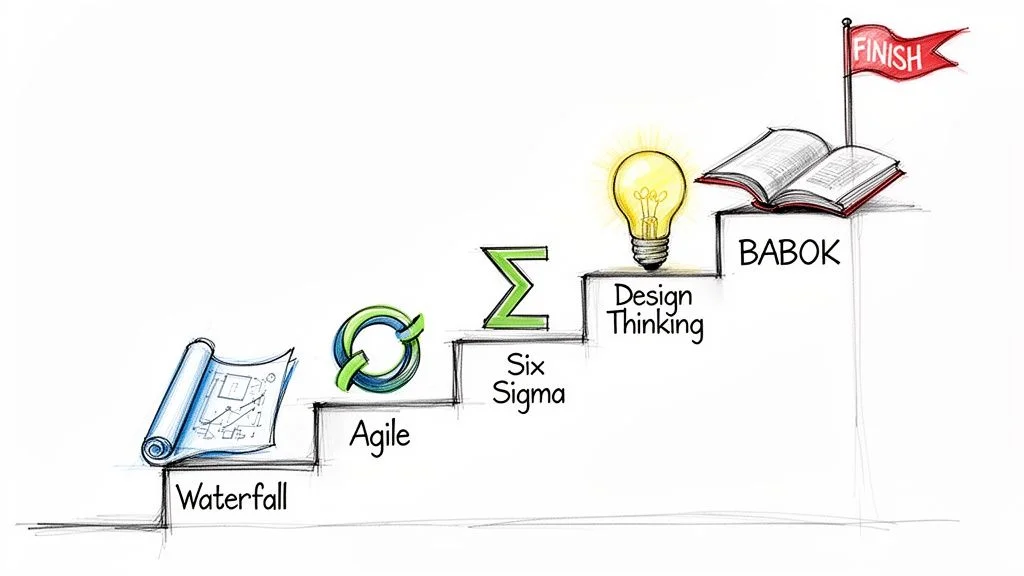
This table provides a concise, bird's-eye view of popular business analysis methodologies. We'll explore each one in greater detail shortly, but this overview should serve as an excellent starting point for understanding their core principles and their optimal use cases in IT.
| Methodology | Core Principle | Best For |
|---|---|---|
| BABOK® Guide | A comprehensive framework of best practices and standards | Establishing a formal BA practice; large, complex enterprise IT projects; IIBA certifications |
| Agile/Lean | Iterative development and continuous feedback | Projects with evolving requirements (e.g., cloud native app development); fast-paced, customer-centric IT work; Scrum, SAFe environments |
| Waterfall | Sequential, linear progression through project phases | Projects with fixed, well-understood requirements (e.g., legacy system upgrades, infrastructure builds); highly regulated environments; PMP-aligned projects |
| Six Sigma | Data-driven process improvement to eliminate defects | Optimizing existing IT operations (e.g., reducing ticket resolution times); manufacturing and quality control; ITIL service improvement |
| Design Thinking | Human-centered problem-solving and innovation | Tackling ambiguous problems; developing innovative, user-focused IT products (e.g., new mobile apps, UX redesigns) |
Understanding these distinct approaches is paramount for IT professionals. In the subsequent sections, we'll break down each of these methodologies, equipping you with the knowledge to confidently select and implement the right one for your specific project needs and career aspirations.
Exploring Core Business Analysis Frameworks
Just as a master chef has an array of cooking methods for different cuisines, a seasoned business analyst commands a comprehensive toolkit of frameworks. These are not merely rigid recipes; they are strategic approaches, each imbued with its own philosophy and unique strengths. Gaining a deep understanding of them is the critical first step toward selecting the most effective tool for any given IT project.
Let's delve into five of the most influential methodologies. We'll move beyond dry, textbook definitions, employing practical analogies and real-world IT examples to help these concepts truly stick. From the highly structured blueprint of Waterfall to the responsive, living system of Agile, you'll discover how each offers a distinct path to solving complex business problems within an IT context.
The BABOK Guide: Your Professional Encyclopedia for IT Business Analysis
Think of the Business Analysis Body of Knowledge (BABOK® Guide) as the authoritative encyclopedia for the entire business analysis profession, particularly critical for IT. It's less of a prescriptive, step-by-step methodology and more of a foundational guide that meticulously documents the global standards and best practices for business analysis.
Developed by the International Institute of Business Analysis (IIBA), the BABOK Guide comprehensively outlines the knowledge areas, tasks, and techniques that define the professional role of a business analyst. IT professionals leverage the BABOK Guide to ensure their analysis is thorough, consistent, and adheres to the highest industry standards. It is an absolutely essential resource for anyone serious about pursuing IIBA certifications like the CBAP® (Certified Business Analysis Professional™) or CCBA® (Certification of Capability in Business Analysis™), and for establishing a robust BA practice within an organization.
This guide is the definitive text for analysts aiming to formalize their skills and earn recognized professional credentials, directly impacting career progression in the IT domain.
Waterfall: The Architectural Blueprint for IT Infrastructure
The Waterfall methodology represents the traditional, sequential approach to project management, much like constructing a complex IT infrastructure or a critical enterprise resource planning (ERP) system. You wouldn't consider deploying servers or configuring networks before the architectural blueprints are finalized and the cabling infrastructure is fully installed, would you? In Waterfall, every phase—from requirements gathering to design, implementation, testing, and deployment—must be 100% complete and signed off before the next one can commence, with progress flowing steadily downwards, much like a waterfall.
This linear, sequential process relies heavily on extensive upfront planning and meticulous documentation. A business analyst on a Waterfall project will dedicate substantial effort to gathering, analyzing, and finalizing every single requirement, typically before any development work begins. This makes it an ideal fit for IT projects where requirements are exceptionally stable, well-understood, and highly unlikely to change, such as building a new compliance reporting system for financial data or upgrading a mission-critical legacy database. The predictability and rigid structure appeal to heavily regulated industries.
Agile: The Cultivated Garden for Software Innovation
On the opposite end of the spectrum, the Agile methodology functions much like cultivating a dynamic garden in a rapidly changing climate. You don't create a perfect, immutable plan for the entire season at the outset. Instead, you plant some seeds (develop core features), water them (test and refine), observe what thrives (gather user feedback), and adapt your approach based on what you learn. You might discover certain application features are highly desired while others are struggling, prompting you to adjust your development strategy on the fly.
Agile is specifically designed to embrace change through short, iterative cycles known as sprints. A business analyst in an Agile team is in constant, dynamic conversation with IT stakeholders, product owners, and developers, continually refining requirements, prioritizing features, and delivering tangible value in small, digestible chunks. This continuous feedback loop is what ensures the final product—be it a mobile application, a cloud service, or a new software module—is what users actually need, even if those needs evolve throughout the project. This makes Agile highly relevant for professionals pursuing certifications like Certified ScrumMaster (CSM) or SAFe Agilist. To see this in action, check out our complete guide to the Scrum framework for agile success.
Agile isn't just a trend; it's a dominant force in IT. Reports indicate that Agile frameworks are now utilized by over 70% of organizations undergoing digital transformation, effectively slashing project delivery times by up to 40% compared to traditional Waterfall methods.
Reflection Point: How might applying an Agile approach to a previous IT project you worked on, which suffered from changing requirements, have improved its outcome?
Six Sigma: The Precision Engineer for IT Service Optimization
Imagine an elite DevOps team relentlessly striving to shave milliseconds off their application deployment times or reduce incident resolution duration. They don't merely guess at solutions. They meticulously analyze every piece of data—code commit frequency, server response times, incident logs, system uptime—to pinpoint and eliminate tiny inefficiencies and defects. That’s the very essence of Six Sigma, a data-driven methodology laser-focused on improving processes and stamping out errors within IT operations.
Its core engine is DMAIC (Define, Measure, Analyze, Improve, Control). A business analyst leveraging Six Sigma identifies where an IT process (e.g., incident management, software release, service desk operations) is suboptimal, quantifies its performance with hard data, analyzes the root causes of the problems, and implements controlled, measurable solutions. This framework is perfect for optimizing existing IT operations, such as reducing errors in data migrations, speeding up IT service desk response times, or improving the reliability of a critical application. It strongly aligns with the continuous service improvement principles found in ITIL® certifications.
Six Sigma is about achieving near-perfection by making decisions based on rigorous statistical analysis rather than mere assumptions. It's a powerful methodology for business analysis when the goal is measurable, consistent quality and efficiency within IT services and operations.
For more hands-on examples of how these techniques are applied in IT, you can dive into key Business Process Improvement Techniques like Lean and Six Sigma.
Design Thinking: The Empathetic Inventor for User-Centric IT Solutions
Design Thinking doesn’t begin with technology or existing processes—it starts profoundly with people, particularly the end-users of IT solutions. It’s akin to a software architect trying to create a revolutionary new banking app. Instead of just brainstorming features in a boardroom, they spend days observing how real users interact with current banking services, both digital and physical. They observe their frustrations, their clever workarounds, and their unspoken needs. The true breakthroughs emerge from this deep, empathetic understanding.
This human-centered framework follows a five-stage iterative process: Empathize, Define, Ideate, Prototype, and Test. A business analyst employing Design Thinking is obsessed with understanding the user's lived experience to uncover those often-hidden needs and pain points. It's an inherently exploratory approach, making it perfect for tackling fuzzy or complex IT problems, such as designing an intuitive new cloud portal, reimagining the employee onboarding experience with new digital tools, or creating a genuinely engaging user interface (UI) for a business intelligence dashboard. It ensures the final IT solution isn't just technically feasible, but genuinely desirable and usable by the people who will actually interact with it, a critical aspect for UX (User Experience) and Product Owner certifications.
How to Choose the Right Methodology for Your Project
Picking the optimal business analysis methodology isn't about identifying a universal "best" approach. Instead, it’s akin to being a skilled matchmaker, meticulously seeking the perfect fit for your project’s unique characteristics, organizational culture, and strategic goals. Misaligning a methodology with a project can lead to significant friction, delays, and outright failure. Conversely, when the right methodology is chosen, the path to success becomes remarkably smoother and more predictable.
So, where does an IT professional begin this critical selection process? The initial step involves playing detective. You must ask incisive questions to fully comprehend the true nature of the work ahead, much like an experienced diagnostician assesses a patient before prescribing treatment.
Assess Your Project’s Core DNA
Before you even contemplate which framework to adopt, you need to thoroughly understand the project’s landscape. Every IT project exists within a unique ecosystem, shaped by specific objectives, technical constraints (e.g., legacy systems, cloud platforms), available resources, and key stakeholders. A clear-eyed assessment of these factors is your foundational move toward selecting a methodology that will genuinely empower your team, rather than impede its progress.
Initiate this assessment by evaluating these four critical areas:
- Requirement Clarity: How precisely do you understand what needs to be built or implemented? If you possess a precise, detailed blueprint for a new data warehouse and the requirements are stable, a structured approach like Waterfall makes considerable sense.
- Project Flexibility: Is the project pathway a direct, predictable route, or is it riddled with anticipated twists, turns, and unforeseen challenges? If you fully expect requirements to evolve as user feedback comes in or market conditions shift, an adaptive methodology like Agile is inherently built for that kind of iterative journey, common in SaaS development or new feature rollouts.
- Stakeholder Availability: How much continuous engagement can you secure from your key decision-makers and end-users? Agile thrives on constant, active collaboration and frequent feedback. In contrast, Waterfall operates more efficiently when stakeholder input is concentrated in specific, well-defined phases.
- Risk Tolerance: What are the potential consequences if something goes awry? For high-stakes IT projects in heavily regulated sectors like finance or healthcare (e.g., implementing a new compliance system), the meticulous control, extensive documentation, and auditability inherent in Waterfall are often non-negotiable.
This decision tree provides an excellent visual aid for choosing between a predictive approach (such as Waterfall) and an adaptive one (such as Agile).
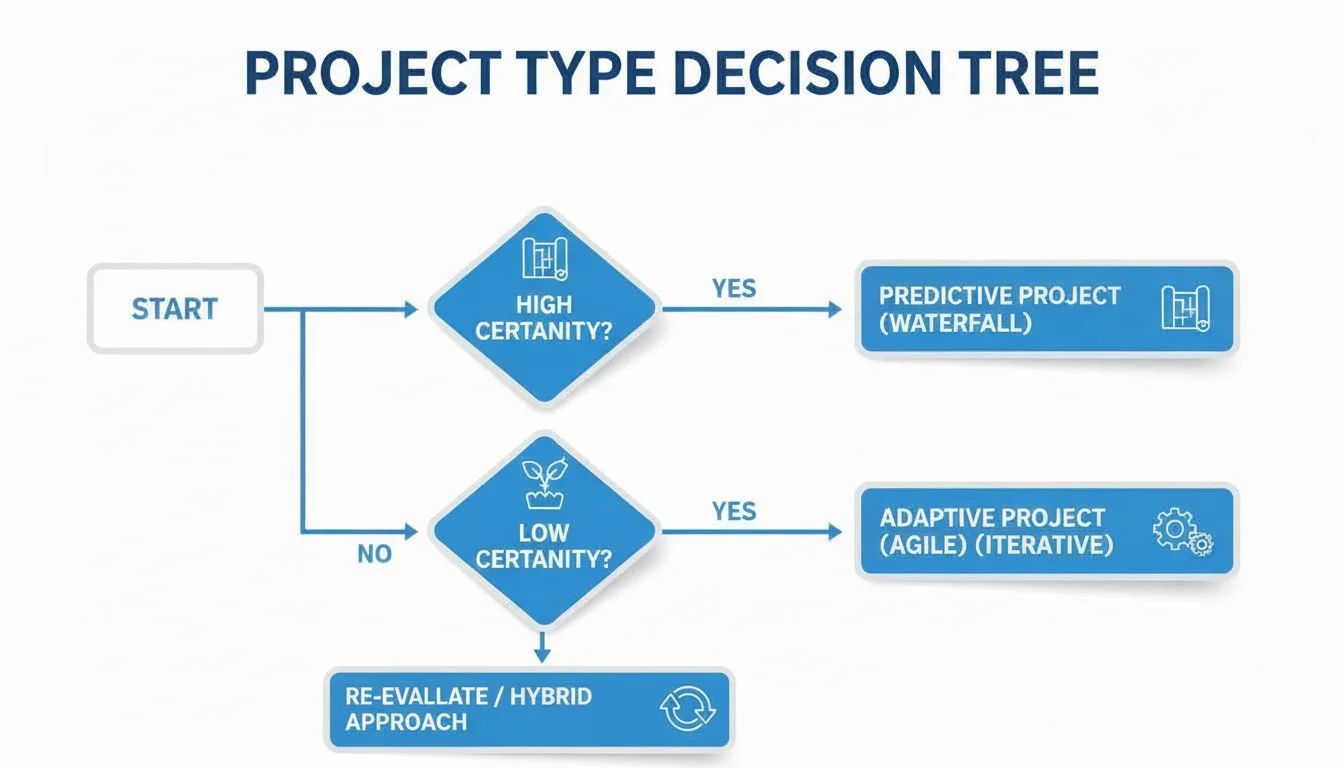
As illustrated, IT projects characterized by high certainty, stable requirements, and a known end-state are a natural fit for structured, predictive lifecycles. Conversely, projects with a high degree of unknowns, innovative goals, or rapidly changing environments thrive with flexible, adaptive approaches.
Match the Methodology to the Mission
Once you have a comprehensive understanding of your project’s DNA, you can begin to connect those insights to a specific methodology. Let's explore a few real-world IT scenarios to illustrate this matching process.
Imagine a startup hires you to develop a brand-new, cloud-native mobile application. The target market is largely unproven, the initial requirements are intentionally fuzzy, and you know continuous user feedback will be absolutely critical for product-market fit. This is quintessential Agile territory. Its iterative cycles (sprints) enable you to build, test, learn, and pivot rapidly without committing to a potentially flawed long-term plan from the outset.
Now, consider a fundamentally different challenge: updating a major corporation's legacy payroll system to comply with new federal tax regulations. The requirements are rigid, non-negotiable, and meticulously documented down to the last detail. There is absolutely no margin for error or deviation. Here, Waterfall provides the tight control, extensive documentation, and predictability required to ensure every single regulatory requirement is met and rigorously tested before the system goes live. This aligns well with a PMP-certified project manager's approach.
Choosing a methodology is an act of strategic alignment. It’s about ensuring the chosen way of working is in complete harmony with the specific business problem you’re trying to solve and the IT solution you’re aiming to deliver.
Finally, what if your objective is to reduce costly errors in a data processing pipeline by 15% within the next six months? This is a clear process optimization problem with a quantifiable, measurable target. A data-driven framework like Six Sigma is the perfect tool for the job, meticulously designed to identify root causes and eliminate defects with statistical proof. This approach resonates with the continuous improvement models found in ITIL.
As you weigh your options, exploring various essential product prioritization frameworks can also provide valuable perspectives for making the right choice, especially for product-focused IT roles.
Methodology Selection Matrix: A Comparative Guide for IT Projects
To make this decision process even more straightforward for IT professionals, here’s a comprehensive table comparing our key methodologies across several critical project factors. Consider it a quick-reference guide to see how each framework stacks up against your specific project demands.
This matrix should empower you to confidently select—and defend—your chosen methodology for business analysis from day one, setting the stage for project success.
| Factor | Waterfall | Agile | Six Sigma | Design Thinking |
|---|---|---|---|---|
| Requirement Stability | High: Works best with fixed, well-defined requirements (e.g., infrastructure build-outs, compliance systems). | Low: Designed to embrace and adapt to changing requirements (e.g., SaaS product features, evolving user needs). | High: Focused on improving existing, defined IT processes (e.g., incident management). | Low: Excellent for exploring and defining ambiguous IT problems (e.g., new product concepts, UX challenges). |
| Stakeholder Engagement | Periodic: Concentrated heavily in initial planning and final acceptance phases. | Continuous: Requires daily or frequent collaboration and feedback (e.g., sprint reviews, daily stand-ups). | Periodic: Involves key stakeholders at defined project milestones (e.g., DMAIC phase reviews). | Continuous: Deeply collaborative and user-focused from start to finish (e.g., user interviews, usability testing). |
| Speed to Initial Value | Slow: Value is delivered only at the end of the project. | Fast: Delivers functional increments in short cycles (sprints) for quick user feedback. | Medium: Value is realized after process improvements are implemented and measured. | Fast: Generates and tests prototypes quickly to validate ideas and user desirability. |
| Best For | Building physical IT infrastructure; compliance projects; legacy system upgrades. | Software development; product innovation; R&D projects; cloud-native applications. | IT service optimization; quality control in operations; reducing defects in IT processes. | New product development; user experience (UX) challenges; innovative IT solution conceptualization. |
By cross-referencing your IT project's specific needs with this comparative guide, you can pinpoint the methodology that offers the greatest chance of success, aligning your efforts with industry best practices and setting a foundation for achieving certification goals.
Implementing a Methodology Step by Step
Selecting the correct business analysis methodology is a crucial decision; however, effectively implementing it is an entirely different, and often more challenging, endeavor. The transition from a theoretical framework to a practical, day-to-day operational process within an IT team demands a thoughtful, deliberate, and well-executed plan. Without such a plan, even the most promising methodology can flounder due to confusion, organizational resistance, or simply a lack of clear direction.
This isn't about enacting an overnight change. It’s a guided transition, requiring clear communication, careful planning, and, critically, demonstrating the tangible value of the change early on. A successful rollout builds momentum by not just showing everyone involved how things are changing, but powerfully articulating why the effort is truly worthwhile. This phased approach is a key concept for anyone studying for PMP or ITIL Change Management certifications.
Secure Stakeholder Buy-In for IT Projects
Before you modify a single IT workflow or introduce a new tool, it’s imperative to gain buy-in from your key stakeholders. This includes project sponsors, IT team leads, department managers, and anyone whose daily responsibilities will be impacted by the new methodology. The overarching goal here is to build a coalition of internal champions who genuinely understand the benefits and will actively advocate for the new way of working.
Begin by clearly articulating the specific problems the new methodology aims to solve. Don't merely introduce a new framework; present it as the strategic solution to existing pain points. Focus on tangible IT benefits such as shipping software features faster, improving the quality of system deployments, or significantly reducing frustrating rework cycles. Leverage data from past IT projects to illustrate where inefficiencies existed and how the new framework will directly address these challenges.
The most common reason a new methodology fails has nothing to do with the framework’s technical merits. It’s almost always a failure to effectively manage the human element of change. Getting the people part right is approximately 90% of the battle in any IT transformation.
Getting this crucial first step right sets the tone for everything that follows. For a deeper look at navigating these complex organizational shifts within IT, our guide on the change management IT process offers practical strategies invaluable for any IT professional.
Reflection Prompt: Consider a time an IT project failed due to lack of buy-in. How might a structured approach to stakeholder engagement, using one of these methodologies, have altered the outcome?
Plan and Launch a Pilot IT Project
Whatever you do, resist the temptation to roll out the new business analysis methodology across the entire IT organization simultaneously. This is often a recipe for disaster. Instead, wisely choose a small, relatively low-risk pilot project. This strategic move provides a safe sandbox environment to learn, make initial mistakes, and fine-tune the framework to perfectly fit your company’s unique IT culture and operational context.
Seek out a pilot project with a clearly defined scope, an enthusiastic and supportive sponsor, and an IT team that is genuinely open to experimenting with new approaches. Remember, the primary goal of the pilot isn't immediate perfection—it's focused learning and adaptation.
- Define Clear Success Metrics: How will you objectively know if the pilot was successful? Establish measurable targets relevant to IT. For example, you might aim to reduce requirement-related defects by 20%, see a noticeable jump in developer satisfaction scores, or decrease deployment lead time by a specific percentage.
- Provide Comprehensive Training and Support: Do not simply throw the team into the deep end. Ensure they receive solid, practical training on the new principles, roles (e.g., Scrum Master, Product Owner), and tools before the project commences. Continuous coaching is also critical.
- Establish Robust Feedback Loops: Schedule regular check-ins, retrospectives, and post-mortems. These are essential forums for discussing what’s working, identifying roadblocks, and collaboratively adjusting the process on the fly.
This controlled experiment generates a powerful case study, backed by real data and testimonials from the IT team who experienced it firsthand, which can then be used to convince the wider organization.
A Business Analyst's First Week in an Agile World
To make the theoretical feel more concrete, let's walk through what a business analyst's first week might realistically look like after their IT team transitions to an Agile (specifically Scrum) methodology. This illustrates how high-level theory translates into tangible, daily actions for IT professionals.
| Day | Key Activities & Focus |
|---|---|
| Monday | Sprint Planning: You're actively participating with the Product Owner and development team to select high-priority items from the product backlog. Your primary role is to clarify technical requirements, decompose epics into manageable user stories, and ensure everyone understands the "why" behind each feature for the upcoming sprint. |
| Tuesday | Backlog Refinement (Grooming): You're collaborating closely with the Product Owner to refine and prioritize upcoming user stories for future sprints. This involves breaking down large, vague requirements into smaller, actionable tasks and adding clear, testable acceptance criteria, often by facilitating discussions with technical leads. |
| Wednesday | Stakeholder Workshop & Technical Review: Time to facilitate. You're running a session with key end-users or subject matter experts to gather detailed feedback on a prototype or mock-up, digging deep to elicit the granular details needed for a complex feature planned for the next sprint. Later, you might conduct a technical review with architects. |
| Thursday | Support Development & QA: Today is all about proactive support. You're embedded with the dev and QA teams, answering questions, clarifying edge cases, and ensuring that the implemented solution aligns with the intended business value. This prevents roadblocks and keeps the development work on track. |
| Friday | Sprint Review Prep & Retrospective: As the sprint concludes, you're helping prepare for the Sprint Review, gathering metrics, assisting with the demo, and shaping the narrative that showcases the real business value delivered. You also participate in the team retrospective, contributing to continuous process improvement. |
Measure, Adapt, and Scale Success
Once your pilot IT project successfully wraps up, it’s time to rigorously analyze the results. Utilize those success metrics you carefully defined at the start to construct a clear, data-driven narrative about the methodology's positive impact. Share that compelling story—and celebrate the wins—with senior leadership and other IT teams across the organization.
With undeniable proof of concept in hand, you can then begin planning to scale the methodology. However, avoid simply copying and pasting the pilot process wholesale. Instead, critically analyze the lessons learned and refine the approach for bigger, more complex IT projects. A phased rollout, moving strategically from one team or department to the next, is almost invariably more successful and less disruptive than a risky "big bang" implementation across the entire enterprise. This iterative scaling aligns well with principles of continuous improvement for certifications like ITIL 4.
The Future of Business Analysis Methodologies
The traditional image of a business analyst is rapidly evolving, driven primarily by the transformative power of artificial intelligence (AI) and big data. The future of business analysis methodology isn't about replacing human experts with algorithms; it's about profoundly augmenting those experts, making them more powerful and insightful than ever before. We are stepping into the age of the augmented analyst—a professional who skillfully marries deep business acumen with sophisticated technology to uncover critical insights at a speed and scale previously unimaginable.
Consider this shift: instead of an analyst spending weeks manually combing through thousands of customer support tickets or application logs, an AI-powered tool can now analyze this massive volume of data in minutes. It can instantaneously spot sentiment trends, flag recurring technical issues, and provide the analyst with a concise, actionable summary. This profound shift frees up the analyst to move beyond being a mere data gatherer and instead focus on the strategic "why" behind what the data is revealing, driving higher-level decision-making.
The Rise of the Augmented Analyst in IT
At its core, this evolution represents a powerful partnership between human intelligence and machine capability. The machine excels at the heavy lifting—processing immense datasets, identifying intricate patterns, and running complex simulations. The human analyst provides the indispensable context, strategic thinking, nuanced ethical judgment, and stakeholder negotiation skills that no algorithm can replicate. The business analyst role is transitioning from primarily gathering information to expertly interpreting it and crafting compelling, data-backed narratives for IT leadership.
This means that to remain highly relevant and competitive, IT business analysts must become comfortable with technology. The most sought-after professionals will be those who can speak the language of predictive analytics, work effectively with machine learning (ML) models, and build clear, impactful narratives using advanced data visualization tools (e.g., Power BI, Tableau). They will effectively serve as the crucial bridge between raw IT operational data and brilliant business strategy.
The objective isn't to automate the business analyst out of existence. It's to automate the tedious, repetitive parts of the job so analysts can dedicate their cognitive power to what they do best: creative problem-solving, complex stakeholder negotiation, and driving genuine innovation within the IT landscape.
This isn't merely a prediction; it's a present reality. Nearly 65% of organizations are projected to be utilizing AI for their data analytics by 2025. This wave is fueling a global market predicted to reach $132.9 billion by 2026, with over 90% of companies already reporting tangible benefits from their investments in this area. For a deeper look at this transformative shift, you can find more data analytics trends on Coherent Solutions.
What This Looks Like in Practice for IT Professionals
So, how does an augmented approach actually transform the day-to-day work of an IT business analyst? Here are a few real-world examples:
- Predictive Risk Assessment: Instead of solely relying on past project experience, an analyst can now utilize a machine learning model to analyze thousands of variables from historical IT projects. This model can then forecast potential risks (e.g., budget overruns, resource conflicts, technical roadblocks) with a much higher degree of accuracy and foresight.
- Automated Requirements Gathering: AI-powered tools can scan meeting transcripts, detailed project documentation, and even stakeholder email exchanges to automatically extract potential functional and non-functional requirements. This provides the analyst with a significantly accelerated starting point for refinement and validation, freeing them to focus on clarifying ambiguity and deeper understanding.
- Dynamic IT Process Modeling & Simulation: Analysts can employ advanced simulation software to model how a proposed change to an IT business process (e.g., a new incident management workflow, a revised software release pipeline) might impact everything from operational costs to end-user satisfaction and system performance. This enables them to test out ideas virtually before committing to expensive, real-world changes.
The bottom line is clear: the future of business analysis methodology in IT is a sophisticated hybrid approach. It’s a skillful blend of the structured, critical thinking inherent in traditional methods and the sheer analytical power of modern technology. The business analysts who will lead the way are the ones who proactively embrace this evolution, continuously invest in their learning, and master the art of transforming a torrent of data into a decisive competitive edge.
Aligning Your Methodology with Career Growth
Gaining a deep understanding and practical command of a business analysis methodology is far more than just learning a new way to manage a project. For IT professionals, it’s a direct and impactful investment in your long-term career trajectory.
Every framework you skillfully add to your professional repertoire—whether it's the iterative cycles of Agile, the precision of Six Sigma, or the comprehensive guidance of the BABOK® Guide—is another potent tool in your belt. This invaluable versatility transforms you from a competent analyst into a truly exceptional one, someone who can confidently take the reins on complex IT initiatives and consistently deliver tangible, measurable value to the business.
When you can fluently speak the language of different frameworks, understand their nuances, and apply them strategically, you become the indispensable person who can bring order to chaotic situations, bridge communication gaps between technical and business teams, and effectively align everyone towards a common objective. This demonstrated capability signals to employers that you are ready for bigger challenges, greater responsibilities, and leadership roles within the IT organization. This is precisely the kind of expertise that helps you stand out in competitive certification exams like the PMP or Agile-related certifications.
In essence, mastering a methodology for business analysis is about translating theoretical knowledge into practical, high-impact capabilities. It is the vital fuel for your career, unlocking diverse opportunities for leadership and giving you a stronger, more influential voice within your organization.
Don't merely skim the surface of these frameworks. Truly master them, and actively convert that profound knowledge into recognized certifications and a portfolio of successful IT projects. For more insights on keeping your skills perpetually sharp and career-ready, explore our comprehensive guide on how to future-proof your career. This is how you effectively fast-track your professional journey in the dynamic world of IT.
Frequently Asked Questions
As you immerse yourself in the dynamic world of business analysis, especially with an IT focus, it’s natural to have questions. It’s a broad and interconnected field, and figuring out where all the pieces fit can be particularly tricky, whether you're just starting out, aiming for a promotion, or meticulously preparing for a certification exam. Let’s tackle some of the most common questions that IT professionals frequently encounter.
Can I Combine Different Business Analysis Methodologies?
Yes, absolutely, and in the real-world IT environment, you almost certainly should! Adhering rigidly to one single framework is quite rare among experienced business analysts. Most seasoned IT BAs end up employing a hybrid approach, intelligently picking and choosing the most effective elements from different methodologies to precisely fit the project's specific needs and unique constraints.
Think of it pragmatically: you might leverage the rigorous, upfront planning and detailed documentation of Waterfall to establish the foundational infrastructure (e.g., network, security architecture, core database) for a large-scale enterprise IT project. But once that stable base is firmly established, you could seamlessly pivot to an Agile framework for developing the user-facing software applications on top of it, where flexibility, rapid iteration, and quick feedback loops are paramount. The key is strategic adaptation—using the right tool for the right job at the right time, rather than a one-size-fits-all solution.
What Is the Most Important Skill for a Business Analyst in IT?
If you were forced to identify just one critical skill, it would unequivocally be communication. Hands down. While technical skills, data modeling techniques, and proficiency with specific software tools are undeniably important, your ability to truly listen actively, ask insightful probing questions, and explain complex technical concepts in clear, concise, and accessible business terms is what truly differentiates a good IT business analyst from an outstanding one. This holds true regardless of the specific methodology for business analysis you are currently employing.
Strong communication is the secret sauce that enables you to:
- Facilitate highly productive stakeholder workshops that actually yield actionable requirements in a Waterfall-driven infrastructure project.
- Keep daily stand-ups focused, efficient, and truly productive within an Agile Scrum team.
- Clearly, persuasively, and impactfully present your findings from a deep-dive Six Sigma analysis of IT operational inefficiencies to executive leadership.
- Bridge the gap between developers and end-users on a complex Azure cloud migration project.
At the end of the day, successful business analysis, especially in IT, is fundamentally about people and problem-solving through collaboration. Your unparalleled ability to connect with diverse individuals, build consensus, and articulate vision is what ultimately propels an IT project from a mere concept to a successful, tangible reality.
Success in business analysis is less about knowing all the technical answers and significantly more about knowing how to ask all the right questions—the ones that unlock understanding and drive progress. This foundational skill transcends any single methodology or IT domain.
Which Methodology Should a New Business Analyst Learn First, Especially in IT?
If you're an IT professional new to the field of business analysis or looking to formalize your skills, your absolute best starting point isn't a single prescriptive methodology, but rather the BABOK® (Business Analysis Body of Knowledge) Guide. It’s less of a strict, step-by-step process and more of a comprehensive, globally recognized guide to the entire profession, encapsulating the breadth of business analysis within an IT context.
Think of it as learning the alphabet, grammar, and fundamental storytelling techniques before you attempt to write a complex novel. The BABOK Guide provides you with the foundational vocabulary, core concepts, essential knowledge areas (like Requirements Elicitation, Solution Evaluation), and fundamental techniques that underpin all other methodologies. Once you have that solid grounding in universally applicable BA principles, learning how to apply those principles effectively within an Agile, Waterfall, or Six Sigma context becomes significantly easier and more intuitive. It’s the most strategic way to build a versatile, adaptable, and certification-ready skill set right from the very beginning of your journey in IT business analysis.
Ready to transform your IT knowledge into a globally recognized credential? MindMesh Academy provides expert-curated study materials and proven learning techniques to help you master complex concepts and ace your certification exams, from Agile to PMP, CompTIA, and beyond. Start your journey to professional success today at Explore IT Certification Practice Exams.

Written by
Alvin Varughese
Founder, MindMesh Academy
Alvin Varughese is the founder of MindMesh Academy and an enterprise architecture leader. An electrical engineer by training, he moved from factory automation in South Africa to cloud architecture at GE Appliances and Humana (Fortune 50), and holds 20 professional certifications including AWS Solutions Architect Professional, Azure DevOps Engineer Expert, and Microsoft Agentic AI Business Solutions Architect. He built MindMesh Academy after interviewing too many highly certified candidates who couldn't answer basic questions: the goal is prep that makes you better at the job, not just able to pass the exam.