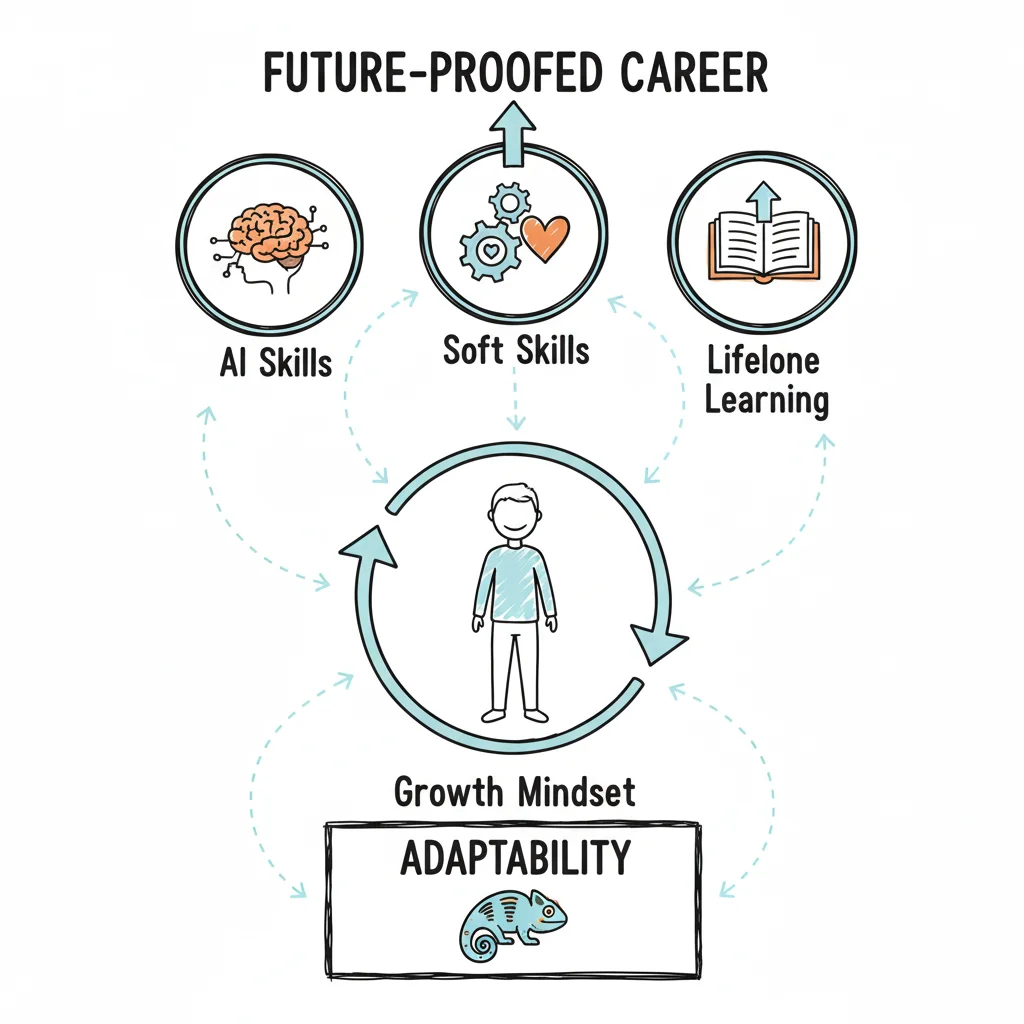
How to Future Proof Your Career: Skills, AI & Growth
How to Future-Proof Your Career: Essential Skills, AI Adaptation, and Continuous Growth
In the field of information technology, keeping pace with current trends is no longer sufficient. To build a career that remains viable for decades, professionals must adopt a proactive strategy. Focus on maintaining a habit of continuous learning, sharpen your uniquely human skills, and grow a strong professional network. This approach goes beyond technical ability. It focuses on your capacity to lead and adapt, even as automation and artificial intelligence change how we work. MindMesh Academy views this foundation as the primary way to manage modern challenges while preparing for what comes next. By building these habits, you ensure your certifications serve as tools for long-term growth and stability rather than just checkboxes on a resume.
Why Future-Proofing Your Career Is So Critical Right Now
Let’s be honest—the tech environment shifts fast. The stability that once came with mastering one specific tool is fading. Specialization can lose its value quickly when a new AI model, cloud service, or economic shift arrives. This isn't a cause for alarm. Instead, it highlights a vast opportunity. Tech evolution is creating roles that seemed like science fiction just years ago. Look at prompt engineers, MLOps specialists, or cloud security architects. These positions were rare or non-existent a decade ago. For insights on how AI affects professional development, the Parakeet AI blog provides useful viewpoints.
The Pace of Change Is Hitting Overdrive
The skills that helped you land your current IT job might not secure your next one. This shift is happening now. The World Economic Forum’s Future of Jobs Report 2025 predicts that 39% of core skills for most roles will change by 2030. This figure is a wake-up call for any IT professional who isn't currently learning new systems. You can read these workforce findings on weforum.org to see the data yourself.
Future-proofing isn't about guessing what happens next with perfect accuracy. It is about building the resilience to succeed regardless of what changes. You are turning market uncertainty into a personal advantage.
Shift Your Mindset from Reactive to Proactive
Waiting for your job to become obsolete is a mistake. To stay ahead, move toward a proactive strategy using these four pillars:
- Honest Skills Auditing: Compare your technical abilities against what the market actually wants. For example, determine if your knowledge of legacy on-premises networking is still as valuable as knowing AWS VPCs or Azure Virtual Networks.
- Constant Learning: Make acquiring new knowledge a fixed part of your week. This might involve studying for the current AWS Certified Solutions Architect exam or practicing new DevOps methodologies to stay current. Setting aside time for structured study prevents your technical knowledge from stagnating.
- Focus on Human Strengths: Concentrate on the abilities AI cannot duplicate. This includes high-level critical thinking, solving complex problems, and the emotional intelligence needed for client management or leading a team. These are the core strengths of a PMP certified project manager. AI can process data, but it cannot manage human stakeholders.
- Strategic Networking: Develop a real support system. This is more than just a list of names; it is a resource for learning about new industry trends and a safety net for your career. Connections with peers provide context that technical documentation cannot offer.
Use this guide as a map to move from just getting by to growing strategically. Aim to stay ahead of change rather than merely reacting to it.
Reflection Prompt: In your current IT role, what is one major technological shift you've observed in the last two years, and how has it impacted the skills required for your work?
Performing Your Personal Skills Audit
Before constructing a resilient IT career, you must conduct an honest assessment of your current standing. A personal skills audit is not just a list of what you can do. It is a strategic evaluation of your professional toolkit. This process reveals your current market value and highlights the specific knowledge you need to acquire to remain relevant.
Many IT professionals become comfortable in their roles and assume their existing skills have indefinite shelf lives. They do not. The job market constantly signals upcoming trends, and ignoring these indicators leads to professional obsolescence. This mismatch between talent and market needs contributes significantly to the global skills gap. Projections show that 2.4 million job openings could go unfilled over the next decade. These vacancies persist because the available talent lacks specific expertise in cybersecurity, cloud computing, and data science.
This threat is not a distant concern; it is happening now. You must move beyond guesswork and use data to analyze your own career path.
Categorize Your Professional Abilities
Start the audit by segmenting your abilities into three distinct categories. This helps you understand which skills provide long-term stability and which require immediate updates.
-
Durable Skills: These are the human-centric capabilities that remain useful regardless of which technology stack a company uses. They include:
- Critical Thinking & Problem Solving: This involves more than fixing technical glitches. It requires understanding how a system failure affects business objectives and choosing the right architectural solution. These skills allow you to troubleshoot incidents even when you are unfamiliar with the specific software.
- Communication: Technical documentation, client presentations, and team collaboration depend on this. As outlined in the ITIL service management framework, clear communication ensures that technical services align with business needs.
- Leadership & Teamwork: These are essential for managing projects according to PMP principles, leading development sprints, and mentoring junior staff.
- Emotional Intelligence: This skill allows you to manage stakeholders effectively and handle team dynamics during high-pressure outages or transitions. Durable skills form the foundation of your career because they are extremely difficult for artificial intelligence to replicate with any degree of accuracy.
-
Perishable Skills: These are specific technical competencies that have a limited lifespan and require frequent updates. Examples include:
- Proficiency in a specific version of a programming language, such as the differences between Python 3.8 and Python 3.12.
- Expertise in a legacy operating system or a database that is being phased out.
- Experience with an older configuration model for a specific cloud service. Technical skills are necessary for your daily work, but they demand constant maintenance. Consider how quickly services in Azure or AWS change. If you do not update these skills, they will become liabilities rather than assets.
-
Emerging Skills: These are the competencies currently gaining momentum in the industry. Only a few years ago, this category might have focused on basic cloud migration. Today, it includes:
- AI Prompt Engineering and the development of Generative AI applications.
- Cloud Security practices that align with CompTIA Security+ or Certified Cloud Security Professional (CCSP) standards.
- DevOps automation tools like Terraform and Kubernetes.
- Data Visualization and the use of advanced analytics to drive business decisions. Learning these skills early gives you a significant competitive advantage over those who wait for the skills to become mandatory.
The following map shows how forces like AI and automation put pressure on the workforce. This pressure forces a constant evolution in the roles we hold.
This visual aid confirms why a systematic skills audit is mandatory if you want to keep pace with technological change.
Benchmark Your Skills Against Market Demand
Once you have categorized your abilities, evaluate them against what employers are hiring for right now. Your own perception of your talent does not determine your value; the market does. You must align your training with the skills that command the highest compensation.
One effective method is to act as a "job description analyst." Visit sites like LinkedIn or Indeed and find 5-10 job postings for roles you want to hold in the next two to five years. Do not just read them. Dissect the text to find the recurring requirements.
- Extract Core Requirements: Copy the "Requirements," "Qualifications," and "Responsibilities" text from these postings into a single document. This creates a raw data set of what the industry expects.
- Identify Patterns: Highlight every specific tool, technology, or certification mentioned. Look for recurring terms like "AWS Certified Solutions Architect," "PMP," "ITIL Foundation," or "Azure Administrator."
- Quantify Frequency: Count how often each skill appears. This data reveals exactly where companies are spending their money. If 80% of the jobs you want require a specific certification, that certification should be your top priority.
This exercise moves you away from subjective feelings. It gives you a factual basis for your professional development.
Conduct Your Personal Gap Analysis
The final step is the gap analysis. This is where you compare your current list of skills against the requirements you found in your market research. This process creates a clear path forward.
A skills gap analysis transforms vague career anxiety into a focused action plan. It is the moment you stop worrying about the future and start building it, one skill at a time.
Consider an IT project manager who realizes her durable skills in leadership and communication are strong. She uses PMP principles daily to keep her team on track. However, she notices her perishable skills are lagging because she has not used the latest agile management software or SAFe methodologies. Her market research also shows that AI-powered project management tools are appearing in 40% of her target job descriptions.
This specific insight is very helpful. She no longer needs to guess what to study next. Instead of taking a generic leadership class, she should focus on mastering new technical tools. She might decide to pursue a Certified Scrum Master (CSM) or SAFe Agilist (SA) certification to fill that specific gap.
Your Personal Skills Gap Analysis Framework
Organize your findings using the table below. It helps you convert your audit results into a concrete list of actions. Use it to transition from knowing what you can do to knowing what you must learn.
| Skill Category (Durable/Perishable/Emerging) | Your Current Skill | Proficiency Level (Novice to Expert) | Future Relevance (High/Medium/Low) | Development Action |
|---|---|---|---|---|
| Example: Durable | Strategic Planning | Intermediate | High | Mentor a junior project manager; take a business strategy course |
| Example: Perishable | Legacy SQL Server Administration (on-prem) | Proficient | Medium | Pursue Azure Database Administrator Associate certification |
| Example: Emerging | Kubernetes Deployment & Management | None | High | Complete a Certified Kubernetes Administrator (CKA) learning path |
This process produces a personalized learning plan. It ensures that every hour you spend studying increases your long-term career resilience. For more structure, use a skill gap analysis template to track your progress and stay organized.
Building Your Personal Learning Plan
You have mapped out your technical strengths and identified where your knowledge falls short. Now, the heavy lifting begins: turning those realizations into a set of habits that stick. Future-proofing an IT career depends on your ability to learn at the same pace the industry moves. You do not need to quit your job to pursue a multi-year degree. Instead, you need an agile strategy that fits into a busy schedule. View this as a core part of your professional identity. Technical skills now lose relevance faster than they used to, so staying sharp is a basic requirement for any technical role.
Choose Your Learning Avenues Wisely
Selecting the right resources determines how much time you waste. The market is saturated with options, so you should mix them based on your specific goals and budget. High-quality training is more accessible than ever, but it requires a discerning eye to pick the right path.
- Micro-Learning Platforms: Sites like Coursera, edX, and LinkedIn Learning work best for targeted skills. If you need to write a Python script for automation or understand the basics of a new marketing tool, these platforms offer quick wins. Subscription costs for these sites often range from $39 to $79 per month (verify current pricing on the vendor site), making them an affordable way to test new interests.
- Industry Certifications: These remain the standard for proving knowledge to recruiters. Earning an AWS Certified Solutions Architect, CompTIA Security+, PMP (Project Management Professional), or Azure Administrator Associate designation shows you have met a rigorous industry standard. These credentials provide a structured path that random tutorials often lack. For example, a certification like the AWS Certified Cloud Practitioner (CLF-C02) costs approximately $100 (verify current pricing on the vendor site) and provides a clear roadmap for entry-level cloud knowledge.
- Professional Communities and Mentorships: Do not ignore the social side of education. Peer groups on Slack or Discord and local tech meetups provide context that a textbook cannot offer. Mentors can tell you which parts of an exam are actually used in the field and which parts are just theory. These interactions provide real-world insights into certification preparation strategies that are hard to find elsewhere.
Think of this as building a personal toolkit. You might use Coursera for specific technical skills while a mentor helps you prepare for more difficult exams like the CISSP.
Adopt a Sustainable Learning Framework
Accessing information is easy; actually finishing a course is hard. You need a system that prevents burnout. The "5-Hour Rule" is a practical way to manage your time.
The "5-Hour Rule" is a straightforward commitment: dedicate five hours every week to deliberate learning. This is not just reading emails or scrolling through tech news. It is focused time spent on a specific curriculum, lab, or project. Consistency is more important than the total number of hours you spend in a single sitting.
This framework moves learning from a task you might do later to a scheduled priority. You block out the time on your calendar and protect it like a mandatory client meeting. It is the most effective way to ensure professional growth.
Consider a Cloud Engineer aiming for the Azure DevOps Engineer Expert badge. They might spend 45 minutes every morning on Microsoft Learn modules before their daily status meeting. On Saturdays, they could spend three hours building a CI/CD pipeline in a personal sandbox environment. Over a year, this small daily habit turns into hundreds of hours of experience. This consistency makes the difference between someone who struggles with an exam and someone who passes with confidence.
Curate Your Personal Knowledge Stream
You cannot read everything. If you try to follow every tech blog and news site, you will be overwhelmed. You must filter the noise to stay focused. News aggregators like Feedly or Flipboard are useful for this. You can subscribe to specific sources like the AWS Architecture Blog, Microsoft Tech Community, or reputable journals relevant to your niche, such as cybersecurity or data science.
Instead of searching dozens of websites every morning, you receive one personalized feed. This shift puts you in control. You will start to see trends before they become mainstream, which gives you a head start on deciding which new skills will be in high demand next. Setting up this automated feed can save you 30 to 60 minutes of manual searching every day.
Make Learning a Continuous Cycle
The most resilient professionals in IT understand that education is not a one-time event. It is a loop: assess, learn, apply, and reflect. Then the cycle starts over.
- Assess: Every quarter, look at your skills again. Have the objectives for the CCNA or ITIL changed? Are there new tools your company is adopting? Identify where you are falling behind.
- Learn: Pick one high-priority gap and find the best resource to close it. This might be a certification course, official vendor documentation, or a session with a mentor.
- Apply: Use the skill immediately. This is the most important step. Volunteer for a task at work that requires the new skill, or build a proof-of-concept project at home. If you are studying for a certification, use practice labs to get hands-on experience.
- Reflect: Look at what went well and where you struggled. This reflection helps you adjust your focus for the next assessment period.
Following this cycle separates those who stay relevant from those who get left behind. To see how this works over a long timeline, examining what is continuous learning shows how this mindset creates a permanent career advantage. By making these habits part of your routine, you ensure you are always ready for the next shift in the industry.
Developing Skills That AI Cannot Replicate
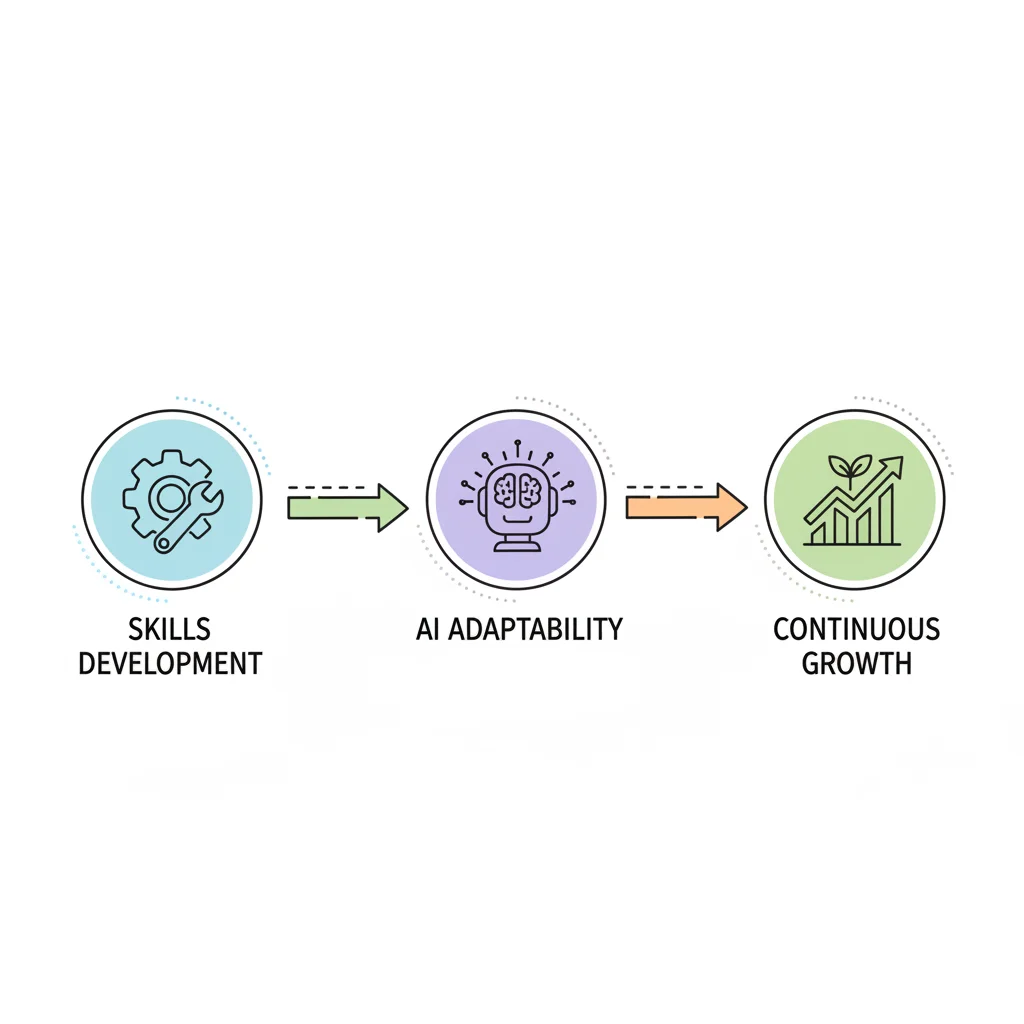
As AI becomes a standard part of the workplace, worrying about losing your job is normal. However, this shift actually points toward a significant chance to focus on skills that make humans unique. AI is advanced, but it simply cannot copy the specific abilities that define us as people.
Stop looking at automation as a threat. Instead, see it as a teammate that can do a lot of the heavy lifting. AI is great at sorting through massive data sets, doing repetitive work, and finding patterns. This lets IT pros spend their time on high-level strategy and projects that cause real growth. Staying relevant in your career means building skills that software helps with but cannot do on its own.
This isn't just a theory; it is happening right now. A 2022 World Economic Forum study found that 85% of companies were ready to use more automation and AI tools (verify latest figures on the WEF site). This shift created a massive need for people with human skills who can work with these tools. If you want more details, the full research about this technological shift covers how the workplace is changing.
Mastering Complex Problem Solving
AI is good at solving problems that have clear rules and plenty of data. It fails when things get messy or when it has to connect ideas that do not seem to fit. It also struggles to define a problem that hasn't been clearly explained yet. This is where your ability to think critically becomes your best tool.
Solving hard IT problems is not just about finding an answer in a database. It requires asking better questions and looking at the whole picture. It is the gap between a bot flagging a network error and a person finding the actual reason for it. Maybe there is a small change in how things were set up or a connection that the data didn't show. These are the types of challenges found in top certifications like the CCIE or AWS Certified Advanced Networking – Specialty.
To get better at this, you need to practice. The next time you find a bug that won't go away, avoid reaching for a fast patch. Stop and look at the whole system. Map out every part and talk to the people involved. Try to find solutions that aren't obvious. Our guide on how to improve critical thinking skills has steps you can take today.
Cultivating Genuine Creativity
Real creativity is about making something new that actually works. Generative AI can make text, code, and pictures, but it is just mixing up things it has already seen. It does not have your background, your memories, or the gut feelings that drive new ideas.
Being able to think for yourself is a major advantage. It leads to better software and more efficient ways to run a business. It lets you look at the same facts as everyone else and find a way to make a cloud setup run better or a network stay safer.
Treat AI as a high-level research assistant, not as the leader of your project. Use it to collect facts and handle the boring parts of a project. This gives you more mental space for the hard, creative thinking that leads to actual progress in the tech world.
Sharpening Your Emotional Intelligence
Emotional intelligence (EQ) is one of the hardest things for a machine to copy. It involves knowing your own emotions, understanding others, and building strong ties. AI can look at the words in an email to see if a person is mad, but it cannot feel bad for a customer whose site crashed.
It cannot inspire a team that is tired and stressed. Your ability to read a room, handle office politics, and build trust is worth a lot. As more of the technical work is done by machines, IT pros who can talk to people will be more important. This means managing what a client expects (PMP), leading a team through a crisis, or getting users to use a new system (ITIL).
Here are practical ways to improve your EQ today:
- Practice Active Listening: In your next meeting, try to listen just to understand. Do not plan your reply while the other person is still talking. Pay attention to their main point and ask questions to make sure you got it right.
- Solicit Feedback: Ask your team how you can communicate better. Do not get upset by what they say. Use their advice to improve how you work with others.
- Observe Non-Verbal Cues: Watch for body language and tone of voice. These often tell you more than the words being said. Knowing how a person really feels helps you respond better.
To keep your edge, look into guides like the complete AI Product Management roadmap for 2025. By focusing on these human skills, you aren't just saving your job. You are becoming a leader who can show others how to use new technology.
Building a Resilient Professional Network
Technical skills and credentials like AWS Certified Solutions Architect or CompTIA CySA+ get you through the door, but your professional circle ensures you stay in the room. This field changes rapidly. The people who know your work and trust your judgment act as an early-warning system for industry shifts. They provide a support structure and alert you to opportunities that never hit a public job board. Your network is not just a list of names; it is a resource that keeps you thriving over the course of a long career.
Old-school networking is dead. It isn’t about awkward cocktail hours or collecting stacks of business cards you will eventually throw away. If you want a career that lasts, stop asking what you can get and start asking what you can give. This shift turns a tedious task into a strategy for building real, mutual support. Your goal is not a massive list of names. It is a small "board of advisors" you can actually count on when you face a difficult decision or a sudden career change. By focusing on contribution rather than acquisition, you create a circle of people who are genuinely invested in your success.
From Collecting Contacts to Making Connections
A large LinkedIn following looks good on paper, but a list of thousands of strangers is often only a mile wide and an inch deep. Real value comes from quality. A resilient network must be diverse. It should include people from different industries, various job roles, and different points in their careers. You need to know junior developers who are using the latest tools, project managers who understand the budget, and seasoned enterprise architects who understand the long-term business strategy.
Do not just click the "connect" button and move on. That is a missed opportunity. Each interaction you have should be specific to that person. If you like a colleague’s project or read a post from an industry leader that changed how you think, say so. Mention the specific details. If they published a piece on cloud migration strategies or finished a project using DevOps principles, reference those points in your message. This makes your outreach feel human. It shows that you are paying attention to their work, which makes your message stand out from the automated noise most professionals receive.
- Be a Giver First: Consistently share useful resources, such as new NIST cybersecurity guidelines, or offer to introduce two people who could help each other. These small actions build social capital. When you are known as someone who provides value without being asked, others are much more likely to help you when you need it.
- Focus on a Two-Way Street: Strong professional relationships rely on a balance of give and take. You should always look for ways to offer value in exchange for someone’s time or advice. You might share a specific strategy you used to prepare for an ITIL exam or help a peer work through a difficult technical bug they mentioned on a forum.
- Engage Authentically: Do not just hit the "Like" button on every post you see. Add a comment that moves the conversation forward or asks a smart question. Join AWS User Groups or PMI Local Chapters and be a contributor, not just a spectator. Being a recognized voice in these communities is much more effective than having a high connection count.
The Power of Informational Interviews
One of the most effective tools for growth is the informational interview. Too many people ignore this because they think it is a waste of time or too social. This is not a secret job interview. It is a short, focused conversation where you ask about a person's career path. You want to know what challenges they face every day and what lessons they have learned the hard way.
Most professionals are surprisingly willing to help if you approach them with real curiosity and respect for their schedule. Asking for a mere 15-20 minutes (verify the individual’s availability before scheduling) of their time is an excellent way to get a perspective that you simply cannot find by searching online. You get a view of which skills actually matter in the day-to-day work environment, the specific technical hurdles common in different IT roles, and where the industry is headed next. These details are vital when you are deciding which certification path to take, such as choosing between Microsoft Azure or Google Cloud.
Your network functions as your career’s essential safety net. It is more than a tool for finding a new job; it is vital for navigating your current role, validating your innovative ideas, and identifying emerging opportunities before they become public knowledge.
Always send a sincere thank-you note after these conversations. It is a basic step that many people skip, but it solidifies the connection. Stay alert for future opportunities where you can return the favor or share a resource that might help them. This keeps the lines of communication open for the long term.
Finding a Mentor and Becoming One
A mentor acts as a career accelerator. They give you advice tailored to your specific situation and help you avoid the common mistakes people make when starting a career or trying to pass a difficult certification. They can also mention your name in rooms you haven't entered yet, acting as an advocate for your skills and potential.
You do not usually find a mentor by asking a stranger a formal question like "Will you be my mentor?" That approach often feels like an immediate burden to the other person. Instead, find someone whose work you respect and build a relationship slowly. Read their work and ask them a specific question about a project they led. Ask for their advice on how to study for an advanced CompTIA exam or how they managed a difficult cloud migration project. Mentorship usually develops naturally from these small, consistent interactions rather than a single formal request.
Eventually, you need to be the mentor. Helping someone who is a few steps behind you reinforces your own knowledge. Explaining a complex topic to a junior colleague helps you understand it better yourself. It also builds your reputation as a leader and a reliable source of information in your field. This continuous cycle of teaching and learning is what keeps a professional community strong and ensures that everyone within it stays prepared for whatever comes next in the industry.
Bringing It All Together: Your Career Resilience Plan
What is the main takeaway for IT professionals? Staying relevant in this field does not require a massive, one-time overhaul of your entire knowledge base. Instead, you should focus on building a sustainable system for growth by making small, consistent adjustments to your daily routine. Future-proofing is less about a frantic sprint to learn every new tool and more about maintaining a mindset of curiosity and steady adaptation.
We have identified the core elements of this approach. It begins with an honest assessment of your current technical skills compared to market requirements, especially regarding industry-standard certifications. Next, you must commit to continuous learning while developing specific human-centric skills that AI cannot easily replicate. Finally, you need to build a professional network that provides genuine support and technical insights when you face new challenges.
The future of employment is not a force beyond your control. You shape your career path through deliberate, strategic choices made over months and years.
Resilience comes from the small actions you take every day. These efforts compound over time, turning uncertainty into a chance to advance rather than a reason for fear.
Starting is often easier than people think. What is one specific task you can finish this week? You might block out 30 minutes on your calendar to study a single module for the Azure Administrator certification (verify current requirements on the Microsoft site). Or you could send a brief message to a professional whose work you follow to ask a targeted question. You have the plan; now you just need to execute the first step.
Common Questions Answered
When you start mapping the future of your IT career, practical questions often come up. These are the specific concerns held by professionals who want to move from strategy to action. Let's look at some of the most frequent questions about staying competitive and building a lasting path in tech.
Which Skills Should I Be Learning Right Now?
Many people focus on high-demand technical skills like cloud computing with AWS, Azure, or GCP, data analytics, and cybersecurity. These are excellent choices, especially certifications like CompTIA Security+ or CISSP, because these fields provide many job opportunities. However, the skills that keep a career safe over decades are "durable" human traits. These include high-level critical thinking, adaptability, and clear communication.
Effective communication is especially vital for anyone holding a PMP or ITIL certification, as these roles require translating technical needs into business results. Emotional intelligence also falls into this category. These human abilities are difficult for AI to replicate, making them resistant to automation.
The best strategy is to balance your growth. You need technical knowledge and current certifications to get noticed by recruiters today. But you must support those technical skills with a strong base of human competencies. This combination creates professional resilience. Your skill set should include technical expertise that gets you into a role and durable human skills that keep you valuable as technology changes. If you ignore one, the other becomes less effective.
How Do I Find Time to Learn with an Already Packed Schedule?
Finding time is a major hurdle for busy IT professionals. The solution is not to look for huge, open blocks of time that never appear. Instead, integrate learning into the routine you already have. This is where micro-learning works well.
Can you set aside 15-30 minutes every day? That small window is enough time to read a technical article, watch a video on a new cloud service, or listen to a tech podcast while you travel. Consistency matters more than occasional long study sessions.
Treat your study time like an appointment you cannot miss. Put it on your calendar. Even if you start with only one hour per week, that dedicated time makes a difference. You should also look for ways to learn while you work. Ask to join a project that uses a technology you do not know yet. This hands-on work is often the most effective way to learn. Many certification providers, including Microsoft and AWS, offer modular learning paths designed for this type of incremental progress.
Is It Better to Be a Specialist or a Generalist?
The most effective IT professionals usually aim to be both. We call these "T-shaped" individuals. The letter T has a vertical bar and a horizontal bar. The vertical stem represents deep expertise in one specific area. The horizontal top represents a wide range of general knowledge.
This model fits the modern IT environment perfectly. You should build deep, recognized skill in one primary area. You might become a Certified Kubernetes Administrator (CKA) or a Microsoft Certified: Azure Solutions Architect Expert. This is your vertical bar. At the same time, you need a functional understanding of other fields. You should know enough about networking, security, and databases to work well with other teams. This makes you an expert who can also see how a whole cloud project fits together.
Here is how the T-shaped model works:
- Deep Specialization (Vertical Bar): This expertise makes you the person people call for difficult, specific problems. It is your technical strength.
- Broad Knowledge (Horizontal Bar): This gives you the flexibility to connect different ideas. It allows you to understand the views of your coworkers in development, operations, or security.
Becoming a T-shaped professional is a smart move. Your deep skills make you valuable, while your broad knowledge keeps you adaptable for the future.
Ready to build the skills you need to move forward and earn respected certifications? At MindMesh Academy, we offer expert certification preparation to help you pass your exams and master the concepts you need for long-term success. Explore our detailed courses today and take the next step in preparing your IT career for the future at Explore IT Certification Practice Exams.

Written by
Alvin Varughese
Founder, MindMesh Academy
Alvin Varughese is the founder of MindMesh Academy and holds 20 professional certifications including Microsoft Agentic AI Business Solutions Architect, AWS Solutions Architect Professional, and Azure DevOps Engineer Expert. He's held senior engineering and architecture roles at Humana (Fortune 50) and GE Appliances. He built MindMesh Academy to share the study methods and first-principles approach that helped him pass each exam.