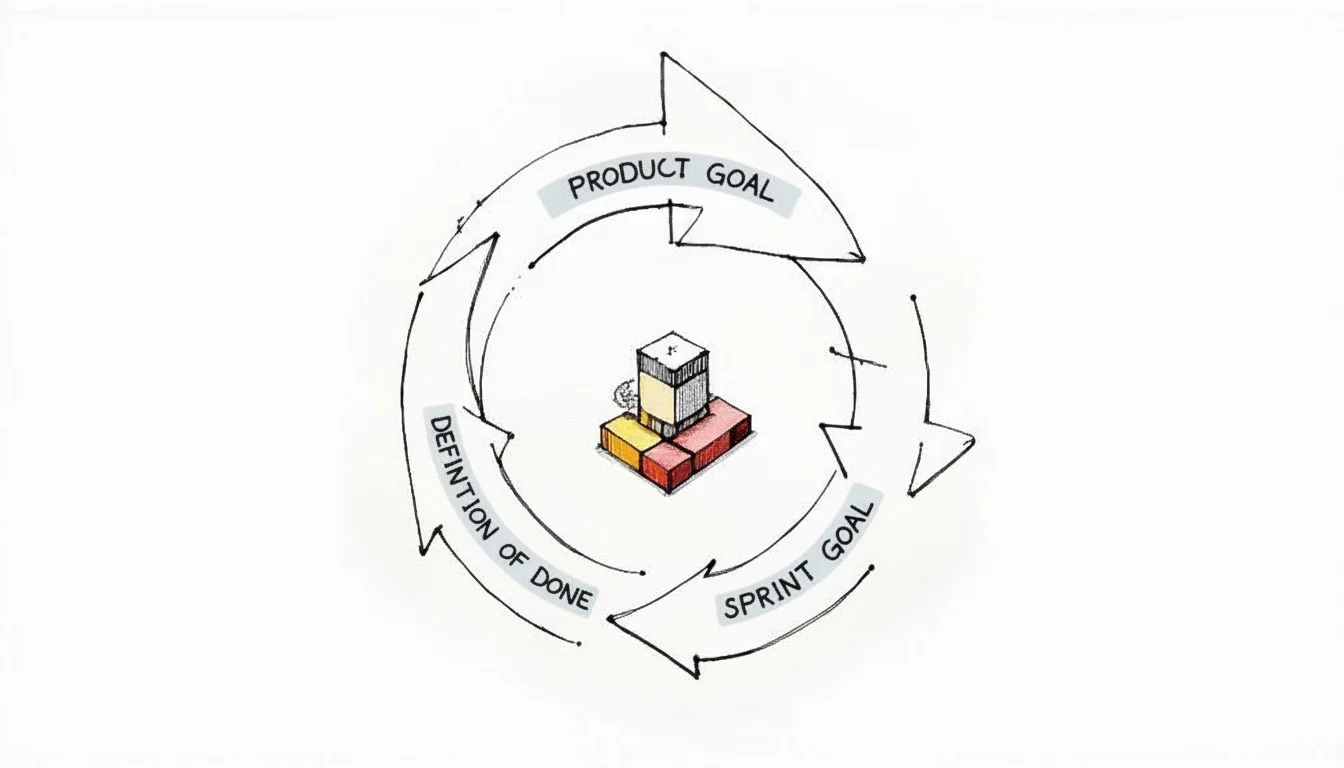
What is Scrum Framework? A Complete Guide to Agile Success
What is Scrum Framework? A Complete Guide to Agile Success
Scrum is a lightweight framework used to manage complex work and deliver high-value products. For IT experts, this approach involves more than organizing tasks. It offers an adaptable method to drive innovation while meeting changing customer needs. Small, skilled teams use Scrum to collaborate and build features incrementally during short, focused cycles called Sprints. This repetitive process helps developers refine their work based on constant feedback. Each cycle brings the product closer to a successful outcome.
Breaking Down the Scrum Framework
 Scrum provides a structured and flexible way to handle iterative product development, allowing for fast adaptation and the steady delivery of value.
Consider a team in an IT department developing a new internal enterprise application or migrating a critical database to a cloud platform like AWS or Azure. A traditional project management approach might involve spending months crafting a fixed, rigid plan for the entire lifecycle. With Scrum, the team operates differently. They break the massive project into small, manageable pieces of work, prioritizing the specific features that deliver the most immediate value to the organization.
The team selects the most critical system components and commits to finishing a working, shippable version of them within a short, time-boxed period. This window typically lasts one to four weeks and is known as a Sprint. This continuous loop of planning, building, testing, and reviewing creates a steady, predictable rhythm. It keeps the team members focused on their immediate goals while allowing them to adapt quickly to new technical requirements or unexpected challenges that appear during development.
This iterative process is the core of what the Scrum framework is. Instead of long, drawn-out development cycles that lead to uncertainty, Scrum uses regular checkpoints. These built-in feedback loops give stakeholders and customers a chance to see tangible progress and offer direct input. This ensures the final solution truly matches actual business needs. Such flexibility makes Scrum a practical choice in the IT world, where software versions and business requirements move fast.
To give you a quick overview, the table below summarizes the core components that make Scrum work.
Scrum Framework at a Glance
| Component | Brief Description |
|---|---|
| Scrum Team | A small, self-managing unit that includes a Product Owner, a Scrum Master, and Developers. |
| Scrum Events | A set of five specific, time-boxed meetings designed to provide structure and a consistent rhythm. |
| Scrum Artifacts | Three key tools—the Product Backlog, Sprint Backlog, and Increment—that make the work and its value transparent to everyone. |
| Scrum Values | The five core values (Commitment, Courage, Focus, Openness, and Respect) that guide the collective mindset and daily collaboration. |
| Pillars of Empiricism | The foundational principles of Transparency, Inspection, and Adaptation that drive the entire development process. |
Each of these components plays a vital role in a system where IT teams can learn, improve, and consistently deliver high-quality solutions. This systematic approach is also why Scrum methods are often a part of professional certification exams, highlighting their importance in modern project management.
Scrum is built on an empirical approach. This means it is based on making work and processes visible, frequently inspecting the results, and adapting based on real-world learning. It prioritizes continuous improvement found through tangible results rather than following a static, pre-defined plan.
As we look closer, we will explore how roles, events, and artifacts fit together to create a collaborative and effective working environment for any IT project.
The Pillars and Values Driving Scrum
 The foundational pillars of Transparency, Inspection, and Adaptation are supported by the five core Scrum values, creating a functional framework for iterative development.
To truly grasp Scrum, IT professionals must look beyond meetings and job titles. At its heart, Scrum embodies empiricism—the idea that teams learn by doing and make decisions based on real-world evidence. This entire approach is supported by three core pillars: Transparency, Inspection, and Adaptation.
Consider these pillars in the context of managing an IT infrastructure project. Transparency functions like a real-time dashboard showing network performance, system health, and project progress. Everyone involved—from network engineers to business stakeholders—needs a clear, unobstructed view of the work, its status, and any potential roadblocks. There are no hidden outages or secret project delays. What the team sees is what actually exists. This clarity builds trust and enables informed decisions based on data rather than guesses.
This clarity makes the next pillar, Inspection, possible. This is similar to a cybersecurity analyst constantly monitoring logs, running vulnerability scans, and reviewing system configurations to identify gaps. In Scrum, teams formally and informally inspect their progress and processes frequently during events like the Daily Scrum and the Sprint Review. They look for deviations from the goal or areas where the workflow could be improved.
Finally, we have Adaptation. If an inspection reveals a critical security vulnerability, the team does not simply proceed as planned. They adjust their work immediately. This might involve prioritizing a high-priority patch or reconfiguring a firewall. When a Scrum team inspects their work and finds something is not optimal or could be better, they adjust their plan or their process. These changes often happen during the Sprint Retrospective to get the project back on track or improve the efficiency of future Sprints.
The Three Pillars of Empiricism
These pillars are not abstract concepts. They form a tight feedback loop that keeps IT projects grounded in reality and continuously improving over time.
- Transparency: All key aspects of the development process and the product's progress must be visible and understandable to everyone responsible for the outcome. This means using common tools like Jira or Azure DevOps, speaking a common language, and ensuring a shared understanding of what "done" truly means for every feature or software component.
- Inspection: The team must frequently check their progress toward the Sprint Goal and the evolving product Increment to spot any problems, deviations, or emerging risks. This includes looking for technical debt or performance issues before they escalate into major failures.
- Adaptation: If an inspection reveals that the project is heading off course or could be improved, the process or product must be adjusted as quickly as possible. This could mean refining requirements, changing technical approaches, or altering how the team collaborates.
A framework needs more than structural pillars. It needs a behavioral foundation, especially when building complex IT solutions. That is where the Scrum values come in. If the pillars define the way the empirical process works, the five values describe the mindset and behavior that enable it. They shape the team culture and guide daily interactions. Without these values, Scrum can feel like merely going through the motions. When an IT team truly adopts them, they create an environment of trust and safety where the three pillars can actually function.
The Scrum values are what transform a collection of rules into a pathway for collaborative problem-solving and high performance. They provide essential behavioral guidance when teams face technical challenges or tight deadlines. Living these values is what transforms a group of IT professionals into a cohesive unit that can solve tough problems together, whether it is debugging a critical system or architecting a scalable cloud solution.
The Five Scrum Values
- Commitment: Team members personally commit to achieving the team's goals and supporting each other. This is not just a promise to a manager. It is a shared pledge to deliver a working Increment, much like a DevOps team committing to a successful release cycle.
- Courage: The team has the courage to do the right thing—to tackle difficult technical problems, challenge outdated assumptions about system architecture, and be honest about obstacles. This includes admitting when a design flaw exists, even if it means extra work.
- Focus: Everyone concentrates on the work of the Sprint and the team's shared goals. In a noisy IT environment, this means tuning out distractions and prioritizing the tasks that contribute to the Sprint Goal. It requires resisting the urge to context-switch constantly between different projects.
- Openness: The team and its stakeholders agree to be open about the work, the progress, and the challenges that come with it. This includes sharing test results openly, admitting when a technical approach is not working, and being receptive to feedback from users or security audits.
- Respect: Team members respect each other as capable, independent professionals, acknowledging diverse technical skills and perspectives. It is the recognition that every engineer, tester, and analyst brings specific expertise needed to solve complex problems.
Reflection Prompt: Consider an IT project you've worked on. How might stronger adherence to these Scrum values, particularly Transparency and Courage, have positively impacted the outcome or team dynamics?
Understanding the 3 Scrum Team Roles
A high-performing Scrum team operates much like a championship sports team. It is a small, cohesive group where every member has a specific function, yet everyone shares a collective goal: delivering a valuable Increment. In this environment, traditional IT project hierarchies do not apply. Scrum relies on collaboration, shared accountability, and self-organization rather than a single manager who assigns tasks to individuals.
The structure consists of three distinct roles: the Product Owner, the Scrum Master, and the Developers.
There is no project manager in the classic sense. Leadership is distributed across these three roles. This arrangement is intentional. It creates a sense of ownership and allows the team to make decisions quickly. By removing the need for multiple layers of management approval, the team can respond to new technical data or shifting business priorities in real time.
The Product Owner: The Visionary
The Product Owner acts as the strategic lead for the project. They focus on the "why" and the "what" of the work. Their main task is to maximize the value of the product that the Developers are building. The Product Owner is the only person accountable for the Product Backlog. This backlog is the prioritized master list that contains every piece of work required for the product.
In a practical scenario, such as building a new cloud-native application on Azure, the Product Owner defines the vision. They look at business requirements and decide which features will provide the most value to the organization or the end users. They do not tell the engineers how to write the code or how to configure the cloud services. That technical execution belongs to the Developers. However, the Product Owner is fully accountable for ensuring the team builds the right features in the right order.
To succeed in this role, the Product Owner must perform several critical tasks:
- Defining the Work: They must clearly state and prioritize every item on the Product Backlog. This often takes the form of user stories. A typical example might be: "As a system administrator, I want to monitor resource utilization in real-time to manage performance."
- Maintaining Transparency: They ensure the Product Backlog is visible and understood by the Scrum Team and all stakeholders. There should be no mystery about what the team is working on or what is coming next.
- Providing Context: They must give the Developers enough detail to understand the value and scope of each task. Without this context, the Developers cannot make informed technical decisions.
The Product Owner represents the voice of the customer. They spend their time balancing user feedback, market trends, business goals, and technical limitations. This role requires a deep understanding of the specific business domain. Many professionals in this position hold certifications in business analysis or cloud architecture to better bridge the gap between business needs and technical possibilities.
The Scrum Master: The Coach
The Scrum Master is a leader who serves the team. Their focus is not on the product features, but on the health of the team and the integrity of the Scrum process. They help everyone involved understand Scrum theory and practice. You can view them as a coach who ensures the team follows the rules while constantly finding ways to improve their performance.
Removing impediments is a major part of this role. An impediment is any hurdle that slows the team down. In an IT setting, this might be a software bug in a development tool, a delay in getting an API key from another department, or a company policy that makes agile work difficult. The Scrum Master works to clear these paths. They also facilitate Scrum events, ensuring these meetings remain productive, stay within their time limits, and achieve their specific goals.
It is a mistake to view the Scrum Master as a boss or a traditional manager. They do not have direct authority over the team members' careers or daily tasks. Instead, their leadership comes from coaching and guiding the team to become self-managing. They ensure the group adheres to the principles of Scrum, even when the pressure of a deadline makes it tempting to cut corners.
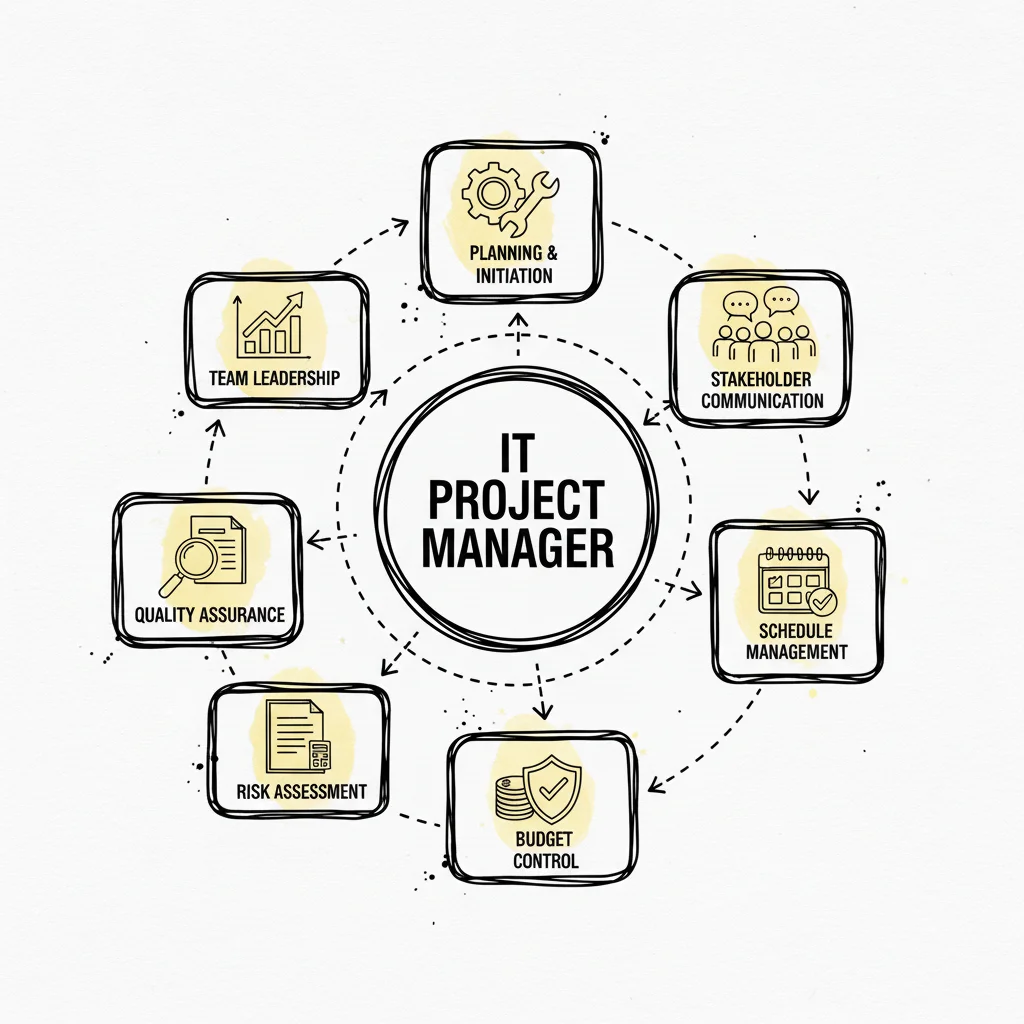
The Scrum Master role differs significantly from a traditional IT project manager. However, some leadership qualities do overlap. You can see how these skills compare by looking at the work of IT project managers and seeing how the PMP certification (verify current pricing on the vendor site) prepares people for complex environments. Even when using agile frameworks, the ability to manage risk and communicate with stakeholders remains vital.
The Developers: The Makers
The Developers are the professionals who do the work to create the product Increment. In the Scrum framework, "Developer" is a broad term that covers many specialties. It does not just refer to people who write code. A Scrum development team is cross-functional. This means the group has all the skills necessary to deliver a "Done" and usable piece of work by the end of every Sprint.
This group might include software engineers, but it also includes cybersecurity analysts, network specialists, UI designers, or quality assurance testers. If a person's skills are needed to reach the Sprint Goal, they are part of the Developers. They are responsible for creating the Sprint Backlog, which is the specific plan for the current Sprint.
Quality is the responsibility of the Developers. They measure their work against a shared Definition of Done. This is a set of standards that every Increment must meet before it is considered finished. Developers are given the authority to manage their own work. They decide the best technical way to turn a backlog item into a functional part of the product. Whether they are writing an AWS Lambda function, configuring an ITIL-compliant service, or building a new enterprise application interface, the technical path is theirs to choose.
Scrum Team Roles and Responsibilities
| Role | Primary Focus | Key Responsibilities |
|---|---|---|
| Product Owner | Maximizing Product Value | Owns and prioritizes the Product Backlog; represents stakeholders; defines the product vision and features. |
| Scrum Master | Process and Team Health | Coaches the team in Scrum; removes impediments; facilitates events; encourages self-management and continuous improvement. |
| Developers | Delivering a Usable Increment | Creates the Sprint plan (Sprint Backlog); builds, tests, and integrates the product; ensures quality against the Definition of Done; adapts their plan daily. |
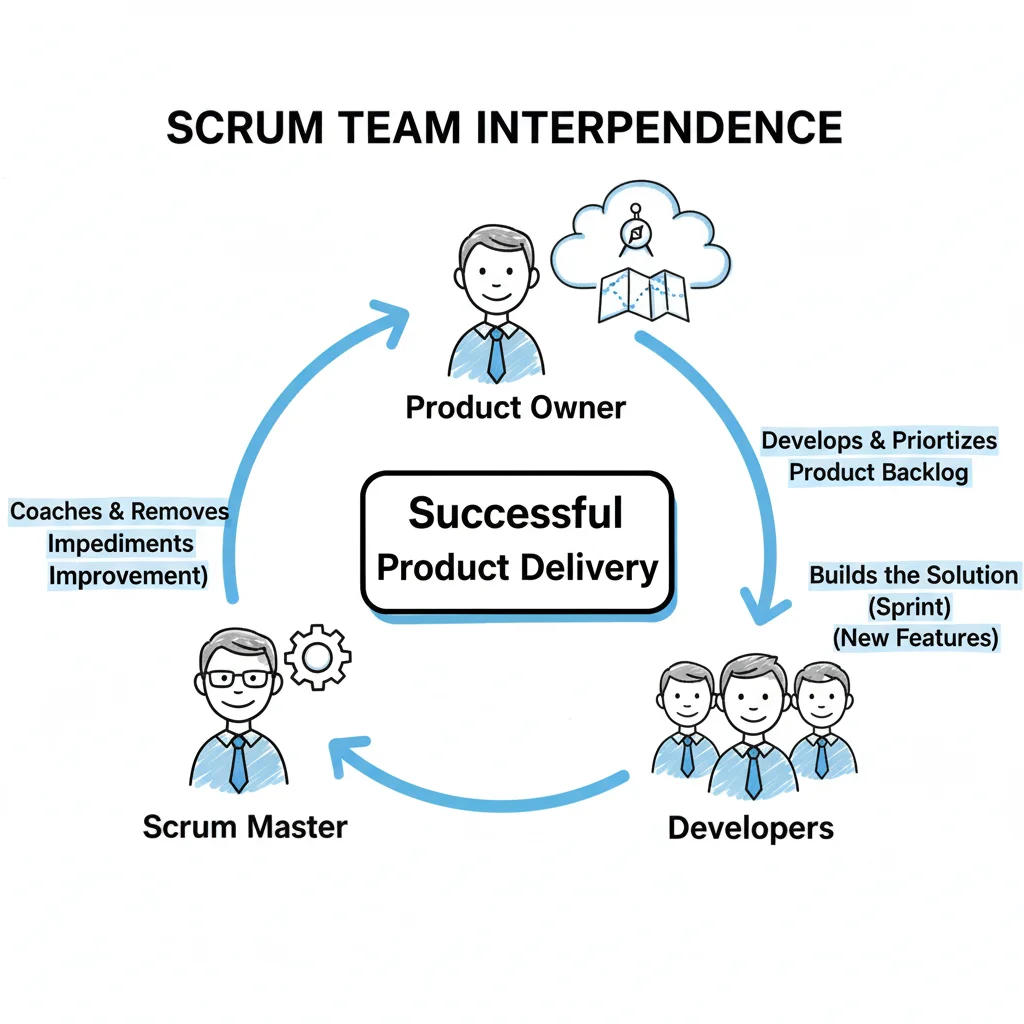
The table above shows how these roles depend on one another. The Product Owner sets the direction. The Developers build the actual solution. The Scrum Master keeps the process moving by removing obstacles and ensuring the team stays focused. Success depends on all three roles performing their specific duties while working as a single unit.
 The flow of work in Scrum illustrates the distinct yet interconnected responsibilities of the Product Owner, Developers, and Scrum Master, all contributing to the creation of the Increment.
The diagram shows that the Product Owner is always looking ahead. They refine the Product Backlog based on new information from the market or stakeholders. At the same time, the Developers focus on the short-term goals found in the Sprint Backlog. They update this plan every day to reflect their progress. This creates a balance between long-term strategy and daily technical execution. By separating these concerns while keeping the roles in constant communication, Scrum helps teams avoid the confusion often found in traditional development projects.
This structure also ensures that technical debt does not pile up unnoticed. Because the Developers are responsible for the Definition of Done, they have the power to insist on quality. They don't just "pass the buck" to a separate testing department. Likewise, the Product Owner cannot force the team to take on more work than they can handle in a Sprint, which prevents burnout and maintains a sustainable pace of work. The Scrum Master watches these interactions to make sure the balance of power remains healthy. When these three roles function correctly, the team becomes more than the sum of its parts. They move from simply completing tasks to delivering actual business value in predictable cycles.
The Events That Create Scrum's Rhythm
 Scrum events provide a predictable rhythm, facilitating regular inspection and adaptation to keep IT projects on track and maximize value delivery.
Scrum does not rely on a single role or tool to succeed. Its strength comes from a steady, predictable rhythm. This framework replaces messy ad-hoc meetings with a clear structure of five formal events. Each event is time-boxed. This means every meeting has a set maximum duration. This regularity limits the need for "quick sync" interruptions that often break a developer’s concentration and stall progress.
These events act as the heartbeat of the project. They offer consistent opportunities for the Scrum Team to inspect their work and adjust their plan. This keeps the team moving forward efficiently. It does not matter if they are building a new application feature or resolving a critical database error. The structure remains the same.
The container for all other activities is The Sprint. This is a fixed-length work period that usually lasts between one and four weeks. During this time, the team focuses on creating a "Done," usable, and potentially releasable piece of the product. As soon as one Sprint concludes, the next begins immediately. There are no breaks between them. This cadence maintains a steady pace and helps the team stay focused on deadlines. This predictability is helpful for certifications like PMP that focus heavily on project planning and execution.
Sprint Planning: Kicking Off the Work
Each Sprint begins with Sprint Planning. This collaborative session involves the entire Scrum Team. They meet to determine two major things: what can be delivered in the upcoming Sprint and how they will accomplish that work. This is not a rigid contract or an unchangeable commitment. Instead, it is a realistic forecast for the next iteration based on what the team knows at that moment.
The Product Owner starts the meeting by presenting the highest-priority items from the Product Backlog. They explain the business value of these items and answer questions from the group. The Developers then analyze these items carefully. They ask technical questions to avoid confusion later. For instance, they might ask, "Can we implement this using serverless functions on AWS Lambda?" or "Which specific APIs do we need to integrate with for the external payment gateway?" They break these high-level items into smaller, manageable tasks.
The Developers then select the amount of work they believe they can realistically finish. This decision is based on their current capacity and how they performed in previous Sprints. This chosen collection of items becomes the Sprint Backlog. To give the work a unified purpose, the team creates a Sprint Goal. This is a single, clear objective for the iteration. Examples might include "Implement core user authentication for the new mobile app" or "Stabilize database performance by 20%." Having a goal prevents the team from just checking off random tasks without a sense of direction.
The Daily Scrum: A Quick Sync-Up
Once the Sprint starts, the Daily Scrum serves as the team's daily pulse check. This is a quick, 15-minute meeting held specifically for the Developers. It allows them to sync their efforts and plan their work for the next 24 hours. This is not a status report for a manager or a stakeholder. It is a planning session for the people doing the actual work. It encourages teams to manage themselves and collaborate without outside direction.
The goal is to inspect progress toward the Sprint Goal and adjust the Sprint Backlog if things change. During this time, team members discuss what they finished since the last meeting and what they plan to tackle today. They also identify any roadblocks or impediments. A developer might say, "I am blocked while waiting for access to the Azure subscription," or "The integration test suite is failing unexpectedly on the staging server." Highlighting these issues early helps the team solve them before they cause major delays.
The Daily Scrum is necessary to maintain momentum in technical projects. It is the team’s chance to self-manage and fix their course every single day. This ensures everyone stays aligned and focused on the technical challenges at hand.
To keep these daily meetings productive, many teams find ways to keep the conversation fresh. If you need ideas, you can find questions for engaging Daily Standups that turn a standard check-in into a strong planning moment.
The Sprint Review: Inspecting the Outcome
When the Sprint ends, the team holds a Sprint Review. This is not a formal or stiff presentation. It is an informal, collaborative session where the Scrum Team and key stakeholders meet. Stakeholders might include product managers, business users, or compliance officers. The goal is to look at what the team accomplished and decide what to do next. They inspect the new product Increment and update the Product Backlog based on the results.
The Developers show the work that is truly "Done." This means they demonstrate functional features, system improvements, or bugs that were fixed and tested. Stakeholders provide immediate feedback. They might ask, "Does this feature meet our operational needs?" or "How well does this integrate with our current legacy systems?" This direct communication creates a feedback loop. It ensures the product stays on the right track. It also stops the team from building features that users do not actually need.
The Sprint Retrospective: Improving the Process
The final event of any Sprint is the Sprint Retrospective. This is a private time for the Scrum Team to inspect its own performance. It is a chance to reflect honestly on how the last few weeks went. They look at their people, their relationships, their processes, and their tools. This is the right time for an IT team to talk about the speed of their CI/CD pipeline or the effectiveness of their automated testing strategy.
The team discusses what went well and what problems occurred. They might note that "Our deployment process was flaky this week" or "We had too many interruptions from other departments." They do not just complain; they look for solutions. From this talk, they choose one or two specific improvements to try in the very next Sprint. This event is the primary driver of continuous improvement. It sits at the center of the Scrum framework to help teams become more effective over time.
The five events work together in this specific order:
- The Sprint: This is the foundation for everything else. It creates a consistent rhythm of work and allows for iterative development.
- Sprint Planning: This event defines what will be built and how the team will build it. It sets the objectives for the developers.
- Daily Scrum: A 15-minute daily session for Developers to plan their day and manage their progress toward the shared goal.
- Sprint Review: A session to inspect the product with stakeholders. It gathers feedback and updates the Product Backlog to match business value.
- Sprint Retrospective: A dedicated time for the team to reflect on their own habits and tools. It identifies ways to increase effectiveness in future Sprints.
These five events create a cycle that corrects itself. They help technical teams deliver value while improving their methods every single Sprint. By following this rhythm, teams can handle changing requirements without losing their focus or their momentum.
How Scrum Artifacts Make Work Visible
While Scrum events establish the rhythm of a project, the artifacts ensure that work remains visible to every stakeholder and team member. These tangible tools allow a Scrum team to define requirements, plan execution steps, and track actual progress. They function as a shared map and logbook for the team. Each artifact provides a clear picture of the current status and the future direction of an IT project.
The three primary artifacts—the Product Backlog, the Sprint Backlog, and the Increment—focus on transparency. When the plan and the results are open to inspection, teams can make adjustments based on objective reality rather than assumptions. Each artifact includes a specific commitment. These commitments keep the team focused and provide a clear definition of what success looks like at different stages of the project.
The Product Backlog
The Product Backlog serves as the primary source of truth for all work required for the product. It is an evolving, ordered list that contains every feature, enhancement, and fix necessary to improve the solution. This list covers technical improvements such as refactoring legacy code, upgrading server operating systems, or patching security vulnerabilities. It acts as the master to-do list for the IT project from its initial concept until the product is eventually retired.
The Product Owner carries sole responsibility for managing this backlog. This role involves constant refinement and prioritization to ensure the most valuable tasks remain at the top of the list. The backlog is never finished or static. It changes as market conditions shift, new security threats appear, or the team gains a better understanding of what users actually require. This makes it a dynamic reflection of both the current state and the future goals for any IT service.
The commitment for the Product Backlog is the Product Goal. This represents a long-term objective that describes a future state the team is working toward. For example, a goal might be to "Become the primary cloud-based CRM solution" or to "Maintain 99.99% uptime for all mission-critical services." Every item added to the backlog should represent a specific step toward this goal. This provides the team with a clear sense of purpose and explains the "why" behind their technical tasks.
The Sprint Backlog
At the start of every Sprint, the team collaborates to build the Sprint Backlog. This is not a static checklist. It consists of three distinct elements: the Sprint Goal (the purpose), the specific Product Backlog items selected for the current cycle (the "what"), and a detailed plan for delivery (the "how"). For technical teams, the "how" often involves breaking down high-level requirements into specific tasks. These might include actions such as "configure AWS S3 bucket permissions," "write unit tests for the login API," or "deploy the updated Docker container to the Kubernetes cluster."
This backlog is the specific plan created by the Developers for the Developers. They own and manage it throughout the Sprint. As they complete tasks or discover new technical requirements, they update the backlog to reflect the real-time status of the work. This level of transparency makes it easy for anyone to see how the team is progressing toward the Sprint Goal.
The commitment for this artifact is the Sprint Goal. This goal provides a focal point for the team. Rather than simply completing a series of unrelated tickets, the team works to deliver a cohesive piece of value. A goal might be to "Deliver a functional user login and registration module" or "Migrate all user data to the new database schema without downtime." The Sprint Goal defines why the work being done during the current period matters to the business.
The Increment and the Definition of Done
The Increment is the concrete result produced by the end of a Sprint. It represents the total value of all Product Backlog items completed during the current Sprint, integrated with all work finished in previous cycles. For an Increment to be valid, it must be usable and potentially shippable. It stands as a tangible piece of progress toward the long-term Product Goal and must be ready for deployment or release to the end users at any time.
To ensure that every part of an IT solution meets quality requirements, the team uses the Definition of Done (DoD). This is a formal agreement on the quality standards that every piece of work must meet before it is considered part of an Increment. This commitment ensures that "done" means the same thing to everyone involved and prevents technical debt from accumulating.
A team's Definition of Done for a software project might include:
- The code has been peer-reviewed and follows established coding standards.
- All automated unit, integration, and acceptance tests pass successfully.
- The code meets established performance and latency benchmarks.
- Security scans return no critical vulnerabilities or unpatched dependencies.
- Technical documentation, API references, and system architecture diagrams are updated.
- The work meets all specific acceptance criteria set by the Product Owner.
- The feature is deployed to a staging environment and has passed User Acceptance Testing (UAT).
This shared standard is a primary reason for the high success rate of this framework. With roughly 75% of Agile practitioners using Scrum, its effectiveness is tied to how it improves quality and team collaboration. Research indicates that 46% of companies that move to Agile see measurable improvements in software quality. You can see more data on these findings in this study on agile adoption and software quality. The DoD ensures that every Increment is reliable and meets the standards often expected in professional certifications like ITIL or PMP. This consistency builds stakeholder trust and makes the development process more predictable over time.
The Business Benefits of Adopting Scrum
We have examined the roles, events, and artifacts that define how Scrum functions. The central question for IT leaders and professionals remains: why do so many organizations adopt this framework? The answer involves more than basic project management. It requires changing how an IT department functions to deliver value quickly and stay competitive.
Markets shift rapidly. A new cybersecurity threat can emerge overnight, or a competitor might launch a service that changes consumer expectations. Scrum provides a mechanism to pivot without derailing the entire operation. IT teams no longer follow rigid, year-long plans for infrastructure rollouts or software development. Instead, they respond to customer feedback, competitor moves, and shifting internal priorities at the end of every Sprint. This agility allows a company to stay relevant even when the industry changes around them.
Faster Value Delivery and Improved Quality
Adopting Scrum allows IT departments to put working products into the hands of customers much faster than traditional methods. Short, focused Sprints eliminate long waits for major releases. Teams deliver value through frequent updates, bug fixes, or infrastructure improvements. This cadence ensures that stakeholders see progress in weeks rather than months or years.
Speed is only part of the equation. Frequent delivery creates a feedback loop that guides the development process. Teams validate new system ideas and generate revenue from services much sooner. This ensures the final product meets actual user needs and prevents wasted effort on features that do not provide value. This approach also has a direct impact on the quality of the technical output:
- Continuous Inspection: Regular Sprint Reviews keep stakeholders involved throughout the process. They identify issues or suggest technical improvements early. This prevents expensive problems from surfacing later in the production cycle when they are harder to fix.
- Built-in Quality: The Definition of Done serves as a quality contract for every Increment. Nothing ships or integrates unless it meets these specific standards. This practice reduces technical debt and increases system reliability, reflecting core principles found in IT service management certifications like ITIL.
- Team Accountability: When an IT team owns its work from requirements through deployment and testing, the result is better. They take more pride in the results because they are responsible for the outcome. This ownership leads to higher quality and more stable solutions across the organization.
Enhanced Team Morale and Engagement
Scrum benefits the individuals performing the work as much as the business. It gives teams the autonomy to solve complex technical problems rather than just following a prescriptive list of tasks. This focus on self-organization serves as a strong motivator for developers, engineers, and analysts.
Trust and ownership drive IT professionals. These factors spark creativity and boost morale, encouraging people to contribute their best work. The rapid adoption of Scrum across the industry confirms these benefits. When people feel they have a say in how work is performed, they are more likely to remain engaged and committed to the project goals.
Data indicates that Scrum deployment and maturity are increasing within many organizations. By late 2024, deployment in scaling environments reached 60% within two years. Rising maturity levels suggest that IT teams are becoming more effective at applying the framework. Discover more insights on monitoring agile transformations.
Success requires investing in staff skills and professional development. Organizations should consider measuring the ROI on training to evaluate the impact on the IT department. To build this capability internally, managers must upskill employees in Agile methodologies. This is the first step toward creating a self-sufficient and high-performing Scrum organization. By focusing on these principles, companies can ensure their IT teams are prepared for the demands of modern business.
Frequently Asked Questions About Scrum
Getting a handle on roles, events, and artifacts is just the beginning of the process. Practical implementation often leads to questions from IT professionals who are starting to use Scrum in their daily routines. These questions help clarify how the framework operates within different project environments. Use this section as a reference to see how Scrum functions within the broader scope of product and project management. These answers address the transition from theoretical knowledge to the daily application of the framework in a technical setting.
What Is the Main Difference Between Agile and Scrum?
Aspiring IT leaders often ask this first. Agile is a mindset founded on the values and principles found in the Agile Manifesto. These values emphasize customer collaboration over rigid contracts and responding to change over following a plan. It is a philosophy that encourages iterative development and the frequent delivery of working software.
Scrum is the framework that puts these beliefs into practice. It provides a concrete structure for teams to follow. This structure includes three roles: the Product Owner, the Scrum Master, and the Developers. The framework defines specific events, such as Sprint Planning, the Daily Scrum, the Sprint Review, and the Sprint Retrospective. It also requires three artifacts: the Product Backlog, the Sprint Backlog, and the Increment. While Agile is the core belief in being adaptive, Scrum is a specific playbook used to bring those beliefs to life in a project team.
Simply put: Agile is the "why"—the belief in being adaptive and customer-centric. Scrum is the "how"—a specific set of practices and rules for managing a project team.
Can Scrum Be Used for Projects Other Than Software?
Scrum started in software development, but its core principles apply to any complex task. Breaking work into smaller chunks and gathering frequent feedback works in many departments. The framework helps teams manage complexity and deliver value incrementally. You will find Scrum teams operating in various non-software IT departments and other business areas:
- IT Infrastructure Teams: They apply Scrum to manage hardware refreshes and server migrations. For instance, a team might use a two-week cycle to configure a new Virtual Private Cloud (VPC) on AWS or deploy a Kubernetes cluster on Azure. This structure helps them identify configuration errors early before they affect the entire network.
- Cybersecurity Teams: These professionals use the framework to organize vulnerability assessments and manage the implementation of security controls. They can track the rollout of multi-factor authentication (MFA) across an organization or manage the remediation of risks found during a penetration test.
- Data Science and Analytics: These groups use Sprints to build data pipelines and train machine learning models. By working in cycles, they ensure that stakeholders see data visualizations and report drafts every few weeks. This prevents the team from spending months on a model that does not answer the business's actual questions.
- Marketing Operations: Teams use these cycles to manage campaign launches, search engine optimization (SEO) tasks, and technical content production. This allows them to react to market trends or search engine algorithm changes quickly.
- Human Resources: HR departments use Scrum to develop internal training modules or update policy handbooks. Breaking these documents into sections allows for faster internal review and approval.
If a project involves uncertainty or requires frequent validation from users, Scrum is usually a suitable choice for the team.
How Long Should a Sprint Be?
The Scrum Guide says a Sprint should be a fixed length of one month or less. Many IT teams prefer one-week or two-week cycles. These shorter windows allow for faster feedback and more frequent adjustments. Finding a duration that suits the team's capacity and the stakeholders' needs is essential. Once you choose a length, you must maintain it. This consistency creates a predictable rhythm. It allows the team to calculate their velocity, which is a measure of how much work they can finish in a single cycle.
A one-week Sprint provides an immediate feedback loop. It is useful when requirements change daily or when technical issues are urgent. The trade-off is the overhead; planning and review meetings happen every five business days. A four-week Sprint offers more time for concentrated technical work on difficult tasks. However, the risk of the Sprint Goal becoming irrelevant increases over a longer period. Most teams find that a two-week cycle provides enough time to finish meaningful work while keeping meetings manageable.
These concepts are part of many professional certification tracks. Understanding how these frameworks fit into strategic goals is a major component of modern management. To see how these methods work alongside traditional management, this PMP certification study guide offers more detail on integrating different styles of project oversight.
The team at MindMesh Academy focuses on helping IT professionals master complex technical subjects to improve their career prospects. By providing practical insights into frameworks like Scrum and offering courses led by experts, we provide the tools to build the skills and the confidence required to succeed. Explore our courses and start mastering these methodologies to meet your professional goals today.

Written by
Alvin Varughese
Founder, MindMesh Academy
Alvin Varughese is the founder of MindMesh Academy and holds 20 professional certifications including Microsoft Agentic AI Business Solutions Architect, AWS Solutions Architect Professional, and Azure DevOps Engineer Expert. He's held senior engineering and architecture roles at Humana (Fortune 50) and GE Appliances. He built MindMesh Academy to share the study methods and first-principles approach that helped him pass each exam.