
What Is Continuous Learning? Boost Your Career Growth
What is Continuous Learning: Boosting Your IT Career Growth and Certification Success
Continuous learning acts as the fundamental operating principle for a successful career in technology. It is far more than a simple to-do list item. This approach stands as the direct opposite of "cramming for an exam" or completing a one-time, intense burst of education for a specific degree or certification. Instead, you make education a natural, ongoing, and integrated part of your professional life as an IT specialist.
This practice involves a proactive, steady pursuit of new skills and knowledge. You might focus on mastering a cloud platform like AWS or Azure, studying cybersecurity best practices, or preparing for ITIL and PMP certifications. By maintaining this habit, you keep your expertise current and push your career forward. This commitment ensures you stay ready for any new challenge that arises within the technology sector.
Why Traditional Career Paths No Longer Work in Tech
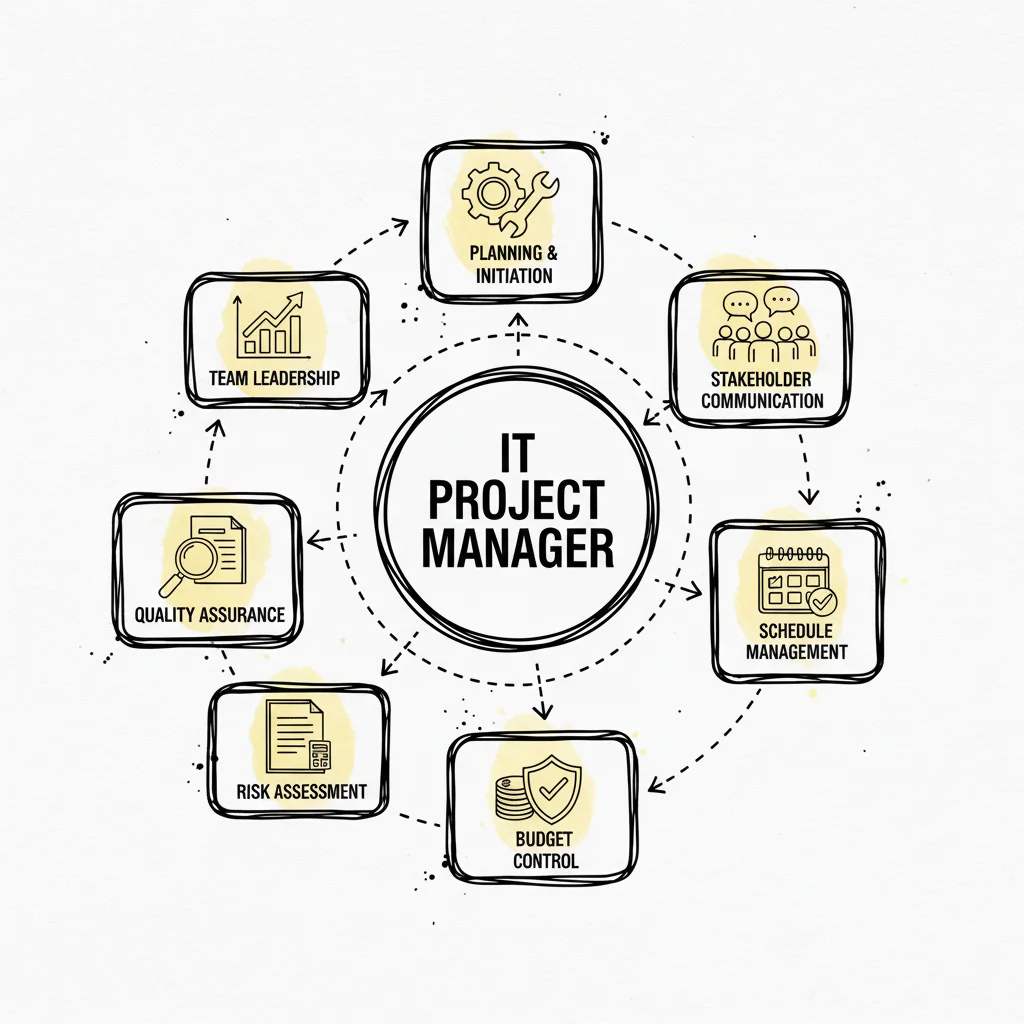 Keeping up with technology requires constant engagement and learning, mirroring the rapid pace of innovation.
The old career advice suggested that you earn a degree, find a job, and rely on that initial training for the next forty years. In the current technology sector, that model is a relic. Changes now happen monthly rather than over decades, making static knowledge obsolete almost as soon as it is acquired.
Consider a software developer who spent a decade becoming an expert in a specific programming language. Or look at infrastructure engineers who spent years managing physical, on-site hardware. These professionals often see serverless computing or Kubernetes-driven cloud architectures make their core skills secondary in a matter of months. This is not a cautionary tale; it is the daily reality for IT professionals. The ground moves too fast for any single set of skills to stay relevant without updates.
This speed explains why continuous learning is now a basic survival skill for anyone in a technical role. It requires you to change your perspective. You cannot view education as a finished event, such as passing one exam or finishing a degree. Instead, you must treat learning as a permanent part of your professional life. Individuals are not the only ones making this change; businesses are investing heavily in this shift to stay alive.
Reports indicate the global corporate eLearning market will reach $325 billion by 2025. This spending is not an accident. It is a direct response to a market where technical skills have a shorter shelf life than ever before. To stay competitive, organizations must ensure their teams learn new methods as they emerge. For the individual, this means your ability to learn is often more valuable than the technical facts you already know.
Your career functions like an operating system. If you do not install regular updates, the system becomes slow and eventually fails to run the software the world needs. Continuous learning is the mechanism that provides these updates, keeping you secure, efficient, and relevant to your employer.
For those building a career in this field, particularly beginners, this mindset is mandatory. If you are starting out, our guide on how to break into the tech industry provides specific strategies for building a strong base.
Taking control of your learning changes your role in the industry. You stop being a passenger and start directing your own path. You can handle new technologies and shifting requirements with more certainty because you have a system for acquiring new information.
Reflection Prompt: Consider your current role. What's one major technological shift happening in your area that you feel unprepared for? How might continuous learning help you bridge that gap?
Traditional Training vs. Continuous Learning at a Glance
Comparing the old and new models side-by-side clarifies the distinction. This contrast shows why the traditional approach is falling behind while continuous learning is now required for success in IT and certification exams.
| Aspect | Traditional Training | Continuous Learning |
|---|---|---|
| Pacing | Event-based (e.g., a one-week boot camp, a specific certification exam) | Ongoing, iterative, and self-paced |
| Goal | Achieve a specific certification like the AWS SAA or master a tool for a current job role | Stay relevant, adaptable, and future-proof for long-term career resilience |
| Driver | External requirement (e.g., manager mandate, project need) | Internal motivation, personal curiosity, and strategic career planning |
| Format | Formal, structured, often passive (lectures, fixed curriculum) | Informal, flexible, blended, and often hands-on (tutorials, personal projects, communities) |
| Scope | Narrow and role-specific (e.g., specific software version) | Broad and interdisciplinary (e.g., cloud security, DevOps culture, AI ethics) |
The table makes the distinction clear. Traditional training works for reaching specific goals, like earning a certification. However, it only provides a snapshot of knowledge. Continuous learning is a moving record of your growth, preparing you for new tools, challenges, and certification paths as they appear.
The Career-Defining Benefits of Continuous Learning
View continuous learning as a strategic investment in your IT career rather than a mandatory requirement. You gain more than a sense of accomplishment; you secure measurable advantages that dictate your financial outlook and career path. This approach secures a higher salary and builds professional resilience against industry shifts. It provides the agility required to move into specialized fields like AI/ML engineering, cloud architecture, or cybersecurity. One clear benefit for IT pros is the average salary increase when changing jobs. This jump frequently results from gaining in-demand skills and earning certifications like the AWS Certified DevOps Engineer or CompTIA Security+.
Compounding Your Career Capital
Consider a common scenario involving two software engineers over a five-year period. Engineer A focuses exclusively on their current tech stack and performs well in their assigned role. Engineer B sets aside a few hours each week to study a new cloud platform, such as Azure. They eventually earn the Azure Developer Associate certification and begin incorporating cloud-native services into their personal side projects.
During the first two years, their professional lives might look identical. However, by the third year, Engineer B uses their cloud expertise and credentials to secure a promotion to a Senior Cloud Developer. This move comes with a significant salary bump. By the fifth year, they lead complex projects that Engineer A cannot handle. Engineer B might even transition into a high-level architect role. Small, regular learning habits and targeted certifications compound. They turn into significant career advantages over time. This sequence demonstrates that education acts as an investment in your earning potential, not an expense.
The benefits extend beyond the individual to the entire company. Businesses that establish a strong learning culture see measurable improvements in their bottom line.
Organizations with strong employee training programs report income per employee that is 218% higher than those without. They also see 17% higher productivity and 21% greater profitability. This data shows a clear link between professional development and business growth.
The connection between skill acquisition and job performance is undeniable. For an IT professional, targeted upskilling through certifications from AWS, Microsoft, PMI, or ISACA validates expertise. These credentials ensure you stand out to recruiters and hiring managers. If you want to make a significant move, understanding how an online IT certification can boost your career is a logical first step.
Reflection Prompt: Think about a specific IT certification you've considered. How would achieving it compound your career capital over the next 3-5 years?
How to Build Your Personal Learning Framework
Talking about continuous learning is simple. Actually making it work while managing a full-time IT role is the real challenge. You need a system that moves past good intentions to create actual, sustainable growth. This process is about being deliberate with your time and energy. You are choosing a specific path for your professional development rather than simply trying to stay busy, which is vital when you are preparing for technical certifications.
Start with a skills audit. Analyze your current projects and compare them to your long-term career goals. Look at the technical shifts happening in your specific corner of the IT world. If you work as a network engineer, you might ask if you understand Software-Defined Networking (SDN) well enough to manage future hardware refreshes. If you are a project manager, you should consider if Agile methodologies and the PMP certification are becoming standard requirements for the roles you want next. This audit helps you find the gaps between your current abilities and the requirements of future positions. It is a tool for identifying the most useful opportunities for growth and the certification paths that will help you reach your objectives.
Connecting your learning directly to your skill development creates clear advantages.
 Continuous learning is a cyclical process, where new knowledge informs practical application, leading to professional advancement.
The cycle is effective. New knowledge builds practical abilities, and those abilities lead to promotions and new professional opportunities.
Set Targeted Goals and Choose Your Methods
Once you identify your gaps, you can set targeted goals. Vague ambitions like "improving at cloud computing" are too broad to be useful. Use the SMART goal framework (Specific, Measurable, Achievable, Relevant, Time-bound) to make your plans concrete. A more effective goal would be: "Achieve the AWS Certified Solutions Architect - Associate certification within the next six months by dedicating 5 hours each week to study and completing hands-on labs."
This level of detail helps you build a learning plan that remains manageable. A good framework uses several different learning styles. This keeps you engaged and ensures the information stays with you when you face real-world technical problems or sit for a certification exam.
- Structured Courses and Certifications: Formal education paths from providers like MindMesh Academy offer a clear map of a technical subject. Industry-recognized certifications such as the PMP, ITIL 4, CompTIA A+, or the Cisco CCNA provide a strong theoretical base. They also offer a standard way to prove your technical expertise to potential employers. These programs help you master difficult subjects by breaking them into manageable modules.
- Hands-on Projects: This is where you turn theory into a practical skill. You should apply what you learn by building something from scratch. You might deploy a serverless application to see how different cloud components interact with each other. You could configure a secure network to test firewall rules or automate a build pipeline to understand integration. Theory is just information until you use it to solve a technical problem.
- Peer Collaboration and Study Groups: You do not have to learn in isolation. You can find a study group for a specific certification, such as a PMP group or an AWS specialty exam cohort. You can also contribute to open-source software or participate in online developer communities. Explaining a technical concept to a peer or hearing how they solved a configuration error helps you see problems from a new perspective.
Your learning framework should also include tools for improving your structured problem solving techniques. These skills are necessary when you need to put new knowledge into practice during difficult IT situations. You can also find more ideas by reviewing best practices for online learning.
Your IT career skills function like a product with its own development roadmap. This roadmap needs a clear vision and consistent effort. It requires the integration of new features, which are your skills, and constant refinement to stay competitive in the market.
Finally, the most important step is scheduling. You must put your learning time on your calendar. Treat these blocks of time like a critical meeting with a manager or a client. If you do not schedule the time, other daily tasks will fill it. This single habit turns a plan into a reality and helps you reach your career growth and certification targets.
Finding the Right Tools for Your Learning Stack
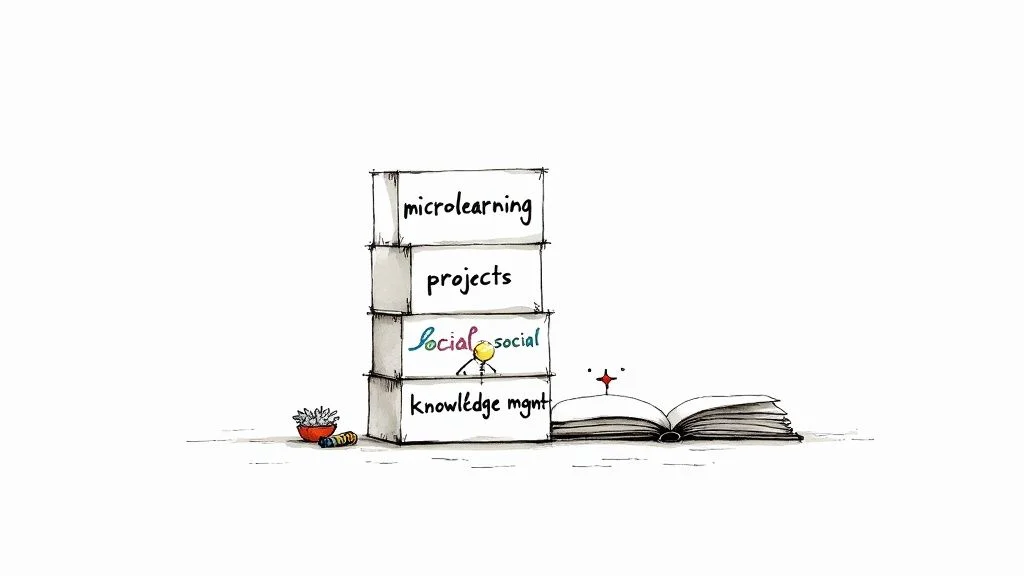
A well-rounded learning stack combines various tools and methods to support diverse learning styles and goals.
A solid continuous learning strategy requires more than good intentions. You need a functional set of tools—what technical professionals often call a "learning stack." This system is not about discovering one magical application that solves every educational hurdle. Instead, it involves building a personal collection of resources tailored to your specific objectives, such as preparing for a professional certification, while remaining compatible with your actual daily schedule.
Most IT professionals cannot simply disappear for three weeks to attend an immersive in-person boot camp. Learning usually occurs in the small gaps of time between stand-up meetings, deployment windows, and personal responsibilities. A diverse toolkit is essential for this reason. It allows you to move away from passive observation and toward active skill development that you can apply to production environments immediately.
Matching Your Method to Your Mission
Building a high-quality learning stack requires you to pick the specific tool for the task at hand. You do not use a heavy sledgehammer when you need a precision screwdriver. The same logic applies to your education. Gaining a high-level summary of a new AWS service requires a different mental approach than mastering a new programming language or studying for an Azure certification from the ground up.
Consider these methods for your rotation:
- Microlearning: This method involves breaking complex IT subjects into small, manageable pieces. You might watch a five-minute video explaining a specific Python library, read a quick article on a new security patch, or complete a single interactive lesson on a command-line utility like
greporawk. It is an effective way to use a coffee break to build a knowledge base without committing to a multi-hour session. - Project-Based Learning: When you need to transition from theoretical knowledge to practical execution, building something is the most effective path. This hands-on approach requires you to solve actual technical problems. You might deploy a containerized application using Docker and Kubernetes, configure a secure site-to-site VPN, or write an automated Bash script to handle backups. These activities fix certification concepts in your mind more effectively than passive video consumption.
- Social Learning: Engaging with a technical community can speed up your progress. Contributing to an open-source repository on GitHub, participating in troubleshooting threads on Stack Overflow, or joining a dedicated study group for a specific exam helps you see different perspectives. You see how other engineers handle code reviews and real-world outages, which provides context that textbooks often lack.
- Formal Courses & Labs: These resources are essential for structured education, particularly when you are preparing for difficult certifications. These programs provide organized syllabi, practice exams that mimic the actual testing environment, and sandboxed labs where you can break things without affecting a live company network. They ensure you address every domain required by the exam provider.
To determine which method to use, identify your immediate objective. If you are exploring a new concept, microlearning is appropriate. If you need to build skills for a high-stakes project or a certification exam, prioritize project-based learning and formal courses.
Choosing the Right Learning Method for Your Goal
| Method | Best For | Example Use Case for IT Pros |
|---|---|---|
| Microlearning | Gaining familiarity with new concepts, specific syntax, or recent cloud service updates. | Watching a 10-minute video to understand how a specific AWS Lambda trigger works (verify current functionality on the vendor site). |
| Project-Based Learning | Improving practical skills, creating a portfolio of work, or preparing for hands-on performance-based exam questions. | Building a basic web application from scratch using a cloud-native framework to prepare for an Azure certification. |
| Social Learning | Getting real-world context, solving problems collaboratively, and finding peer support during exam preparation. | Joining a Discord server for Linux administrators or a PMP study group to review difficult project management concepts with peers. |
| Formal Courses | Following a structured, deep-dive curriculum with expert instruction, which is vital for certification success. | Enrolling in a cloud practitioner course to be well-prepared for a CompTIA or AWS certification exam. |
The most effective approach is usually a blend of these methods. You might use microlearning to get a general overview of a new technology, then start a small project to practice the implementation. Finally, you can enroll in a formal course with MindMesh Academy to ensure you have the depth of knowledge required to pass your certification exam with confidence.
Aim to build a system where you act as a participant in your skill development rather than just a consumer of content. A functional learning stack converts raw information into actual capability, which supports both your certification goals and your long-term career path.
Your learning stack is not complete without a method to manage the information you collect. A knowledge management tool or a personal wiki is essential for saving notes, organizing documentation links, and archiving configuration snippets. Without a central repository, the insights you gain from labs and articles will likely be forgotten. A dedicated knowledge base allows your efforts to accumulate over time. You are essentially building a private library of expertise that you can search during a 2 AM troubleshooting session or use as a study guide for a future exam. Consistently capturing what you learn ensures that your hard work results in a permanent professional asset.
Navigating the Real-World Hurdles to Learning
Adopting a growth mindset sounds great in theory. Making it work while balancing a technical workload is where the friction starts. You will likely hit three specific walls that turn professional development into a chore rather than a career advantage.
The most common barrier is time. Between on-call rotations, sprint deadlines, and emergency patches, carving out a dedicated hour for study feels impossible. This is particularly true when you are eyeing high-stakes certifications like the CCIE or CISSP. When your calendar is full of stand-ups and deep work, learning often feels like a luxury you cannot afford. Delaying study until the weekend rarely works because mental fatigue sets in by Friday night.
Next is the sheer volume of data. The tech sector produces a constant stream of documentation, tutorials, and version updates. Deciding which cloud provider, language, or security framework to focus on becomes a project in itself. This leads to analysis paralysis. It is easy to spend hours scouring forums for the "best" resource instead of actually consuming the material. You might have ten tabs open with various guides, yet you haven't written a line of code because you are worried about picking the wrong starting point.
Overcoming Imposter Syndrome in Tech
Finally, there is the mental barrier of imposter syndrome. Studying a difficult new topic forces you to be a beginner again. That vulnerability is uncomfortable, especially if your peers seem to master new tools instantly. Comparing your progress to curated success stories on Reddit or LinkedIn can make you doubt your fundamental technical abilities. You might feel like you are faking your expertise because you don't understand a specific container orchestration logic or a new encryption protocol immediately.
In technology, education is not a race. It is a process of incremental improvement. Aim to be slightly more capable today than you were yesterday. You do not need to know everything at once. Adopting a beginner’s mindset is how you actually progress.
You must be strategic to get past these roadblocks.
- For time constraints: Stop searching for four-hour windows. Instead, block out 25-30 minutes for a learning sprint during your workday. Treat this block with the same respect you give a client meeting. Use the Pomodoro Technique to keep your focus sharp and avoid burnout. These short bursts make heavy certification prep feel manageable rather than overwhelming.
- For information overload: Apply an information diet. If you are targeting the AWS Developer Associate certification, choose one reputable course or one technical manual and ignore everything else. Stop looking for better alternatives until you finish that one resource. You can check other sources after you have built a baseline of knowledge.
- For imposter syndrome: Change how you measure success. Celebrate small wins, like finally understanding a Kubernetes pod configuration or successfully debugging a logic error in a shell script. Remember that every senior engineer you respect once struggled with the same basics. Be honest about your learning curve with your peers. You will likely find they are dealing with the same doubts.
Addressing these challenges with a concrete plan turns these walls into manageable steps.
Reflection Prompt: Which of these hurdles resonates most with you? What's one specific, actionable step you can take this week to address it?
The Future of Your Career Is the Future of Learning
Technological shifts happen fast. Automation, artificial intelligence, and quantum computing are no longer speculative concepts; they actively redefine what success looks like in IT roles. Because of this, staying current is a core professional requirement. You must adapt to remain competitive in an environment where technical standards change often.
Committing to regular education allows you to stay ahead of changes instead of simply reacting to them. You become a problem solver rather than someone sidelined by new developments. Research from the World Economic Forum indicates that by 2030, roughly 39% of core workforce skills will be different. This statistic serves as a signal for every professional in the field. You can read the full details of this data from the World Economic Forum to understand how these trends might affect your specific role.
Continuous learning changes technological disruption into a real opportunity. It is a vital tool to lead the way and help shape how technology evolves instead of being controlled by it.
View this process as a challenge to adapt, earn new certifications, and move into advanced roles. It is about taking control of your path and building a career that is stable, influential, and prepared for future shifts. If you ignore these trends, you risk stagnation. If you embrace them, you gain a significant advantage over those who wait for instructions.
The time to start is now. Identify one new skill or certification path you can research this week. Maybe it is a new cloud architecture or a programming language you have ignored. Take that first step today to ensure your skills remain relevant tomorrow.
Got Questions About Continuous Learning? We’ve Got Answers.
Let’s look at the practical side. Constantly learning is a tall order when you are balancing deadlines and a heavy workload as a busy IT professional. Most pros ask the same few questions when trying to fit education into a tight schedule.
How Do I Get My Manager to Back My Learning?
Focus on results. Instead of presenting a personal wish list, link your study goals to a business outcome or an active project. If you tell a manager you want to learn Python, it sounds like a hobby. Change the pitch. Tell them: "By earning the Microsoft Certified: Azure Developer Associate certification and learning Python, I can automate deployment scripts for Project X." Explain how this saves the team five hours every week (verify these time savings against your actual project data) and helps in reducing errors. This transforms a request for a course into a proposal for a productivity gain. Managers find it much easier to approve a budget for exam fees when they see a clear return on the investment.
Certifications or Hands-On Projects: What’s Better?
You need both. They serve different roles in a technical career.
Certifications (like AWS Solutions Architect, PMI PMP, or CompTIA Security+) prove you possess core knowledge. They show you understand industry standards. These credentials often act as a filter for recruiters and hiring managers. They validate that you grasp a broad domain and can communicate using the technical language expected by your peers.
Hands-on projects are where you gain true proficiency. Projects build the practical experience needed to talk through an interview or fix a production outage. When you deploy a full-stack application on AWS or set up a secure network segment, you show you can do the work. This evidence of capability carries more weight than theory alone.
For the best results, use certifications to structure your study and prove your theoretical foundation. Then, apply that knowledge to a project to build a portfolio. This combination demonstrates that you can both pass the test and handle the job.
Ready to build the skills that will define your IT career? MindMesh Academy offers expert-led certification prep, structured learning paths, and practical resources to turn your learning goals into real-world achievements. Start mastering your next skill and earning your next certification at Explore IT Certification Practice Exams.

Written by
Alvin Varughese
Founder, MindMesh Academy
Alvin Varughese is the founder of MindMesh Academy and holds 20 professional certifications including Microsoft Agentic AI Business Solutions Architect, AWS Solutions Architect Professional, and Azure DevOps Engineer Expert. He's held senior engineering and architecture roles at Humana (Fortune 50) and GE Appliances. He built MindMesh Academy to share the study methods and first-principles approach that helped him pass each exam.