Study Bank Organization for Multi-Exam Certification Prep
Organize Your Study Bank for Multiple Certifications
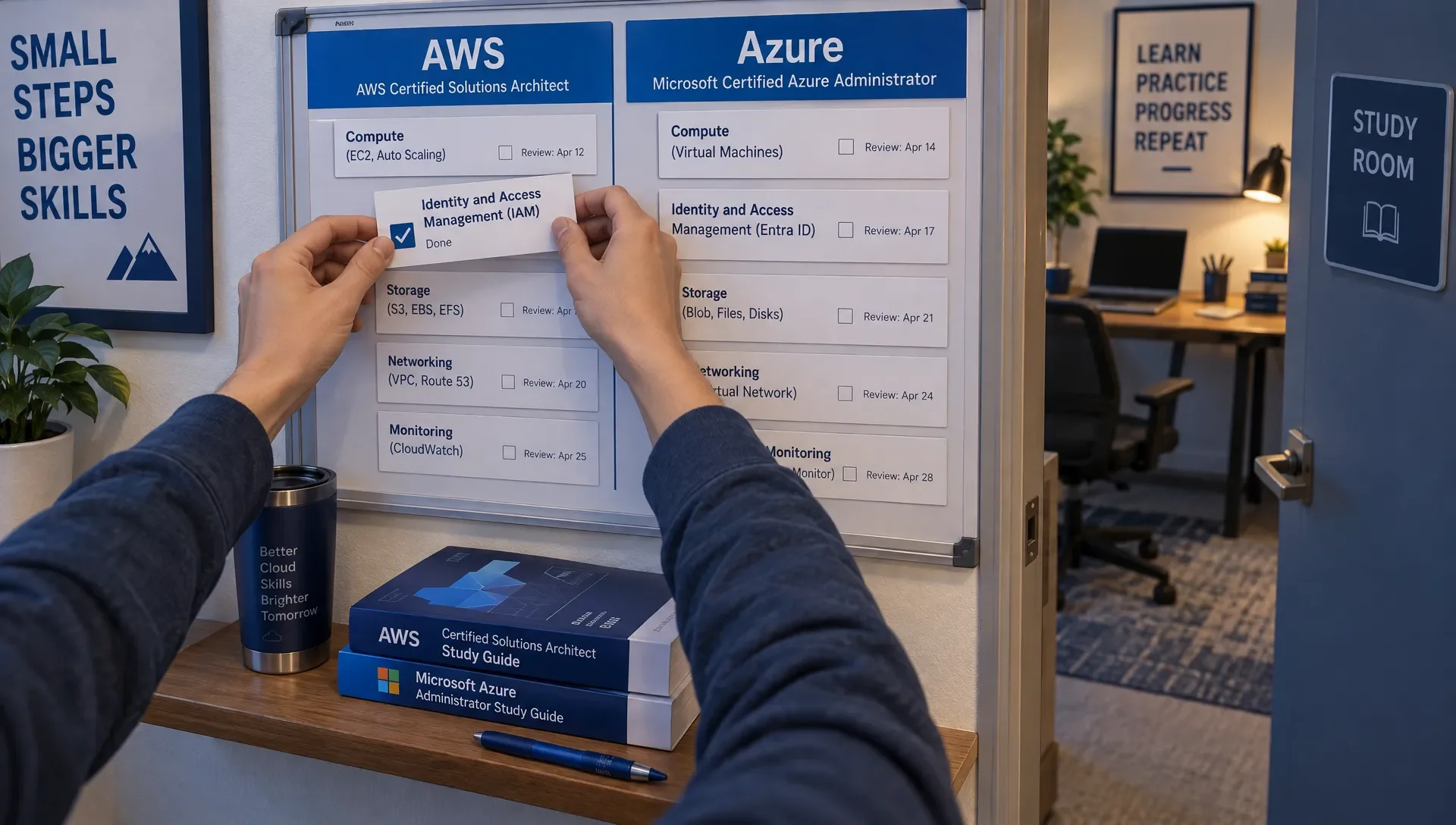
Preparing for multiple IT certifications can feel like juggling. A good study bank helps you separate each exam's specific requirements while still letting you reuse truly shared concepts. Instead of mixing every question, flashcard, and note into a single, overwhelming collection, start with one workspace for each exam, a dedicated shared reference area, and a small index guiding your next steps.
Before your next study session, create a specific folder or section for each certification you're pursuing. In it, record the current objectives, your target exam date, and topics where you feel weakest. Then, move any shared explanations into your general reference area. Crucially, keep practice results tied to the specific exam that generated them. This approach prevents duplicate notes without creating misleading progress scores that conflate your readiness for different certifications.
Separate Exam Requirements Before Combining Materials
Two certifications might cover similar concepts, but they rarely test the exact same knowledge. Take the AWS Certified Cloud Practitioner and Microsoft Azure Fundamentals exams, for example. Both involve core cloud ideas, but their specific service names, management responsibilities, and expected distinctions are not interchangeable.
Use each vendor's current exam requirements as your primary organizing authority. The official AWS Certified Cloud Practitioner page provides preparation resources and exam information. Similarly, Microsoft's AZ-900 study guide outlines the skills measured for Azure Fundamentals.
For each exam, create a short header. Include its name, exam code (if applicable), the source of its objectives, and the date you last checked that source. If you're studying for an exam with a scheduled update, confirm which requirements apply to your specific appointment; don't just assume all resources match the current version.
Your study bank should maintain these boundaries, even if you're learning related topics in the same week. A solid explanation of cloud elasticity, for instance, can support both AWS and Azure exams. However, an AWS-specific service comparison cannot automatically count as Azure preparation.
Also, choose one certification as your primary exam for your current study cycle. This exam receives your main learning blocks, while a secondary exam gets maintenance review or a smaller time allocation. This is a strategic planning choice, not an assertion that everyone should prepare for two exams simultaneously. If both require substantial new learning and your available hours are limited, consider sequencing them instead.
How to Organize a Study Bank by Exam and Objective
Use a simple hierarchy: exam, then objective, then specific learning material or practice evidence. Keep shared reference notes separate from this hierarchy. They can support multiple exams without replacing either exam's unique requirements.
| Workspace area | What belongs there | What stays separate |
|---|---|---|
| Exam overview | Objective source, target date, and current priorities | Another exam's readiness score |
| Objective folders | Notes, resource links, and relevant practice references | Unrelated objectives |
| Shared concepts | Vendor-neutral explanations and comparison notes | Claims that an exam objective is mastered |
| Assessment records | Attempt dates, coverage, and results for one exam | Results from another certification |
| Archive | Superseded resources and completed exam materials | Active review assignments |
You can use a spreadsheet, a physical notebook, or a digital folder system to create this structure. You don't need to move all your learning content directly into it. Often, an index that links to existing resources is easier to maintain than making a complete copy of everything.
Record Enough Information to Find the Next Action
For each useful resource, capture a small set of fields:
- Exam and objective: Which requirement does this resource support?
- Resource type: Is it a reference note, flashcard, practice question, or hands-on task?
- Source and identifier: Where can you find the original again?
- Status and next action: Should you learn it, review it, resolve a gap, or archive it?
- Review date: When will you revisit it if another review is needed?
These fields make your study bank actionable without turning organization into a second project. Add a version field for any resources affected by changing objectives, services, or terminology.
For question references, save the provider's identifier or a permitted link rather than copying entire collections into your own files. Always follow the resource's terms and avoid collecting leaked or recalled live exam questions.
Connect Shared Concepts Without Merging Exam Evidence
Create a shared note only when the underlying explanation genuinely helps more than one exam. Good candidates for shared notes include concepts like availability, least privilege, encryption fundamentals, and the difference between authentication and authorization.
Then, link that shared note from the relevant objective folders in each exam's workspace. Keep the general explanation concise and add separate exam-specific examples beneath it. For instance, a least-privilege note can explain the principle of limiting access to only necessary actions, while its AWS and Azure references point to the services and terminology specific to each certification.
Avoid creating a universal flashcard that simply asks, "Which access service should you use?" without naming the environment. The correct answer depends entirely on the platform and scenario. Either make the card truly vendor-neutral, or explicitly state the vendor.
A well-organized study bank allows you to reuse explanations without reusing conclusions about your readiness. Understanding a shared principle is valuable evidence of foundational knowledge, but you still need to handle each exam's specific wording and scope.
Here's a practical test for shared notes: Does the explanation remain correct after you remove all vendor names? If it does, it likely belongs in your common reference area. If removing the names makes it vague or incorrect, keep it within the specific exam workspace.
Review this distinction when you add new material, not every time you study. You should spend most of your preparation time learning and practicing, not debating folder placement.
Keep Reference, Practice, and Assessment Materials Separate
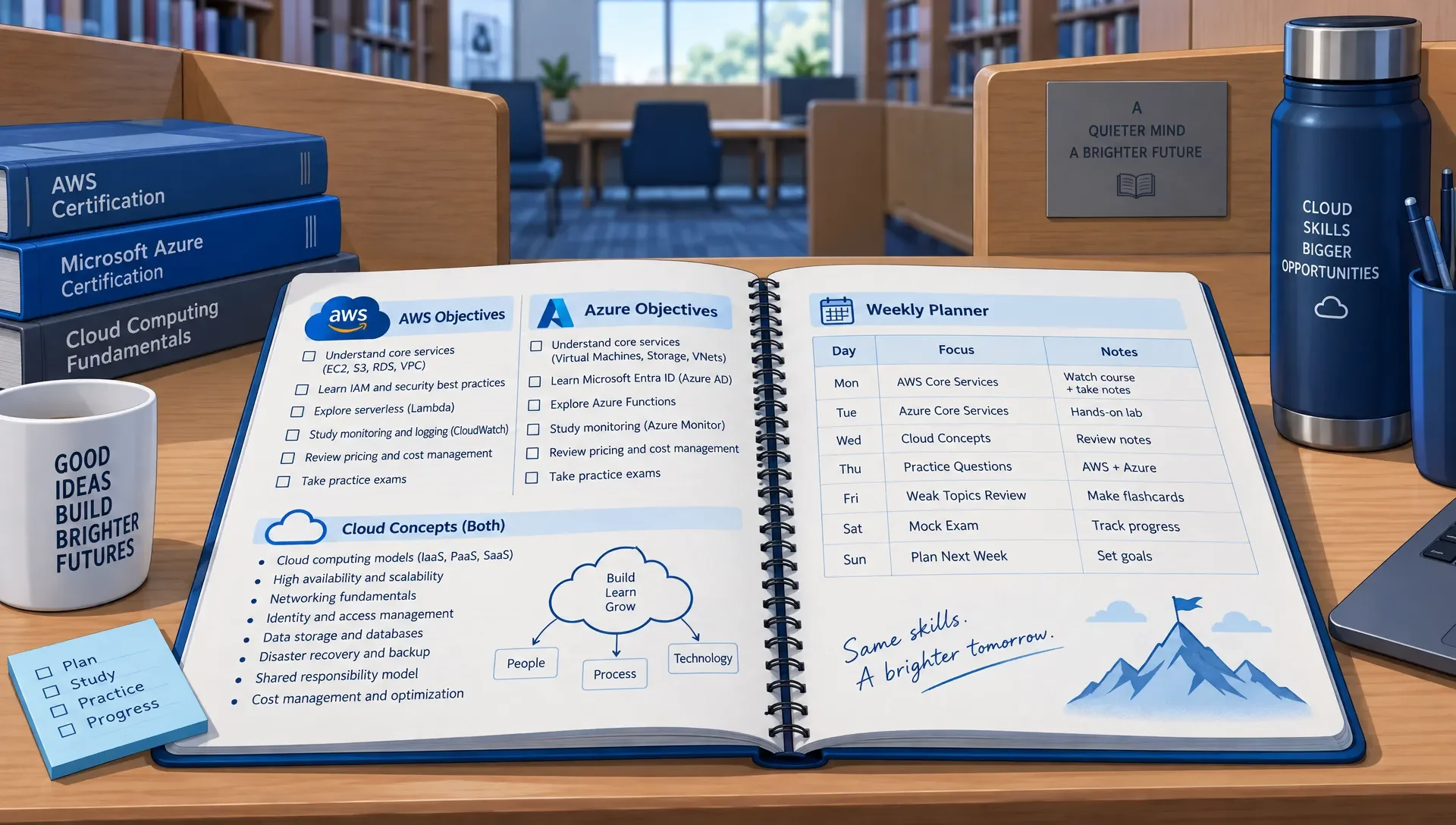
Reference materials help you understand a topic. Practice materials help you apply it and pinpoint knowledge gaps. Assessment materials help you check your performance under conditions similar to the actual exam. Give these resources distinct locations or labels.
Without this separation, a collection of familiar questions can start to feel like proof of readiness. The organizational fix is simple: record whether a question set is new to you, already reviewed, or specifically reserved for a later assessment.
Keep an untouched assessment set whenever your resources allow. If they don't, label repeated attempts honestly and seek additional evidence through unfamiliar scenarios, objective-level explanations, or tasks appropriate to the exam.
Your study bank should make a resource's purpose clear before you even open it. A note marked "reference" invites consultation. A set marked "assessment" should have its own attempt conditions and a clear record of your results.
The distinction between a test bank and a practice exam is useful when deciding which materials belong in each area.
For example, place the AWS Certified Cloud Practitioner practice exam in your AWS workspace, rather than treating it as a general cloud score. Similarly, use the Microsoft Azure Fundamentals study guide within your Azure objective structure. These resources can support related learning, but their exam-specific purposes remain distinct.
Build Separate Review Queues for Each Certification
A review queue is a short list of due work, not just another inventory of everything you own. Keep one queue per exam and give each entry a concrete action, such as "explain the service distinction" or "retry the configuration task."
When you finish a session, route any unfinished work to the correct queue. An Azure terminology gap goes into your Azure review. An AWS scenario mistake goes into your AWS review. A weak explanation of a shared concept can update the common note, with follow-up practice assigned separately as needed.
Don't let the combined size of your study bank dictate your daily workload. Instead, select tasks based on your next exam, uncovered objectives, and unresolved weaknesses. A large collection of easy flashcards shouldn't crowd out a smaller set of important knowledge gaps.
Give Each Session One Main Purpose
Before you begin, decide if your study block is for new learning, targeted practice, scheduled review, or assessment. This choice directs you to the right part of your workspace and tells you what evidence to record afterward.
For example, a 45-minute primary-exam block might include 25 minutes of objective-focused study, 15 minutes of application, and five minutes for updating your next actions. This is an illustrative schedule, not a rigid formula.
A shorter secondary-exam session can focus on due flashcards or resolving one specific distinction. It doesn't need to become a second full study block every day.
If repeated questions start feeling easier without leading to better explanations, use strategies to avoid memorizing exam-bank patterns. Keep your organization focused on what you still need to demonstrate, not how many items you've seen.
Track Readiness Separately for Every Exam
Never average practice results across certifications. An improvement in AWS questions doesn't equate to progress on Azure objectives, even if both cover cloud computing.
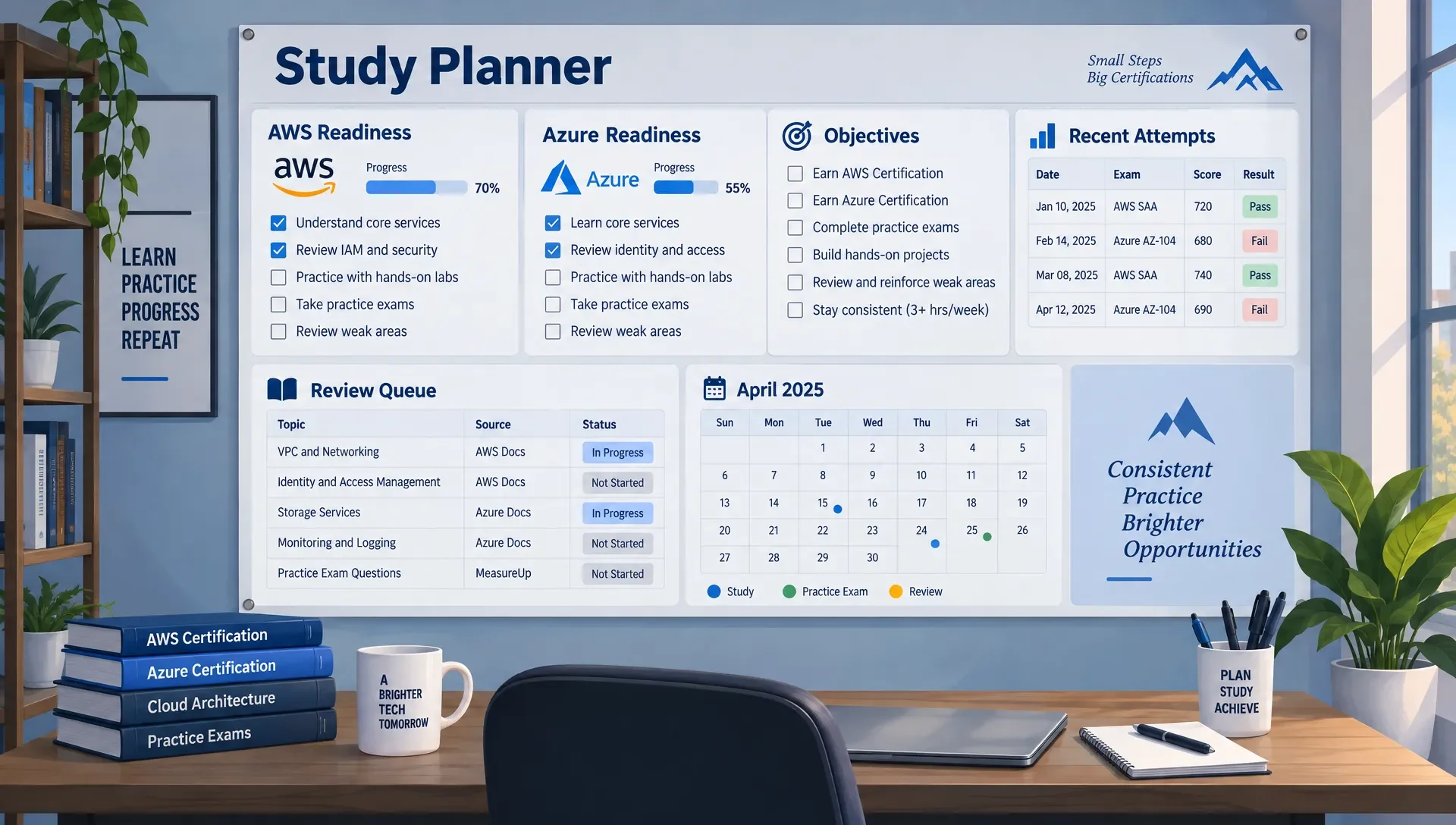
Maintain a separate readiness record for each exam. Include objective coverage, recent practice evidence, any unresolved gaps, and the conditions of each assessment attempt. Clearly distinguish between "I studied this" and "I can apply this without help."
For objective coverage, a simple status vocabulary works well: not started, learning, applying, and needs review. Define what each status means before you use it. For instance, "applying" might mean you can explain the concept and answer unfamiliar objective-aligned questions without consulting notes.
The readiness view in your study bank should highlight missing evidence, not just completed activity. A topic might have many notes but still lack recent application practice.
Keep Scores Attached to Their Context
Record the number of questions, topics covered, whether the questions were familiar, and whether you used notes. A result of eight correct answers out of ten is only easy to interpret when you know what those ten questions actually tested.
Don't treat a self-selected practice percentage as a guaranteed passing threshold. Use multiple sources of evidence and the certification's actual requirements to decide when you're ready to schedule your exam.
If an exam includes performance-based questions, keep evidence from those formats separate from ordinary multiple-choice results. Recognizing a term and completing a task represent different demonstrations of understanding.
If you're preparing for two exams, review both records together for planning, but make each readiness decision independently.
Keep Exam Versions and Outdated Resources Under Control
Check official objectives when you begin your preparation and again before your final assessment. Also, recheck them if your exam date changes or the vendor announces an update.
When requirements change, don't delete everything immediately. Compare the old and current objectives, identify affected material, and move uncertain resources out of your active queue until you've verified them.
A practical study bank archive preserves useful history without making obsolete material appear current. Mark archived resources with the exam or objective version they supported and the reason you removed them from active use.
Apply the same discipline to shared notes. A broad definition may remain useful even if a vendor example becomes outdated. Update the example without duplicating the entire explanation.
After completing an exam, move its assessment records and exam-specific review queue into a "completed" area. Keep shared concepts available if another certification still uses them. This keeps your active workspace focused on the remaining exam rather than displaying finished work as daily clutter.
Frequently Asked Questions About Multi-Exam Study Organization
Should I use one collection or a separate collection for each certification? Use one overall workspace with separate exam sections. Your study bank can share reference notes, but objectives, practice results, and readiness decisions should stay exam-specific.
Can the same flashcard support two certifications? Yes, if it tests a genuinely shared concept without relying on vendor-specific wording. If the answer changes by platform, create separate cards and identify the exam or vendor in the prompt.
How many certifications should I prepare for at once? Base that decision on your available study time and the amount of new material in each exam. One primary exam plus limited secondary review is a manageable starting approach. If both exams need extensive learning, preparing sequentially may give you clearer priorities.
How many practice questions should I organize under each objective? There's no universal number that proves coverage. Aim for different scenarios and the formats relevant to the objective. Keep adding or locating practice when your current set leaves a knowledge gap or has become too familiar to provide useful evidence.
What should I do with outdated questions and notes? Remove them from active review until you've checked them against current requirements. Archive resources that no longer fit, and retain still-valid explanations with updated exam-specific references. Don't count archived results as evidence for a changed objective.
Set Up Your Next Two Study Sessions
Choose one objective from your primary exam and one due review task from your secondary exam. Place their resources in the right sections, write a specific next action, and keep everything else outside today's queue.
Ready to organize your multi-exam study and put these strategies into practice? Explore the MindMesh Academy AWS Certified Cloud Practitioner study guide to structure your learning. Our platform offers objective-based study guides, detailed practice questions with explanations, and readiness tracking to keep your preparation focused and effective.
Keep the study bank structure small enough to maintain after each session. The useful outcome isn't a perfectly cataloged library; it's knowing which exam needs your attention, what you'll work on next, and what evidence you're still missing.

Written by
Alvin Varughese
Founder, MindMesh Academy
Alvin Varughese is the founder of MindMesh Academy and an enterprise architecture leader. An electrical engineer by training, he moved from factory automation in South Africa to cloud architecture at GE Appliances and Humana (Fortune 50), and holds 20 professional certifications including AWS Solutions Architect Professional, Azure DevOps Engineer Expert, and Microsoft Agentic AI Business Solutions Architect. He built MindMesh Academy after interviewing too many highly certified candidates who couldn't answer basic questions: the goal is prep that makes you better at the job, not just able to pass the exam.