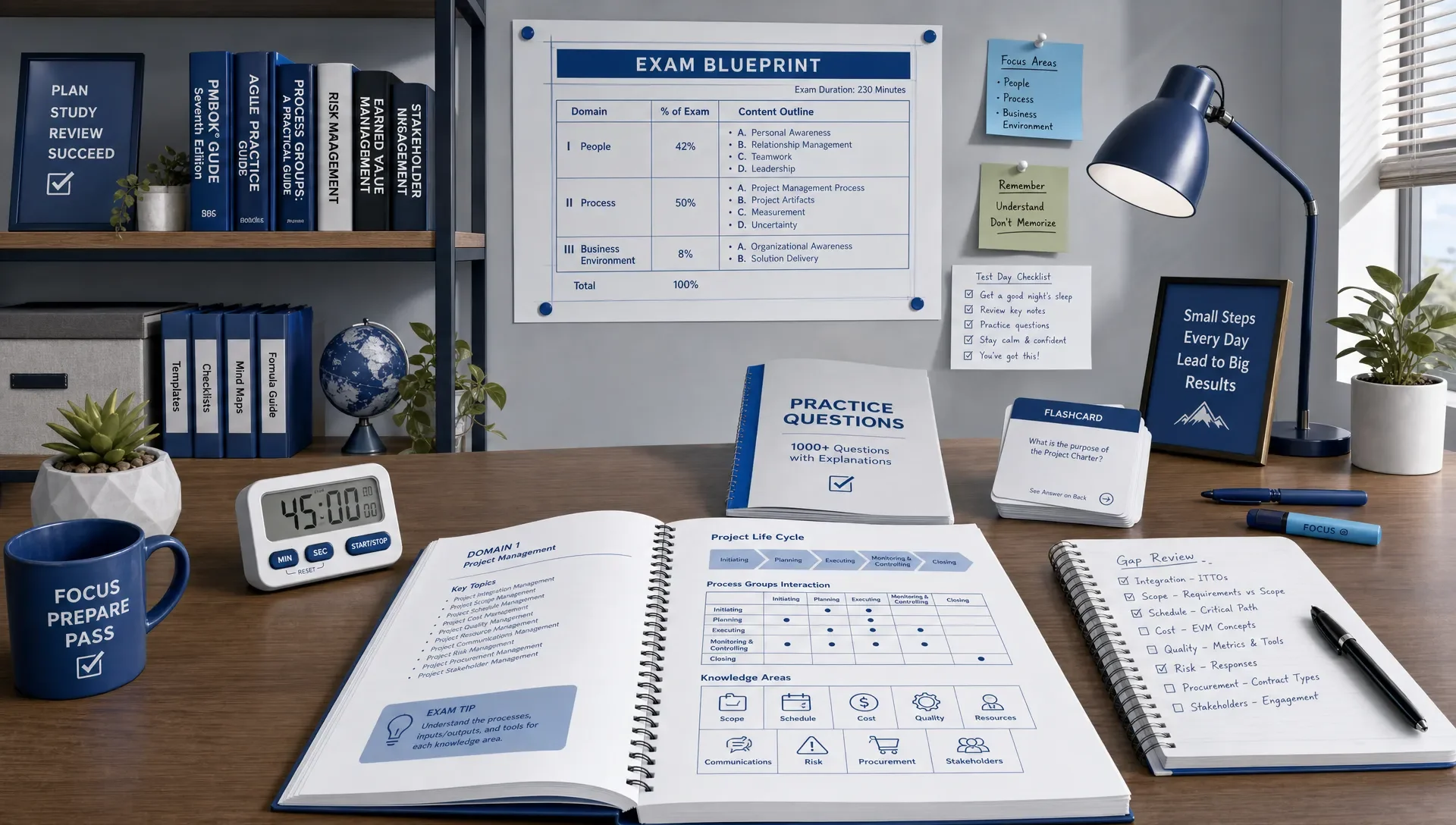
Prep Questions That Reveal Gaps Before Test Day
Prep Questions That Reveal Gaps Before Test Day
Before exam day, use prep questions as a diagnostic tool, not just to track your score. Your goal is to pinpoint the exam objectives you can almost explain, the scenario clues you overlook, and the answer choices you pick for the wrong reasons.
Start with three essential steps: answer questions closed-book, tag every missed item to an official exam objective, and rewrite your reason for the miss in your own words. If you only record your percentage, you won't know if your weakness lies in identity and access management, subnetting, risk response, change enablement, or simply rushing through long question stems.
Why Prep Questions Beat Full Practice Exams for Gap Analysis
Full practice exams are valuable, but they can sometimes mask deeper issues. A 78 percent score might include lucky guesses, repeated questions, or domains you passed only because the wrong answers were obvious. Effective prep questions isolate one skill at a time, then challenge you to explain why the correct answer works.
This distinction matters because testing does more than just measure knowledge. It also strengthens retrieval. A well-known paper in Psychological Science by Roediger and Karpicke found that testing improved long-term retention compared with simply rereading material. The Institute of Education Sciences' practice guide on organizing instruction and study also endorses practice testing and spaced study as effective learning strategies.
For certification prep, this means a question set should do more than tell you if you're right or wrong. It should reveal whether you can identify the objective, choose the best action given specific constraints, and justify your choice without relying on notes.
Build Prep Questions from Official Exam Objectives
The best prep questions align directly with the exam blueprint. Vendor objectives aren't just decorative; they define what the exam writers can test and provide a clear framework for organizing your knowledge gaps.
Official pages, such as the AWS Certified Cloud Practitioner certification page and the CompTIA Security+ certification overview, organize content into domains. Use these domains as your labels when reviewing missed questions. If you can't label a wrong answer, you can't reliably fix it.
| Review item | Weak gap signal | What to do next |
|---|---|---|
| Exam objective | You missed several questions from the same domain | Reread that objective and create a mini set for it |
| Question stem | You missed the clue that changed the answer | Underline the constraint before choosing |
| Distractor | You picked an answer that is true but not best | Write why each wrong option fails |
| Explanation | You understood the answer only after reading it | Make a flashcard from the missing concept |
| Retake result | You remembered the letter choice | Wait before retesting and change the scenario |
MindMesh Academy study guides organize content by exam objectives, which simplifies this workflow. Instead of reviewing a broad topic like cloud, security, or networking, you can connect each miss to the precise area that needs work.
Use Question Types That Reveal Different Weaknesses
A useful set of prep questions should test more than just factual recall. Many certification exams require you to apply a concept to a scenario, eliminate plausible distractors, or complete performance-based tasks. If all your practice feels like vocabulary review, you're probably not testing your application skills enough.
| Question type | What it reveals | Example prompt style |
|---|---|---|
| Definition check | Whether you know the term | Which service or control matches this description? |
| Scenario choice | Whether you can apply the rule | A company has this constraint. What should it do first? |
| Best answer | Whether you can rank plausible options | Which option is most appropriate given cost or risk? |
| Troubleshooting | Whether you can diagnose from symptoms | A user reports this failure. What is the likely cause? |
| Performance-based | Whether you can complete a task sequence | Configure, match, order, or analyze the given components |
Don't treat all misses equally. A definition miss means you need to review a concept. A scenario miss suggests you need practice applying rules under varying conditions. A "best answer" miss often indicates you know the topic but aren't weighing the most critical constraint.
For example, in AWS Cloud Practitioner prep, a pricing question might seem simple until the stem adds variable demand or a commitment term. In Security+ prep, an answer might be technically valid but not the best first response to an incident. Your review notes should capture that distinction.
Review Wrong Answers Without Memorizing Patterns
The fastest way to waste a question bank is to retake the same items too soon. You'll feel like you're improving, but often you're just remembering phrasing. When prep questions start to feel familiar, slow down and review the reasoning before you retest.
Use a short review format after every missed or guessed item:
- Objective: What official exam objective does this test?
- Clue: What words in the question stem changed the answer?
- Trap: Why was my chosen answer attractive, even if wrong?
- Fix: What rule, process, or definition did I need to know?
- Retest: When will I answer a changed version of this question?
If you tend to recognize question wording after a few attempts, pair this process with MindMesh Academy's guide to using exam bank questions without memorizing patterns. The key is making the explanation harder to fake than just picking the answer choice.
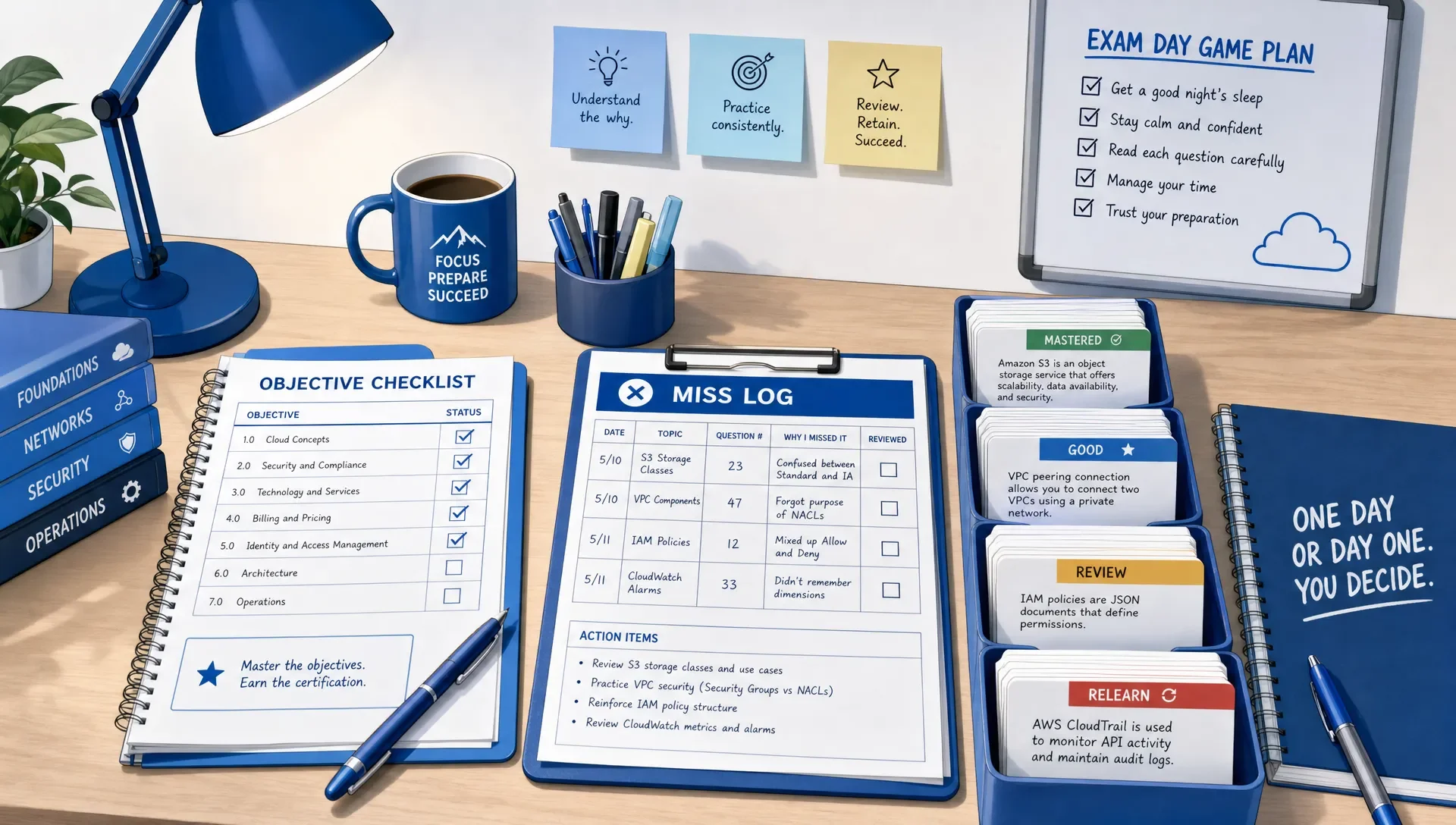
Turn Missed Questions into a Weekly Retake Plan
Once prep questions identify a weak domain, don't immediately retake the same set. Fix the gap first, then test it again after a delay. Spaced repetition works best when you revisit the concept after some forgetting has occurred, not ten minutes after reading the explanation.
A simple weekly loop works well for most certification candidates. On day one, take a small closed-book question set. On day two, review explanations and build flashcards. On day three or four, do a different set from the same objective. At the end of the week, run a mixed quiz so you don't know which domain will come next.
This is where readiness tracking becomes useful. A raw score tells you what happened today. Topic-level progress shows whether a weak domain is actually improving across multiple attempts. MindMesh Academy combines practice questions, explanations, spaced-repetition flashcards, and mastery tracking so you can see whether your review is changing your performance.
For the study mechanics behind this, the MindMesh Academy article on test prep methods that actually stick is a helpful companion to your question review routine.
Match Practice to Your Certification Exam Format
General prep questions can help with fundamentals, but certification exams reward familiarity with their specific format. The closer your practice mirrors how your exam asks questions, the easier it is to catch gaps before they become test-day surprises.
If you're preparing for a broad cloud fundamentals exam, use short scenario items that ask you to select a service, pricing model, or responsibility boundary. The AWS Certified Cloud Practitioner practice exam is built for that kind of readiness check.
If you're preparing for a security exam, mix definitions with incident response, access control, risk, and implementation questions. Security exams often penalize shallow recognition because several choices can sound plausible. The CompTIA Security+ practice exam provides a way to practice with explanations and track the areas that keep slipping.
Apply the same principle for Azure, Cisco, ITIL, PMP, CISSP, or any other certification path. Your questions should follow the exam objectives, but your review should focus on the thinking error that caused the miss.
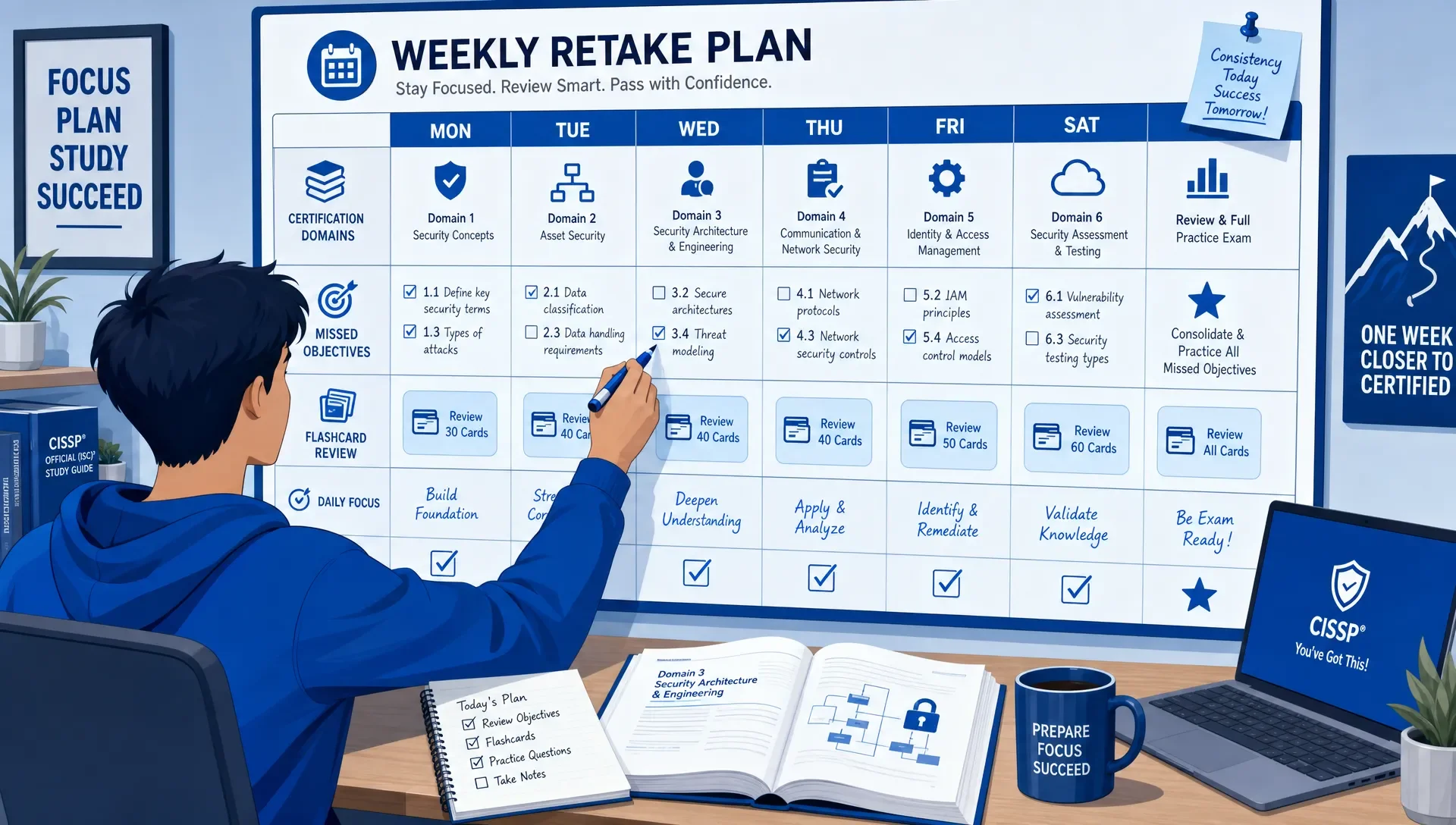
Run a 7-Day Gap Check Before Test Day
Use prep questions differently in the final week. This isn't the time to consume every remaining item in a question bank. It's the time to verify readiness, protect your strongest domains, and address the gaps most likely to cost you points.
| Day | Main task | What to avoid |
|---|---|---|
| 7 days out | Take a mixed timed set and tag misses by objective | Reading explanations without writing a fix |
| 6 days out | Review the two weakest domains with notes and flashcards | Jumping to unrelated content |
| 5 days out | Answer new questions from those weak domains | Retaking identical questions immediately |
| 4 days out | Practice scenario and best-answer items | Memorizing only definitions |
| 3 days out | Take a shorter mixed set under time | Overreacting to one low mini-score |
| 2 days out | Review missed rules, formulas, commands, or processes | Starting brand-new major topics |
| 1 day out | Do a light confidence check and stop early | Exhausting yourself with marathon testing |
A gap check should feel specific. Instead of saying, "I need to study networking," you should be able to say, "I miss questions where route selection depends on longest prefix match," or "I confuse when to escalate versus contain during incident response."
Signs Your Question Practice is Working
You don't need perfection before test day, but you do need evidence of readiness. Look for patterns across several attempts, not just one good or bad session.
You're getting closer when your explanations become shorter and more precise. You can name the objective before reading the explanation. You can eliminate two distractors quickly and explain your final choice. You also stop missing the same clue words, such as first, most likely, least privilege, cost-effective, or given these constraints.
You're not ready if your score depends on seeing familiar wording. You're also not ready if you can explain correct answers only after reading the rationale. Recognition feels smooth, but certification exams often test transfer. You need to apply the concept even when the wording changes.
Frequently Asked Questions
How many prep questions should I answer before an exam? There isn't one perfect number. A better target is coverage: answer enough questions to touch every exam objective, then keep practicing the domains where your explanations are weak or inconsistent.
Should I review questions right after finishing them? Review soon enough that you remember your reasoning, but don't retake the exact same questions immediately. Write down the gap, study it, then retest later with mixed or changed items.
Are wrong answers more useful than correct answers? Wrong answers are useful because they show gaps, but guessed correct answers matter too. Mark any item you couldn't explain confidently and review it the same way you review a miss.
What should I do if my practice score is stuck? Stop doing full sets for a few days and sort your misses by objective. Then rebuild the weakest one or two domains with study guide review, flashcards, and smaller targeted quizzes.
Can flashcards replace question practice? Flashcards help you retain facts, commands, definitions, and process steps. They don't fully replace scenario practice because you still need to choose the best answer under exam-style constraints.
How do I know when I'm ready for test day? Look for stable performance across mixed sets, fewer repeated misses, and clear explanations in your own words. If your weak domains are improving rather than cycling, you're likely moving toward readiness.
Make Every Practice Session Show You What to Fix Next
The point of certification practice isn't to collect questions. It's to reduce uncertainty before test day. When every item is tied to an objective, every miss has a written cause, and every retake happens after review, your study time becomes easier to trust.
MindMesh Academy gives you a connected workflow for that process with objective-based study guides, practice questions with explanations, spaced-repetition flashcards, adaptive weakness-based practice, and readiness tracking across certification paths. Use your next study session to find the gaps that matter most, then fix them while there's still time to change the result. If you're focusing on cybersecurity, you can build your CompTIA Security+ foundation with our official study guide to reinforce core concepts.
Check out the CompTIA Security+ Study Guide here.

Written by
Alvin Varughese
Founder, MindMesh Academy
Alvin Varughese is the founder of MindMesh Academy and an enterprise architecture leader. An electrical engineer by training, he moved from factory automation in South Africa to cloud architecture at GE Appliances and Humana (Fortune 50), and holds 20 professional certifications including AWS Solutions Architect Professional, Azure DevOps Engineer Expert, and Microsoft Agentic AI Business Solutions Architect. He built MindMesh Academy after interviewing too many highly certified candidates who couldn't answer basic questions: the goal is prep that makes you better at the job, not just able to pass the exam.