Boost Your Tech Career with Entry-Level IT Certifications
Your Blueprint to Success: Top Entry-Level IT Certifications for Aspiring Professionals
Starting an IT career requires a clear plan. Most beginners ask which path leads to visibility in a crowded field of candidates. Strategic certification is the most reliable answer. This guide analyzes specific entry-level IT certifications that help you secure foundational roles and build a sustainable career. You need credentials that prove you have the technical skills recruiters look for in new hires.
We have selected the most effective credentials for roles in IT support, cloud computing, cybersecurity, and network administration. These certifications provide objective evidence of your expertise. If you are still weighing your options, review our analysis on Is technology a good career path?. For those ready to start, this article provides the technical details and insights needed to move forward with confidence. We focus on the current exams to ensure your knowledge stays relevant for years to come.
Skip the generic advice. Each certification and platform analysis includes:
- Scope and Significance: A summary of what the certification covers and why it remains a standard in the current IT job market.
- Candidate Profile: Details on the ideal background for each exam, helping you align your specific career goals with the right credential.
- Career Outcomes: A look at specific job roles and typical salary ranges so you can set realistic expectations for your first positions.
- Exam Details: A breakdown of the current exam format, including question types and the environment you will face on test day.
- Preparation Strategy: Actionable study tactics and recommended timelines to help you structure your schedule and prepare to pass with confidence.
This guide explores top learning platforms, from official sources like CompTIA and Microsoft Learn to popular marketplaces like Udemy. We also explain how to use science-backed tools from providers like MindMesh Academy to speed up your progress and improve retention. Our goal is to ensure you do more than just pass a test. You must master the actual skills required for long-term technical success. Let's begin reviewing the certifications that will define your future in technology.
1. CompTIA A+: The Standard Starting Point for IT Careers
Many technical professionals refer to the CompTIA A+ as the "driver's license of IT." It serves as the industry standard for anyone searching for IT certifications entry level. This credential confirms you have the technical skills required to start a career in technology. It is a vendor-neutral certification that covers a wide array of basic knowledge in areas like hardware, software, networking, and security. Because of its broad scope, it is the most common requirement for people applying for roles in desktop support, field technician work, and help desk operations.
The A+ is not a single test. It consists of a two-part series: the Core 1 (220-1201) and Core 2 (220-1202) exams. This structure ensures you understand both the physical and logical sides of IT. Core 1 focuses on hardware components, mobile devices, and network topologies. Core 2 covers how to configure operating systems, manage security, and follow operational best practices. You must pass both exams to earn the full certification.
Who It's For and Career Paths
This certification is for people looking to secure their first role in the IT industry. It works well for career changers, new graduates, or anyone without a technical background who wants a recognized way to enter the field. Often, it serves as a stepping stone toward more advanced paths like networking through CompTIA Network+ or cybersecurity with CompTIA Security+.
- Typical Job Roles: Help Desk Technician, Technical Support Specialist, Field Service Technician, IT Support Specialist, Desktop Support Analyst, and Junior System Administrator.
- Average Salary Range (Entry-Level): $45,000 - $65,000 annually (verify current market rates on job boards or vendor sites). You can see significant growth in this number as you gain experience and add specialized certifications.
Exam Details and Preparation Strategy
Passing the A+ exams requires a clear study plan. These tests use multiple-choice questions along with hands-on, performance-based questions (PBQs). These PBQs simulate real IT tasks, testing how you apply what you know to actual scenarios like troubleshooting a network or securing a workstation.
| Exam Feature | Details |
|---|---|
| Prerequisites | None officially, but 9-12 months of hands-on experience is recommended (verify current recommendations on the CompTIA site). |
| Exam Format | Multiple-choice and performance-based questions (PBQs). |
| Number of Questions | Maximum of 90 questions per exam. |
| Exam Length | 90 minutes per exam. |
| Passing Score | Core 1: 675 (on a scale of 100-900), Core 2: 700 (on a scale of 100-900). |
| Difficulty | Beginner to Intermediate. The wide variety of topics in hardware and software is the main challenge. |
| Recommended Study Time | 3-5 months, with 5-10 hours of study each week. This allows enough time to cover all material. |
Pro Tip: Avoid simple memorization. Focus on the reasons why systems work and the methods used to fix them. The performance-based questions will test your ability to solve problems like configuring network settings, diagnosing OS errors, or recovering data. Using practice labs is a vital part of your preparation.
How MindMesh Academy Accelerates A+ Preparation
Preparing for two exams like the CompTIA A+ Core 1 and Core 2 can be difficult. MindMesh Academy provides a specific structure and tools to help you be well-prepared.
- Adaptive Learning Paths: MindMesh avoids a generic approach. If a pre-assessment shows you are strong in hardware but have gaps in security, the platform changes your plan. It directs your study time toward those weaker areas, such as identifying malware or syncing mobile devices. This makes your study time more productive.
- Spaced Repetition System (SRS): The A+ material includes many port numbers, acronyms, and troubleshooting steps. The SRS flashcards schedule reviews of these facts at specific times. This helps move information from short-term memory into long-term recall by testing you right before you are likely to forget.
- Performance Dashboards: You can track your progress for both Core 1 and Core 2. The dashboard shows your scores across different topic areas. You will see exactly where you stand in categories like "Operational Procedures" or "Networking," allowing you to focus your review before exam day.
Learn more about the certification at the official CompTIA A+ website.
2. CompTIA (Official): Your Authoritative Source for Foundational Certifications
CompTIA issues several of the most recognized IT certifications entry level professionals can obtain. Their official website is the primary source of truth for anyone starting an IT career. This platform functions as the central location for downloading exam objectives, buying official study guides, and obtaining exam vouchers. It is the definitive resource for certifications like A+, Network+, and Security+. These credentials provide the ground-level knowledge required for a wide range of roles in technical support, networking operations, and cybersecurity.
The site hosts detailed blueprints for every certification. These documents list every domain and sub-objective covered in the tests, such as the 220-1201 and 220-1202 for A+ or the N10-009 for Network+. Using these outlines removes uncertainty and helps you build a study plan that aligns with exactly what the examiners require. From this portal, you can buy their proprietary training tools like CertMaster Learn, Labs, and Practice. You also use the site to purchase the vouchers you need to schedule your testing session through Pearson VUE.
Who It's For and What It Offers
The official CompTIA site is the first stop for career changers and students who have committed to a specific certification path. It provides the most direct route for people pursuing roles as help desk analysts, desktop support technicians, junior network administrators, or entry-level security analysts. By using these vendor-approved resources, you ensure your training materials are current and credible.
- Key Offerings: You can find official CertMaster products, including Learn for interactive e-learning, Labs for practicing in virtual environments, and Practice for simulating the actual exam environment. The site also sells exam vouchers and bundles that combine training materials with test attempts. Additionally, it offers free downloadable PDFs of the exam objectives.
- Primary Audience: This site is for individuals dedicated to earning a CompTIA credential who want to use first-party resources to ensure the highest accuracy in their preparation.
Pricing and Access
While CompTIA offers the most authoritative content, their store is rarely the cheapest place to buy materials. Official guides and vouchers often cost more when purchased directly from the source compared to authorized resellers or university-affiliated programs.
| Product/Service | Details |
|---|---|
| Official Content | Access to CertMaster Learn (lessons and videos), Labs (hands-on configuration practice), and Practice (timed test simulations) that match exam objectives. |
| Exam Vouchers | These are unique codes required to book your test. You can buy them one at a time or as part of a package to save money. |
| Bundles | These packages often include an exam voucher, a second-shot retake option, and study tools at a lower price than buying them separately. |
| Cost | A+ exam vouchers cost approximately $246 each, and you must pass two exams (220-1201 and 220-1202) to get certified (verify current pricing on the vendor site). Study bundles vary from a few hundred to over a thousand dollars. |
| Availability | Most digital products work worldwide. You can take the actual exams at a physical Pearson VUE testing center or via an online proctored session. |
| Pros | The content is always up-to-date and 100% relevant to the current exam version. It provides the most reliable information available. |
| Cons | The pricing is higher than many third-party alternatives. Some students find that third-party videos or books fit their learning style better. |
Pro Tip: Check the CompTIA "Academic Marketplace" before you check out. Students with a valid .edu email address or other proof of enrollment can often get deep discounts on vouchers and CertMaster tools. This makes the certification process much more affordable.
How MindMesh Academy Complements CompTIA's Resources
CompTIA provides the syllabus and the test, but a platform like MindMesh Academy provides the method for mastering that information. It converts the official curriculum into a personalized and effective study routine. This approach helps bridge the gap between reading the material and being ready for the exam. For more details on this process, read our guide on how to get a CompTIA certification.
- Structured Study Plans: MindMesh Academy analyzes the official CompTIA exam objectives and builds an adaptive path for you. It organizes the material into logical steps, helping you move through topics like network troubleshooting or threat identification without feeling lost.
- Integration with Official Content: You can use the MindMesh Spaced Repetition System (SRS) to build digital flashcards based on terms found in your CertMaster Learn text. This technique forces you to recall definitions and port numbers actively, which helps move that knowledge into your long-term memory.
- Practice and Review: Use the MindMesh dashboards to record and study your scores from CertMaster Practice tests. By tracking your performance, you can see which domains need more work. If you are struggling with "Software Troubleshooting" on the A+ or "Network Security" on the N10-009, you can focus your final review sessions on those specific areas to pass with confidence.
You can view the full list of available certifications at the official CompTIA website.
3. Microsoft Learn: The Official Gateway to Microsoft Certifications
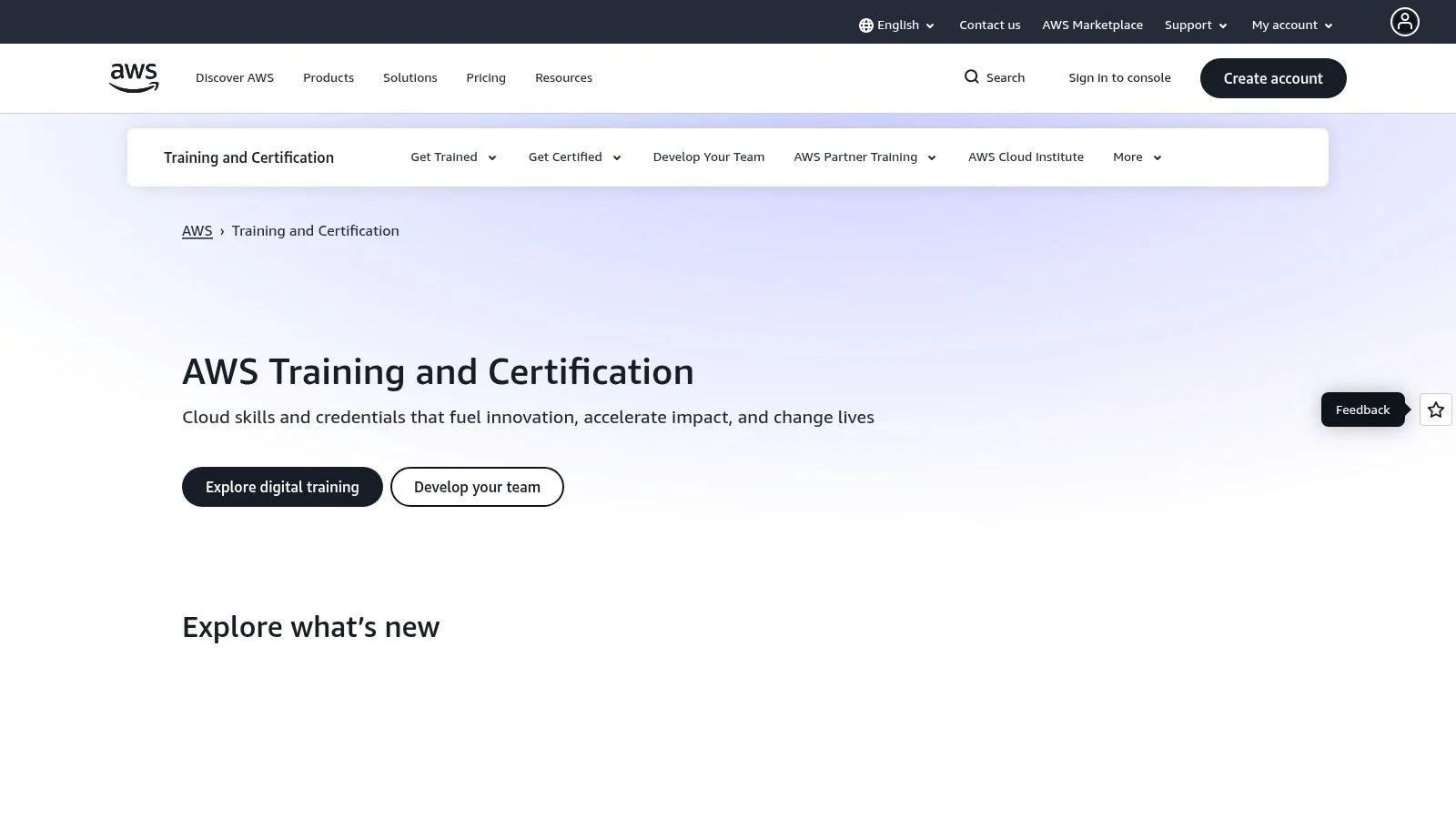
Microsoft Learn is the primary place for anyone wanting to start a career in the cloud or IT security. As the official training platform from Microsoft, it provides current learning paths for foundational certifications like the AZ-900 (Azure Fundamentals) and SC-900 (Security, Compliance, and Identity Fundamentals). These are excellent choices for people looking for entry-level IT certifications. This site is more than just a list of articles. It is a structured platform that offers self-paced modules, hands-on labs for certain paths, and exam readiness checks that map directly to certification objectives. It helps clarify the path to earning a Microsoft credential by providing the necessary resources for free.
Who It's For and Career Paths
Microsoft Learn works well for individuals aiming for roles within the Microsoft cloud environment. This includes jobs in cloud computing, security, and data platforms. It is a smart starting point if you want to specialize early in your career and earn a vendor-specific credential that many employers value. If you are looking for specific regional information, you can check resources like this guide on cybersecurity certification in Australia for local insights.
- Typical Job Roles: Cloud Support Associate, Junior Cloud Administrator, Entry-Level IT Security Analyst, Technical Support Specialist with a cloud focus, and Business Analyst.
- Average Salary Range (Entry-Level): $50,000 - $75,000 annually (verify current market rates on job boards). There is significant potential for growth as you move toward associate-level Microsoft certifications like the AZ-104 Azure Administrator Associate.
Exam Details and Preparation Strategy
Microsoft's "900-series" fundamental exams, including the AZ-900, SC-900, and AI-900, test your basic knowledge. These single-exam certifications use different question types to check your understanding of core concepts. They are designed to be an accessible first step for those new to technical credentials.
| Exam Feature | Details |
|---|---|
| Prerequisites | None. These tests are built for people with little to no technical experience. |
| Exam Format | Multiple-choice and drag-and-drop questions. You will likely not see hands-on labs in these fundamental exams. |
| Number of Questions | Typically 40-60 questions (check the official exam page for updates). |
| Exam Length | 45-60 minutes. |
| Passing Score | 700 on a scale that goes from 1 to 1000. |
| Difficulty | Beginner level. You need to understand what the services do and why they are used rather than how to set them up deeply. |
| Recommended Study Time | 2-4 weeks if you spend 5-10 hours each week studying (verify current guidelines). |
Pro Tip: Look for Microsoft’s Virtual Training Days. These online events are instructor-led and often include free exam vouchers once you finish the course. This is a practical way to get certified at no cost. You should check the official Microsoft events page regularly to find these opportunities.
How MindMesh Academy Enhances Microsoft Learn
Microsoft Learn provides the core content, but MindMesh Academy helps you prepare for the specific challenges of exam day. It fills the gap between learning the facts and being ready to pass.
- Adaptive Learning Paths: MindMesh connects with your study of Microsoft Learn modules. After you finish a section on core Azure services like compute, networking, or storage, you can use MindMesh to study those specific topics. This ensures you have the depth of knowledge required for the test rather than just a basic understanding.
- Spaced Repetition System (SRS): Microsoft exams require you to know many specific terms, service details, and acronyms. MindMesh flashcards help you memorize the differences between IaaS, PaaS, and SaaS. You can also use them to learn the functions of various security tools like Azure Firewall versus Network Security Groups. This helps you recall information accurately under the pressure of the exam.
- Performance Dashboards: Microsoft has practice assessments, but MindMesh provides more detailed feedback. The dashboards show your performance across every exam objective. You can see exactly which areas, such as Azure pricing or identity services, need more study time. This allows you to plan your review sessions more effectively.
Find official Microsoft training modules and certification paths at Microsoft Learn.
4. AWS Certified Cloud Practitioner: Your Gateway to the Cloud
For professionals looking to enter the cloud computing sector, the AWS Certified Cloud Practitioner (CLF-C02) serves as the standard starting point. As the introductory credential from Amazon Web Services, the global leader in cloud market share, it confirms your grasp of the AWS Cloud, its primary services, and its business value. This certification does not require deep coding skills or advanced architectural knowledge. Instead, it proves you can speak the language of the cloud effectively. This makes it a useful first step for those in technical, managerial, sales, or financial roles who work alongside cloud technology teams.
The current exam covers four distinct domains: Cloud Concepts, Security and Compliance, Cloud Technology and Services, and Billing, Pricing, and Support. Passing this test confirms that you understand how cloud resources solve business problems and how AWS specifically structures its offerings. It provides a stable base for future learning in more specialized technical areas.
Who It's For and Career Paths
The AWS Cloud Practitioner fits individuals in non-technical roles who need to understand cloud basics for their daily tasks. It also serves technical workers who want a formal baseline before they move toward Associate-level certifications like the Solutions Architect or Developer tracks. The credential provides a broad perspective that is useful across many departments.
- Typical Job Roles: IT Support Specialist (with cloud focus), Junior Cloud Practitioner, Cloud Sales or Marketing Associate, Project Manager (focusing on Cloud Projects), and Business Analyst (interpreting cloud cost structures). This certification often acts as a bridge to more technical, cloud-specific positions.
- Average Salary Range (Entry-Level): $55,000 - $80,000 annually (verify current salary trends on employment sites like Glassdoor or Payscale). Salaries usually increase as you earn more advanced AWS certifications and gain hands-on experience.
Exam Details and Preparation Strategy
Success on this exam depends on your knowledge of cloud deployment models and the specific reasons why a business would choose AWS. The test uses multiple-choice and multiple-response questions to evaluate your breadth of knowledge. Because the exam covers a wide variety of services, consistent study and clear conceptual understanding are more effective than simple rote memorization.
| Exam Feature | Details |
|---|---|
| Prerequisites | None officially. Basic IT knowledge is helpful. AWS suggests six months of cloud exposure, though focused study can replace this. |
| Exam Format | Multiple-choice and multiple-response questions. |
| Number of Questions | 65 questions. |
| Exam Length | 90 minutes. |
| Passing Score | 700 (on a scale of 100-1000). |
| Difficulty | Beginner. You must learn the purpose and benefits of many different services without needing to perform complex configurations. |
| Recommended Study Time | 1-2 months, with 5-10 hours of study per week. This provides enough time to learn the service catalog without getting lost in technical detail. |
Pro Tip: Focus on the "what" and "why" for every major AWS service. For example, you should know when to use Amazon EC2 for compute power versus AWS Lambda for serverless functions. Understanding the business value and how services work together is more important than knowing specific command-line arguments for this exam. Pay close attention to the shared responsibility model, which defines which security tasks belong to AWS and which belong to the customer.
How MindMesh Academy Accelerates CCP Preparation
The large number of AWS services can feel intimidating to beginners. MindMesh Academy uses specific tools to help you organize your study time and focus on the topics that are most likely to appear on the exam.
- Adaptive Learning Paths: MindMesh checks what you already know across the four exam domains: Cloud Concepts, Security, Technology, and Billing. If you already have a strong grasp of security but struggle with the various support tiers, the platform adjusts your study plan. It prioritizes the topics where you have the most room for improvement, making your preparation more efficient.
- Spaced Repetition System (SRS): It is easy to confuse services like S3 for storage and RDS for databases when you first start. MindMesh's SRS flashcards test you on these service definitions and use cases at optimized intervals. This technique helps move technical definitions into your long-term memory so you can recall them quickly during the test.
- Performance Dashboards: You can use the dashboard to track your progress on practice exams. By viewing your scores broken down by domain, you can see if you are consistently missing questions in "Billing and Pricing" or "Cloud Concepts." This visual feedback allows you to adjust your focus and study specifically what you need to pass with confidence.
Learn more about the certification at the official AWS Certified Cloud Practitioner website.
5. Coursera — Google IT Support Professional Certificate
Most traditional IT certifications end with a single exam that carries high stakes. The Google IT Support Professional Certificate on Coursera takes a different path. It uses a thorough, curriculum-based method to teach foundational IT skills over several months. Google built this program specifically for people who have no previous experience in the tech world. It is now a popular entry point for those wanting to start a career in technology. This certificate provides the hands-on training and technical theory you need to work in various support roles.
The program consists of five courses that link together. You start with the basics of technical support and move into networking, operating systems, and system administration. The final parts focus on security. You do not have to pass a single, stressful final exam to graduate. Instead, you watch video lectures, take quizzes, and complete interactive labs. These labs use virtual environments to test your skills as you learn. This setup helps absolute beginners and people changing careers build their technical abilities step by step.
Who It's For and Career Paths
This certificate helps people who want to move into the IT field. You do not need a computer science degree or years of technical experience to enroll. The courses are self-paced, which means you can learn while working a full-time job. The focus stays on practical skills that employers look for when hiring for their help desks.
- Typical Job Roles: IT Support Specialist, Help Desk Technician, Computer User Support Specialist, IT Technician, Junior Systems Analyst, and Field Support Technician. These roles form the front line of technical support in almost every company.
- Average Salary Range (Entry-Level): $50,000 - $70,000 annually (verify current salary data on sites like Glassdoor or Payscale). One of the biggest benefits of this program is the Google employer consortium. This is a group of more than 150 companies. These companies, including Deloitte, Ford, and Google itself, look at graduates of this certificate when they hire for entry-level IT roles. This connection makes it much easier to find a job after you finish the courses.
Program Details and Preparation Strategy
The Google IT Support Professional Certificate emphasizes hands-on work and fixing problems. You cannot simply watch the videos and expect to pass. You must spend time in the labs. These labs simulate the technical issues you will see every day in an IT office.
| Program Feature | Details |
|---|---|
| Prerequisites | None. Google created this specifically for beginners who have no IT background. |
| Program Format | This is a series of 5 courses. It includes video lectures, reading materials, quizzes, and many hands-on labs. |
| Number of Courses | 5 total. Courses include Technical Support Fundamentals, The Bits and Bytes of Computer Networking, and Operating Systems and You. |
| Program Length | This is self-paced. Google suggests most people finish in under 6 months by working about 10 hours each week. |
| Passing Score | You must finish all graded assignments. You must also pass every quiz and lab in all five courses to get the certificate. |
| Difficulty | Beginner. The curriculum moves from zero knowledge to job-ready skills in a way that supports the learner. |
| Recommended Study Time | Plan for 3-6 months. Aim for 5-10 hours of study per week (verify your personal schedule and pace). This gives you enough time to practice in the labs. |
Pro Tip: Spend extra time on the optional projects. Take great care when finishing the labs. These labs are a chance to build a portfolio of your work. You can show this portfolio to hiring managers to prove you can fix real technical problems. It shows you have practical experience, even if you have never held an IT job before.
How MindMesh Academy Enhances Your Learning
Finishing a five-course program like this requires you to stay organized. You have to remember a large amount of information over several months. MindMesh Academy provides tools that work with Coursera to help you learn better and remember more.
- Spaced Repetition System (SRS): The Google courses introduce many technical terms. You will learn about networking, different operating systems, and security. You can use MindMesh to build flashcards for these concepts. Focus on networking protocols such as TCP/IP and DNS. You should also make cards for command-line tools like ping and ipconfig. Using an SRS ensures you do not forget the early lessons while you are working on the final courses.
- Adaptive Learning Paths: As you work through the five courses, use MindMesh to organize your study plan. You can connect your notes to specific parts of the Google curriculum. This helps you identify which areas are difficult for you. For example, if you struggle with IT automation or specific security principles, you can flag those sections for more review. This keeps your study time efficient.
- Performance Dashboards: You can take quizzes in MindMesh based on your own flashcards. The performance dashboard tracks how well you know each topic. It gives you a visual map of your progress. This allows you to see where you are strong and where you need more work before you take the official Coursera assessments. Using these tools helps you go into every graded lab with more confidence.
Learn more about the certificate at the official Coursera — Google IT Support Professional Certificate website.
6. Udemy: A Versatile Marketplace for Certification Prep
Official study guides and labs are essential, but adding video courses often clarifies technical topics faster. Udemy functions as a large marketplace for on-demand video lessons. It offers many options for those seeking entry-level IT certifications. The platform provides a low-cost way to find expert instruction and specific exam materials tailored to your goals.
Rather than using one set curriculum, Udemy hosts content from thousands of independent instructors. This variety lets you find a teaching style that works for you. You can find prep materials for popular credentials like CompTIA A+, Network+, Security+, AWS Cloud Practitioner, and Microsoft Azure Fundamentals. This marketplace structure allows you to select a course based on your budget and how much detail you require for a specific subject.
Who It's For and How to Use It
Udemy works well for students who study on their own and want to add video learning to their primary books or labs. It is effective for people who learn best by watching a teacher perform a task or listening to a lecture. Practical demonstrations and real-world examples in these videos help turn abstract ideas into something you can visualize.
- Exam Preparation: You can find full-length courses that go through every single objective listed in the official exam guidelines for a specific certification.
- Study Supplement: Use these videos to explain topics that your primary textbook might not explain clearly enough for your specific learning style.
- Subject Specifics: If you only struggle with one part of a certification, such as subnetting or identity management, you can find a short course focused only on that domain.
- Practice Materials: Many instructors include several full-length practice exams that mimic the format and the difficulty level of the actual test you will take.
- Alternative Perspectives: If one instructor's explanation of a networking concept does not make sense to you, it is easy to find another teacher who explains it in a different way.
A major benefit is lifetime access. When you buy a course, you own it forever. If you buy a class during a sale, you can return to the material years later. This is helpful if you need to renew a certification or want to review a specific technical process for a new job role.
Platform Details and Selection Strategy
Finding the right material in such a large library requires a careful approach. The value of the platform is its size, but the quality of the teaching varies between instructors. You must look closely at the ratings and reviews for every course before you commit your time and money.
| Platform Feature | Details |
|---|---|
| Pricing Model | You pay for each course one time. Prices are often $10–$20 during sales (verify current pricing on the vendor site). There is also a monthly subscription called the "Personal Plan." |
| Content Format | Courses include on-demand video, notes, and downloadable code. Many also provide practice tests to check your knowledge at the end of sections. |
| Instructor Interaction | Use Q&A forums to ask instructors questions. Seeing other students' queries helps identify common issues and solutions within the community. |
| Key Certifications | It covers CompTIA A+, Network+, and Security+. You can also find AWS CCP, Azure AZ-900, ITIL 4 Foundation, CCNA, and project management tests like PMP. |
| Accessibility | You can watch on a web browser or use the mobile app. The app allows you to download videos to watch while you are traveling or offline. |
| Quality Control | The platform uses student ratings and reviews. You must check these to make sure the instructor is effective and the material is current. |
| Refund Policy | There is a 30-day money-back guarantee. If a course does not meet your needs, you can get a refund within that first month. |
Pro Tip: Do not pay the full price listed for a course. Udemy has sales almost every week where prices drop to $10–$20 (verify current pricing on the vendor site). When you pick a course, check the "last updated" date. This helps you confirm the material matches the current exam version. Also, watch the free preview videos to see if you like the instructor’s voice and teaching style before you pay.
How MindMesh Academy Complements Udemy Courses
Pairing Udemy videos with MindMesh Academy for practice helps you remember what you learn. This strategy uses both passive learning from watching videos and active recall from testing yourself on the material.
- Content Integration: Watch a video on a specific topic like networking protocols (TCP or HTTP). Then, immediately use MindMesh Academy's quizzes and flashcards on that same topic. This tests your memory right away. This moves information into long-term memory and reduces the chance of forgetting it.
- Practice Exam Analysis: If you miss questions on a Udemy practice test, enter those topics into MindMesh. The platform creates a study plan that focuses on your weak points. This makes your study time more efficient because you are not repeating things you already know well.
- Theory and Practice: Use the instructor's lecture to understand a concept. Then, use MindMesh simulations or scenario-based questions to apply that knowledge. This helps you translate what you see on a screen into the skills needed for the exam and a real-world IT career.
Explore the diverse course catalog at the official Udemy website.
7. PeopleCert: The Official Home of ITIL Certifications
PeopleCert is the only examination institute for all ITIL and PRINCE2 certifications. This makes it the official source for anyone pursuing the ITIL 4 Foundation credential. As the owner of the ITIL framework, the platform provides direct access to the most current exam objectives, official courseware, and exam vouchers. It is the central authority for validating skills in IT service management (ITSM). This area is vital for entry-level IT professionals who want to work effectively in structured corporate and enterprise environments.
The PeopleCert website allows you to purchase self-paced eLearning courses and exam bundles directly. Buying from the source ensures that training materials match the real test. You can also use the global directory to find an Accredited Training Organization (ATO) for instructor-led courses. These options provide enough flexibility to fit different learning styles, schedules, and budgets.
Who It's For and Career Paths
The ITIL 4 Foundation certification targets IT professionals who need to learn the standard language and processes of service management. It is valuable for those in roles that interact with multiple IT departments, manage service delivery, or support business operations. This makes it a relevant entry-level IT certification for corporate roles focused on efficiency.
- Typical Job Roles: IT Support Specialist, Service Desk Analyst, IT Project Coordinator, Junior Business Analyst, Operations Support Technician, and Service Management Analyst.
- Average Salary Range (Entry-Level): $55,000 - $75,000 annually (check local market rates for current pricing and averages). Many process-driven organizations require ITIL knowledge for roles that prioritize structured service delivery.
Exam Details and Preparation Strategy
The ITIL 4 Foundation exam is a closed-book, multiple-choice test designed to confirm you understand the core concepts, terms, and principles of the ITIL 4 framework. Success depends on your ability to grasp how the components of the ITIL Service Value System (SVS) and its guiding principles work together to create and support services. You must show that you understand how these parts connect to provide value to the organization.
| Exam Feature | Details |
|---|---|
| Prerequisites | None. However, attending an accredited training course—either self-paced or through an instructor—is recommended due to the specific terminology. |
| Exam Format | Multiple-choice questions. |
| Number of Questions | 40 questions. |
| Exam Length | 60 minutes. |
| Passing Score | 65% (you must answer 26 out of 40 questions correctly to pass with confidence). |
| Difficulty | Beginner. The main challenge lies in memorizing and understanding the specific ITIL terminology, core concepts, and framework components. |
| Recommended Study Time | 2-4 weeks. Dedicating 5-10 hours per week allows you to digest the framework without feeling overwhelmed by new information. |
Pro Tip: Focus on the "why" behind the ITIL Guiding Principles, such as "Focus on Value" and "Start Where You Are." You should also study the stages of the Service Value Chain and how they interact. The exam tests your comprehension of how these concepts apply to actual service management scenarios, rather than your ability to simply recall definitions from a textbook.
How MindMesh Academy Streamlines ITIL Preparation
Mastering the specific vocabulary of ITIL can be difficult for new learners. The framework uses a logical flow within its Service Value System that requires focus and repetition to learn effectively. MindMesh Academy is built to simplify this process and improve retention. For more information on the certification process, see this guide on how to get ITIL certified on the MindMesh Academy blog.
- Spaced Repetition System (SRS): ITIL relies on precise terms like "Service Value System" and the "Four Dimensions of Service Management." MindMesh's SRS flashcards help you drill these definitions until they are familiar. This method ensures you are prepared for the specific language used in the exam questions.
- Adaptive Learning Paths: If you have experience with service desk operations but are new to change enablement or problem management, the platform adjusts. It identifies the ITIL practices where you need the most work and shifts your focus accordingly. This approach saves time and makes your learning effort more effective.
- Performance Dashboards: Use these dashboards to track your scores on ITIL practice exams. You can see which areas, such as the Service Value Chain or specific practices like Incident Management, are your weakest. This visibility allows you to plan your final review to address those gaps before test day.
Learn more about the certification at the official PeopleCert ITIL website.
Top 7 Entry-Level IT Certification Providers — Comparison
| Platform / Provider | Implementation complexity | Resource requirements | Expected outcomes | Ideal use cases | Key advantages |
|---|---|---|---|---|---|
| MindMesh Academy | Low. The self-paced onboarding includes an adaptive "Mastery Path" to guide your study. | Paid subscription. Pricing is not public, so verify current rates on the official site. Includes digital tools and integrated practice labs. | Leads to significantly higher pass rates and superior long-term knowledge retention. Students achieve genuine mastery of technical concepts. | Certification candidates who want evidence-based, personalized preparation focusing on memory retention. | Uses advanced spaced repetition and adaptive paths. Provides exam-aligned practice and granular performance analytics to track your progress. |
| CompTIA (official) | Low. You can buy official training materials and exam vouchers directly from the CompTIA store. | Paid official products and vouchers. Keep in mind that certifications like A+ (220-1201/220-1202) require passing two separate exams. | Industry-standard IT credentials that are highly valued by hiring managers across the globe. | Professionals targeting roles in help desk support, desktop support, junior security, or basic networking. | CompTIA provides official content that stays up-to-date with current exam objectives. They maintain high vendor credibility for neutral certifications. |
| Microsoft Learn (official) | Very low. The platform offers free, self-paced modules organized into clear, logical learning paths. | Free modules and official documentation. You may need to buy third-party practice tests to feel fully prepared for the exam. | Strong preparation for Microsoft Fundamentals certifications, such as the AZ-900 cloud or SC-900 security exams. | Beginners who want foundational cloud or security knowledge specifically for Microsoft environments. | Official content from Microsoft provided at no cost. The modules stay current as the exams and technology evolve. |
| AWS Training and Certification (official) | Low. Offers free digital courses and a simple registration process for certification exams. | Free digital courses via AWS Skill Builder. Optional paid labs are available, or you can use the AWS Free Tier for hands-on practice. | Vendor-recognized credentials, such as the AWS Certified Cloud Practitioner (CLF-C02), and a thorough grasp of cloud basics. | Beginners who want to specialize in AWS cloud technology and earn a foundational certification. | A high volume of free, official AWS content and flexible global testing options via Pearson VUE. |
| Coursera — Google IT Support Certificate | Moderate. This is a multi-course, structured program that requires a significant time commitment to complete technical modules. | Requires a monthly subscription fee. The program features various hands-on labs and assessments that are graded. | Job-ready IT support skills. This professional certificate is recognized by Google and many other corporate partners. | Absolute beginners or career changers who want a clear path into entry-level IT support roles. | The curriculum is designed by Google. It emphasizes practical labs and provides direct access to career resources upon completion. |
| Udemy (marketplace) | Very low. You can purchase a specific course and start your study session immediately. | One-time low-cost purchases. Note that quality and depth vary significantly between the different instructors. | Outcomes vary by course. It is highly effective for targeted exam cramming or as a supplement to official textbooks. | Budget-conscious learners who need extra explanations or a quick review of specific exam topics. | Offers a massive selection of courses with frequent discounts. You get lifetime access to any content you buy. |
| PeopleCert (ITIL owner) | Low to moderate. Purchase bundles or sign up for training through Accredited Training Organizations. | Paid eLearning and exam bundles. Prices vary by region, so verify current pricing on the vendor website. | Official ITIL 4 certifications, which are vital for understanding IT service management and operations. | Candidates who need ITIL certification to work in enterprise IT environments or service delivery teams. | Provides official courseware and convenient bundles. They maintain a large global network of training partners. |
Take the Next Step: Turn Your Certification Plan Into a Career
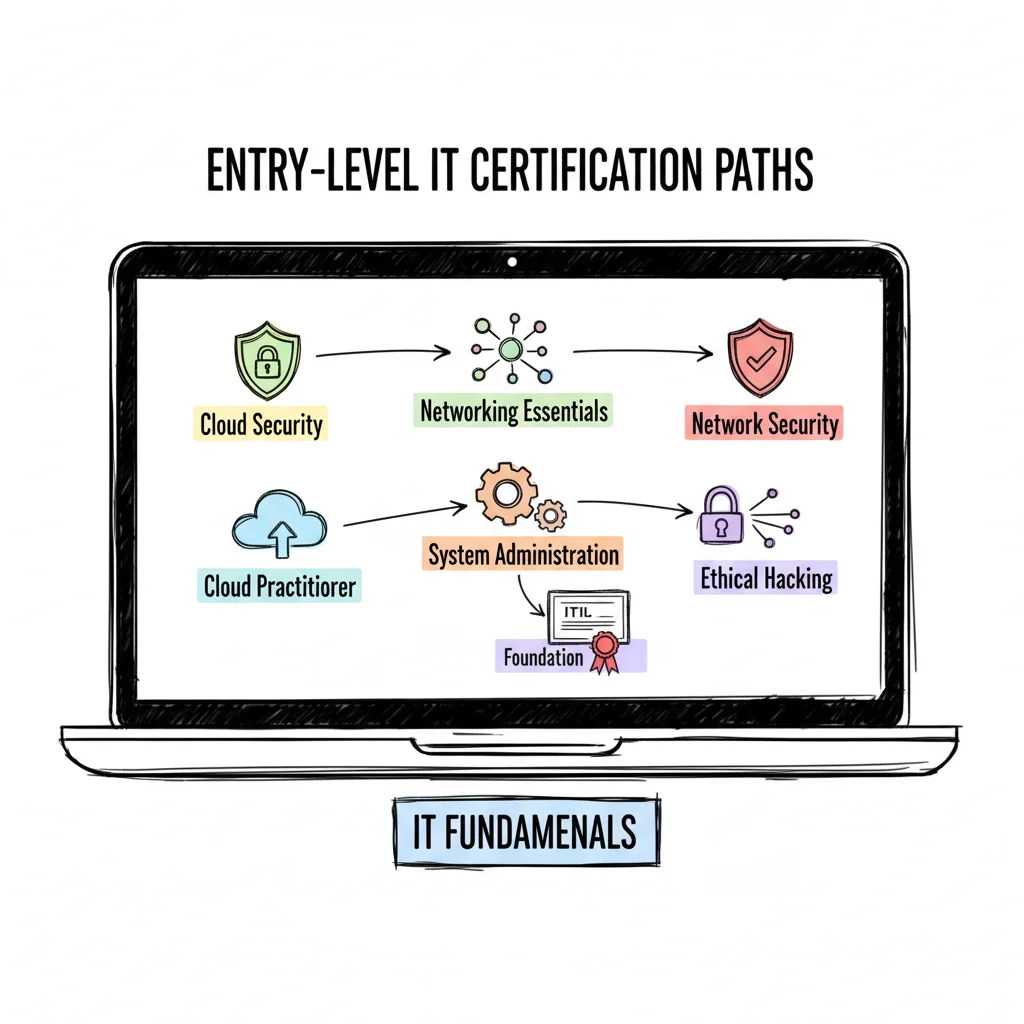
Selecting entry-level IT certifications involves more than picking a name from a list. We examined core certifications like the CompTIA A+, cloud options from AWS and Microsoft Azure, the Google IT Support Professional Certificate, and ITIL. Each of these credentials provides a specific entry point into the technology sector. They help you qualify for roles in help desk support, networking, or cloud administration.
The certification is only one part of the success equation. How you prepare for the exam is just as important. The difference between passing a test and mastering technical skills depends on your study habits. Reading textbooks or watching video lectures is a common starting point, but these methods are often passive. Passive learning usually leads to forgetting information shortly after the exam is over. To build a career, you need to retain what you learn and apply it in technical scenarios.
From Information to Implementation: Your Action Plan
Moving from selecting a certification to earning it requires a structured approach. Your success depends on building a study routine that reinforces knowledge and ensures you understand the concepts deeply. Here is a plan to help you move forward:
1. Define Your Goals and Choose Your Path: Confirm your long-term career objectives before you buy materials or sign up for classes. Are you interested in the physical hardware of computers and local networking? If so, the CompTIA A+ is a good fit. If you prefer to work with virtual servers and remote infrastructure, focus on the AWS Certified Cloud Practitioner or Microsoft Azure Fundamentals. If you like the organized side of how businesses manage technology services, ITIL is a strong choice. Your specific goals will help you stay focused during long study sessions. Review the salary data and job titles discussed earlier to ensure your chosen certification matches the career outcome you want.
Reflection Prompt: What types of technical problems do you enjoy solving? Do you like troubleshooting a hardware issue, setting up cloud-based servers, or making technical processes run more efficiently? Let your interests guide your choice.
2. Choose Effective Learning Resources: The materials you use to study are vital for your progress. Official resources from Microsoft Learn or AWS Training provide accurate information because they come from the providers. However, these materials sometimes lack the interactive features that help you remember facts over time. You can also find many courses on sites like Udemy. When using third-party platforms, check the reviews to ensure the content matches the current exam versions.
Key Insight: A successful study plan uses accurate content and a system that encourages active recall. Your goal is to interact with the information and find the areas where you need the most improvement.
3. Use a Modern Study Method: Avoid old-fashioned methods like cramming. Instead, use a system based on the science of how people learn. This makes your study time more productive and helps you feel more prepared on exam day:
- Spaced Repetition System (SRS): This technique involves reviewing technical facts at specific intervals. Platforms like MindMesh Academy use this method to help you recall information just before you are likely to forget it. This process helps move knowledge into your long-term memory. It ensures you are ready for the exam and capable of performing the job duties once you are hired.
- Adaptive Learning: You should not spend time on concepts you already know. Use a tool that tracks your performance on practice tests and changes your study path based on your results. This allows you to focus on your weak spots. Focusing on what you do not know is a faster way to prepare for the test.
- Performance Analytics: You need a way to measure your progress. A dashboard that tracks your scores across different technical areas is essential. It helps you see your strengths and find your knowledge gaps. For example, if you see that you are doing well with security but struggling with networking, you can adjust your focus accordingly.
By using these methods, you change how you study. You move from being a passive listener to an active learner. This approach helps you pass your entry-level IT certifications and build a base of knowledge that will help you throughout your career. Your future in technology is built on the steps you take today to improve your skills.
If you are ready to stop guessing and start learning, MindMesh Academy provides adaptive learning paths and performance dashboards. Their spaced repetition system helps you be well-prepared for your exams and build skills that last. Begin your career path with MindMesh Academy today and start working toward the tech role you want.
Ready to Get Certified?
Prepare with expert-curated study guides, practice exams, and spaced repetition flashcards at MindMesh Academy. Use them to pass with confidence:

Written by
Alvin Varughese
Founder, MindMesh Academy
Alvin Varughese is the founder of MindMesh Academy and an enterprise architecture leader. An electrical engineer by training, he moved from factory automation in South Africa to cloud architecture at GE Appliances and Humana (Fortune 50), and holds 20 professional certifications including AWS Solutions Architect Professional, Azure DevOps Engineer Expert, and Microsoft Agentic AI Business Solutions Architect. He built MindMesh Academy after interviewing too many highly certified candidates who couldn't answer basic questions: the goal is prep that makes you better at the job, not just able to pass the exam.