
Is ITIL Certification Worth It in Today's Tech World
In the rapidly evolving landscape of IT, professionals often find themselves at a crucial juncture, asking: "What's the most impactful next step for my career?" For those aiming to elevate their expertise, increase earning potential, transition into leadership roles, or simply master the art of business-aligned IT service delivery, the answer is a definitive yes—ITIL certification remains an exceptionally valuable asset. At MindMesh Academy, we recognize ITIL as one of the globe's most recognized and respected credentials, a clear indicator of an individual's deep understanding in crafting efficient, stable, and value-driven IT operations that directly support organizational goals.
The Verdict on ITIL Certification's Value
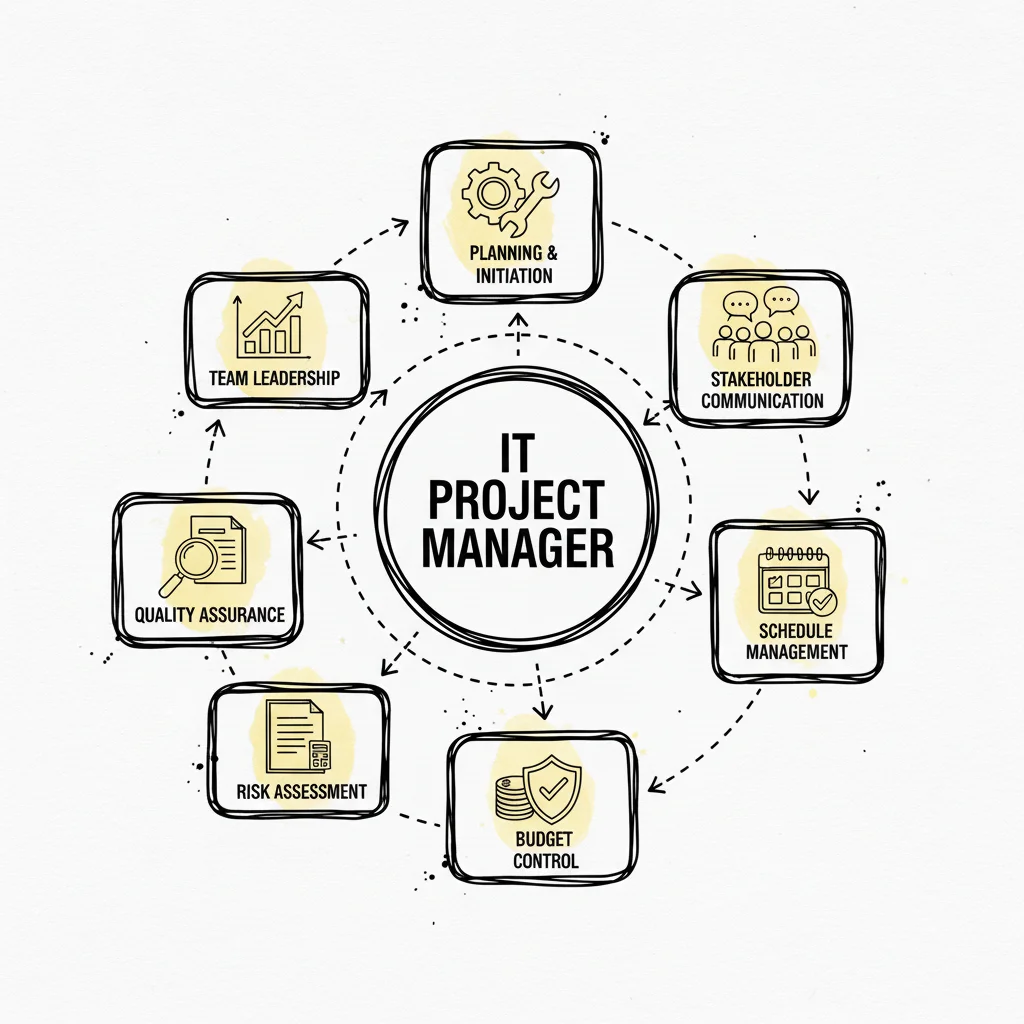
Every IT professional weighs the investment of time and resources into a new certification against its potential career return. Amidst the continuous buzz surrounding methodologies like Agile and DevOps, a common question arises: "Is ITIL truly still relevant in today's fast-paced tech environment?" The overwhelming evidence strongly affirms its enduring value, particularly for professionals eager to bridge the gap between technical execution and strategic business objectives.
Consider ITIL not as a prescriptive, rigid rulebook, but rather as a universally accepted language and comprehensive framework for IT Service Management (ITSM). It equips organizations with a shared lexicon and a robust toolkit of best practices, empowering them to streamline operations, optimize costs, and consistently deliver superior services. For you, as an individual, mastering this framework translates into a profound career advantage. Before we dive deeper, let's provide a quick, high-level overview of the key advantages and considerations.
ITIL Certification at a Glance Pros and Cons
| Key Benefit | Potential Drawback |
|---|---|
| Boosts salary potential and career opportunities. | The framework can seem overly structured for smaller, agile teams. |
| Provides a globally recognized credential. | Training and exam costs can be a significant upfront investment. |
| Aligns IT processes with business strategy. | Keeping up with new versions (like ITIL 4) requires ongoing learning. |
| Establishes a common language for service management. | Benefits may be less immediate if your company hasn't adopted ITIL. |
This summary offers a concise perspective. While every investment has its costs and factors to consider, the substantial financial and professional benefits of ITIL certification often prove compelling, as we will explore in the following sections.
The Financial and Career Impact
For many IT professionals, the immediate appeal of an ITIL certification lies in its proven financial impact. Consistently, ITIL ranks among the top-paying IT certifications globally. Data unequivocally demonstrates that certified individuals command a significant salary premium. For instance, the ITIL 4 Foundation certification is frequently cited as one of the top 15 highest-paying credentials worldwide, with certified professionals often reporting an average of 11% higher earnings compared to their non-certified peers. For a more detailed breakdown of these salary advantages, explore resources like this analysis on ITIL salary benefits.
Beyond the immediate pay bump, ITIL acts as a powerful catalyst for career mobility and advancement. A quick scan of prominent job boards reveals that a vast array of organizations—especially large enterprises, government agencies, and even mid-sized companies adopting structured IT operations—frequently list ITIL as a highly desired or even mandatory qualification for critical roles. Think of positions such as:
- IT Project Manager: Guiding technical initiatives with a service-centric mindset.
- Service Delivery Manager: Ensuring the consistent and high-quality provision of IT services.
- IT Operations Manager: Overseeing the day-to-day efficiency and reliability of IT infrastructure.
- Business Analyst: Translating business needs into actionable IT requirements, a key interface role.
- Cloud Operations Lead (e.g., in AWS or Azure environments): Applying service management principles to manage cloud resources effectively.
ITIL provides the foundational structure for standardizing how IT services are selected, planned, delivered, and managed. This leads to greater efficiency and predictable, high-quality service delivery—a skill highly valued by employers.
Ultimately, an ITIL certification represents a strategic investment in your capacity to articulate and deliver business value through technology. It demonstrates your proficiency in aligning IT services with overarching organizational goals, effectively managing risks, and ensuring the delivery of services that truly meet user needs and expectations. These are evergreen skills, critical for success in any contemporary tech landscape.
What ITIL Actually Means for Your IT Career
Let's demystify ITIL and ground it in practical, real-world application. Forget the perception of a dry, academic framework. Instead, envision ITIL as the definitive "master playbook" for operating IT functions with the precision and strategic foresight of a thriving business. Its essence isn't rote memorization of abstract theories, but rather the acquisition of a shared, actionable language that meticulously links every IT activity directly to a tangible business objective.
Consider a bustling, high-stakes environment like an emergency room or a mission control center. Without standardized protocols and clear communication, critical errors are inevitable, leading to chaos and potentially dire consequences. Now, picture that same high-pressure setting, but with established, proven processes guiding every professional—from triage nurse to lead surgeon, or from flight director to ground control. The inherent chaos is mitigated. Every action is coordinated, resources are optimally utilized, and critical outcomes are achieved predictably.
This is precisely the transformative effect ITIL has on the world of IT. It introduces a structured, predictable methodology for managing technology, ensuring that every task, from a routine password reset to a major enterprise-wide software deployment, is handled with maximum efficiency and minimal disruption.
From Rigid Rules to a Flexible Framework
The outdated perception of ITIL as a ponderous, bureaucratic framework is firmly relegated to the past. The latest iteration, ITIL 4, fundamentally reshaped this narrative. Its focus has emphatically shifted away from rigid control and excessive documentation towards the proactive delivery of value, the achievement of measurable outcomes, and the cultivation of robust collaboration across the entire service value chain.
A critical design principle of ITIL 4 was its inherent compatibility and synergy with other leading methodologies that define modern IT. It integrates seamlessly with dynamic approaches, including:
- Agile: Providing structured service management practices that complement iterative development cycles, enabling rapid adaptation to evolving project requirements in environments like software development sprints or feature rollouts.
- DevOps: Facilitating seamless collaboration between development and operations teams, ensuring faster, more reliable, and lower-risk software deployments, particularly in CI/CD pipelines.
- Cloud Services: Offering a robust framework for managing the complexities of hybrid and multi-cloud infrastructures (e.g., orchestrating services across AWS, Azure, and Google Cloud), ensuring governance, cost optimization, and service consistency.
By actively embracing and integrating with these contemporary practices, ITIL 4 definitively proves that organizations and professionals don't have to sacrifice stability for speed. It establishes the vital operational guardrails that empower agile and DevOps teams to innovate rapidly and deploy frequently, all without compromising service integrity or business continuity. This adaptability is precisely why ITIL's relevance has only grown stronger.
Reflection Prompt: Consider a recent project where your team introduced a new feature or service. How might a structured approach like ITIL have helped manage the transition, support the new service, or ensure its value delivery?
For those embarking on this journey, a comprehensive ITIL 4 Foundation study guide offers an ideal starting point, laying the groundwork for understanding these interconnected principles.
The Core Philosophy: Taming IT Chaos
Fundamentally, ITIL's essence revolves around elevating service quality management. It instigates a crucial shift in the IT mindset: moving beyond merely reacting to broken hardware or software, to proactively designing, delivering, and optimizing valuable services that directly support business operations. This transformation is achieved through the establishment of clear, repeatable, and adaptable processes that govern every aspect of IT, from swift incident resolution to comprehensive long-term strategic planning.
When you immerse yourself in ITIL, you're not simply acquiring a checklist of processes. You are cultivating a strategic approach to understanding technology's pervasive role within the broader organizational ecosystem. You evolve into the pivotal individual capable of bridging the crucial communication and understanding gap between the technical teams on the ground and the executive boardroom.
This invaluable ability to translate intricate technical activities into tangible business outcomes is precisely why ITIL-certified professionals are exceptionally sought after. They possess the insight to identify opportunities for cost reduction, implement robust strategies to prevent costly service outages, and ensure that every IT investment is directly aligned with advancing the company's overarching mission. This strategic foresight is the profound edge that positions ITIL as an indispensable career asset.
Calculating the Financial ROI of ITIL Certification
When evaluating any professional credential, particularly one like ITIL, the concept of Return on Investment (ROI) naturally comes to the forefront. For many IT professionals, this boils down to a fundamental question: Will the financial and time investment in certification directly translate into a higher salary and enhanced career prospects? Let's dissect the numbers and explore the real-world financial implications.
The initial cost for the foundational ITIL 4 Foundation certification can vary significantly based on your preferred learning method. A self-driven approach, leveraging high-quality study materials and the exam fee, might range from a few hundred dollars. Conversely, a comprehensive, instructor-led training course or bootcamp could be an investment of anywhere from $1,500 to $2,500.
While these figures might seem substantial at first glance, this initial outlay is frequently recouped rapidly through the increased earning potential that ITIL-certified professionals command. The "ITIL Certified" designation on your resume serves as a potent signal to prospective employers: you possess the critical understanding to link IT services directly to core business objectives and strategic outcomes. This capability is a premium skill, and organizations are consistently prepared to compensate for it.
Breaking Down the Costs and Gains
To truly grasp the ROI, it's essential to juxtapose the investment costs against the tangible, real-world salary enhancements. ITIL is far from a fleeting trend; its robust popularity has been consistently maintained over many years, with approximately 200,000 professionals achieving certification each year. This sustained demand is a testament to its enduring value in a competitive job market.
ITIL-certified professionals almost universally report a discernible salary uplift. In regions like North America, for example, the average annual salary for individuals possessing both ITIL and broader ITSM credentials stands at an impressive $93,601. This underscores that ITIL is not merely a popular certification but a genuinely financially rewarding one. For an in-depth exploration of this data, consider reviewing reports on ITIL's consistent ranking among top-paying IT certifications.
Reflection Prompt: If an ITIL certification could increase your current salary by 10-15%, how quickly would that cover your investment in training and exam fees?
The following infographic provides a clear visual summary of how ITIL drives crucial career benefits that go beyond purely financial gains, encompassing enhanced efficiency, improved collaboration, and strategic alignment within IT operations.

As illustrated, even with a conservative estimate for salary growth, the investment in ITIL certification frequently demonstrates a clear positive ROI, often paying for itself within the initial year of application.
Long-Term Financial Upside
The financial advantages of ITIL extend far beyond the immediate post-certification period. Consider the ITIL certification as a powerful credential that systematically unlocks pathways to more senior, strategic, and ultimately, higher-paying roles throughout your career trajectory.
For example, beyond the initial positions, ITIL knowledge is foundational for roles that involve cross-functional leadership and significant business impact, often complementing other domain-specific certifications:
- Service Delivery Manager: These critical roles are intrinsically tied to ITIL principles, focusing on the consistent, high-quality provision of IT services aligned with business requirements. The remuneration for these positions directly reflects this vital responsibility.
- IT Manager / Director: A profound understanding and application of the ITIL framework are frequently an explicit prerequisite for management and director-level positions. This foundational knowledge enables effective oversight of IT operations, strategic planning, and team leadership, naturally commanding a substantial increase in compensation.
- Business Analyst (with a focus on IT services): Professionals skilled at translating complex business demands into actionable IT solutions are invaluable. ITIL provides the structured language and framework necessary to excel in this bridging role, much like a PMP® certification equips project managers with a standardized approach to project execution.
- Enterprise Architect / Solutions Architect (especially in cloud environments like AWS or Azure): While deeply technical, these roles benefit immensely from ITIL's focus on service design, transition, and operation, ensuring that complex architectural decisions result in reliable, manageable, and value-driven services.
The real financial power of ITIL lies in its ability to unlock senior roles. It’s not just about a one-time salary bump; it's about building a career trajectory with a much higher earning ceiling over the next five to ten years.
Even a conservative 5-10% salary increase immediately following certification can enable the initial investment to pay for itself within a matter of months. For a growing number of forward-thinking IT professionals, the pertinent question is not whether they can financially afford to pursue this certification, but rather, whether they can afford not to. The empirical data consistently affirms that investing in ITIL yields a rapid and significantly compelling financial return, alongside invaluable professional growth.
How ITIL Certification Can Open Up Your Career
While the allure of a higher salary is undeniably a powerful incentive, the true transformative potential of an ITIL certification delves much deeper. Envision it less as a mere addition to your resume, and more as a master key that unlocks access to senior roles and expanded responsibilities that were previously beyond your grasp. It broadcasts a resounding message to employers: you don't just comprehend technology; you strategically understand how technology is leveraged to propel business objectives forward. This is an indispensable skill for any IT professional with leadership ambitions.
A quick survey of job advertisements for roles such as IT Manager, Service Delivery Lead, or IT Operations Director will swiftly reveal a recurring pattern: the phrase "ITIL certification required" or "strongly preferred" appears consistently, particularly within large enterprises, government entities, and organizations heavily reliant on structured IT operations. This isn't a perfunctory HR requirement; rather, hiring managers actively seek this credential because it instills profound confidence. It serves as tangible proof that you grasp the fundamental principles of constructing stable, efficient, and predictable IT services—precisely the assurance they demand when entrusting individuals with the management of mission-critical systems and high-performing teams.
Speaking the Same Language as the Business
One of the most profound, yet frequently underestimated, benefits of ITIL is its capacity to equip you with the essential communication skills to engage effectively with business leaders. You learn to transcend purely technical metrics like server uptime or network latency. Instead, you develop the ability to articulate IT performance and initiatives in the language of business value, tangible risk reduction, and measurable customer satisfaction.
This shared vocabulary acts as a complete paradigm shift. Suddenly, you transcend the label of merely "the tech person." You evolve into a trusted strategic partner, capable of engaging with executives and departmental heads to collaboratively explore how technology can directly facilitate the achievement of their specific business targets. For instance, instead of reporting "99.9% network uptime," you might say, "Our robust network reliability directly contributed to a 15% increase in online sales conversion rates this quarter by eliminating critical downtime during peak business hours."
"Certification in ITIL (Information Technology Infrastructure Library) provides the basic structure for the standardization of selecting, planning, delivering, maintaining, and managing the overall lifecycle of IT services within an organization. It allows for greater efficiency and predictable service delivery."
This crucial ability to connect the intricate operations of the server room with the strategic imperatives of the boardroom is precisely what propels a career onto the fast track. You become the indispensable professional capable of translating nuanced business challenges into actionable, value-driven IT projects, solidifying your position as an exceptionally valuable asset to any organization.
Moving From Tactical Work to Strategic Influence
Earning an ITIL certification frequently catalyzes a significant reorientation in your career's trajectory. It facilitates a crucial shift from engaging in routine, day-to-day tasks to strategically defining the purpose and importance of that work. You transition from a reactive posture—primarily fixing existing issues—to a proactive, strategic stance—actively preventing problems and systematically creating new value.
Consider these impactful career progressions that ITIL enables:
- From Help Desk Technician to Incident Manager: Your role evolves from merely resolving individual tickets to architecting and implementing robust processes that significantly reduce the occurrence of such incidents across the enterprise.
- From Systems Administrator to Change Manager: Instead of simply deploying system updates, you become responsible for meticulously assessing, planning, and managing the potential risks and business impacts of all changes across the entire organizational IT landscape. This is critical for maintaining stability in complex systems (e.g., Azure or AWS infrastructure deployments).
- From Network Engineer to Service Level Manager: Your primary focus shifts from granular network performance statistics to ensuring that end-to-end IT services consistently meet and exceed agreed-upon service level agreements (SLAs) with the business.
This advancement from hands-on execution to strategic oversight is a hallmark of a seasoned, senior IT professional. The ITIL certification process serves as a monumental step on this career path. If you're seeking guidance on initiating this journey, our comprehensive guide on how to get ITIL certified provides a clear, actionable roadmap. Ultimately, ITIL is far more than an additional bullet point on your resume; it is a powerful launchpad for a more influential, strategic, and impactful career in IT.
ITIL in a World of Agile, DevOps, and COBIT
ITIL does not operate in isolation; it is an integral component within a broader ecosystem of frameworks, all meticulously designed to optimize technology's contribution to business objectives. A frequent and pertinent question among IT professionals is how ITIL seamlessly integrates with modern, agile methodologies like Agile and DevOps, or with governance frameworks such as COBIT. The crucial insight is to cease viewing these frameworks as competing paradigms. Instead, they are highly specialized disciplines, each fulfilling distinct, yet complementary, functions.
Consider the intricate operation of building and campaigning a high-performance Formula 1 race car:
- ITIL embodies your quality control, engineering, and maintenance team. These experts meticulously ensure that every component is reliable, every operational process is rigorously documented, and the vehicle performs consistently, predictably, and safely, lap after exhilarating lap. Their domain is centered on achieving stability, maintaining consistency, and proactively managing risks.
- Agile and DevOps represent the high-speed pit crew and the innovative design engineers. These dedicated teams operate in rapid, iterative cycles to continuously innovate, enhance the car's speed and performance, and swiftly exchange components or deploy upgrades even during a live race to gain a competitive advantage. Their core drivers are speed, cross-functional collaboration, and relentless continuous improvement.
In this powerful synergy, one team meticulously constructs and maintains the rock-solid foundation, while the other relentlessly pursues blistering innovation atop that stable base. A truly winning race car, mirroring a successful IT operation, is simply unattainable without the harmonious collaboration of both.
Finding Harmony Between Frameworks
Forward-thinking organizations understand that the most effective strategy isn't to choose between these methodologies, but rather to master their strategic integration. For instance, a development team might leverage DevOps practices to rapidly build, test, and deploy a new software feature onto an AWS or Azure cloud environment. However, the instant that feature transitions into live production, robust ITIL processes seamlessly activate to manage user support, address incidents, fulfill service requests, and proactively guarantee the ongoing stability, security, and availability of that service.
This is precisely where the value of an ITIL certification becomes profoundly evident. It demonstrates your ability to architect and sustain the robust operational backbone that enables rapid, agile development without allowing the entire system to descend into chaos. For example, a well-defined change management process in IT—a cornerstone of ITIL—is absolutely indispensable for reliably deploying the frequent updates generated by a DevOps pipeline, ensuring that new features are introduced without inadvertently disrupting critical business operations or existing services.
Where COBIT Fits In
So, where does COBIT fit into this integrated picture? Extending our race car analogy, if ITIL represents the meticulous maintenance crew and DevOps the agile pit crew, then COBIT functions as the overarching official rulebook, the strategic race officials, and the ultimate governance body. COBIT doesn't instruct you on the minute mechanics of how to change a tire or fine-tune an engine; instead, it establishes the comprehensive governance policies, control objectives, and risk management frameworks to ensure that the entire racing operation—from financial management to data security—is compliant with regulations, secure, and strategically aligned with the team owner's ultimate business objectives.
COBIT operates at a much higher, enterprise-wide level, with a primary focus on IT governance and control. In contrast, ITIL furnishes the practical, hands-on framework for the actual day-to-day management and delivery of IT services. They work in powerful tandem: COBIT defines the "what" (objectives) and "why" (value, risk, resources), while ITIL meticulously outlines the "how" (processes and practices).
Ultimately, possessing a deep understanding of how these powerful frameworks interoperate provides an immense strategic advantage in your career. It demonstrates your capacity to think holistically and strategically about the entire IT landscape, rather than confining your perspective to isolated operational silos. An ITIL certification provides you with that indispensable foundational service management knowledge, which is critical for making everything else—from rapid-fire development cycles to stringent governance compliance—not just feasible, but profoundly successful.
Why Top Companies Still Hire ITIL Professionals

While the individual career advantages are undeniable, the most compelling answer to "Is ITIL worth it?" often emanates directly from the employer's perspective. Leading organizations, from Fortune 500 giants to rapidly scaling tech firms, don't merely seek ITIL-certified professionals to satisfy a bureaucratic checklist. They actively recruit these experts because the certification translates directly into a more resilient, predictable, and ultimately more profitable business operation.
Envision a vast corporation as an intricate, high-precision machine comprising thousands of interdependent components. ITIL functions as the meticulously standardized operating manual and the lubrication system that ensures all those gears turn in perfect synchronicity, minimizing friction and maximizing output. When an organization brings on board an individual with ITIL training, they aren't simply acquiring another technical specialist. They are investing in a strategic expert who possesses the acumen to proactively manage risk, rigorously ensure service quality, and intrinsically link every IT action back to the overarching strategic objectives of the business.
The Business Case For ITIL Expertise
The persistent demand for ITIL expertise is anything but abstract; it is fundamentally driven by tangible, real-world business imperatives. Companies that strategically adopt and embed ITIL principles consistently observe concrete, measurable improvements across their entire operations. This direct correlation between ITIL and business success is precisely why these organizations vigorously seek out professionals who can effectively implement and deliver these results.
Here are the key drivers fueling this top-down demand for ITIL proficiency:
- Elevated Service Quality and Customer Satisfaction: ITIL provides a robust playbook for engineering and delivering consistent, reliable, and high-quality IT services. This transcends merely expediting fixes; it's about systematically building customer trust, enhancing user experience, and directly boosting client satisfaction. For instance, in a large-scale AWS cloud environment, ITIL's Service Level Management ensures that critical applications meet defined uptime and performance targets, directly impacting end-user productivity.
- Significant Cost Optimization and Efficiency: By standardizing and streamlining IT processes, organizations can dramatically reduce waste, optimize resource allocation (e.g., more efficient use of Azure compute resources), and proactively prevent costly service outages, rework, and unforeseen expenditures that can derail budgets.
- Enhanced Risk Management and Compliance: The ITIL framework instills a proactive culture of identifying, assessing, and mitigating risks before they escalate into business-critical problems. This leads to vastly superior operational stability and significantly simplifies adherence to stringent industry regulations and compliance mandates (e.g., GDPR, HIPAA), a crucial consideration for any organization, especially those handling sensitive data.
For a business, an ITIL-certified professional is an investment in stability and scalability. They are the architects of reliable IT services that can grow with the company, preventing chaos before it even starts.
This is not merely a niche industry trend. A remarkable 85% of Fortune 500 companies leverage ITIL to govern and manage their complex IT service landscapes. This statistic alone underscores the undeniable criticality and widespread adoption of this framework within top-tier organizations.
As the tech industry undergoes continuous transformation, it's also prudent to consider the broader context of the evolving nature of qualifications in tech hiring. In this dynamic environment, an ITIL certification serves as a powerful, unambiguous signal to employers: it demonstrates your fundamental understanding of how to impose structure, instill predictability, and consistently generate tangible value within IT operations, making you a significantly more attractive and competitive candidate in a bustling marketplace.
Common Questions About ITIL Certification
Even after exploring the myriad benefits and strategic alignments, it's natural to have lingering questions about ITIL certification. Let's address some of the most frequently asked queries directly, empowering you to make a confident and informed decision for your professional future.
Is ITIL Still Relevant with Agile and DevOps?
Absolutely, yes. This is one of the most prevalent misconceptions in the IT world. The contemporary ITIL 4 framework was meticulously redesigned with explicit consideration to integrate harmoniously with modern methodologies such as Agile and DevOps, rather than conflicting with them.
To reiterate our earlier analogy: consider Agile and DevOps as the high-performance engines and specialized tools that enable you to build and release new applications and services with remarkable speed and efficiency. ITIL, in this context, provides the robust chassis, the precise steering mechanism, and the reliable braking systems—the fundamental, essential structure that ensures everything remains stable, predictable, and meticulously managed once it's deployed and operational. In essence, you don't choose one over the other; you strategically leverage both to achieve optimal success in complex IT environments.
How Long Does It Take to Get Certified?
For the ITIL 4 Foundation certification, which serves as the entry point for the vast majority of aspiring professionals, the path to certification can be remarkably efficient. With dedicated self-study, many individuals find themselves prepared for the exam within a focused 2-4 week period. Alternatively, an intensive, instructor-led bootcamp can accelerate this process, allowing you to achieve certification in just a few rigorous days.
The real goal isn't just to pass a test; it's to actually absorb the material. The timeline matters less than truly understanding how to use the framework to solve real-world problems.
Do I Need Technical Experience for the Foundation Exam?
No, absolutely not. The ITIL 4 Foundation certification level is designed to be accessible to a broad professional audience and carries no formal prerequisites. Its curriculum is structured for a wide range of individuals, extending far beyond deeply technical specialists.
Whether you are an aspiring IT professional, a seasoned project manager (e.g., PMP-certified individuals looking to understand IT service context), a business analyst, or even involved in a support function, the primary focus is on the foundational concepts, the standardized ITIL language, and the holistic service value system. The exam does not test your coding proficiency, network configuration skills, or other hands-on technical abilities.
Which ITIL Certification Should I Start With?
This question has a straightforward answer. For well over 95% of individuals embarking on their ITIL journey, the unequivocal recommendation is to begin with the ITIL 4 Foundation certification.
This credential serves as the essential bedrock for all subsequent ITIL learning and career advancement. It imparts the core knowledge, principles, and shared language indispensable for understanding the entire framework. Furthermore, it is a mandatory prerequisite for progressing to more advanced certification streams, such as the ITIL Managing Professional (MP) or ITIL Strategic Leader (SL) designations. Our advice is clear: avoid getting entangled in the complexities of the full certification scheme initially; simply focus on and master the Foundation level first.
If the answer for you is yes, book through an accredited training organisation and sit the exam with PeopleCert. MindMesh Academy does not publish ITIL material, so we are not the place to prepare for it. Where we can help is the adjacent skill: most people who find ITIL worth it are running the service-management platform as well as the framework, and our free ServiceNow CSA study guide covers that side.

Written by
Alvin Varughese
Founder, MindMesh Academy
Alvin Varughese is the founder of MindMesh Academy and holds 20 professional certifications including Microsoft Agentic AI Business Solutions Architect, AWS Solutions Architect Professional, and Azure DevOps Engineer Expert. He's held senior engineering and architecture roles at Humana (Fortune 50) and GE Appliances. He built MindMesh Academy to share the study methods and first-principles approach that helped him pass each exam.