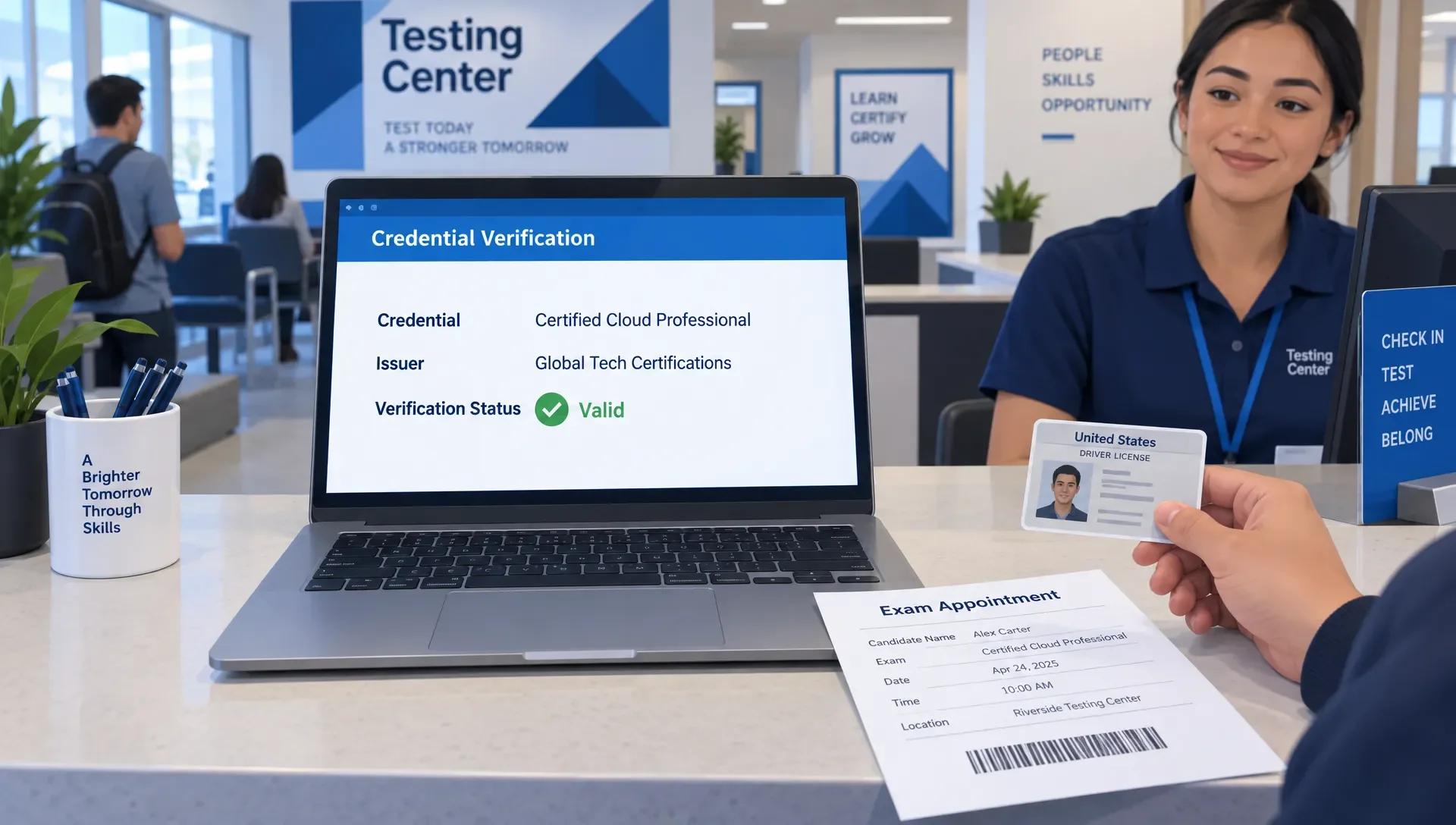
Certified Test vs. Course Certificate for IT Careers
Certified Test vs. Course Certificate for IT Careers
When you're comparing a certified test with a course certificate, focus on two things: who awards the credential and what you need to do to earn it. In most IT contexts, you're looking at an official certification exam versus proof of completing a training course. They serve different purposes, and neither automatically guarantees you're ready for a job.
First, consider the role you want. If a job posting specifically names a certification, a course completion certificate usually won't meet that requirement. If your goal is to build a new skill before applying, a practical course might be a better first step. Before enrolling, confirm whether the advertised outcome is training, an assessed certificate, or an industry certification.
Certification Exams vs. Course Certificates: What Each Proves
A certification exam measures your knowledge or skills against the standards set by the issuing organization. Depending on the specific credential, earning it might also involve experience requirements or other conditions. Passing the exam isn't always the only step in the process.
A course certificate records an achievement within a training program. This achievement could mean watching lessons, completing assignments, or passing a substantial assessment. You'll need to inspect the requirements closely rather than judging the document by its name alone.
The phrase "certified test" isn't a standard credential category. Always look for the exact certification name and the organization issuing it before you pay for anything.
| Question | Industry certification | Course certificate |
|---|---|---|
| Who defines the requirements? | The certification issuer | The course provider or awarding organization |
| What earns the credential? | Meeting the issuer's requirements, often including an exam | Completing the course's stated requirements |
| Is assessment required? | Check the specific certification rules | It may involve attendance, assignments or an exam |
| Can someone verify it? | Look for the issuer's verification process | Verification depends on the provider |
| Does it expire? | Renewal rules vary by credential | Expiration rules vary, and many completion records don't expire |
| What does it tell an employer? | You met a named credential's requirements | You completed a particular learning program |
An exam at the end of a course doesn't automatically make its certificate an industry certification. Similarly, an assessed course certificate can represent meaningful work even if it's not the credential a job posting names.
Which Credential Matches Your Target IT Job?
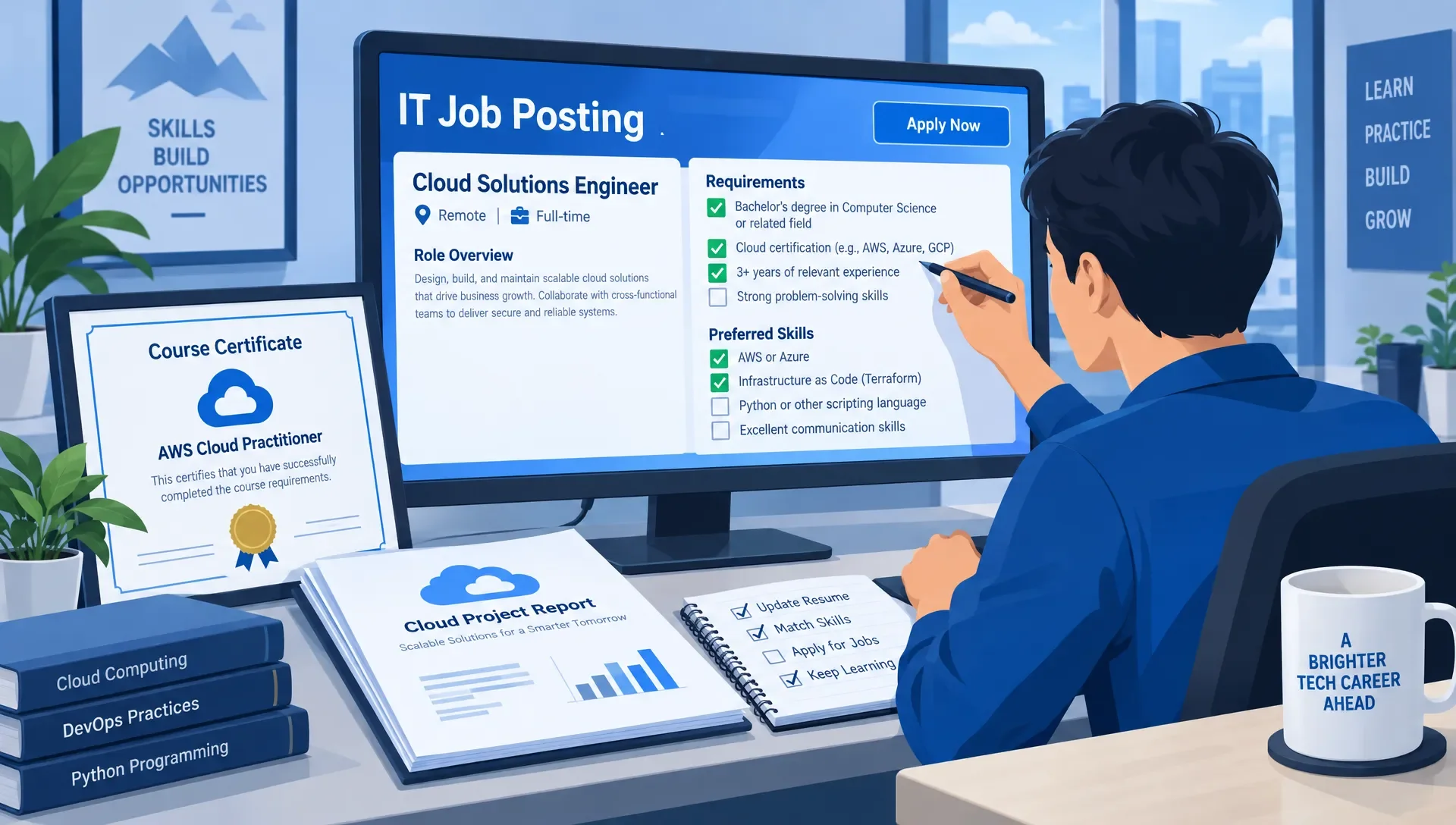
When a job posting names a certification
Read the requirement literally. "AWS Certified Cloud Practitioner preferred" points to a specific credential. "Completed cloud fundamentals training" describes a learning background. Don't assume they're interchangeable.
Passing a certified test is most useful when the resulting credential aligns with a qualification your target employer actually requests.
Separate mandatory requirements from preferences. If a certification is required, find out if you need to hold it when applying, or if the employer allows you to earn it after hiring. Ask the recruiter if the wording isn't clear.
Avoid collecting unrelated credentials just to pad your resume. A relevant qualification plus evidence of practical work tells a clearer application story than several certificates disconnected from the role.
When the role emphasizes practical skills
If the job posting focuses on troubleshooting, scripting, or configuring systems, compare each learning option with those specific tasks. A course that culminates in a working project might address your immediate skill gap better than exam preparation alone.
For example, foundational cloud knowledge and the ability to troubleshoot a deployment are different outcomes. You might need both, but you shouldn't expect one credential to prove everything.
Build a small, explainable work sample alongside your training. Document the problem, your configuration choices, and how you tested the result. Use a personal lab or a sanitized example; never use confidential employer data.
How to Verify a Credential Before You Pay
Start on the issuing organization's official website, not just a training provider's sales page. Confirm the credential's exact name, the required assessment, and the current earning requirements.
For instance, AWS's Cloud Practitioner certification page describes the certification and its foundational scope. Microsoft's Azure Fundamentals page identifies the certification and its associated exam. These official pages help you distinguish preparation materials from the actual credential.
Before booking a certified test, ensure the exam you're purchasing leads to the qualification you intend to list on your resume.
Check these details before committing:
- Issuer: Identify the organization that awards the final credential. This might be different from the organization providing the training.
- Assessment: Confirm whether you must pass an official certification exam, an internal assessment from the provider, or both.
- Included costs: Check if your purchase includes an exam voucher or only access to learning materials.
- Verification and renewal: Find out how employers can verify your achievement and whether you need to renew it.
A badge is a display format, not a guarantee of rigor. Both course providers and certification issuers use digital badges. Always inspect what the badge represents and who issued it. For example, AWS explains its certification digital badges on its own website.
Keep a copy of the stated requirements and your purchase confirmation. This provides a clear record if the offer's wording is ambiguous.
How to List Certifications and Course Certificates on Your Resume
Use separate labels when you hold both types of achievements. A "Certifications" section can list earned industry credentials. A "Training" or "Professional Development" section can list completed courses.
Use the exact credential name rather than rephrasing it. If you completed an Azure fundamentals course but haven't earned "Microsoft Certified: Azure Fundamentals", list the course and its provider. Don't claim the Microsoft certification.
After passing a certified test and meeting all remaining requirements, list the awarded credential instead of the exam preparation course.
These examples illustrate the distinction:
- Earned certification: "AWS Certified Cloud Practitioner, Amazon Web Services. Earned [month and year]." Add a verification link where appropriate, and always follow the issuer's rules for representing your credential.
- Completed training: "Cloud Fundamentals, [training provider]. Completed [month and year]. Project: configured a sample cloud environment and documented access controls." Include the project only if you actually completed it.
- Certification in progress: "Preparing for [exact certification name]." An intended exam date isn't an earned qualification, so don't place it among completed certifications without clearly labeling its status.
In interviews, explain what you can do, not just what you studied. Describe a troubleshooting decision, a lab result, or a configuration trade-off. Be equally clear about the limits of your experience. Foundational knowledge doesn't become production experience just because you passed an assessment.
When a Course Certificate Is the Better First Step
Choose training first when you lack the background needed to understand the exam objectives. Working through explanations, exercises, and feedback can be more productive than repeatedly attempting questions you can't yet reason through.
A course can also be the right choice when you're exploring a new field. You might want to try networking or cloud administration before committing to a specific certification path.
A course certificate and a certified test can complement each other effectively: the course builds skills, and the official exam validates the relevant knowledge afterward.
Evaluate the learning experience, not just the printable certificate. Look for a clear syllabus, exercises that align with your goal, and assessments that require you to apply what you've learned. Check whether feedback explains mistakes or simply displays a score.
If you already possess the underlying skills and only need a named credential, a full introductory course might repeat material you already know. Start with the official objectives and identify the topics that need your attention. Your learning gap should determine your preparation plan.
How to Prepare for the Official Certification Exam
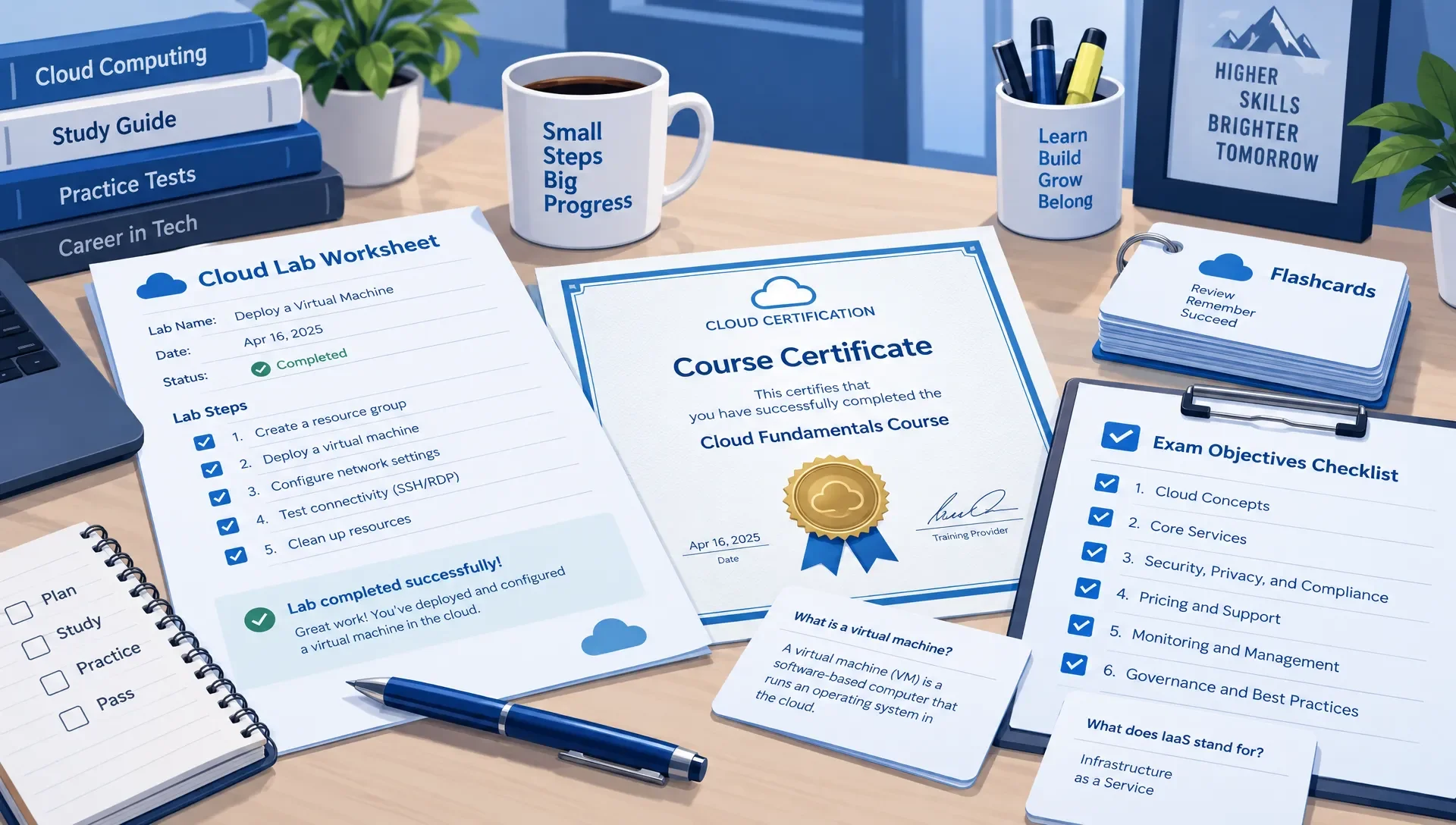
Once you've chosen your credential, build your study plan around its official objectives. Mark each topic as something you can explain, something you can apply, or something you still need to learn.
Don't confuse a practice score with an awarded qualification. The distinction between an official exam and a practice test matters because practice is preparation, not credential issuance.
Preparation for a certified test should help you explain unfamiliar scenarios, not just recognize answers you've seen before.
For an Azure Fundamentals goal, MindMesh Academy's AZ-900 study guide provides an objective-based starting point. If you're targeting AWS's foundational credential, the AWS Certified Cloud Practitioner practice exam supports question-based preparation.
MindMesh Academy combines study guides, practice questions with explanations, and spaced-repetition flashcards. Its weakness-based practice and topic progress tracking help you focus your next session instead of repeatedly reviewing material you already understand.
When you miss a question, identify the knowledge gap and explain why the other options don't fit. Then, revisit the relevant objective and apply the concept in a new example. If you need a more specific next step, use this approach to decide what to study after reviewing your practice results.
Treat readiness tracking as preparation feedback. The certification issuer determines whether you've met its credential requirements.
Frequently Asked Questions
Is a course certificate the same as an IT certification? Not necessarily. A course certificate records the achievement defined by its provider. An industry certification confirms that you've met a certification issuer's requirements. Inspect the issuer and earning criteria rather than relying solely on the word "certificate."
Do I need a certified test to get an IT job? Not for every role. Check your target job postings for required or preferred credentials. Where no specific certification is requested, relevant skills, projects, and experience may be more directly useful. A credential doesn't guarantee a job offer.
Does completing a certification course make me certified? Only if completion also satisfies the issuing organization's certification requirements. Most preparation courses are separate from the official assessment. Check whether an exam is included and if you must meet additional conditions.
Can I put a course certificate on my resume? Yes, when it's relevant. List the course name and provider under training or professional development. Accurately describe any substantial projects, and don't present course completion as an industry credential you haven't earned.
Should I take a course before booking the official exam? Base that decision on your knowledge gaps and the certification's requirements. A course can provide needed structure, but don't assume it's mandatory or sufficient. Review the official objectives and any training prerequisites before choosing your preparation route.
Build a Study Plan for Your Certified Test
Choose one target role, identify its relevant credential, and verify what earning it requires. Then, spend your study time on the gaps between your current skills and those requirements.
If an official certification is your next step, MindMesh Academy offers resources to help. You can solidify your cloud fundamentals knowledge and prepare for the AZ-900 exam with our AZ-900 practice exam. It includes detailed explanations and tracks your progress to help you focus your study efficiently.

Written by
Alvin Varughese
Founder, MindMesh Academy
Alvin Varughese is the founder of MindMesh Academy and an enterprise architecture leader. An electrical engineer by training, he moved from factory automation in South Africa to cloud architecture at GE Appliances and Humana (Fortune 50), and holds 20 professional certifications including AWS Solutions Architect Professional, Azure DevOps Engineer Expert, and Microsoft Agentic AI Business Solutions Architect. He built MindMesh Academy after interviewing too many highly certified candidates who couldn't answer basic questions: the goal is prep that makes you better at the job, not just able to pass the exam.