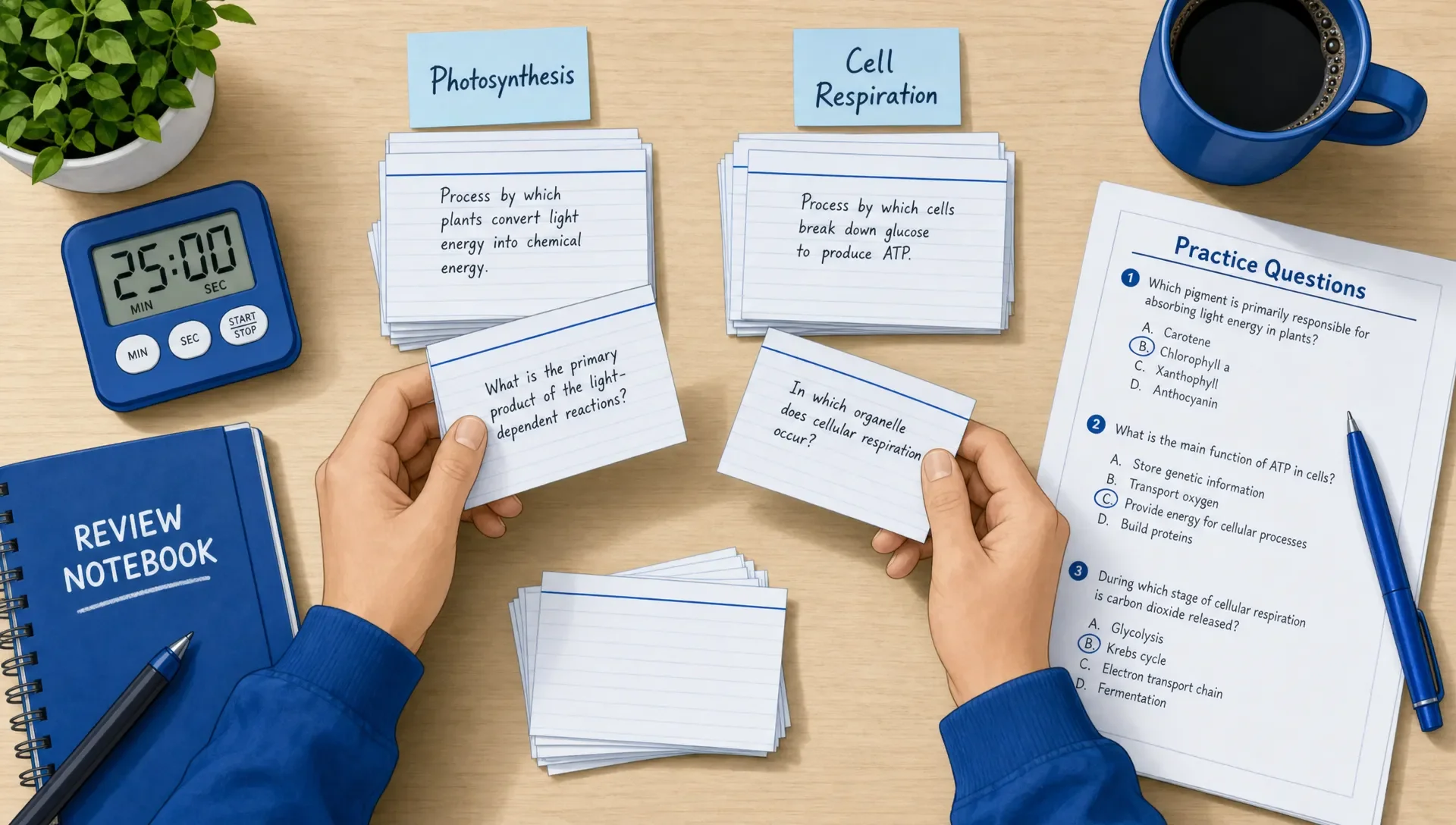
Exam Test vs Practice Test: Know the Difference
Exam Test vs Practice Test: Know the Difference
If you're studying for a certification, the difference between an official exam and a practice test matters because each serves a distinct purpose. The actual exam determines if you earn the credential. Practice tests help you identify knowledge gaps, refine your timing, and improve recall before that critical moment.
Grasp this distinction early in your study plan. Treat practice tests as training data, not as trophies. Consider the official exam a scored event demanding readiness across objectives, question formats, time pressure, and confidence.
Official Exam vs. Practice Test: The Core Difference
An official exam is the formal assessment from the certification body or its testing partner. It adheres to the provider's specific exam objectives, scoring model, delivery rules, and security policies. For IT and project management certifications, this might include multiple-choice, multi-select, scenario-based questions, or performance-based tasks, depending on the specific exam.
A practice test, conversely, is a study tool. While it might mimic the real thing, its primary purpose is diagnostic. Effective practice questions explain why an answer is correct, why the distractors are incorrect, and which objective you need to review. This feedback loop is what makes practice so effective.
| Category | Official exam | Practice test |
|---|---|---|
| Main purpose | Certify competence | Improve readiness |
| Stakes | Pass or fail outcome | Learning and diagnosis |
| Feedback | Usually limited | Explanations, scoring by topic, and review data |
| Timing | Fixed testing appointment | Flexible, repeated use |
| Best use | When you're prepared | Throughout your study plan |
This is why a high score on one practice attempt doesn't automatically mean you're ready. You need consistent performance across topics, not just recognition of familiar questions.
What the Official Certification Exam Actually Measures
An official exam evaluates your ability to meet a standard defined by the certification provider. For example, AWS publishes exam guides and domain weightings for certifications such as AWS Certified Cloud Practitioner. Microsoft lists skills measured for exams such as AZ-900 Microsoft Azure Fundamentals. CompTIA publishes exam objectives for certifications such as Security+.
These official documents are your ultimate guide. They outline the scope of the actual exam, how content is structured, and which skills carry the most weight. If your study routine doesn't directly align with these objectives, you're essentially guessing what the exam will cover.
The official exam also tests your endurance and judgment under strict constraints. You'll face limited time, minimal feedback, and no pause button. You must read each question carefully, eliminate distractors, and respond solely based on the scenario provided, not what you wish the question asked.
What a Practice Test Is Supposed to Do
A practice test's primary role is to reveal your weaknesses before you face the official attempt. It helps you pinpoint areas like: Which domains need more work? Are you struggling with factual recall, misinterpreting scenarios, or simply running out of time? Can you apply a concept even when the question's wording changes?
MindMesh Academy supports this kind of workflow with practice questions and explanations, flashcards with spaced repetition, weakness-based practice, and readiness tracking across certification paths. If you're preparing for a cloud fundamentals exam, the AWS Certified Cloud Practitioner practice exam is the kind of tool you can use to turn missed questions into a targeted review plan.
Research into retrieval practice strongly backs the value of self-testing as a learning strategy. In a peer-reviewed study published in Science, Karpicke and Roediger found that repeated retrieval improved long-term retention compared with additional study alone. The practical takeaway is straightforward: actively recalling information by answering questions helps embed knowledge, rather than just passively assessing what you already know.
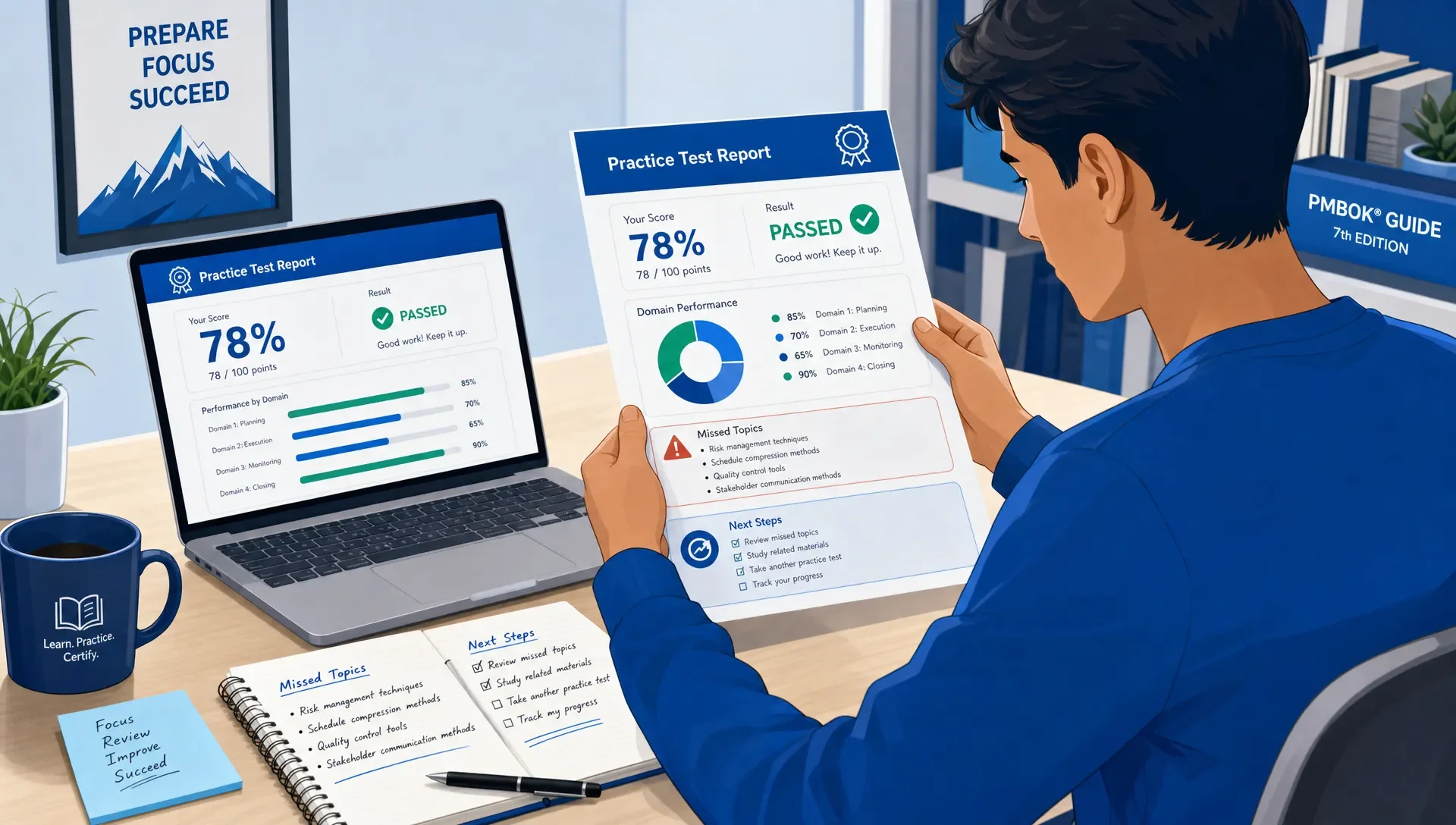
When to Use Each One in Your Study Plan
Schedule your official exam towards the end of your preparation, once you've covered all objectives and honed your timing. Practice tests, however, should be used throughout your study process, with formats adapting as you advance.
Early on, use short topic quizzes to check your understanding after completing each domain. Mid-way through, mix topics to practice transitioning between different concepts. Closer to exam day, use full-length simulations to rehearse your pacing, stamina, and critical decision-making.
If you want a deeper breakdown of timing, MindMesh has a guide on when to take a practice test in your study plan. The main takeaway: don't save all your practice until the final week. By then, mistakes feel more stressful, and you'll have less time to correct them.
| Study stage | Best test format | What to look for |
|---|---|---|
| First pass through content | Objective-based quiz | Basic understanding and recall |
| Midpoint review | Mixed-topic practice set | Weak domains and confusion between concepts |
| Final preparation | Full practice exam | Timing, endurance, and consistency |
| Last few days | Light targeted review | Confidence without cramming |
A practice test offers the most value when you review it thoroughly and deliberately. Your score highlights where to focus, and the explanations guide you on what to reinforce.
How Scores Should Change Your Next Study Session
Never view a practice test score as a personal judgment. Instead, see it as a routing signal for your study efforts. A 62% on a networking section doesn't mean you're inherently poor at networking. It means your next study session should pinpoint the exact objective, concept, or question pattern behind those missed points.
Begin by categorizing wrong answers into common causes. Perhaps you genuinely don't know the concept. Or, you might understand it but struggle to apply it in a given scenario. You might also rush and overlook critical qualifiers such as "most secure," "least operational effort," or "best first step." Each of these issues demands a different corrective action.
For a stronger review process, read the question again before reading the explanation. Predict why the correct answer is correct, then compare your reasoning with the explanation. MindMesh's article on how to review an exam practice test the right way covers this review habit in more detail.
If you're preparing for security certifications, a tool like the CompTIA Security+ practice exam can help you connect practice performance with security topics you need to revisit.
Common Mistakes That Make Practice Tests Less Useful
The most common mistake is repeatedly taking the same practice test until your score artificially improves. At that stage, you're likely memorizing questions, not genuinely demonstrating exam readiness. Repetition aids learning when it reinforces core concepts. However, it misleads when it devolves into simple answer memorization.
Another error is reviewing only your incorrect answers. Correct answers warrant attention too, particularly if you guessed or arrived at them without full confidence. A fortunate correct answer can mask the same underlying weakness as an incorrect one.
Also, avoid attempting a full practice exam too early in your studies. If you haven't adequately studied the objectives, the results will offer little insight beyond confirming you haven't covered the material. Begin with smaller, focused question sets, then gradually scale up to full simulations.
| Mistake | Why it hurts | Better habit |
|---|---|---|
| Memorizing repeated questions | Inflates confidence | Use varied questions and explain your reasoning |
| Skipping correct answers | Hides lucky guesses | Mark low-confidence answers for review |
| Ignoring the blueprint | Creates uneven coverage | Map misses to official objectives |
| Testing without review | Turns practice into score chasing | Spend more time reviewing than answering |
The objective isn't merely to take the most tests. It's to transform each practice attempt into informed decisions for your subsequent study.
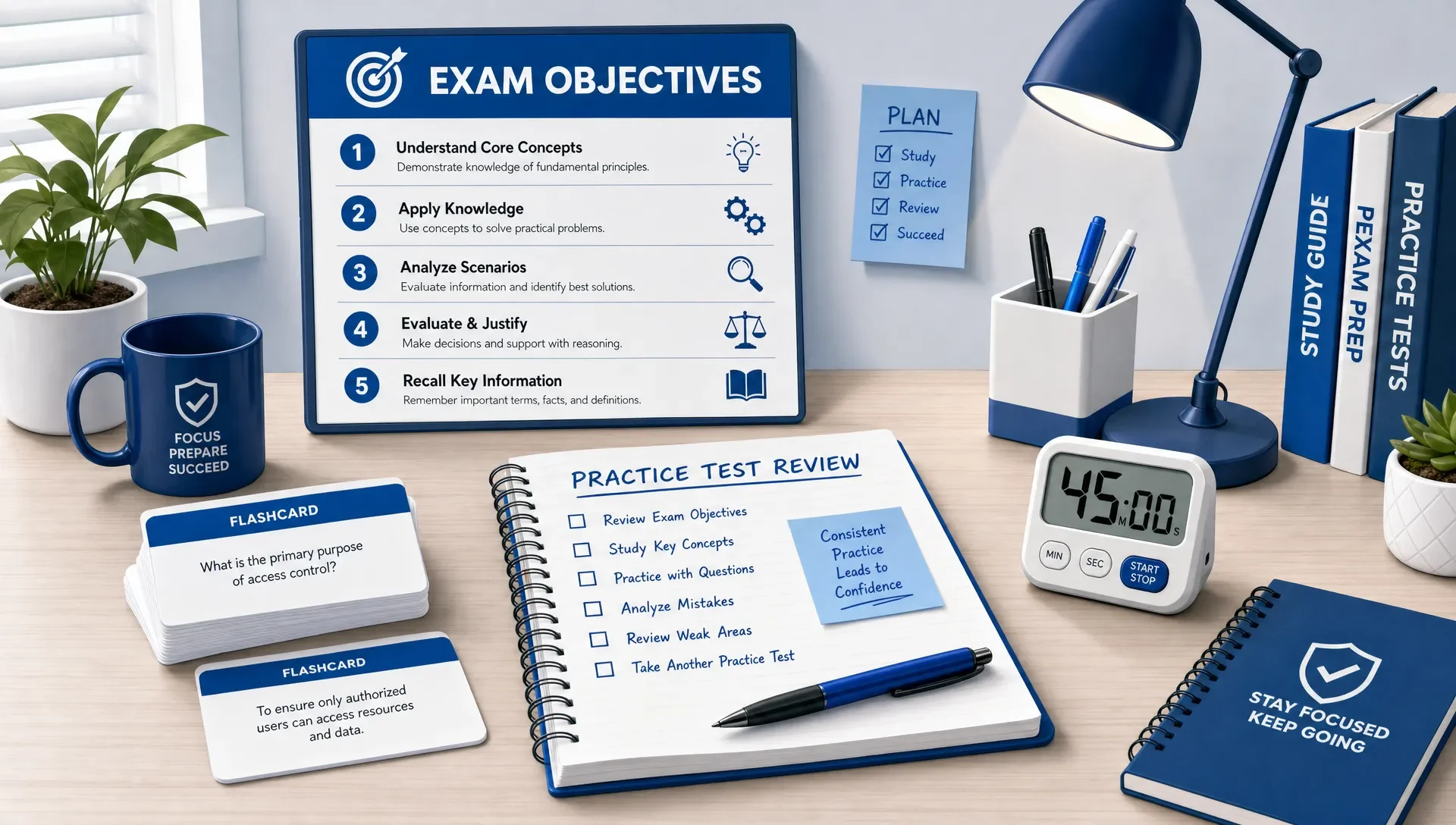
How to Know You're Ready for the Real Exam
True readiness extends beyond a single score. You need consistent evidence that you can perform effectively under realistic exam conditions. This means you can complete the exam within the allotted time, articulate the reasoning behind your answers, and maintain composure even when questions are phrased unexpectedly.
When assessing your readiness, look for consistency across multiple signals. Your topic scores should be well-balanced, not reliant on a single strong domain. Your missed questions should group into a few identifiable, fixable areas, rather than scattering across the entire exam blueprint. Your timing should allow ample room to review marked questions without rushing the final section.
If your scores swing wildly from one practice attempt to the next, slow down. Return to study guides, flashcards, and targeted question sets. MindMesh Academy's connected workflow is built around that loop: study by objective, practice, review explanations, reinforce with spaced repetition, and track readiness by topic.
A good rule of thumb: don't schedule your official exam simply because one practice score offered a moment of relief. Schedule it when your consistent study process yields stable, reliable results.
How This Applies Across Popular Certifications
This fundamental distinction holds true whether you're preparing for certifications in cloud, networking, cybersecurity, IT service management, or project management. The official exam validates adherence to a standard. Effective practice helps you achieve that standard.
For Azure fundamentals, begin by aligning your study notes with the official skills measured and filling any gaps through structured review. A resource like the AZ-900 Microsoft Azure Fundamentals study guide can help you keep objectives organized instead of jumping between disconnected topics.
For networking exams like the CCNA, practice must involve applied reasoning, moving beyond mere definitions. For the PMP, scenario interpretation is critical, so practice carefully analyzing the role, constraints, and the best next action. For the CISSP, you need broad knowledge, sound judgment, and the ability to select the answer that best aligns with the given risk context.
In all these cases, the official exam is not the venue for discovering your weak domains. That's precisely the role of practice.
Frequently Asked Questions
Is a practice test harder than the real certification exam? Sometimes, but difficulty varies greatly by certification provider and the practice test source. An effective practice test should closely mirror the actual exam's objectives and reasoning style, designed to reveal gaps without resorting to trick questions.
Can I pass if I only take practice tests? Generally, no. Practice tests are most effective after you've thoroughly studied the exam objectives. If you bypass essential study guides, labs, or conceptual reviews, you'll likely memorize question patterns rather than develop transferable understanding.
How many practice tests should I take before the official exam? There's no single magic number. Take enough to demonstrate consistent performance across all domains, timing, and question types. For many, this translates to several smaller topic sets followed by at least one or two full-length simulations closer to exam day.
Should I review questions I answered correctly? Absolutely. Review any question you guessed on, answered slowly, or couldn't explain clearly why it was correct. Correct answers only truly count as evidence of readiness when your underlying reasoning was sound.
When should I stop taking practice tests? Reduce intensive practice testing when you're nearing the exam and your results are no longer meaningfully altering your study plan. In the final days, focused review, flashcards, and light confidence checks are often more beneficial than exhaustive full-length mock exams.
Use Practice to Earn the Score Before It Counts
The practical distinction is clear: the official exam records your result, while dedicated practice builds that result before any scoring takes place. By using practice tests to diagnose weak objectives, sharpen recall, and rehearse timing, the actual exam transforms into a validation step rather than an unforeseen challenge.
MindMesh Academy offers comprehensive tools to prepare for your certification. Our platform includes practice questions with detailed explanations, spaced-repetition flashcards, and readiness tracking, designed to give you confidence. To start building that foundational knowledge for cloud, consider our AWS Certified Cloud Practitioner practice exam.

Written by
Alvin Varughese
Founder, MindMesh Academy
Alvin Varughese is the founder of MindMesh Academy and an enterprise architecture leader. An electrical engineer by training, he moved from factory automation in South Africa to cloud architecture at GE Appliances and Humana (Fortune 50), and holds 20 professional certifications including AWS Solutions Architect Professional, Azure DevOps Engineer Expert, and Microsoft Agentic AI Business Solutions Architect. He built MindMesh Academy after interviewing too many highly certified candidates who couldn't answer basic questions: the goal is prep that makes you better at the job, not just able to pass the exam.