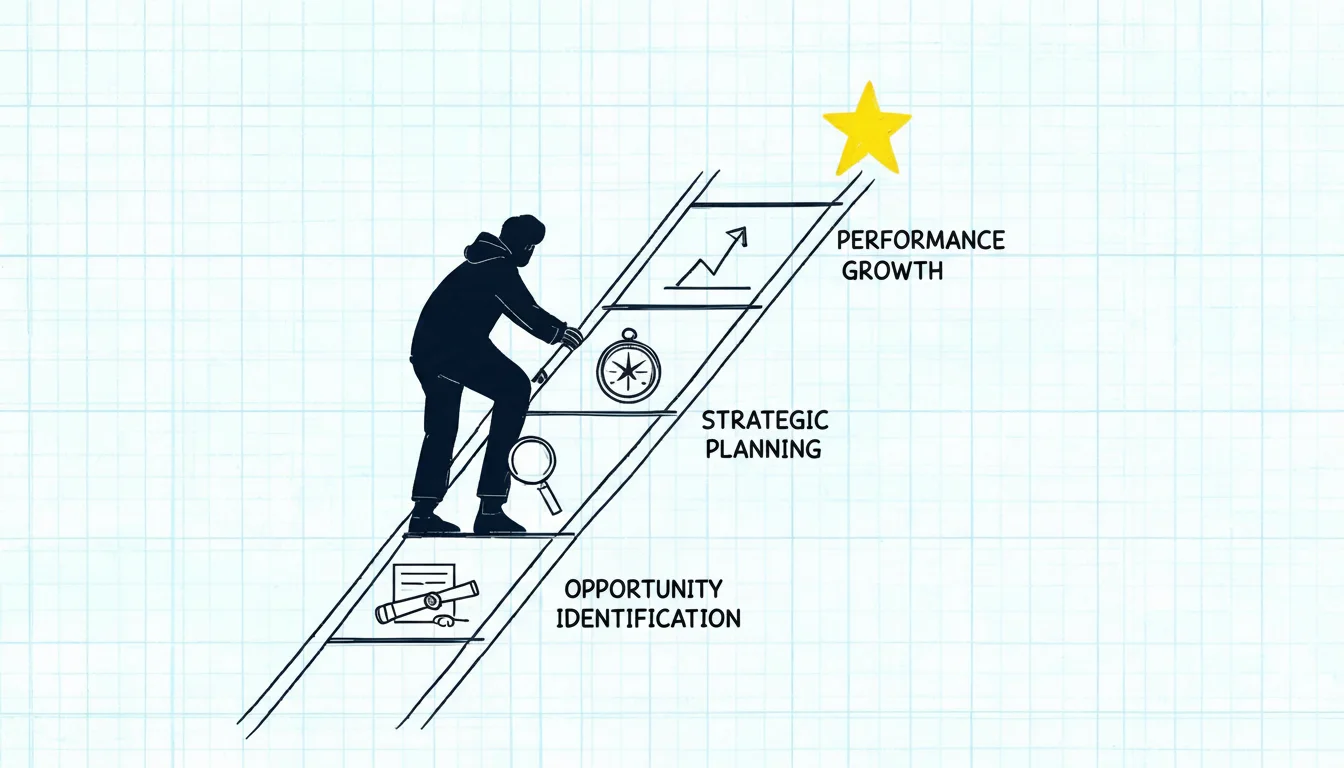
Career Advancement Program: A Guide for IT Pros & Orgs
Career Advancement Program: A Guide for IT Pros & Orgs
You're doing the work. You've picked up tickets nobody else wanted, earned trust on tough systems, maybe even helped newer teammates unblock themselves. But when promotion conversations come up, the path can still feel unclear.
This is common in IT. Technical ability alone doesn't always lead to advancement. Individuals often stall because the organization hasn't clearly defined the next step, or because the employee hasn't translated their effort into visible readiness. A career advancement program, when designed effectively, addresses both issues. It provides companies a system for developing talent and gives individuals a clear map to convert skills into career momentum.
In tech, such a map is crucial. Roles change quickly. Infrastructure shifts constantly. Security expectations keep rising. New tools often appear before job descriptions can catch up. Certifications offer one of the clearest ways to make growth visible, especially when connected to real projects, mentoring, and internal mobility, rather than just isolated exam badges.
Why Your Career Needs a Blueprint
Consider the systems administrator already doing cloud work informally. She troubleshoots IAM issues, helps on migration tasks, and knows she wants to move into architecture. Yet, nobody has shown her what “ready for architect” truly means. She has skills, ambition, and proof of effort, but lacks a blueprint.
This gap isn't just about personal frustration. It often points to the employer's structure. Gallup found that 74% of employees at organizations with 1,000 or more employees report advancement opportunities, while only one in three employees at very small organizations say the same, according to their report on workplace development and internal mobility (Gallup workplace advancement findings). Simply put, many aren't stuck due to lack of drive; they're stuck because the path is unclear or inconsistent.

A strong career advancement program closes this gap. It tells employees which skills matter, how to build them, what milestones signal readiness, and who can provide support. For employers, it creates a repeatable process, rather than relying on managers to develop people ad hoc.
Practical rule: If an employee can't describe the next role, the skills required, and the evidence needed to qualify, the organization doesn't have a development system. It has hopeful guessing.
For IT professionals, certifications are useful. Not magical, but genuinely useful. They can serve as trusted markers within a larger system that includes hands-on work, coaching, and role-based progression. For HR and talent leaders, certifications offer a clearer way to link learning investments to overall workforce capability.
Defining a True Career Advancement Program
A true career advancement program is more than a one-off training session, a tuition reimbursement policy, or a vague promise of “opportunities.” Think of it as a GPS for your career. It shows your current location, your destination, the milestones between them, and a few alternate routes should your path change.
What makes it different from ordinary training
Many organizations offer learning. Fewer offer true advancement. The difference lies in structure.
An effective program connects four elements: an employee's current skills, the requirements of future roles, the experiences needed to bridge any gaps, and the signals that confirm readiness. Without these connections, training remains disconnected from promotion.
For an IT employee, saying “take this cloud course” isn't enough. A better approach sounds like this: complete a cloud certification aligned to the target role, apply that knowledge in a migration project, review outcomes with a mentor, and document competency against the role profile.
Why companies need it as much as employees do
The business case is clear. Research cited in a workforce development report, specifically McKinsey's 2022 findings, indicates that lack of career development and advancement was the most common reason employees gave for quitting. Additionally, a Pew Research survey found 63% of people who left jobs in 2021 cited lack of advancement opportunities as a key factor (workforce development insights on advancement and retention).
If you're in HR, this means advancement isn't just a perk; it's a core part of your retention strategy.
As an IT professional, a weak program should influence how you evaluate an employer. A company might offer modern tools, strong branding, and exciting projects, yet still leave people feeling stranded because nobody truly owns career progression.
A promotion process without a development process usually rewards visibility, not readiness.
What it looks like in practice
A strong program usually includes:
- Defined target roles: Employees understand the requirements for roles like “Senior DevOps Engineer” or “Security Lead.”
- Documented milestones: Teams can identify certifications, projects, competencies, and behaviors that are important.
- Visible movement options: Individuals can move up, across, or into adjacent specialties, recognizing that vertical promotion isn't always the only fit.
- Manager involvement: Growth isn't entirely outsourced to HR or a learning platform.
- Evidence of progress: The company tracks individual development, internal mobility, and areas where people might stall.
This last point matters. Career growth isn't always a straight ladder. In IT, the best move might be sideways first. A support engineer, for example, might need a networking credential and exposure to infrastructure automation before becoming a cloud engineer. Similarly, a business analyst could need ServiceNow platform knowledge and cross-functional project ownership before moving into product operations.
A career advancement program acknowledges this reality. It treats advancement as a managed pathway, not simply a lucky break.
The Core Components of a Successful Program
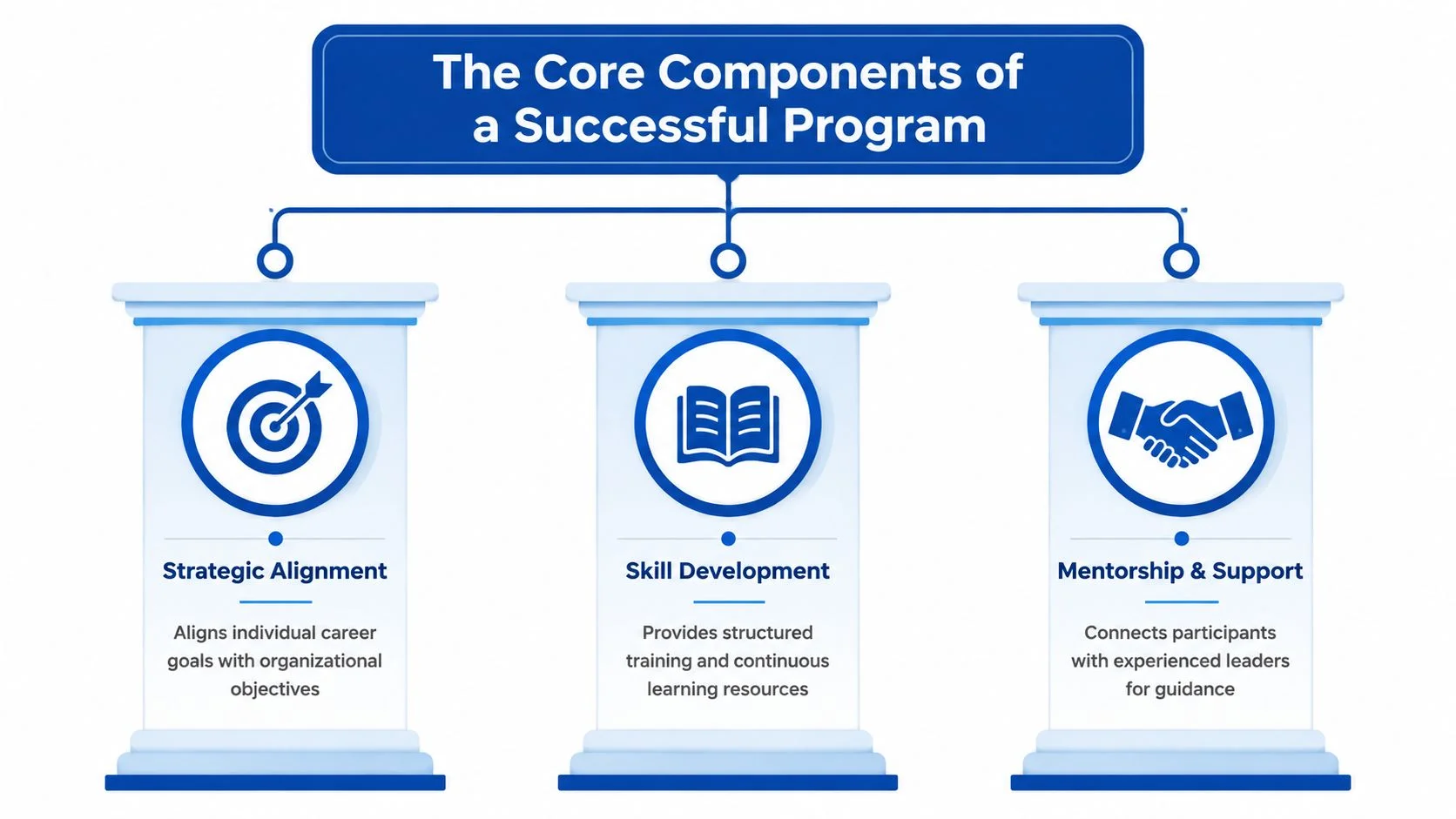
The most effective programs don't start with courses; they start with diagnosis. Before buying training, assigning a mentor, or launching a learning portal, an organization needs to understand its current capabilities, what future roles demand, and where the true gaps exist.
That's why effective programs build on a formal skills-assessment layer mapped to defined career paths. This ensures technical training, mentorship, and certifications align with actual business needs and promotion readiness, rather than just generic learning activity (career development roadmap and skills alignment).
Start with strategic alignment
An advancement program fails if it teaches skills the business doesn't need or promotes people into roles that were never clearly defined.
Start with three questions:
- Which roles will be most important over the next few years?
- Which capabilities are difficult to hire for externally?
- Which current employees could grow into these roles with structured support?
In an IT environment, this often highlights priorities such as cloud architecture, cybersecurity, service management, project leadership, data operations, and platform administration. Once these role families are clear, HR and technical leaders can build progression paths around them.
For individuals, this serves as the first filter when evaluating a company's program. If the organization can't explain how learning connects to actual roles, you're likely looking at a training library, not a true career system.
Build skill development around proof
Training matters, but proof matters more. Certifications help because they transform invisible learning into visible evidence.
A help desk technician who earns CompTIA Network+ and then takes on network troubleshooting is easier to evaluate for expanded responsibility. A project coordinator who achieves PMP preparation milestones and leads a rollout builds a clearer promotion case than someone who only says they're “interested in leadership.”
Use a mix of learning methods:
- Technical training: Vendor-specific or role-based instruction directly linked to the target job.
- Certification preparation: Credentials like AWS, Azure, CompTIA, ITIL, PMP, or ServiceNow, selected specifically to support a career path.
- Applied work: Stretch assignments, migrations, implementations, audits, or taking ownership of processes.
- Reflection and review: Manager check-ins that convert learning activity into documented readiness.
If you're building this internally, studying how other teams are handling tech skill gap analysis can help ensure development plans are based on observable gaps, rather than just manager guesswork.
Separate mentorship from coaching
Many companies use these words interchangeably, but they shouldn't.
A mentor typically helps with perspective. They explain how the organization operates, what senior roles demand, and which common mistakes to avoid. A coach, on the other hand, focuses more narrowly on performance and capability within the current or next role.
Both are important. In practice:
- Mentorship helps a junior security analyst understand what distinguishes a senior analyst from an engineer, providing broader career context.
- Coaching helps that same analyst improve specific skills, like incident write-ups, stakeholder communication, or threat triage discipline.
For employees who feel stuck, an outside framework for thinking through options is Maeve's guide on navigating your future career options. This resource is helpful when your issue isn't lack of effort, but rather deciding which path best fits your strengths.
The right mentor doesn't just encourage you. They translate unwritten rules into actionable next steps.
Define pathways that aren't just ladders
In IT, a straight ladder is too restrictive. Strong programs adopt a career lattice model. This means an individual can move up, sideways, or diagonally to build the necessary background for a larger role.
A cloud engineer, for example, might need project exposure before becoming an architect. A support lead could move into service management instead of infrastructure. A QA analyst might shift toward automation before transitioning into engineering.
Programs become stronger when they acknowledge that growth often involves sequencing, not immediate promotion. The employee gains skills in a logical order, and the company achieves stronger coverage in adjacent areas. Everyone involved can see why the move makes sense.
How to Choose or Design the Right Program
Not every career advancement program is worth your time. Some might appear polished but still produce little actual movement, often because they focus on activity rather than outcomes. The smartest way to assess a program is to ask what it demands, what opportunities it opens up, and how clearly it connects effort to opportunity.
If you're an IT professional evaluating a program
Ask direct questions. A serious employer should answer them clearly, without evasion.
- Defined pathways: Ask which IT roles have documented progression criteria.
- Skill assessment: Look for a repeatable process, not solely manager opinion.
- Valued credentials: Find out whether certifications are recognized in promotion reviews or for tuition support.
- Relevant experiences: Clarify whether stretch projects, incident leadership, migrations, or cross-functional work are part of the advancement path.
- Support structure: Ask whether managers, mentors, and HR each have defined responsibilities in the process.
- Progress review frequency: Annual reviews alone are typically insufficient for genuine development.
One of the best indicators is specificity. If the company states, “For cloud roles, we look for architecture knowledge, migration experience, stakeholder communication, and role-relevant certification,” that's a useful answer. If they simply say, “We support growth for everyone,” that tells you almost nothing.
If you're building the program inside an organization
Design starts with a business problem. Perhaps your company continuously hires externally for senior infrastructure roles. Perhaps cybersecurity demand outpaces your talent pipeline. Or perhaps project managers understand delivery but not cloud environments. These are development design problems, not merely hiring problems.
A practical design sequence looks like this:
- Choose role families first: Start with high-impact areas like cloud, security, support leadership, service management, or project delivery.
- Define readiness signals: Determine what knowledge, credentials, work products, and behaviors indicate advancement potential.
- Decide buy versus build: Some organizations create internal academies; others combine manager-led development with outside certification prep, bootcamps, or formal coursework.
- Pilot before scaling: Test the framework with one function or level before implementing it company-wide.
- Track business-facing outcomes: Focus on internal mobility, retention, capability coverage, and promotion quality, which matter more than just course enrollment.
For ideas on structuring these pathways, this resource on career progression strategies for IT professionals is useful because it breaks role growth into concrete planning choices, rather than relying on generic motivation.
Comparing career advancement activities
| Activity | Typical Time Commitment | Primary Outcome | Best For |
|---|---|---|---|
| Certification prep | Moderate to high, depending on exam scope | Validated knowledge in a defined domain | Employees targeting role-specific credibility |
| Mentorship | Ongoing, light but consistent | Career clarity, organizational insight | Employees navigating internal mobility |
| Stretch projects | Intensive during project period | Demonstrated applied capability | Employees who need visible proof of readiness |
| Job shadowing | Short-term | Exposure to target role realities | Early-stage career exploration |
| Manager coaching | Recurring | Performance improvement tied to role expectations | Employees close to promotion readiness |
| Continuing education | Longer-term | Broader knowledge and foundational growth | Employees making bigger career pivots |
Decision lens: Pick one activity for credibility, one for application, and one for support. That combination is usually stronger than going deep on only one dimension.
For employees, that might mean a certification combined with a stretch project and mentorship. For employers, it means your program shouldn't rely on just a single lever.
A Sample Roadmap for IT Career Advancement
Consider a mid-level cloud engineer who wants to become a senior solutions architect. He already understands platform basics and supports deployments, but isn't yet the person leadership trusts to shape architecture decisions. His challenge isn't a lack of effort; it's proper sequencing.
The most effective advancement programs create clear pathways into high-demand careers like IT. Policy research cited by American Progress notes an estimate that three out of four jobs require postsecondary education or training, reinforcing the need for pathways that build durable career value rather than simply handing out credentials in isolation (career pathways and workforce development scan).
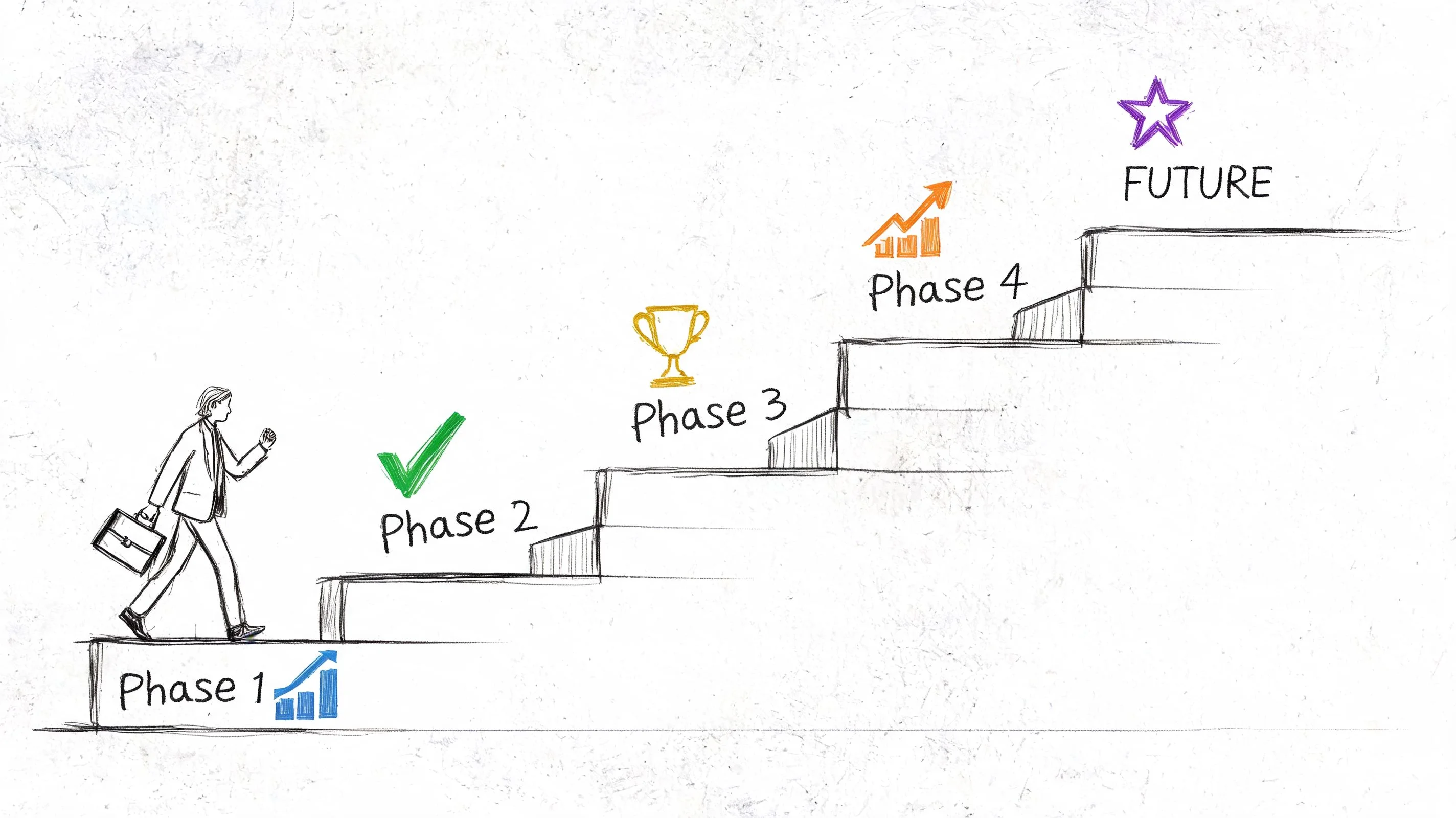
Phase one: Build a clear baseline
First, the engineer needs a gap review. This isn't a generic self-assessment, but rather a role comparison.
A manager or mentor compares his current work against the target architect role. Identified gaps might include solution design depth, stakeholder communication, financial tradeoff thinking, documentation quality, and leadership in ambiguous projects.
This is also where certifications become tactical. If the target role values architecture credibility, the employee can find professional technology credentials aligned to that path and choose one that matches the intended role, rather than collecting unrelated badges.
Useful early actions include:
- Map current versus target skills: List what the role requires and mark what you can already demonstrate.
- Choose one anchor certification: Select the credential most relevant to the next role, not simply the most popular one.
- Gather evidence from real work: Save architecture notes, deployment plans, migration diagrams, or post-incident improvements.
Phase two: Add applied leadership
Now the employee needs more than just technical competence; he needs role-shaped experience.
This could involve leading a small migration workstream, drafting architecture recommendations for a new service, or coordinating with security and finance on design tradeoffs. This phase often determines whether a manager starts to see someone as “next level” rather than merely reliable.
A valuable support resource during this period is RankResume's piece on mastering core IT skills, especially for identifying which foundational abilities still need strengthening before stepping into broader ownership.
Promotions in IT usually happen when technical skill, business judgment, and communication start showing up together.
At this stage, a mentor should help the employee sharpen executive-facing communication. Many strong engineers lose momentum because they can solve the technical problem but struggle to explain the tradeoffs in a way leaders trust.
Here's a useful explainer on how development planning and visible milestones work in practice:
Phase three: Convert growth into promotion readiness
The final phase is about packaging. Not spin, but evidence.
The employee presents completed work, lessons from project leadership, certification progress or completion, and examples of cross-functional influence. If the next role also requires broader delivery ownership, this is the ideal point to begin structured project management development, such as PMP-related study, if it fits the role.
A promotion case becomes stronger when it includes:
- A role-aligned credential: A relevant certification directly tied to the target job.
- A meaningful project outcome: Something with significant scope, complexity, or stakeholder visibility.
- Feedback from others: Input from peers, managers, or partners who observed the employee operating at a higher level.
- A forward-looking plan: Clear next responsibilities the employee is prepared to take on.
For organizations, this kind of roadmap transforms advancement from opinion into evidence. For IT professionals, it replaces the vague hope of “being noticed” with a concrete plan you can execute.
Measuring Success and Proving ROI
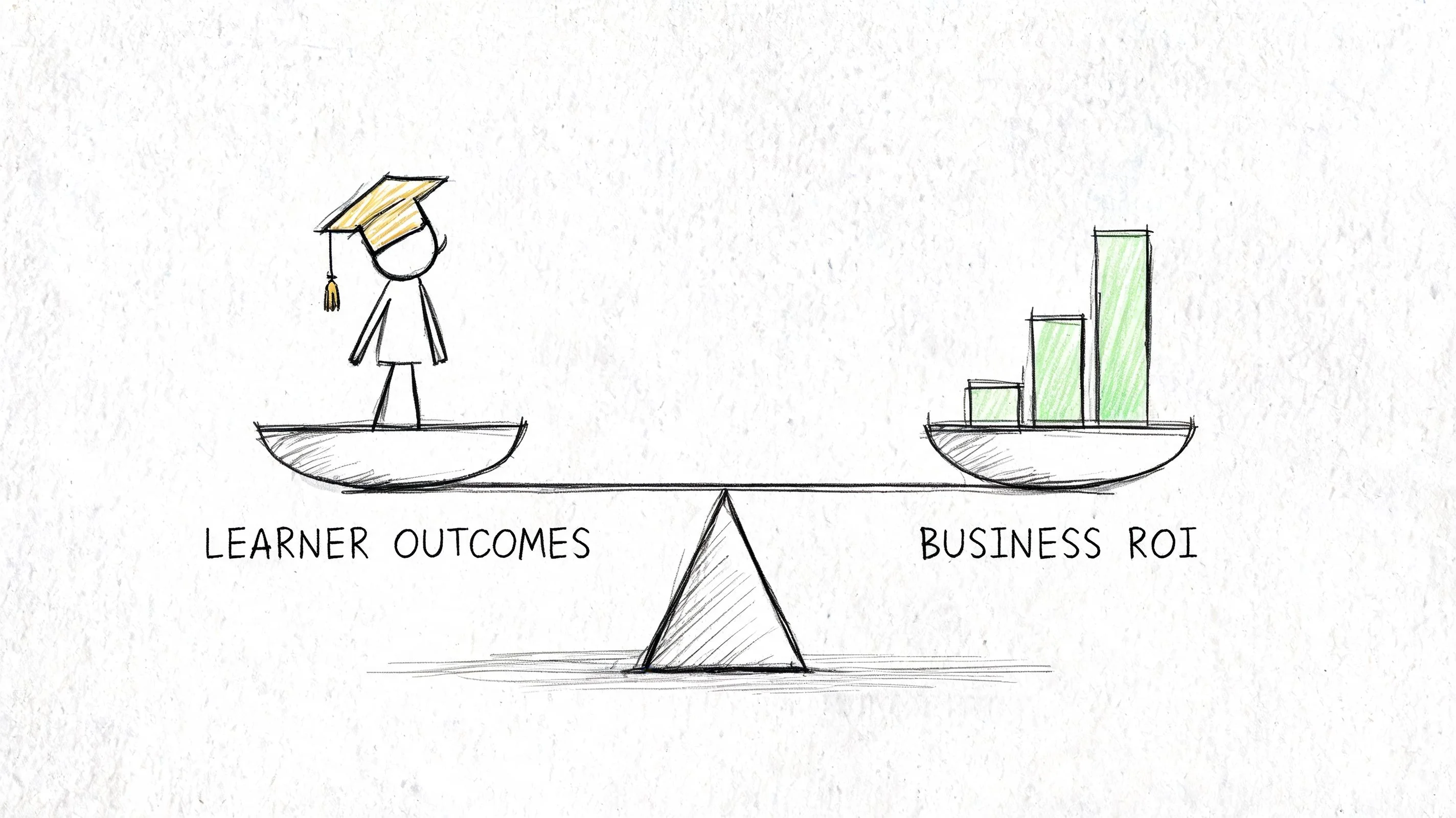
A career advancement program requires two scorecards: one for the learner and one for the business. If you only measure participation, you won't know whether the program is truly changing careers or solving talent problems.
Measure learner progress with visible signals
For individuals, the central question is simple: Is the person becoming more ready for a better role?
Useful learner metrics include:
- Skill acquisition: Has the employee closed documented gaps in their target role profile?
- Credential progress: Are relevant certifications completed, in progress, or being applied on the job?
- Internal mobility: Has the employee transitioned into a broader, more technical, or more strategic role?
- Promotion readiness evidence: Are managers observing stronger ownership, judgment, and communication?
- Engagement signals: Are employees participating consistently and effectively using available support?
For certification-heavy pathways, learning dashboards can help if they show more than just completion. Tracking milestones, reviewing weak areas, and monitoring progress against role goals make the data more actionable.
Translate development into business value
Finance leaders usually ask one key question: What did the program change?
A concrete ROI method is to quantify the reduction in employee turnover by calculating separation, vacancy, and replacement costs saved by the program, then subtracting implementation costs. This approach transforms career development into a measurable investment, rather than just a soft benefit (turnover-based ROI approach for career development).
That framework is straightforward:
| ROI area | What to track |
|---|---|
| Separation savings | Costs avoided when fewer trained employees leave |
| Vacancy savings | Reduced impact of open roles staying unfilled |
| Replacement savings | Lower recruiting, onboarding, and ramp-up costs |
| Program cost | Training, mentoring time, tools, and administration |
| Net value | Savings minus total program cost |
If your organization already measures outcomes in other functions, it can help to borrow familiar thinking. Marketing teams, for instance, often justify spending through attribution and outcome frameworks, such as this guide on measuring webinar ROI. The categories may differ, but the discipline is similar: define inputs, track leading indicators, and connect them to real business results.
Career development is easier to defend when you can show what changed in retention, internal mobility, and capability coverage.
A good program doesn't require perfect measurement on day one. It needs consistent measurement that evolves and gets smarter over time.
If you're building your own path in IT, or designing one for your team, MindMesh Academy can support the certification side of that journey. Used inside a broader career advancement program, our exam preparation resources help turn learning goals into visible milestones that managers and employees can work with. Ready to advance your IT career? Discover MindMesh Academy's certification resources for AWS, Azure, CompTIA, PMP, and ServiceNow.

Written by
Alvin Varughese
Founder, MindMesh Academy
Alvin Varughese is the founder of MindMesh Academy and an enterprise architecture leader. An electrical engineer by training, he moved from factory automation in South Africa to cloud architecture at GE Appliances and Humana (Fortune 50), and holds 20 professional certifications including AWS Solutions Architect Professional, Azure DevOps Engineer Expert, and Microsoft Agentic AI Business Solutions Architect. He built MindMesh Academy after interviewing too many highly certified candidates who couldn't answer basic questions: the goal is prep that makes you better at the job, not just able to pass the exam.