
How to Upskill Employees for Business Growth
Successful employee upskilling requires a simple, repeatable framework: Assess your current team, Develop specific skills through targeted training, and Measure the impact on your overall business results. This shift turns training into a genuine growth driver instead of a simple cost center. Following this approach ensures your people stay prepared for future challenges and shifting business requirements as they arise.
Why Upskilling Is a Core Business Strategy
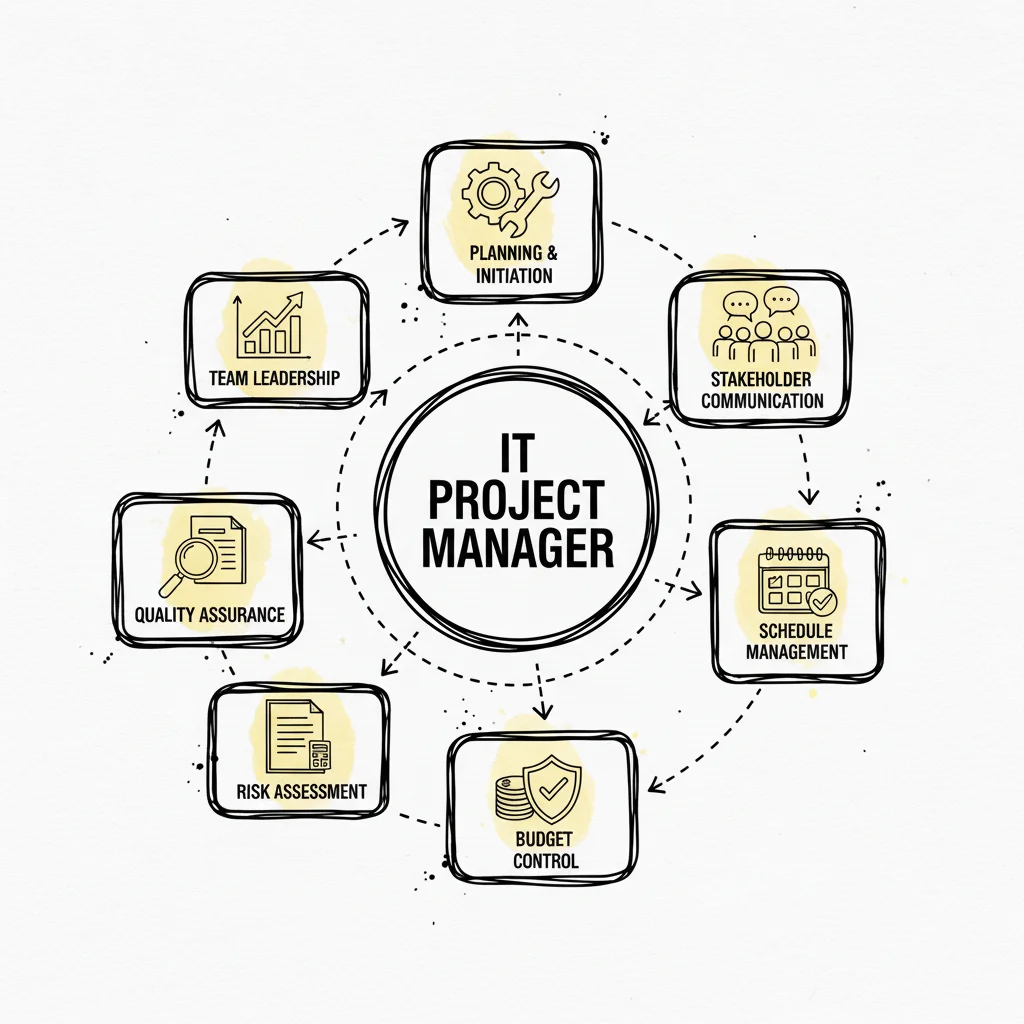
Training programs often drift to the bottom of the priority list, treated as an optional expense for when budgets allow. This neglect is a mistake. The primary risk isn't the capital spent on education; it’s the cost of technical stagnation. In a market where requirements and client expectations change constantly, a team relying on outdated skills becomes a significant liability for the business.
A structured upskilling program is the best tool available for building a resilient, adaptable team. It influences your profitability directly, improves employee retention, and creates a workforce that can pivot to seize new opportunities. Instead of viewing training as a luxury, treat it as an essential requirement for maintaining your most valuable assets: your people.
The Tangible Returns on People Investment
Investing in staff development yields measurable returns. When you provide clear growth paths, you build a team that is more engaged and technically capable. This isn't just a feel-good theory; the financial data supports this approach.
Companies that maintain formal training programs see a 218% higher income per employee compared to those without. Furthermore, well-trained teams are 17% more productive and achieve 21% greater profitability. You can explore the full training statistics on eLearning Industry to see the specific data points that support this business case.
Organizations must decide if they prefer the upfront cost of education or the far higher long-term cost of a workforce that cannot keep pace with the industry. Stagnation is always more expensive than education.
A Simple Framework For Success
Success requires moving away from random workshops and one-off courses. You need a strategy that aligns with your specific technical needs and business objectives. This entire guide follows a straightforward process that works.
The following table provides a summary of the three primary pillars we will examine in this guide.
The Core Framework for Employee Upskilling
| Phase | Objective | Key Activity |
|---|---|---|
| Assess | Identify critical skill gaps and future needs. | Conduct a thorough skills analysis aligned with business goals. |
| Develop | Implement targeted learning experiences. | Select and deploy effective training methods, from microlearning to coaching. |
| Measure | Quantify the program's business impact. | Track key metrics like productivity, retention, and ROI. |
By following this Assess, Develop, and Measure model, you ensure your initiatives remain focused and effective. This approach ties every training hour directly to the success of the organization.
Pinpointing the Right Skills to Develop
A successful upskilling program begins with a clear view of where your team stands and where your business needs to go. Buying generic training courses for every employee is like traveling without a map—it costs too much, wastes time, and usually leaves you stranded. The real solution is a strategic skill gap analysis.
This process moves your planning from guesswork to certainty. It ensures every dollar spent on training hits the right target. You aren't searching for faults here. Instead, you are identifying growth opportunities that will actually change the trajectory of your organization.
For example, a software company reviewing its three-year product roadmap might notice a large need for AI literacy and machine learning skills. Similarly, a marketing agency could look at past project outcomes and realize the team lacks the advanced data analytics expertise required to win larger, high-paying clients.
Align Future Skills With Business Goals
The first step is looking ahead. Your company's strategic goals are the destination, and your upskilling plan provides the route. Start by asking direct questions that connect your business objectives to your workforce.
- Where is the company headed in the next 1-3 years? Are you moving into different markets, releasing a new product line, or migrating to a different technology stack?
- What new skills will be non-negotiable for achieving these goals? What specific skills are required to hit those marks? For instance, if you automate internal workflows, you need staff who can maintain and improve those specific automated systems.
- Which existing roles will feel the biggest impact from these shifts? Which specific teams will see the most disruption from these changes? Pinpoint the departments that will need the most assistance to stay productive.
This forward-thinking method ensures you address current gaps while preparing your staff for future demands. It shifts upskilling from a reaction into a strategy for long-term growth. To begin this process, this training needs assessment template provides a clear structure for organizing your ideas.
Uncover Insights From Performance Data
Your existing data provides a wealth of information. Performance reviews, project debriefs, and customer feedback contain clues about where your team succeeds and where they struggle. Do not let that information sit in a digital file. Use it to build your strategy.
Search for specific patterns. Do several performance reviews mention trouble with project management or client communication? Do customer satisfaction scores drop because your support team lacks technical depth? These recurring issues highlight the skills that require immediate attention.
By analyzing the performance metrics you already collect, you can identify systemic weaknesses. Fixing these through specific training leads to improvements in productivity, output quality, and employee morale. It is about linking individual performance directly to the overall capability of the company.
Talk To Your Managers On The Ground
No analysis is finished without speaking to the people who lead your teams every day. Department managers see the daily hurdles and the real-world capabilities of their staff. They know who the experts are and who is struggling to use new software tools.
Set up short, focused meetings with these leaders. Ask them plain questions: What skills would help your team perform better? What obstacles prevent them from hitting their targets? Their feedback is necessary to confirm the trends seen in your data. It ensures your upskilling program solves actual problems rather than theoretical ones. This three-part approach gives you the full picture needed to build a program that produces results.
Choosing Upskilling Methods That Actually Work
Selecting the correct path for employee development requires more than just picking a popular course. Effectiveness depends on how well the training method aligns with the specific skill and the daily routine of the staff member. A rigid, one-size-fits-all strategy often results in wasted resources and a team that feels disconnected from the learning objectives. The goal is to build a training environment where learning feels like a standard part of the workday rather than a distracting requirement.
Consider the specific needs of different departments. A remote sales group that must stay current on shifting product features benefits from microlearning. These short, focused modules work well on mobile devices between client calls, allowing for quick consumption and immediate application. Conversely, this method fails an engineering team tasked with adopting a new software framework. Those engineers require the depth of an instructor-led workshop or a dedicated bootcamp to grasp complex logic, architectural changes, and integration requirements through hands-on practice and whiteboarding sessions.
The infographic below illustrates how different learning technologies impact completion and engagement.
Standard online courses are common, but they often struggle with low immersion and completion rates. Modern technologies like virtual reality offer a much higher level of presence and focus. This is particularly useful for technical tasks or high-stakes environments where practicing in a physical setting is either too dangerous or too expensive for the company to facilitate regularly.
Blending Formal Training With On-The-Job Experience
Organizations continue to spend significant capital on talent development. The global workplace training market is currently valued at $401 billion (verify current market valuations on industry research sites for the latest figures). Despite this massive investment, formal classroom time is only one part of the equation.
Research indicates that approximately 70% of employee skills are acquired through direct experience on the job. This reinforces the idea that doing the work is often the most effective teacher. The most productive upskilling initiatives find ways to integrate educational content directly into the daily workflow so that learning and doing happen simultaneously.
Try these practical approaches to bridge the gap between theory and practice:
- Project-Based Learning: Assign employees to cross-functional teams focused on real business problems. This forces them to apply new skills in a live environment where the outcomes matter to the company. It also helps staff understand how their technical work impacts other departments.
- Peer-to-Peer Coaching: This method is cost-effective and highly targeted. By pairing an expert with a colleague who needs to grow, you facilitate the direct transfer of internal knowledge and technical "know-how" that external courses often miss. It builds stronger communication lines within the team.
- Mentorship Programs: Use formal mentoring to guide career progression over the long term. A mentor helps a junior staff member refine technical abilities and professional communication under the oversight of an established leader who understands the company's specific growth goals.
Effective learning occurs when a worker applies a new concept to a problem immediately. Integrating training into the work process makes the information relevant and more likely to be retained than lessons learned in isolation.
Selecting The Right Learning Modality
The format of the training dictates how well your team stays engaged. A long, static video on a topic that requires hands-on practice will likely lead to boredom and poor retention. You need a variety of tools to meet different goals. This comparison helps identify which format fits your specific needs based on the complexity of the subject and the availability of your staff.
Comparing Employee Upskilling Methods
Each format has unique strengths. Matching the method to the objective ensures the training is both efficient and useful for the business.
| Training Method | Best For | Key Benefit |
|---|---|---|
| Self-Paced Online Courses | Foundational knowledge, compliance topics, and self-directed learners. | Provides the flexibility for staff to consume content during low-traffic hours or personal time, which reduces the impact on billable hours. |
| Live Virtual Classrooms | Collaborative troubleshooting, team skills, and high-complexity topics. | Allows for real-time questions, group exercises, and immediate feedback from instructors, making it easier to clarify difficult concepts. |
| Mentorship & Coaching | Leadership growth, soft skills, and specific internal processes. | Provides a high level of personalization and moves internal expertise from senior to junior staff, preserving company-specific knowledge. |
| Simulations & Gamification | Technical procedures and high-risk tasks that need practice. | Provides a safe space to fail and repeat processes until the employee reaches proficiency without risking real-world equipment or data. |
| Microlearning | Rapid updates, reinforcing core concepts, and situational help. | Delivers information in small, five-to-ten minute chunks that are easy to digest during a busy shift or while commuting. |
Most organizations find that a hybrid approach serves them best. You can find more details in our guide on best practices for online learning. Combining these methods creates a program that meets employees where they are and ensures the investment in their growth yields real results for the business.
Building a Culture That Champions Continuous Learning
Building a culture centered on learning is necessary. A brilliant upskilling program fails if the organization treats education as a task to check off a list. To see results, integrate professional development into daily operations. This involves more than offering a course catalog; it requires an environment where curiosity is expected and growth is a mutual objective between the company and the staff.
Change begins with leadership. When executives attend training sessions, discuss their own progress in meetings, and remain transparent about their skill gaps, the rest of the workforce notices. This involvement moves training from a mandatory chore to a strategic priority. If employees see that a leader is taking time to learn a new data tool or a management technique, they feel more comfortable doing the same. This validates education as a high-value activity.
Recent data highlights the necessity of this shift. Only 24% of workers believe they possess the skills required for their next career move. More striking is that only 17% feel their employers invest sufficient resources into their professional growth. You can read more about these workforce development findings to understand why building a supportive environment is the only way to close this confidence gap.
Make Time and Space for Learning
Employees frequently cite a lack of time as the primary barrier to learning. To fix this, companies must formally allocate hours for study. Waiting for staff to find a spare hour between meetings rarely works because urgent tasks will always take precedence over long-term growth.
- Schedule "Learning Hours": Assign specific blocks on the company calendar. Whether it is a "Focus Friday" or two hours every other Tuesday, these blocks grant employees permission to pause their daily tasks and study. Formalizing this on the calendar protects employees from being interrupted by non-urgent requests.
- Provide the Right Tools: Centralize resources so they are easy to find. If you are evaluating a new platform, explore our learning management systems comparison to identify a solution that fits your requirements. Disorganized systems discourage even the most motivated workers.
- Set Clear Expectations: Managers must participate by discussing specific learning goals during performance reviews and one-on-ones. Professional development should be viewed as a core job responsibility rather than an optional activity. When managers ask about progress, it reinforces the idea that learning is part of the job description.
This structured approach removes the guilt employees feel when they aren't working on active projects. It reframes education as a productive and vital part of the role, demonstrating that the organization is invested in the future of its people.
Celebrate and Reward Growth
Recognition drives repetition. If a team member completes a difficult certification or gains proficiency in new software, acknowledge that achievement. Public recognition of these wins encourages others to begin their own training. A shout-out in a team channel or a mention in a company newsletter works well.
The most effective motivator is linking new skills to career advancement. When employees see a direct connection between learning and a promotion, a salary increase, or more complex projects, upskilling becomes a logical path for personal success.
Consider creating skill-based career tracks. Instead of promoting based on tenure, base progression on the mastery of specific competencies. For instance, a junior data analyst could move to a mid-level position by earning a specific data visualization certification and successfully managing a new reporting project, rather than simply waiting for a two-year anniversary. This method turns professional development into a consistent habit.
Focusing On High-Impact Hard And Soft Skills
Determining exactly what to teach defines whether your upskilling efforts succeed. Avoid assigning generic courses that do not align with your specific goals. Instead, identify the specific abilities that drive actual business results. A smart curriculum looks beyond current tasks to anticipate future requirements.
Your staff needs technical proficiency in areas like AI or cybersecurity, but they also require versatile interpersonal skills like clear communication and teamwork. This balance ensures employees can handle technical tasks while collaborating effectively to solve problems as they arise.
The Rise Of Analytical And Creative Thinking
Modern employers expect more than technical certifications or basic coding knowledge. The World Economic Forum’s Future of Jobs Report ranks analytical thinking as the most important core skill, according to 70% of surveyed companies (verify current figures in the full report). Professionals who can interpret complex data, recognize patterns, and make decisions based on evidence are in high demand.
You can discover more insights in the full WEF report to see these changing requirements. Successful training programs focus on both technical and interpersonal growth. For instance, a logistics company might train staff on route optimization software while running drills on proactive client communication and problem-solving to manage delivery delays.
Finding The Right Mix For Your Team
Skill priorities vary between departments. One team might need technical certifications, while another requires better collaboration habits. The best results come from combining these areas rather than treating them as separate tracks.
- Infuse Soft Skills Into Technical Modules: When you introduce a new analytics dashboard, include a workshop on how to write clear executive summaries.
- Highlight “Power Skills”: Build resilience, adaptability, and social influence so employees can handle change and lead others through transitions.
- Use Real-World Simulations: Create challenges that require both technical expertise and direct client communication, mimicking the actual hurdles employees face every day.
A data analyst who builds an accurate predictive model provides value. However, an analyst who also explains the business impact of that model to the executive team is far more effective. That is the advantage of pairing technical depth with interpersonal strength.
Effective upskilling treats employees as well-rounded professionals. By combining technical knowledge with social skills, you build a workforce capable of performing immediate tasks and adapting when new challenges arrive.
Measuring the True ROI of Your Upskilling Program
Proving that an upskilling program works requires looking beyond surface-level data. High course completion rates often serve as vanity metrics; they indicate participation but fail to show if the training actually influences company performance. To justify the budget and refine your strategy over time, you must focus on indicators that reflect actual growth and efficiency. Participation alone does not equal proficiency.
Real proof appears in team performance, employee retention, and a reduction in costly errors. You must identify the direct relationship between newly acquired skills and specific business results. Moving beyond a dashboard of simple clicks allows you to see how training affects the bottom line. This level of analysis turns training from an HR obligation into a driver of competitive advantage.
Tying Training to Business KPIs
Linking a training initiative to a key performance indicator (KPI) provides the most persuasive evidence of value. Instead of tracking attendance, monitor the operational metrics the learning was intended to fix. This approach produces the hard data needed to calculate a return on investment. This shift changes the narrative from participant satisfaction to tangible business results.
- Sales Training: Move past tracking who attended the session. Monitor the trained group's average deal size, close rates, and sales cycle length during the following quarter. Compare these figures against the pre-training baseline to identify growth.
- Customer Service Upskilling: Completion of a de-escalation module is only a starting point. Success shows up as a measurable decrease in support ticket escalations or a clear increase in customer satisfaction (CSAT) scores. These metrics prove that the staff can handle difficult interactions without needing management intervention.
- Technical Training: When developers learn a new framework, the goal isn't a digital certificate. Success involves a reduction in production bugs or faster feature deployment speeds. Track the time from the first line of code to the final release to see if the training improved workflow efficiency.
Shift your focus from measuring activity to measuring impact. When you connect a training module to higher revenue or lower operational costs, the upskilling program becomes a strategic asset rather than a line-item expense.
Research indicates that investing in staff yields higher productivity and better retention, yet a gap remains in how companies apply these programs. Fewer than 4% of employers provide upskilling to new hires within their first two years (verify current data in the original report). This oversight persists despite the clear advantages of early development for long-term loyalty.
You can explore more insights about this training gap from ADP Research to understand why addressing this shortfall is vital. Focusing on actual ROI helps you build a case for expanding the budget and resources allocated to your team.
Got Questions About Upskilling? We’ve Got Answers.
Even a detailed upskilling strategy will face questions. That is expected. Let’s look at some common obstacles leaders encounter when launching a training initiative.
How Do I Get Budget Approval For Upskilling?
Budget approval is a hurdle for many managers. To succeed, stop describing training as an expense and start presenting it as a strategic investment. Do not provide a simple list of costs. Instead, create a business case that links the training to a measurable business outcome. Focus on metrics that matter to the C-suite: lower employee turnover, higher sales, or improved operational efficiency.
For example, you might pitch it this way: "If we invest $10,000 (verify current pricing on the vendor site) in advanced project management training for our operations team, we can likely reduce project delays by 15%. Using last year’s data, that shift represents a cost saving of roughly $50,000 (verify current pricing on the vendor site) in the next fiscal year." By doing this, you turn a cost center into a profit generator. Building a simple spreadsheet that shows these calculations can help convince even the most skeptical finance director.
How Can We Get Employees To Actually Participate?
You cannot force people to learn. Buy-in makes the difference. Since your team is already busy with daily tasks, they need a clear reason to prioritize training. The program must answer one specific question: "How does this help my career?"
Show them that gaining these skills is the most certain way to reach a promotion, secure a raise, or get assigned to high-profile projects. When you connect skill development to career growth, you stop pushing people to learn. They start seeking it out themselves.
Reduce friction wherever possible. Block out dedicated learning time on their calendars so they do not feel guilty about stepping away from work. Ensure managers actively support the program rather than just tolerating it. When an employee completes a course or earns a certification, recognize that achievement publicly. A simple shout-out goes a long way toward building a learning culture.
What Is The Best Way To Upskill A Remote Team?
Training a distributed workforce requires a different strategy. Dragging everyone into a single conference room for eight hours is impossible for global teams. Even relying on live video calls often leads to frustration when people work across different time zones. Use a flexible, digital-first approach. The best programs combine on-demand resources with specific opportunities for human interaction.
Use these tactics for remote teams:
- Use bite-sized microlearning. Provide short videos, brief articles, or quick quizzes that employees can finish in 15 minutes. This fits easily into a busy schedule.
- Make virtual sessions count. Use live workshops for solving problems and working together. Do not waste live time on lectures that could be recorded and watched later.
- Encourage digital community. Create Slack channels or virtual learning circles. This allows remote employees to discuss ideas, ask questions, and learn from their peers without needing a meeting.
Ready to Get Certified?
Prepare for upcoming certifications using study guides, practice exams, and spaced repetition flashcards at MindMesh Academy. Start training today:

Written by
Alvin Varughese
Founder, MindMesh Academy
Alvin Varughese is the founder of MindMesh Academy and holds 20 professional certifications including Microsoft Agentic AI Business Solutions Architect, AWS Solutions Architect Professional, and Azure DevOps Engineer Expert. He's held senior engineering and architecture roles at Humana (Fortune 50) and GE Appliances. He built MindMesh Academy to share the study methods and first-principles approach that helped him pass each exam.