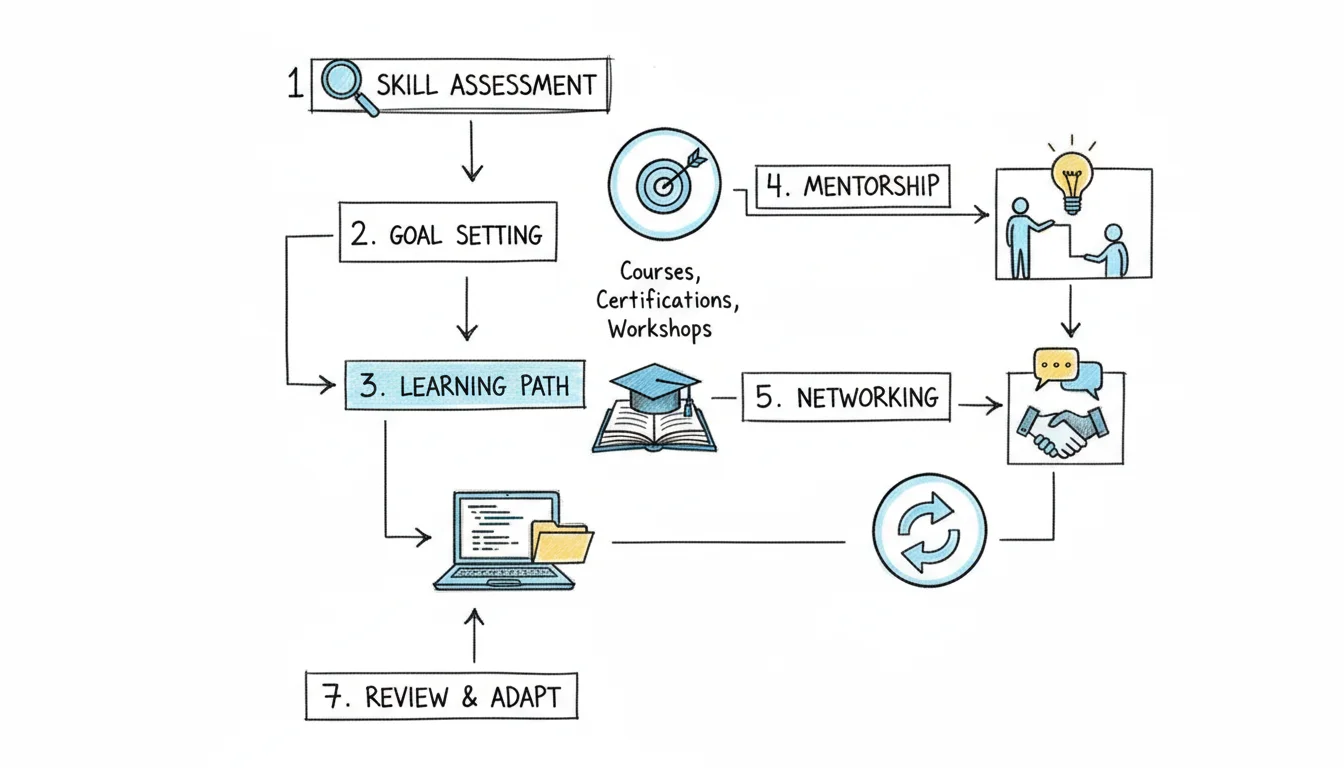
8 Actionable Career Development Plan Examples for IT Professionals in 2026
8 Actionable Career Development Plan Examples for IT Professionals in 2026
Technology shifts rapidly, and remaining static leads to career stagnation. A well-constructed career development plan acts as a guide for earning promotions, securing salary increases, and building the specific technical skills required for the challenges of 2026. Still, starting the planning process can feel overwhelming. You might struggle to know where to begin, which certifications provide the most long-term value, or how to set milestones that allow you to track your progress with objective data.
This guide clarifies the requirements for professional growth. We provide eight role-specific career development plan examples for various stages of an IT career, from entry-level associates to those aiming for IT Director positions. We move past general suggestions by examining the logic behind every plan. Each example includes specific Key Performance Indicators (KPIs) and practical actions you can implement immediately to improve your standing. If you need to understand the fundamental mechanics of professional growth, read our guide on how to create a career development plan.
If you want to become a Cloud Architect, a Cybersecurity specialist, or an experienced manager looking toward the C-suite, these blueprints offer the necessary structure. We focus on certification paths from major providers like AWS, Azure, CompTIA, and the Project Management Institute (PMI) for the PMP. At MindMesh Academy, we recognize the focus needed to succeed. We demonstrate how organized learning environments and specific study tools help you build better habits. This strategy ensures you pass with confidence while mastering the technical abilities and leadership traits required for your target role. This article provides the framework you need to turn your high-level professional goals into specific, reachable milestones.
1. Entry-Level IT Professional Certification Pathway Plan: Building Your Foundational IT Skills
For individuals starting a career in information technology, a structured certification pathway is one of the most effective career development plan examples. This roadmap offers a clear, step-by-step path for building technical knowledge and earning credentials that employers value. This plan is designed for people with 0 to 2 years of experience—including recent graduates, those changing careers, or help desk technicians who want to move up. The core strategy involves finishing a specific sequence of certifications, starting with CompTIA A+, then moving to Network+, and finishing with Security+. This triple-threat approach ensures you gain a wide and clear understanding of vital IT areas.
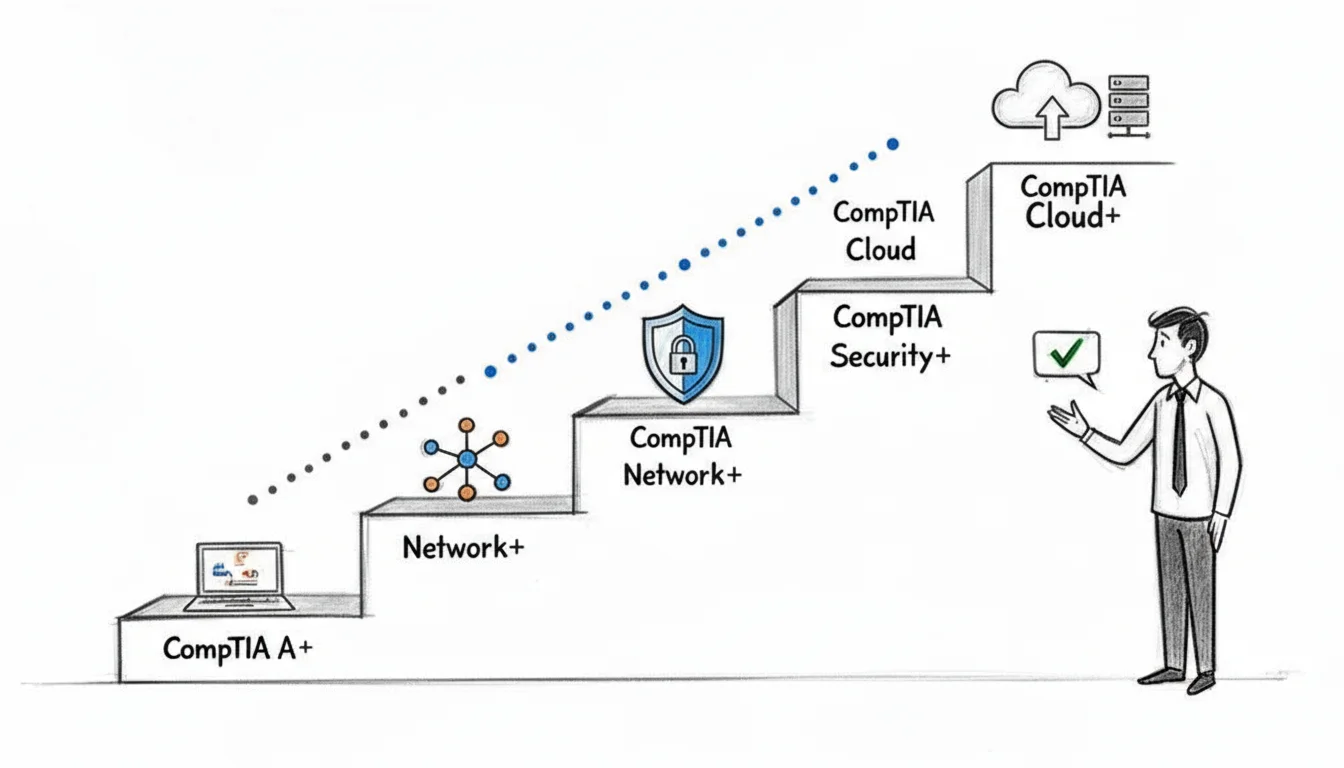 Figure 1: A typical 6-12 month progression for entry-level IT professionals aiming for the CompTIA A+, Network+, and Security+ certifications.
This methodical progression helps in building competence and confidence. Each certification builds on the previous one, creating a broad skill set covering hardware, software, networking, and security principles. This transforms an abstract goal like "get a better IT job" into a concrete series of achievable milestones.
Strategic Breakdown
- Goal: Earn the "CompTIA Trifecta" (A+, Network+, Security+) within one year. This set of credentials qualifies you for roles like Systems Administrator, Network Technician, or Junior Cybersecurity Analyst. It provides a solid starting point for various technical paths.
- KPIs: Pass each certification exam on your first attempt; finish every study module within the planned time (such as learning A+ topics within 4 months); participate in practical labs (such as building a home network or fixing hardware problems).
- Timeline:
- Months 1-4: CompTIA A+ – Focus on hardware, operating systems, mobile devices, and standard troubleshooting methods. This certification helps you understand the physical and logical parts of modern computing systems.
- Months 5-8: CompTIA Network+ – Switch your focus to networking basics, including TCP/IP protocols, network topologies, and wireless technologies. You will also learn about network security and how to manage traffic. This knowledge is the basis for all modern connected systems and is needed for many administrative roles.
- Months 9-12: CompTIA Security+ – Finish the year by learning core cybersecurity concepts. You will study threats, vulnerabilities, and basic incident response. You will also look at application security and cryptography. This builds a defensive mindset that is required in all technical roles to protect company data.
Actionable Takeaways
To follow this sequential plan effectively, you need a structured way to learn.
- Use Learning Platforms: Use a tool like MindMesh to create an organized workspace for each certification. This helps you manage your materials, track your progress, and stay focused.
- Consistent Scheduling: Set specific weekly study blocks that you do not skip. For example, study for 2 hours, 3 times a week. Regular study habits are better than trying to learn everything in a few days.
- Spaced Repetition: Use features like flashcards or software that uses spaced repetition. This helps you remember technical definitions and key concepts over the long term.
- Reflection Prompt: Consider: How will each of these certifications build on what you already know to create a complete understanding of IT systems?
Key Insight: This plan works because it uses a building-block approach. Trying to study for all three exams at the same time often leads to burnout and failing the tests. By mastering one area before moving to the next, you create a solid understanding of IT infrastructure. This makes you a better professional.
A good example is a retail worker moving into tech who follows this specific plan. After earning the A+ certification, they get a job as an IT Support Technician. They use that daily work experience to help them understand the topics in their Network+ and Security+ studies. For more information on starting out, you can look at this guide on how to launch an IT career. This path provides a reliable way to enter the tech industry and prepare for future specializations.
2. Cloud Architecture Specialist Development Plan (AWS/Azure): Advancing Your Expertise
For IT professionals with three to five years of experience, a cloud architecture development plan provides a clear strategy for career growth. This plan moves you from traditional roles into cloud architect positions that offer higher pay. It is for those ready to master the design, deployment, and management of cloud systems on AWS or Azure. The program lasts 12 to 18 months, combining certifications with project work. This timeframe allows you to absorb complex architectural patterns while staying focused on immediate employment goals.
This approach turns a vague goal into a structured process. The plan emphasizes building a portfolio that demonstrates expertise in infrastructure design, security, and cost control. This mix of theory and practical skill is what employers look for. You are learning how to solve business problems with cloud technology.
Strategic Breakdown
- Goal: Earn a professional-level cloud certification, such as the AWS Certified Solutions Architect - Professional or the Azure Solutions Architect Expert, and move into a cloud architect role within 18 months. This goal proves you can design and run complex, scalable cloud systems that meet high technical standards.
- KPIs: Pass an associate-level exam within six months. Build three projects that prove your skills to recruiters. These should include a multi-tier web application, a data processing pipeline, and a secure hybrid cloud connection. You must also show a 20% reduction in mock infrastructure costs through better design, such as rightsizing instances and using the correct storage classes.
- Timeline:
- Months 1-6: Foundational Associate Certification – Focus on an associate-level certification like the AWS Certified Solutions Architect - Associate or the Azure Administrator Associate. This stage builds your knowledge of core services, identity management, virtual networking, and storage. Passing this exam within the first half-year provides a solid base for the more complex architectural concepts you will encounter later.
- Months 7-12: Skill Expansion & Specialty – Increase your skills by building projects in a free-tier account. This is the time to move from theory to implementation. At the same time, study for a specialty certification that fits your professional interests. Good options include the AWS Certified Security - Specialty, the Azure DevOps Engineer Expert, or the AWS Certified Advanced Networking - Specialty.
- Months 13-18: Professional Architect & Portfolio Refinement – Prepare for the professional-level architect exam. This exam requires a deep understanding of multi-account strategies and migrations. Finish your portfolio projects, documenting your design choices and the business value delivered. Start your job search using your certifications and project evidence to prove your value.
Actionable Takeaways
Practical application is essential.
- Build Instead of Only Reading: Use a free-tier account on AWS or Azure to create projects. Do not just follow simple tutorials that tell you which buttons to click. Try different services to see how they interact. Build a system, break it, and then fix it. This process teaches you more than any video course.
- Keep Records: Use a tool like MindMesh to track what you learn. Document your project designs, including diagrams and service settings. Keep a guide on how to save money on cloud costs. These records are helpful for technical interviews because you can explain your logic clearly. This documentation shows that you are organized and thorough.
- Reflection Question: How will a portfolio of cloud projects make you stand out from people who only have certifications? What real-world problems can your projects solve for a potential employer?
Key Insight: The biggest error people make when trying to become cloud architects is skipping hands-on experience to focus only on professional certifications. The value of this plan is that it focuses on projects. A portfolio that shows you can build secure, scalable, and affordable cloud systems is more impressive to employers than a certificate alone. Certifications help you get an interview, but your practical skills prove you can do the job.
A typical example involves a system administrator who manages local servers and earns an Azure Administrator Associate certification. They then design a hybrid cloud setup for a personal project that connects local storage to the cloud. This experience, along with the certification, helps them get promoted to a Cloud Operations Manager or a Junior Cloud Architect role. For more details, check the official AWS Certification or Microsoft Azure Certification learning paths to see the current requirements and recommended study materials.
3. Project Management Professional (PMP) Career Advancement Plan: From Technical Expert to Strategic Leader
Senior technical professionals aiming for leadership roles often find that a structured path toward the Project Management Professional (PMP) certification serves as a clear career development roadmap. This specific pathway is designed for individuals who already possess five or more years of professional experience. If you are currently a senior systems administrator, an infrastructure lead, or a principal software engineer, this plan helps you transition into strategic IT project management or program management roles. The strategy requires you to master the Project Management Body of Knowledge (PMBOK® Guide), build leadership capabilities, and prepare for a rigorous exam environment.
This approach turns your work experience into a recognized credential. It proves you can lead teams, manage budgets, and align engineering work with business goals. This 12-month guide provides a clear shift in perspective. You move from a mindset where you do the work to a management mindset where you lead the work. Your responsibilities shift from technical troubleshooting to high-level resource allocation and stakeholder communication.
Strategic Breakdown
- Goal: Earn the PMP certification within a 12-month window. This qualification prepares you for roles like IT Project Manager or IT Program Manager, where you will lead large projects and manage high-level budgets that influence company strategy.
- KPIs: Carefully track 4,500–7,500 hours of project leadership experience (verify current PMI requirements as they may now be measured in months of experience on the official vendor site); pass the PMP exam on the first attempt; achieve scores of 75% or higher on full practice exams; join one project management peer group or community.
- Timeline:
- Months 1-3: Documentation and Education – Focus on recording your past project work in detail. Ensure these hours align with the PMP application standards. At the same time, finish the required 35 hours of project management education through an approved training provider to fulfill the formal education requirement.
- Months 4-9: PMBOK and Agile Study – Use this time to study the PMBOK® Guide and the Agile Practice Guide. You must understand the five process groups: initiating, planning, executing, monitoring and controlling, and closing. Focus on both traditional waterfall methods and modern Agile frameworks, as the current exam covers both in equal measure.
- Months 10-12: Testing and Final Review – Shift your focus to taking full-length practice tests under timed conditions. Review every wrong answer to understand the logic behind the correct choice. This builds the mental stamina needed for the 180-question exam and helps you identify which knowledge areas need more attention.
Actionable Takeaways
Success requires disciplined study and organized records.
- Organized Study Space: Set up a workspace in a tool like MindMesh to centralize your notes. Use it to build digital flashcards for definitions and to log project hours as they happen. This keeps your application data ready for submission and prevents last-minute stress during the audit process.
- Set a Deadline: Book your exam date roughly 3 or 4 months after you start your serious study phase. Having a hard deadline prevents procrastination and keeps your preparation on track. It creates a sense of urgency that helps you prioritize your evening and weekend study sessions.
- Find a Mentor: Connect with someone who already holds the PMP. They can provide advice on the application process and explain how theoretical concepts apply to real-world IT challenges. Their feedback on your project descriptions can help you avoid common application rejections.
- Reflection Prompt: Which of your past technical projects involved leading a team or managing a timeline, even without a formal "manager" title? How can you describe those specific actions to satisfy PMP application requirements?
Key Insight: The PMP is not just a test of what you know; it is a validation of what you have done. The most important step you can take today is to begin documenting your project history. Many qualified engineers fail to get certified because they cannot prove their past hours or they wait too long to start the application. Do not let your past work go to waste by failing to record it accurately.
Consider a senior database administrator who spent years leading migration projects. By documenting those efforts, they meet the PMP requirements and move into an IT Program Manager role. In that position, they oversee several technical initiatives at once rather than just managing databases. To see more about how these skills translate to real-world success, explore the role of an IT project manager. This plan provides a proven way to turn technical skill into leadership authority.
4. IT Service Management (ITIL) Career Path for IT Operations: Driving Value Through Process Excellence
IT operations and support professionals with 2 to 4 years of experience can follow a structured development plan centered on ITIL 4 certifications to advance their careers. This strategy shifts your professional focus from basic technical troubleshooting to a service-oriented management approach. It emphasizes the processes that provide measurable value to the business. This path works well for help desk technicians, support specialists, and operations analysts who want to move into roles such as Service Desk Manager, Change Management Coordinator, or IT Operations Lead. The main goal is to earn ITIL certifications over a 6 to 9 month period to master domains like incident, change, and problem management.
This approach changes how you understand IT service delivery. You move from being a reactive problem-solver to someone who improves processes before they break. By learning the ITIL framework, you show you can align IT activities with business goals. This is a vital skill for leadership. This plan provides a clear way to gain a strategic perspective on IT operations.
Strategic Breakdown
- Goal: Successfully earn the ITIL 4 Foundation certification and one Specialist-level certification, such as ITIL 4 Specialist: Create, Deliver and Support, within 9 months. This qualification makes you a strong candidate for service management or team lead roles by proving you understand how IT services function as a whole.
- KPIs: Pass the ITIL 4 Foundation exam with a score of 85% or higher (verify current passing requirements and exam formats on the official PeopleCert website); apply at least two ITIL guiding principles, like "Start where you are" or "Progress iteratively with feedback," to a real-world work project; find and propose an improvement for an existing IT service process.
- Timeline:
- Months 1-3: ITIL 4 Foundation Mastery – Spend these months learning the basics of the ITIL 4 framework. You must learn the Service Value System (SVS), the four dimensions of service management, and the standard terminology. You need to understand how IT services create value for the company.
- Months 4-5: Practical Application and Observation – Use the concepts you learned in your current work environment. You could volunteer to document an IT process that is not currently written down or look at incident tickets to find recurring problems. Link these real-world issues to ITIL solutions.
- Months 6-9: Advanced ITIL Module Specialization – Study for an advanced ITIL 4 module. Pick a specialization that matches your career goals, such as ITIL 4 Specialist: Create, Deliver and Support or ITIL 4 Specialist: Drive Stakeholder Value. Focus on areas like change enablement, incident management, or the customer experience.
Actionable Takeaways
To succeed with this plan, you must apply the ideas to your daily work and keep looking for ways to improve.
- Visualize Processes: Use a tool like MindMesh to create process flow diagrams. These visual aids help you see how different parts of ITIL relate to each other. For example, you can map how an individual incident might turn into a larger problem, which then leads to a change request and eventually results in service improvement.
- Consistent Study Habits: Set a regular study schedule and stick to it. Use techniques like spaced repetition to memorize ITIL processes, principles, and terms. This is necessary for passing the exam and helps you use the right language when talking to leadership or stakeholders.
- Seek Opportunities: Find ways to use ITIL principles in your current role now. You could lead a review meeting after a major incident, suggest changes to the service catalog, or participate in a change advisory board.
- Reflection Prompt: How can you use the ITIL focus on "value co-creation" to improve a specific service or process on your team and show leadership without a formal management title?
Key Insight: This plan works because it connects theory with practice. Passing the ITIL 4 Foundation exam is just the first step. The real value comes from using a continuous improvement mindset in your daily tasks. Showing initiative and a strategic understanding is something management will notice, and it helps open the door for leadership opportunities.
One common example is an IT Support Specialist who earns an ITIL Foundation certification and then uses the framework to find bottlenecks in how the team handles tickets. This data-driven improvement makes service delivery better and helps them get a promotion to Service Desk Team Lead. To learn more about a core part of this framework, you can read this guide on what change management is in ITIL. This career development plan example works for those who want to move from technical execution to operational strategy.
5. Cybersecurity Career Transition Plan (Security+, CISSP Track): Fortifying Your Expertise
Experienced IT professionals who want to specialize in cybersecurity require a structured transition plan. This 18–24 month roadmap targets individuals with three or more years of foundational IT experience, such as network engineers or systems administrators. These professionals often aim for high-demand roles like Security Analyst, Security Architect, or Security Manager. The core strategy involves layering certifications. You start with a foundational credential like CompTIA Security+ (SY0-701) before moving toward operational and management-level certifications, including Certified Ethical Hacker (CEH) and the Certified Information Systems Security Professional (CISSP).
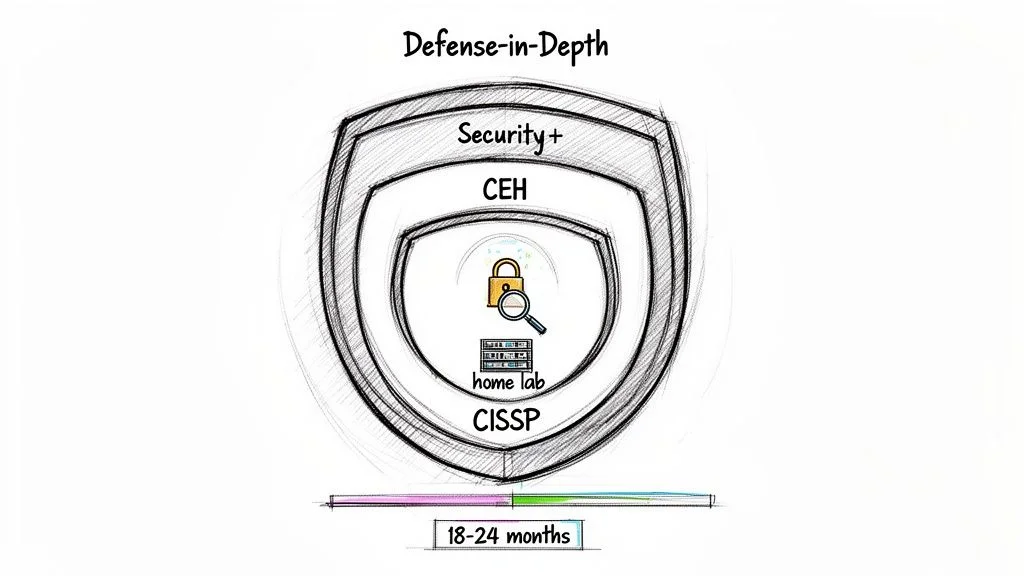 Figure 2: A visual representation of a "Defense-in-Depth" strategy for cybersecurity career development, emphasizing layered certifications and practical home lab experience over 18-24 months.
This plan converts the broad goal of becoming a security expert into a clear progression. It focuses on building a defense-in-depth skill set that covers security architecture, risk management, compliance, and ethical hacking. Instead of starting from scratch, this track uses your existing IT knowledge as a base for mastering technical security concepts.
Strategic Breakdown
- Goal: Successfully move from a general IT role to a specialized cybersecurity position within two years, ending with the CISSP certification. This qualification prepares you for senior or leadership roles where you design, implement, and manage strong security postures.
- KPIs: Pass the Security+ (SY0-701), CEH, and CISSP exams; build and document five hands-on projects in a home lab environment. Projects may include setting up a Security Information and Event Management (SIEM) system, configuring a hardware firewall, or performing vulnerability scans. You must also gain verifiable experience in at least two of the eight CISSP domains.
- Timeline:
- Months 1-6: Foundational Security (CompTIA Security+): – Earn the CompTIA Security+ (SY0-701) to validate your knowledge across core domains like threats, vulnerabilities, architecture, and risk management. This certification provides the necessary terminology and concepts used throughout the field.
- Months 7-15: Offensive/Defensive Specialization & Practice (CEH/Hands-on): – Prepare for and pass the CEH exam while seeking security-related tasks within your current role. Set up a dedicated home lab using virtual machines like Kali Linux and Windows Server. Use these tools for hands-on practice in penetration testing, vulnerability scanning, and incident response. Ensure your practice aligns with frameworks such as the NIST Cybersecurity Framework.
- Months 16-24: Strategic Security Leadership (CISSP): – Focus your study on the CISSP. This certification requires both technical knowledge and several years of experience in at least two of its eight domains, such as Security and Risk Management or Identity and Access Management. Document your relevant work experience and study the details of security governance, compliance, and risk.
Actionable Takeaways
Executing this plan requires a mix of theoretical study and regular practical application.
- Adaptive Learning Paths: Use a tool like MindMesh to create distinct learning tracks for each certification. Use adaptive features to identify and concentrate on difficult topics such as cryptography, risk management, or security operations. This helps ensure a deep understanding of the material rather than relying on memorization.
- Build Your Home Lab: Spend time setting up a lab environment using VirtualBox or VMware Workstation Player. Practice real-world scenarios like configuring firewalls, deploying intrusion detection systems, and analyzing security logs. Documentation is vital. Treat your lab setups and findings as portfolio pieces to show potential employers that you have practical technical skills.
- Seek Security Responsibilities: Volunteer for security-related tasks at your current job, even if you are not in a formal security role. You might review security policies, participate in a security audit, or help implement new access controls. These tasks provide the context needed for advanced certifications and help you meet the work experience requirements for the CISSP.
- Reflection Prompt: Beyond certification exams, what tangible evidence—such as home lab projects or documented improvements to security policies at work—will you gather to prove your practical expertise to future employers?
Key Insight: The effectiveness of this plan stems from its strategic, sequential layering of knowledge and skills. Attempting the CISSP without a foundation from Security+ or the technical skills from CEH studies often leads to frustration. Each step builds the necessary expertise and helps you accumulate the documented experience required for advanced certifications.
A network engineer can use this plan to earn a Security+ certification followed by the CEH. These steps help them transition into a Security Architect role. While working in that position, they can systematically collect the work experience needed to sit for and pass the CISSP. This process eventually leads to a role as a senior security leader. For structured guidance, the MindMesh Academy Cybersecurity Tracks provide paths designed for these specific certifications.
6. Data Engineering/DevOps Specialist Development Plan: Mastering Modern Software Delivery
Software developers and systems engineers with 2-5 years of experience need a defined plan to transition into DevOps or data engineering roles. This 15-month schedule combines technical skills with industry certifications. It focuses on cloud platforms, containerization, and automation. The primary goal is to build a project-based portfolio that shows you can manage infrastructure, continuous integration/continuous delivery (CI/CD) pipelines, and data orchestration. By the end of this period, you should be able to handle complex cloud deployments and automate repetitive manual tasks.
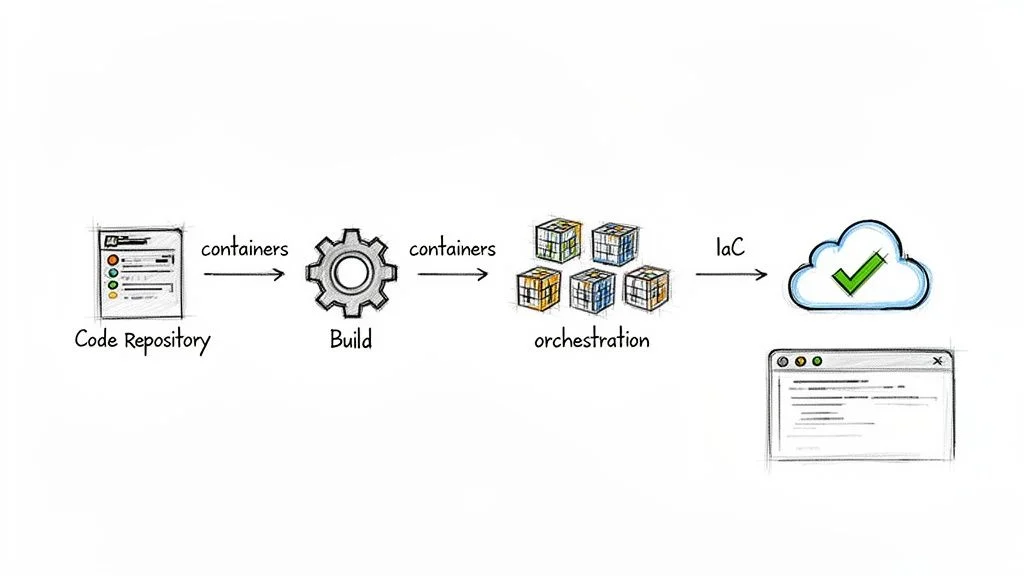 Figure 3: An illustration of a typical DevOps pipeline, encompassing stages from code repository to build, container orchestration, and final cloud deployment.
This plan changes a general career goal into a specific learning path with measurable results. By matching certifications like the AWS Developer Associate or Certified Kubernetes Administrator (CKA) with hands-on projects, you can prepare for internal promotions or job applications. This method focuses on the tools that run modern software delivery and data systems. Professionals who follow this path will gain the practical skills needed to support high-scale applications and manage complex cloud environments effectively.
Strategic Breakdown
- Goal: Secure a DevOps Engineer, Platform Engineer, or Data Engineer role within 15 months. You will do this by learning cloud platforms, containerization, and Infrastructure-as-Code (IaC) principles. The focus is on moving from traditional development into operational and infrastructure roles.
- KPIs: Earn two certifications, including one cloud-specific and one container-specific. Build and publish three end-to-end projects in a public GitHub repository. These must include an automated CI/CD pipeline, a containerized microservice, and a data ingestion workflow. You should also contribute to an open-source tool or an internal company automation project to show community involvement.
- Timeline:
- Months 1-4: Container Fundamentals & Foundational Cloud – Learn container basics using Docker to package and distribute applications. Earn a foundational cloud certification such as the AWS Certified Developer - Associate or Azure Developer Associate. (Verify current pricing on the vendor site). Study container lifecycles, images, and how to integrate cloud services while following security best practices for identity and access management.
- Months 5-9: Container Orchestration & Advanced Cloud – Work on container orchestration using Kubernetes. Prepare for and pass the Certified Kubernetes Administrator (CKA) or Certified Kubernetes Application Developer (CKAD) exam. Focus on deployment strategies like canary releases, cluster scaling, and managing persistent storage for stateful applications. You will learn how to maintain high availability in a production setting.
- Months 10-15: Infrastructure-as-Code & CI/CD Pipelines – Use Infrastructure-as-Code (IaC) tools like Terraform to manage and version your cloud resources. Build CI/CD pipelines using GitHub Actions, GitLab CI, or Azure DevOps to automate testing and delivery. Combine these skills into a final capstone project that shows automated deployment from the first line of code to a live production environment.
Actionable Takeaways
To complete this plan, prioritize practical work and constant learning.
- Project-Based Learning: If you are a software developer with three years of experience, use this plan to get AWS and Kubernetes certifications. This helps you move into a DevOps role. Do not just follow guides. Build your own projects from the ground up. For example, deploy a multi-service application on a Kubernetes cluster managed by Terraform. Automate the deployment using GitHub Actions. Using local tools like Minikube or Kind can help you practice without high costs.
- Targeted Skill Development: Use MindMesh features to find and fix gaps in your knowledge. Focus on areas like cloud networking, serverless computing, and container orchestration. By identifying these gaps early, you can focus your study time on the most difficult technical concepts.
- Document & Share: Keep records of your architecture and the steps you took to build your projects. Share these in a public GitHub repository. A clear portfolio is a strong tool for your resume and helps during technical interviews.
- Reflection Prompt: How can you use your current development or systems engineering background to solve automation or data pipeline challenges with new tools like Kubernetes or Terraform?
Key Insight: In DevOps and data engineering, theory is not enough. The value of this plan comes from practical application. Build a Kubernetes cluster with Minikube. Test cloud configurations and practice Infrastructure-as-Code (IaC) in a free-tier account. This provides the hands-on experience that hiring managers want. Your ability to build and deploy shows your value.
Systems engineers can follow this path to move from manual server management to automated infrastructure. You can focus on Terraform and CI/CD practices to modernize your workflow. To see the principles behind DevOps, the video below provides an overview.
This hands-on method is an effective career development plan for tech professionals looking for engineering roles that require technical knowledge and operational foresight.
7. IT Director/Manager Leadership Development Plan: From Managing Systems to Leading Strategy
Senior IT professionals who have spent years building technical expertise eventually hit a common wall. To move past it, they must shift from managing technical systems to leading people and defining business strategy. This leadership development plan serves experienced managers and principal engineers with 8 or more years of experience. These individuals are ready to move into Director, VP, or CIO roles. The core of this strategy involves adding business acumen, executive presence, and strategic thinking to a strong technical foundation. This plan is not about collecting another technical badge. It is a method for building an executive mindset.
This 12 to 18-month path goes beyond technical goals. It integrates advanced leadership and business credentials into a daily routine. It changes the target from "becoming a director" to a structured path that combines certifications like the ITIL 4 Managing Professional or the current TOGAF standard with executive education or an MBA. The focus moves from finishing IT projects to making sure those projects help the company grow revenue or expand into new markets. This makes the plan a clear example for any aspiring executive.
Strategic Breakdown
- Goal: Reach a Director-level IT leadership position within 18 months. You will achieve this by creating a record of strategic management, business knowledge, and leadership results.
- KPIs: Complete an advanced strategic certification such as the ITIL 4 Managing Professional, the current TOGAF standard, or a CIS Controls Expert certification. Enroll in and finish an executive education course in finance, organizational leadership, or change management. Lead a project that crosses several departments and shows a clear business result. Find and maintain a relationship with a mentor at the executive level.
- Timeline:
- Months 1-6: Strategic Certifications & Mentorship – Start by earning an advanced technical or strategic certification. The current TOGAF standard or the ITIL 4 Managing Professional designation are standard choices. These programs teach you how to view the company as a whole, focusing on enterprise architecture and service management. At the same time, find an executive mentor. This person should be someone who can help you understand company politics and how to make difficult strategic choices. Their advice will help you handle situations that a textbook cannot cover.
- Months 7-12: Executive Education & Strategic Initiative Identification – Enroll in an executive education program. Look for courses that teach finance to non-financial managers or focus on business strategy. You need to understand how budgets work and how the company stays profitable. During these months, find a big project in your company that needs a leader. This project should be tied to a major business goal, such as cutting operational costs or entering a new market. Create a plan to lead this project and present it to your leadership. For those in this phase, learning how to demonstrate leadership skills and accelerate your career is essential.
- Months 13-18: Lead & Influence – Direct the strategic project you identified. Spend your time building partnerships with the leaders of other departments. You want to show that you understand their needs and can help them succeed. Start writing about your experiences as a leader. Post articles on LinkedIn or industry blogs. Join executive IT forums and networking events. These steps help you build a name for yourself outside of your current team.
Actionable Takeaways
To follow this plan, you must bridge the gap between technology and business goals.
- Strategic Goal Mapping: Use a project management tool for your own career growth. Do not just use it for work tasks. Set up your career goals as a project. Break down big objectives like "Executive Education" into smaller parts. Track when you will research schools, when you will apply, and how much time you will spend studying each week. This keeps you moving toward your goal.
- Proactive Mentorship Engagement: Set a schedule for meeting your executive mentor every three months. Do not spend this time asking for help with a server. Ask about strategic problems, company culture, and how to talk to people who do not have a technical background. Use these meetings to learn how a leader thinks and makes decisions.
- Business Impact Mindset: When you talk about your work, focus on the result for the company. Instead of saying "we upgraded the network," say "this network upgrade will reduce downtime by 20%, which saves the company $50,000 every month." When you speak in terms of money and efficiency, other executives will take your ideas more seriously.
- Reflection Prompt: Look at your company’s current goals. Is there an IT project that could help the company reach those goals faster? How can you position yourself to lead that project?
Key Insight: At this level of leadership, your value is based on your ability to turn technology into business success. A Principal Engineer who earns a TOGAF certification and designs a plan to scale the company's infrastructure while saving money is much more valuable than one who only has technical skills. This engineer could save the company millions (verify specific cost-saving potential with your finance department). Combining technical ability with business strategy is what defines a successful executive.
A common example is a Senior IT Manager with ten years of experience who finishes the ITIL 4 Managing Professional certification and then gets an executive MBA. This combination of tech and business training makes them the perfect candidate for a promotion to IT Director. This plan gives you the framework to make that same leap into a leadership role.
8. Multi-Cloud Architect Career Excellence Plan: Becoming a Cloud Ecosystem Master
For cloud professionals with over four years of specialized experience, a multi-cloud excellence plan is a high-impact choice among professional development options. This technical blueprint serves architects and engineers who want to master the specific mechanics of designing, deploying, and managing infrastructure across the three major hyperscale providers: AWS, Azure, and Google Cloud Platform (GCP). The strategy centers on securing expert-level certifications from each provider over a 16-month window to build a platform-agnostic perspective.
This plan moves past the limitations of single-vendor knowledge. It focuses on how different cloud systems interact, including cross-cloud security, cost optimization, and unified governance. You will transform the vague goal of being an expert into a structured 15 to 16-month program. By the end, you will be a multi-cloud architect capable of guiding large enterprises through their most difficult technical transitions.
Strategic Breakdown
- Goal: Pass expert-level certification exams, specifically the AWS Solutions Architect Professional, Azure Solutions Architect Expert, and GCP Professional Cloud Architect. The objective is to qualify for a role as a Principal Cloud Architect or a Multi-Cloud Solutions Lead.
- KPIs: Pass each certification exam on the first attempt without needing retakes. Design and document two detailed enterprise-grade multi-cloud reference architectures, such as a disaster recovery system that spans two different clouds or a hybrid data pipeline. Demonstrate a 20% reduction in infrastructure costs in a lab environment by applying cross-platform optimization techniques.
- Timeline:
- Months 1-5: Primary Cloud Mastery – Increase your technical proficiency in your current primary cloud provider. If you are an AWS specialist, you will study for and earn the AWS Solutions Architect Professional. If Azure is your main platform, focus on the Azure Solutions Architect Expert. This stage ensures you have a firm anchor in one specific set of tools and services.
- Months 6-10: Second Cloud Specialization – Move your entire focus to the second major provider. For instance, if you finished the AWS requirements, you should now prepare for the Azure Solutions Architect Expert exam. Focus on how this provider handles identity management and networking compared to your first platform.
- Months 11-15: Third Cloud Integration – Master the third major provider. If you have already covered AWS and Azure, use these five months to study for the GCP Professional Cloud Architect certification. During this phase, you should emphasize how these services interoperate and perform comparative technical analysis.
- Month 16: Consolidation, Portfolio & Branding – Combine your knowledge across all three platforms. Build a technical portfolio that features projects integrating services from different vendors. Update your resume and LinkedIn profile to show your ability to work across different cloud environments.
Actionable Takeaways
Following this plan requires disciplined thinking that avoids vendor bias.
- Comparative Analysis Workspaces: Use a tool like MindMesh to build distinct workspaces for AWS, Azure, and GCP. Do not just look at individual services. Perform a thorough comparison of core tools such as IAM (Identity and Access Management), virtual private clouds, security groups, serverless compute functions, and managed database services.
- Integrate & Innovate: Design and build technical projects that require you to connect services from different providers. For example, build a data pipeline that collects data in an AWS S3 bucket, processes that data using Azure Functions, and stores the final results in GCP BigQuery. Document your architectural choices, the latency between clouds, and the security configurations required.
- Community Engagement: Join technical communities and forums that focus on multi-cloud setups. Participate in discussions about the latest cross-platform tools and open-source projects like Terraform or Pulumi. Learning from the practical mistakes of others helps you avoid similar errors in production environments.
- Reflection Prompt: When you evaluate a multi-cloud strategy for a new application, which factors—such as cost, specific service features, compliance requirements, or avoiding vendor lock-in—will take priority, and how does your knowledge of different providers influence that ranking?
Key Insight: The value of this plan goes beyond collecting three certificates. It comes from mastering the architectural patterns and governance models that apply regardless of the specific provider. A true multi-cloud expert knows when to use an AWS service and when an Azure or GCP equivalent offers better performance, tighter security, or lower costs for a specific business requirement. This high-level perspective makes an architect highly effective in complex enterprise settings.
Consider a senior AWS engineer who follows this path to earn Azure and GCP architect credentials. This specific sequence allows them to lead a large corporation’s hybrid-cloud project. They can design global solutions that use the best technical features from each platform while managing costs effectively. This is a clear example of how a technical development plan can prepare senior engineers for the highest-level roles in the cloud industry.
Comparison of 8 Career Development Plans
| Plan | Implementation complexity | Resource requirements | Expected outcomes | Ideal use cases | Key advantages |
|---|---|---|---|---|---|
| Entry-Level IT Professional Certification Pathway Plan | Low — follows a predictable, linear path through foundational IT concepts. This approach creates a manageable learning curve for newcomers. | 6–12 months of study; 10–15 hours per week; low costs for entry-level exam vouchers; zero to minimal prerequisites required for success. | CompTIA A+ (220-1201/220-1202), Network+ (N10-009), and Security+; roles in technical support; salary growth of 15% to 25%. | Recent graduates, career changers, or those with 0–2 years of industry experience. | Offers clear progression milestones and builds a technical base through labs and direct mentorship. |
| Cloud Architecture Specialist Development Plan (AWS/Azure) | High — involves mastering advanced architecture, complex design patterns, and specific cloud platform services. | 12–18 months of commitment; 15–20 hours weekly; moderate to high costs for cloud labs and exams; 3–5 years of experience recommended. | AWS or Azure Solutions Architect roles; typical compensation ranges from $120,000 to over $160,000. | IT professionals with 3–5 years of experience aiming to design and manage large-scale cloud environments for modern organizations. | Addresses high market demand for specialized skills while providing deep experience with major cloud platforms. |
| Project Management Professional (PMP) Career Advancement Plan | Medium–High — demands mastery of the PMBOK guide and the development of professional leadership skills. | 12 months; 15–20 hours weekly; requires at least 5 years of experience and 35 hours of project management training; moderate exam fees. | PMP credential; path to IT project manager or management tracks; salary increases of 20% to 30%. | Senior technical professionals looking to move into dedicated project leadership and oversight roles. | Provides a globally recognized credential that can accelerate a move into executive management. |
| IT Service Management (ITIL) Career Path for IT Operations | Low–Medium — centers on conceptual frameworks and the practical mapping of organizational processes. It focuses on how services are delivered. | 6–9 months (the Foundation level is achievable in 2–3 months); $300–$500 (verify current pricing on the vendor site); 2–4 years of experience. | ITIL Foundation or Practitioner status; improved service delivery and noticeable gains in operational efficiency. | Staff working in service desks, Network Operations Centers, or operational supervision roles. | Teaches practical service management and acts as an accessible stepping stone for career growth. |
| Cybersecurity Career Transition Plan (Security+, CISSP Track) | High — requires a layered understanding of security concepts, modern cryptography, and rapid incident response protocols. | 18–24 months; 3+ years of experience for senior credentials; high cumulative cost ($2,000+; verify current pricing on vendor site); intensive study schedule. | A progression from Security+ to CEH to the CISSP track; senior security roles; compensation between $130,000 and $200,000+. | IT professionals moving into security or aiming for leadership positions in the field. | Meets urgent market demand with high salary potential and globally respected certifications. |
| Data Engineering/DevOps Specialist Development Plan | High — involves software coding, distributed systems, container orchestration, and the complexity of infrastructure as code. | 15 months; 18–25 hours per week; requires strong programming skills; moderate to high costs for specialized labs. | Roles in DevOps or data engineering; typical salaries ranging from $120,000 to $170,000+. | Software developers or systems engineers with 2–5 years of experience who want to transition into DevOps or data engineering roles. | Builds highly transferable skills through a heavy focus on automation and hands-on projects. |
| IT Director/Manager Leadership Development Plan | High — focuses on strategic organizational leadership, business finance, and corporate governance within the IT department. | 12–18 months; 8+ years of professional experience; high program costs ($5,000–$15,000+; verify current pricing on vendor site); executive time commitment required. | Director or CIO track; executive-level roles with potential compensation between $200,000 and $500,000+. | Senior IT managers and team leads pursuing a career in executive leadership at the enterprise level. | Integrates technical knowledge with business strategy to prepare for board-level accountability and financial oversight. |
| Multi-Cloud Architect Career Excellence Plan | Very High — demands mastery of multiple vendor platforms, orchestration, and enterprise-level governance. | 15–16 months; 4+ years of cloud experience; significant costs ($3,000+; verify current pricing on vendor site); 20–25 hours weekly. | Multi-cloud architect roles; salaries between $160,000 and $220,000+; independent consulting opportunities. | Experienced cloud engineers wanting to establish authority in complex, multi-provider environments. | Provides top-tier credentials and positions the professional as an authority in enterprise architecture. |
From Plan to Progress: Activating Your Career Development – Your Blueprint for Success
This guide has analyzed a diverse set of career development plan examples, ranging from foundational IT support roles to the high-level responsibilities of multi-cloud architecture. Every blueprint—including those designed for cloud architects, project managers, or cybersecurity analysts—rests on a foundation of intentional and structured growth. These documents are not simple checklists. They function as active roadmaps designed to direct your professional path with clarity.
The most important takeaway is that a career plan must be a living document. It should not sit in a folder gathering digital dust. It requires a mix of theoretical study, such as preparing for CompTIA or ITIL certifications, and direct technical application. This balance between learning and doing distinguishes those who wait for promotions from those who earn them through documented skill acquisition.
The Core Principles of Effective Career Planning
The examples provided earlier share several principles that are required for professional growth in the technology sector. Success in these roles requires more than just showing up; it requires a systematic approach to skill building.
- Specificity is Power: Broad goals such as "learning about the cloud" rarely lead to advancement. A functional plan uses specific targets. For example, a worker might state: "I will earn the AWS Certified Solutions Architect - Associate certification within four months." This goal includes a commitment to study for at least eight hours per week and complete three hands-on labs using a free-tier account to verify technical competency. This level of detail provides a clear definition of success and failure.
- Metrics Matter: Each plan must include key performance indicators (KPIs). You should track your progress using hard data. This might include the percentage of practice exam questions answered correctly, the number of technical projects finished, or new protocols implemented at your current job. If you are a systems administrator, a KPI might be the automation of five manual server tasks using Python or Bash. Tracking these points turns a list of dreams into a system of accountability.
- Adaptability is Essential: The technology sector changes rapidly. New tools emerge, and business requirements shift. Your development plan must be flexible enough to accommodate these changes without falling apart. If a vendor changes an exam version or your company migrates from one cloud provider to another, your plan should change too. Conducting a review every three months allows you to check your progress and update your goals based on current industry needs.
Synthesizing Strategy into Action
The value of these career development plan examples is found in their logic, not just their specific steps. You should not copy them exactly. Instead, understand why they are structured the way they are. For an IT Director, the plan focuses on connecting technical projects to business revenue and operational efficiency. For a cybersecurity professional, the plan focuses on building a verifiable portfolio of work that proves defensive or offensive capabilities to an employer.
Your career development plan is your personal business plan. In this context, you should define your unique value proposition, which consists of your specific technical skills and certifications. You must identify your target market, which includes the specific industries or company sizes where your skills are most in demand. Finally, you need a strategy to reach that market. This involves acquiring the right experience and documenting it so that hiring managers can see the evidence of your work.
This requires a change in perspective. You are not a passive participant in a company's hierarchy. You function as the lead executive of your own career. This means making deliberate investments in your skills. Every hour spent in a lab environment or reading documentation is a capital investment in your future earning potential.
Your Immediate Next Steps
Reading about career planning is a useful starting point, but action is what produces results. A plan that stays on a page has no impact on your salary or your job title. Even a small step forward creates more momentum than perfect planning. Here is how to move from reading to execution:
- Select and Deconstruct: Pick the example plan that aligns most closely with your five-year goals. Break that plan down into smaller pieces. Identify the very first milestone you need to hit. If you are looking at security, your first step might be reviewing the exam objectives for Security+. If you are moving into management, it might be documenting your current project lead experience for a future PMP application.
- Customize Your Timeline: Adjust the timelines in these examples to fit your life. If you have family commitments or a heavy workload, a four-month certification goal might need to be six months. Be honest about how much time you can actually spend. Once you decide, put those study blocks on your calendar. Treat them as mandatory meetings that cannot be moved.
- Commit to the First Action: Do not wait for the start of a new week or month to begin. Take one small, concrete action today. You could set up a virtual home lab using Proxmox or a cloud free tier. You might watch a single module of a training course or sign up for a trial at a learning platform. If you are pursuing the PMP, you could spend twenty minutes listing the projects you have managed over the last three years to see if you meet the 36-month leadership requirement.
The transition from your current role to a more advanced position is built through these small, deliberate steps. The frameworks provided here are the map, but you are the one who must move. Your commitment to following through on your plan is the difference between staying where you are and reaching a more rewarding role.
Turning a career plan into reality requires structured learning and access to technical environments. MindMesh Academy provides the resources needed to execute these career development plan examples. Whether you are working on entry-level IT certifications or advanced architectural designs, you can find the tools you need to progress. You can start this process by viewing the available training paths and lab environments at MindMesh Academy today.

Written by
Alvin Varughese
Founder, MindMesh Academy
Alvin Varughese is the founder of MindMesh Academy and an enterprise architecture leader. An electrical engineer by training, he moved from factory automation in South Africa to cloud architecture at GE Appliances and Humana (Fortune 50), and holds 20 professional certifications including AWS Solutions Architect Professional, Azure DevOps Engineer Expert, and Microsoft Agentic AI Business Solutions Architect. He built MindMesh Academy after interviewing too many highly certified candidates who couldn't answer basic questions: the goal is prep that makes you better at the job, not just able to pass the exam.