The 10 Best Books on Project Management for 2026
The 10 Best Books on Project Management for 2026
You’re probably in one of two places right now. Either you need to pass a certification and your reading list feels fragmented, or you already run projects and you’re tired of reading smart books that never change how you work on Monday morning.
That’s why a plain roundup of the best project management books usually falls short. The question isn’t just which books are worth buying. It’s which books belong together, in what order, and how you turn them into a system you can retain and use under pressure.
I’ve seen capable project managers make the same mistake repeatedly. They read PMBOK cover to cover, underline half the pages, then forget the material when they need to build a risk response, coach a delivery team, or explain governance to an executive sponsor. Reading alone doesn’t create operational judgment. Structured practice does.
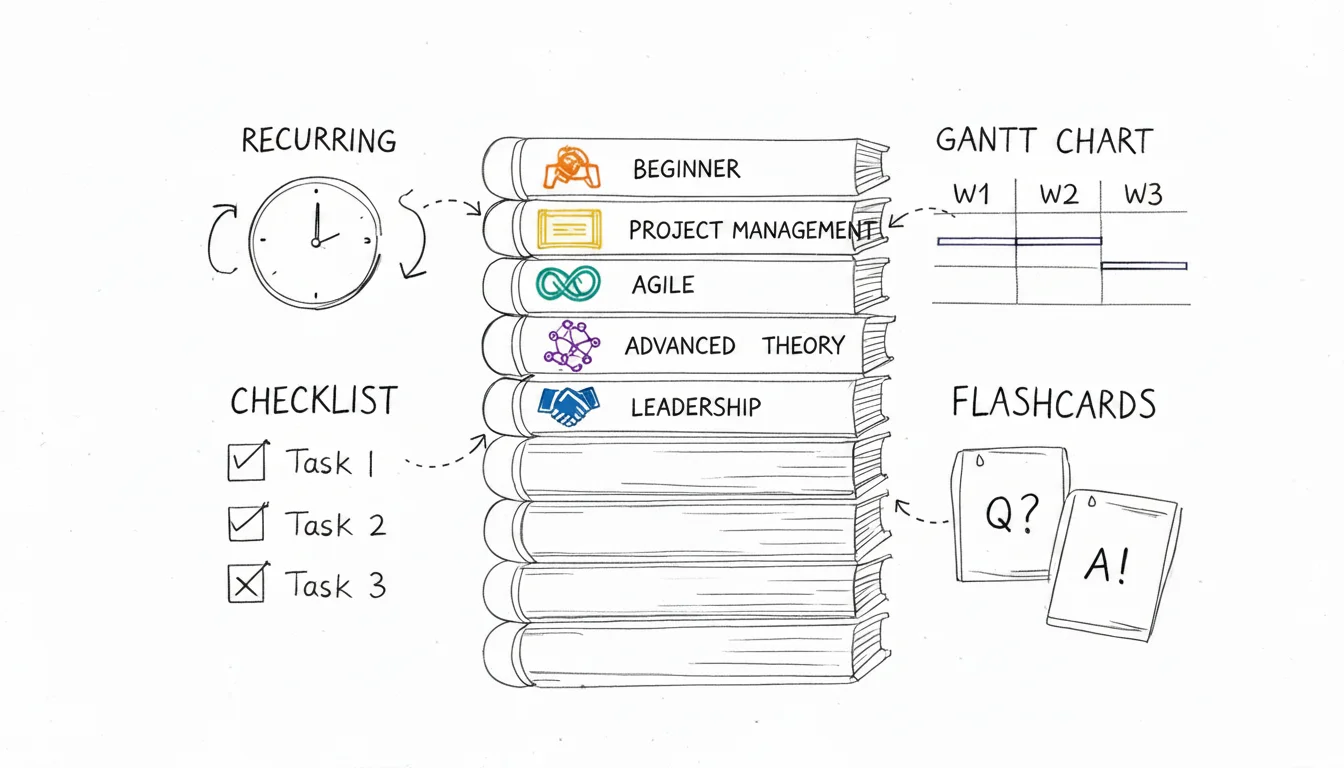
So this list is built differently. Each book earns its place because it fills a specific role in a personal learning stack: standards, agile translation, exam preparation, software delivery, leadership, or operational flow. If you pair the right book with active recall, spaced repetition, and short review cycles in a platform like MindMesh Academy, you stop collecting information and start building usable judgment.
If you also need better artifacts to support what you learn, keep a set of project status report templates nearby. Good books sharpen your thinking. Good templates help you prove it in real projects.
1. A Guide to the Project Management Body of Knowledge (PMBOK Guide), 7th Edition by Project Management Institute (PMI)
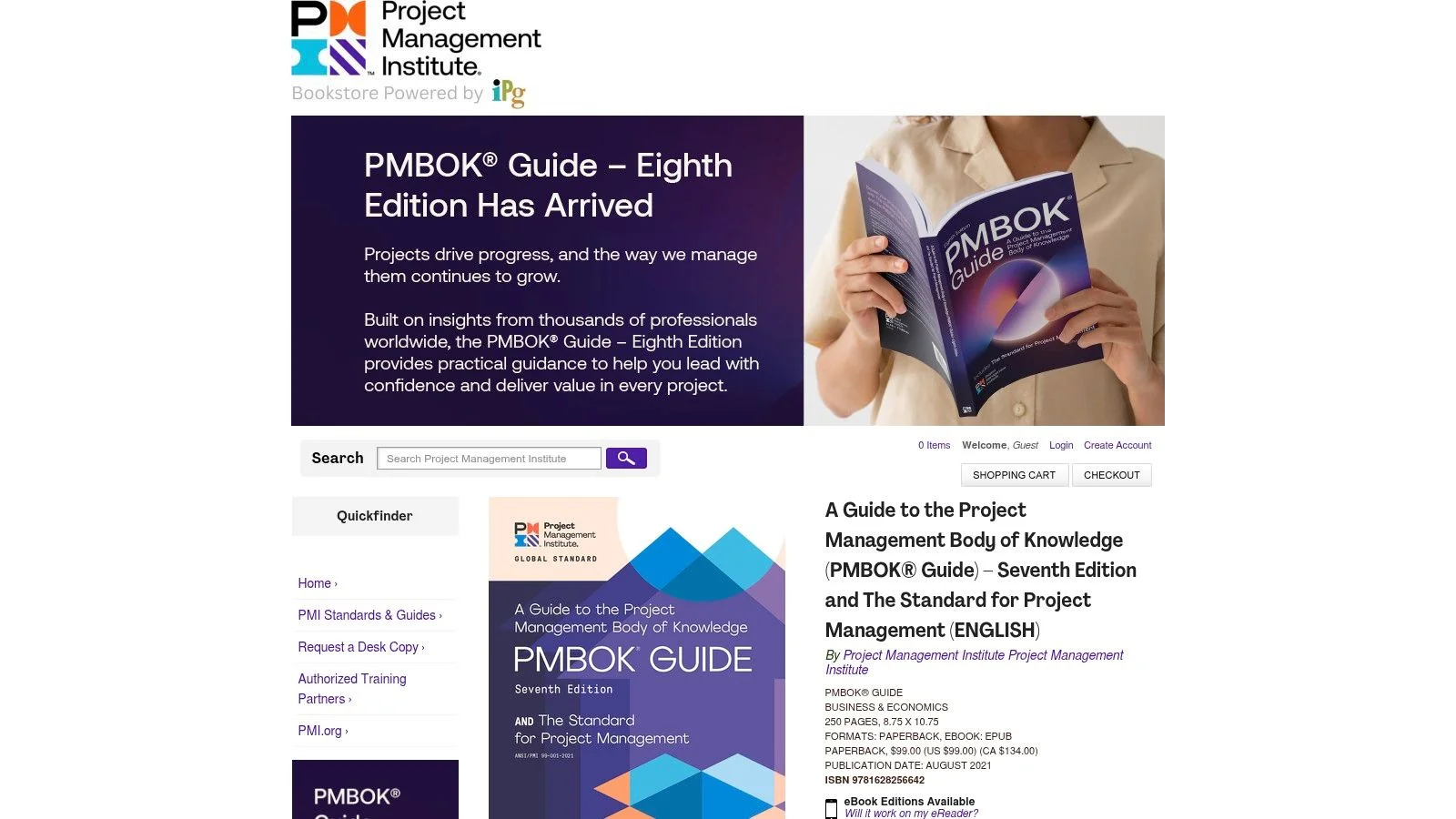
A sponsor wants dates, a delivery lead wants flexibility, and the PMO wants traceability. That’s the kind of situation where the PMBOK Guide, 7th Edition from PMI proves its worth. It gives you a shared operating language for governance, risk, value, stakeholders, and delivery choices when the project environment is mixed and messy.
The 7th edition marks a significant shift from older PMI thinking. Instead of centering the book on process groups and step order, it frames project management around 12 principles and 8 performance domains. This makes it more useful for real projects where one team uses a predictive plan, another iterates weekly, and leadership still expects one coherent story. PMI outlines that structure in its PMBOK Guide overview.
Where it works best
Use PMBOK as a reference spine for decision quality. Do not use it as a script.
In practice, this book helps most when you need to explain why a decision is sound, not just what to do next. If you are preparing for PMP or CAPM, it provides the vocabulary and mental model. If you already manage projects, it sharpens judgment around uncertainty, tailoring, and governance trade-offs.
Its limitation is just as important. PMBOK will not teach a new PM how to run a tense workshop, recover a slipping sprint, or coach a product owner through backlog conflict. For that, pair it with books on agile execution and delivery leadership, especially if your role includes applying agile principles in software or translating agile concepts for less technical stakeholders through references like Wisely's Agile methodology guide.
A better way to read it is chapter by chapter against live work.
- Best use case: Build core terminology for certification study, PMO alignment, and executive communication.
- Less effective use case: Learning team facilitation or delivery mechanics from scratch.
- Smart pairing: Read one principle, write two scenario questions from your current project, then review them in your study platform using spaced repetition.
Practical rule: After each reading session, answer one question in writing: What decision on my current project would change if I applied this principle correctly?
That’s how PMBOK becomes useful. It stops being a book you read once and becomes a standard you revisit, test, and connect to the rest of your learning path. For the PMP candidate, it’s the foundation. For the hybrid PM, it’s the translation layer. For the working project lead, it’s the check against improvising yourself into avoidable problems.
2. Agile Practice Guide by PMI
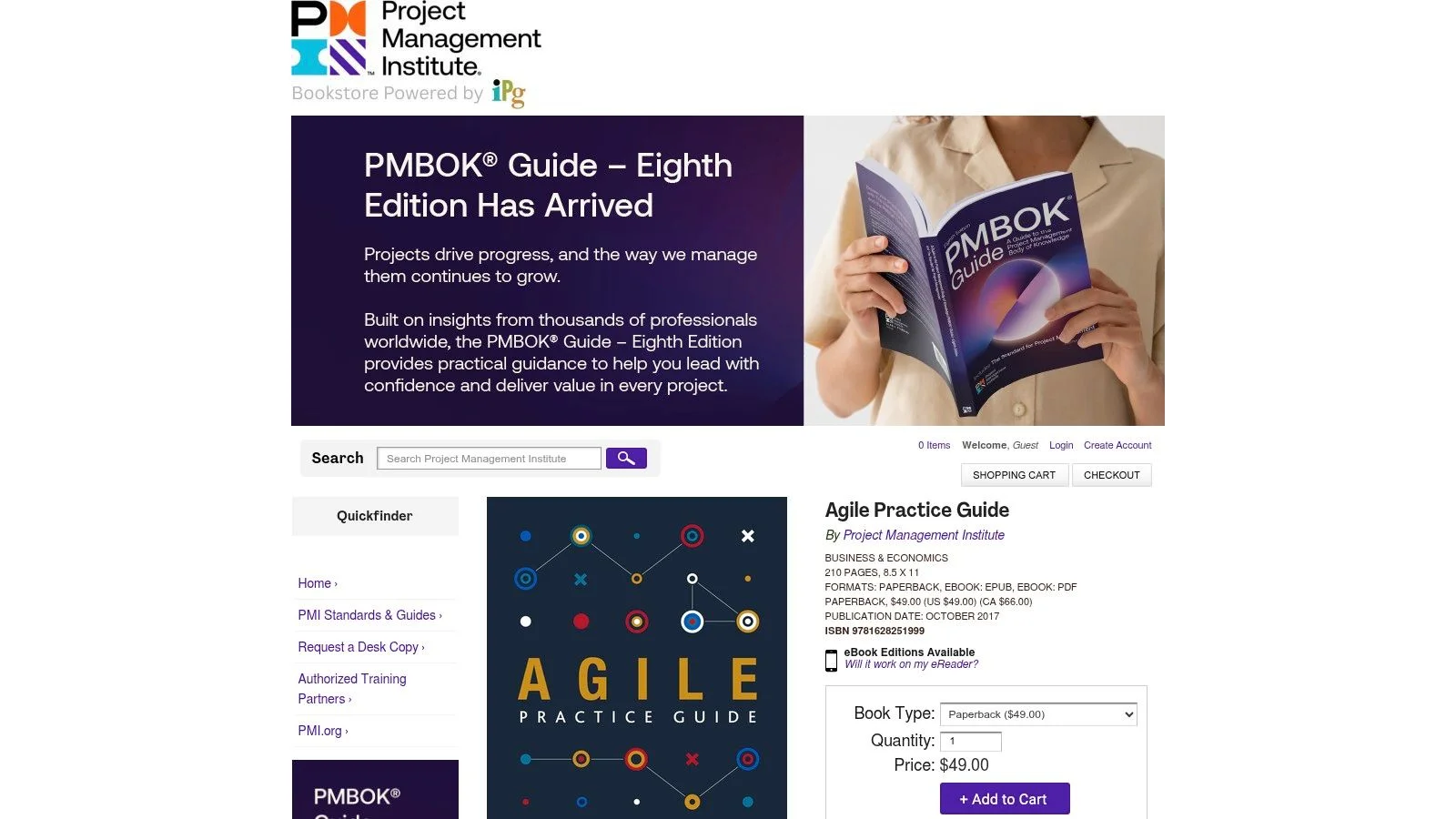
A familiar failure pattern shows up right after a company decides to "go agile." Leaders still want fixed dates and status traffic lights. Teams start using Scrum terms. Delivery gets harder because nobody has agreed on what should stay predictive, what should become iterative, and who can make trade-off decisions.
The Agile Practice Guide from PMI helps with that transition. It gives project managers, delivery leads, and PMO teams a shared way to choose methods based on context instead of treating agile as a belief system. It’s one of the better books on this list for people who work between team-level execution and organizational governance.
Why this book earns a place in a real learning system
This guide is short enough to use while running live work, which matters. Long, theory-heavy agile books often sit unread once delivery pressure rises. PMI’s guide is better used as a decision aid. Read a section, compare it to your current project, then record what you would change in planning cadence, stakeholder review, backlog control, or reporting.
That’s also why it fits well with digital study tools. If you are building a learning path for "The Agile Leader" or a hybrid PM role, turn each chapter into a few scenario cards in your study platform. Focus on prompts such as: Which work needs upfront certainty? Which work benefits from iteration? What governance can stay without slowing the team down?
It’s also a strong companion for anyone applying agile principles in software, especially when the team needs practical language for explaining delivery choices outside engineering.
What it helps you do on the job
The core value is method selection under constraints. This book helps you handle questions such as:
- Delivery model choice: Should this initiative run as predictive, agile, or hybrid based on risk, uncertainty, and stakeholder tolerance for change?
- Executive communication: How do you explain iterative delivery to sponsors who still expect milestones, forecasts, and escalation paths?
- Team design: Which practices improve flow now, and which ones just add ceremony your team cannot support yet?
In my experience, that middle ground is where many PMs struggle. Pure agile texts often assume product autonomy and mature teams. Traditional standards assume more stability than many delivery environments have. The Agile Practice Guide is useful because it addresses the messy middle.
If your current goal is certification, pair this with a structured guide to PMP certification and use the book to test judgment, not just memorize terms. If your goal is organizational adoption, compare its guidance with Wisely's Agile methodology guide and note where your company needs clearer rules for funding, approvals, and delivery reporting.
Read this one with a pen in hand. After each chapter, write down one active project that should become more iterative, one that should stay plan-driven, and one that needs a deliberate mix of both. That’s how this book stops being background reading and starts improving delivery choices.
3. Rita Mulcahy’s PMP Exam Prep, 11th Edition by RMC Publications
You have six weeks until your PMP exam. Your calendar is full, your mock scores are inconsistent, and rereading standards material isn’t fixing the problem. Rita Mulcahy’s PMP Exam Prep from RMC Publications helps because it trains exam judgment under pressure, not just recall.
That difference matters. PMBOK gives you the reference model. Rita teaches you how PMI-style questions are framed, where distractors show up, and how to choose the best answer when two options look plausible.
Best for turning study time into exam readiness
This book works well for candidates who need a disciplined system. The structure is practical. Read a chapter, answer questions, review the rationale, then log the patterns behind your misses. If you skip that last step, you do a lot of reading without fixing your decision errors.
I do not recommend using this as your only project management book. I do recommend it as the book that converts theory into passing behavior.
- Use it for: Situational questions, exam pacing, process logic, and identifying weak domains.
- Less useful for: Broader leadership judgment, stakeholder influence, and running live projects with messy organizational constraints.
- Best pairing: Use each chapter with your guide to PMP certification, then turn missed questions into flashcards or short quizzes inside your study tool.
The book fits the larger learning system as follows. Read the chapter once. Summarize it in your own words. Build spaced repetition cards from errors, not highlights. If you use a digital platform, tag those cards by domain and question type so your reviews adapt to what you keep missing. That approach is much closer to how strong candidates improve than merely rereading marked pages.
Rita is especially useful for the PMP Candidate reading path. Start with PMBOK for terminology and principles, use the Agile Practice Guide to sharpen delivery judgment across predictive, agile, and hybrid environments, then use Rita to pressure-test your understanding. Each book has a separate job. Together, they create a study sequence instead of a pile of good intentions.
In my experience, candidates improve fastest when they stop asking, "What chapter should I reread?" and start asking, "What mistake am I still making under time pressure?" This book helps you answer that question clearly.
4. The Fast Forward MBA in Project Management, 6th Edition by Eric Verzuh
For many working PMs, the best book isn’t the most authoritative one. It’s the one you’ll keep on your desk and reopen when a kickoff is weak, a schedule is drifting, or a sponsor asks for something that should’ve been clarified three weeks earlier.
That’s where The Fast Forward MBA in Project Management from Wiley earns its spot. Eric Verzuh writes in plain English, and that matters. Teams don’t need another abstract framework when they’re trying to scope work, manage dependencies, or clean up communication routines.
Best for practical operators
This book is a solid desk reference for people who run real projects but don’t live inside certification preparation. It provides enough structure to improve discipline without sounding like a standards document. I’ve found it especially useful for PMs who work cross-functionally and need to bring non-PM stakeholders along.
You’ll get practical coverage of initiation, planning, scheduling, risk, governance, and procurement. Beyond this, you also get forms, templates, and checklists that help translate concepts into repeatable behavior.
- Strong fit: New PMs, team leads becoming project leads, and functional managers who suddenly own delivery.
- Trade-off: Agile coverage is helpful but not deep enough for someone leading a mature product organization.
- Best pairing: Read it alongside PMBOK if you want both practical tools and common governance language.
This is one of the few books on the list that works well as a bridge between learning and execution. If your problem is less “What is project management?” and more “How do I run this project without chaos?” this is often the better first purchase.
5. Making Things Happen by Scott Berkun
Some books teach methods. Scott Berkun’s Making Things Happen teaches what it feels like to carry delivery responsibility when ambiguity, politics, and human behavior get in the way. That’s why it still holds up.
This is one of the most readable titles in the best books on project management category because it respects a truth many standards books underplay. Project management is often less about the perfect plan and more about recovering well when the plan collides with reality.
Human judgment under pressure
Berkun is especially strong on decisions, communication, leadership, and the awkward parts of execution. If your projects live in software, product, or web environments, the examples will feel familiar. Even when the scenarios are older, the people problems aren’t.
What it doesn’t do is provide certification alignment. If you need exam preparation, look elsewhere. If you need sharper instincts for handling dates, scope confusion, and stakeholder friction, this book does real work.
I recommend this one to PMs who already know the terms but still feel blindsided by the politics around delivery.
A practical way to use it is to read one chapter after a difficult week, then write down one behavior you’ll change in your next planning session, retrospective, or escalation conversation. That’s how this book becomes useful. Not as theory, but as a mirror.
6. Essential Scrum by Kenneth S. Rubin
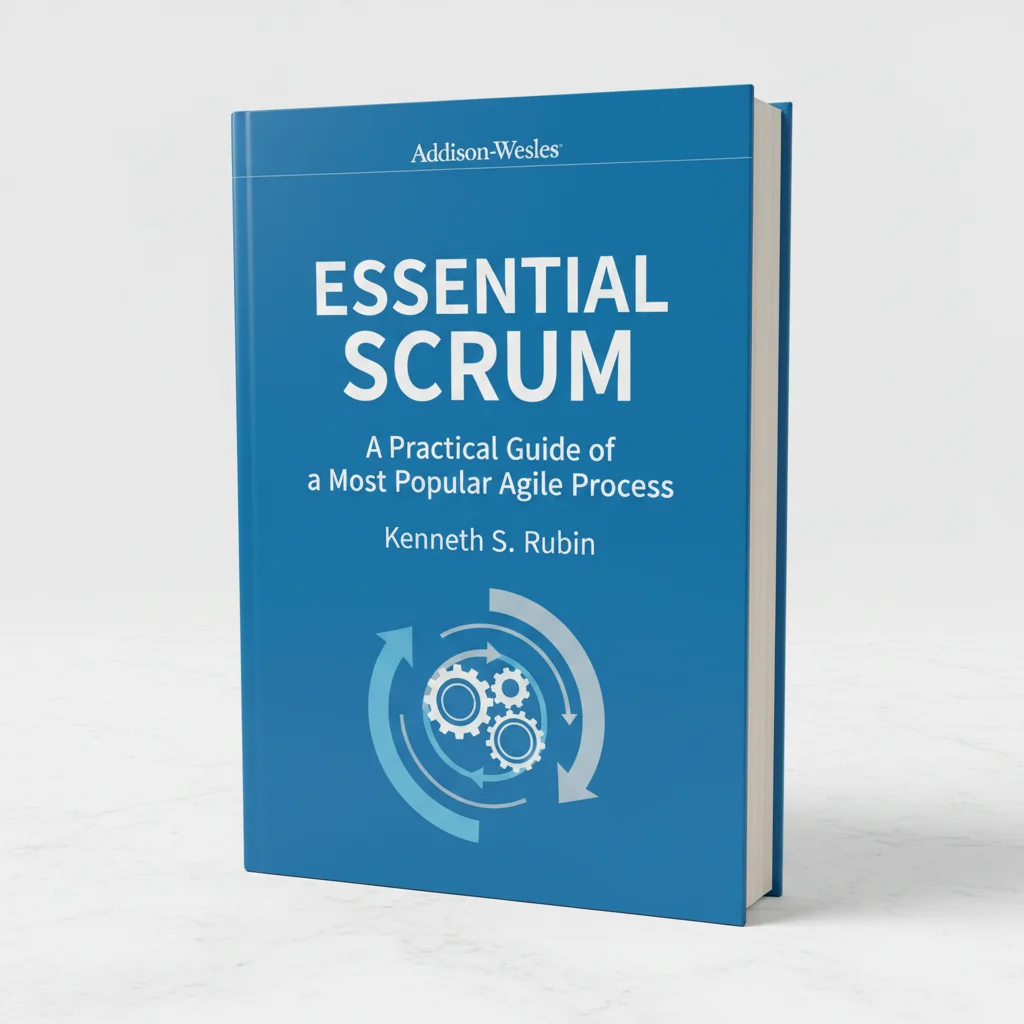
When a team says it’s “doing Scrum,” I usually want to ask three follow-ups: Who owns backlog decisions? How does work enter the sprint? And what happens when priorities change midstream? Essential Scrum by Kenneth S. Rubin helps answer those questions in operational detail.
Rubin’s value is clarity. He makes roles, artifacts, events, and estimation practices understandable without stripping away nuance. That’s hard to do well.
Deep enough to align a team
This is a practical reference for project managers, product owners, delivery leads, and engineering managers who need one shared vocabulary. It’s especially useful when teams have adopted Scrum words without consistent Scrum behavior.
The book is Scrum-centric, so it won’t give you broad Kanban or XP coverage. That’s the trade-off. But if your team’s issue is inconsistent Scrum execution, focus beats breadth.
- What works well: Clarifying role boundaries, improving sprint planning quality, and aligning language across teams.
- What doesn’t: Solving portfolio governance by itself.
- Best learning move: Turn each chapter into short scenario cards. Example: “A sprint goal is threatened by urgent work. What options preserve team focus without pretending priorities never change?”
This is the kind of book that prevents performative agility. It helps teams stop saying the right words while practicing the wrong habits.
7. Scrum The Art of Doing Twice the Work in Half the Time by Jeff Sutherland and J.J. Sutherland
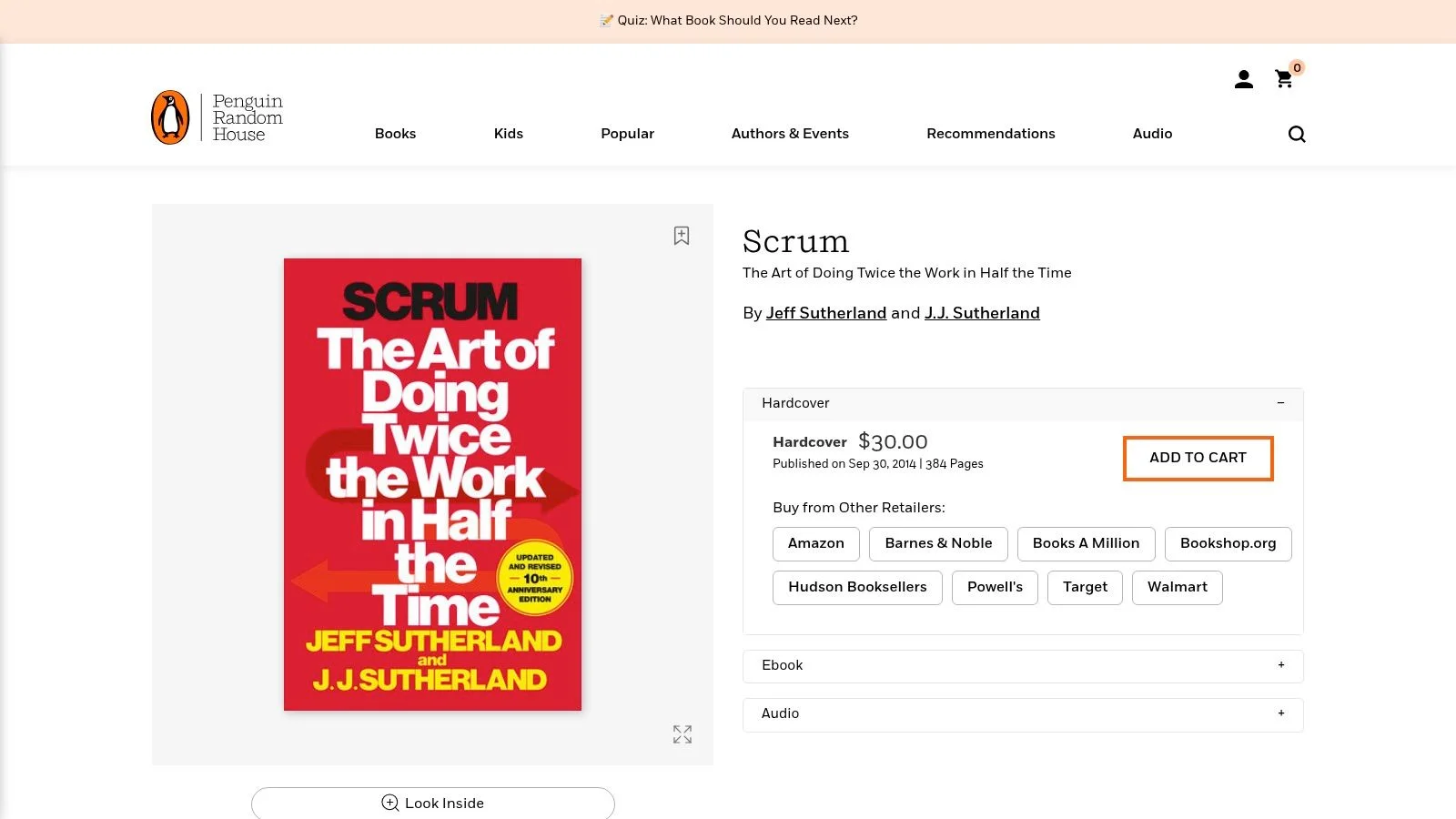
A transformation stalls in a familiar way. Leaders approve agile training, teams rename meetings, and delivery still feels slow and political. That’s the audience for Scrum by Jeff Sutherland and J.J. Sutherland. It helps people understand why old coordination habits create drag and why shorter feedback loops matter.
Its value is narrative persuasion. This is the book for executive sponsors, functional leaders, and PMs who need enough conviction to support a change effort before they are ready to read a field manual.
Best for creating momentum, not operating detail
The trade-off matters. This book makes Scrum feel accessible, which is useful when you need buy-in across finance, operations, product, and delivery leadership. It does not give a PM or Scrum Master enough guidance to run backlog refinement well, set sprint boundaries, or handle mid-sprint disruption with discipline.
That distinction matters in practice.
I have seen teams read this book, get excited, and then fall into a common trap. They adopt the ceremonies, skip the hard work of product clarity, and call the resulting confusion “agile.” The book is still useful. You just have to place it correctly in your learning system.
Use it as the motivation layer. Pair it with a more operational text for execution, then turn the lessons into active study. A good pattern is simple: read one chapter, capture three claims you agree with, write one scenario from your own team that tests those claims, then convert the weak spots into review prompts in a study tool. That’s how a persuasive business book becomes working management judgment instead of shelf decoration.
Leadership note: Give this to stakeholders who need to support Scrum behavior, not just approve Scrum vocabulary.
It also fits well into curated reading paths. For “The Agile Leader,” read this after the Agile Practice Guide to strengthen the case for iterative delivery. For “The PM rebuilding a stalled software program,” read it before a more detailed Scrum reference so the team understands the purpose of the change before debating mechanics.
My advice is straightforward. Use this book to build commitment, shared language, and urgency. Use your next book, plus spaced review and scenario-based practice, to build repeatable habits.
8. Accelerate by Nicole Forsgren, Jez Humble, and Gene Kim
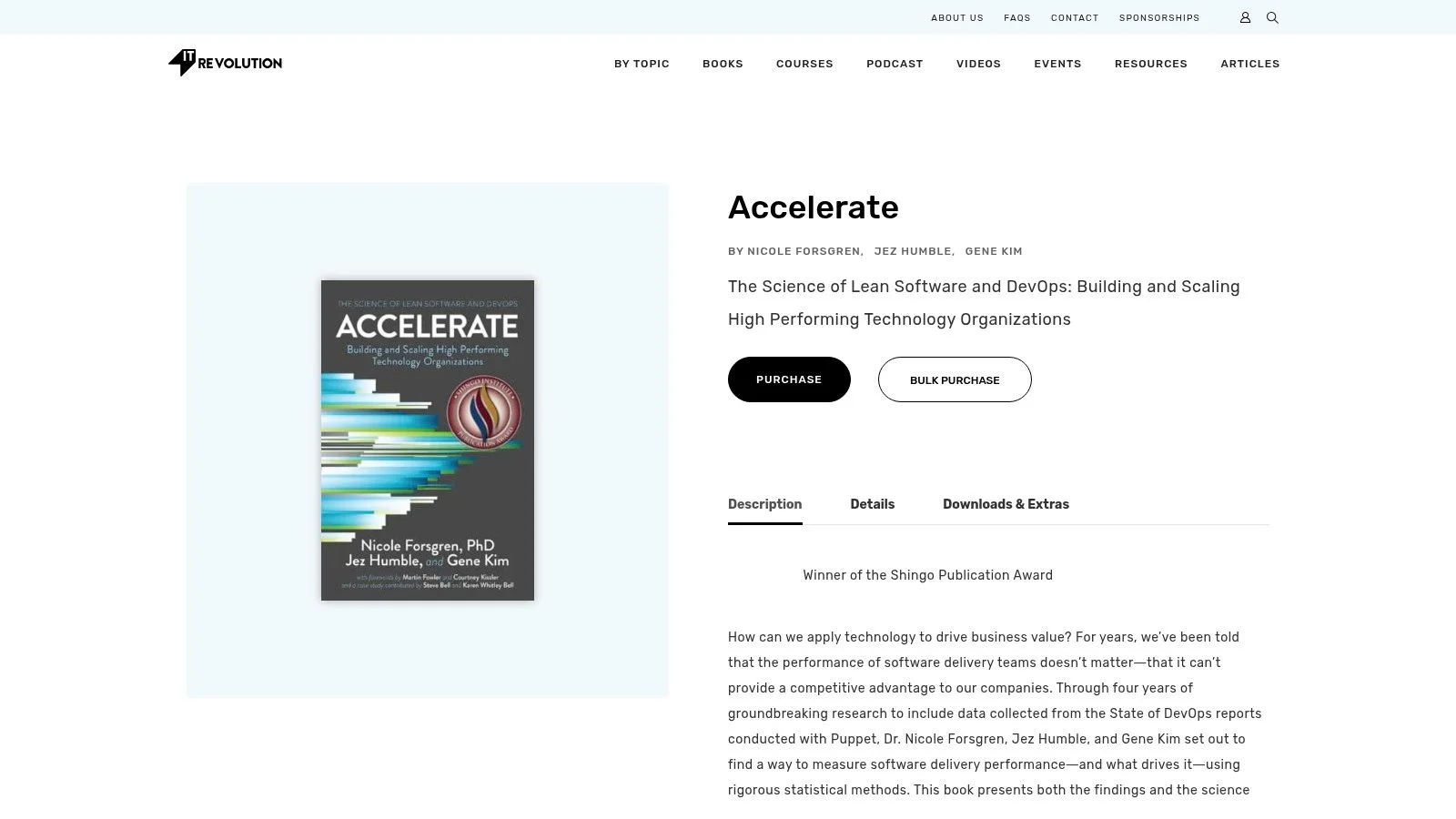
Many PM books focus on plans, status, and governance. That’s necessary, but not sufficient for technical delivery. Accelerate from IT Revolution earns its place because it shifts the conversation toward delivery capability and measurable flow.
For technical PMs and PMO leaders, this is one of the most important corrective reads on the list. It reminds you that shipping performance is not just a developer concern. It’s a business outcome shaped by systems, policy, team structure, and operational discipline.
Why PMs should read a DevOps book
If you manage software initiatives, you need to understand lead time, deployment frequency, change failure rate, and recovery speed well enough to ask better questions. Traditional project metrics can tell you whether a plan moved. They often can’t tell you whether value moves efficiently through the delivery system.
This book is especially valuable in organizations where project reporting looks healthy but releases still feel slow, brittle, or unpredictable. That gap usually means the governance layer and the engineering reality aren’t talking to each other.
- Best fit: Technical PMs, transformation leads, PMO leaders supporting engineering organizations.
- Not ideal for: Readers looking for a beginner’s general overview of project management.
- Best pairing: Combine it with PMBOK or PRINCE2 if your environment requires stronger governance language.
In a personal learning system, this book belongs in the “measurement and flow” track. Read it when you’re ready to move beyond managing commitments into understanding delivery mechanics.
9. The Phoenix Project by Gene Kim, Kevin Behr, and George Spafford
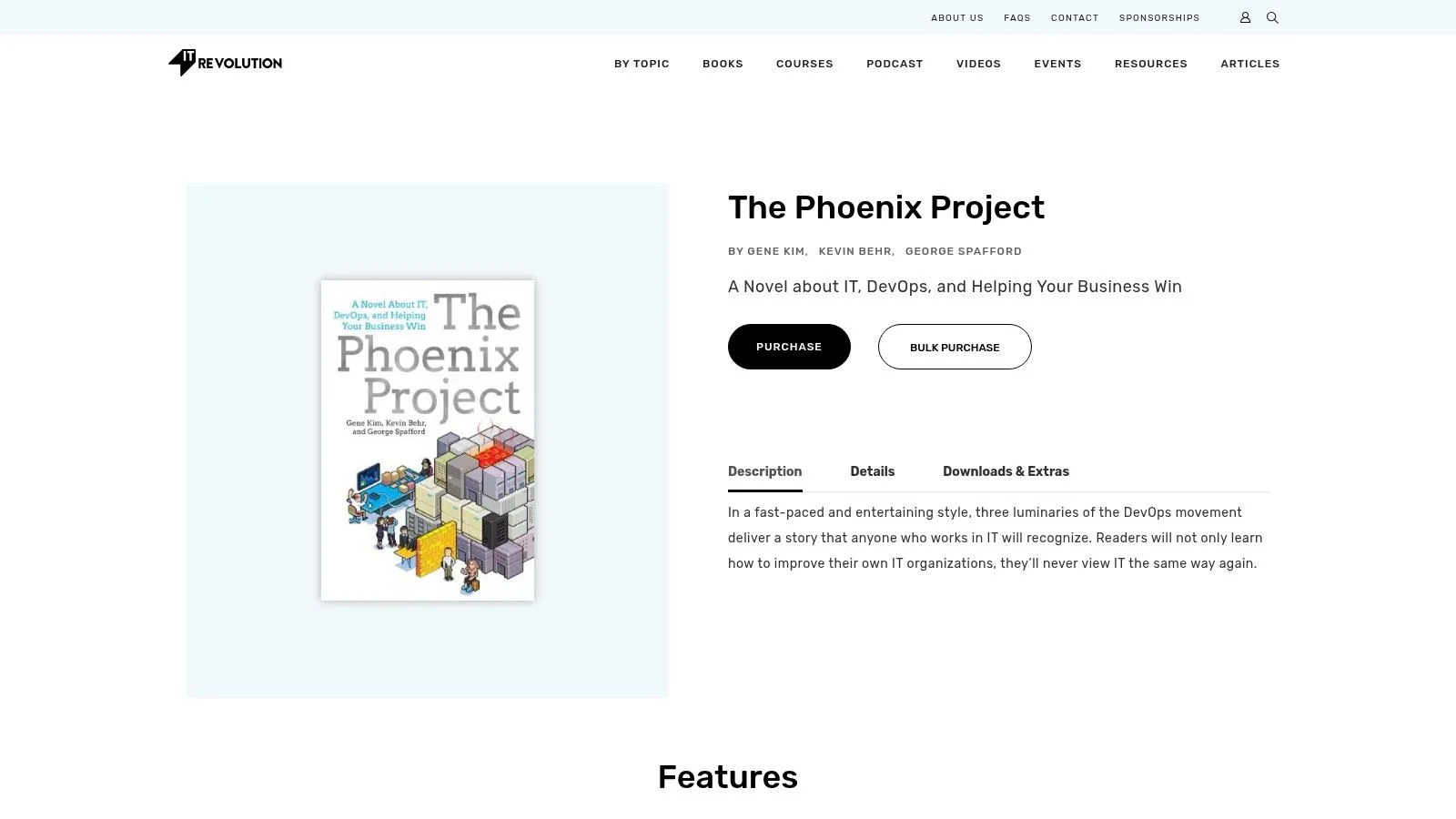
If Accelerate gives you the measurement mindset, The Phoenix Project from IT Revolution gives you organizational empathy. It teaches flow, constraints, and operational friction through a story, which makes it unusually effective for leaders and stakeholders who won’t absorb a dense methods text.
I’ve used this book as an onboarding read for people entering enterprise IT programs because it quickly surfaces the tension between urgent work, invisible dependencies, and overloaded teams. Most PMs recognize the pattern immediately.
Best for cross-functional understanding
This is not an implementation manual. It’s a narrative that helps product, project, engineering, security, and operations people see the same system from different angles. That’s extremely useful when your delivery problem isn’t a missing template but a broken relationship between functions.
The fictional format is the trade-off. Readers often finish it energized but still need a more concrete playbook afterward.
A good way to use it is in a team discussion format:
- Ask what the bottleneck is: Not who is busiest, but what constraint governs system flow.
- Ask what work type dominates: Planned feature work, unplanned interruption, compliance, or operational carryover.
- Ask what to change first: A queue, a handoff, an approval path, or release coordination.
This book won’t teach you formal governance. It will make you more aware, in the best sense. You’ll start seeing the system that sits underneath the plan.
10. PRINCE2 7 Managing Successful Projects Official Handbook by PeopleCert
Not every PM works in a culture that rewards flexible interpretation. In regulated sectors, public sector work, and client environments with strict governance expectations, structure is part of the job. That’s where the PRINCE2 7 handbook from PeopleCert becomes highly practical.
PRINCE2 is sometimes dismissed as heavyweight by people who’ve only seen bad implementations. The method itself isn’t the problem. Unadapted bureaucracy is.
Where PRINCE2 earns its keep
This book is strongest when accountability, control points, role definition, and documentation quality matter as much as delivery speed. It explains the seven principles, practices, and processes in a way that gives organizations a consistent control model.
The downside is obvious. In startup-style environments, the terminology and formality can feel excessive if nobody needs that level of control. The payoff is much higher when your employer, customer, or sector already works this way.
Good governance feels heavy only when it isn’t tailored. In regulated work, vague accountability is usually more expensive than formal structure.
If PRINCE2 is on your career path, pair the handbook with focused PRINCE2 certification exam preparation. Read the official language first, then test yourself with applied scenarios. That sequence reduces a common mistake: People memorize process names before they understand why each control exists.
Top 10 Project Management Books, Quick Comparison
| Title | Core Focus | Target Audience | Exam-Prep Fit | Key Strengths | Limitations / Notes |
|---|---|---|---|---|---|
| A Guide to the PMBOK Guide, 7th Edition (PMI) | Principles, performance domains, systems thinking, tailoring | PMP/CAPM candidates, PMOs, governance leads | High as an authoritative reference; conceptual alignment with PMP | Industry standard; vendor‑neutral baseline for governance | Conceptual (not prescriptive); few practice questions |
| Agile Practice Guide (PMI, 2017) | Agile, hybrid & lean practices; practical selection guidance | PMP candidates moving to agile; teams adopting hybrid delivery | Good as a pragmatic bridge to agile topics on the exam | Compact, practical tools and situational tips | First edition (2017); less depth than Scrum texts |
| Rita Mulcahy’s PMP Exam Prep, 11th Edition (RMC) | Intensive exam strategies, scenario practice, detailed Q&A | First‑time PMP candidates aiming to pass | Very high, focused workbook with many practice questions | Strong instructional design; exam‑focused exercises | Not a general PM reference; price/availability varies |
| The Fast Forward MBA in Project Management, 6th Ed (Verzuh) | End‑to‑end PM handbook with templates and checklists | Beginners and practitioners needing a practical desk reference | Moderate, good for concept mastery but not an exam workbook | Clear, accessible guidance; downloadable templates/forms | Not designed for PMP exam prep; agile content is introductory |
| Making Things Happen (Scott Berkun) | Pragmatic essays on planning, decision‑making, leadership | Technical PMs, software/product managers | Low for certification; high for real‑world execution skills | Readable, practical insights on the human side of projects | Software/web examples dominate; not a certification guide |
| Essential Scrum (Kenneth Rubin) | Scrum roles, artifacts, events, scaling and portfolio views | PMs, product owners, engineering leaders using Scrum | Low for PMP; high value for Scrum knowledge but not exam prep | Comprehensive Scrum reference with strong visuals | Scrum‑centric; limited Kanban/XP coverage |
| Scrum: The Art of Doing Twice the Work... (Sutherland) | Narrative case studies explaining Scrum principles and benefits | Executives, managers, stakeholders seeking buy‑in | Low, conceptual and motivational rather than procedural | Persuasive overview for leaders; accessible storytelling | Not a how‑to manual; may raise high expectations |
| Accelerate (Forsgren, Humble, Kim) | DORA metrics and research‑backed delivery performance practices | Technical PMs, PMOs, engineering leaders measuring outcomes | Moderate, valuable modern delivery insight, not classic PMP prep | Evidence‑based, measurable levers to improve delivery | Focuses on delivery performance over traditional schedule/scope tools |
| The Phoenix Project (4th Ed) (Kim, Behr, Spafford) | DevOps, flow, constraints taught via business novel | PMs needing cross‑functional influence; non‑technical leaders | Low, narrative learning; useful for context and empathy | Engaging, effective onboarding for non‑technical stakeholders | Fictional format; requires practical guides for implementation |
| PRINCE2 7: Managing Successful Projects, Official Handbook | PRINCE2 method: principles, practices, processes, tailoring | PRINCE2 Foundation/Practitioner candidates; regulated sectors | Very high for PRINCE2 exams; primary exam reference | Clear governance model; updated guidance on sustainability/digital | Heavy terminology/processes for startups; best when organization uses PRINCE2 |
Final Thoughts
The best project management books don’t all solve the same problem. That’s the first filter I’d apply before buying anything. PMBOK gives you standards language. Rita helps you prepare for an exam. Agile Practice Guide translates methods across contexts. Berkun sharpens judgment. Rubin teaches disciplined Scrum. Accelerate and The Phoenix Project teach delivery systems. PRINCE2 gives you governance where control matters.
The second filter is career goal. If you’re a PMP candidate, your reading path should be PMBOK, Rita Mulcahy, then Agile Practice Guide. Read PMBOK for structure, use Rita for exam reasoning, and use the agile guide to close the gap between textbook concepts and modern delivery reality.
If you’re becoming an agile leader, I’d start with Agile Practice Guide, then Essential Scrum, then Scrum, then either Accelerate or The Phoenix Project depending on where your gaps are. Essential Scrum helps you run the machine. Scrum helps you explain why the machine exists. Accelerate helps you measure whether the machine improves delivery. The Phoenix Project helps the rest of the organization understand why work gets stuck.
If you’re a cross-functional PM or PMO manager building stronger operational instincts, The Fast Forward MBA in Project Management and Making Things Happen are excellent companions. One gives you practical execution tools. The other helps you survive the human side of delivery, which is where many otherwise solid plans break down.
The bigger lesson is this: Reading passively won’t change your performance much. You need a personal learning system. For most professionals, that means three habits:
- Capture actively: Convert each chapter into short notes, decision rules, and scenario questions.
- Review deliberately: Revisit weak areas using spaced repetition instead of rereading favorite sections.
- Apply immediately: Tie every book insight to a current project, status report, risk discussion, or planning session.
That’s where modern study tools matter. A platform like MindMesh Academy makes books more useful because it supports adaptive learning, review discipline, and progress visibility. Instead of guessing what you know, you can see where your understanding is thin and revisit it before it fades. That’s especially valuable for certification candidates, but it’s just as helpful for experienced PMs trying to turn broad reading into faster judgment.
One practical system is generally effective. Pick one anchor book and one complementary book for a six-week cycle. For example, PMBOK plus Rita. Or Essential Scrum plus Accelerate. Read a small section each day, create a few review prompts, and test yourself at the end of the week. Keep the cycle small enough that it survives a busy workload.
Books still matter because they slow your thinking down enough to build depth. Digital tools matter because they help you retain and retrieve that depth when work gets messy. Put those together, and your reading list becomes more than professional development. It becomes an operational advantage.
If you want to turn these books into a real study system, MindMesh Academy is a strong place to do it. Its certification preparation, adaptive learning paths, spaced repetition, and progress dashboards are built for the exact problem most professionals face: not finding material, but mastering it well enough to pass the exam, lead the project, and make better decisions under pressure.

Written by
Alvin Varughese
Founder, MindMesh Academy
Alvin Varughese is the founder of MindMesh Academy and an enterprise architecture leader. An electrical engineer by training, he moved from factory automation in South Africa to cloud architecture at GE Appliances and Humana (Fortune 50), and holds 20 professional certifications including AWS Solutions Architect Professional, Azure DevOps Engineer Expert, and Microsoft Agentic AI Business Solutions Architect. He built MindMesh Academy after interviewing too many highly certified candidates who couldn't answer basic questions: the goal is prep that makes you better at the job, not just able to pass the exam.