
Azure Cloud Certification Training: Your 2026 Mastery
Azure Cloud Certification Training: Your 2026 Mastery
IT professionals often face a specific challenge when browsing Microsoft’s extensive certification catalog. You see a confusing array of codes like AZ-900, AZ-104, and AZ-305, and feel an immediate sense of fatigue. You already handle daily IT demands. You recognize that cloud computing is vital for your future. Now, you need to determine which Azure certification will actually advance your career instead of simply adding a digital badge to your LinkedIn profile.
This uncertainty is understandable. Azure includes a massive range of services, including core infrastructure, identity management, networking, data analytics, artificial intelligence, security, governance, and DevOps. Approaching these topics without a specific strategy is like reading a technical manual from cover to cover without a project in mind. However, viewing these certifications as a strategic career map makes the progression much easier to handle.
High-quality Azure cloud certification training provides that clarity. It should do more than simply list available exams. It functions as a guide, showing you exactly where to start, how to organize your study hours, and how to link your current skills to your next job title. MindMesh Academy helps you plan this path with precision, ensuring your preparation leads directly to professional growth and long-term career success.
Why Azure Cloud Certification Training Matters Now
Roles in modern IT departments change quickly. A junior systems administrator might start Monday by moving a simple file server and end the week in meetings about identity protocols, cost management, backup strategies, and network security. This rapid growth in responsibility happens frequently. Azure-based projects rarely stay confined to a single department for long.
This shifting environment is exactly why Azure cloud certification training is so important. High-quality instruction provides an extensive roadmap for a platform that covers everything from infrastructure and identity to governance and security. Without this map, you might end up studying at random. You'll collect disconnected facts but still feel lost when a real project requires you to use three or four different Azure services at the same time.
Market data backs up this need. Microsoft's financial reports consistently show Azure as a top global cloud platform (Microsoft Investor Relations). Companies want to hire people who can use cloud tools in real situations, rather than just reciting theoretical concepts. Surveys consistently show that certified workers often earn a salary premium of 8% to 15% (verify current salary benchmarks on vendor sites). The lesson is clear: certifications can lead to significant pay increases, but only if you choose the path that matches the work you want to do.
This distinction is central. Many people talk about certification as if it were a straight ladder where everyone starts at the bottom. In reality, career paths follow varied tracks. A help desk technician who wants to move into administration needs a different plan than a data analyst who wants to focus on Azure data tools. The specific name of the exam matters less than the signal it sends to employers. You want to show that you have practical skills you can apply immediately in a professional environment.
Reflection Prompt: Consider your current role. What's one cloud-related task that, if you mastered it, would significantly impact your daily work or career trajectory?
If you are still evaluating different platforms, an AWS vs Azure vs GCP comparison can show you where Azure excels. It is often the best choice for businesses that already use Microsoft software, need hybrid cloud setups, or require structured enterprise governance rules.
Why the market signal matters
Managers are not looking for people who have just memorized the manual. They want employees who can start working immediately, contribute from their first day, ask the right questions, and stop expensive mistakes like huge bills or security leaks before they happen.
Azure certification training builds this readiness:
- You connect services to job tasks: You learn how to set up virtual machines, how to use Role-Based Access Control (RBAC) for permissions, and how to create disaster recovery plans.
- You learn the operating model: You look past individual services to see the bigger picture. This includes governance, keeping costs low, and knowing which tasks are your responsibility and which belong to Microsoft.
- You build cross-team fluency: You will be able to talk to security teams about compliance, finance teams about the budget, developers about deployment, and operations teams about monitoring.
- You reduce guesswork: Your studying becomes focused on a specific job. You won't waste time on a random list of services that don't help your career.
That focus determines whether you spend your time well. Someone following a role-based path practices the same decisions they will make at work. People who study without a plan often spend weeks on topics that offer no professional return.
Azure certification works best as role preparation tied to a clear career outcome and a disciplined study methodology, not as a mere collection of disconnected trivia.
Take a practical approach by matching your certification effort to the expected payoff. If your primary goal is to understand cloud basics and build your professional vocabulary, the AZ-900 fundamentals exam can build your confidence quickly. However, if you want a promotion into cloud administration or architecture, you should look at Associate or Expert level training tracks. These paths require more hands-on work but usually offer a better return on your time. This is why looking at Azure certification paths should always start with the job you want next. Think about your current skills, the gaps in your knowledge, and your timeline for results.
Certifications structure and validate practical experience rather than replacing it. If you are changing careers, this structure makes the process less confusing. If you are already an IT professional, it turns your existing Azure knowledge into a signal that employers trust.
The exam is just a milestone. The real value is the study process itself. It prepares you to perform superior work.
Decoding the Azure Certification Paths
Microsoft’s certification portal often looks like a wall of confusing alphanumeric codes. AZ-900, AZ-104, AZ-305, and DP-100 might feel like an airport departures board when you are late for a flight. However, the logic behind these codes is simpler than it appears once you stop looking at them as a random list.
Instead of asking which exam sounds most impressive, ask which path matches the work you want to perform. Azure certifications are organized by professional responsibility levels rather than simply increasing difficulty. Microsoft divides these into four tiers: Fundamentals, Associate, Expert, and Specialty. When you view these as signals of job scope and technical ownership, the structure makes sense. Each level serves as a milestone that confirms you possess the specific skills required to solve problems at that stage of a project. This shift in perspective is helpful because it allows you to focus on the actual role requirements rather than just collecting badges.
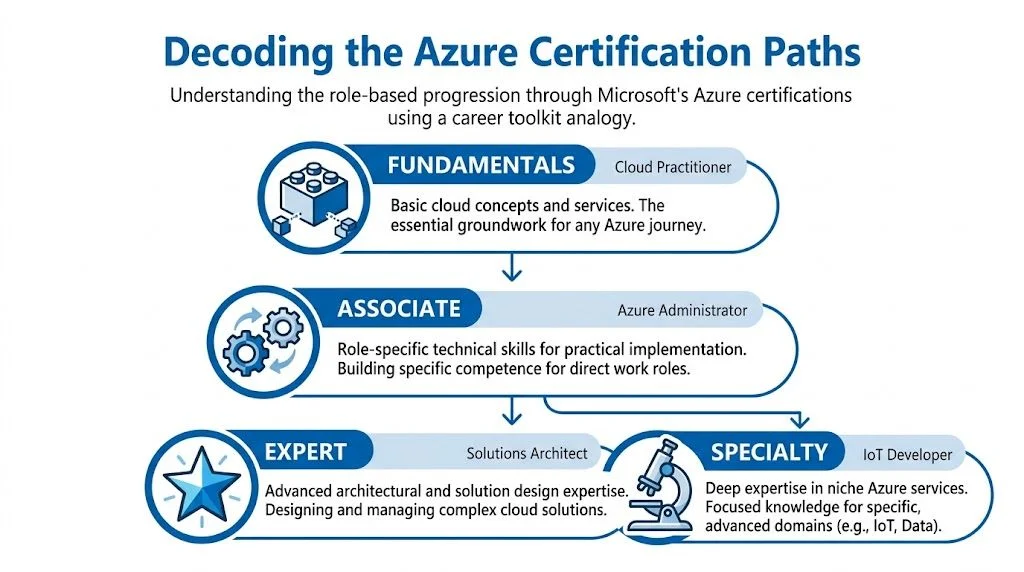 Caption: Understand the structured progression of Azure certifications, designed to align with career growth from foundational knowledge to expert-level leadership.
The four levels in plain English
Fundamentals
Fundamentals serves as the vocabulary-building stage. It resembles learning the basic grammar and essential words of a language before you attempt to write a full-length book. At this level, you learn the core ideas that define cloud computing. This includes grasping primary Azure service categories—such as compute, networking, and storage—and the different pricing models, including consumption-based billing and reserved instances.
You also cover basic security concepts and governance rules, such as Role-Based Access Control (RBAC) and Azure Policy, that keep a cloud environment organized. This tier works well if you need a clear mental map before you start configuring virtual machines or building virtual networks. It introduces the shared responsibility model, which defines what Microsoft secures and what you secure. This concept is used by AWS, Azure, and Google Cloud, making it a transferrable skill. You also learn how cloud resources differ from legacy on-premises hardware in terms of scalability and capital expenditure. These exams are often the starting point for people in sales, marketing, or management who need to speak the language of the technical team without necessarily writing code.
Examples include AZ-900 (Azure Fundamentals), AI-900 (Azure AI Fundamentals), and DP-900 (Azure Data Fundamentals).
Associate
The Associate level shifts from general ideas to specific job functions. The main question here is: "What tasks does a person in this specific role do every day?" You will perform hands-on work tied to actual job duties. This level requires you to move beyond definitions and start implementing solutions. You will be expected to manage user identities through Microsoft Entra ID, set up network configurations like peering and VPNs, deploy applications, or manage databases.
This is where you apply concepts like resource groups and virtual networks to fix real-world problems. For example, an administrator might spend their day troubleshooting a storage sync issue or adjusting autoscaling rules for a web app. A developer might spend their time integrating an app with Key Vault for secret management or configuring an Azure Function. These certifications prove that you can be trusted with the keys to the environment to perform routine maintenance and deployment tasks without constant supervision. They are the standard baseline for most cloud-focused job postings.
Examples include AZ-104 (Azure Administrator Associate), AZ-204 (Azure Developer Associate), and DP-100 (Azure Data Scientist Associate).
Expert
Expert certifications show you can handle high-level design and broad ownership of the platform. You will make high-stakes design choices, manage complex tradeoffs, and ensure systems stay online, secure, and reliable. These exams test your judgment and logic, instead of simple memorization. They are intended for professionals working in solution architecture, platform strategy, or end-to-end cloud delivery.
At this stage, you aren't just deploying a virtual machine; you are designing the entire high-availability strategy for a global application. You must account for disaster recovery through Azure Site Recovery, cost optimization across hundreds of subscriptions using Azure Advisor, and the integration of automated DevOps pipelines. It resembles mastering project management or ITIL principles, but specifically for the Azure architecture. Most Expert-level certifications require you to have already earned an Associate-level certification, ensuring you have the technical foundation before you start making architectural decisions.
Examples include AZ-305 (Azure Solutions Architect Expert) and AZ-400 (Azure DevOps Engineer Expert).
Specialty
Specialty tracks are for those who need deep knowledge in one specific area of the platform. These are for roles where employers want focused expertise instead of a broad overview. While an Associate certificate provides a general toolkit, a Specialty certificate is a precise tool for advanced networking, SAP migrations, or high-level security.
If a company is moving their entire SAP workload to Azure, they aren't looking for a generalist; they want someone who understands the specific storage requirements and latency needs of an SAP Hana database on Azure. Similarly, if a firm uses Azure Virtual Desktop to support a remote workforce of thousands, they need a specialist who understands profile management and session host scaling. These exams are often harder than Associate exams because they focus on a narrower set of services with much greater intensity. They are aimed at professionals who solve focused technical problems every day.
Examples include AZ-700 (Azure Network Engineer Associate) which functions as a specialty, AZ-500 (Azure Security Engineer Associate), and AZ-140 (Configuring and Operating Microsoft Azure Virtual Desktop).
Azure role-based certification paths at a glance
| Role | Key Certifications | Focus Area | Ideal For |
|---|---|---|---|
| Cloud Beginner or Career Changer | AZ-900, AI-900, DP-900 | Core cloud concepts, Azure services, pricing, security basics | People new to Azure, non-technical staff, and IT support seeking foundational knowledge. |
| Azure Administrator | AZ-104 | Resource management, compute, networking, governance, identity, storage | Sysadmins, help desk staff, and operations engineers moving to cloud. |
| Azure Developer | AZ-204 | Building, deploying, and maintaining Azure applications and services | Software developers and cloud engineers focused on app code and APIs. |
| Data Professional | DP-100, DP-900, DP-300 | Data storage, processing, analytics, and machine learning | Data analysts, database admins, and aspiring ML engineers. |
| Solutions Architect | AZ-305 | Designing Azure solutions, cost optimization, security architecture | Senior engineers, technical leads, and enterprise architects. |
| DevOps Professional | AZ-400 | Delivery pipelines, automation, infrastructure as code, collaboration | DevOps engineers, release managers, and automation specialists. |
| Specialized Azure Practitioner | Specialty certifications (e.g., AZ-700, AZ-500) | Niche areas like networking, security, or virtual desktops | Security architects and network engineers solving focused problems. |
How to choose a path by role, not by hype
A certification path is similar to a road map. A Fundamentals cert helps you read the map. An Associate cert helps you drive to a specific destination. Expert and Specialty certs give you the tools to fix the engine or navigate dangerous terrain. If you pick a path that doesn't match your current skills or your career goals, you will work harder for a smaller payoff.
Start by picking the job you want. Then, match the certification level to that role's responsibility. Finally, choose study methods that fit that level. If you are taking a Fundamentals exam, focus on concepts and comparing services. If you are aiming for Associate, use hands-on labs and troubleshooting. For Expert exams, focus on design reasoning and architectural tradeoffs rather than the title of the test.
For example, if you want to become a Cloud Architect, do not jump into AZ-305 immediately. You need the hands-on experience of AZ-104 first. This prevents a gap between what you know for an exam and what you can actually do in a production environment. Employers in 2026 prioritize candidates who can demonstrate that their certifications represent actual skill, instead of a mere exam result. Use the certification level as a clue about the kind of learning you need.
For a broader visual guide to sequencing your certifications, this Azure Certification Roadmap offers a useful second opinion to complement Microsoft’s official role-based model.
If you prefer a role-oriented overview that categorizes options by entry, growth, and specialization, our guide to Azure certification paths serves as a practical companion.
Pick the certification that directly correlates with the decisions you aspire to make on the job. That is where the genuine return on your study time truly materializes.
Choosing Your Ideal Starting Point
You have decided to pursue an Azure certification. After a long workday, you sit down, open the Microsoft certification portal, and face the first significant decision in your technical growth. Do you begin with AZ-900 to build a conceptual map of the cloud, or do you move directly into AZ-104 to focus on the practical implementation of resources?
This choice dictates the efficiency of your study time. Starting at a level too high can make every technical topic feel disconnected and difficult to retain. Conversely, starting too low might lead to weeks spent reviewing material you already use in your daily professional life. The primary question is not which exam currently holds more popularity in the industry. Instead, you should ask which exam aligns with the technical decisions you need to make in your career.
Most learners choose between AZ-900 (Azure Fundamentals) and AZ-104 (Azure Administrator Associate) as their entry point into the Microsoft cloud environment.
When AZ-900 is the smart move
AZ-900 is an effective choice if you need to establish a conceptual framework before you attempt to learn hands-on configuration skills. Microsoft lists this as a fundamentals exam, and it requires no prior certifications. This distinction is vital for long-term success. Cloud knowledge functions like a physical building; you must secure the ground floor before you can add additional levels.
If terms such as resource groups, shared responsibility, or consumption-based pricing feel foreign, jumping into a role-based administrator exam can lead to frustration. You might find yourself memorizing button clicks in the portal without grasping the underlying logic of the system. If you try to manage a virtual machine without understanding regions, availability zones, or security groups, your administrative actions will feel disjointed. AZ-900 provides the context needed to understand why specific configurations matter.
AZ-900 is typically a strong first step for:
- Career changers who are transitioning from non-technical roles, such as project managers who must oversee cloud budgets or sales professionals who need to explain the value of cloud migration to clients.
- IT support professionals who have a general technical background but lack direct experience with cloud-native environments and services.
- Managers, consultants, and sales professionals who need cloud fluency to communicate with technical teams and make strategic decisions regarding organizational infrastructure.
- Students and early-career technologists who are building their very first technical foundation in a cloud-first environment.
If this describes your background, we recommend starting with the AZ-900 Microsoft Azure Fundamentals study guide from MindMesh Academy. You can use it to build a mental model of how Microsoft services interact. Once you understand the basics of identity, governance, and privacy, you can decide whether administration, security, or data architecture offers the best career return for your next move.
A quick visual overview can help if you are still deciding if the fundamentals exam matches your current skill level.
*Caption: Watch a concise overview of the AZ-900 Azure Fundamentals exam to gauge its scope and determine if it's the right starting point for your cloud journey.*Reflection Prompt: Have you encountered a situation where a lack of foundational cloud knowledge hindered a technical conversation? How might the concepts in AZ-900 have changed that outcome?
When AZ-104 makes more sense
AZ-104 is a more appropriate starting point if you already have a background in infrastructure management, whether on-premises or using other cloud platforms. It targets the practical integration of Azure into a daily operational skill set.
Microsoft designs AZ-104 as an administrator exam. It focuses on the management of Azure identities, governance policies, storage solutions, and compute resources like virtual machines or containers. The exam also covers the creation and maintenance of virtual networks. This scope shows that the certification is not just a sign of cloud awareness. It provides specific training for professionals who must configure resources, enforce policies, and monitor the health of cloud services. An experienced system administrator moving from VMware to Azure virtual machines will find this level of detail necessary. Similarly, a help desk engineer troubleshooting Azure Active Directory issues needs the operational depth found in this syllabus.
The difference between AZ-900 and AZ-104 is practical. An AZ-900 student might ask what Azure Policy is. An AZ-104 student asks how to apply Azure Policy across twenty different subscriptions to ensure the organization remains compliant. One question focuses on vocabulary, while the other requires operational judgment.
AZ-104 is often the logical next step for:
- System administrators who are moving from traditional data center environments to cloud-native operations and need to translate their existing skills to the Microsoft portal.
- Help desk or support engineers who want to advance into cloud operations and take on hands-on responsibilities for resource deployment and maintenance.
- Network or server professionals who already manage production systems and need Azure-specific skills to extend their current technical expertise.
- Early cloud practitioners who have experience with AWS or Google Cloud and want to build specific administration capabilities within the Microsoft environment.
You should also consider your final goal. If you need a credential for a resume to show you understand cloud basics, AZ-900 is sufficient. If you want to qualify for a role that requires you to log in and manage production environments, AZ-104 establishes a direct connection between your study time and job market requirements.
Reflection Prompt: If you are currently an IT professional, list three tasks you perform daily. Does the AZ-104 curriculum cover the cloud equivalent of those specific tasks?
A simple decision test
Use the following table to guide your choice before you commit to a study plan.
| If this describes your situation | Better starting point |
|---|---|
| “I need cloud fundamentals before Azure concepts start to connect, or I am completely new to the IT field.” | AZ-900 |
| “I already manage servers, networks, or users and want Azure-specific skills for a hands-on role.” | AZ-104 |
| “I can discuss technical systems, but I have not personally configured Azure resources or managed a cloud environment.” | Usually AZ-900 first |
| “I work in a cloud operations role for another provider and want to transition my skills to Azure administration.” | AZ-104 |
A useful rule of thumb is this: if terms like Availability Sets, Virtual Machine Scale Sets, Role-Based Access Control (RBAC), or Azure Policy feel abstract or unfamiliar, start with AZ-900. Those concepts are the building blocks for everything that follows. If those terms describe work you already do, or if you have managed similar concepts in AWS or Google Cloud, AZ-104 is the more efficient path.
There is no extra credit for choosing a more difficult exam first. The most effective move is to pick the path that matches your current skill set and your target job role. You want a tangible return on the hours you invest in your professional development. If you start with a solid foundation, the more advanced certifications will be easier to master later. Focus on building a clear understanding of the platform before you attempt to manage high-stakes production environments. This method ensures you pass with confidence and gain skills you can actually use in an interview or on the job. Regardless of the path you choose, the goal is to build a consistent habit of learning that allows you to keep pace with the updates Microsoft releases for the Azure platform.
Final word: if you are unsure, spend two days looking at the AZ-900 material. If it feels like a review of things you already know, move immediately to AZ-104. If you find new information in every chapter, stay with AZ-900 until you have mastered the basics. This small investment of time can prevent you from feeling overwhelmed later in your study process.
Mastering the Material with Proven Study Techniques
Many intelligent, capable individuals fail Azure certification exams for a simple, avoidable reason: they approach studying as if the goal is recognizing terms rather than understanding and applying concepts. Recognition is a passive skill that fails when you face a scenario-based question requiring a specific architectural decision.
Cloud certification requires a different mental model. Azure exams reward functional knowledge. You must identify what a service does, determine when to use it over a competing service, and understand how its suitability changes when technical constraints or budget requirements shift. It is the difference between knowing that an "Azure Virtual Network" exists and being able to design a secure network for a multi-tier application that spans across different regions. If you cannot explain the "why" behind a configuration, you have not reached the depth required for the current exam standards.
Use spaced repetition for cloud vocabulary
Learning the cloud creates a heavy memory load. You will encounter dozens of different services, governance rules, networking protocols, identity models, and pricing tiers in a short window of time. If you resort to cramming, you might retain enough information to feel confident for a afternoon, but you will likely find that the information has vanished by the time you sit for the actual test.
Spaced repetition is a cognitive method that addresses this by revisiting key ideas over increasing intervals. This helps move information from short-term memory into long-term storage. This process is similar to how professionals study technical terms for a PMP exam or specific ITIL processes. By spacing out your reviews, you force your brain to work harder to recall the information, which strengthens the mental connection.
A practical way to implement spaced repetition for Azure:
- Day 1: Actively learn a new concept, such as Azure Resource Groups, Virtual Networks, or Role-Based Access Control (RBAC) roles. Focus on why these tools exist.
- Day 2: Review the concept from memory without looking at your notes. Try to explain the technical requirements for that service out loud.
- Later that week (e.g., Day 4-5): Test yourself using a flashcard or a short self-quiz. Focus on the limitations of the service rather than just the benefits.
- Next week: Revisit the concept by looking at a practical example or a quick lab. If you studied storage, try to remember the difference between Hot, Cool, and Archive tiers.
- Subsequent review cycles: Connect the concept to more complex questions. For example, how does an Azure Policy impact the deployment of the Virtual Network you studied in week one?
Azure concepts are interconnected. If you do not retain the basics of identity and networking, advanced topics like security architecture or DevOps automation will feel like a collection of random facts.
Reflection Prompt: Pick an Azure service you recently studied. How could you apply spaced repetition to ensure you remember its core function, key benefits, and common use cases in a month?
Turn every topic into a hands-on action
Reading about Azure services is a good start, but it is never enough. Azure is an operational platform designed for builders. It demands that you interact with the tools to understand their behavior.
If you are studying Azure Virtual Machines, do not stop at the documentation. Deploy a machine, configure its network interface, and try to connect to it using a private IP address. If you are learning about storage accounts, explore the differences between blob, file, queue, and table storage. Upload a file and try to change its access tier in the portal to see which options are available. If the topic is governance, create a policy definition that restricts the size of virtual machines, assign it to a resource group, and then try to deploy an oversized machine to see the error message. These tangible experiences create a mental map that a textbook cannot provide.
Try this four-step pattern for every major topic:
- Read the concept using an official Microsoft Learn module or a detailed training guide. Avoid skimming the technical specifications.
- Explain it aloud using simple language. Imagine you are explaining the service to a colleague who has never used the cloud. If you stumble over the explanation, you do not understand the topic well enough yet.
- Touch the service by following a guided lab or using the Azure portal directly. You can also use the Azure CLI or PowerShell to perform the same task. For example, set up an Azure Virtual Network peering and then verify that traffic can pass between the networks.
- Write one scenario where you would definitely choose this service and one where you would choose something else. For instance, why would you use an Azure SQL Database instead of a SQL Server running on a Virtual Machine?
This final step is vital. It moves you from simple recall to the exercise of professional judgment. In an exam environment, most questions test your ability to choose the "best" or "most cost-effective" option, not just a "working" option.
If you can explain why a team would choose one service over another, such as Azure SQL Database versus Azure Cosmos DB, you are studying at the correct depth for the exam.
Use practice exams as diagnostics, not scoreboards
Practice questions are useful tools for identifying gaps in your knowledge, but only if you use them correctly. Do not treat a practice exam as a final score or a reflection of your intelligence.
Resist the urge to look at your percentage and move on. Instead, use these questions to find exactly where your understanding breaks down. You might find that your knowledge of Azure Compute is strong, but governance questions reveal confusion regarding Azure Policy or Blueprints. You might understand networking terms in isolation but struggle to see how they interact in a complex scenario, which is a common challenge when preparing for a technical exam like the AWS Solutions Architect exam.
A reliable review cycle follows these steps:
- First pass: Take a timed practice set under simulated exam conditions. Do not look up answers while the clock is running.
- Error review: Look at every question you got wrong. Do not just look at the correct answer; look at the "distractor" answers and explain why they were incorrect in that specific context.
- Repair work: Dedicate study time specifically to your weak topics. Revisit the documentation and perform a targeted lab to clear up the confusion.
- Second pass: Retest yourself after a few days. Do not retest immediately, or you will simply be memorizing the answers to the practice questions rather than learning the material.
- Final pass: Perform a full simulation of the exam closer to your test date. This helps you build the mental endurance needed for a two-hour technical exam.
Build a study system, not a heroic week
Consistency is more effective than intensity. A calm, predictable routine will lead to better results than a panicked weekend of cramming before the test. Short, focused sessions allow your brain to process complex cloud concepts in layers.
A reliable weekly schedule for Azure preparation includes:
- One Concept Session: Spend this time learning new material and reading the technical requirements for new services.
- One Review Session: Use your flashcards and spaced repetition tools to keep older topics fresh in your mind.
- One Hands-on Session: Work in the Azure portal or a lab environment to apply what you have learned to a real configuration.
- One Question Session: Take a small batch of practice questions to see how the concepts you studied this week are tested in a scenario format.
- One Short Reflection: Spend fifteen minutes at the end of the week identifying what still feels confusing. This becomes your priority list for the next week.
Following a structured system like this ensures that you are making steady progress toward mastery. It prevents the burnout that often comes from trying to learn the entire Azure environment in a single sitting. By focusing on a sustainable rhythm, you allow your technical knowledge to become a permanent part of your professional skillset.
Crafting Your Personalized Study Timeline and Budget
It happens often: you select an ambitious target exam date, buy three online courses during a single weekend, and commit to studying every evening after work. Then, within two weeks, your carefully arranged schedule starts to break down. This failure usually does not stem from a lack of willpower. Instead, it happens because the plan was built on a burst of initial excitement rather than a realistic look at your calendar and energy levels.
Effective preparation works like a flight plan. You must identify your destination, check your fuel (your actual energy and focus), account for storms like family emergencies or work overtime, and leave room to adjust your course along the way. Your Azure study process becomes manageable and predictable when you use this structured approach.
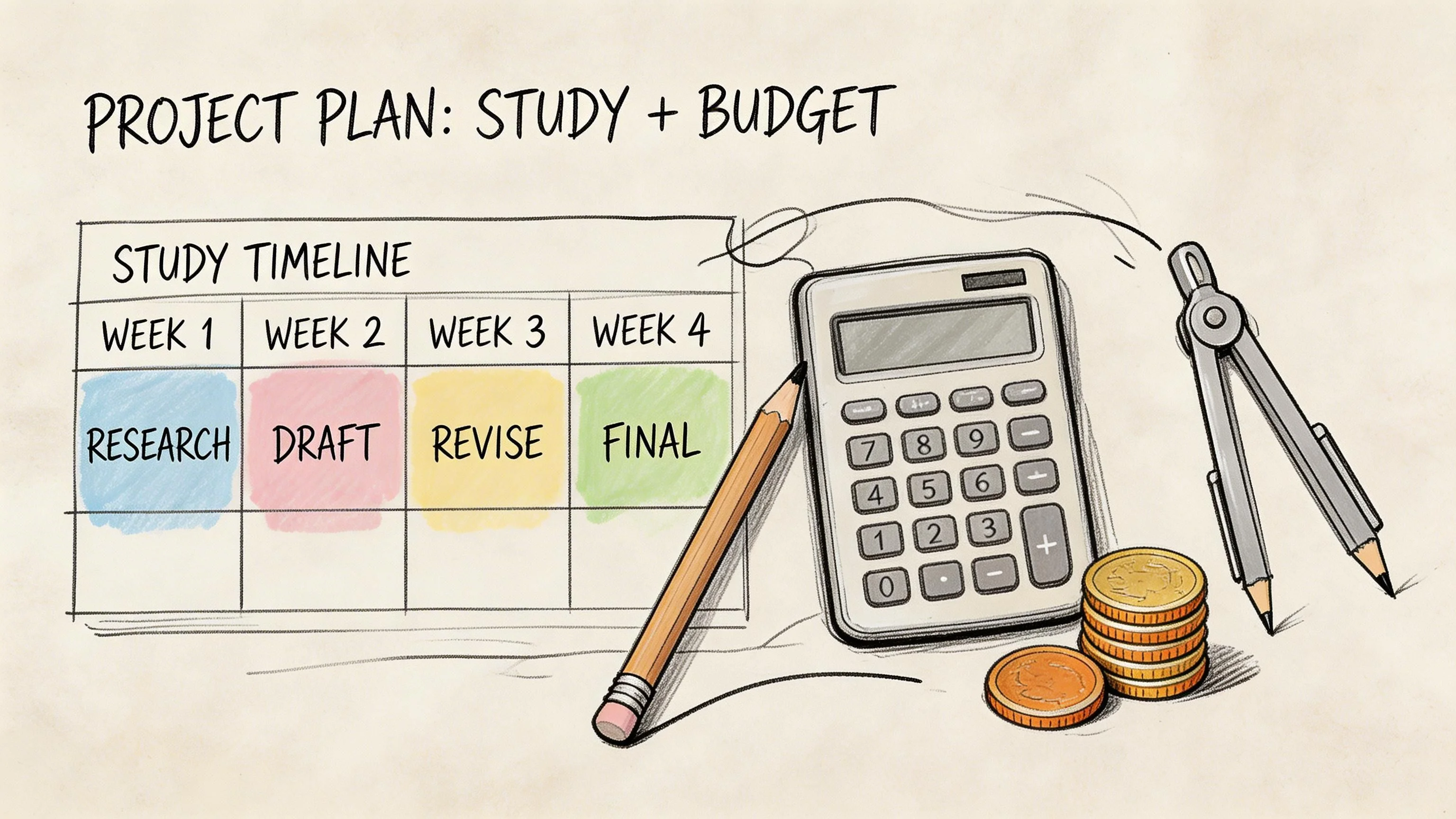 Caption: Strategically plan your Azure certification journey by aligning your study timeline and budget with your career goals, treating it like a well-managed project.
Start with the costs you can know
Identify the fixed expenses first to clear up the confusion and guesswork. Microsoft Fundamentals exams, such as the AZ-900, typically cost $99 USD (verify current pricing on the vendor site). Associate and Expert-level exams, such as the AZ-104 Administrator or the AZ-305 Solutions Architect, are generally priced at $165 USD (verify current pricing on the vendor site). One significant advantage of the Microsoft ecosystem is that certifications are renewed every year for free through Microsoft Learn. This system encourages you to keep your skills current without paying for the same exam repeatedly.
These figures are useful for more than just simple budgeting; they help you weigh your financial investment against your career reward. A $99 investment in a fundamentals badge is a fast way to get recognized if you are transitioning into technology or need to speak the language of the cloud. An associate-level exam costs more and requires more study hours, but it signals to employers that you have the hands-on technical skills required for production environments.
Beyond the exam fee, you must account for the costs you can control:
- Exam fee for your chosen certification, including the cost of a retake voucher if you prefer that safety net.
- Primary study resource, which usually starts with official Microsoft Learn documentation and is often paired with one paid structured course or a cloud lab subscription.
- Optional practice tools, which you should only buy if you find a specific gap in your knowledge, such as a set of practice questions focused on networking or security.
- Time, which is the most expensive part of your budget and the most limited.
Many people underestimate the value of their time. Losing money on a course you never finish is annoying, but losing two months to a study plan that was never going to work with your job and family life is a much larger setback.
Match your timeline to the exam's job value
Many study guides only group exams by how hard they are. A more effective strategy is to ask: what specific job outcome am I working toward during this study block?
If you are looking for an entry-level support role or a junior administrative position, a shorter timeline for a fundamentals or entry-level associate path, like the AZ-900 or AZ-104, provides a faster return on your investment. However, if your daily work already involves using Azure for security, data engineering, or software development, you should plan for a longer study period. An advanced exam like the AZ-400 (DevOps Engineer Expert) or AZ-305 (Solutions Architect Expert) will be a better use of your time because it matches your current responsibilities and helps you move into senior roles.
This approach helps you build career momentum rather than just collecting digital badges.
A simple planning model looks like this:
| Certification Level | Best Planning Focus | Typical Study Duration (Highly Variable) |
|---|---|---|
| Fundamentals | Short study window, steady concept review, fast exam turnaround | 2-4 weeks |
| Associate | Medium timeline, intensive hands-on practice, scenario-based review | 4-8 weeks |
| Expert | Longer runway, deep architecture judgment, broader revision cycles | 8-16 weeks |
Build backward from your real calendar
The most effective strategy is to pick your target exam month first and then map your tasks backward in four distinct phases. This ensures you are not rushing through complex topics during the final week.
-
Foundation Phase (Discovery & Gaps):
- Review the official skills outline provided by Microsoft.
- Identify which topics are completely new and which ones you already understand from your job.
- Example: For the AZ-104, you might find that you understand Virtual Machines but need a week to learn how Entra ID (formerly Azure Active Directory) handles identities and groups.
-
Practice Phase (Application & Hands-on):
- Spend your time inside the Azure portal or using the Command Line Interface (CLI).
- Build resources, break them, and then learn how to fix them.
- Example: Do not just read about virtual networks; actually configure subnets, set up peering between two networks, and implement Network Security Groups (NSGs) to control traffic.
-
Gap-Closing Phase (Reinforcement & Refinement):
- Go back to the areas where you struggled during your labs.
- Turn your notes into quick review prompts or short summaries that you can look at during your lunch break.
- Example: If you still cannot remember the difference between Blob, File, and Disk storage, run three specific labs that use each storage type for different scenarios.
-
Exam-Readiness Phase (Simulation & Rest):
- Stop trying to learn new concepts and start practicing how to take the test.
- Take practice exams to see if you can handle the time pressure and the way Microsoft phrases its questions.
- Example: Take a full-length practice test and specifically review why you got the scenario-based questions wrong. Ensure you get enough sleep in the three nights leading up to the exam.
Each person must customize these phases. Someone coming from a non-technical background might need more time in the foundation phase to learn how the cloud differs from traditional servers. A person who has been a developer for five years might skip parts of the practice phase for compute services but need extra time on networking and cost management. To get a better estimate of where you should start, Mindmesh Academy can help you look at different certification paths and find the one that matches your current skills and your future career goals.
Leave margin in both your budget and your schedule
Cloud technology does not always make sense on the first try. You might understand one module in twenty minutes, but then hit a wall with the next topic that requires three days of reading and several lab sessions before you truly grasp it.
You must plan for this inconsistency.
Add a small time buffer to your weekly schedule. If you have a plan that spans three months, include at least one "catch-up week" where no new material is assigned. This week is for reviewing difficult topics or resting so you do not burn out. Also, wait to buy extra practice tests or books until you know exactly what you need. If you understand the theory but struggle with the exam format, buy a question bank. If the technology feels too abstract, pay for a dedicated lab environment instead of another video series.
The best study plan is not the one that looks the most impressive on paper. It is the one you can actually follow on a tired Tuesday evening after a long day of work without needing to be a hero. Be well-prepared by being realistic about your time and your budget.
How Mindmesh Academy Accelerates Your Certification Journey
You have just finished a long day at work. You open your Azure study plan, but you quickly hit a familiar wall. One online course feels too elementary, covering basic concepts you already mastered years ago. Another course assumes you already understand complex cloud architecture that you haven't even touched yet. A third resource provides forty hours of video content but gives no clear signal on where to start or what to prioritize for the current exam.
This situation is the primary bottleneck for most people pursuing Azure certifications. The problem rarely stems from a lack of effort. Instead, it is a problem of decision fatigue and a lack of specific, individual guidance.
A help desk technician aiming for the Azure Administrator (AZ-104) requires a different study trajectory than a senior developer preparing for a cloud architecture role. A professional with years of experience in AWS likely understands core cloud patterns, such as the shared responsibility model or immutable infrastructure, but they might still struggle with Azure-specific identity management, naming conventions, and governance structures. If all these individuals follow the same generic study path, they will inevitably spend hours on material they already know or topics that do not align with their career goals.
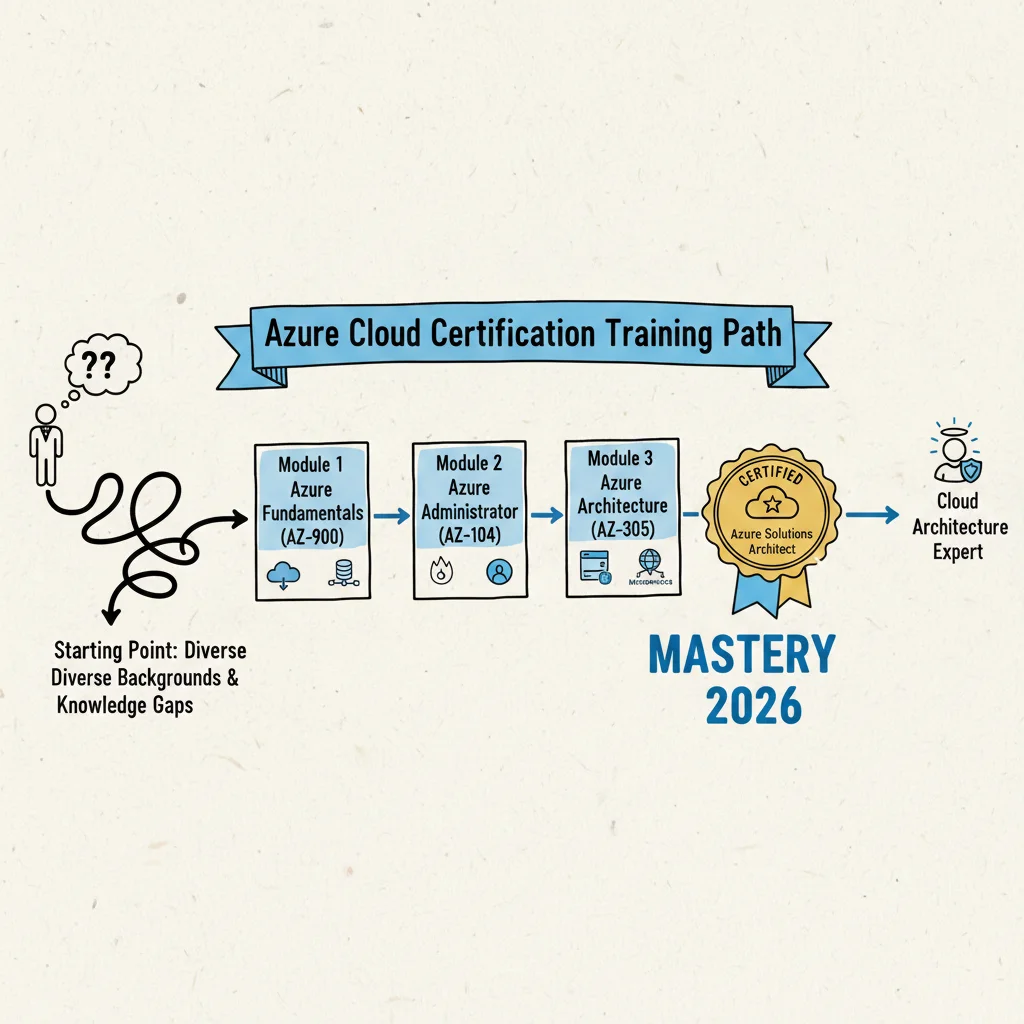 Caption: MindMesh Academy transforms meandering study paths into direct, efficient routes to certification by leveraging adaptive learning and focused content, helping you master complex topics faster.
Personalization changes the economics of studying
Certification preparation is like a long-distance drive with a specific amount of fuel. If your route includes unnecessary loops or wrong turns, you will run out of time and energy before you reach your destination. You are still spending your resources, but you aren't getting closer to the goal.
A personalized study system improves your return on investment (ROI) because it forces your effort to match your specific needs. Rather than treating Azure training as a static, one-size-fits-all ladder, a personalized system uses diagnostic questions to build a better plan. It identifies your target role, recognizes your existing technical background, and highlights the weak areas that will most likely cause you to fail the exam or struggle in a real-world production environment.
This adaptive approach defines the practical value of Mindmesh Academy. The platform focuses on certification preparation across the Azure ecosystem by using adaptive learning paths and built-in spaced repetition algorithms. These tools track your progress at a granular level, allowing you to focus on the specific knowledge gaps that matter for your career. This ensures that your study time is spent on high-impact topics rather than redundant reviews of things you already understand.
Good study methods need a system around them
Effective study techniques like active recall, spaced repetition, and hands-on labs are proven to help the human brain retain technical information. These methods work because they force you to retrieve information rather than just reading it passively. However, these techniques are difficult to maintain without a structured system.
If your digital flashcards are in one app, your notes are in another, and your lab instructions are scattered across different browser tabs, your study process becomes a project management task. You spend more time organizing your materials than you do learning the technical content. This friction often leads to burnout. Even motivated learners lose focus when the system requires them to manually track every exam objective in a spreadsheet.
A platform designed for certification prep reduces this friction by integrating the various parts of the learning process into one environment. This integration offers several practical advantages:
- Adaptive paths adjust your upcoming lessons based on your quiz performance, ensuring you don't stay on easy topics for too long.
- Review prompts use algorithms to bring back difficult material just as you are about to forget it, which strengthens long-term memory.
- Topic-level tracking shows exactly how well you understand specific domains, such as virtual networking or Entra ID governance.
- Exam resources align directly with official certification objectives so that no part of the exam syllabus is missed or overlooked.
This structure provides a concrete benefit: it shortens the gap between studying a concept and knowing how to apply it. A useful study platform does not just provide videos; it helps you make better choices about how to spend your next thirty minutes of study time.
Progress visibility improves judgment
Many people decide they are ready for an exam based on how they feel that day. This is a risky approach because your mood and your actual technical proficiency are often unrelated.
A single successful lab might give you a false sense of security. On the other hand, a few missed questions on a practice exam might make you feel like you aren't making any progress at all. Neither of these moments provides a full picture of your skills. You need objective, visible data to understand your growth. You need to see which domains are improving and which ones collapse when the questions become scenario-based.
Intuitive dashboards and diagnostic signals are helpful because they turn vague feelings into data you can use. If you see that your scores in "Storage Account Security" are consistently low while your "Compute" scores are high, you know exactly where to focus your weekend study session. This level of clarity prevents you from wasting time on your strengths while ignoring your weaknesses.
This visibility also helps teams and managers. When a company invests in training for its staff, simple completion certificates do not tell the whole story. Managers need to see if their engineers are building the specific skills needed for upcoming projects, such as network design or cost management. Clear progress tracking makes these professional development conversations more accurate and grounded in data.
A better framework for evaluating training value
Most guides for Azure training focus on how many hours of video a course provides. A more useful way to evaluate a course is to ask if it helps you make smarter decisions. If a course saves you twenty hours of unnecessary study, it is far more valuable than a course that provides a hundred hours of content you don't need.
For an individual, training value appears in four specific areas:
- Minimized time waste on topics you have already mastered through work experience or previous certifications.
- Direct movement toward the correct exam for your career goals, avoiding "certification soup" where you take exams that don't help your resume.
- Better resource selection by using a system that identifies which practice questions and labs are most relevant to the current exam version.
- Effective knowledge transfer that allows you to take what you learned for the exam and apply it to an actual Azure environment the next day.
For a team, the value comes from efficiency and role alignment. An operations engineer should not spend the same amount of time on web app deployment as a developer. A junior admin and a senior architect require different pacing and different depths of technical detail. Training is most effective when it adapts to these differences rather than forcing everyone into the same mold.
This diagnostic, personalized approach to Azure training does more than just prepare you for a test. It gives you a framework to manage your career growth. By choosing a path that makes sense for your budget and your professional goals, you can master the Azure platform without the typical frustration of generic, unorganized study plans. The goal is to move from "studying for a test" to "building a career" with the highest level of efficiency possible.
Your Next Steps From Certified Professional to Cloud Leader
You have passed the exam, updated your professional profile, and taken a moment to celebrate. Then Monday arrives. A colleague asks if a new workload belongs on an Azure SQL Managed Instance or a standard VM. Another asks why cloud costs spiked by several thousand dollars last month. This is when your certification starts to matter in a significant way. The badge proves you have studied the map. Real leadership begins when you use that map in live, high-pressure environments where technical constraints and financial consequences are real.
A smart move is to view your certification as the first specialized tool in a growing kit, not the entire kit. Ask where you want that tool to take you. Do you want to be the engineer who defines governance for a global enterprise? Do you want to be the architect who translates complex service choices into clear options for the executive board? These questions shift your focus from collecting digital badges to building a career with clear intent and measurable impact.
Turn certification into visible contribution
The fastest way to grow after earning a certificate is to link your new knowledge to active work. You could drive the improvement of Azure tagging standards across your company subscriptions. You might thoroughly document a high-availability deployment runbook or audit identity settings to improve security. Even small tasks, like helping a team choose between Azure Functions and Logic Apps, build your reputation.
Cloud leadership usually starts with these small wins. A junior professional who removes technical friction and explains the logic behind a configuration is already doing leadership work. The formal job title often follows later, acting as a late acknowledgment of the influence you have already built.
This is where the decision-making framework you studied really counts. If you want to be a cloud administrator, focus on operational speed and clean execution. If you want to move toward architecture, spend more time comparing different options. Look at the tradeoffs between cost, speed, and resilience. Do not try to study everything at once. Strategically study the specific topics that change your daily results. For example, if your company struggles with costs, become the person who understands Azure Advisor and Reserved Instances better than anyone else.
Use renewal as a checkpoint, not a chore
Azure certifications expire. Microsoft requires you to renew them through their online platform on a regular cycle. This is an advantage if you treat it as a milestone rather than a task to finish as quickly as possible. Use it as a scheduled review of your actual growth. Think about what you did with Azure since your last exam. Which parts of the technical documentation still feel confusing? Where are you making independent decisions, and where are you still guessing?
This habit separates those who just memorize facts from those who grow professionally. It keeps your learning tied to your actual job performance. A simple reflection loop can help guide this process every few months:
- What Azure-related decisions did I influence or make during this quarter?
- Which specific Azure service or feature was most useful to my team recently?
- Where did a lack of knowledge prevent me from contributing to a larger project?
The answers to these questions provide a better plan for your next certification or project than any generic career ladder. If you found yourself unable to explain how a Virtual WAN works during a meeting, that is your signal to prioritize networking in your next study block.
Leadership is part technical, part translational
Highly effective cloud leaders do more than click buttons in the Azure Portal. They explain why technical choices matter to the business. You must be able to explain why a specific Azure Policy is necessary before a security breach happens. You need to translate jargon about latency, IOPS, or ingress into language that a manager or an auditor can use to make a budget decision.
Teaching others is one of the best ways to prove you have mastered a subject. If you can break down a complex Azure concept so a new teammate can use it, you are no longer just a student. You are a force multiplier for your entire department. This is how certifications lead to the kind of career growth that shows up in your salary and responsibilities.
Helping a colleague set up their first Bicep template or explaining how Role-Based Access Control (RBAC) differs from Management Groups shows that you understand the big picture. When you help others avoid the mistakes you once made, you become an asset the company cannot afford to lose.
Keep your certification active, but tie every renewal cycle to a new responsibility, better communication, and stronger technical judgment.
The professionals who become leaders follow a repeatable pattern. They keep learning, they apply what they learn in visible ways, and they help others make better decisions. Certification opens the door. However, practicing your skills and contributing to your team are what will carry you through that door. If you focus on solving problems rather than just passing tests, your career trajectory will take care of itself.
If you are looking for a clear, efficient way to study Azure without the guesswork, MindMesh Academy offers certification preparation built around adaptive learning paths, spaced repetition, and progress tracking. Our approach helps you focus on understanding the material so you can move into the cloud role you want with confidence.

Written by
Alvin Varughese
Founder, MindMesh Academy
Alvin Varughese is the founder of MindMesh Academy and an enterprise architecture leader. An electrical engineer by training, he moved from factory automation in South Africa to cloud architecture at GE Appliances and Humana (Fortune 50), and holds 20 professional certifications including AWS Solutions Architect Professional, Azure DevOps Engineer Expert, and Microsoft Agentic AI Business Solutions Architect. He built MindMesh Academy after interviewing too many highly certified candidates who couldn't answer basic questions: the goal is prep that makes you better at the job, not just able to pass the exam.