Your Guide to Azure Certifications Paths for Cloud Career Growth
Your Guide to Azure Certification Paths for Cloud Career Growth
Starting a cloud career without a plan often feels like wandering through a strange city without a map. Microsoft's Azure certification paths provide a clear, structured framework for your professional development. These tracks organize cloud skills into specific, role-focused routes. These paths function like separate transit lines, each leading to a defined destination like Cloud Administrator, Developer, or Security Engineer. Every certificate serves as a milestone on your route to expertise. At MindMesh Academy, we recognize that this structured approach helps build a reliable and long-lasting career. By following these established tracks, you gain the precise technical knowledge required for your specific job role rather than learning random, disconnected skills.
Charting Your Course With Azure Certifications
Success in cloud computing requires clear direction rather than a random collection of technical skills. Microsoft structured its certification program to lead IT professionals through a logical progression. This starts with basics and moves into specialized expertise. The framework does more than collect digital badges for a LinkedIn profile. It serves as a plan for moving up in a career, offering proof that you can handle specific roles that are in high demand.
Your progression through Azure starts with learning its certification tiers. Each level builds on the previous one. This creates a solid base of knowledge for harder tasks later. This step-by-step method ensures you learn the right skills at the right time. Both newcomers and IT veterans find value here. For those new to cloud, it offers an entry point. For experienced staff, it validates years of practical work with formal credentials.
The Three Tiers of Azure Expertise
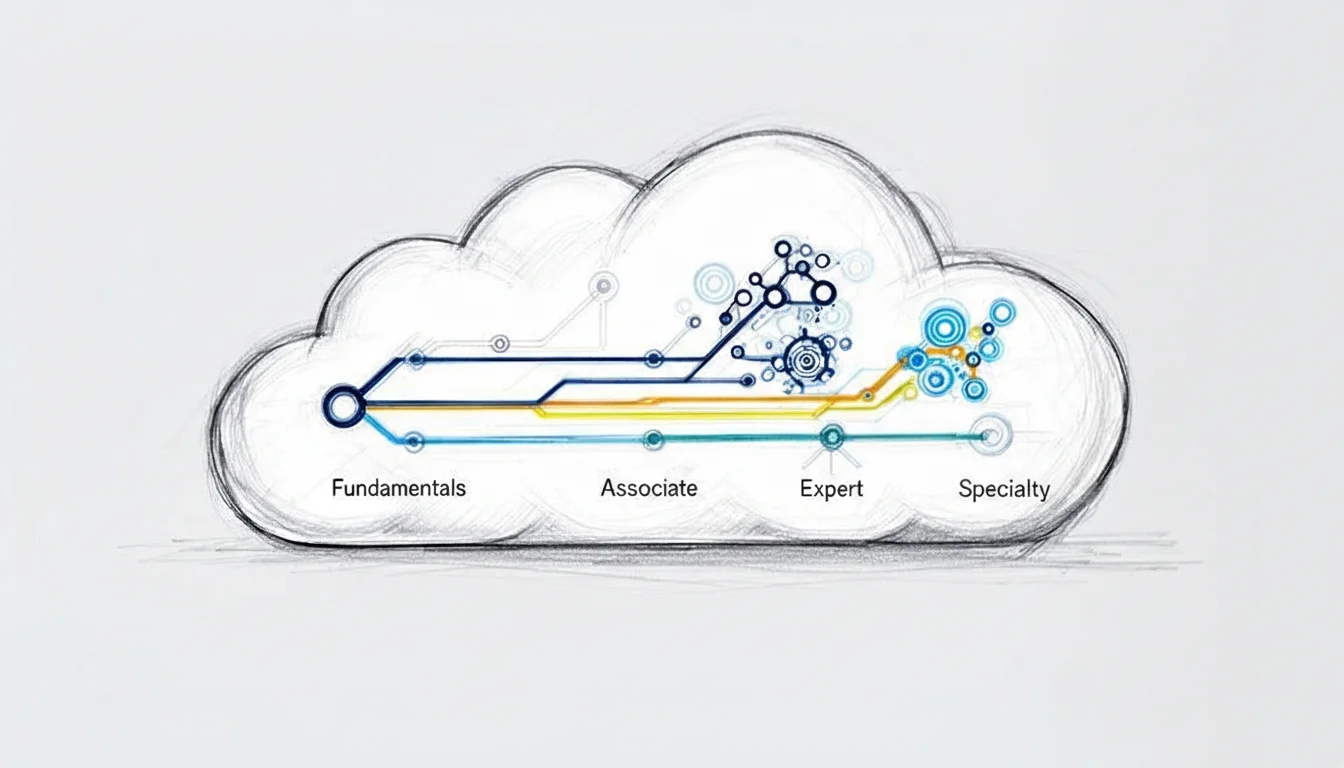
The Azure certification framework uses three primary levels. Each level aligns with a different stage of professional development. These tiers help clarify the various Azure certifications paths available to you.
- Fundamentals Level: This is the starting point for everyone. Certifications at this level cover core cloud concepts and basic Azure services. This level works well for people in non-technical roles like sales, marketing, or project management who need to speak the language of the cloud. It is also the first step for students or career changers. For instance, while CompTIA Cloud+ provides a vendor-neutral base, Azure Fundamentals provides a base specific to Microsoft’s cloud environment. It ensures everyone on a team uses the same terminology when discussing cloud resources.
- Associate Level: This tier is for people who do the daily work. Getting an Associate certification proves you can deploy, manage, and monitor Azure solutions. You might work as an administrator, developer, or security engineer. At this stage, you move from knowing what Azure is to showing you can operate it. You will handle tasks like configuring virtual networks, managing storage, or writing code for cloud-native apps. It is the standard for technical professionals who need to prove they have hands-on experience.
- Expert Level: This tier shows mastery of the platform. It is for experienced professionals who design and build complex systems for large organizations. The focus is on high-level design and turning business needs into technical plans. Professionals at this level often lead teams or consult on major migrations. Achieving this is similar to earning a PMP for project management. It shows you have a broad understanding of how different parts of a system work together to solve a business problem.
This visual illustrates the progression through the Azure certification tiers, showing the path from foundational knowledge to expert-level mastery.
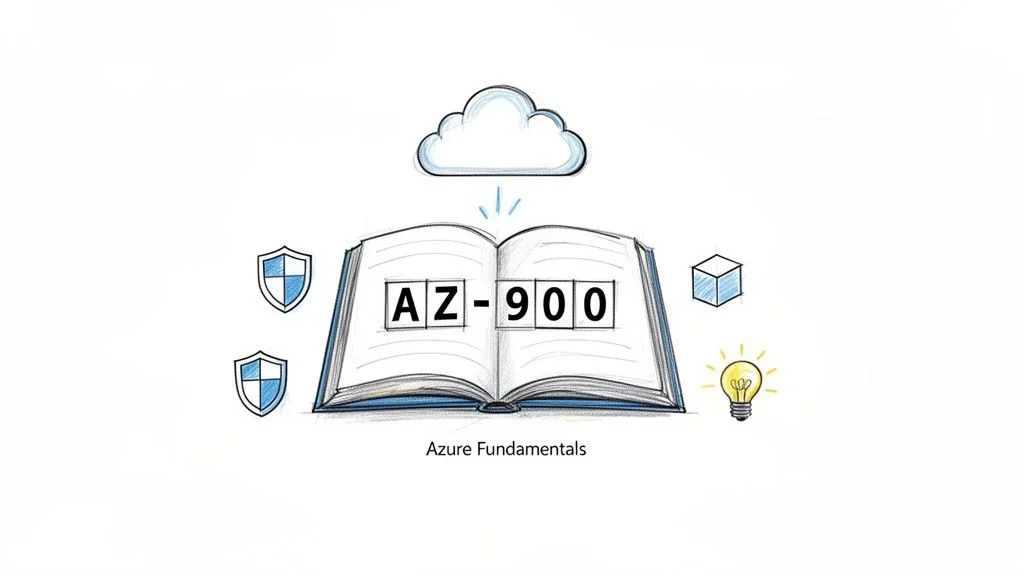
As shown, each level serves as a stepping stone. This creates a logical path for advancing a career within the Azure environment.
To provide a quick overview, the following table shows how these levels are structured and who should take them.
Azure Certification Levels at a Glance
| Certification Level | Target Audience | Career Focus | Key Certifications |
|---|---|---|---|
| Fundamentals | Beginners, non-technical staff, sales/marketing | Foundational cloud concepts, basic Azure services | AZ-900 (Azure Fundamentals), AI-900, DP-900 |
| Associate | IT professionals with hands-on cloud experience | Role-specific implementation and management | AZ-104 (Administrator), AZ-204 (Developer), AZ-500 (Security) |
| Expert | Senior engineers, architects, consultants | Advanced solution design and complex problem-solving | AZ-305 (Solutions Architect), AZ-400 (DevOps Engineer) |
This table provides a structural perspective. It helps you identify where your current skills fit and what your next step should be.
Aligning Certifications With Your Career Goals
Picking the right path means matching your career goals with a specific track. Are you interested in building and maintaining the infrastructure that keeps a company running? If so, the Azure Administrator path, led by the AZ-104 certification, is likely your best choice. This role focuses on identity management, governance, and virtual networking. If you prefer writing code and building applications, the Azure Developer path (AZ-204) is a better fit. This track tests your ability to use SDKs, handle data storage patterns, and implement authentication. You should look at a full Azure certification list to see all the options.
By picking a certification for a specific role, you turn your study time into a tool for moving up. This focused approach ensures the skills you learn apply directly to the job you want. It improves the return on the time and effort you spend studying.
If you want to work in a specialized area, mastering MS Azure integrations can improve your career prospects. This knowledge helps you decide which certifications to take next. The goal is to build a personal plan that validates what you know and prepares you for the job you want in the future.
Reflection Prompt: Think about your current role or the role you want next. Which Azure certification tier and path match those goals? How would getting this certification change your daily work or help you find new opportunities?
Building Your Foundation With AZ-900 Azure Fundamentals
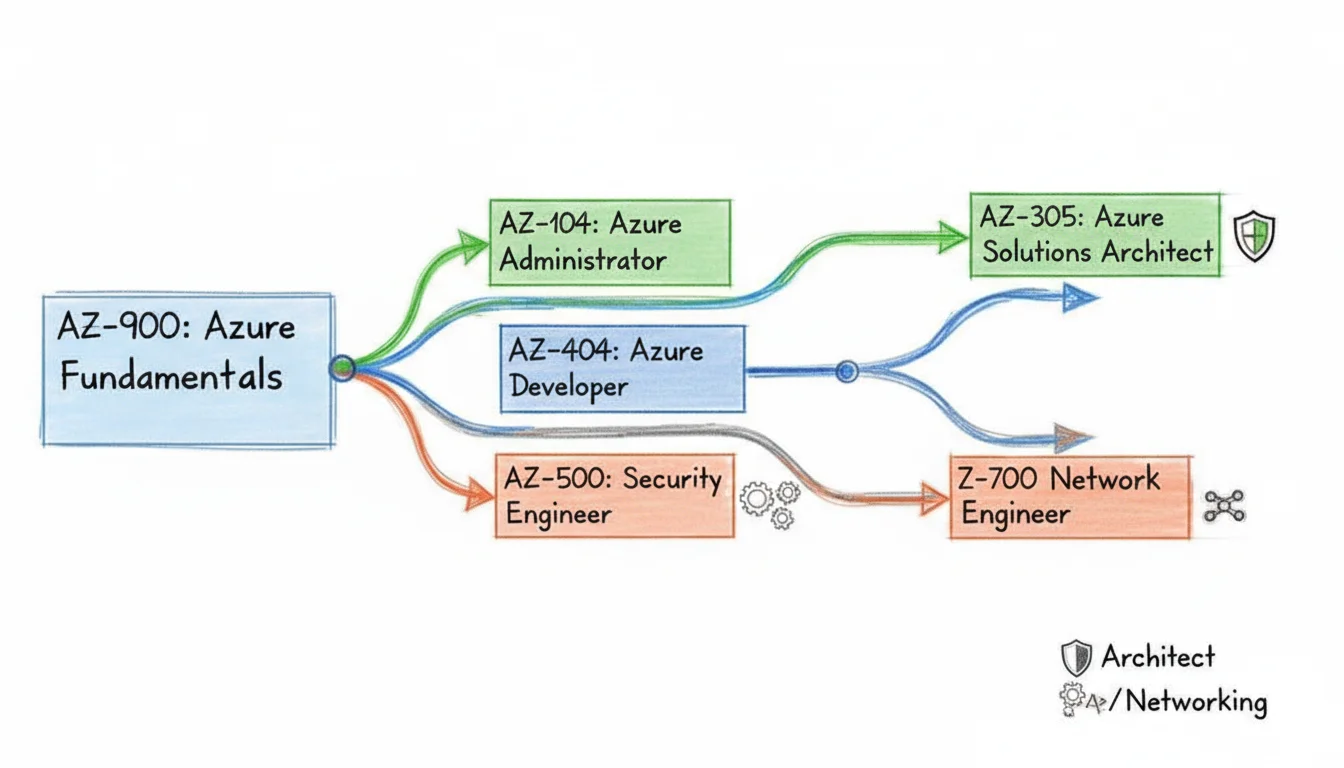
Every serious move into cloud technology requires a clear starting point. For those aiming to work with Microsoft Azure, the AZ-900 Azure Fundamentals certification represents that first step. This exam provides a direct and practical look at how cloud computing works and what services Microsoft offers. It acts as a baseline for any specialized training you might pursue later.
Think of the AZ-900 as the way to learn the basic rules and language of the cloud. Just as you cannot explain a complex legal case without knowing basic law, you cannot build advanced cloud systems without a firm grip on the underlying principles. This certification ensures that everyone in an organization—including technical engineers and business staff—can discuss Azure using the same terms. It removes confusion during technical meetings and helps align business goals with what the technology can actually do.
Who Is This Certification For?
The AZ-900 has a broad appeal because it covers the basics of the cloud without requiring years of experience. It is not just for people who want to be cloud architects. It provides value for many different roles across an organization.
You should consider this certification if you belong to one of these groups:
- Total Beginners: If you have never worked in information technology or the cloud before, this exam is a manageable way to start. It introduces concepts slowly and does not assume you already know how to manage servers.
- Career Changers: People moving from fields like retail, healthcare, or education into technology can use the AZ-900 to show employers they understand the modern cloud. It is a recognized credential that proves you have put in the effort to learn the basics.
- Non-Technical Staff: Sales teams, marketing managers, and finance professionals who work with cloud products benefit from this knowledge. It helps them talk to technical teams and understand why certain services cost more than others. It makes them more effective at their jobs by removing the mystery of how the cloud works.
- Current IT Professionals: If you have spent your career managing physical servers and data centers, this certification helps you translate that knowledge into the cloud. It provides a fast way to see how your existing skills map to Azure's tools.
- Leadership and Managers: Leaders need to understand Azure to make good choices about budgets and strategy. This certification helps them see how the cloud can save money or make a company more efficient through better resource use.
If your job involves talking about, buying, or planning for cloud services, this certification was created for you. It provides the context needed to understand the more advanced Azure certifications paths you might see later.
What Does The AZ-900 Exam Cover?
The AZ-900 exam follows a logical path. It starts with broad ideas about how the cloud functions and then moves into the specific tools Azure provides. You do not need to write code or use complex command-line scripts for this test. The goal is to understand what the services do rather than how to program them.
The AZ-900 is less about performing specific tasks in Azure and more about identifying what Azure services can achieve. It explains why a company would choose one service over another. This creates the conceptual framework you need before you move into role-based certifications.
Here are the specific knowledge areas you will study:
- Cloud Concepts: You will learn the definitions of Infrastructure-as-a-Service (IaaS), Platform-as-a-Service (PaaS), and Software-as-a-Service (SaaS). You will also study the differences between public clouds, private clouds, and hybrid models. This helps you understand where data lives and who is responsible for maintaining it.
- Core Azure Services: You will get to know the main tools in the Azure catalog. This includes Virtual Machines (VMs) for running applications, Blob Storage for saving files and data, and Azure SQL Database for managing structured information. You also learn how Virtual Networks connect these pieces safely.
- Security, Privacy, and Compliance: This area focuses on how Azure keeps data safe. You will learn about Microsoft Entra ID, which used to be called Azure Active Directory, for managing who can log in to your systems. You also look at tools like Azure Policy that help companies follow industry regulations.
- Azure Pricing and Support: You will examine how Azure charges for its services using a pay-as-you-go model. This section covers how to track costs and what kind of uptime guarantees come with Service Level Agreements (SLAs).
To help you prepare, our AZ-900 Microsoft Azure Fundamentals Study Guide offers a structured way to review these topics before your test date.
Navigating Exam Difficulty And Study Time
The AZ-900 is widely considered the most accessible exam in the Microsoft catalog. The questions test your ability to recall facts and recognize definitions. You will not have to solve complex, multi-stage technical puzzles during the test. There are no mandatory prerequisites, and you do not need years of hands-on experience to pass. The difficulty is very similar to the AWS Cloud Practitioner (CLF-C02) or the Google Cloud Digital Leader exams. All three serve as the entry point for their respective platforms.
Most people need between 15-30 hours of study to feel ready. If you already work in an IT role, you might be able to pass within a single week of review. If you are brand new to technology, spending a full month on the material is a better approach. This allows you to truly understand the terms before you move on.
The exam is available in 11 languages and the standard price is $99 (verify current pricing on the vendor site). While this is a foundational exam, it can lead to better job opportunities. Many people see a 10-15% increase in their pay as they use this certificate to move into more advanced cloud roles. For the latest updates on the test format or rules, check the official Microsoft page: learn more about the official exam details.
Choosing Your Path to Role-Based Associate Certifications
After you successfully master the fundamentals with the AZ-900, you understand the primary vocabulary of Azure. You know how the cloud functions and what it offers. Now, you must translate that theoretical knowledge into practical skills. Associate-level certifications are the way to do this. They move you beyond simply knowing cloud concepts to proving you possess the hands-on abilities required for specific IT roles. These credentials show employers that you can perform the work, not just talk about it.
To use the building analogy again: the Fundamentals certification showed you what a hammer, a saw, and a box of nails look like. An Associate certification proves you can use those tools to build a functional, stable table. This is the shift from a conceptual understanding to a professional application. Moving to this level is a necessary step for your progress in the Azure environment.
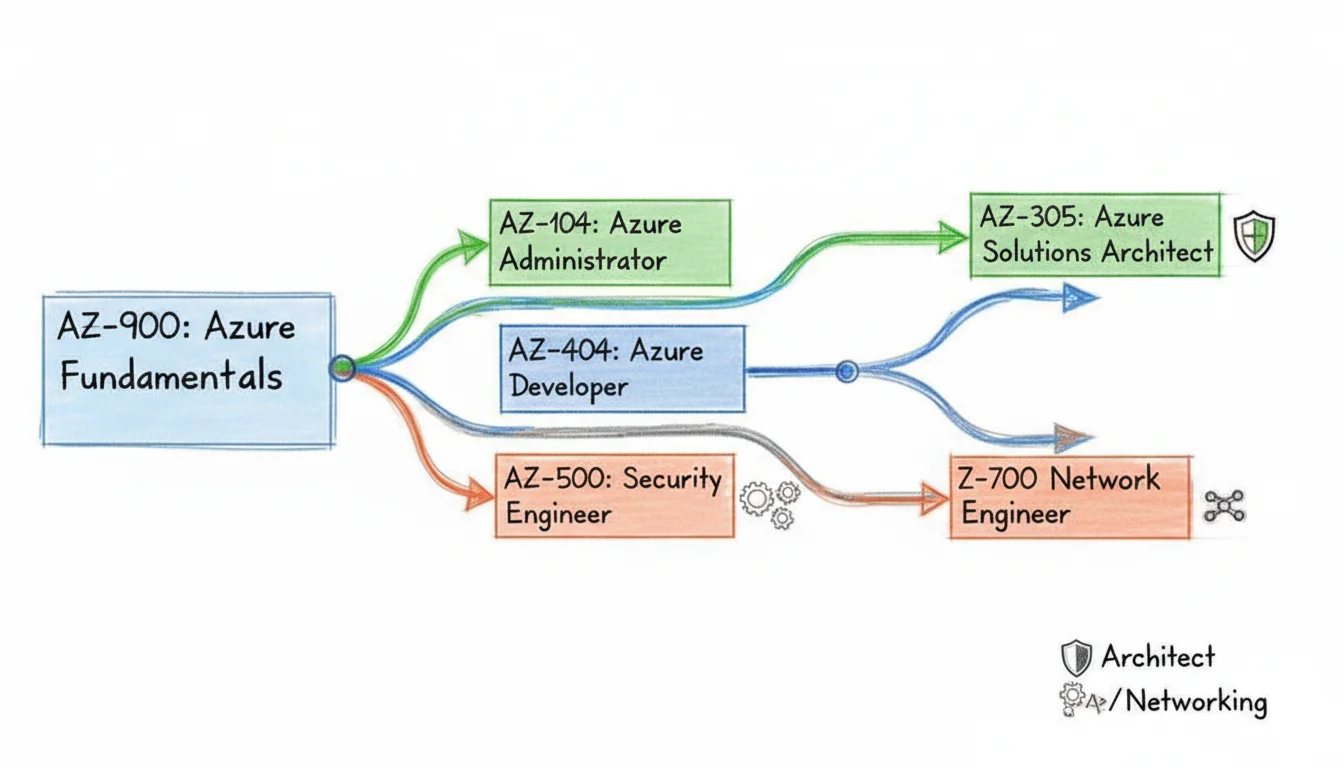
This phase of your career is about matching your goals with a specific cloud role. Companies are looking for people with specialized skills rather than general knowledge. We will look at some of the most popular Associate-level certifications you can earn to advance your career.
The Azure Administrator Associate AZ-104
Many IT professionals enjoy making sure systems run smoothly and efficiently. If you want to be the person who maintains the cloud infrastructure of an organization, the Azure Administrator role is a great fit. These professionals implement, manage, and monitor the core services in Azure. They ensure that every part of the environment stays secure, optimized, and reliable for the users who depend on it.
On a typical day, an Azure Administrator handles several key tasks:
- Resource Provisioning: Setting up and configuring virtual machines (VMs) to support new business applications and services.
- Storage Management: Handling different types of storage accounts, maintaining data integrity, and checking that backup and recovery processes work as expected.
- Network Monitoring: Observing network traffic patterns and modifying firewall rules or network security groups to keep the cloud environment safe from outside threats.
- Identity Management: Using Microsoft Entra ID to manage identities and access rights, which ensures that only the right people can reach specific resources.
- Task Automation: Scripting routine operations with Azure PowerShell or the Azure CLI to make the daily workload more efficient for the whole team.
The AZ-104 exam tests these skills. It is a vital credential if you work in IT operations, systems administration, or infrastructure management. If you are ready to prepare for this test, our AZ-104 Microsoft Azure Administrator study guide provides a clear path to help you succeed.
The Microsoft Azure Administrator Associate (AZ-104) is one of the most requested certifications in the cloud industry today. Its popularity comes from its focus on the practical skills needed to manage identities, storage, compute power, and virtual networks. As more companies move to Azure, the demand for these administrators continues to grow. For example, in late 2025, India had more than 5,000 active job openings related to Azure. A high number of these job descriptions specifically listed the AZ-104 as a requirement for candidates. You can look at the rise of in-demand Microsoft certifications to see how this trend is developing.
The Azure Developer Associate AZ-204
If your interest lies in writing code and building software, the Azure Developer Associate path is the right choice. This certification is for software developers who design, build, and maintain cloud applications. The focus here is not on managing the underlying hardware or infrastructure. Instead, developers use Azure’s extensive Platform-as-a-Service (PaaS) tools to create software that can grow and stay resilient as more people use it.
A day for an Azure Developer often includes these responsibilities:
- Solution Development: Writing and deploying code for event-driven tools like Azure Functions or Azure Logic Apps to process data as it arrives.
- Service Integration: Connecting applications to Azure data services such as Azure SQL Database, Azure Cosmos DB, or Azure Storage.
- App Management: Hosting web applications on the Azure App Service and building automated CI/CD pipelines to handle software updates.
- Security Implementation: Setting up authentication and authorization for APIs and microservices through Azure Active Directory and API Management.
- Code Optimization: Finding and fixing bugs in cloud-native applications to improve performance and keep operational costs low.
The AZ-204 exam is a difficult test. Microsoft recommends that you have one to two years of professional development experience before you try it. This experience should include hands-on time with Azure services. The exam confirms that you can program in a language Azure supports, such as C#, Java, Node.js, or Python. It also checks your ability to use Azure SDKs and different data storage options.
The Azure Security Engineer Associate AZ-500
Security is a major concern for every company. A single data breach can cause serious financial loss and damage a brand's reputation. This makes the Azure Security Engineer a vital part of any IT team. These professionals act as guardians for the cloud. They protect sensitive data, applications, and the networks they run on. Their main goal is to set up strong security controls and find ways to stop threats before they cause problems.
A Security Engineer spends their time on defense and quick responses:
- Identity Control: Creating strict access policies with Microsoft Entra ID, role-based access control (RBAC), and privileged identity management (PIM) to stop unauthorized users.
- Platform Protection: Securing virtual networks by applying firewall rules and setting up defenses against denial-of-service (DDoS) attacks.
- Security Operations: Running security tools like Microsoft Sentinel to handle Security Information and Event Management (SIEM) and automation tasks.
- Data Security: Protecting information through encryption for data at rest and in transit while applying data loss prevention (DLP) policies and secure coding standards.
The AZ-500 certification is for professionals who make security their top priority. It provides proof that you can identify vulnerabilities and set up solutions to fix them. Holding this certification makes you an asset to any modern IT department because you can keep the company’s cloud assets safe.
Choosing the right Associate-level certification is a major decision for your career. When you understand the daily tasks and technical requirements of these roles, you can pick the one that matches your current skills and your future goals. This focus helps you find success as you grow in the cloud field. Each of these paths offers a different way to contribute to a company's success. Whether you prefer the operational side of the house or the creative side of development, there is a role-based certification that fits your needs. By committing to one of these paths, you demonstrate to the industry that you are ready for the responsibilities of a cloud professional.
Reaching the Summit With Expert-Level Certifications
If Associate-level certifications validate your ability to operate specific cloud tools, Expert-level certifications show you can design and oversee the entire infrastructure. This is the top tier for Azure certification paths. These credentials are for experienced professionals who have moved past daily operational tasks to focus on strategy, high-level architectural design, and business impact. This represents a change in mindset—from doing tasks to designing solutions and leading teams.
At this advanced level, you are no longer just laying digital bricks. You are the architect creating the master plan for complex, resilient, and secure cloud environments that solve difficult business problems. This is where your accumulated experience in IT operations, development practices, and security principles comes together into a strategic capability. You must look at the big picture rather than just the individual components.
The Azure Solutions Architect Expert AZ-305
The Azure Solutions Architect Expert is a respected credential in the cloud industry. it confirms your skill in designing and building scalable, cost-effective solutions on Microsoft Azure. The exam covers a wide range of topics, including compute, networking, storage, data, and security.
Think of a traditional building architect. They do not pour the concrete or install the wiring themselves. Instead, they create the master plan. They ensure a skyscraper can handle environmental stress, follow building laws, and meet the client's needs. An Azure Solutions Architect does the same for a cloud environment. They make the design choices that affect scale, security, and costs for years. They are responsible for making sure the infrastructure remains stable as the business grows or changes.
To earn the Azure Solutions Architect Expert certification, you must first show your hands-on skills by holding the Azure Administrator Associate (AZ-104) certification. This prerequisite ensures that every architect has a practical foundation in managing Azure resources before they start designing large-scale cloud solutions. This layered approach is similar to other industry certifications, like the AWS Solutions Architect Professional, which also requires associate-level knowledge.
The AZ-305 exam does not focus on memorizing command-line syntax or clicking through menus in the portal. Instead, it gives you business scenarios and asks you to design the best, most secure, and most cost-effective cloud solution. You will be tested on your ability to:
- Design identity, governance, and monitoring solutions: This involves building strategies for secure access and resource management. You will plan how to enforce policies and maintain visibility across the entire corporate cloud footprint.
- Design data storage solutions: You must evaluate and select the right database services, storage accounts, and data integration patterns. These choices must meet specific application needs and business goals.
- Design solutions for business continuity: This includes developing strong backup strategies and disaster recovery plans. You must also create high-availability architectures to ensure operations continue without a break.
- Design infrastructure solutions: You will architect compute resources, complex networking setups, and plans to move existing on-premises workloads into the Azure cloud.
This certification is about turning business needs into secure, scalable, and reliable cloud solutions that provide value to the organization. It requires a deep understanding of how different services interact with each other.

The Azure Solutions Architect Expert (AZ-305) is a high-level certification for those who want to design advanced Azure solutions. Demand for this skill set is increasing as more companies move to the cloud. The exam costs $165 (verify current pricing on the vendor site) and is for people with significant IT operations and design experience. In the UK, many employers in finance and healthcare look for this credential. Architect salaries in those sectors often range from £55,000 to over £95,000. You can find more details about this leading Azure certification on datacamp.com.
The DevOps Engineer Expert AZ-400
While the Solutions Architect designs what the cloud solution looks like, the DevOps Engineer Expert focuses on how to deliver that solution. They concentrate on giving value to users with more speed and consistency. This certification is for professionals who combine people, processes, and technology to ship products that solve real problems.
The DevOps path is about removing the walls between development (Dev) and operations (Ops) teams. A certified DevOps Engineer Expert focuses on automation and collaboration. They guide the process from the first line of code to a live production feature. Their goal is to create an automated flow with fast feedback loops. This helps the organization improve its software constantly.
To earn this certification, you must already hold either the Azure Administrator Associate (AZ-104) or the Azure Developer Associate (AZ-204) certification. This requirement makes sense because a DevOps role is a hybrid discipline. It requires a practical grasp of both infrastructure management and software development principles. You cannot automate what you do not understand.
The AZ-400 exam tests your expertise in several areas:
- Develop an instrumentation strategy: This covers how you monitor systems and collect data from applications to track performance and health.
- Develop a Site Reliability Engineering (SRE) strategy: You will focus on operational excellence and managing incidents. This includes understanding error budgeting to balance new features with system stability.
- Create a security and compliance plan: This involves integrating security practices throughout the software development lifecycle. It is often called DevSecOps, ensuring that security is not an afterthought.
- Manage source control: You must know how to implement branching strategies and ensure code quality across the team.
- Facilitate communication and collaboration: This involves helping different teams work together and share ownership of the final product.
- Implement continuous integration and delivery pipelines: You will define and build CI/CD pipelines. This automates the building, testing, and deployment of code to reduce human error.
Earning an Expert-level certification is a strong statement to make to an employer. It shows you have the strategic vision and technical skill to lead their most important cloud projects. It proves you can handle the responsibility of designing and maintaining the systems that keep a modern business running. These certifications verify that you are prepared to lead a team through the technical requirements of a large-scale cloud migration or a complex software launch. By reaching this level, you position yourself as a leader who can bridge the gap between technical execution and business strategy.
Carving Out Your Niche With Specialty Certifications
Role-based certifications establish your core abilities as an administrator, developer, or architect. Specialty certifications take a different path. They certify you as a subject matter expert in a specific, high-demand technical area. These are not entry-level certifications. Instead, view them as focused studies into specialized technologies that address specific, high-cost business challenges. Organizations often look for these credentials when they need to solve problems that a generalist cannot handle.
Consider a medical comparison. An Associate-level certification is like a general practitioner with a broad and essential skill set. An Expert-level certification matches a surgeon who has advanced knowledge of an entire body system. A specialty certification is more like a neurosurgeon focusing on one complex, critical, and rare field. Companies search for these specialists when the stakes are high and general cloud knowledge is not enough to ensure success.
Holding a specialized certification provides a competitive advantage. In a crowded job market, a specialty certification on your resume acts as a clear signal of expertise that most professionals do not have. It proves you have mastered an intricate technology that is necessary for specific industries and complex problem sets. These certifications demonstrate that you can manage the specific technical requirements that high-value enterprise projects demand.
Reflection Prompt: Are there any specialized areas within Azure, such as AI, IoT, or SAP, that interest you? How might a specialty certification in one of these areas differentiate you in the job market and align with your career goals?
Diving Into Azure For SAP Workloads
One of the most popular specialty certifications is the Azure for SAP Workloads Specialty (AZ-120). For many decades, SAP has functioned as the operational center for global enterprises. It manages core finance, human resources, and global supply chains. Migrating these massive, mission-critical systems to the cloud is a delicate and complex task. Because these systems are the lifeblood of a company, the migration must be handled with extreme care to avoid data loss or downtime.
This certification validates the specialized skills required to complete these migrations and manage ongoing operations. A certified professional understands the unique architecture, networking requirements, and high-availability standards necessary for running an SAP environment securely on Azure. They are trained to handle the specific storage and compute needs that SAP applications require to function at scale.
These specialists solve difficult technical problems:
- Designing an Azure infrastructure that can consistently meet the strict performance benchmarks and latency requirements set by SAP.
- Executing migrations of large SAP HANA databases into the cloud with minimal downtime to avoid disrupting business operations.
- Constructing reliable disaster recovery plans and high-availability clusters for systems that cannot afford failure.
Earning the AZ-120 credential helps you become a lead architect or consultant. This prepares you for some of the most challenging and high-paying enterprise cloud projects currently available in the industry.
Mastering The Internet Of Things
Another interesting specialty is the Azure IoT Developer Specialty (AZ-220). The Internet of Things involves connecting billions of physical devices to the cloud. These range from factory sensors to smart appliances. The goal is to collect, analyze, and use real-time data to make better business decisions. This field requires a mix of skills in hardware integration, networking, security, and data analytics.
An Azure IoT specialist is the engineer who connects the physical world to the digital world. They ensure that data flows safely from a remote sensor into a cloud database where it can be processed.
The AZ-220 certification validates your ability to design, implement, and manage the entire lifecycle of an IoT solution on Azure. This includes connecting devices, processing sensor data streams, and integrating that information with other business applications and analytics platforms.
An IoT expert might build a smart factory solution. This system uses sensor data to predict when a machine needs maintenance before it breaks. This helps avoid expensive downtime and saves the company money. They might also create a global logistics system to track packages with real-time accuracy across different countries. This certification is for developers who want to build solutions that interact with the physical world.
Choosing a specialty certification is a smart career move. It allows you to work on high-impact projects, stand out from other professionals, and increase your earning potential based on your specific expertise. These credentials show that you can handle the most technical and demanding work in the cloud industry today.
So, How Do You Actually Prepare for an Azure Exam?
Choosing which certification path to start is one vital step, but passing the exam requires a structured study plan. The transition from reading about Azure services to applying that knowledge under pressure requires a clear approach tailored to your background and specific exam goals. This guide serves as a practical plan for your certification success.
Be realistic about the time commitment. For a fundamentals exam like the AZ-900, a person new to cloud computing may need 30-40 hours of focused study (verify current hour recommendations on the official Microsoft site). If you are an IT professional with foundational knowledge, you might prepare in under 15 hours (verify study timelines on the Microsoft portal).
As you move to an Associate-level exam like the AZ-104 (Azure Administrator), the time required increases. If you have practical experience with Azure, budget about 60-80 hours for preparation (verify current requirements on the Microsoft site). If you have limited hands-on experience, expect to spend 100-120 hours to prepare, including time for labs (verify exam preparation guidelines on the Microsoft site).
The Building Blocks of a Great Study Plan
A strong study plan involves more than reading documentation before the test. It is a mix of learning methods that build theoretical knowledge and practical skills. Successful plans combine official materials with active use of the Azure platform. This framework helps you build the skills needed for a passing score.
- Start with the Official Microsoft Learn Path: Use this as your primary resource. Microsoft offers free modules mapped to exam objectives. These modules act as the official textbook for the exam. Skipping this step often leaves gaps in your understanding of how Microsoft expects you to solve specific problems.
- Get Your Hands Dirty with Labs: You cannot master Azure through reading alone. This is like trying to learn to drive by only reading a car manual. Sign up for a free Azure account, which includes credits for various services. Build resources like virtual machines, configure storage accounts, and set up virtual networks. For Associate or Expert exams, hands-on experience is a requirement for success.
- Utilize High-Quality Practice Exams: Once you understand the material, test yourself. Practice exams help you get used to question styles and manage your time. They identify weak areas before the actual test. Look for exams that explain both correct and incorrect answers. Using techniques like active recall and spaced repetition can help you remember information much longer than cramming will.
At MindMesh Academy, we built our platform to support this structured approach. The dashboard shows which topics you have mastered and which areas need more work. We use specific spaced repetition and adaptive learning algorithms to help you retain concepts long-term rather than simply memorizing facts for the exam week. This method ensures that the information stays with you throughout your career.
The Final Stretch: Exam Day and What Comes Next
When you consistently score well on practice tests, you are ready to move forward. Register for your exam on the Microsoft certification portal. You can take the exam at a physical testing center or from home with an online proctor.
On exam day, stay calm and read every question. Pay attention to the clock to ensure you have enough time for every section. You have done the work, so rely on your preparation.
Passing the exam is a major achievement, but it is not the final step. The cloud changes quickly, and your skills must change with it. Role-based Azure certifications at the Associate and Expert levels are valid for one year. To keep them active, you must pass a free online renewal assessment (verify current renewal policies on the Microsoft site).
This renewal process ensures that anyone holding an Azure certification has current knowledge. The annual assessment is a tool to help you stay updated on new features and services. See your certification as a dynamic milestone in your professional development. By following a clear study plan and committing to learning, you position yourself for success in the changing world of cloud computing.
When you prepare for the AZ-104 or any other technical exam, remember that the goal is to understand the "why" behind the configurations. If you can explain why a specific Load Balancer is better than a Traffic Manager for a certain scenario, you are ready for the test and the job. Consistency is the most important factor in your study schedule. Dedicate time every day to reading or lab work, and the results will follow. The skills you gain during this process are just as important as the certificate you receive at the end. Focus on the logic of the cloud, and the exam will feel like a natural extension of your daily work.
Answering Your Top Azure Certification Questions
Mapping out a path for Azure certification usually brings up several questions. Getting clear answers now helps you plan your study schedule, manage your budget, and choose the right direction for your career without hitting unexpected obstacles. Preparation is the best way to avoid surprises during the testing process as you work toward your professional goals.
How long does the entire process take? The timeline varies based on your professional background and the specific certificate you want. For the AZ-900 Fundamentals exam, most people pass with confidence after two or three weeks of study. If you aim for an Associate-level credential like the AZ-104, plan for 2-3 months (verify latest requirements on the Microsoft site), especially if you are transitioning from another IT role. Expert-level exams require a deeper commitment. These tests often take 3-6 months (verify latest requirements on the Microsoft site) of study combined with regular hands-on practice in a lab environment or sandbox.
Do Azure Certifications Expire?
The answer depends on the level of the certificate you hold. Role-based Associate and Expert certifications, along with specialty credentials, are valid for one year. Microsoft uses this window to ensure your technical knowledge stays current with the frequent updates made to the platform features and security protocols. This policy mirrors other industry standards, such as the CompTIA CE program or the PMI requirements for PMP renewal.
You do not need to re-sit the full, high-stakes exam to keep your status active. Instead, you can pass a free online renewal assessment on the Microsoft Learn platform. This assessment becomes available six months before your expiration date. It is a shorter, open-book test that covers recent changes and new features added to the Azure environment since you last tested. Successful completion extends your certification for another year from its current expiration date.
Fundamentals certifications like the AZ-900 follow different rules. These do not expire. Once you earn a Fundamentals certificate, it remains on your transcript permanently as proof that you understand the core concepts of cloud computing and basic cloud services.
Azure skills also work well with other Microsoft tools. Learning the Microsoft Power Platform can create new paths in low-code development, business process automation, and data analytics. Combining cloud infrastructure knowledge with these automation tools makes you a more versatile professional in any technical department.
At MindMesh Academy, we provide learning paths and study tools to help you through these exams. Our platform and progress tracking help you understand the material instead of just memorizing answers. Start your Azure certification preparation with us today!

Written by
Alvin Varughese
Founder, MindMesh Academy
Alvin Varughese is the founder of MindMesh Academy and holds 20 professional certifications including Microsoft Agentic AI Business Solutions Architect, AWS Solutions Architect Professional, and Azure DevOps Engineer Expert. He's held senior engineering and architecture roles at Humana (Fortune 50) and GE Appliances. He built MindMesh Academy to share the study methods and first-principles approach that helped him pass each exam.