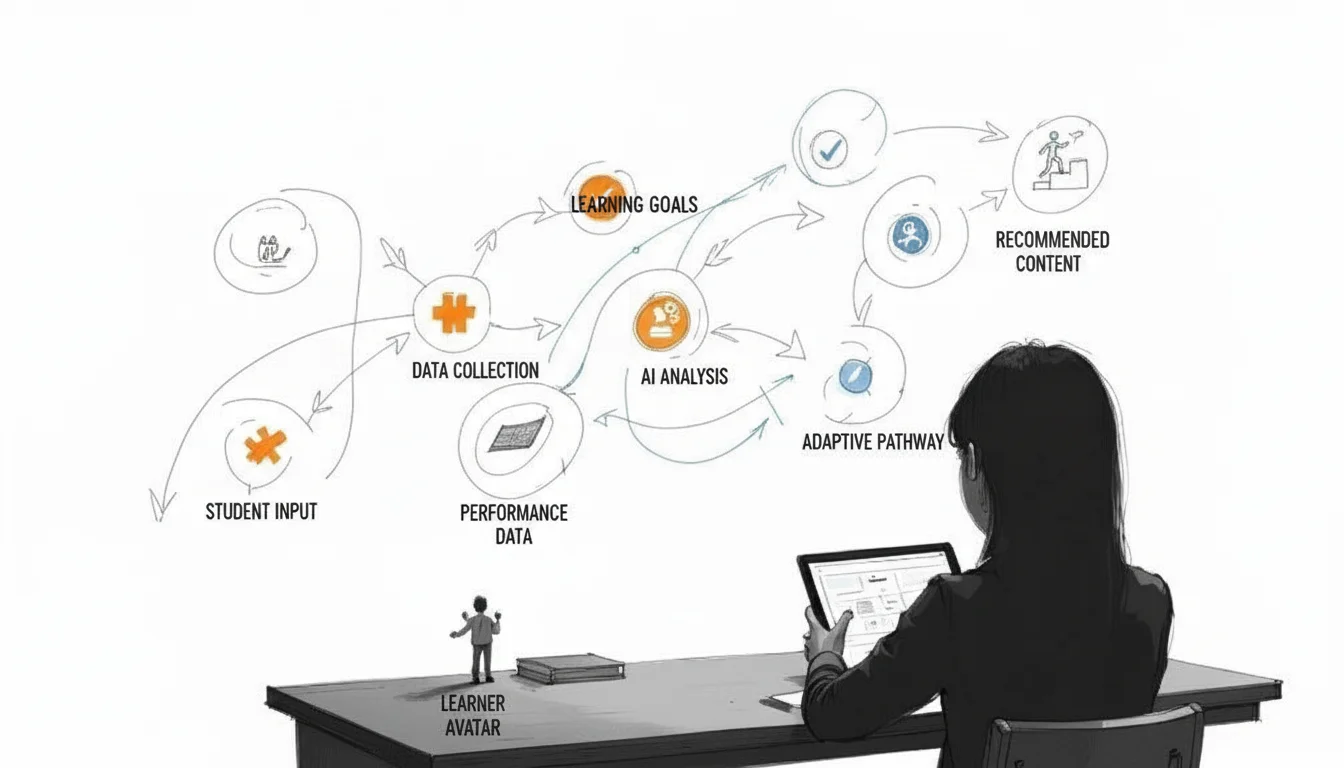
What is adaptive learning: A Guide to AI-Powered Education
What is Adaptive Learning: A Guide to AI-Powered Education for IT Professionals
Adaptive learning acts like a personal tutor that recognizes your strengths and pinpoints your knowledge gaps. Instead of following a rigid, linear curriculum, these platforms use artificial intelligence to modify study materials and difficulty levels in real-time. This method moves past standard lesson plans to tailor every study session. For IT professionals studying cloud architecture, cybersecurity, or project management, this approach creates an efficient path to expertise. It ensures you focus on new concepts rather than reviewing material you already know. This makes certification preparation more effective.
The Core Idea Behind Adaptive Learning
Adaptive learning functions like a specialized coach for your brain. If you master cybersecurity protocols quickly, this digital coach increases the challenge by introducing advanced scenarios or attack simulations. If you struggle with AWS configurations, the system pauses. It provides simpler explanations or targeted labs until you understand the concept fully.
This technology replaces rigid educational paths. Traditional structures often fail professionals who bring different backgrounds and existing knowledge to their studies. By using data and algorithms, adaptive systems build a precise profile of your current skills and identify where you need help. The goal is to keep you at an optimal challenge level. You stay engaged without feeling overwhelmed by the difficulty of exams like the PMP or Azure Solutions Architect. This prevents fatigue from curricula that are too fast or repetitive.
The Shift From Static To Dynamic Education
For decades, education remained static. In university lecture halls and standard online online courses, everyone receives the same material at the same pace. IT professionals often waste hours reviewing concepts they already know. Meanwhile, beginners might feel lost when facing advanced topics without enough support. An adaptive system changes this model by gathering performance data to adjust the experience for your specific needs.
This feedback loop ensures that study time yields the highest impact. You direct your energy toward fixing weak spots—perhaps specific networking concepts for the CompTIA Network+ N10-009 exam or agile methodologies for a PMP—instead of repeating material you have already mastered.
Demand for efficient training is growing. The global adaptive learning market is projected to reach USD 28.36 billion by 2033 (verify current projections on market research sites). This figure shows how organizations are adopting smarter training methods to meet industry requirements. You can explore the full research on the adaptive learning market for more data on these trends. Professionals now expect their tools to recognize and adapt to their skill levels.
These systems also provide a base for other modern educational models. Adaptive technology frequently works alongside immersive learning. This includes tools like Augmented Reality (AR) and Virtual Reality (VR) to build engaging environments. For example, an adaptive system might detect a student's struggle with hardware repairs and then trigger a VR simulation to provide hands-on practice. Both methods focus the experience on the individual student rather than the group.
Adaptive Learning vs Traditional Learning
Comparing adaptive learning to traditional methods highlights the shift in how people gain skills. While traditional teaching still has its place in collaborative environments, adaptive systems offer better efficiency and personalization. This is especially useful for IT certification prep where speed and accuracy matter. Traditional courses follow a schedule that might be too slow for some and too fast for others.
| Feature | Traditional Learning | Adaptive Learning |
|---|---|---|
| Pacing | Fixed, instructor-led pace for all learners. | Individualized, learner-controlled pace, optimized by AI. |
| Content | Static, one-size-fits-all curriculum. | Dynamic content, adjusted in real time based on performance. |
| Feedback | Delayed, often provided at the end of a module or assessment. | Immediate, continuous, and actionable, guiding next steps. |
The table shows that adaptive learning responds to individual needs. Traditional methods focus on group instruction, but AI-driven tools prioritize the person. For an IT professional, this means less time on redundant content and more focus on closing specific knowledge gaps. Because the system tracks every answer and interaction, it knows when you are ready for the exam before you even take it. This data-driven approach removes the guesswork from professional development.
How Adaptive Learning Technology Works
How does an intelligent, personalized learning system actually work? To understand its power, we must look at the logic driving these platforms.
Imagine an adaptive platform acting as a coach for IT skills. A skilled trainer does not give every athlete the same workout plan. They watch how you perform every movement, noting where you excel and where you struggle. Based on that immediate feedback, they adjust your next session to build on your specific progress.
Adaptive learning systems function in the same way. The software acts as a data engine that monitors every interaction you have with the study material. It tracks specific metrics to understand your progress and learning style:
- Accuracy: Which certification practice questions you answer correctly and which ones you miss.
- Time on Task: How long you spend looking at a complex network diagram or analyzing a snippet of code.
- Resource Engagement: The specific hints, video explanations, or technical articles you open when you hit a roadblock.
- Fluency: Concepts you grasp immediately, which shows the system you have prior knowledge or have mastered the topic.
This data stream feeds an AI engine. The system does more than grade your answers; it looks for patterns to build a detailed map of your knowledge base. It identifies what you know, pinpoints exactly where your understanding breaks down, and predicts which upcoming topics might cause trouble.
Creating Your Personal Learning Path
Once the system has a detailed understanding of your learning profile, it begins its most important task: adjusting your study path in real time. This goes beyond making questions harder or easier. The system selects and delivers the right content, in the right format, at the exact moment it will help you the most.
For example, if you are consistently passing questions on ITIL 4 fundamentals, the platform will not force you through another introductory module. Instead, it might skip ahead to a complex service management scenario or a case study to test your strategic skills. If you struggle with Azure Security Engineer policies, the system will not simply push you forward. It provides targeted micro-lessons, simpler practice questions, or a different video explanation to help you build a solid foundation before you move to more difficult material.
At its core, the technology operates on a continuous, iterative loop: assess, analyze, and adapt. This cycle keeps your study sessions calibrated to your needs, which reduces the frustration of repeated content and makes every minute of your study time more efficient.
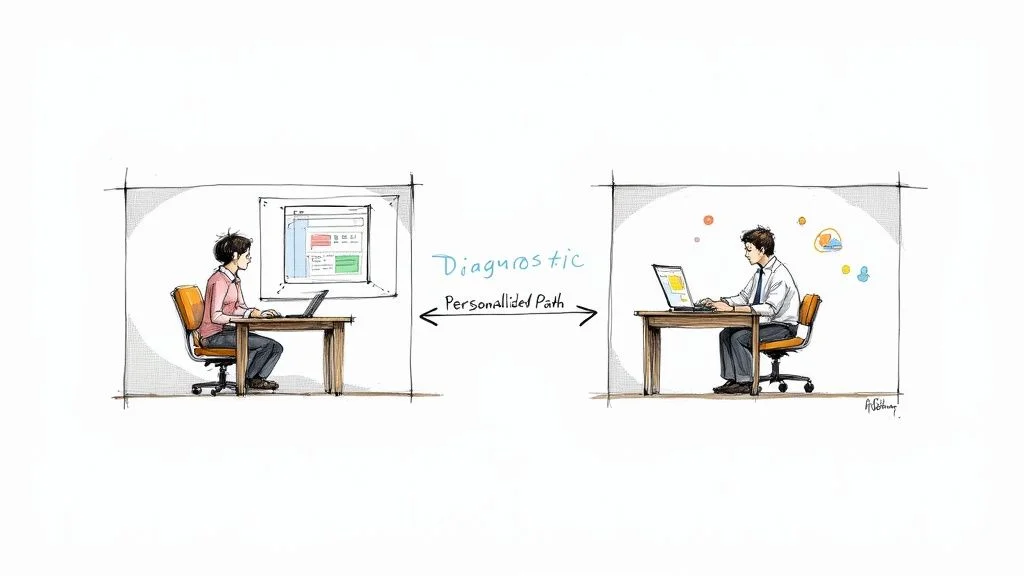
This infographic illustrates the difference between a traditional, static approach and the personalized flow of an adaptive system.
The adaptive model uses a loop of continuous assessment and tailored content delivery. In contrast, the conventional model pushes every student down the same rigid, linear track regardless of their background.
The Algorithm Behind The Scenes
The logic behind adaptive learning is not a mystery; it is the practical application of algorithms and data modeling. These systems work in the background to sequence content logically for every user. This is a calculated method designed to build your knowledge step-by-step, ensuring you master one concept before you see the next.
This sequencing makes adaptive learning a transformative tool for high-stakes exam preparation. By personalizing the learning process, platforms like MindMesh Academy help you move through large amounts of certification material—including exams such as the AWS Certified Solutions Architect or the Microsoft Certified: Azure Administrator Associate—more efficiently than a standard textbook could. The system makes sure every session addresses your specific needs, leading to better memory retention and helping you pass with confidence.
The Real-World Payoff: Key Benefits of Adaptive Learning
Understanding the theory of adaptive learning is helpful, but the true value appears when looking at the results it produces in actual work environments. By moving away from static, one-size-fits-all training, organizations and individual IT professionals find a learning experience that is efficient, engaging, and effective.
For the individual learner, especially an IT professional working under tight deadlines, the main advantage is a path that respects their current skills and previous work experience. No one wants to spend hours reviewing material they already know well. Adaptive learning allows users to skip past mastered topics to focus on areas that require improvement. This approach keeps a balance of challenge and support. This change in methodology helps reduce the boredom and frustration often linked to traditional classroom or video training.
Deeper Engagement and Knowledge That Sticks
When material is tailored to the learner—avoiding content that is too easy or discouragingly difficult—participation naturally increases. This higher level of engagement leads to better retention and a more thorough understanding of the subject matter.
The goal is genuine mastery rather than rote memorization for a test. By revisiting difficult topics and building on existing strengths, adaptive systems help move information into long-term memory. This proves vital for certifications where you must demonstrate practical application and understanding, beyond basic recall.
In a corporate IT setting, these capabilities change how teams grow. Companies use adaptive technology to speed up employee onboarding, prepare teams for new technologies like cloud migrations, and close specific skill gaps with precision. Instead of making an entire development team attend a generic, lengthy training session, the system identifies exactly what each person needs to learn about a specific DevOps tool or security protocol.
Research consistently indicates that adaptive platforms can improve student performance compared to standard teaching methods. This improvement comes from the system’s ability to assess understanding and change instructional strategies immediately. You can see the effect of these personalized solutions by looking at recent market research trends in the education technology sector.
Actionable Insights for Instructors and L&D Teams
Adaptive learning benefits the student while also providing a useful strategic tool for corporate trainers and Learning & Development (L&D) teams. These platforms generate high-quality data on performance, giving clear insights into where individuals or groups are getting stuck.
An L&D specialist or instructor can see, in near real-time:
- Specific Skills: Which programming languages, cloud services, or project management methodologies are difficult for the entire team to grasp.
- Individual Needs: Which IT professionals are struggling with certain concepts and require one-on-one coaching or different resources.
- Time Management: How much time learners spend on technical topics or practical lab exercises.
This data helps educators move from being general lecturers to acting as effective coaches and mentors. They can provide support exactly when it is required, making their time and expertise more effective.
For any organization, this data-driven method is necessary to maximize the return on training investment. It provides the objective metrics needed for how to measure training effectiveness, creating a more agile and competent IT workforce.
Real-World Examples of Adaptive Learning in Action
 Adaptive learning moves beyond theory to deliver results in actual training environments. This technology is changing how IT professionals learn and master skills. From university computer science programs to large-scale business upskilling, adaptive systems address specific learning obstacles to provide results tailored to the individual. These systems identify precisely where a student struggles and adjust the curriculum to fix those specific gaps immediately.
Take the case of an IT professional who finds complex routing protocols difficult during a networking course. Instead of falling behind as the class moves to a new topic, an adaptive networking program identifies the specific struggle, such as understanding OSPF area types. The software then provides targeted practice problems, simulations, and video explanations until the person masters the concept. The system only introduces new material after the learner proves they understand the current topic through active assessment.
This method makes sure nobody is left behind. It adjusts the pace and difficulty based on how well the student performs. This level of detail explains why technical degrees and K-12 education make up the largest part of the adaptive learning market.
Corporate Training and Professional Development
Businesses in the IT sector use adaptive learning to improve employee skills and drive growth. Companies use these systems for everything from onboarding new staff to helping teams prepare for major certifications like CompTIA Security+ or Salesforce Administrator. The primary goal is efficiency. It provides the specific knowledge employees need at the right time to keep the company competitive.
If a new cloud engineer joins a team and needs to learn a specific multi-cloud strategy, an adaptive system starts with a diagnostic test. This test checks their existing AWS, Azure, or GCP knowledge. The system then creates a training plan that only covers the skills they lack. This is much more effective than traditional day-long seminars that often repeat information experts already know while confusing those with less experience.
The primary advantage in an IT business environment is precision. Adaptive learning works as a diagnostic tool to find skill gaps in areas like containerization, data analytics, or cybersecurity. It then provides the exact training needed to fix those gaps. This creates a more capable and flexible workforce.
Preparing for High-Stakes Certification Exams
Adaptive learning is particularly effective for students preparing for difficult IT certification exams. If you have studied for the PMP, AWS Certified Solutions Architect, Microsoft Certified: Azure Administrator Associate, or ITIL 4 Foundation, you know they require mastering many complex topics. Traditional study habits often lead to time wasted on subjects you already know while your weak spots stay weak.
Adaptive platforms change this by building a study plan 100% tailored to what you need to learn.
- Diagnostic Assessment: The process starts with a detailed test to find your current knowledge level and identify specific weaknesses. For example, the test might show you understand AWS EC2 well but need more work on S3 bucket policies or VPC configurations.
- Targeted Content Delivery: After the diagnosis, the system gives you a mix of practice questions, videos, and case studies that focus on your weak areas. If you find project scope management difficult for the PMP exam, the system will prioritize that topic while skipping areas where you have already shown proficiency.
- Continuous Adjustment: The platform changes as you improve. It brings in new topics as you master old ones and brings back concepts you missed previously to make sure the information stays in your memory.
This active approach powers platforms like MindMesh Academy. These systems use adaptive technology to create an efficient path to IT certification. By making sure every study session focuses on what matters most for your progress, you can prepare faster and retain more information. You will be well-prepared to take your exams. To see how different tools use this method, you can review a learning management systems comparison for 2025, which provides context on the tools available in the current market.
How to Choose an Adaptive Learning Solution
Selecting the right adaptive learning platform feels difficult because of the high volume of available choices. The best approach is to look past the sales presentations and marketing slogans. Instead, concentrate on your specific learning targets and the technical functions that will actually help you meet them.
A massive company training a large sales force on new product features has different requirements than an individual IT specialist trying to pass a difficult exam like the AWS Certified DevOps Engineer. Before you schedule a sales call or request a software demo, you need a clear definition of what success looks like for your specific situation.
Start with a Clear Needs Assessment
The first step requires honest internal review. You cannot find the right tool until you can describe your goals and the results you want to see. This means asking specific questions to map out where you are now and where you want to go. A thorough needs assessment for technical teams should cover several key areas:
- What are the specific learning goals? Determine if you are trying to master a certain technical domain for a high-stakes certification, such as the PMP or CCNA. You might need to get new hires up to speed on cloud platforms quickly, or you might be trying to close skill gaps in a development team regarding Python scripting or Kubernetes.
- Who are the learners? You must evaluate their current technical skill level and how comfortable they are with digital tools. Their previous industry experience and preferred ways of learning matter. A senior systems architect has very different needs than a junior technician on the help desk. The architect might need high-level training on security protocols, while the technician needs a broad overview of hardware troubleshooting.
- What content do we have versus what do we need? Determine if you need a platform that comes with a pre-built library of IT courses for AWS, Azure, or Cisco. If you already have internal training materials, you need to know if they can be integrated into the new system without technical friction.
- What are the practical constraints? Budget limits, your current IT setup, and legal compliance requirements are real factors. These factors will quickly narrow down your list by removing platforms that do not fit your infrastructure or financial reality.
Answering these questions early prevents you from buying into impressive-looking features that do not solve your actual problems.
Evaluate Key Platform Features
After defining your needs, you can look at platforms with a critical eye. Focus on how the software creates an adaptive environment. The engine of the system is the algorithm. This is the intelligence that tracks what you know, identifies what you still need to learn, and figures out the best order to show you the material.
An effective algorithm acts like a personal tutor. It recognizes when to give you harder concepts and when to stop and review a topic where you are struggling, such as specific networking subnets. It keeps you moving forward without making the work feel impossible.
As you look at different vendors, examine the depth and quality of their content. A smart algorithm cannot help if the information in the database is thin or outdated. For IT professionals, this means the content must be current and follow the specific blueprints of major certifications. If you are studying for an Azure or Cisco exam, the material must reflect the latest changes to the exam objectives. Outdated information can lead to failure on exam day, which makes content quality a top priority.
You also need to look at analytics and reporting. A good system gives you clear data on how people are progressing. It should show where the group is strong and exactly where individuals are failing to grasp the material. This data allows managers to see the return on investment for their training budget. Reviewing best practices for online learning in 2025 provides a standard for what a modern digital tool should provide.
Finally, the user experience is a major factor. The interface has to be simple and clean. If a platform is hard to use or confusing, people will stop using it, no matter how good the AI is. Use free trials or pilot tests to get feedback from actual users before you sign a long-term contract. Technical learners often prefer high-density information without unnecessary animations or slow transitions.
Feature Checklist for Selecting an Adaptive Learning Platform
This table summarizes the essential features to evaluate when comparing different adaptive learning solutions for your organization or personal IT professional development.
| Feature Category | Key Considerations | Why It Matters for IT Professionals |
|---|---|---|
| Adaptive Engine | How does the algorithm work? Does it adjust in real-time? How personalized is the learning path? | This is the engine of your certification preparation. A strong engine provides a personalized experience that directs your study time toward your specific weaknesses, like certain AWS services or PMP formulas. |
| Content Library | Is the content relevant, up-to-date, and high-quality for IT? Can you integrate your own content? | Technology is only as good as the content it holds. The library should directly match the objectives of certifications like Azure, CompTIA, or ITIL, or your specific internal training needs. |
| Analytics & Reporting | What data is tracked? Are reports clear and actionable for both learners and administrators? | Without clear data, you cannot measure individual progress or prove the value of IT training. Good analytics identify specific knowledge gaps in technical domains to help refine future study plans. |
| User Experience (UX) | Is the interface intuitive and easy to navigate? Is it mobile-friendly? Is it engaging for technical learners? | A cluttered interface distracts you from complex technical material. A great UX ensures IT professionals will actually use the platform, which helps them make the most of their limited study time. |
| Integration & Scalability | Can it connect with existing systems (LMS, HRIS)? Can it grow with your organization's IT training needs? | The platform must connect easily with your existing IT systems, such as single sign-on or an internal LMS. Scalability means it can handle more users and more complex technical content as your needs grow. |
| Support & Onboarding | What level of customer support is offered? Is there a clear onboarding process for new users and admins? | Even a great technical tool requires solid support. Strong support ensures a smooth rollout within an IT department and helps resolve technical or content-related issues quickly. |
Using a structured checklist makes it easier to compare platforms objectively and ignore the sales pressure. It focuses your attention on features that have a significant effect on your results. This ensures you choose a solution that fits your IT career goals or your company's development needs. This evaluation process helps you find a tool that moves beyond basic digital reading and into true skill mastery.
Common Questions About Adaptive Learning
As you look closer at adaptive learning, several practical questions come to mind. Because this technology marks a major shift from the one-size-fits-all study habits many of us developed in school, it is natural to question how it works and where it might fall short. These systems use data in ways traditional textbooks cannot, creating a more efficient path for professionals who need to master complex technical skills quickly.
The following sections address the most frequent points of confusion for IT professionals considering these tools.
Is Adaptive Learning The Same As Personalized Learning?
People often confuse these two terms. While they share the goal of helping an individual succeed, they are different in execution. Personalized learning is a broad educational strategy. It focuses on tailoring the entire experience—the topics, the speed of delivery, and the teaching style—to a specific person's needs or career goals. An example of personalized learning is an instructor who allows a developer to skip a written test on API design because that developer has already submitted a functional GitHub repository proving their competence.
Adaptive learning is a specific, data-driven method used to achieve that personalization. It acts as the technical engine that makes personalized learning possible at a large scale. This engine uses algorithms to change the difficulty and order of material in real time based on how you answer questions. If you are preparing for a Cisco CCNA exam and you consistently miss questions about Variable Length Subnet Masking (VLSM) but easily answer questions about physical layer cabling, the system recognizes this pattern. It will automatically provide more subnetting exercises and fewer cabling diagrams. You do not have to wait for a human to review your progress and change your syllabus; the software does it instantly.
In this way, adaptive learning provides the mechanics that allow thousands of students to follow different, individualized paths through the same course material simultaneously.
What Kind of Data Does an Adaptive Learning System Use?
The effectiveness of an adaptive platform depends on the variety and quality of data it collects. This information acts as the fuel for the algorithm, allowing it to make choices about which lesson or practice problem you should see next. These systems do not just look at whether you got a question right; they look at how you arrived at that answer.
These platforms track specific data points during every session, including:
- Performance Metrics: The system identifies which IT concepts you have mastered and which ones cause errors. It tracks your accuracy on specific topics like SQL injection prevention, Python list comprehensions, or AWS Identity and Access Management (IAM) policies.
- Behavioral Data: This involves tracking how you interact with the interface. The system measures how long you spend looking at a complex diagram of a VPC peering connection or how many times you pause a video on container orchestration. If you take three minutes to answer a question that usually takes thirty seconds, the algorithm may flag that topic as an area of uncertainty, even if your final answer was correct.
- Engagement Patterns: This data shows which resources you prefer. It tracks whether you watch a full lecture on BGP routing or if you prefer to go straight to a command-line simulation. If you consistently skip certain types of content, the system learns which formats help you learn most effectively.
- Confidence Levels: Many systems ask you to rate how sure you are of an answer before you submit it. This adds a layer of subjective data. If you are highly confident but get the answer wrong, the system identifies a "confident error," which is a specific type of knowledge gap that requires more intensive review.
By combining these inputs, the software builds a dynamic profile that reflects your current knowledge, your technical strengths, and the areas where you are most likely to fail an exam.
Can Adaptive Learning Replace Human Teachers?
Adaptive technology is not meant to replace instructors. Instead, it changes their role to make them more effective. Think of these systems as high-capacity assistants that handle the repetitive parts of teaching. The software manages the initial diagnosis of knowledge gaps and the delivery of foundational content. This allows the human instructor to move away from lecturing on basic definitions and focus on high-value interactions.
When the software handles the drill-and-practice portions of a cybersecurity course, the instructor has more time for mentorship. They can provide feedback on a student’s cloud architecture design, lead a discussion on the ethics of AI, or help a student prepare for a specific job interview. The instructor becomes a guide who helps apply technical knowledge to real-world scenarios. While an algorithm can tell you that you missed a semicolon in your code, a human mentor can explain the trade-offs between different architectural patterns or help you troubleshoot a unique bug in a legacy system.
What Are The Biggest Challenges to Implementation?
While the benefits are clear, setting up an adaptive system in a large IT organization or a training center involves several hurdles. These challenges generally fall into the categories of cost, data security, and culture.
The first challenge is the initial investment. High-quality adaptive platforms that include specialized IT content and sophisticated algorithms are expensive to license. If an organization wants to build its own adaptive path, it must create a massive library of content that is properly tagged with metadata so the algorithm can understand what each piece of content teaches.
The second challenge involves data privacy and security. Because these systems track every click and every error, they collect a significant amount of data about an individual's performance. IT departments must ensure this data is stored according to strict standards like GDPR or HIPAA. Organizations must be transparent about who can see this data and how it is used to prevent learners from feeling like they are under constant, punitive surveillance.
Finally, there is the challenge of change management. If employees or students do not understand how the system works, they may feel frustrated when the software "forces" them to repeat topics. Success requires a culture where learners understand that the system is there to save them time, not to make the course more difficult. Without clear communication from leadership, even the best technical solution will see low adoption rates.
If you want to see how an adaptive platform can speed up your career and help you prepare for certifications, MindMesh Academy uses this technology to build efficient study plans. Instead of reviewing topics you already know, you can focus on the specific skills you need to pass your next exam.
Discover Your Personalized Path to Certification at MindMesh Academy

Written by
Alvin Varughese
Founder, MindMesh Academy
Alvin Varughese is the founder of MindMesh Academy and holds 20 professional certifications including Microsoft Agentic AI Business Solutions Architect, AWS Solutions Architect Professional, and Azure DevOps Engineer Expert. He's held senior engineering and architecture roles at Humana (Fortune 50) and GE Appliances. He built MindMesh Academy to share the study methods and first-principles approach that helped him pass each exam.