What Does Comptia Stand For? A 2026 Guide
What Does CompTIA Stand For? Your Essential 2026 Guide to IT Certification
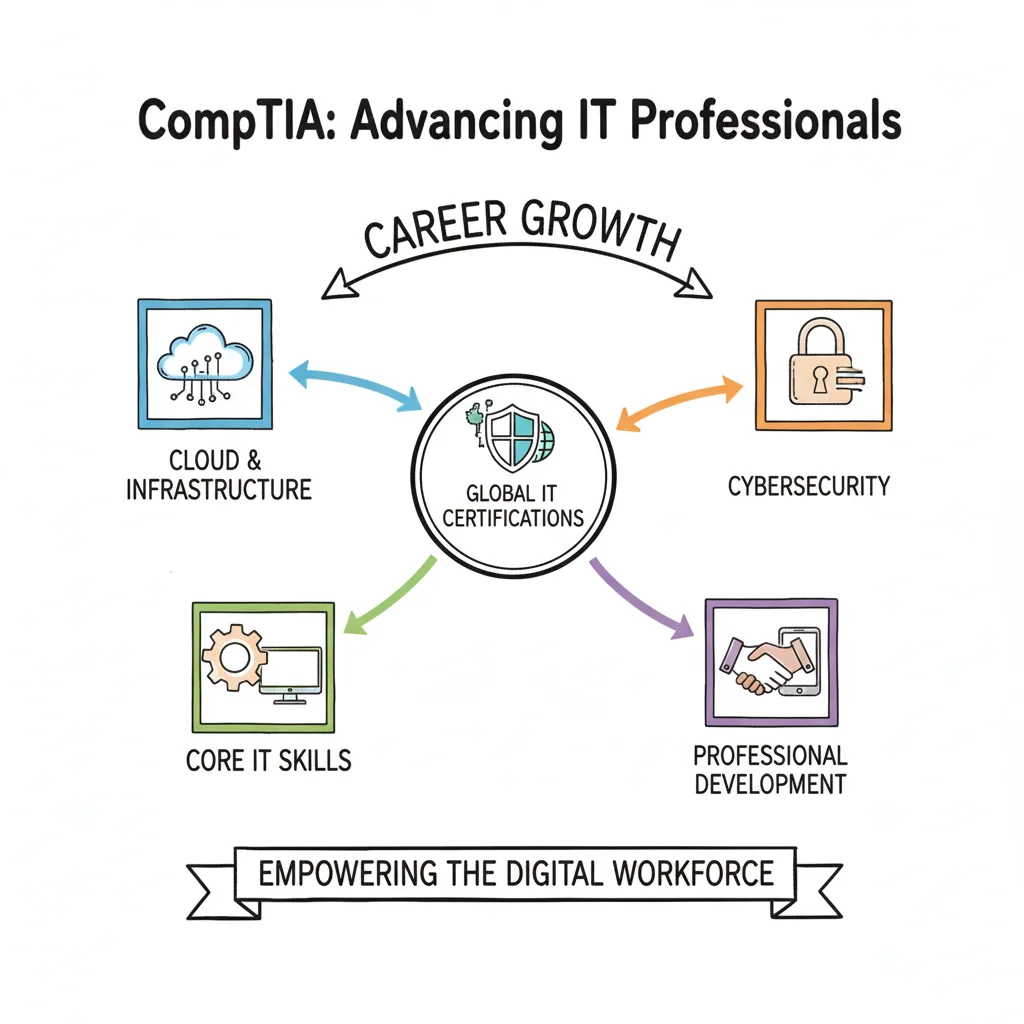
The acronym CompTIA represents the Computing Technology Industry Association. While the name is simple, the organization operates as a nonprofit trade association that shapes how tech professionals learn and prove their skills globally. It has issued millions of certifications to workers worldwide through its testing programs. These credentials serve as a vendor-neutral standard, meaning they focus on general technology concepts rather than specific brands like Microsoft or Cisco.
At MindMesh Academy, we see how these certifications validate the technical knowledge required for modern IT roles. This guide explores how the association functions, the specific benefits of its credentials, and why these exams remain a baseline for professional growth in the technology sector.
What Does CompTIA Stand For, and Why It Matters
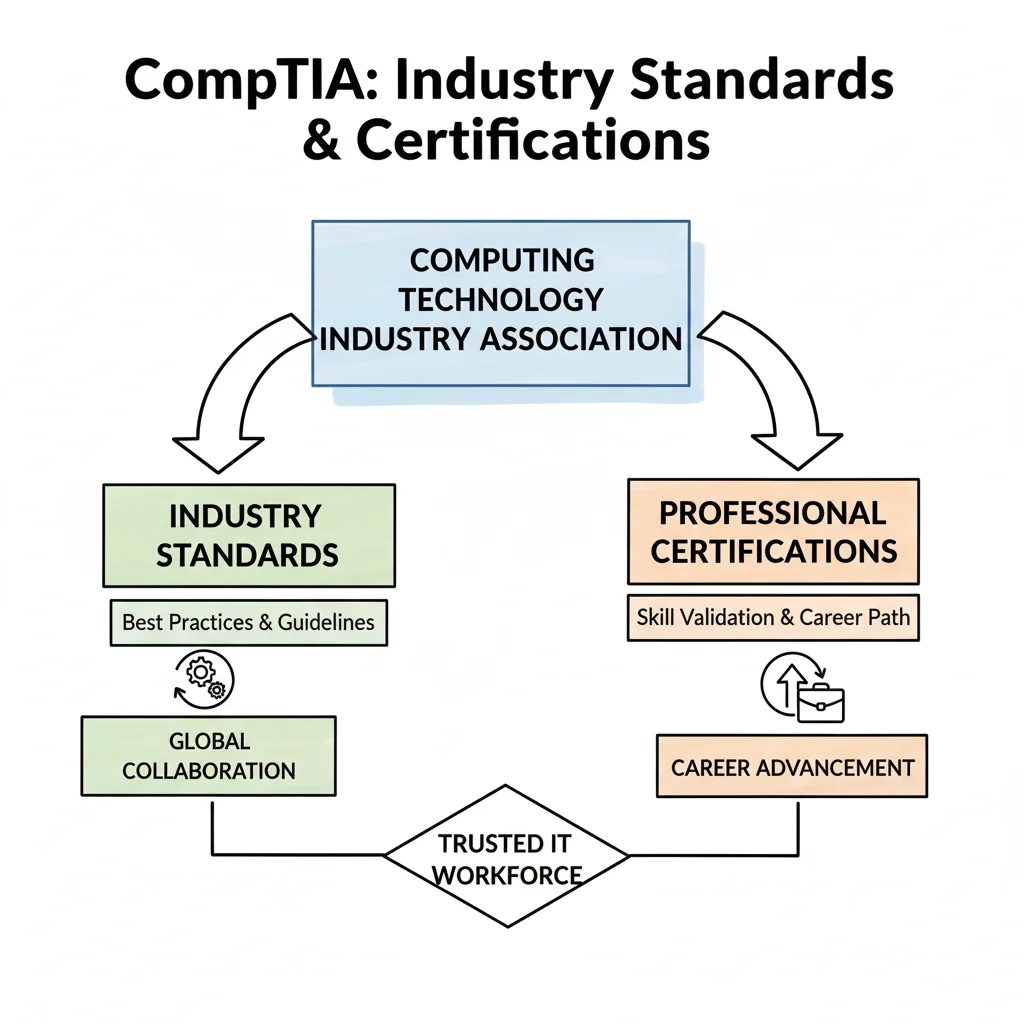
CompTIA acts as a global authority rather than just a corporation. Its official name, The Computing Technology Industry Association, explains its primary goal: to unify and improve the technology sector. By looking at each word in the title, you can see how the organization supports the IT workforce through different eras of innovation.
CompTIA At A Glance
| Component | Meaning | What It Represents for IT Professionals |
|---|---|---|
| Computing | The hardware, software, networks, and data at the heart of the field. | This signals a focus on the fundamental, practical skills that keep systems running. It is about the mechanics of how technology works. |
| Technology | The broad and changing field of digital innovation. | It shows a commitment to keeping certifications current. This ensures your skills remain useful as new tools enter the market. |
| Industry | A global collective of businesses, professionals, and educators. | This highlights the role of creating a unified standard. It makes your certifications recognizable to many different employers. |
| Association | A nonprofit group driven by a shared mission. | The goal is to improve the IT industry and its workers. Certifications are designed to serve both the professional and the employer. |
The name is a mission statement. It signifies a commitment to creating a common ground for everyone in the tech sector. This includes entry-level technicians and experienced cybersecurity analysts alike.
From Dealer Group to Global Standard
The organization began in 1982 (verify date on vendor site) as the Association of Better Computer Dealers (ABCD). At that time, it functioned as a trade group for people who sold computer hardware. However, those sellers soon hit a wall. They realized that selling a computer was not enough; customers needed people who could set up, manage, and repair the systems. This gap in technical skills triggered a major change in the group’s focus.
This shift in purpose led to the rebrand as CompTIA. The new goal was to set global, vendor-neutral standards for IT skills. This allowed the organization to move beyond sales and focus on the expertise required to keep the world’s computers running.
A Project Management Professional (PMP) certification validates your ability to manage projects in any field using any tool. In the same way, an ITIL certification defines best practices for IT service management across any company. CompTIA certifications follow the same logic. They prove you have fundamental IT skills that apply to any environment. You are not locked into one brand like AWS or Azure. You learn the underlying principles of the technology itself, rather than just learning how to use one specific vendor's interface.
What CompTIA Does Today
The core mission is what gives CompTIA certifications their value. The organization serves as a bridge. It connects people who want to start a tech career with the companies that need skilled workers. It does this through several main programs:
- Foundational Certifications: CompTIA creates and maintains certifications that test hands-on skills for real jobs. These exams are vendor-neutral. They focus on universal practices that work across different platforms.
- Education and Insight: The association provides research and learning materials. These tools help people get ready for exams and track new trends. You can see these career tracks by looking at the various CompTIA certifications offered at MindMesh Academy.
- Industry Advocacy: CompTIA works with governments and schools to create better training policies. This helps build a stronger tech workforce and addresses the lack of skilled workers in the market.
When you see the CompTIA name, it represents a seal of quality. It is a benchmark that tells employers you have a specific, validated set of technical skills. These certifications provide the credentials needed to find a job in the technology sector.
The Evolution From Dealer Group To Global Tech Authority
CompTIA’s history as a global certification leader reflects the rapid expansion and change of the technology sector. Its start in the early 1980s did not stem from a grand plan to certify millions of professionals. Instead, the organization began as a pragmatic response to the immediate needs of a growing industry.
In 1982, the group formed as the Association of Better Computer Dealers (ABCD). As the name implies, its primary goal was to create fair business standards for retailers selling personal computers. However, members quickly realized that selling hardware was only part of the challenge. The real struggle involved finding technicians capable of configuring, repairing, and maintaining these machines for customers. At the time, computer systems were becoming more common, but the workforce lacked the specialized training to keep them operational.
The early IT sector faced a massive skills shortage. More importantly, there was no objective method to prove a technician's expertise. This lack of standardization made hiring and training expensive and unpredictable for business owners.
This challenge forced a change in direction. The association stopped focusing only on sales and began developing universal skills standards. This move helped build a reliable workforce that could support technology across different companies and locations.
From Sales to Skills
This change led to the release of the CompTIA A+ certification. It became the first vendor-neutral benchmark for PC technicians and changed how companies hired staff. Employers finally had a reliable way to confirm that a job seeker understood hardware, software, and networking basics. Success with the A+ exam established a framework for every certification that followed and defined the modern mission of the group.
The organization remains relevant by adapting to new trends. The CompTIA Security+ certification serves as a primary example. Since its 2002 launch, the exam has changed to address new risks. It received updates in 2008 to cover cryptography and in 2011 to address cloud security. By 2014, the curriculum expanded again to include mobile device threats and access controls. These changes help fill the global cybersecurity talent gap. You can see how these requirements changed over time in the detailed exam history of Security+.
This forty-year history shows that CompTIA is more than a testing provider. It is an institution that changes alongside technical progress. By updating its standards to match real-world work, it ensures its credentials remain valuable in a professional field that never stops moving.
Mapping Your Career With Core CompTIA Certifications
Building a stable career in IT can seem like a major challenge, but CompTIA offers a logical and well-defined progression. Their certification paths work as a structured learning path where each credential builds directly upon the skills you have already mastered. You begin with fundamental concepts and then branch out into specialized, high-demand technical fields.
This process is more than a way to collect random badges. It is a strategic approach designed to ensure you develop a practical understanding of how technology functions from the ground up. Employers across the industry recognize and value this progressive model. This recognition is why CompTIA certifications are a regular requirement in many IT job descriptions.
The Foundational Skill Stack
Every successful IT professional begins with a common core of knowledge. CompTIA has grouped these essentials into a trifecta of core certifications that work together to prepare you for the workforce.
The process starts with CompTIA A+. This certification serves as the base for any modern IT role. It validates your skills in handling hardware, software, and various operating systems while teaching you troubleshooting methodologies. If your goal is to work in IT support, as a helpdesk technician, or in a desktop support role, A+ is a necessary starting point. It covers a significant 85% of core IT fundamentals and is a listed requirement in over 70% of helpdesk job postings worldwide.
Reflection Prompt: Consider your current skills. Which of these foundational areas—hardware, software, networking, or security—do you feel most confident in, and which do you see as your biggest growth opportunity?
Next, you move to CompTIA Network+. Once you understand individual devices, you must learn how they communicate. This certification covers network infrastructure, topologies, and protocols such as TCP/IP. It also covers network security and advanced troubleshooting techniques. This credential proves you understand how businesses and data stay connected. It is ideal for junior network administrators or anyone supporting a networked environment.
The final piece of the core puzzle is CompTIA Security+. This certification provides the baseline skills needed to protect networks and data. You will learn about threat detection, risk management, cryptography, and the security principles that keep digital assets safe from unauthorized access. CompTIA developed this exam in 2002 to address a skills gap in the industry. Today, millions of professionals use it to enter the field of cybersecurity defense.
Building Out Your Specialization
Once you have achieved the core trifecta of A+, Network+, and Security+, you are equipped to target more advanced roles. This is where you transition from being a generalist to becoming an expert in a specific domain. It is similar to a medical professional choosing a specialty after finishing general training.
-
CompTIA CySA+ (Cybersecurity Analyst): This is the next step for security professionals looking to move beyond foundational principles. It focuses on proactive threat detection and incident response. You will apply behavioral analytics to identify and stop malware and advanced persistent threats (APTs). This is a strong choice for those wanting to work as SOC (Security Operations Center) analysts.
-
CompTIA PenTest+: If your goal is to move into ethical hacking and penetration testing, this is the certification to pursue. PenTest+ validates your ability to plan, conduct, and analyze penetration tests. It involves uncovering system vulnerabilities and helping organizations fix security holes before they are exploited by malicious actors.
The chart below breaks down popular certification paths and the career opportunities they create. It illustrates the progressive nature of these offerings.
Popular CompTIA Certification Paths
| Certification | Core Focus | Target Audience | Typical Job Roles |
|---|---|---|---|
| A+ | Hardware, Software, & Troubleshooting | Aspiring IT Technicians, Helpdesk Staff | Help Desk Technician, Field Service Tech, IT Support Specialist, Desktop Support Analyst |
| Network+ | Network Infrastructure & Connectivity | Junior Network Admins, IT Professionals | Network Administrator, Systems Engineer, Network Support Specialist, Data Center Technician |
| Security+ | Core Cybersecurity Principles | Anyone entering cybersecurity | Security Administrator, Systems Administrator, Junior Security Analyst, Compliance Analyst |
| CySA+ | Threat Detection & Response | Security Analysts, Threat Hunters | Cybersecurity Analyst, Threat Intelligence Analyst, SOC Analyst, Incident Responder |
| PenTest+ | Penetration Testing & Vulnerability Mgmt | Ethical Hackers, Security Consultants | Penetration Tester, Security Consultant, Vulnerability Analyst, Red Team Member |
Each of these certifications represents a clear step forward in your career. They build on what you have already learned to qualify you for senior and often higher-paying positions.
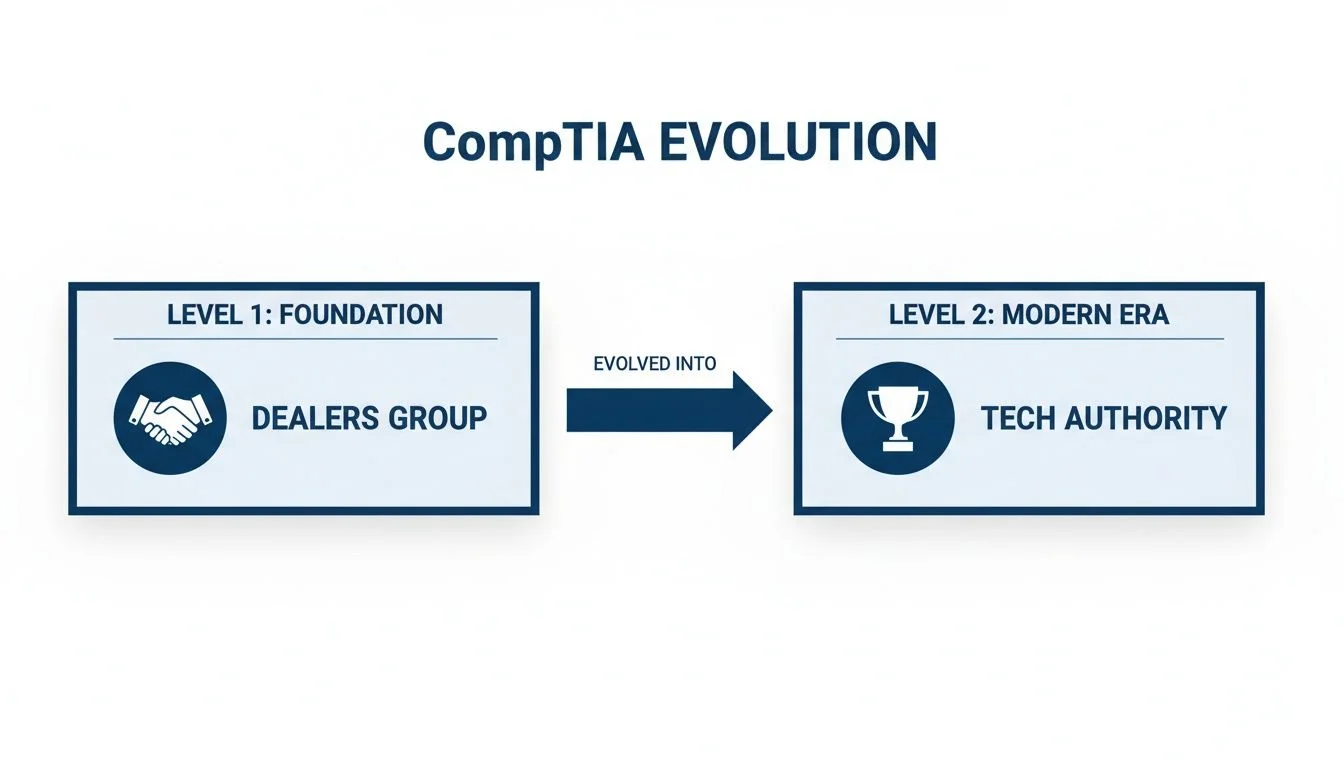
Just as CompTIA evolved from a trade association to a global certification leader, its roadmap for your career is designed for growth. By following this progression, you can transform an entry-level job into an expert-level career.
Ready to build your foundational skills? A great place to start is with our CompTIA A+ Core 1 study guide. It is specifically designed to help you master the first step on your certification path.
Why Vendor Neutrality Is Your Career Superpower

One core concept explains why CompTIA certifications remain a gold standard for hiring managers: vendor neutrality. This philosophy is why employers across all industries value these credentials. While some certifications focus on a specific product, CompTIA ensures you understand the underlying technology itself.
Consider this analogy. A vendor-specific certification, like the Microsoft Certified: Azure Administrator Associate or the Cisco Certified Network Associate (CCNA), is like becoming an expert on one specific car brand. You might know every detail of a Tesla's software or every command for a Cisco router. Your knowledge is deep, but it is focused strictly on that brand.
However, complications arise when your next role involves managing servers on AWS or fixing a network built with Juniper hardware. Your specialized training might not translate directly to these different systems. You could find yourself starting over because your expertise was tied to a single manufacturer’s way of doing things.
Learning the Rules of the Road
CompTIA uses a different strategy. It avoids the specific quirks of one brand’s product line. Instead, it teaches universal principles of how technology operates. These are the fundamental rules that apply across all platforms. You learn how an operating system functions, how networking protocols handle data, and the core requirements of cybersecurity. This foundational knowledge stays relevant whether you use Windows, Linux, AWS, Azure, or Google Cloud platforms.
With this solid base, you can approach any hardware or software and quickly get up to speed. Your skills are portable. They remain useful even as a company changes its hardware providers or software vendors. You are not locked into a single way of doing things or a specific vendor's interface.
Vendor neutrality proves you understand the "how" and "why" behind technology, instead of only the specific hardware or software catalog of a single company. You become a versatile problem-solver.
This flexibility is a massive advantage. Most enterprise networks are built from a mix of different technologies. A single company might use Dell servers, store data in both AWS and Azure, and secure everything with a variety of third-party tools.
A professional with vendor-neutral training can step into these multi-vendor environments and start working immediately. They can troubleshoot problems across different platforms and integrate systems that were never meant to work together. This adaptable expertise is exactly what IT managers look for when building tech teams that can handle whatever comes next.
Reflection Prompt: Think about the technologies you use daily, such as different operating systems or cloud providers. How would vendor-neutral skills help you adapt more quickly when a company switches to a new provider?
How A CompTIA Certification Impacts Your Hiring Potential
Adding a CompTIA certification to your resume does more than fill a line in a document. It acts as a stamp of industry validation that hiring managers trust. Organizations like Intel, Dell, and the U.S. Department of Defense write these certifications into their job descriptions for a reason. They need objective assurance that a new hire has the technical skills to perform on day one without needing basic remedial training.
From an employer’s point of view, holding a CompTIA credential proves you have mastered a specific set of industry-standard skills. It removes uncertainty from the hiring process. When a manager sees your certification, they know you understand the operational mechanics of your role. This is a practical validator that leads to actual career growth and makes you a much more attractive candidate during the screening process.
From Application To Offer
How does this signal help you when you are looking for a job? It provides a clear advantage at several stages of the hiring process.
- Getting Past the First Hurdle (Applicant Tracking Systems): Your resume is much more likely to be flagged by an Applicant Tracking System (ATS) when it contains terms like "CompTIA A+ Certified" or "Security+ Certified." Recruiters often set these systems to filter for specific credentials first. If you do not have the certification, your application might never reach a human set of eyes, even if you have years of informal experience.
- Strengthening Your Salary Negotiation: A certification offers proof of your professional value. You are not just making claims about your ability; you have an industry-backed credential that proves your knowledge. This verifiable expertise gives you a better position when asking for a higher starting salary or a performance-based raise. Industry data shows that certified IT professionals often earn more than their uncertified peers.
- Opening More Job Opportunities: Many roles in government contracting or large corporate IT departments require specific CompTIA certifications by law or internal policy. Without the right credential, you are often disqualified before the interview starts. Having the certification is the difference between being a candidate and being a qualified professional.
Scenario: Consider two people applying for a Help Desk Technician role. Candidate A writes that they are "proficient in fixing computers and Windows." Candidate B lists their status as "CompTIA A+ Certified." Candidate B will likely get the interview because their skills are verified by an external standard, while Candidate A’s claims are subjective and harder to verify during a quick resume review.
A CompTIA certification is a strategic investment in your professional growth. It pays you back through more job leads, higher earning potential, and better career mobility across the tech sector.
After you earn your credential, you can find remote jobs that match your skills. This lets you look for work outside your local area. Earning a certification shows you are dedicated to your work and willing to keep learning. Employers notice that commitment and are often willing to pay more for it.
Your Next Steps To Getting CompTIA Certified
If you are convinced that a CompTIA certification will help your career, the next phase is the most critical. You must turn that interest into a physical credential that recruiters respect. Moving from a beginner to a certified professional requires more than just casual reading or watching a few videos. You need a strategic plan to ensure your study time results in a passing score. Aimless study is often the biggest obstacle to success, and a structured approach is necessary to move forward.
MindMesh Academy provides a platform based on proven learning science to help you master the material for certifications like A+, Network+, and Security+. We help you move past the basics to ensure you are ready for the professional world. Our goal is to help you pass with confidence while building technical skills that last throughout your career.
Study Smarter, Not Harder
Many students make the mistake of cramming for a test only to forget the details a few days later. This method does not create the technical knowledge required for a long-term IT career. If you want to succeed in this field, you need to understand how systems work rather than just memorizing answers for a single day. Our training methods prioritize durable understanding and the practical application of technology.
- Spaced Repetition: This technique functions like a personal trainer for your brain. The system tracks your progress and prompts you to answer questions on specific topics right before you are likely to forget them. This specific timing forces your brain to recall information, moving it from short-term memory into long-term storage. This process ensures the information stays with you during the exam and while you are working in the field.
- Adaptive Learning: Our platform identifies the topics you have already mastered and highlights your specific knowledge gaps. It then generates a personalized study plan that focuses on your weak areas. This approach ensures every minute you spend studying is productive. You will spend less time reviewing what you already know and more time strengthening the areas where you need the most improvement.
MindMesh Academy aims to do more than help you pass an exam. We want to prepare you with the practical, real-world skills you will use starting on your first day in a new IT career.
Earning a certification is a major achievement, but it is only one part of the process. You should combine your new credential with effective job search strategies for 2026 to see the best results. Our expert content, interactive exercises, and progress trackers help you walk into your exam with the skills needed to succeed. For a full walkthrough, read our guide on how to get a CompTIA certification.
Your CompTIA Questions, Answered
Deciding to earn a CompTIA certification brings up several practical questions about timelines and requirements. Curiosity about study times or renewal intervals is common, and getting these details right helps you organize your preparation toward your career goals. Let's look at the most frequent questions candidates ask when starting this process.
How Long Does It Take to Get CompTIA Certified?
The time you need to invest depends on the specific exam and your technical background. Beginners pursuing the CompTIA A+ typically need to plan for 3-6 months of steady study. This window provides enough room to learn hardware basics, operating systems, and troubleshooting protocols without rushing through the material.
If you are an active IT professional, you might finish in a few weeks. Your preparation involves filling gaps in theoretical knowledge rather than learning every concept from scratch. The most effective way to succeed is to maintain a predictable study routine. Setting aside specific hours each day for reading and practice labs usually yields better results than long sessions only on the weekend. Establish a schedule that fits your life and treat it like a professional obligation.
Do CompTIA Certifications Expire?
Most CompTIA certifications remain valid for three years from the day you pass your exam. This expiration policy ensures the credentials hold weight in the job market. Because technology changes rapidly, a certification earned a decade ago would not reflect current industry standards. This renewal cycle shows employers that your skills remain fresh and that you understand modern hardware and security threats.
You can keep your status active by earning Continuing Education Units (CEUs). You collect these by completing qualifying activities such as attending industry conferences, finishing training courses, or publishing technical articles. Alternatively, passing a more advanced CompTIA exam often automatically renews your lower-level certifications. This system promotes continuous learning and keeps your professional profile competitive as the industry moves forward.
This three years renewal cycle is a primary reason why hiring managers trust CompTIA. It acts as a verified claim that your technical abilities have kept pace with the changing demands of the industry.
Should I Start With CompTIA A+ or Security+?
Most people entering the field find that CompTIA A+ is the best place to start. It establishes the functional knowledge required for nearly every IT role, covering hardware, software, and networking. A+ provides the framework for your technical career. You need the floors, walls, and roof in place before you can install a high-tech alarm system.
Starting with CompTIA Security+ is usually only advisable if you already have significant, hands-on experience in desktop support or networking. While Security+ is an entry-level security credential, it assumes you already understand how data moves through a network and how operating systems function. If you skip the basics, you may struggle with the context of the security protocols you are trying to learn. Building a strong technical base first ensures you have the knowledge needed to master more specialized topics later.
Ready to turn your interest in technology into a career? At MindMesh Academy, we provide the study materials and digital tools you need to master these concepts and approach your exam with confidence.
Explore our certification prep courses and see how our resources can support your effort to become a certified professional.

Written by
Alvin Varughese
Founder, MindMesh Academy
Alvin Varughese is the founder of MindMesh Academy and an enterprise architecture leader. An electrical engineer by training, he moved from factory automation in South Africa to cloud architecture at GE Appliances and Humana (Fortune 50), and holds 20 professional certifications including AWS Solutions Architect Professional, Azure DevOps Engineer Expert, and Microsoft Agentic AI Business Solutions Architect. He built MindMesh Academy after interviewing too many highly certified candidates who couldn't answer basic questions: the goal is prep that makes you better at the job, not just able to pass the exam.