Topics to Study First When Time Is Limited
Prioritizing Study Topics When Time is Tight
When you have limited time to study for a certification exam, the smartest approach isn't to start with chapter one or your favorite subject. Instead, focus on topics that combine high exam weight, your personal weaknesses, and questions that test real-world application. Prioritize areas that will most quickly improve your score.
A good rule of thumb: if a topic appears in the official exam objectives, shows up in scenario questions, and consistently costs you points in practice, it belongs at the top of your study list. If you already score well in an area, or if it only involves rare recall questions, save it for your final review block.
How to Choose Which Topics to Study First
The most effective topics to tackle first are rarely the easiest ones. Your goal isn't to feel busy; it's to increase your pass probability before exam day.
Use four filters to rank each domain or objective:
- Exam importance: Does the vendor's official exam guide give this domain significant coverage?
- Current weakness: Are you missing questions in this area during practice?
- Question complexity: Does the topic appear in scenarios, troubleshooting prompts, or performance-based tasks?
- Dependency value: Will understanding this topic make several other areas easier to grasp?
This last filter often matters more than candidates realize. For instance, strong IAM (Identity and Access Management) concepts can help you answer security, governance, and cloud architecture questions on AWS or Azure exams. Networking fundamentals support cloud, cybersecurity, and Cisco objectives. Understanding project lifecycle concepts can help you navigate many PMP scenario questions.
| Priority Signal | What it means | What to do next |
|---|---|---|
| High exam weight and low score | Big opportunity for points | Study first and practice immediately |
| Low exam weight and high score | Small return on effort | Review near the end |
| Scenario-heavy topic | Likely to test judgment | Practice with explanations |
| Foundational dependency | Supports many other domains | Learn before memorizing details |
| Pure fact recall | Useful but narrow | Save for flashcard review |
Start with Official Exam Objectives, Not Chapter Order
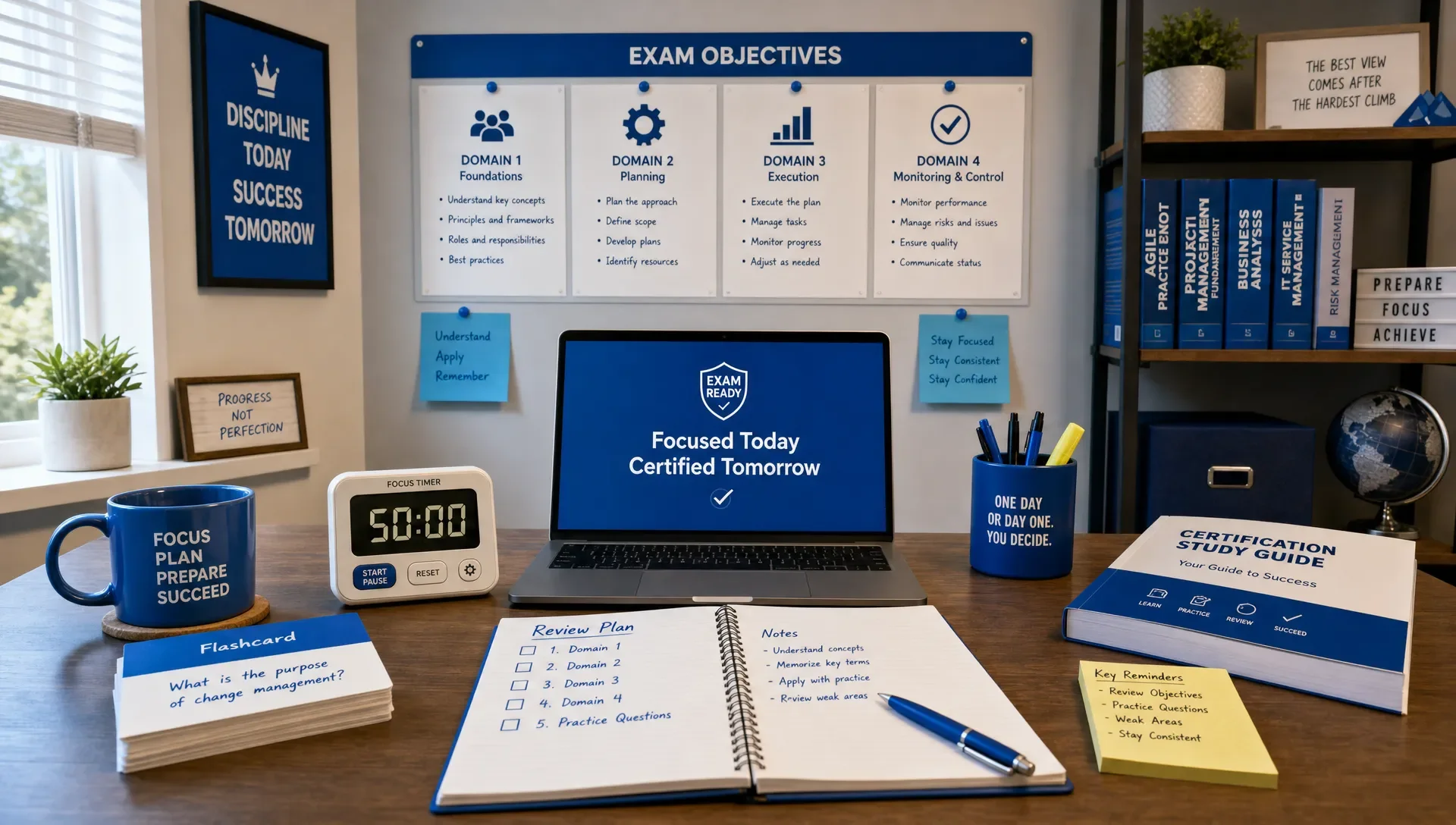
Vendor exam objectives are your roadmap. While course chapters, book sections, and videos are helpful, they don't always align with the exam's weighting. When time is short, the official blueprint should dictate your initial study pass.
AWS, Microsoft, CompTIA, Cisco, and PMI all publish exam information detailing what each exam measures. For example, AWS provides official information for the AWS Certified Cloud Practitioner, Microsoft publishes an AZ-900 study guide, and CompTIA lists certification details for Security+. These resources help you distinguish essential domains from interesting, but non-critical, side material.
Once you have the blueprint, turn it into a quick ranking list. The topics you study should come from objectives where you see both impact and risk, not just from whatever lesson comes next in a book.
Here's a quick way to rank:
| Step | Action | Output |
|---|---|---|
| 1 | Open the official exam objectives | List of domains and skills |
| 2 | Mark domains where you score below target | Personal weakness list |
| 3 | Circle scenario-heavy areas | Applied practice list |
| 4 | Pick the top 3 to 5 items | Study queue for this week |
If you're preparing for a specific path, an objective-based guide can shorten this process. For example, MindMesh Academy's AZ-900 Microsoft Azure Fundamentals study guide organizes review around exam objectives, so you don't have to guess what to tackle first.
Prioritize Weak, High-Weight Domains Over Comfortable Ones
Most candidates waste precious study time reviewing what they already know. It feels good, but it won't fix a low score.
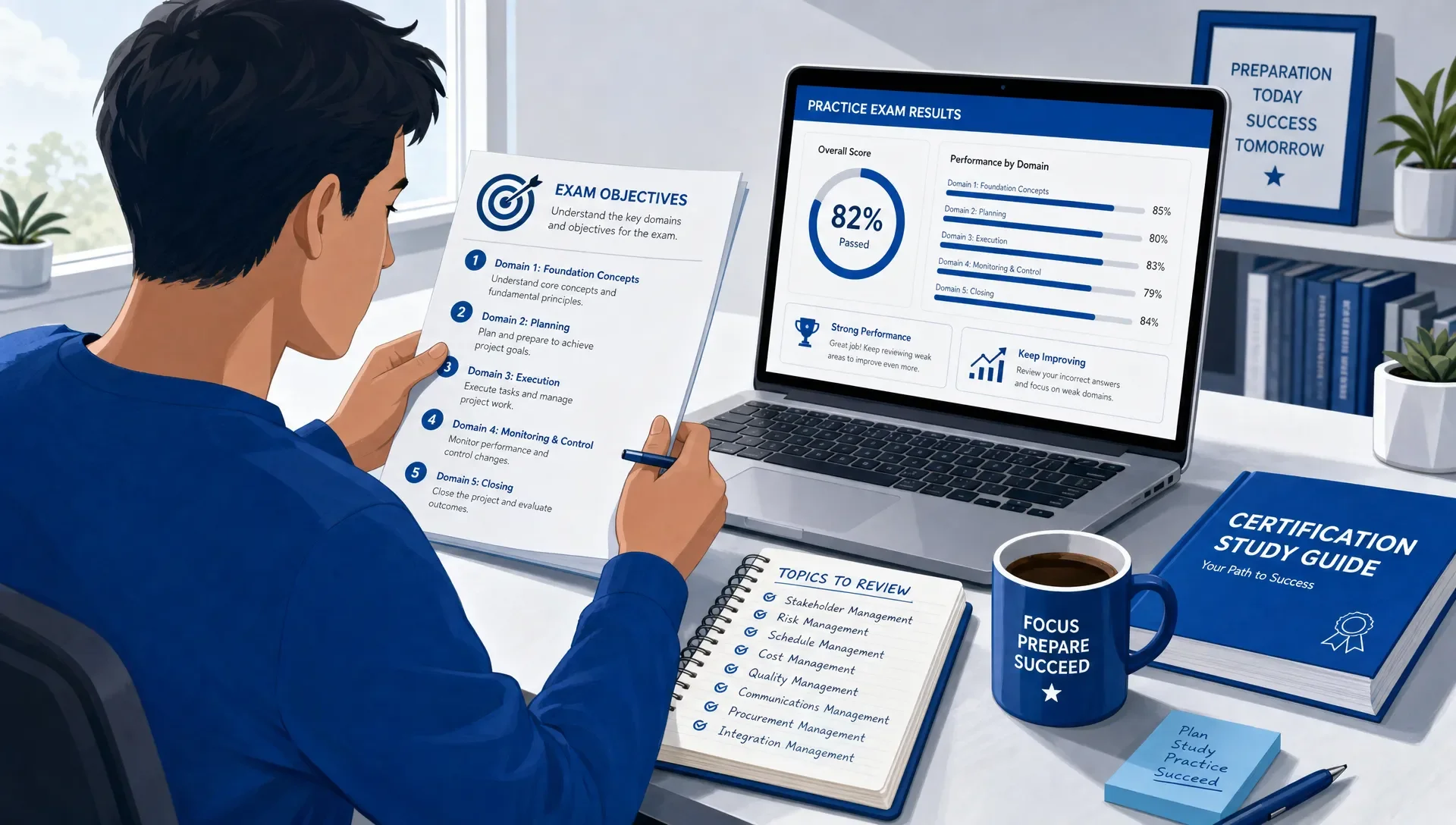
A better strategy is to compare your practice test results against the exam blueprint. If you score 90 percent in a low-stakes domain and 55 percent in a major domain, your next study block is clear. The weaker, higher-weight domain should come first.
This is where practice questions shine as a diagnostic tool, not just for rehearsal. A missed question reveals more than a highlighted paragraph because it exposes how you think under exam conditions. If you can review the explanation and map your mistake back to a specific objective, you can study with far less guesswork.
For cloud and IT exams, examples of high-return weak areas often include identity and access control, networking basics, the shared responsibility model, logging, monitoring, risk management, and troubleshooting workflows. For project management exams, stakeholder engagement, change control, and situational judgment often deserve early attention because they impact many scenario questions.
Study Scenario-Based Tasks Before Small Facts
Scenario questions test whether you can apply a concept, not just define it. If your exam includes troubleshooting prompts, case questions, or performance-based tasks, these should rise in priority.
This applies across certification families. Cisco publishes CCNA exam topics, and many networking objectives require you to interpret behavior, not simply recall a definition. PMI's PMP materials guide candidates toward applying project management principles in realistic situations through its PMP exam preparation resources. CompTIA exams often feature performance-based questions where you must complete a task or analyze a setup.
When limited time forces tradeoffs, the topics to study first are those that help you answer multi-step questions. Memorizing a port number might help with one item. Understanding how a security control fits a business requirement, however, can help with several.
A strong scenario review block has three parts. First, read the question and identify the specific task the exam wants you to perform. Second, explain why the correct answer fits. Third, explain why the tempting wrong answers are incorrect. This third part is often where candidates gain the most points.
Build a 90-Minute Limited-Time Study Block
If you only have one evening, don't spend it passively reading. Use a study block that forces retrieval, feedback, and correction. A 2013 review by Dunlosky and colleagues in Psychological Science in the Public Interest rated practice testing and distributed practice as highly effective learning techniques compared with common passive methods like rereading and highlighting (journal source).
Here is a practical 90-minute format you can repeat:
| Time | Activity | Goal |
|---|---|---|
| 0-10 minutes | Choose one weak objective | Avoid scattered review |
| 10-30 minutes | Review only the core concept | Rebuild the missing foundation |
| 30-60 minutes | Answer targeted practice questions | Test recall and application |
| 60-75 minutes | Read explanations and write corrections | Fix the reason you missed items |
| 75-90 minutes | Make flashcards or quick notes | Prepare for spaced review |
If you're targeting AWS, a focused pass through an AWS Certified Cloud Practitioner practice exam can help you pinpoint which domains deserve your next 90-minute block. For security certifications, a CompTIA Security+ practice exam can serve the same diagnostic role.
Use Dependencies to Decide What Can Wait
Some topics simplify others. Study those earlier. Other topics are isolated facts; study those later.
For example, if you don't grasp the difference between authentication and authorization, access-control questions will remain confusing. If your subnetting skills are weak, many routing and network troubleshooting questions will be slower and more difficult. If you don't understand project constraints, PMP scenario questions about tradeoffs will feel inconsistent.
This dependency-first approach helps you avoid random effort. The topics to study aren't just the domains with the lowest scores. They're the low-score domains that underpin several other skills.
A simple dependency test: ask, "If I understand this, what else becomes easier?" If the answer is "many things," move it up. If the answer is "one narrow detail," move it down unless your practice results show it's a recurring problem.
What to Study Last When Exam Day is Near
Some material is worth reviewing, but not at the expense of higher-return work. Save these for the final pass unless your practice results reveal a clear issue.
Low-priority final review typically includes exact product limits, rare command variations, minor terminology differences, and facts you consistently answer correctly. These details can still matter, but they shouldn't overshadow weak objectives that appear in applied questions.
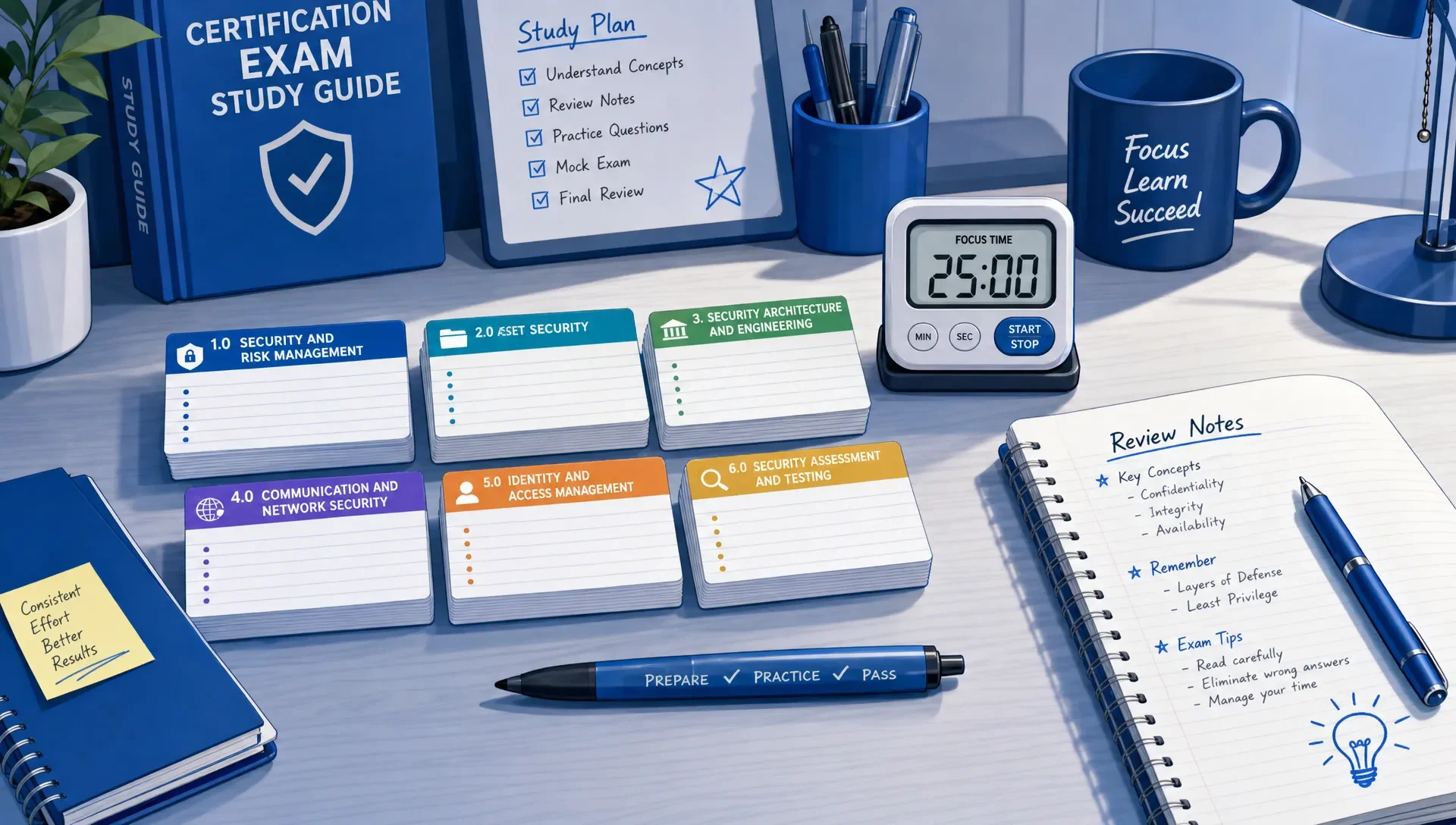
Use flashcards for this layer. Spaced repetition is effective here because it brings back facts at timed intervals, preventing you from having to reread everything at once. MindMesh Academy includes flashcards with spaced repetition, which is perfect for this final-review phase when you need repeated recall without reopening full lessons.
If you're studying around work or family responsibilities, you might also need a plan that respects your energy level. This guide on study help for busy people preparing after work offers practical ways to keep your review realistic when your best hours are limited.
A Simple Three-Day Priority Plan
If your exam is close, keep your study plan tight. Don't try to rebuild the entire course. Instead, use practice results, official objectives, and explanations to target your biggest gaps.
| Day | Main focus | What to avoid |
|---|---|---|
| Day 1 | Diagnose weak, high-value objectives | Full rereads of familiar material |
| Day 2 | Drill scenario questions and explanations | Jumping between unrelated domains |
| Day 3 | Review missed questions, flashcards, and quick notes | Learning brand-new, low-value details |
On day one, take a timed or semi-timed practice set, then categorize every missed question by objective. On day two, work through the top two or three weak areas with targeted questions. On day three, revisit your correction notes and test your recall without looking up answers.
By this point, your list of topics to study should be focused enough to fit into real sessions. If the list still feels overwhelming, cut it again using the same criteria: high weight, weak score, scenario difficulty, and dependency value come first.
Frequently Asked Questions
What should I study first if I only have one day? Start with objectives you missed most frequently on your latest practice test, especially those with high exam weight in the official guide. Focus most of your time on understanding explanations and working through similar questions, rather than rereading full chapters.
Should I study my weakest topic or the highest-weight topic first? Choose the overlap. A weak topic that also carries significant exam weight usually offers the best return on your study time. If the highest-weight topic is already a strength, then move to your next weak domain that can still impact your overall score.
Are flashcards enough when time is limited? Flashcards are excellent for recall, definitions, and quick facts, but they shouldn't replace scenario practice. Use them after you've worked through questions and explanations for your highest-priority objectives.
How many topics should I study in one session? One or two topics are usually enough for a focused session. If you try to jump between too many areas, you might recognize terms without being able to apply them effectively under exam pressure.
Should I take a full practice exam close to test day? Only take a full practice exam if you have enough time to review it thoroughly afterward. A full exam without dedicated explanation review is less effective than a smaller, targeted set of questions followed by careful correction.
What if I don't know what my weak areas are? Take a short, objective-based practice set and meticulously track your misses by domain. Your next study list should be based on this evidence, not on how confident you feel while simply reading.
Turn Limited Study Time Into a Clear Exam Plan
Limited time doesn't mean you have to study randomly. Select the highest-return objectives, practice them under realistic question conditions, and use explanations to correct the thinking behind each mistake.
To connect what you study, what you miss, and what you should review next, check out MindMesh Academy. Our platform features exam-objective study guides, practice questions with explanations, spaced-repetition flashcards, and adaptive weakness-based practice. Build your next study session around evidence instead of guesswork and get ready for your AZ-900 exam with MindMesh Academy's practice tests.

Written by
Alvin Varughese
Founder, MindMesh Academy
Alvin Varughese is the founder of MindMesh Academy and an enterprise architecture leader. An electrical engineer by training, he moved from factory automation in South Africa to cloud architecture at GE Appliances and Humana (Fortune 50), and holds 20 professional certifications including AWS Solutions Architect Professional, Azure DevOps Engineer Expert, and Microsoft Agentic AI Business Solutions Architect. He built MindMesh Academy after interviewing too many highly certified candidates who couldn't answer basic questions: the goal is prep that makes you better at the job, not just able to pass the exam.