
Top 7 Network System Administrator Certifications
Top 7 Network System Administrator Certifications: A Strategic Guide
For dedicated IT professionals, network system administrator certifications are far more than just credentials; they are strategic investments in a rapidly evolving career landscape. In an industry where technology shifts constantly, staying ahead with validated skills is paramount for professional advancement, increasing earning potential, and solidifying your expertise in high-demand domains like cloud networking, robust enterprise systems, and critical cybersecurity.
This comprehensive guide is designed to cut through the complexity, highlighting the top network system administrator certifications that deliver demonstrable career value. Our goal at MindMesh Academy is to provide a clear roadmap for your professional development. We'll meticulously break down the most impactful options from leading vendors such as AWS, Cisco, CompTIA, and Microsoft. Each entry will delve into the certification's specific focus, essential prerequisites, typical exam costs, and its direct impact on your career trajectory, empowering you to make an informed decision aligned with your unique professional goals.
Whether you're deeply entrenched in managing on-premise infrastructure, making a pivotal transition to cloud environments, or securing complex hybrid networks, this roundup offers a tailored path for you. By the end, you'll possess a clear understanding of which certification offers the best return on your valuable investment of time and resources, complete with direct links to kickstart your journey.
1. AWS Certified Advanced Networking – Specialty Study Guide (ANS‑C01)
MindMesh Academy’s study guide for the AWS Certified Advanced Networking – Specialty (ANS-C01) exam stands out as an exceptional resource for seasoned IT professionals aiming to validate their profound expertise in cloud networking. This certification is specifically engineered for network system administrators who already possess a robust on-premises networking foundation and are ready to master the intricacies of complex AWS networking architectures. The MindMesh Academy guide prioritizes deep conceptual understanding over rote memorization, ensuring you're not just prepared to pass the exam, but to confidently tackle real-world cloud infrastructure challenges.
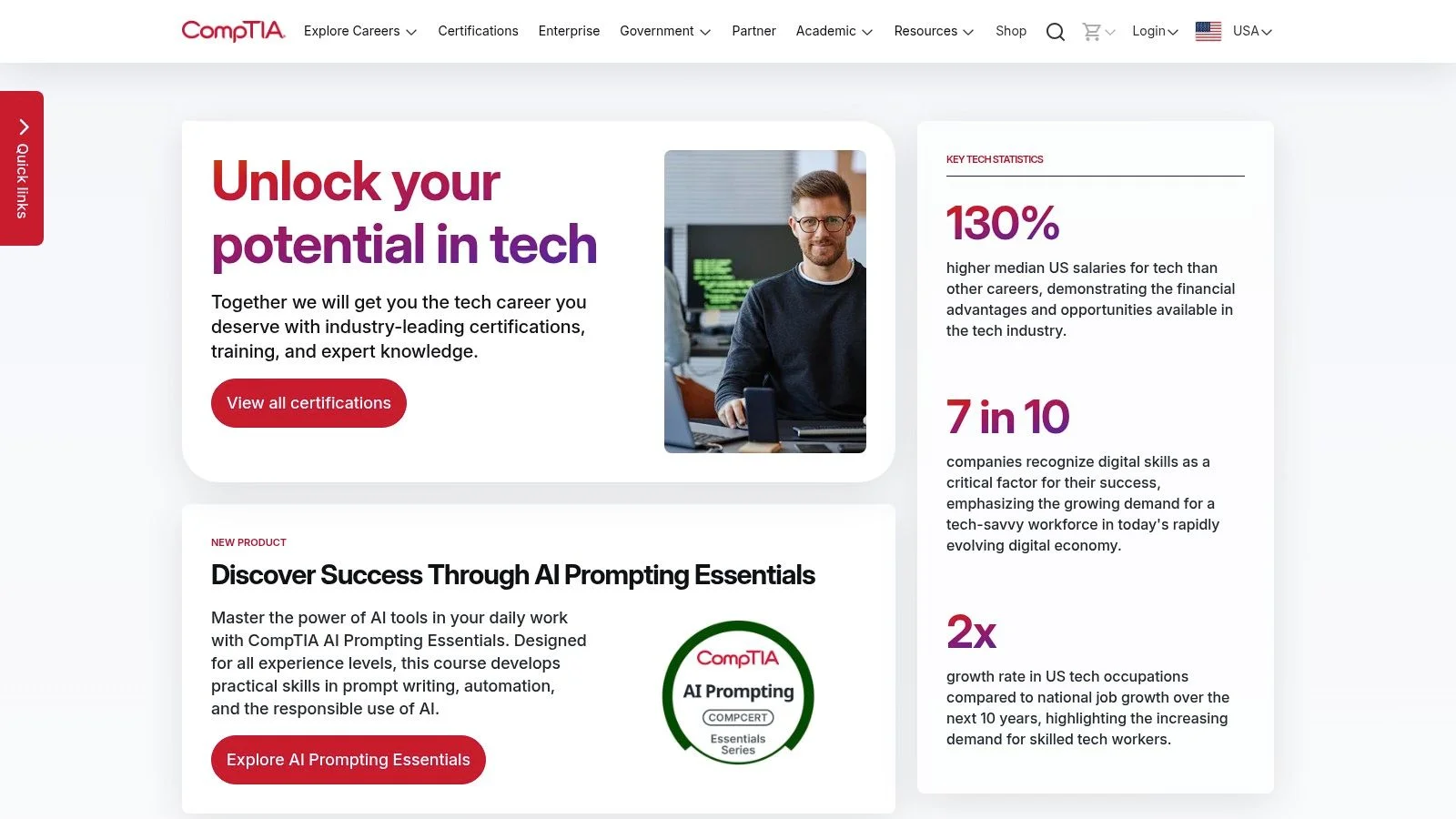 Image: The MindMesh Academy study guide for the AWS Certified Advanced Networking – Specialty (ANS-C01) certification.
This platform is more than just a collection of notes; it's an intelligent, adaptive learning system. By effectively translating traditional networking knowledge into AWS-specific concepts and solutions, it significantly shortens the typical learning curve. The content is meticulously mapped to the official ANS-C01 exam blueprint, ensuring that every minute of your study time is highly efficient and directly relevant to the knowledge and skills you'll need on test day. For example, understanding how to design secure and performant Virtual Private Clouds (VPCs) with complex routing, or implementing advanced direct connect solutions, are core to this certification.
Why It Excels for Network System Administrators
What truly distinguishes this guide is its evidence-based learning methodology. It seamlessly integrates advanced techniques such as spaced repetition and adaptive learning paths. These powerful approaches are proven to reinforce knowledge retention and intelligently guide you to focus on your weakest areas, making your study process highly personalized and effective. The platform’s integrated dashboard provides a clear, visual representation of your progress, allowing you to pinpoint specific knowledge gaps and strategically allocate your study time for maximum impact. This data-driven approach builds confidence by transforming abstract study goals into measurable achievements.
The guide is particularly effective in demystifying intricate topics essential for cloud administrators, such as hybrid cloud connectivity, advanced routing protocols (like BGP over VPN), and the implementation of AWS Transit Gateways. It ensures you not only understand but can also confidently design, implement, and manage secure, scalable, and resilient networks that seamlessly bridge on-premises data centers with the expansive AWS cloud. For a deeper look into this critical area, you can explore their detailed breakdown of hybrid cloud connectivity.
Reflection Prompt: Consider your current networking environment. Are you seeing a shift towards hybrid cloud? How might mastering AWS advanced networking concepts prepare you for future infrastructure challenges?
Practical Considerations
| Feature | Details |
|---|---|
| Primary Focus | Preparing experienced network/systems administrators for the AWS ANS-C01 exam. |
| Learning Method | Spaced repetition, adaptive learning paths, and progress tracking dashboard. |
| Strengths | Direct alignment with exam objectives; translates on-prem skills to cloud. |
| Limitations | Not ideal for absolute beginners; supplemental hands-on lab time is recommended. |
Ultimately, this study guide is one of the premier resources for network system administrator certifications because it delivers a focused, efficient, and role-specific pathway to achieving a highly respected cloud networking credential.
Learn More: MindMesh Academy AWS Advanced Networking Study Guide
2. CompTIA Certifications: The Foundation of IT
CompTIA stands as a foundational cornerstone for anyone building or advancing a career in IT, offering a suite of globally recognized, vendor-neutral network system administrator certifications. Its official website, comptia.org, serves as the central hub for everything from purchasing exam vouchers to accessing a vast library of official training materials. These resources, including CertMaster Learn, CertMaster Practice, and CertMaster Labs, are meticulously designed to align perfectly with exam objectives, ensuring a direct-from-the-source approach to your study.
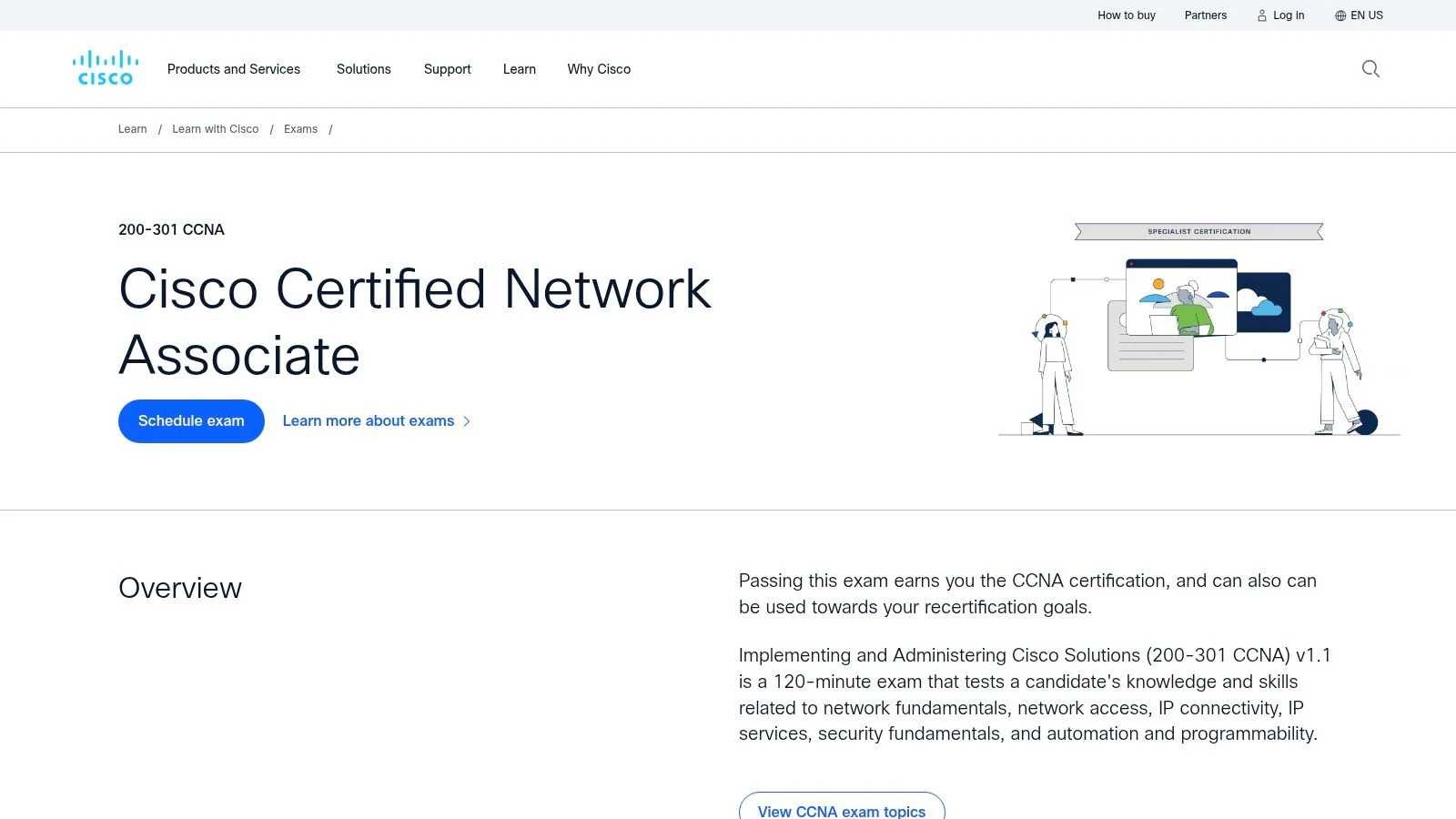 Image: The CompTIA logo, representing a suite of vendor-neutral IT certifications.
The CompTIA platform is particularly valuable for its flexible purchasing options. Aspiring professionals in the US can choose from various bundles, including a basic exam voucher, a voucher with a retake option for added peace of mind, or comprehensive packages that include official training tools. This tiered structure allows candidates to tailor their investment based on their current confidence level, existing knowledge, and specific study needs. For a more detailed breakdown of the process and how to plan your entry into the CompTIA ecosystem, you can explore this guide on how to get a CompTIA certification.
Key Features and Offerings
The CompTIA website's primary strength lies in its unified and accessible ecosystem. Everything a candidate needs, from initial research into career paths to sitting for the exam, is readily available in one place.
- Official Exam Vouchers: The site is the direct marketplace for purchasing vouchers for all CompTIA exams, including popular choices like Network+, Security+, Server+, and Linux+. Exams are delivered globally via Pearson VUE, with both convenient in-person and secure online proctoring options available.
- CertMaster Suite: This collection of first-party study products (Learn, Labs, Practice) is expertly engineered to cover every exam objective. It provides an integrated learning experience that combines structured instruction with essential hands-on practice, crucial for network system administrators.
- Continuing Education (CE) Program: The platform provides clear guidelines and an intuitive portal for renewing credentials. Maintaining certifications through the CE program demonstrates a vital commitment to lifelong learning and staying current, a crucial trait for any effective system administrator. For example, understanding the common causes and remedies for how to fix DNS issues is a practical skill directly aligned with objectives in certifications like CompTIA Network+.
Reflection Prompt: Are you new to IT or looking to formalize your foundational knowledge? Which CompTIA certification (e.g., A+, Network+, Security+) would best complement your current skills or bridge a knowledge gap?
Pros and Cons
| Pros | Cons |
|---|---|
| Vendor-neutral credentials are highly respected and recognized by a wide range of US employers. | Pricing can be confusing; the central price list may differ from the voucher store prices. |
| Flexible purchasing options (voucher-only, voucher + retake, bundles) cater to different budgets. | Continuing Education (CE) fees are required to renew most credentials every three years. |
| An extensive ecosystem of official study materials ensures alignment with exam objectives. | The cost of official training bundles can be a significant investment for some individuals. |
3. Cisco Certifications: The Standard for Network Engineering
Cisco remains a dominant and foundational force in the networking industry, and its certifications are absolutely essential for professionals working in Cisco-powered environments worldwide. The official Cisco website, specifically the page for the CCNA exam, is the authoritative resource for one of the most sought-after network system administrator certifications. This portal consolidates everything a candidate needs to pursue this crucial credential, from official exam blueprints and scheduling links to its comprehensive Cisco U. learning platform.
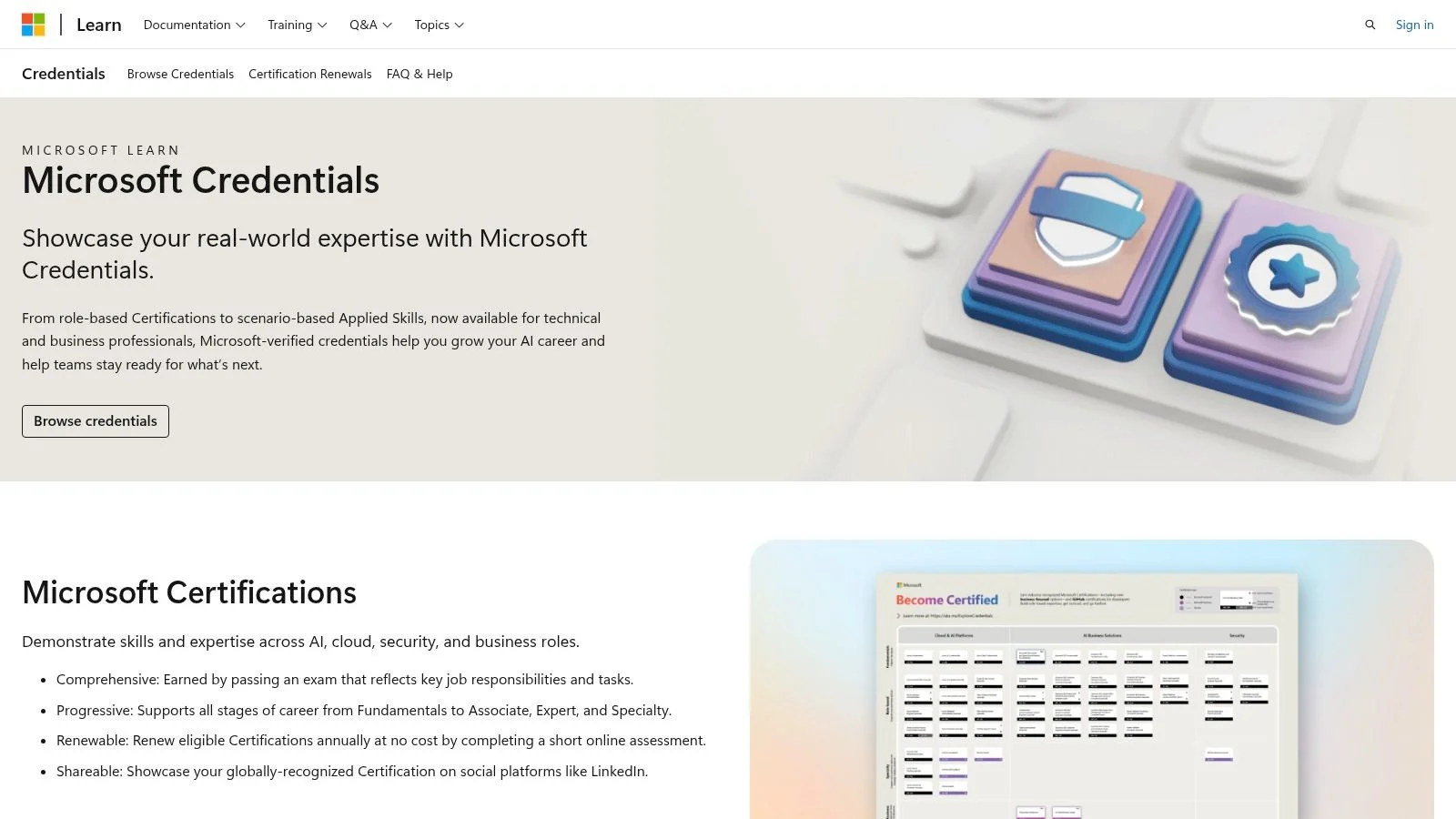 Image: The Cisco logo, representing a global leader in networking hardware and software.
The Cisco platform clearly outlines the path to certification, detailing the single 200-301 CCNA exam that covers a broad yet deep range of networking fundamentals. Cisco provides transparent pricing for the US market, with the exam fee listed directly on the site, making it easy to budget for your investment. For those looking to excel, it's highly advisable to review expert advice on CCNA exam preparation tips to build an effective and efficient study plan. This direct-from-the-vendor approach ensures all information, from specific exam objectives to intricate recertification policies, is accurate and consistently current.
Key Features and Offerings
The Cisco website excels at creating a direct, authoritative, and streamlined path for certification candidates. It serves as the central nervous system for anyone embarking on a Cisco career track.
- Official Exam Blueprints: The site provides direct access to the official exam topics, giving candidates a precise, detailed checklist of the skills and knowledge required to pass. This includes fundamental concepts like IP addressing, routing (OSPF, EIGRP), switching (VLANs, STP), and network automation basics.
- Cisco U. Learning Paths: This integrated training platform offers structured learning paths, in-depth courses, and hands-on labs mapped directly to the CCNA domains, providing a comprehensive and structured study experience. These labs are crucial for gaining practical experience with Cisco IOS commands and configurations.
- Direct Exam Scheduling: Candidates can easily find links to schedule their exam through Pearson VUE, which offers both convenient in-person and secure online proctored testing options, ensuring flexibility.
- Clear Recertification Guidelines: The platform details the Continuing Education (CE) program, outlining the requirements to maintain certification status through various learning activities or by passing higher-level exams, promoting continuous professional development.
Reflection Prompt: If you're managing a network today, how much of your infrastructure relies on Cisco equipment? How would a CCNA certification directly enhance your ability to configure, troubleshoot, and optimize those systems?
Pros and Cons
| Pros | Cons |
|---|---|
| High market recognition and demand, especially for network administrator roles in Cisco environments. | Vendor-specific focus means knowledge is less transferable to non-Cisco networking hardware. |
| Robust training ecosystem with official courses, labs, and sandboxes for hands-on practice. | Often requires hands-on practice with real or simulated equipment beyond just theoretical training. |
| The single-exam path to CCNA makes the total cost predictable and straightforward. | Recertification through the CE program requires ongoing commitment and can incur additional costs. |
4. Microsoft Learn (Microsoft Certifications): Mastering the Microsoft Ecosystem
Microsoft Learn is the definitive and comprehensive source for role-based network system administrator certifications that are deeply focused on the expansive Microsoft ecosystem. Its dedicated website, learn.microsoft.com/credentials/, acts as the official portal for highly valued credentials such as the Azure Administrator Associate, Windows Server Hybrid Administrator Associate, and the Microsoft 365 Administrator Expert. The platform truly excels by integrating free, comprehensive learning paths directly with the certification process, ensuring aspiring administrators have a clear, highly cost-effective, and practical route to thorough preparation.
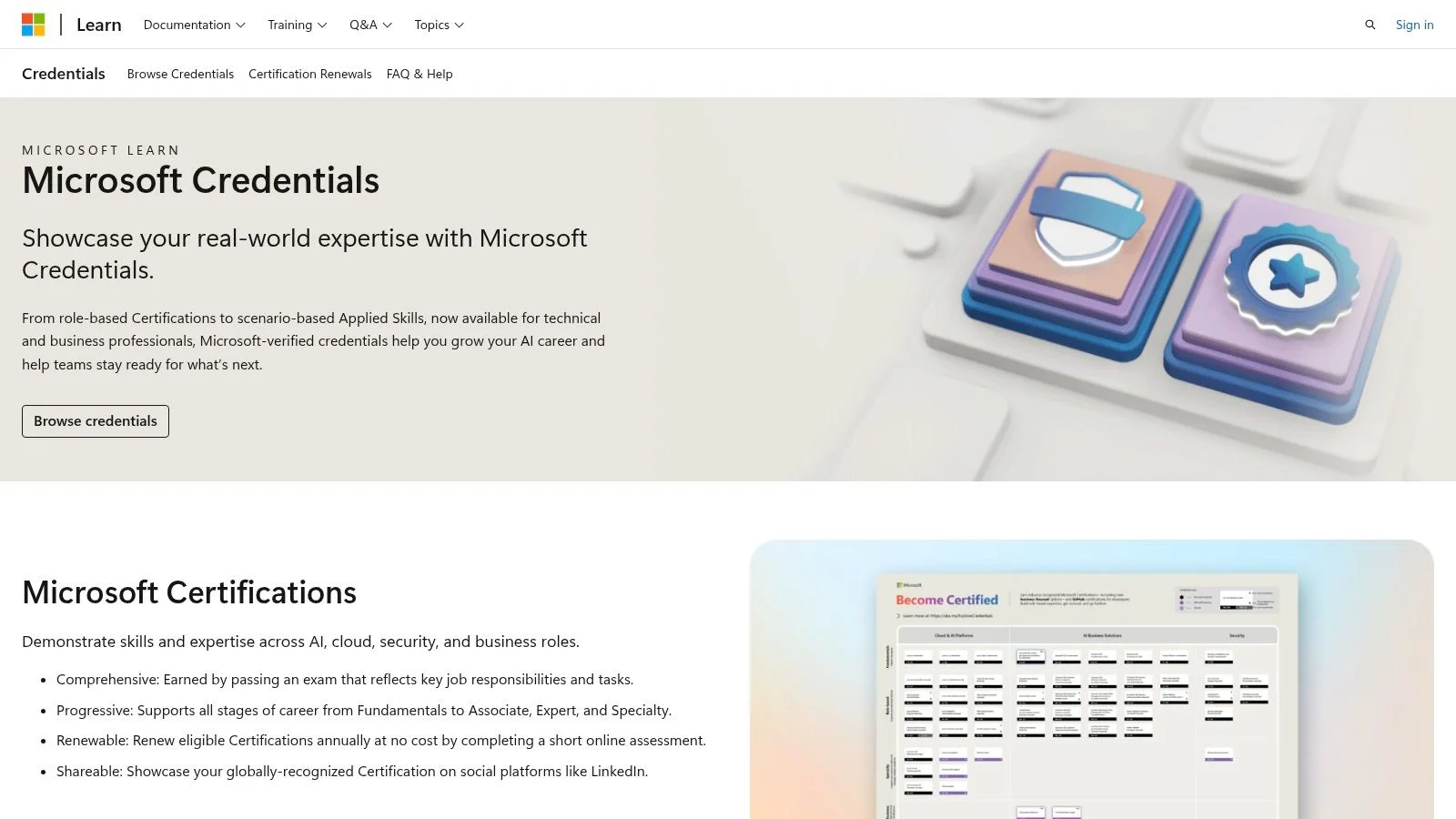 Image: The Microsoft Learn logo, representing comprehensive training and certification for Microsoft technologies.
The platform meticulously centralizes the entire certification journey, guiding users from initially exploring required skills to scheduling the final exam. Each certification page meticulously outlines the specific exam objectives and links directly to curated Microsoft Learn modules. These modules often include invaluable hands-on sandbox environments, allowing candidates to gain practical experience configuring and managing Microsoft services (like Azure Virtual Networks, Active Directory, or Exchange Online) without needing their own paid subscriptions. Exams are scheduled through Pearson VUE, with typical pricing for associate-level exams in the US listed at US$165.
Key Features and Offerings
Microsoft Learn's greatest strength is its seamless fusion of no-cost, high-quality training with high-stakes, globally recognized certifications. This approach democratizes access to essential skills development for Microsoft-centric IT roles, making it highly valuable for network system administrators working with Windows Server, Azure, or Microsoft 365.
- Free Learning Paths: The site provides extensive, self-paced learning content, including detailed articles, practical tutorials, and interactive sandbox labs. All these resources are meticulously aligned with specific exam objectives and are available at no charge, making advanced learning accessible.
- Centralized Exam Scheduling: Candidates can easily find exam details and schedule their tests directly through the certification pages, which link seamlessly to the Pearson VUE portal for both convenient in-person and secure online proctored exams.
- Free Certification Renewals: Many role-based certifications can be renewed annually for free by simply passing an online, unproctored assessment. This forward-thinking policy actively encourages continuous learning and skill maintenance without the financial burden of re-taking the full exam, which is a significant benefit for IT professionals.
Reflection Prompt: Is your organization heavily invested in Azure or Microsoft 365? How would an Azure Administrator Associate or Microsoft 365 Administrator Expert certification validate your ability to manage and optimize those critical cloud services?
Pros and Cons
| Pros | Cons |
|---|---|
| Deep alignment to Windows, Microsoft 365, and Azure administrator roles. | The exact exam price can vary by locale and is only finalized at the checkout stage. |
| Abundant free study content and hands-on sandbox resources reduce preparation costs. | Promotional offers like Exam Replay or other discounts change over time and may not always be available. |
| Straightforward scheduling and widely available test-center delivery via Pearson VUE. | The platform's focus is vendor-specific, which may be less ideal for non-Microsoft environments. |
5. Red Hat Certifications: Proving Linux Mastery
Red Hat provides some of the industry's most respected network system administrator certifications for Linux professionals, distinctively focusing on real-world, hands-on skills validation. Its website, specifically the landing page for the Red Hat Certified System Administrator (RHCSA) exam (EX200), is the primary portal for understanding detailed exam objectives and finding official training paths. The platform directs US customers to purchase exams and comprehensive training bundles through authorized partners and resellers, ensuring a high standard of delivery and support.
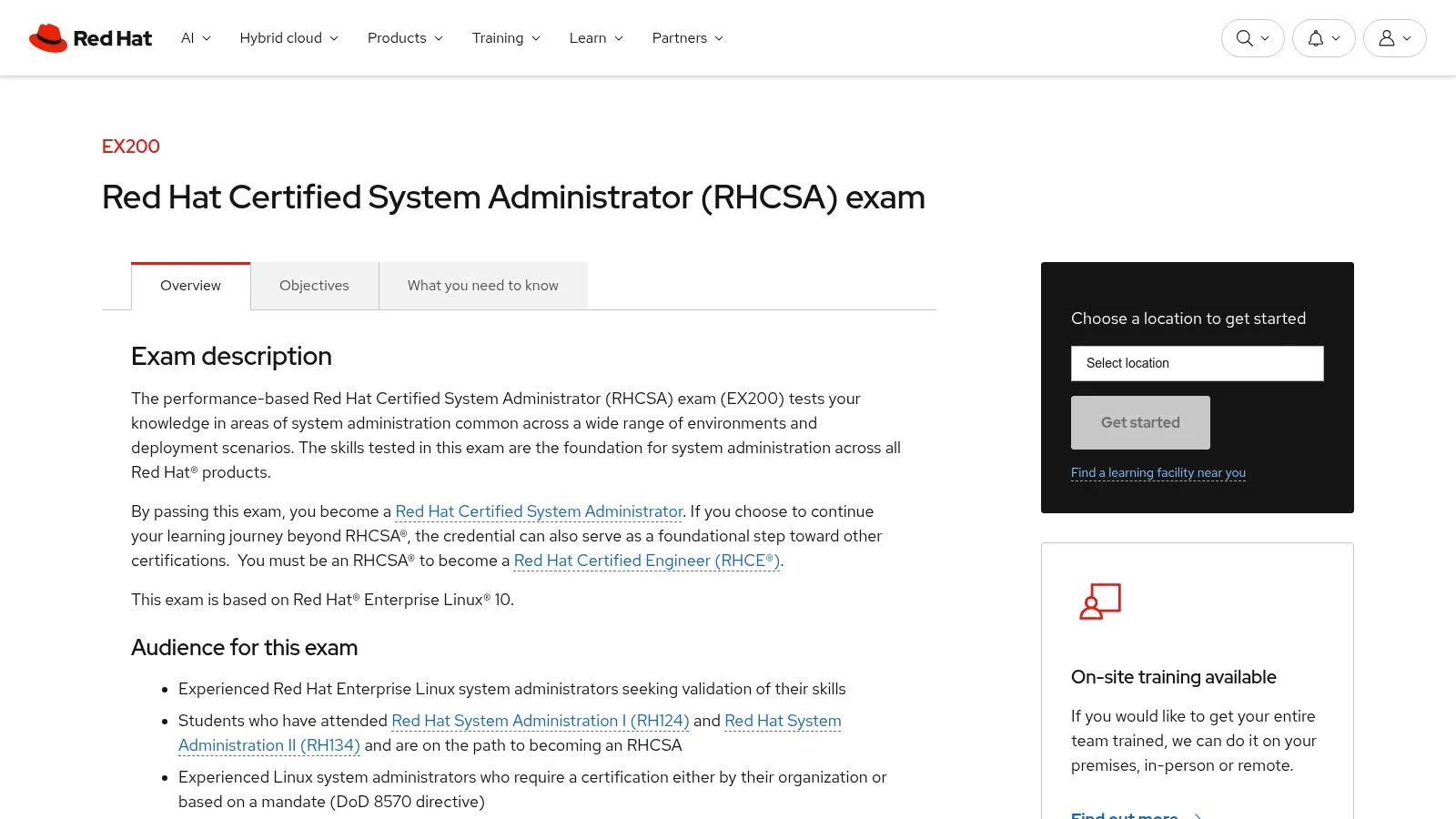 Image: The Red Hat logo, symbolizing expertise in enterprise Linux and open-source solutions.
What truly makes Red Hat certifications unique and highly valued is their performance-based testing model. Unlike conventional multiple-choice exams, credentials like the RHCSA and Red Hat Certified Engineer (RHCE) demand that candidates successfully perform actual system administration tasks on a live, real-world Red Hat Enterprise Linux (RHEL) system. This practical approach provides employers with a definitive and unambiguous validation of a candidate's actual, practical abilities, which is invaluable for a network system administrator. The website serves as an essential guide, connecting aspiring administrators with the necessary resources, including official courses like RH124 (Red Hat System Administration I), RH134 (Red Hat System Administration II), and the accelerated RH199 rapid track course.
Key Features and Offerings
The Red Hat website is the authoritative source for its certification program, powerfully emphasizing a direct link between structured training and rigorous, performance-based validation.
- Performance-Based Exams: The site meticulously details the objectives for its hands-on exams, such as the EX200 for the RHCSA credential. These tests are widely regarded across the industry as a true and accurate measure of a system administrator's practical competence in a Linux environment.
- Official Training Paths: Red Hat clearly outlines recommended courses and comprehensive learning paths specifically designed to prepare for its demanding exams. These high-quality courses are available directly from Red Hat or through its extensive global network of authorized training partners.
- Multiple Exam Delivery Options: Candidates are offered the flexibility to schedule exams at a certified testing center or to take them as a remotely proctored session, providing convenience to fit various schedules and geographical locations.
- Authorized US Partners and Resellers: The platform efficiently guides users to a trusted network of partners for purchasing exam vouchers and training, which sometimes offer unique bundles or promotional discounts.
Reflection Prompt: Do you frequently interact with Linux servers in your role? How would a performance-based certification like RHCSA directly demonstrate your practical skills to your current or prospective employer?
Pros and Cons
| Pros | Cons |
|---|---|
| Highly respected, hands-on validation for enterprise Linux administrators. | The official EX200 landing page does not list a single US price; pricing comes via partners. |
| Strong alignment to real-world tasks in Red Hat Enterprise Linux (RHEL) environments. | Pricing can vary by reseller and may be higher than vendor-neutral alternatives. |
| Multiple authorized US sellers provide scheduling flexibility and occasional promotions. | The focus is exclusively on the Red Hat ecosystem, making it less broad than other certs. |
6. ISC2 Certifications: Strengthening Cybersecurity Skills
ISC2 is a globally recognized leader in cybersecurity, offering a suite of certifications that are exceptionally relevant for administrators tasked with the critical responsibility of securing network systems. While primarily a security-focused body, its website, isc2.org, is an essential resource for those seeking network system administrator certifications with a crucial security specialization. The platform is the direct source for purchasing exam vouchers and accessing official training for foundational credentials like the Systems Security Certified Practitioner (SSCP).
 Image: The ISC2 logo, representing a global leader in cybersecurity certification and education.
The ISC2 website clearly outlines the entire certification pathway, guiding candidates from understanding complex exam domains (like access controls, network security, and risk management) to scheduling the test and effectively maintaining the credential. ISC2 frequently offers time-limited bundles that expertly package an exam voucher, a retake option, and official self-paced training, providing significant value for dedicated candidates. This integrated approach ensures that administrators have convenient access to authoritative materials specifically designed to prepare them for the practical and evolving challenges of securing modern IT infrastructure.
Key Features and Offerings
The ISC2 website centralizes all critical aspects of the certification journey, making it the definitive and trusted source for its highly respected security credentials.
- Official Exam Information: Each certification has a dedicated page detailing comprehensive exam objectives, necessary experience requirements, and straightforward scheduling procedures. Published US exam pricing is transparently listed for each credential, removing any guesswork.
- Training and Bundles: The site is the primary and official marketplace for authentic training materials, including flexible self-paced courses. It often features attractive bundles combining official training with an exam voucher and a valuable retake option, offering a cost-effective and comprehensive preparation path.
- Global Test Delivery: ISC2 partners with Pearson VUE for seamless global exam delivery. The website provides clear, published policies regarding exam fees, rescheduling, and cancellations, empowering candidates to manage their logistics efficiently and with confidence.
- Membership and Maintenance: After successfully passing an exam, the site serves as the essential portal for managing annual maintenance fees (AMFs) and submitting Continuing Professional Education (CPE) credits, which are crucial for keeping valuable certifications active and demonstrating ongoing professional commitment.
Reflection Prompt: In your role as a network or system administrator, how much of your time is dedicated to security? How would a certification like the SSCP enhance your ability to implement and manage robust security controls?
Pros and Cons
| Pros | Cons |
|---|---|
| The SSCP is a recognized security credential tailored specifically for system administrators. | Annual membership and maintenance fees (AMFs) are required to maintain the credential after passing. |
| Official self-paced training options and bundle discounts provide excellent value. | The security focus complements but does not fully replace core networking or platform admin certs. |
| Transparent reschedule and cancellation fee policies are published directly on the site. | The experience requirements for some certifications can be a barrier for newcomers to the field. |
7. AWS Training and Certification: Cloud Administration Mastery
As cloud infrastructure becomes the undeniable standard across industries, AWS Training and Certification offers essential credentials for professionals tasked with managing modern IT environments. Its dedicated website, aws.amazon.com/training/certification/, is the definitive source for some of the most sought-after network system administrator certifications explicitly focused on the cloud, such as the AWS Certified SysOps Administrator – Associate. The platform serves as the official portal for exploring detailed exam information, accessing authoritative official training materials, and securely registering for exams.
 Image: The AWS Training and Certification logo, signifying pathways to cloud expertise.
The site provides a clear and structured pathway for administrators operating within the vast AWS ecosystem. It centralizes all necessary information, from comprehensive exam guides outlining the required knowledge domains (like deployment, operations, security, and troubleshooting on AWS) to official practice question sets and robust digital training courses. This direct-from-the-source model ensures that all preparation materials are perfectly aligned with the real exam, giving candidates the best possible chance of success. Registration is streamlined through the AWS Certification Account, which then directs users to Pearson VUE to schedule their exam at a US test center or conveniently via online proctoring.
Key Features and Offerings
The AWS Training and Certification website truly excels at providing a structured, role-based learning journey. It effectively demystifies the process of getting certified for a specific career path within the cloud, making it indispensable for any network system administrator transitioning to or specializing in AWS.
- Official Exam Registration: The platform is the sole and official gateway for registering for all AWS certification exams. Candidates create an AWS Certification Account to efficiently manage their credentials, view benefits, and schedule exams through the integrated Pearson VUE portal.
- Role-Based Certification Paths: AWS thoughtfully organizes its certifications by specific IT roles (e.g., SysOps Administrator, Solutions Architect, Developer) and by expertise level (Foundational, Associate, Professional, Specialty). This clear structure significantly helps individuals map their career goals to the most relevant and impactful credentials.
- Comprehensive Learning Resources: The site offers an extensive library of both free and paid resources, including official digital training modules, immersive classroom courses, hands-on exam readiness workshops, and invaluable official practice exams to simulate the test environment.
- Transparent Pricing: Exam costs are clearly stated and easily accessible, with associate-level exams like the SysOps Administrator priced at an accessible US$150, making it straightforward for individuals and US-based organizations to accurately budget for their training and certification investment.
Reflection Prompt: Are you an on-premises administrator looking to make a full transition to cloud operations? How would the AWS Certified SysOps Administrator – Associate certification validate your readiness for day-to-day management of AWS resources?
Pros and Cons
| Pros | Cons |
|---|---|
| Credentials directly align with real-world administrative duties on the world's leading cloud platform. | Focus is entirely on the AWS cloud, making it less suitable for on-premises or multi-cloud roles. |
| AWS certifications are highly recognized and in-demand by employers across the US and globally. | Hands-on experience with the AWS platform is strongly recommended, often essential, to pass the exams. |
| A transparent pricing structure and clear learning paths simplify the certification process. | The sheer volume of services and training options on AWS can be overwhelming for newcomers. |
7-Way Comparison: Network System Administrator Certifications
| Item | Implementation complexity | Resource requirements | Expected outcomes | Ideal use cases | Key advantages |
|---|---|---|---|---|---|
| AWS Certified Advanced Networking – Specialty (ANS‑C01) | High — advanced AWS networking topics | Study guide + platform features, spaced repetition, recommended hands‑on AWS labs | Advanced AWS networking expertise and ANS‑C01 exam readiness | Network/sysadmins transitioning to AWS or hybrid networking roles | Exam‑aligned, evidence‑based adaptive learning and progress tracking |
| CompTIA | Low–Medium — foundational to intermediate scope | Exam vouchers, CertMaster Learn/Practice/Labs, optional labs | Vendor‑neutral baseline networking/security skills (e.g., Network+, Security+) | Entry to mid‑level admins seeking broad foundational certs | Widely recognized, flexible purchase bundles, large practice ecosystem |
| Cisco (CCNA) | Medium — Cisco‑centric networking concepts | Cisco U. learning paths, labs/sandboxes, exam fee | Cisco networking competence and CCNA certification | Roles working with Cisco equipment; network engineer career path | Strong market recognition, robust lab/sandbox resources |
| Microsoft Learn (Microsoft Certifications) | Low–Medium — role‑based Microsoft/Azure focus | Free Learn modules, sandboxes, exam scheduling via Pearson VUE | Microsoft/Azure/Windows admin skills and role‑aligned credentials | Microsoft 365, Azure, or Windows Server administrator roles | Abundant free content, hands‑on sandboxes, clear renewal options |
| Red Hat (RHCSA/RHCE) | High — performance‑based, hands‑on exams | Official courses, lab practice, exam/voucher via Red Hat or partners | Practical, hands‑on Linux admin validation on RHEL | Enterprise Linux administrators and RHEL environments | Highly respected hands‑on validation and strong RHEL alignment |
| ISC2 (SSCP) | Medium–High — security administration focus | Official training bundles, exam fees, ongoing membership/maintenance | Security administration credential (SSCP) and demonstrated security skills | Admins responsible for security controls and operations | Recognized security credential with official training options |
| AWS Training and Certification | Medium — cloud/admin role alignment | Official AWS training, Certification Account, hands‑on AWS experience recommended | AWS role‑aligned certifications (e.g., SysOps) and cloud admin competence | Administrators operating in AWS environments | Direct alignment to AWS duties, transparent pricing, broad delivery options |
Putting Your Certification Plan into Action: A Strategic Roadmap
Navigating the expansive landscape of network system administrator certifications can indeed feel like charting a course through a vast and complex digital ocean. From fundamental, vendor-neutral foundations like CompTIA and ISC2 to highly specialized, platform-specific credentials from industry giants like Cisco, AWS, Microsoft, and Red Hat, the options are as diverse and varied as the myriad career paths they are designed to unlock. This guide has provided a detailed, comprehensive map, meticulously outlining the prerequisites, typical exam formats, associated costs, and the significant career impact of each major certification. The key takeaway is crystal clear: there is no single "best" certification for everyone; rather, there is only the one that best aligns with your immediate career goals, existing skill set, and long-term professional aspirations.
Your choice should always be a strategic one, deeply rooted in your career trajectory. Are you primarily focused on building a foundational understanding of core networking and essential security principles? Then a CompTIA Network+ or Security+ certification is likely your ideal starting point. Are you aiming for a pivotal role in a Cisco-powered enterprise environment, perhaps as a network engineer? In that case, the CCNA is almost non-negotiable. If cloud infrastructure is your ultimate professional destination, AWS and Microsoft certifications offer direct and highly respected routes to the industry's most in-demand cloud administration roles.
Building Your Strategic Certification Roadmap
Merely selecting a certification is not sufficient; the true transformation happens when you create a structured, actionable, and personalized plan. This is what truly transforms ambition into a tangible and highly valued achievement. The most valuable network system administrator certifications are meticulously designed to be rigorous, testing not just what you passively know, but crucially, how you actively apply that knowledge in dynamic, real-world scenarios.
To systematically set yourself up for undeniable success, consider integrating the following critical steps into your preparation:
- Define Your "Why": Clearly identify and articulate your core motivation. Are you seeking a promotion, making a strategic career change into cloud or cybersecurity, or specializing in an emerging technology like advanced cloud networking or robust DevOps principles? Your "why" will serve as the powerful fuel for your dedication through what can often be challenging and demanding study sessions.
- Establish a Realistic Timeline: Honestly assess your current commitments, including work and personal life, and then work backward from your desired exam date. Break down the entire curriculum into manageable weekly and daily study goals. Remember, consistency in your study routine is significantly more effective and sustainable than intense, last-minute cramming sessions.
- Integrate Hands-On Labs: Theoretical knowledge forms a crucial bedrock, but practical, demonstrable skill is ultimately what employers seek and hire for. Actively utilize virtual labs, build a robust home lab setup, or leverage cloud sandboxes (like the AWS Free Tier, Azure for Students, or Google Cloud's free tier) to configure, troubleshoot, and confidently manage real-world systems. This invaluable practical experience will be indispensable, not only for successfully passing your exam but also for thriving in your future job responsibilities.
- Embrace Continuous Learning: The landscape of technology evolves at an unprecedented pace, and so too must your skills and knowledge base. Once certified, your professional journey is not over; in fact, it has only just begun. Stay actively engaged with professional communities, subscribe to reputable industry newsletters, and consistently plan for your next certification or specialized skill development to keep your expertise sharp, highly relevant, and future-proof.
As you advance in your career and apply your newly certified skills to manage, secure, and upgrade critical infrastructure, remember that responsible IT practice extends to the full lifecycle of your hardware assets. Understanding the benefits of recycling networking equipment is crucial for promoting sustainability within your organization and the broader industry.
Ultimately, choosing and achieving the right certification acts as a powerful catalyst for your professional career. It validates your hard-earned expertise, proactively opens doors to exciting new opportunities, and consistently demonstrates a profound commitment to continuous professional excellence. By choosing wisely and preparing diligently, you are not merely earning a credential; you are making a strategic and lasting investment in your future.
Ready to conquer your certification goals with a smarter, more effective study plan? MindMesh Academy offers evidence-based learning paths, including our comprehensive guide for the AWS Certified Advanced Networking – Specialty, designed with spaced repetition and adaptive learning to maximize retention and significantly cut down your study time. Start your journey toward certification success with a proven method today at MindMesh Academy.

Written by
Alvin Varughese
Founder, MindMesh Academy
Alvin Varughese is the founder of MindMesh Academy and an enterprise architecture leader. An electrical engineer by training, he moved from factory automation in South Africa to cloud architecture at GE Appliances and Humana (Fortune 50), and holds 20 professional certifications including AWS Solutions Architect Professional, Azure DevOps Engineer Expert, and Microsoft Agentic AI Business Solutions Architect. He built MindMesh Academy after interviewing too many highly certified candidates who couldn't answer basic questions: the goal is prep that makes you better at the job, not just able to pass the exam.