How to Improve Test Taking Skills and Boost Scores
Mastering Your IT Certification Exams: A Strategic Guide to Boosting Test Scores
Advancing your IT career requires more than raw technical knowledge. To excel on exam day, you must prioritize strategic preparation over last-minute cramming. Start by building a smart, proactive study plan. The secret to passing your AWS, Azure, PMP, or CompTIA certification exam involves creating a solid base of understanding months before you enter the testing center. This shift in mindset replaces anxiety with confidence. By treating the exam as a technical project rather than a hurdle, you turn a high-pressure situation into a structured, manageable task that reflects your professional growth.
Build a Rock-Solid Test Preparation Foundation
Many people mistakenly believe that being a "good test-taker" is a natural talent you either have or you do not. The reality is quite different. IT professionals who consistently earn high scores on exams like the AWS Certified Solutions Architect or Microsoft Certified: Azure Administrator Associate are usually experts in organization. They do more than simply put in long hours; they use a structured system that supports actual learning and reduces the mental pressure that leads to exam day nerves.
This foundation is never built in a single night. It is the product of steady, intentional effort that replaces chaotic, last-minute cramming with a repeatable process. By following a clear plan, you take full control of your certification path rather than letting the volume of material dictate your stress levels.
Design a Realistic Study Timeline
Start by building a study schedule that fits your actual daily routine. Procrastination often ruins exam preparation, and a structured timeline serves as your best defense. This plan allows you to take what feels like a massive amount of technical documentation and slice it into small, manageable tasks.
Identify your exam date and plan your work backward from that point. You must be honest about your current responsibilities, including your work schedule, family commitments, and personal time. A study plan that ignores the actual constraints of your life will usually fail immediately.
- Block Out Your Non-Negotiables: Before you schedule any study time, mark your calendar for work hours, recurring meetings, on-call rotations, and essential family responsibilities. This gives you a realistic view of the time you actually have available.
- Schedule Specific Study Blocks: Treat study sessions like high-priority project meetings. Add them to your calendar as firm appointments: "Monday, 7-9 PM: Detailed Review of AWS EC2 Instance Types," or "Wednesday, 6-8 PM: Review PMP Risk Management Processes."
- Build in Buffer Days: Real life rarely follows a perfect schedule. Server outages, family emergencies, or late-running projects at work can easily interrupt your plans. By adding "catch-up" days into your schedule before the exam, you create a safety net. This buffer prevents a single bad day from ruining your entire preparation phase.
Reflection Prompt: Look at your current workload and personal obligations for the next month. What specific hours can you realistically commit to studying each week without risking burnout? Identifying these slots now prevents panic later.
Break Down Complex Subjects
Staring at an official certification guide or a long syllabus is often discouraging. The best way to handle this is to deconstruct broad topics into smaller, more specific pieces. This method, known as chunking, helps your brain process technical details without feeling overwhelmed. It makes the material feel less like a mountain and more like a series of small steps.
If you are preparing for the CompTIA Security+ or CCNA certification, avoid vague goals like "Study Network Security." That objective is too broad to be useful and offers no clear starting point.
Instead, list focused, actionable tasks:
- Firewall Rule Set Configuration
- Intrusion Detection and Prevention Systems (IDS/IPS)
- VPN Tunneling and Encryption Protocols
- Identity and Access Management (IAM) Models
This specific focus lets you master one technical concept at a time, building your confidence as you finish each task. This creates a sense of progress that keeps your motivation high. When you use this method alongside a clear note-taking system, you will find it much easier to recall these technical details during the exam. For more details on this, see our guide on effective note-taking methods for tech certifications.
A structured study plan does more than just organize your calendar; it gives you a mental advantage. Knowing you have a plan and are following it creates a sense of control that actively fights feelings of helplessness. You will walk into the testing center feeling prepared because you have the proof of your hard work.
"True confidence on test day comes not from hoping you know the material, but from knowing you've prepared for it. A solid plan is your best defense against test anxiety."
This approach is supported by clear data. A disciplined plan is a proven way to lower stress and increase performance. A study focusing on public health students showed that those using structured preparation techniques saw their average test anxiety scores drop from 47.90 to 34.64. This shows that a disciplined routine is one of the most effective tools you have to improve your test-taking skills and manage anxiety for any professional certification.
Effective Study Preparation Framework for IT Professionals
Following a framework turns a chaotic scramble into a professional routine. The table below shows how specific preparation habits lead to better performance on exam day.
| Strategy | Description | Key Benefit for IT Certifications |
|---|---|---|
| Time Blocking | Setting aside non-negotiable slots in your calendar for study, treating them as mandatory work appointments. | Prevents procrastination on difficult technical topics like subnetting or cloud architecture and ensures steady progress. |
| Topic Chunking | Slicing large technical subjects, such as Kubernetes or Azure networking, into small, specific sub-topics. | Reduces the feeling of being overwhelmed and improves your ability to remember intricate technical details and configurations. |
| Practice Testing | Taking full-length practice exams under timed, realistic conditions to simulate the actual environment. | Builds familiarity with exam interfaces like Pearson VUE, helps identify specific knowledge gaps, and improves your pacing. |
| Buffer Days | Setting aside "catch-up" days at the end of each week or before the exam to handle unexpected delays. | Lowers stress by providing a safety net for life's interruptions, ensuring you cover every exam objective before the test date. |
This systematic approach changes the way you view your certification. Instead of a high-pressure event, the exam becomes the final step in a well-managed process. By building this foundation, you ensure that your scores reflect your actual technical knowledge rather than your ability to handle stress.
Develop Winning Strategies for Different Test Formats
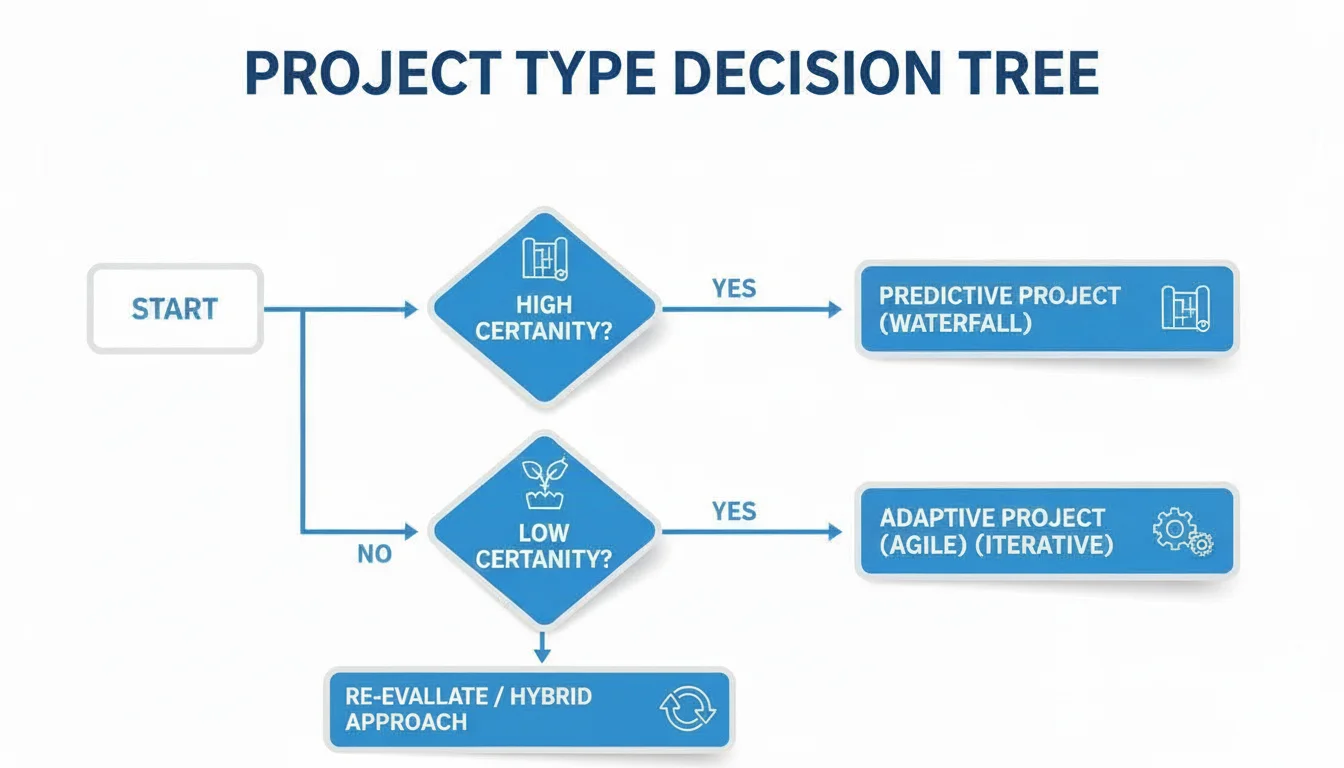 Caption: Adapt your strategy to the specific question types of your certification exam for optimal performance.
Entering an IT certification exam without a plan tailored to its specific question formats is like trying to fix a production bug in a programming language you don't speak. You might find the answer eventually, but you will waste time and energy. If you want to improve your test-taking skills for high-stakes exams like the Certified Information Systems Security Professional (CISSP) or the Azure Solutions Architect certification, you must recognize that different question types require different tactics.
A multiple-choice question on cloud security architecture works differently than a performance-based lab where you must configure a virtual network. Similarly, scenario-based questions that ask you to design a disaster recovery plan require a different mental gear than a simple knowledge check. A generic approach won't help you get the best possible score when the timer is ticking. You need to adjust your mindset as you move through different sections of the test.
Dominating Multiple-Choice Questions
Multiple-choice questions (MCQs) appear in almost every IT certification. They can seem easy, but exam writers use distractors—wrong answers that look right—to test the depth of your knowledge. These options are often technically correct in another context but wrong for the specific question asked. To beat these, you need a proactive system.
First, read the question and try to answer it in your head before looking at the provided options. This keeps you from getting distracted by plausible-sounding lies. If the answer you thought of matches one of the choices, you can select it with more certainty. This builds momentum and keeps you from second-guessing your technical training.
If the answer isn't immediately clear, switch to the process of elimination and look for patterns:
- Watch for Absolutes: Be suspicious of options using words like "always," "never," "all," or "none." Technology is rarely that black and white. In an AWS Certified Developer exam, for instance, a specific service is rarely the only way to solve a problem. These extreme statements are often there to help you rule out a choice quickly.
- Find Paired Opposites: When two choices are total opposites or nearly identical with one small difference, the correct answer is usually one of them. The examiners are likely testing whether you understand a specific distinction between those two technical concepts. Focus your energy on comparing these two rather than worrying about the other distractors.
- Slash the Obvious Incorrect: Mentions of tools or protocols that do not exist in the context of the question should be eliminated immediately. If a question is about Layer 2 switching and an answer mentions BGP routing, cross it out. This increases your probability of success, even if you ultimately have to guess between the remaining two choices.
Crafting High-Scoring Scenario-Based or Short-Answer Responses
While you won't write long essays in most IT exams, you will encounter scenario-based questions or short-answer justifications. These are common in the PMP exam, ITIL Foundation explanations, or when you have to justify a design choice for an Azure Architect certification. The primary hurdle here is the clock. You have a few minutes to build a logical argument, and if you start typing without a plan, your answer will likely be a disorganized mess that misses key points.
To solve this, use a rapid outline technique.
Take exactly 90 seconds to sketch a skeleton of your answer. For a scenario, identify the primary problem, your proposed fix, and two or three technical reasons why that fix works. For a short answer, stick to a main point followed by supporting evidence. This prevents you from rambling and ensures you hit the marks the grader is looking for.
Imagine a question asks you to explain the benefits of moving to a DevOps culture in a large company:
- Thesis/Main Point: DevOps improves software delivery speed, team collaboration, and system stability.
- Point 1: Delivery Efficiency: Discuss how CI/CD pipelines and automated testing reduce manual labor. This allows teams to release updates more frequently with fewer errors.
- Point 2: Collaboration: Mention how shared responsibility between development and operations teams breaks down traditional silos. Using integrated toolchains helps everyone stay on the same page.
- Point 3: Reliability: Explain how infrastructure as code and real-time monitoring allow for faster incident response. These practices reduce total downtime for the organization.
Following this structure shows you can communicate technical strategy clearly. A well-organized explanation that hits three solid points is worth more than a brain-dump of twenty random facts that aren't connected. Logic and clarity are crucial here.
A well-structured explanation or solution, even with slightly less exhaustive detail, will almost always score higher than a disorganized brain-dump of facts. Clarity, organization, and a logical flow of technical reasoning are essential.
Tackling Complex Problem-Solving Questions
Technical exams often include math or logic problems. You might calculate subnet masks for a CCNA exam, optimize a query for a SQL certification, or perform encryption calculations for a cybersecurity credential. These questions test application, not just memory. The biggest risk is moving too fast and making a simple mistake.
Start by reading the prompt twice. Use the first pass to get the general idea. On the second pass, find the specific numbers, the constraints, and the exact thing you are solving for. It is easy to confuse a request for "total usable hosts" with "total addresses in the block." For example, knowing if a network design needs to accommodate 200 hosts or 200 subnets changes your entire calculation.
Manage your time by recognizing "time-sink" problems. If a multi-step calculation looks like it will take five minutes, flag it and move on. You can always come back. It is better to answer five quick questions correctly than to get one hard problem right while losing the time needed for ten others. Every question usually carries the same weight, so don't let one calculation ruin your pace.
Finally, show your work. If the exam interface allows for a digital scratchpad or notes, use it. Many scoring systems offer partial credit if you use the right formula but make a small math error. Writing out the steps also helps you catch your own mistakes. If your final number for a subnet mask looks impossible, you can look back at your notes and find where the logic broke. In a technical environment, a clear process is just as important as the final result.
Master Your Mindset on Exam Day
The certification exam room is where your preparation meets reality. In this setting, your performance depends on your mental state just as much as your technical knowledge. Handling time, nerves, and focus determines whether you get a passing score or an exceptional one on the CompTIA A+ (220-1201/220-1202) or PMP exam. When the clock starts, feeling overwhelmed is a common reaction. If you arrive with a plan for the actual testing window, you can stay in control and capture every possible point. Mental clarity allows you to parse complex technical requirements that you might otherwise misread under stress.
Execute a Strategic Time Management Plan
When the proctor says "begin," the immediate temptation is to start reading question one. Do not do that. Use the first 60 to 90 seconds to perform a brain dump. Use your scratch paper to write down formulas, subnetting calculations, RAID level details, or OSI model layers you might forget when you are tired later in the session. Writing these down while your mind is fresh prevents the mid-exam panic where you suddenly cannot remember how many disks a RAID 5 array requires. This technique clears your working memory, making room for active problem-solving.
After the brain dump, skim the entire exam quickly. You are not trying to solve problems yet. You are looking for high-weight sections or performance-based questions that look like significant time-sinks. This routine prevents surprises and lets you adjust your pacing strategy based on the specific questions you face. If you see a long scenario-based lab at the end, you will know to work faster through the early multiple-choice sections. You'll know exactly where to invest your energy, which is a major advantage in any timed technical environment.
Conquer In-the-Moment Anxiety
Even the best IT professionals feel pressure during high-stakes tests. If your heart races, your palms sweat, or your thoughts blur, you must pause. Controlled breathing resets your physiological stress response. The box breathing technique is a reliable tool to use right at your desk:
- Inhale slowly for four seconds.
- Hold your breath for a count of four.
- Exhale slowly for four seconds.
- Hold again for a count of four.
Repeating this three or four times can lower your heart rate and help you recall technical facts. For more on this, see our guide on how to overcome exam anxiety with confidence.
The Yerkes-Dodson law explains this relationship between stress and performance. While some stress helps you focus, too much anxiety stops you from retrieving complex technical information. When you reach the peak of the curve, your "fight or flight" response takes over, which is useless for troubleshooting a virtual network or calculating a project's critical path. Using physical relaxation techniques keeps you on the productive side of that curve so you can think clearly.
Avoid Common Exam Day Pitfalls
Simple errors often cost points. Misreading the instructions is a major issue. Read every direction before answering. Does the test penalize guessing? Must you answer every question to pass? Review the rules for your CompTIA, Microsoft, or Cisco exams carefully. Exams from these vendors often have different navigation rules; some let you flag questions for review, while others move only forward. Knowing these constraints before you start is non-negotiable.
Another mistake is staying stuck on one hard question. If you spend more than two minutes on a single networking calculation or API call without progress, stop. Mark it and move on. It is better to get points from three easy questions than to lose ten minutes on one hard one. You can return to it later. Often, a different question later in the exam will trigger the memory you need to solve the one you skipped.
If you've spent more than a couple of minutes on a single question and you're not making any real progress (e.g., stuck on a complex networking calculation or an obscure API call), it's time to cut your losses. Circle it and move on.
If you are truly stuck, use the process of elimination. Look for answers that are technically impossible or use absolute language like "always" or "never," which are often incorrect in technical contexts. In a networking question about IP addressing, if two answers list invalid subnet masks, eliminate them immediately. Getting rid of two wrong answers gives you a 50% chance of being right. That is a smart way to pass with confidence. If there is no penalty for an incorrect guess, never leave a question blank. A random guess is always better than a certain zero.
Turn Practice Tests into a Powerful Advantage
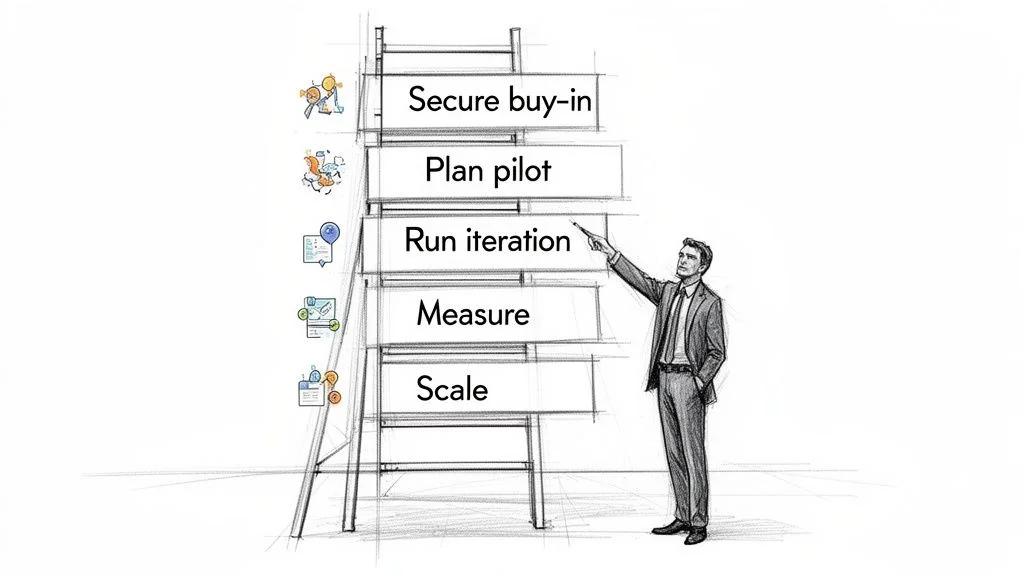 Caption: Regular, timed practice tests are your secret weapon for building confidence and identifying areas for improvement.
Why do some IT professionals appear so relaxed before an exam? It is rarely a natural talent. Most of the time, that composure comes from focused, repetitive practice. To improve your test-taking skills for any certification, you must make practice exams a mandatory part of your study schedule. This process involves more than just answering random questions. It is an organized method designed to remove the mystery of the testing experience. Every time you finish a practice session, you trade uncertainty for the confidence that comes from being familiar with the exam format and the complexity of the material.
Simulate the Real Exam Environment
Many candidates fail because they treat practice sessions like a casual homework assignment. To gain a true advantage, you have to recreate the pressure of the testing center. This simulation builds the mental endurance you will need on the actual day. If your CCNA or PMP exam allows 90 minutes (verify current duration on the official vendor site), you must hold yourself to that exact 90-minute limit. No pauses for coffee and no checking your phone. Find a quiet room where you will not be interrupted, silence all notifications, and clear your desk of everything except the permitted items, such as a pen and a single piece of scratch paper.
- Time Yourself Strictly: Pacing is a vital skill for IT certifications where wordy scenarios can quickly drain your time. By working against a strict timer, you develop a better internal clock. You will learn to recognize the moment you have spent too long on one difficult problem. In the real exam, you cannot afford to get stuck. Practicing with a timer helps you decide when to flag a question and move on to ensure you see every question on the test.
- Use Only Permitted Resources: Put away your notes, textbooks, and browser tabs. Forcing your brain to recall information under pressure is a form of active retrieval that makes knowledge stick. If you cannot remember a technical detail without a search engine, you have identified a high-priority topic for your next review.
- Complete the Full Test: It is tempting to stop early when you get tired, but finishing the entire test in one sitting is how you build stamina. Most IT certifications are as much a test of concentration as they are a test of knowledge. Completing a full-length session prepares you for the mental fatigue that often sets in during the final third of the official exam.
When you make these simulations a habit, the high-stakes event starts to feel like a familiar challenge you have already conquered. For example, those preparing for the AWS Certified Cloud Practitioner certification can use a specific AWS Certified Cloud Practitioner practice exam to get used to the exact question types, digital interface, and time pressures they will face.
Use Practice to Pinpoint Your Weaknesses
A practice exam is a diagnostic tool that provides a clear map of your knowledge gaps. Do not just look at your final percentage and walk away. You should carefully analyze every single question you missed. Ask yourself why you got it wrong. Was the issue a technical gap, such as confusing different Azure security services or PMP stakeholder engagement tools? Or was the error related to the way you read the question? You might have missed a key word or ran out of time before you could think the logic through. Spotting these trends allows you to adjust your study plan with precision so you can focus on the areas that provide the biggest score increase.
The goal of a practice test is not to get a perfect score immediately. The real objective is to learn from your errors so you are much less likely to repeat them when the results actually matter on exam day.
This method of frequent, low-stakes testing is a proven strategy for better results. Research shows that the frequency of testing has a direct impact on how well a student performs. While major certifications only happen once, repeated exposure through practice tests builds skills through direct application. You can read more about how testing frequency influences performance on oecd.org.
By making practice tests a central part of your preparation, you do more than just review facts. You actively build the knowledge and resilience needed to handle the pressure of the actual testing day. This strategic approach ensures you are prepared to perform your best when the clock is running.
Use Post-Test Analysis to Fuel Future Success
When you finally submit that last certification exam and leave the testing center, your first instinct is likely to find a way to relax. The mental fatigue is real, and the relief of being finished can be overwhelming. It is tempting to simply walk away, put your notes in a drawer, and avoid thinking about the subject matter for a few weeks. However, if you want to see consistent growth in your IT career, your analytical work is only halfway done.
Learning to break down your performance after the fact is a habit that separates top-tier IT professionals from those who find themselves repeating the same study mistakes year after year. Every test attempt provides a wealth of specific information. It does not matter if you passed your CCNA with high marks or if you struggled through a difficult Cloud Security module. Both outcomes offer data that can help you refine your approach. A structured post-test review helps you understand the specific reasons behind an incorrect answer. You need to know why a mistake happened, not just which button you should have clicked.
Dig Deeper Than the Final Score
A certification exam grade is a single data point. While it tells you if you met the minimum requirements for the credential, the real story stays hidden within your mistakes. When you get your practice test results or a post-exam score report, do not just glance at the percentage and move on. You should set aside dedicated time to go through every single question you missed or even those you guessed on and got right by luck.
This process is not about punishing yourself for errors or dwelling on a low score. Instead, you are acting as a researcher looking for patterns and clues. This disciplined approach converts the frustration of a missed question into a specific plan for your next study session. It ensures that your future effort is directed where it will have the most impact.
The objective of post-test analysis is to stop looking at the past score and start investing in a better future result. It turns every technical error into a lesson that helps you avoid that same pitfall during your next high-stakes exam.
By finding the root cause of an error—such as a fundamental misunderstanding of Kubernetes manifests or a confusion regarding a PMP process group—you can fix the underlying issue. This is far more effective than simply reading the same textbook over again and hoping for a better outcome the next time around.
Identify Your Error Patterns
Errors on technical exams are rarely random. Most of them fall into specific categories that reveal how you process information under pressure. As you look through your exam results, try to categorize each mistake into one of the following groups:
- Knowledge Gaps: These are straightforward technical deficiencies. You simply did not know the concept, the specific formula, or the industry best practice required to answer the question. An example would be forgetting the exact syntax for a
kubectlcommand or not knowing the specific port used by a legacy protocol. - Careless Mistakes: These errors are often the most frustrating because you actually know the material. These include simple math errors, clicking the wrong radio button, or failing to see a qualifier in the text like "NOT," "EXCEPT," or "LEAST." You might select "HTTP" when you meant "HTTPS" because you were reading too quickly.
- Question Misinterpretation: In these cases, you understand the technical concept, but you failed to grasp what the question was actually asking. This often happens with wordy scenarios or questions that require multiple steps to solve. For instance, you might confuse "availability" with "scalability" in a question about cloud architecture because the prompt mentioned both terms.
- Time Management Issues: This happens when you rush through a section and make sloppy choices, or when you spend ten minutes on a single difficult problem and find yourself forced to guess on the last five questions of the exam.
- Application Error: This occurs when you have the theory or the formula memorized, but you cannot apply it to a practical scenario. You might know the rules for subnetting perfectly but fail to apply them when asked to design a network for a specific number of hosts in a corporate environment.
The image below shows how various preparation strategies influence both your final score and your stress levels. It highlights why a technical, analytical approach is so important for success.
 Caption: Effective prep methods, combining strategic practice and mindful techniques, lead to both higher scores and reduced anxiety.
The data indicates that while techniques like controlled breathing are helpful for managing anxiety, targeted technical practice drills result in an average score improvement of 15%. This proves that the specific way you spend your study hours has a direct correlation with your success on exam day.
Create an Actionable Improvement Plan
Once you see the patterns in your mistakes, you can build a plan that fixes your specific weaknesses. This step is what turns your review into actual progress. Consider how these solutions might look in practice:
- If your review shows that knowledge gaps in a specific area like Azure Identity Management are your main problem, you need to change your study habits. Passive reading clearly isn't working for that topic. You should switch to active recall by using flashcards, setting up a lab environment to test the features yourself, or trying to explain the concepts to a colleague.
- If careless mistakes are your biggest hurdle, you need a strategy to slow down. The solution is often a better review process during the test itself. Start building in five minutes of review time at the end of every practice test. Focus specifically on reading the question twice before looking at the answers.
- If you find that you are frequently misinterpreting questions, you should practice breaking down long prompts. Use a scratchpad to write down the core requirement of the question. Highlight or underline words like "MOST likely" or "BEST option." Rephrase the question in your head to ensure you know exactly what is being asked before you evaluate the choices.
Using a systematic approach like this is a common trait among high achievers. Global data shows that students who perform best in various educational systems often get specific training on how to take tests, rather than just learning the subject matter. To see more about how these skills influence outcomes, you can read about how test-taking skills impact student performance on epi.org.
To help you organize this process, use the following checklist after every practice exam or official certification attempt.
Post-Test Error Analysis Checklist for IT Professionals
This table helps you break down your errors methodically. It moves you past the "pass or fail" mindset and gives you a clear path forward for your next attempt.
| Error Type | Potential Cause | Actionable Solution |
|---|---|---|
| Knowledge Gap | Insufficient study time; using passive learning methods like reading without practicing; cramming for a specific AWS CLF-C02 (verify current pricing on the vendor site) service or a PMP domain. | Shift to active recall and hands-on labs. Schedule regular study sessions using spaced repetition. Create diagrams to show how different technical systems connect. |
| Careless Mistake | Rushing to finish; high levels of stress; lack of focus; fatigue from a long testing session or lack of sleep. | Use mindfulness or breathing exercises to stay calm. Practice a "second pass" review for every question. Ensure you are well-rested before your next exam. |
| Misread Question | Skimming technical details too fast; missing words like "always" or "never"; panicking when a question looks long or difficult. | Highlight the key technical requirements in the prompt. Rephrase the core question in your own words. Break complex scenarios into smaller, manageable parts. |
| Ran Out of Time | Pacing issues; getting stuck on a single hard question; not having a plan for how much time to spend on each section. | Use a "triage" method: answer easy questions first and flag hard ones. Set a timer during practice tests to mimic the real exam environment. |
| Application Error | You understood the definition but not the implementation; lack of practical experience with the technology in a real-world setting. | Work through more case studies and scenario-based problems. Try to build the solution in a virtual lab. Discuss the technical "why" with a study group or mentor. |
Using this checklist consistently will turn every exam attempt into a diagnostic tool. You are creating a cycle where you test, analyze your errors, and adjust your study plan accordingly. This makes you a more efficient learner and a more prepared professional.
At MindMesh Academy, we build our certification prep around these strategies to help you study more effectively. Our platform is built to help you see real results and reach your professional goals. Explore our all-inclusive courses and start preparing for your next certification with MindMesh Academy today.

Written by
Alvin Varughese
Founder, MindMesh Academy
Alvin Varughese is the founder of MindMesh Academy and an enterprise architecture leader. An electrical engineer by training, he moved from factory automation in South Africa to cloud architecture at GE Appliances and Humana (Fortune 50), and holds 20 professional certifications including AWS Solutions Architect Professional, Azure DevOps Engineer Expert, and Microsoft Agentic AI Business Solutions Architect. He built MindMesh Academy after interviewing too many highly certified candidates who couldn't answer basic questions: the goal is prep that makes you better at the job, not just able to pass the exam.