
Top 10 Certificates That Pay Well
Top 10 Certifications That Pay Well: A Strategic Guide for IT Professionals
Investing in your career often means acquiring new skills, but which credentials truly move the needle on your salary and open doors to advanced opportunities? In today's dynamic and competitive IT landscape, targeted certifications offer a direct path to higher earnings, specialized roles, and greater job security. While a foundational degree provides a strong base, a specialized certification proves you've mastered a specific, in-demand skill set that employers are willing to pay a premium for. This focused expertise is what separates high-earners from the crowd and is a hallmark of success for IT professionals.
Forget generic advice; this guide dives deep into specific, data-backed certifications that pay well, transforming your professional development from a guessing game into a strategic investment. We cut through the noise to provide a clear, actionable roadmap for IT professionals aiming to significantly boost their income and accelerate their career trajectory. At MindMesh Academy, we understand that true mastery comes from applied knowledge, not just memorization. That's why we focus on helping you understand the underlying concepts and real-world applications of these critical credentials.
This article is designed to be your go-to resource for making an informed decision about your next career move. For each of the top 10 certifications, we will explore:
- Potential Salary Ranges: Concrete data on what certified professionals are earning right now.
- Time & Cost Investment: A realistic look at the hours and financial commitment required.
- Career Impact & ROI: How each credential can unlock promotions, leadership roles, and new opportunities.
- Prerequisites & Study Paths: Clear guidance on what you need before you start and how to prepare effectively, connecting concepts to real-world scenarios.
Whether you're in cloud architecture, project management, cybersecurity, or data privacy, the right credential is your key to unlocking the next level of professional success. We've done the research so you can focus on what matters: choosing the certification that will deliver the greatest return on your effort and accelerate your journey to a higher earning potential.
1. Project Management Professional (PMP)
The Project Management Professional (PMP) certification, offered by the Project Management Institute (PMI), stands as the global gold standard for project management expertise. This credential validates your competence to perform in the role of a project manager, adeptly leading and directing diverse projects and teams. It's more than a technical validation; the PMP certifies your mastery of the interconnected people, processes, and business environments that define modern project management. For IT professionals, a PMP demonstrates the ability to manage complex software development, infrastructure upgrades, or cloud migration projects with strategic oversight and efficiency.
Earning the PMP demonstrates to employers that you possess the specific skills and experience they seek to deliver successful initiatives. It’s consistently recognized as one of the top certifications that pay well, with PMI’s own salary survey reporting that PMP holders earn a median salary 16% higher than their non-certified peers globally. Tech giants like Google and Microsoft, alongside major government contractors, frequently list PMP as a required or preferred qualification for senior project and program manager roles, emphasizing its direct link to leadership within the IT domain.
Path to Certification and ROI
Achieving PMP status requires a significant commitment, blending structured education, verified project experience, and a rigorous examination.
- Average Salary Range: $110,000 - $150,000+
- Experience Level: Mid to Senior-level. Requires a four-year degree with 36 months of leading projects OR a high school diploma with 60 months of leading projects. This experience must be non-overlapping.
- Time & Cost: Expect to spend 3-6 months preparing for the exam. The exam fee is $405 for PMI members and $575 for non-members. Quality prep courses can range from $500 to over $2,000, depending on format and provider.
- ROI Guidance: The PMP often leads to immediate salary bumps and opens doors to leadership roles across various industries, including IT, healthcare, and finance. The investment in exam fees and training typically pays for itself within the first year through increased earning potential and career advancement.
Actionable Preparation Strategy
A structured and disciplined approach is crucial for passing the rigorous PMP exam. Begin by thoroughly documenting your project experience to ensure you meet PMI's stringent application requirements, highlighting your leadership and decision-making roles.
Key Insight: The PMP exam isn't about rote memorization of the PMBOK Guide. It tests your ability to apply project management principles to real-world situational questions, often requiring judgment based on agile, hybrid, and predictive approaches. Your study plan should focus on understanding concepts and their practical application, not just recalling facts.
For a detailed roadmap, consider creating a PMP certification study plan. This will help you organize resources, set milestones, and track your progress effectively. A combination of self-study using the official PMBOK Guide, supplemented by a reputable online course or boot camp (which often includes the mandatory 35 contact hours of project management education), is the most effective strategy. Joining a local PMI chapter also provides invaluable networking opportunities and access to study groups, allowing you to discuss complex scenarios with peers.
Reflection Prompt: Consider how your past project experiences align with PMP domains. Where do you need to strengthen your understanding of project initiation, planning, execution, monitoring, and closing in diverse methodologies like Agile or Waterfall?
2. Chartered Financial Analyst (CFA)
The Chartered Financial Analyst (CFA) designation, conferred by the CFA Institute, is the preeminent credential for investment management professionals globally. This rigorous, graduate-level program validates expertise across a broad spectrum of investment topics, including ethics, quantitative methods, economics, financial statement analysis, corporate finance, equity investments, fixed income, derivatives, alternative investments, portfolio management, and wealth planning. For IT professionals interested in FinTech or quantitative analysis roles, the CFA provides a deep dive into the financial models and market dynamics that drive the industry.
Earning the CFA Charter demonstrates to employers a profound commitment to financial excellence, ethical conduct, and analytical rigor. It’s consistently one of the highest-earning certifications that pay well, commanding a strong salary premium in the asset management and investment banking sectors. Professionals holding the CFA Charter are highly sought after by leading financial institutions, hedge funds, and investment firms worldwide, often filling roles such as portfolio manager, equity analyst, and chief investment officer.
Path to Certification and ROI
Achieving the CFA Charter is a formidable, multi-year challenge, consisting of three sequential levels, each requiring a separate exam and extensive study.
- Average Salary Range: $120,000 - $300,000+ (Highly dependent on experience, role, and location)
- Experience Level: Entry to Senior-level. While you can start the exams with a bachelor's degree (or equivalent professional experience), you need four years of qualified work experience to become a CFA Charterholder.
- Time & Cost: Each of the three exam levels typically requires 300+ hours of study. Exam fees range from $900-$1,200 per level, plus an initial enrollment fee around $350. Prep courses and study materials can add $500-$1,500 per level. The entire journey can span 3-7 years.
- ROI Guidance: The CFA Charter offers one of the strongest returns on investment in finance. The significant salary premium, global recognition, and access to elite investment roles far outweigh the substantial time and financial commitment. It is a long-term investment in a high-earning, stable career.
Actionable Preparation Strategy
Success on the CFA exams demands exceptional discipline, a structured study plan, and a deep conceptual understanding of complex financial topics. Begin by thoroughly understanding the curriculum for each level and assessing your existing knowledge.
Key Insight: The CFA exams are comprehensive and test your ability to apply sophisticated financial concepts to real-world scenarios, often involving intricate calculations and ethical judgments. Focus on understanding the underlying principles and their practical implications, not just memorizing formulas. Consistent practice with exam-style questions is vital.
Treat your CFA preparation as a marathon, not a sprint. Dedicate consistent daily or weekly study hours over several months for each level. Utilize the CFA Institute's official curriculum and consider supplementing with a reputable third-party review provider that offers practice questions, mock exams, and video lectures. Forming a study group can also provide peer support and diverse perspectives on challenging topics.
Reflection Prompt: Given the multi-year commitment, how might you integrate CFA study into your current professional and personal life? What strategies will you employ to maintain momentum and motivation across three rigorous exam levels?
3. Certified Public Accountant (CPA)
The Certified Public Accountant (CPA) license is the pinnacle of achievement in the accounting profession in the United States. Granted by state boards of accountancy, it signifies that a professional has met rigorous standards in education, examination, and experience. A CPA license grants the holder legal authority to provide assurance services, such as auditing financial statements, and is a symbol of trust, integrity, and expertise in finance and business. For IT professionals, particularly those in cybersecurity or compliance, understanding the financial controls and audit requirements validated by a CPA is crucial for implementing robust systems.
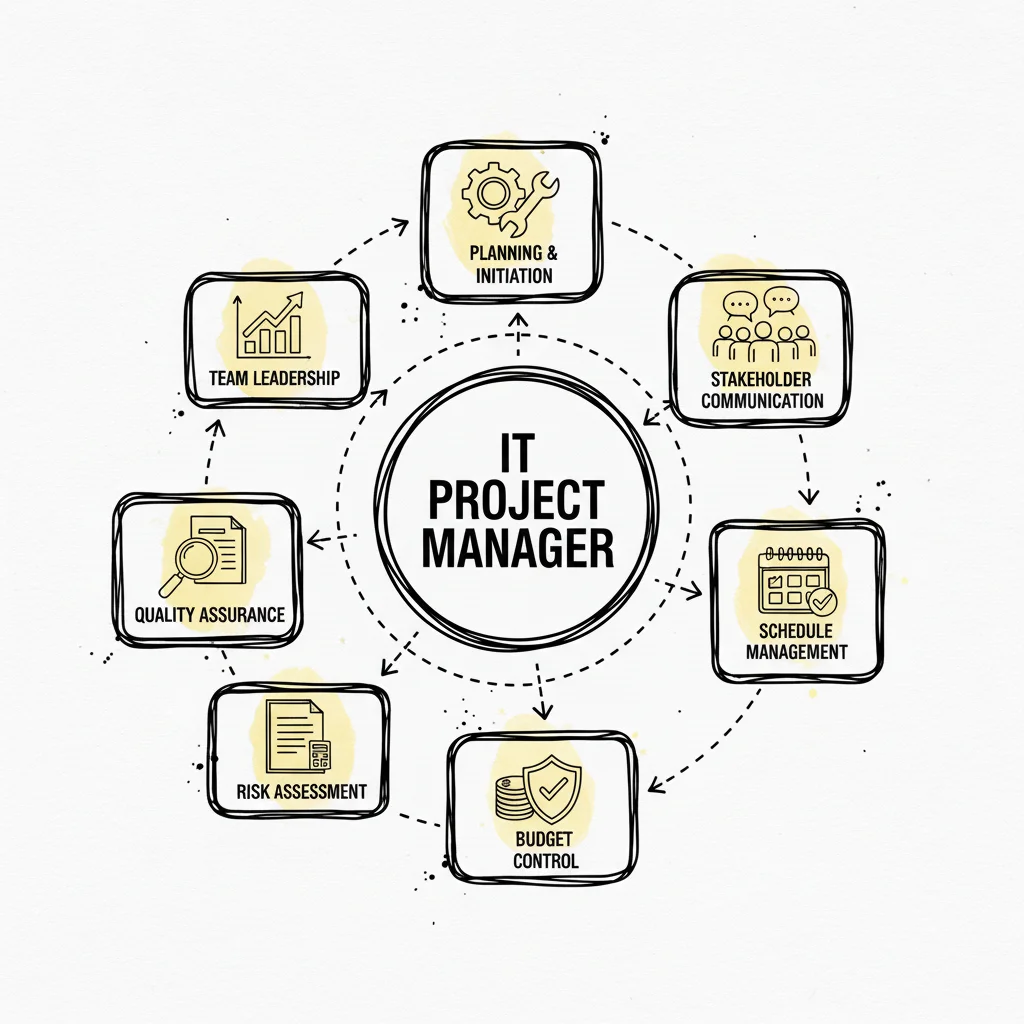
Holding a CPA license is one of the most reliable ways to secure a high income, making it one of the premier certifications that pay well. CPAs are in constant demand across public accounting, corporate finance, government, and non-profit sectors. Professionals at "Big Four" firms like Deloitte and PwC are typically CPAs, and many CFOs and controllers at major corporations hold the license, showcasing its direct link to executive leadership positions and strategic financial oversight.
Path to Certification and ROI
Earning the CPA license is a formidable challenge, requiring a specific educational foundation (often 150 semester hours, which is more than a standard bachelor's degree), a comprehensive four-part exam, and verified experience, typically under a licensed CPA.
- Average Salary Range: $75,000 - $160,000+ (Varies greatly by experience, industry, and role)
- Experience Level: Entry to Senior-level. Requires a bachelor’s degree with 150 semester hours of education and typically 1-2 years of relevant experience under a licensed CPA.
- Time & Cost: Preparing for the four-part exam can take 6-18 months of dedicated study. Exam fees total around $1,000, and comprehensive review courses (like Becker or Wiley) can cost $2,000 to $4,000.
- ROI Guidance: The CPA license often results in a 5-15% salary increase, commonly known as the "CPA premium." The investment is substantial but offers immense long-term career stability, accelerated advancement opportunities, and higher earning potential that far outweighs the initial cost.
Actionable Preparation Strategy
Success on the Uniform CPA Exam demands a disciplined and strategic study plan. Begin by ensuring you meet your state's specific educational requirements for sitting for the exam, which can often be completed while finishing your degree or through a master's program.
Key Insight: The CPA exam is a test of endurance as much as knowledge. Each of the four sections (Auditing and Attestation, Business Environment and Concepts, Financial Accounting and Reporting, and Regulation) is extensive. Treat your preparation like a part-time job, dedicating consistent daily hours. Passing all four sections within the 18-month rolling window (which starts from the date you pass your first section) is critical, so a well-structured timeline is non-negotiable.
Plan to tackle one exam section at a time. Invest in a high-quality review course that matches your learning style and create a strict study schedule, dedicating 15-20 hours per week for 2-4 months per section. Focus on understanding the concepts behind the questions rather than just memorizing answers, as the exam primarily tests your ability to apply principles in complex, scenario-based situations, including simulation questions.
Reflection Prompt: If you're considering the CPA, how might your current professional experience in IT or project management intersect with financial auditing or internal controls? What bridging knowledge might you need to acquire to connect these domains effectively?
4. Certified Information Systems Auditor (CISA)
The Certified Information Systems Auditor (CISA) certification, offered by ISACA, is the global standard for professionals in information systems audit, control, and security. It validates your expertise in auditing, controlling, and assessing an organization's IT and business systems. This credential signifies that you possess the knowledge and skills to identify critical issues, manage IT risk, and provide tangible value to the enterprise by ensuring the integrity and security of its information assets.
Earning the CISA demonstrates a deep understanding of IS audit processes and an ability to protect information assets, making it particularly valuable for IT professionals transitioning into governance, risk, and compliance (GRC) roles. It is one of the most respected certifications that pay well, especially in the realms of GRC. Top employers, including Big Four accounting firms like Deloitte and PwC, major financial institutions, and government agencies, actively seek CISA-certified professionals to ensure their IT controls and cybersecurity postures are robust, compliant with regulations (e.g., SOX, HIPAA, GDPR), and resilient against threats.
Path to Certification and ROI
Achieving CISA status requires a blend of proven professional experience and passing a challenging exam focused on five key job practice domains: Information System Auditing Process; Governance and Management of IT; Information Systems Acquisition, Development, and Implementation; Information Systems Operations and Business Resilience; and Protection of Information Assets.
- Average Salary Range: $105,000 - $145,000+
- Experience Level: Mid to Senior-level. Requires a minimum of five years of professional information systems auditing, control, or security work experience. Certain educational degrees (like a master's in IT) or other certifications can substitute for up to three years of this experience.
- Time & Cost: Preparation typically takes 3-5 months of dedicated study. The exam fee is $575 for ISACA members and $760 for non-members. Official review courses and materials from ISACA or reputable providers can add $700 to $1,500 to the total cost.
- ROI Guidance: The CISA certification often qualifies professionals for senior audit and security roles, leading to significant salary increases and enhanced job security. The investment is frequently recouped within the first year, driven by higher earning potential and access to specialized, high-demand positions in critical compliance functions.
Actionable Preparation Strategy
A successful CISA journey hinges on a deep understanding of audit principles as they apply to complex IT environments. Start by confirming you meet the stringent experience requirements and meticulously document your relevant work before you begin studying for the exam.
Key Insight: The CISA exam tests your judgment as an auditor and risk professional. It's less about technical minutiae and more about applying an audit mindset to various IT scenarios, understanding control objectives, and evaluating the effectiveness of controls. Focus on understanding the "why" behind controls, risk mitigation, and compliance frameworks, not just the "what."
For a structured approach, leverage ISACA's official CISA Review Manual and the Questions, Answers & Explanations (QAE) database, which is invaluable for practice. Joining a local ISACA chapter provides excellent networking opportunities, access to study groups, and insights from experienced professionals. Many candidates find success by combining self-study with an official ISACA review course or a reputable third-party boot camp to tackle complex topics like IT governance and business resilience in a structured manner.
Reflection Prompt: How would a CISA certification enhance your ability to lead or contribute to IT risk assessments, compliance audits (e.g., SOC 2, ISO 27001), or security policy development within your organization?
5. Certified Information Systems Security Professional (CISSP)
The Certified Information Systems Security Professional (CISSP), administered by (ISC)², is the undisputed gold standard for information security management. It's a comprehensive credential that validates an expert's deep technical and managerial knowledge across eight critical domains of security, including security and risk management, asset security, security architecture, and software development security. Achieving CISSP status signifies you have the advanced knowledge and practical experience to design, engineer, implement, and manage an organization's overall security posture across diverse IT ecosystems.
This certification is a powerful career accelerator and one of the most respected certifications that pay well in the technology sector. It's often a mandatory requirement for senior cybersecurity roles, including Security Architect, CISO (Chief Information Security Officer), Director of IT Security, and Cybersecurity Consultant. Top employers like Microsoft, Apple, and government agencies such as the Department of Defense actively seek out CISSP holders to lead their most critical security initiatives, trusting their expertise to protect vital digital assets.
Path to Certification and ROI
The journey to CISSP is rigorous, designed to validate both comprehensive security knowledge and extensive hands-on experience, ensuring a high return on investment (ROI).
- Average Salary Range: $120,000 - $175,000+
- Experience Level: Mid to Senior-level. Requires a minimum of five years of cumulative, paid, full-time work experience in two or more of the eight CISSP domains. A four-year college degree or an approved credential can substitute for one year of this experience.
- Time & Cost: Plan for 3-6 months of intensive study. The exam fee is currently $749. Official training courses and bootcamps, which are often recommended given the exam's breadth, can cost between $2,000 and $5,000.
- ROI Guidance: The significant salary increase and access to senior leadership positions make the CISSP a highly profitable investment. The credential's prestige and market demand often lead to a recovery of costs within the first year through promotions or new, higher-paying job opportunities.
Actionable Preparation Strategy
Success on the CISSP exam requires a well-structured plan that comprehensively covers the vast breadth of all eight security domains. Start by mapping your professional experience to the required domains to ensure you meet the prerequisites before you begin studying.
Key Insight: The CISSP exam is often described as "a mile wide and an inch deep." It tests your ability to think like a security manager and risk advisor, not just a deep technical practitioner. Your focus should be on understanding concepts, their interdependencies, and their business implications for risk management and organizational security, rather than just technical memorization.
To get a feel for the exam's style and question types, it's highly helpful to work through practice questions early in your preparation. You can find many resources, including a CISSP exam sample questions guide, to test your knowledge and identify weak areas across domains like Security Operations, Identity and Access Management (IAM), and Software Development Security. A balanced approach combining official (ISC)² study materials, a reputable bootcamp for structured learning, and consistent practice with scenario-based questions is the most most effective path to passing.
Reflection Prompt: How would a CISSP certification empower you to influence organizational security strategy, evaluate new technologies from a risk perspective, or mentor junior cybersecurity professionals?
6. AWS Certified Solutions Architect - Professional
The AWS Certified Solutions Architect - Professional certification is a top-tier credential for anyone designing complex cloud solutions on Amazon Web Services. It validates advanced technical skills and extensive experience in designing distributed, resilient, and cost-optimized applications and systems on the AWS platform. This certification signifies that you can evaluate cloud application requirements and make strategic architectural recommendations for implementation, deployment, and provisioning on AWS, often involving multiple services and accounts.
This credential is a clear signal to employers of your expertise in managing and operating highly available, scalable, and fault-tolerant systems in the cloud. It's renowned as one of the most lucrative certifications that pay well, with certified professionals being sought after by major tech companies and enterprises undergoing digital transformation. Cloud architects at innovative firms like Netflix and Spotify, as well as enterprise teams at major financial institutions and government agencies, often hold this certification to lead their most critical cloud infrastructure initiatives and migrations.
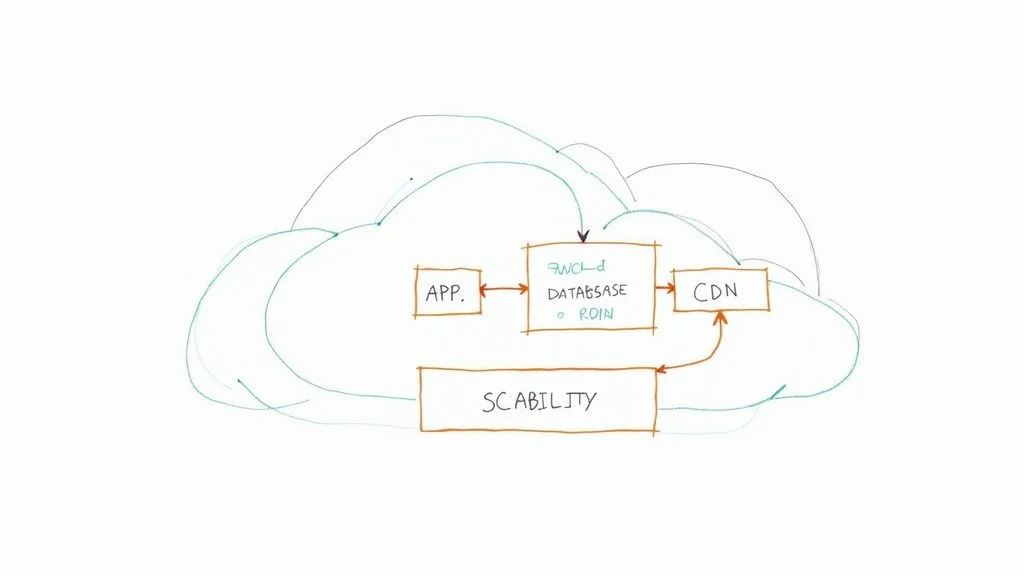 Caption: A conceptual diagram illustrating cloud architecture components, emphasizing the interconnectedness and scalability crucial for AWS solutions.
Path to Certification and ROI
Achieving this professional-level certification is a demanding process that requires deep hands-on experience and a thorough understanding of AWS services, best practices, and architectural patterns.
- Average Salary Range: $140,000 - $180,000+
- Experience Level: Senior-level. AWS recommends at least two years of hands-on experience designing and deploying cloud architecture on AWS. The AWS Certified Solutions Architect - Associate is a formal prerequisite, providing a foundational understanding.
- Time & Cost: Preparation typically takes 4-6 months after earning the Associate-level certification, requiring dedicated study. The exam fee is $300. High-quality training courses from providers like A Cloud Guru or official AWS training can cost between $300 and $1,500.
- ROI Guidance: The significant salary increase and access to senior architect roles in a rapidly expanding cloud market make the ROI extremely high. The investment is often recovered within a few months, and the credential unlocks opportunities for leadership in enterprise cloud strategy, leading complex migrations and greenfield deployments.
Actionable Preparation Strategy
Success on the AWS Certified Solutions Architect - Professional exam hinges on practical experience and strategic study that goes beyond individual service knowledge. A solid first step is indeed earning the Associate-level certification to build a foundational knowledge base across core AWS services.
Key Insight: This exam is not about individual AWS services in isolation. It intensely tests your ability to design complex, multi-service solutions that solve intricate business problems, focusing on cost optimization, operational excellence, performance efficiency, reliability, and security (the five pillars of the AWS Well-Architected Framework). Your preparation must focus on understanding how services integrate and why certain architectural choices are made under specific constraints.
Your study should heavily involve building real-world projects and hands-on labs using the AWS Free Tier. Utilize a combination of official AWS whitepapers (e.g., Well-Architected Framework), re:Invent deep-dive videos, and a reputable training course that includes scenario-based practice questions. For those starting their journey, our detailed study guide for the prerequisite certification provides an excellent roadmap to prepare for the professional-level challenge.
*Caption: Watch this video for insights into advanced AWS architectural patterns and best practices, essential for the Solutions Architect Professional exam.*Reflection Prompt: Consider a complex application you've worked with. How would you redesign its architecture for optimal performance, cost, and resilience on AWS, leveraging various services and architectural patterns (e.g., serverless, microservices, containerization)?
7. Certified Health Care Compliance Professional (CHCP)
The Certified Health Care Compliance Professional (CHCP) certification, offered by the Health Care Compliance Association (HCCA), validates expertise in the complex and critically important field of healthcare compliance. This credential demonstrates a professional's deep knowledge of healthcare regulations (e.g., HIPAA, Stark Law, Anti-Kickback Statute), anti-fraud laws, and the intricate processes involved in implementing and managing effective compliance programs. It certifies an individual’s ability to navigate the intricate legal and ethical landscape of the healthcare industry, a sector increasingly scrutinized by regulatory bodies.
Earning the CHCP signals to employers that you possess the specialized skills to mitigate risk and ensure organizational integrity in a highly regulated environment. It is one of the definitive certifications that pay well within the healthcare administration and legal sectors. Major hospital systems like the Mayo Clinic, large insurance providers, and pharmaceutical companies actively seek CHCP holders for crucial compliance officer and manager roles, trusting them to safeguard the organization from costly penalties, legal issues, and reputational damage.
Path to Certification and ROI
Achieving CHCP certification requires a combination of relevant professional experience in compliance and passing a comprehensive exam that covers key aspects of healthcare law and operational compliance.
- Average Salary Range: $95,000 - $145,000+
- Experience Level: Mid-level. Requires 1,500 hours of direct, full-time compliance-related work experience within the two years preceding the exam application OR completion of a one-year, full-time university-accredited compliance program.
- Time & Cost: Preparation typically takes 2-4 months of focused study. The exam fee is $275 for HCCA members and $375 for non-members. Official study guides, practice exams, and review materials are available for an additional cost, usually under $300.
- ROI Guidance: The CHCP often provides a direct path to higher-level, higher-paying roles like Compliance Director or Chief Compliance Officer within healthcare organizations. The investment is relatively low compared to the significant salary increase and career stability it offers in the ever-expanding and strictly regulated healthcare sector.
Actionable Preparation Strategy
A successful approach to the CHCP exam involves leveraging your hands-on experience and focusing on the seven key domains of healthcare compliance, as outlined by HCCA. Start by thoroughly documenting your compliance-related projects and initiatives to ensure you meet the stringent work experience requirement.
Key Insight: The CHCP exam tests practical application, not just regulatory memorization. Focus your study on how to apply standards from the Office of Inspector General (OIG) and Centers for Medicare & Medicaid Services (CMS) to real-world scenarios such as conducting risk assessments, managing internal investigations, developing training programs, and responding to regulatory inquiries. Understanding the "why" behind compliance rules is crucial.
A solid study plan should involve reviewing the official CHCP Candidate Handbook and using HCCA's recommended study materials. Supplement your reading by staying current with the latest OIG fraud alerts, CMS updates, and other relevant legal and regulatory developments. Joining a professional organization like HCCA provides excellent networking opportunities and access to study groups, which can be invaluable for understanding how different organizations handle common compliance challenges and share best practices.
Reflection Prompt: How does robust healthcare compliance directly contribute to patient safety, data privacy (e.g., HIPAA), and the financial integrity of a healthcare organization? Think about specific examples you've encountered.
8. Google Cloud Certified - Professional Cloud Architect
The Google Cloud Certified - Professional Cloud Architect certification is Google's premier credential for validating expertise in designing, developing, and managing robust, secure, and scalable solutions on the Google Cloud Platform (GCP). It signifies a deep understanding of cloud architecture and Google's specific technologies, placing certified professionals in a strong position to lead critical cloud initiatives. This certification is a direct competitor to top-tier AWS and Azure credentials, demonstrating mastery of a rapidly growing cloud ecosystem.
As cloud adoption continues to surge globally, a Professional Cloud Architect certification is one of the most valuable certifications that pay well. It signals to employers that you can translate complex business objectives into optimal technical cloud solutions, a critical skill for any organization leveraging GCP for its digital transformation. Companies ranging from tech startups to Fortune 500 enterprises actively seek these professionals to design and oversee their cloud infrastructure, often making it a prerequisite for senior cloud architect or engineering roles.
Path to Certification and ROI
Achieving this elite certification requires a combination of extensive hands-on experience with GCP services and a thorough understanding of cloud design principles, operational best practices, and cost optimization strategies.
- Average Salary Range: $135,000 - $175,000+
- Experience Level: Mid to Senior-level. Google recommends 3+ years of industry experience, including 1+ year designing and managing solutions using GCP, to ensure sufficient practical application.
- Time & Cost: Preparation typically takes 2-4 months of focused study. The exam fee is $200. High-quality training courses from providers like Coursera or A Cloud Guru can range from $300 to $1,000, often including labs and practice exams.
- ROI Guidance: The high demand for skilled GCP experts often results in a significant salary increase post-certification, especially as organizations expand their multi-cloud strategies. The investment is quickly recouped, as it unlocks opportunities for high-impact roles in a growing and lucrative cloud ecosystem, with a clear path to leadership.
Actionable Preparation Strategy
Success on the Google Cloud Certified - Professional Cloud Architect exam hinges on practical application and a deep understanding of how to build and optimize solutions on GCP, not just theoretical knowledge. Start by leveraging the GCP Free Tier and Qwiklabs to build and deploy small-scale projects, gaining hands-on experience with core services like Compute Engine, Kubernetes Engine, Cloud Storage, and BigQuery.
Key Insight: This exam heavily emphasizes scenario-based questions and in-depth case studies. You must be able to analyze detailed business requirements and design the optimal GCP solution, considering factors like security, cost, reliability, performance, and operational efficiency. Your preparation should focus on solving architectural challenges and making trade-off decisions.
For a comprehensive approach, enroll in the official Google Cloud training on a platform like Coursera or use a dedicated cloud training provider that offers extensive labs and practice questions. Supplement this with a deep dive into Google's official documentation and review the provided case studies, as they form a significant part of the exam content and help you practice critical thinking for complex scenarios.
Reflection Prompt: How would you approach designing a highly available and scalable data analytics pipeline on GCP, considering data ingress, processing (e.g., Dataflow, Dataproc), storage (e.g., BigQuery, Cloud Storage), and visualization?
9. Certified Data Privacy Professional (CDPP) & Certified Privacy Professional (CPP)
The International Association of Privacy Professionals (IAPP) offers the gold-standard credentials for data privacy expertise. These certifications, including the Certified Information Privacy Professional (CIPP) with various jurisdictional concentrations (e.g., CIPP/E for European law, CIPP/US for U.S. private sector law) and the Certified Information Privacy Manager (CIPM), validate your understanding of complex data privacy laws, regulations (like GDPR, CCPA, HIPAA), and best practices for managing privacy programs. As data becomes a critical business asset and global regulations enforce strict compliance, skilled privacy professionals are in exceptionally high demand, particularly for IT professionals involved in data management, security, and governance.
Earning an IAPP certification demonstrates a deep knowledge of the legal and operational requirements for handling personal data responsibly and ethically. This makes it one of the top certifications that pay well, especially in roles like Data Protection Officer (DPO), Privacy Counsel, Privacy Engineer, and Compliance Manager. Companies from tech giants like Meta and Apple to financial and healthcare institutions actively seek IAPP-certified experts to navigate the intricate landscape of global privacy laws, mitigate the risk of costly data breaches, and build customer trust.
Path to Certification and ROI
Achieving an IAPP certification requires a focused effort on understanding both the legal frameworks and the practical application of privacy principles within an organizational context.
- Average Salary Range: $120,000 - $170,000+ (Varies by certification, experience, and specific role)
- Experience Level: Entry to Senior-level. While no formal experience is strictly required for the exam, a background in legal, IT, compliance, or information security is highly beneficial for conceptual understanding.
- Time & Cost: Plan for 2-4 months of dedicated study per certification. The exam fee for most CIPP concentrations is $550. Official IAPP training and study materials can range from $300 to over $2,500, depending on the format and whether it includes a training course.
- ROI Guidance: The investment is quickly recouped given the high demand and specialized nature of privacy roles. An IAPP certification can unlock specialized, high-paying positions that are often less saturated than general IT roles. It provides a clear path to leadership in the rapidly growing and evolving field of data governance and privacy, ensuring career longevity as privacy laws continue to expand.
Actionable Preparation Strategy
Success on IAPP exams hinges on mastering specific legal and jurisdictional knowledge, combined with an understanding of how to operationalize privacy principles. Begin by selecting the certification that most directly aligns with your career goals and the geographic focus of your work (e.g., CIPP/E for roles dealing with European data, CIPP/US for U.S.-focused private sector roles, or CIPM for privacy program management).
Key Insight: These exams are not just about memorizing regulations; they test your ability to apply legal principles to real-world business scenarios. Focus on understanding the intent behind laws like GDPR, CCPA, and LGPD, and how they translate into operational controls, privacy impact assessments (PIAs), data subject access request (DSAR) processes, and privacy policies. Thinking like a privacy advocate and risk manager is key.
A practical study plan should involve reading the official IAPP textbook for your chosen exam, supplemented with online training courses or IAPP's training programs. Building hands-on experience by working on privacy impact assessments (PIAs), helping draft privacy policies, or contributing to incident response plans is invaluable. Joining the IAPP provides access to a wealth of resources, web conferences, and networking opportunities that are crucial for staying current and for career growth in this specialized and critical domain.
Reflection Prompt: How does your organization currently handle customer or employee data? What privacy risks exist, and how could an IAPP certification empower you to identify and mitigate them in alignment with global regulations?
10. Certified Management Accountant (CMA)
The Certified Management Accountant (CMA) credential, offered by the Institute of Management Accountants (IMA), is a globally recognized certification for accounting and finance professionals working within organizations. It validates advanced expertise in financial planning, performance, analysis, control, and decision support. Unlike the CPA, which often focuses on public accounting and external auditing, the CMA is tailored for strategic management roles, making it one of the top certifications that pay well for those driving internal financial strategy, operational efficiency, and business insights. For IT professionals, understanding management accounting principles (e.g., budgeting, cost analysis) is vital for making informed technology investment decisions and demonstrating IT's financial value.
Earning the CMA signals that you possess critical skills in corporate finance and management accounting that are highly valued in business. According to the IMA's Global Salary Survey, CMA holders earn significantly more than their non-certified peers, often by 30-60%. This certification is a key differentiator for roles like Financial Planning and Analysis (FP&A) managers at Fortune 500 companies, controllers, finance directors, and even CIOs who need to translate financial data into actionable business insights and strategic recommendations.
Path to Certification and ROI
Achieving CMA status requires passing a rigorous two-part exam and meeting specific educational and professional experience requirements, positioning it as a strategic career investment for those focused on internal business success.
- Average Salary Range: $100,000 - $145,000+
- Experience Level: Early to Mid-level. Requires a bachelor's degree (in any area, not necessarily accounting) and two continuous years of professional experience in management accounting or financial management.
- Time & Cost: Each exam part (Financial Planning, Performance, and Analytics; Strategic Financial Management) typically requires approximately 150-170 hours of intensive study. IMA membership and exam fees total around $1,000 to $1,500, with comprehensive review courses ranging from $1,200 to $2,500.
- ROI Guidance: The significant salary premium for CMAs ensures a strong return on investment. The credential directly qualifies candidates for higher-level management roles, often leading to promotions and increased responsibility that quickly recoup the initial costs through enhanced earning potential and career progression.
Actionable Preparation Strategy
A focused and practical study plan is essential for mastering the CMA's comprehensive curriculum, which covers topics like cost management, internal controls, and corporate finance. It is highly beneficial to pursue the certification while actively working in an accounting or finance role to directly connect exam topics to real-world applications and organizational challenges.
Key Insight: The CMA exam emphasizes decision-making, strategic analysis, and problem-solving, not just calculation or rote memorization of accounting rules. Your preparation should focus on understanding why certain financial strategies are used, how to interpret financial performance, and how to apply them to solve complex business problems, such as capital budgeting or performance measurement.
Start by joining the IMA and utilizing their official study materials as your foundation. Supplement these resources with a reputable review course that offers extensive practice questions, detailed explanations, and mock exams to simulate the real test environment. Aim to schedule the two exam parts a few months apart to maintain momentum and allow for dedicated study time for each. Engaging with a local IMA chapter can also provide access to valuable study groups and professional networking opportunities, offering insights into how different companies apply CMA principles.
Reflection Prompt: How could a deeper understanding of management accounting (e.g., budgeting, variance analysis, cost-benefit analysis) improve your decision-making in IT project selection, resource allocation, or vendor contract negotiations?
Top 10 High-Paying Certifications Comparison
| Certification | Implementation complexity | Resource requirements | Expected outcomes | Ideal use cases | Key advantages |
|---|---|---|---|---|---|
| Chartered Financial Analyst (CFA) | Very high — three rigorous levels; 300+ hrs/level; 4‑year experience for charter | High cost ($3k–$4k+); extensive study time; exam scheduling over years | $120k–$300k+; strong premium in asset management and investment banking | Portfolio manager, equity analyst, asset management, investment banking | Global recognition; large salary premium; strong professional network |
| Project Management Professional (PMP) | High — rigorous exam; 3–5 yrs PM experience; 35‑hr education | Moderate cost (~$555 exam + materials); 6–12 weeks prep; documented project hours | $75k–$140k; improved leadership and project roles across industries | Project/program manager, PMO, government contractors, IT projects | Cross‑industry applicability; clearer leadership pathway; strong market demand |
| Certified Public Accountant (CPA) | Very high — four exam sections; 150 credit hrs; 2–3 yrs experience; lengthy timeline | High cost ($2.5k–$4k); extensive education and months of study per section | $60k–$250k+; required for audit/attest roles; path to CFO/partner | Public accounting, audit, tax, CFO, regulatory compliance | Legally required for attest services; top accounting earnings; strong job security |
| Chartered Information Systems Auditor (CISA) | High — challenging exam; typically 5 yrs IT audit/control experience | Moderate cost; 120–150 hrs study; annual CPE requirements | $90k–$160k+; valued in IT audit, governance, compliance | IT auditor, governance, internal audit in finance/healthcare/government | Strong IT governance credential; global recognition in regulated industries |
| Certified Information Systems Security Professional (CISSP) | Very high — 8 domains; 5 yrs experience (4 with degree); endorsement required | High cost (exam + dues); 3–6 months prep; 120 CPE/3yrs | $110k–$250k+; leadership track to CISO; very strong placement | Security lead, enterprise security architect, CISO candidates | Gold‑standard security cert; high salary and global recognition |
| AWS Certified Solutions Architect – Professional | High — advanced architecture scenarios; associate prerequisite; 3‑hr exam | Moderate cost; hands‑on AWS experience (2+ yrs); 6–12 months prep | $110k–$200k+; strong demand for cloud architects | Cloud architect, enterprise migration, cloud consulting | High market demand; direct cloud architecture skill validation; faster path vs some certifications |
| Certified Health Care Compliance Professional (CHCP) | Moderate — 2 yrs healthcare compliance experience; role‑specific exam | Lower cost; 2 yrs experience + 2–3 months study; renewal CEs | $80k–$150k; compliance leadership in healthcare organizations | Healthcare compliance officer, hospital systems, insurers | Healthcare‑specific compliance expertise; growing sector demand; lower barrier than clinical creds |
| Google Cloud Certified – Professional Cloud Architect | High — scenario‑based exam; recommend associate prep; 2‑hr exam | Moderate cost; hands‑on GCP experience; 4–8 months prep | $110k–$180k+; GCP architect and infrastructure roles | GCP‑focused cloud architects, startups, enterprise multi‑cloud teams | Less saturated GCP market; high salary; strong GCP specialization |
| CDPP (CDPP) & CPP (CPP) | Varies — CDPP low complexity; CPP high (5 yrs experience) | Moderate cost; CDPP: 2–3 months; CPP: 5 yrs experience + months study; CPEs | $85k–$180k+ depending on level; growing demand in privacy roles | Privacy officer, data protection lead, compliance teams, consultants | Critical for data protection and regulatory compliance; career longevity as laws expand |
| Certified Management Accountant (CMA) | Moderate — two‑part exam; 2 yrs experience; bachelor’s required | Moderate cost; 4–5 months intensive study; annual CPE | $70k–$150k+; premium in corporate finance and FP&A | FP&A manager, controller, finance director, management accountant | Faster path than CPA; strategic finance and decision‑support focus; valued in industry |
From Learning to Earning: Charting Your Certification Path
We've journeyed through a comprehensive list of certifications that pay well, exploring ten powerful credentials that can significantly elevate your career and earning potential as an IT professional. From the intricate financial landscapes navigated by CFA charterholders and CPAs to the secure digital fortresses built by CISSP professionals, a clear pattern emerges. These certifications are more than just lines on a resume; they represent a deep, verifiable mastery of specialized, in-demand skills. The high salaries they command are a direct reflection of the value that certified experts bring to their organizations, solving complex problems, mitigating critical risks, and driving strategic initiatives.
The central takeaway is that while the promise of a higher salary is enticing, the journey to certification is a strategic investment in your professional identity. The most successful professionals don't just pass the exam. They internalize the frameworks, apply the principles, and use their newfound knowledge to drive tangible business outcomes. The PMP credential isn't just about knowing project management methodologies; it's about leading IT teams to deliver projects on time and under budget, often leveraging Agile principles. Similarly, an AWS or Google Cloud certification is not merely a test of cloud service knowledge, but a validation of your ability to design and deploy resilient, scalable, and cost-effective architectures that meet specific business requirements.
Your Next Move: From Decision to Action
Choosing the right certification from a list of high-paying options is a critical decision point. Now is the time to transition from consideration to committed action. Avoid analysis paralysis by breaking down your decision-making process into clear, manageable steps.
-
Perform a Self-Audit: Look at your current role, skills, and experience. Where are the gaps between your current capabilities and the requirements for the roles you aspire to? Which certification directly addresses those gaps and aligns with your passion? For example, if you are in a financial analysis role and want to move into portfolio management, the CFA is a logical next step. If you're managing software projects, the PMP could be transformative.
-
Align with Career Trajectory: Where do you see yourself in five years? If your goal is to become a C-suite executive like a CFO, a CPA or CMA provides a strong foundation. If a CISO role is your target, the CISA and CISSP are essential milestones on that path. Map the certification to your long-term ambitions, not just your next job.
-
Calculate Your Personal ROI: We've provided cost and time estimates, but you must create a personal budget and timeline. Consider not just the exam fees but also the cost of study materials and the value of your time. Frame it as an investment: spending $2,000 and 200 hours to potentially increase your salary by $20,000 annually yields an incredible return that often pays for itself many times over.
Mastering the Material, Not Just Memorizing
The most significant mistake candidates make is treating certification preparation like a sprint to memorize facts for an exam. This approach often leads to burnout, short-term recall, and, more importantly, a failure to retain and apply the knowledge where it counts: on the job. The true value of these elite credentials lies in achieving a deep, functional understanding of the subject matter, allowing you to solve complex real-world problems.
This is where a structured, strategic approach to studying becomes your greatest asset. Instead of aimless reading, focus on methodologies that enhance long-term retention and comprehension, such as active recall, spaced repetition, and hands-on practice (e.g., building labs for AWS/GCP, working through case studies for PMP/CFA).
Key Insight: The path to a top-tier salary is paved with applied knowledge, not just exam scores. Focus your preparation on understanding the "why" behind the concepts, the interdependencies of systems, and the implications of your decisions. By doing so, you will be equipped to solve real-world problems, making you an invaluable asset to any team and setting you up for sustained career growth.
Ultimately, the certificates that pay well are those that challenge you to grow. They push you beyond your comfort zone and demand a new level of professional discipline and expertise. The process itself is transformative, building not just knowledge, but confidence and critical thinking skills. By committing to this journey, you are signaling to yourself and the market that you are dedicated to excellence and continuous improvement. The financial rewards are a byproduct of the valuable expertise you will gain. The path is laid out before you; the first step is yours to take.
Ready to turn your certification goals into a high-earning reality? MindMesh Academy provides structured, evidence-based exam preparation for many of the top-tier certifications discussed in this article. Leverage our adaptive learning platform to create a personalized study plan that optimizes your time and ensures you master the concepts, not just memorize them for exam day. Start your journey with confidence at MindMesh Academy.
Ready to Get Certified?
Prepare with expert-curated study guides, practice exams, and spaced repetition flashcards at MindMesh Academy:

Written by
Alvin Varughese
Founder, MindMesh Academy
Alvin Varughese is the founder of MindMesh Academy and an enterprise architecture leader. An electrical engineer by training, he moved from factory automation in South Africa to cloud architecture at GE Appliances and Humana (Fortune 50), and holds 20 professional certifications including AWS Solutions Architect Professional, Azure DevOps Engineer Expert, and Microsoft Agentic AI Business Solutions Architect. He built MindMesh Academy after interviewing too many highly certified candidates who couldn't answer basic questions: the goal is prep that makes you better at the job, not just able to pass the exam.