
Top 10 Project Management Tests for 2026
Top 10 Project Management Tests for 2026
Most candidates ask the wrong question first. They ask, "Which PMP simulator has the most questions?" A better question is, "Which project management tests will train me to think the way the exam demands?"
That gap matters. The PMP, CAPM, and related project management certifications don't reward raw memorization for very long. They reward judgment under time pressure, pattern recognition, and the ability to choose the least-wrong option when several answers look plausible. Practice banks that only drill terms and definitions can leave you feeling productive while underpreparing you for the actual exam.
That's a real problem because the market is crowded with lookalike tools. Some platforms are excellent at timed realism. Others are better for weak-area repair, formula work, or mobile repetition during short breaks. And some are just dressed-up question dumps. Existing prep resources also lean heavily toward process memorization while doing a weaker job on the broader PMI Talent Triangle dimensions, according to PMI's discussion of the PMI Talent Triangle.
Good prep is broader than brute force. Candidates generally need to get above 80% on sample questions and practice exams to have a good chance of passing, based on guidance summarized by project-management.info's PMP sample exams resource. That doesn't mean you should chase a score in isolation. It means your test platform needs to help you diagnose why you missed questions, not just tell you that you missed them.
If you want a stronger study system around these tools, pair your test practice with 10 Evidence-Backed Study Techniques. That combination works better than marathon cramming.
1. MindMesh Academy

What if your practice test tool did more than score answers and told you how to study next?
That is the case for MindMesh Academy. Its value is not just the question bank. It gives you a study loop: read a focused guide, answer scenario questions, review the misses, then feed weak areas into spaced repetition so the next session fixes a specific problem instead of repeating the same mistakes.
That matters because many PMP candidates confuse activity with progress. They take quiz after quiz, see a decent score, and still struggle with situational questions a week later. MindMesh is built for retention and diagnosis, which makes it a stronger fit for candidates who need a system rather than another pile of mock questions.
Where it fits best
MindMesh works well for self-directed learners who want one place for content review, practice, and memory reinforcement. I would put it in the "best for structured mastery" category. If your prep breaks down because your notes live in one app, flashcards in another, and tests somewhere else, this kind of setup saves time and reduces friction.
It also helps candidates who need concept support before they can score well on harder scenario items. The built-in guides give useful context, and pairing practice with the 12 Principles of Project Management makes the situational questions easier to reason through.
Practical rule: A good test platform should tell you what to study after a wrong answer, not just record the miss.
Strengths, weaknesses, and trade-offs
The strongest part of MindMesh is the workflow. Adaptive practice and spaced repetition are more useful than brute-force mock testing when your issue is forgetting concepts between sessions. The dashboard also makes progress visible, which helps busy professionals protect limited study time.
The trade-off is market positioning. If you want the closest possible feel to official exam wording, other tools on this list are stronger for pure exam simulation. MindMesh is better earlier in the prep cycle, when you are still building judgment and closing knowledge gaps.
Pricing is another consideration. Full access requires paid enrollment, and pricing or refund details are not especially prominent on the site. Unlike subscription-based tools, this can be a one-time purchase for your prep cycle, but buyers should still confirm the commercial terms before committing, especially for team purchases or reimbursement. There is a free study guide and practice exam available to try before you buy.
There is also an institutional trade-off. MindMesh is a prep platform, not a certifying body or formal training authority. For individual candidates, that is usually fine. For companies that need approved training vendors, it may work better as part of a broader prep stack.
- Best for structured study: Guides, questions, flashcards, and review logic work together.
- Best for retention-focused prep: Strong choice if you forget material between study sessions.
- Less ideal for final realism checks: Better for mastery-building than last-week exam simulation only.
If your goal is to access project management tests inside a disciplined study system, not just hammer random quizzes, MindMesh Academy earns a place on the shortlist.
2. PMI Study Hall Plus
What should you use when your real problem is not knowledge, but exam judgment under PMI wording?
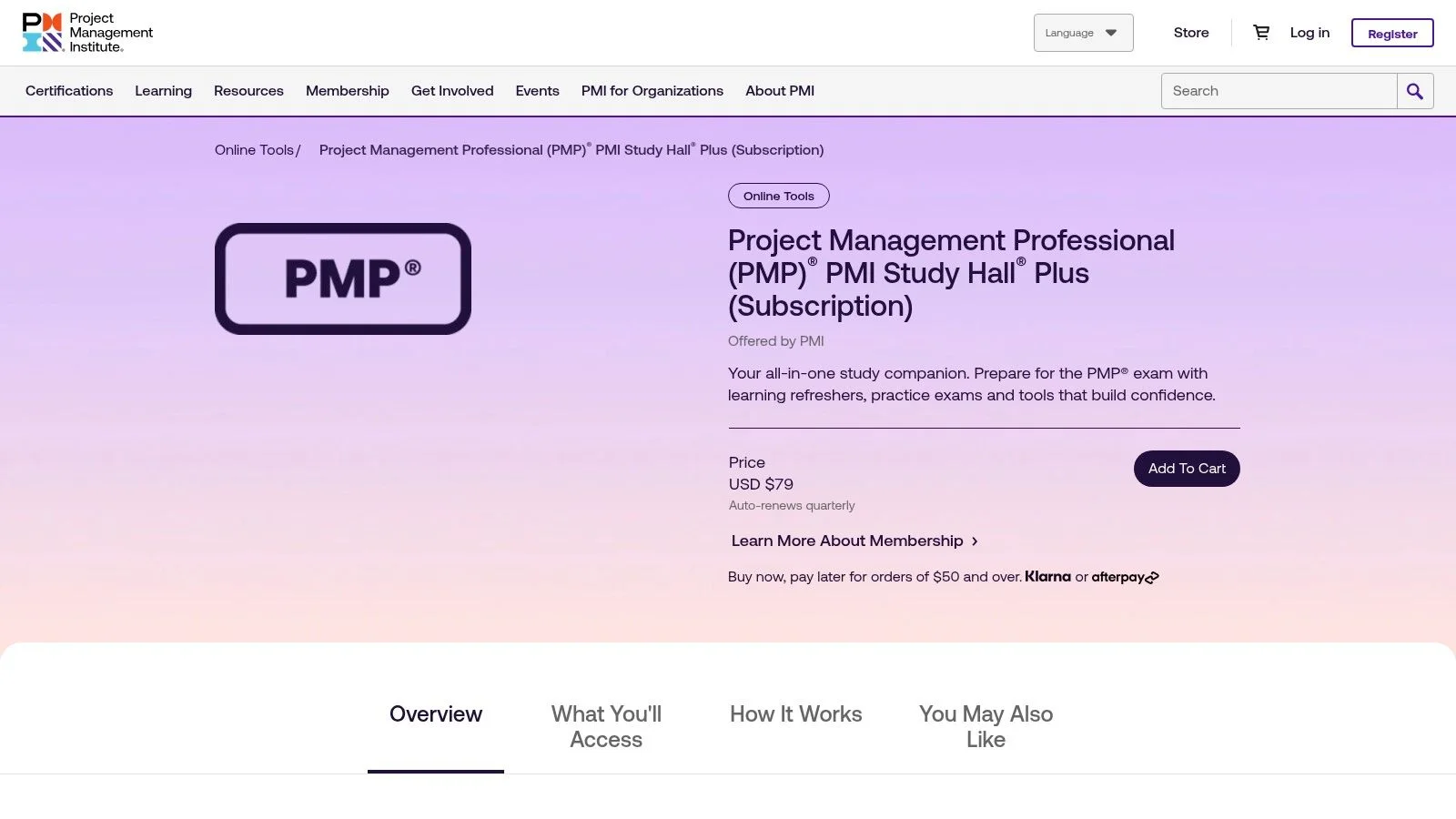
PMI Study Hall Plus is the tool I put in front of candidates who are past the learning phase and need to measure how close they are to exam-ready. Its advantage is simple. PMI owns the exam framework, so its question style is the closest many candidates will get to the tone, ambiguity, and pacing that create trouble on test day.
The platform includes full-length mock exams, shorter quizzes, flashcards, games, and performance tracking on the PMI Study Hall Plus subscription page. That mix matters because this is not just a question bank decision. It is a calibration decision. Use it to find out whether you can read a messy scenario, identify the PMI priority, and stay steady over a long session.
That is why I rate it highest for situational-question practice and final readiness checks.
Where it helps most
Study Hall Plus works best for candidates who already know the material and need exposure to PMI-style friction. The questions often feel awkward on purpose. In practice, that is useful. It trains you to slow down, separate what the scenario says from what you assume, and choose the answer PMI wants rather than the answer your workplace culture might reward.
If your misses come from mindset mistakes instead of content gaps, pair it with this guide to PMP Exam Strategy. For principle-level grounding, the existing overview of the 12 Principles of Project Management helps make the scenario logic easier to read.
Trade-offs to understand before you buy
This is a realism-first tool, not a patient teacher. Candidates who are still shaky on core concepts often get frustrated because the platform exposes weaknesses faster than it explains them. I would not use it as a first resource unless you already have strong notes, a course, or another reference you trust for review.
There is also a practical subscription trade-off. If your exam date is loose, monthly access can drift into wasted spend. If your date is fixed and close, the timing works much better because you can use the mocks, review the misses, and finish before renewal becomes a factor.
Its scope is narrow by design. That is a strength if your only goal is PMP alignment. It is less useful if you want one platform that supports broader project management certifications or teaches from the ground up.
- Best for situational-question realism: Strong choice for candidates who need PMI-style wording and ambiguity.
- Best for final calibration: Useful in the last stretch when scores matter less than pattern recognition and pacing.
- Less ideal for first-pass learning: Better once you already understand the concepts and need sharper exam judgment.
If you want project management tests that pressure-test your readiness instead of gently teaching the material, PMI Study Hall Plus earns its place on the shortlist.
3. PMTraining PMP Practice Exams
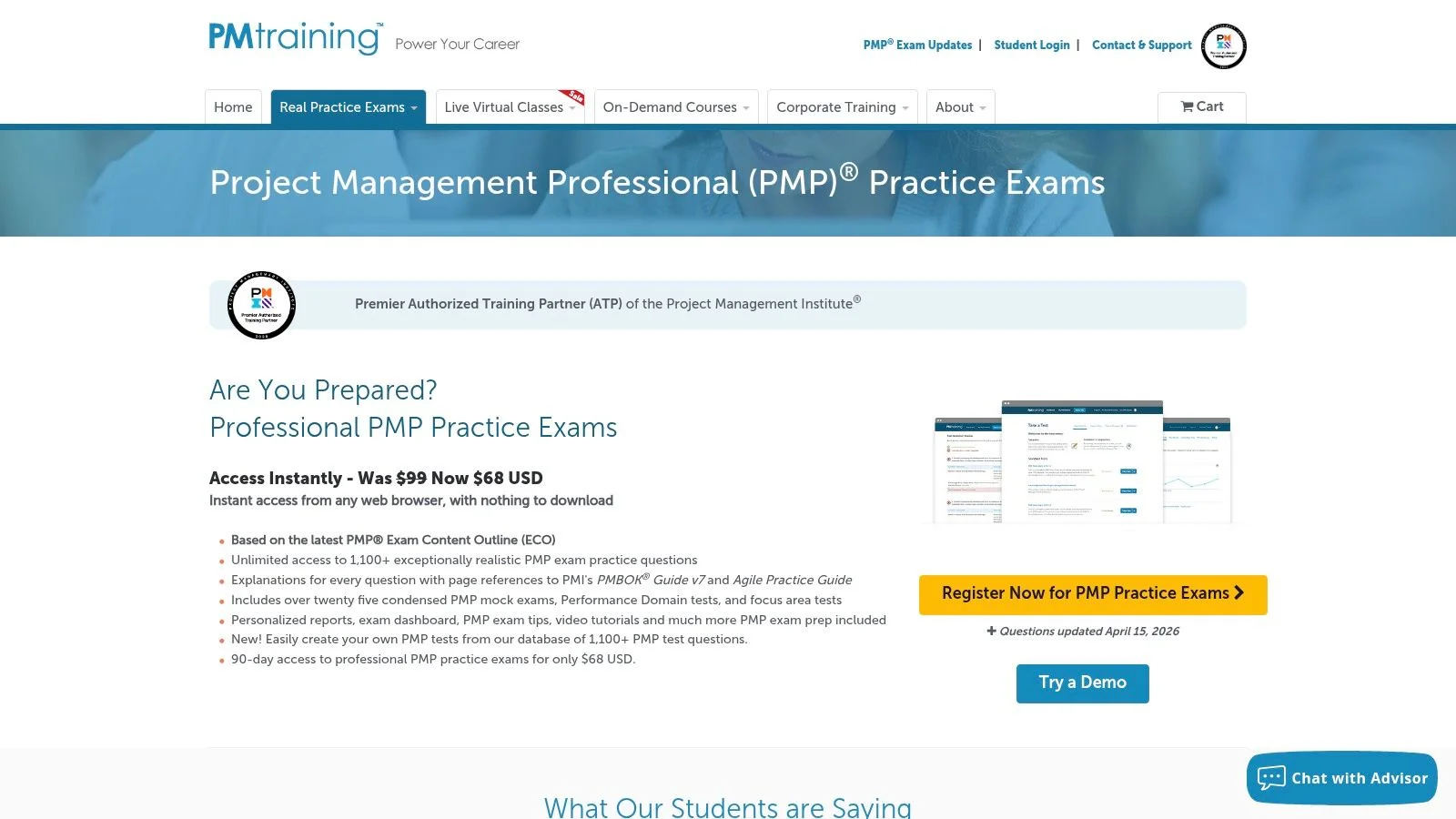
Need a PMP practice tool that lets you diagnose weak spots without paying for a large course bundle you may never use? PMTraining sits in that middle ground well. It gives PMP candidates a focused exam environment, useful reporting, and enough question variety to support repeat practice without the bloat of a broader certification platform.
Its main advantage is study control. The question bank is large enough for repeated sessions, and the platform offers condensed exams and domain-level practice through the PMTraining PMP practice exams page. That makes it a practical fit for candidates who already know the basics and now need to find patterns in their misses.
Where PMTraining earns its spot
I would put PMTraining in the "targeted drilling" category rather than the "final realism" category. If your scores swing by domain, process area, or question style, the reporting helps you stop studying everything at once. That matters because many PMP candidates are not broadly unprepared. They usually have a few recurring judgment errors, and those errors keep showing up.
It also works well for candidates who want shorter, structured practice blocks during a busy week. Two or three focused sessions on weak areas can produce more score movement than another full mock taken too early.
If situational questions are still costing you points, pair your review with PMP Scenario Question Techniques and the existing PMP Exam Strategy guide. That combination helps because PMTraining can show you where you are missing questions, while mindset and scenario review help explain why.
Trade-offs to weigh before you buy
PMTraining is a specialist option. That is part of its appeal. Candidates focused only on PMP often prefer that simplicity, but anyone trying to cover CAPM, PMI-ACP, or multiple certifications in one subscription may find the value narrower than some competing tools.
Timing matters too. Fixed access works best when your exam date is close and your study plan is stable. If work deadlines keep shifting your prep schedule, a shorter access window can turn a budget-friendly tool into rushed practice.
- Best for weak-area remediation: Useful for candidates who need domain-focused drilling and clearer score patterns.
- Best for structured weekly practice: Good fit if you study in shorter sessions instead of long weekend mocks.
- Less ideal for broad certification coverage: Better for PMP-only prep than for a multi-certification study plan.
For candidates who want project management tests that support disciplined review, PMTraining remains a solid choice. Its strength is not flash. Its strength is helping you decide what to fix next.
4. The PM Exam Simulator
Need a simulator that can tell you whether you are ready, or just getting good at familiar quiz patterns? That is the lane where PrepCast has earned its reputation.
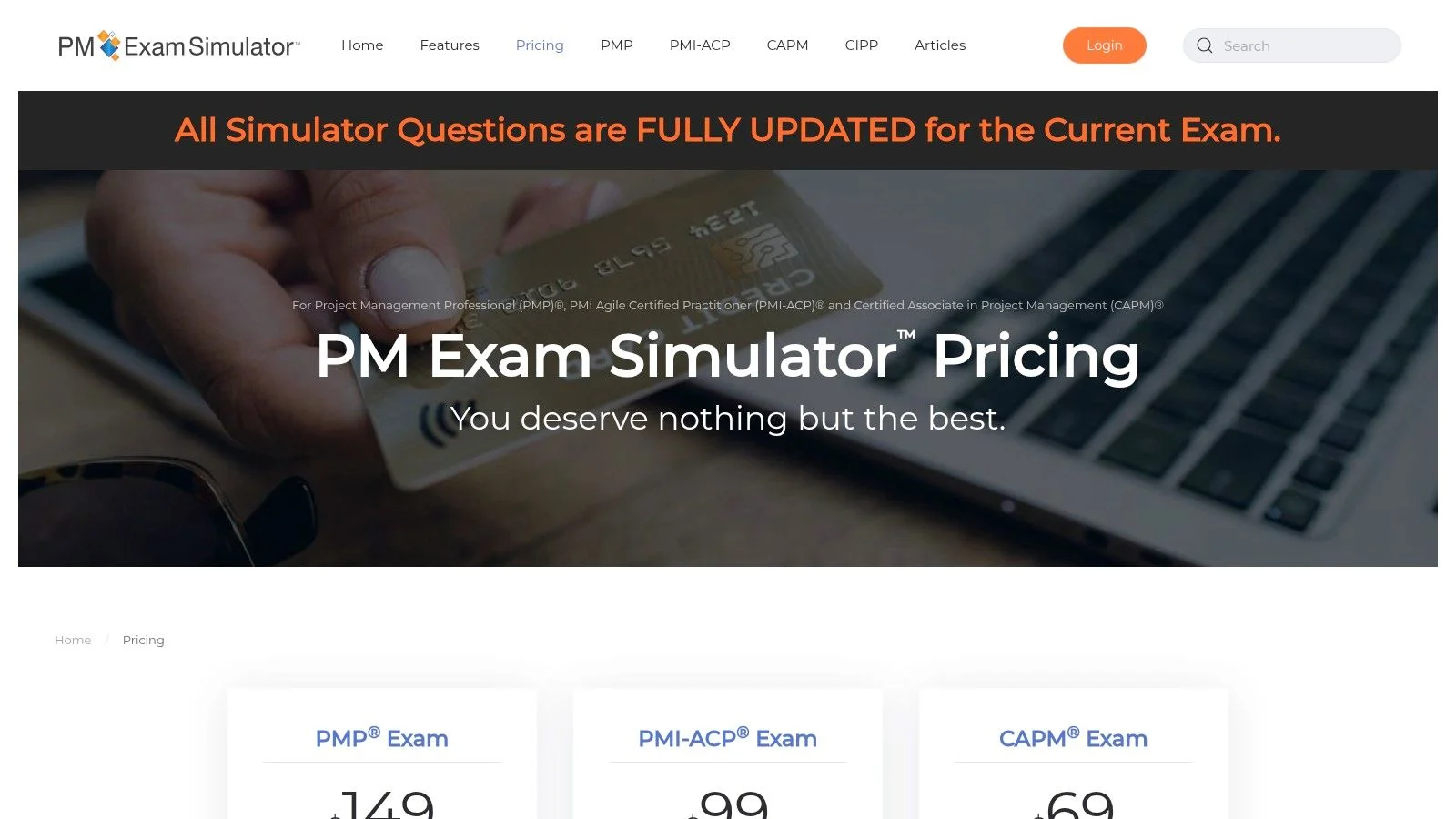
The PM Exam Simulator is a strong fit for candidates who want exam-like practice with enough depth to make trend lines meaningful. The platform offers full-length exams, shorter quizzes, learning mode, and separate tracks for other PMI certifications, as shown on the PM Exam Simulator pricing page. In practice, that makes it more useful as a readiness tool than as a general study hub.
Its biggest strength is diagnostic value. A lot of project management tests will tell you your score. Fewer help you decide what to fix next, what to ignore, and whether a weak result came from knowledge gaps, poor pacing, or shaky judgment on situational questions.
That last point matters. PrepCast is one of the better options for candidates who need serious scenario practice, especially once they know the content but still miss the best-next-action style questions. Pairing simulator review with PMP Scenario Question Techniques usually produces better gains than doing another passive read through process notes.
I would not put this tool at the very start of a study plan. Strong question banks are finite, even when they feel large. If your basics are still weak, using a premium simulator too early can turn valuable practice into expensive guessing.
The trade-off is straightforward. PrepCast is better for candidates in the application and exam-booking phase than for people still building their foundation over several months. The access window and price make more sense when you are close enough to test, review mistakes seriously, and sit for full mocks under timed conditions.
It also works best as a specialist tool. If you want flashcards, lesson videos, and guided teaching inside the same product, you will probably need a second resource. If you want a reliable readiness check and realistic pressure, this is one of the safer choices in the category.
- Best for readiness assessment: Strong pick when you need score trends you can trust before booking or keeping an exam date.
- Best for situational question practice: Useful for candidates who know the material but still struggle with judgment calls.
- Less ideal for early-stage prep: Better used after core concepts are already in place.
5. RMC Learning Solutions PM FASTrack Cloud
Some tools help you memorize. Rita Mulcahy's FASTrack has long been used by candidates who want to learn how the exam tries to trick them. That's the difference.
RMC's cloud simulator is especially good when you're tired of questions that feel too literal. The scenario style often forces you to evaluate sequencing, stakeholder judgment, and the "best next action" more carefully than lighter quiz apps do. For many candidates, that friction is exactly what they need.
The real strength of FASTrack
This is one of the better picks for reasoning-heavy practice. If your current scores look fine on direct recall but start sliding once answer choices become nuanced, FASTrack is worth attention. It pushes you into the gray areas where the PMP often lives.
Longer access options are another practical advantage. Some candidates need more runway because work, family, or travel interrupts study consistency. A tool that doesn't expire quickly can be more helpful than a larger bank with a shorter clock.
The trade-offs
FASTrack's interface is functional, not polished. That may sound minor, but it affects how often people want to log in. A smoother user experience does reduce friction, especially over a long prep cycle.
It also sits at a more premium tier than some competitors. If budget is tight and you mainly need volume plus timing practice, another simulator may offer better immediate value.
- Best for situational rigor: Strong for "what should the PM do next?" style thinking.
- Best for longer prep windows: Extended access can matter more than question count.
- Less ideal for UI-sensitive users: The interface works, but it won't wow anyone.
If you want project management tests that pressure your judgment more than your memory, RMC Learning Solutions PM FASTrack Cloud is still a credible option.
6. BrainBOK
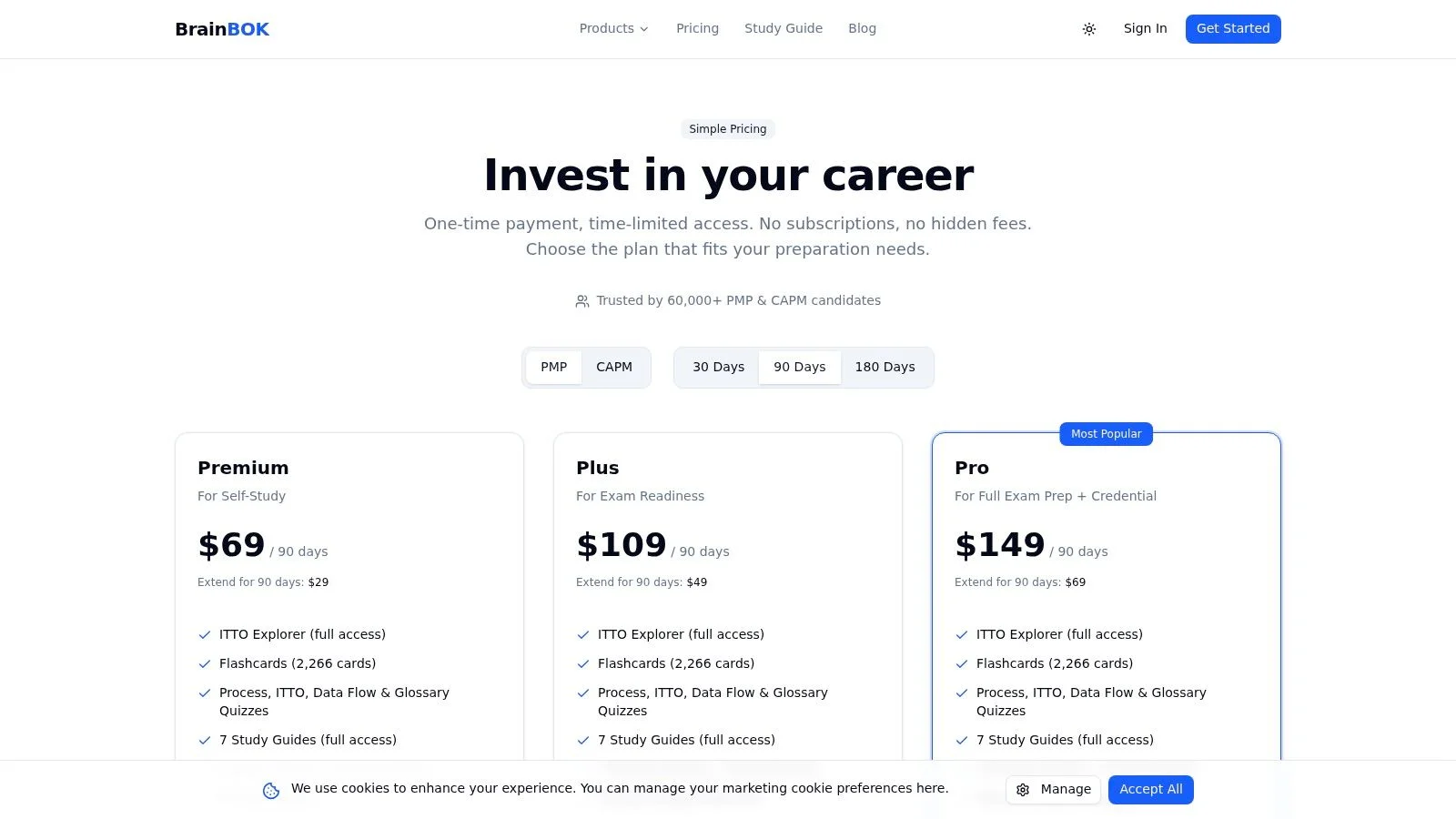
Need a prep tool that helps you connect the material instead of just drilling more questions? BrainBOK is one of the clearer fits for that job.
Its value comes from the mix of exam practice and structure-building tools. Alongside PMP and CAPM mock exams, BrainBOK includes a formula exam, flashcards, study guides, AI-based exam analysis, and an ITTO Explorer, as shown on the BrainBOK pricing page. For candidates who still see PMBOK content as isolated terms instead of linked processes, that matters.
The ITTO Explorer is the feature I would focus on first. A lot of candidates can memorize inputs, tools, and outputs well enough to survive short quizzes, then lose points on situational questions because they do not understand how the pieces connect across process groups. BrainBOK does a better job of supporting that relationship-level learning than a plain question bank.
It also fits a specific buyer well. Self-directed learners who do not want a bundled course, and who prefer having several study modes in one place, can get reasonable value here.
There are trade-offs. Lower-tier plans do not give you the same volume of full-length exam reps that some dedicated simulators offer. If your final month strategy depends on repeated four-hour practice under timed conditions, BrainBOK is stronger as a support tool than as your only exam engine.
Timing matters too. Access is limited to a set window, so this is a purchase to make once your study calendar is real and your exam date is taking shape.
- Best for process-linking review: Strong choice if ITTOs and PMBOK flow still feel fragmented.
- Best for mixed study modes: Useful for candidates who want mocks, formulas, flashcards, and guides in one account.
- Less ideal for heavy exam-stamina training: Better for concept organization than high-volume full-length simulation.
BrainBOK works well for candidates who need project management tests with more structure around them, especially if the gap is understanding how the framework fits together rather than answering more questions being the solution.
7. Pocket Prep
Pocket Prep solves a specific problem. A lot of candidates don't fail because they lack resources. They fail because they keep waiting for a perfect two-hour study block that never arrives.
This app is built for fragmented schedules. Short quizzes, weak-subject review, missed-question review, and mobile-first design make it easier to keep contact with the material daily. That's not glamorous, but consistency beats heroic weekend studying.
Best for on-the-go practice
If you commute, travel, or spend your day in meetings, Pocket Prep fits into the cracks better than most browser-first simulators. It's especially useful during the middle phase of prep when you're trying to keep concepts active while building stamina elsewhere.
The pass guarantee and straightforward subscription model are also user-friendly. Candidates usually understand what they're buying without much detective work.
A mobile quiz app is a maintenance tool, not always a full replacement for exam-day simulation.
What to watch out for
Pocket Prep is not the platform I'd choose as my only resource for final exam conditioning. App-style sessions are great for repetition and recall. They're less effective at replicating the psychological grind of a long certification exam.
Question-bank size varies by listing and plan, so check the current product details before purchase. The broader point is that Pocket Prep works best when paired with one deeper simulator for full-length sessions.
For candidates who need project management tests they can use every day, Pocket Prep is one of the easiest tools to fit into real life.
8. Velociteach InSite
Need a prep option that covers both eligibility and exam practice without piecing together three separate tools? Velociteach InSite is built for that buyer.
The appeal is structure. Instead of asking candidates to assemble a course, contact hours, and practice exams from different vendors, Velociteach packages them together in Velociteach's Complete PMP Exam Prep Bundle. That can save time early in the process, especially for people who have not yet met the education requirement and do not want to second-guess their study stack.
Best for candidates who want one guided system
Velociteach makes the most sense for learners who still need formal instruction and want their practice environment tied to that instruction. The bundle includes the required training hours plus three full 200-question exams, so the study path is already mapped out.
I usually point this type of product toward two groups. First, candidates starting from scratch who want fewer decisions. Second, employer-sponsored learners who need one invoice that clearly covers training and exam prep.
That convenience has real value. It reduces tool switching, keeps the study plan tighter, and gives you a cleaner procurement story if reimbursement is involved.
Where the trade-off shows up
The downside is cost efficiency. If your contact hours are already done, part of what you are paying for may be redundant. At that point, a standalone simulator often gives better value per practice question.
It also will not fit every study style. Some candidates want granular analytics, a larger question bank, or the freedom to mix one simulator with another resource such as MindMesh Academy for targeted concept review. Velociteach is better for candidates who want a preset lane than for people who prefer to customize everything.
My read on who should buy it
- Best for all-in-one prep: Strong fit if you need both training hours and practice tests in one purchase.
- Best for structured learners: Useful if you study better with a defined sequence instead of building your own system.
- Less ideal for late-stage prep: Weaker fit if you already qualify for the exam and only need high-volume project management tests.
Velociteach InSite is a practical choice for candidates who want one guided package and are willing to pay for convenience over modular flexibility.
9. vCare Project Management PMP Exam Simulator
Need a simulator that lets you grind through full PMP exams for months without watching the clock on your subscription? That is the case for vCare.
The product centers on one clear advantage: volume plus a long access window. According to the vCare PMP exam simulator page, you get multiple full-length mock exams and a year to use them. That makes it more useful as an endurance tool than as a feature-rich study platform.
Where vCare fits best
I would put vCare in the "best for repeated full-length practice" category. It suits candidates who improve by sitting through exam-length sessions again and again, reviewing weak areas, then repeating the cycle until pacing and stamina stop being a problem.
It also works well for candidates with a long or uncertain prep timeline. If your exam date may shift because of work, family, or application delays, the longer access period gives you breathing room that shorter-license simulators do not.
That is the main buying logic here.
Trade-offs to weigh before you buy
vCare looks narrower than tools that pair practice exams with stronger analytics, adaptive study paths, or broader review features. If your main challenge is diagnosing why you miss situational questions, not just getting more reps, another simulator may give you better feedback per study hour.
The presentation also feels more sales-led than product-led, which matters less than candidates think until they need to judge exam realism and study workflow. I prefer platforms that make it easier to evaluate question style, reporting depth, and retake options before purchase.
Price structure is the other consideration. A shorter access tier would make this easier to recommend for candidates in the final stretch who only need a few weeks of timed practice.
My read on who should use it
- Best for full-length repetition: Strong fit if your plan depends on repeated mock exams to build stamina and pacing.
- Best for long study windows: Useful if your PMP timeline may stretch over several months.
- Less ideal for diagnostic-heavy prep: Weaker fit if you want deeper analytics or more targeted coaching on question patterns.
vCare has a specific role in a smart study stack. Use it if your gap is test endurance and schedule flexibility. Look elsewhere if you need richer diagnostics or a broader learning system.
10. Master of Project Academy PMP Exam Simulator
Need a simulator that fits your schedule instead of forcing you into a short countdown? Master of Project Academy earns its place on this list because its access model is more flexible than the standard 60- or 90-day setup. Monthly, annual, and lifetime options are available through the Master of Project PMP exam simulations page.
That matters for a specific type of candidate. If your exam date is still moving, your work schedule is unpredictable, or you expect your prep to come in waves, this platform solves a real buying problem. I have seen many PMP candidates lose momentum because they bought a short license too early and then had to rush or repurchase.
Best use case
Master of Project Academy makes the most sense for candidates who want timing flexibility first and are willing to accept some trade-offs in realism and diagnostics. It is a practical fit for stop-and-start study plans, employer-sponsored prep, and anyone who dislikes having a ticking clock attached to every practice session.
The free trial helps with that decision. You can check the interface, test the study flow, and decide whether the question style works for you before spending more.
Where it is weaker
The main caution is exam fidelity. Some candidates will find the wording and feel less PMI-like than the strongest simulators in this guide, especially if they are sensitive to situational nuance. That does not rule it out. It means this tool works better as a flexible practice engine than as your only benchmark for exam-day realism.
Analytics look serviceable rather than detailed. If your study strategy depends on pinpointing patterns in missed questions, weak domains, or decision traps, a platform with stronger reporting will give you more value per review session.
My read on who should use it
- Best for flexible access: Strong choice if your study timeline may stretch, pause, or restart.
- Best for budget structure choice: Useful if you want to choose between short-term access and a longer commitment.
- Less ideal for realism-first prep: Weaker fit if you want the closest possible match to official PMI question style.
- Less ideal for diagnostic-heavy study: Better tools exist if you want deeper reporting and sharper weak-area analysis.
Used strategically, Master of Project Academy fills a clear role. Pick it for schedule flexibility and steady practice volume. Pair it with a more exam-realistic source if your final goal is confidence under true PMP-style question pressure.
Top 10 Project Management Test Prep Comparison
| Platform | Core features | Quality & UX | Value / USP | Target audience | Price / Access |
|---|---|---|---|---|---|
| MindMesh Academy | Spaced repetition + adaptive practice; 16,000+ Qs; 10,000+ SRS flashcards; scenario-based guides | Mastery dashboard; detailed wrong-answer explanations; cohesive study paths | Mastery-oriented retention; targets weak topics; reduces retakes | IT pros, students, career changers, teams | Free starter tier; paid enrollment unlocks full bank; verify current pricing on the site |
| PMI Study Hall Plus (official PMI) | Official PMI item bank; 2 full-length mocks; quizzes, flashcards, games | Closest exam feel; ECO-aligned; desktop & mobile | Official source & exam-format fidelity | PMP candidates seeking official practice | Quarterly subscription; auto-renews |
| PMTraining PMP Practice Exams | 1,100+ questions; 25+ condensed mocks; custom exams | Granular reporting; frequent content updates | Strong analytics & competitive pricing | PMP-focused candidates wanting targeted review | Competitive price; 90-day access window |
| The PM Exam Simulator (OSP/PrepCast) | 1,930+ Qs; 4 full exams; exam/timed/learning modes | Calibrated questions; clear readiness analytics | Large, high-quality question bank | PMP/CAPM/PMI-ACP candidates | Standard 90-day access; extensions cost extra |
| RMC FASTrack (Rita Mulcahy) | Scenario-heavy items; multiple modes; detailed analytics | Deep situational practice; strategy-focused | Long access options; rigorous scenario practice | Candidates wanting test-taking strategy & depth | Premium pricing; 6-12 month cloud access options |
| BrainBOK | Full mocks; ITTO Explorer; 2,266 flashcards; AI exam analysis | Specialized tools for PMBOK logic; AI insights | Unique ITTO tooling + AI analysis; good value | PMP/CAPM learners focused on PMBOK logic | One-time payment options; tiered access (30-180 days) |
| Pocket Prep | Mobile-first app; large question bank; multiple quick modes | Highly accessible; short-session friendly; strong analytics | On-the-go practice + pass guarantee | Busy professionals & frequent short-study users | Transparent subscription plans; cross-platform |
| Velociteach (InSite) | 35-contact-hour course + testing lab; 3×200-question mocks | Combines instruction with practice; course integration | Course + exam practice bundle; can grant contact hours | Learners needing formal contact hours + practice | Higher price; 1-3 month bundle access |
| vCare Project Management | 11 full-length mocks (1,980 Qs); instant feedback; tracking | Extensive timed-practice focus; clear reports | Very high volume of full exams; 12-month access | Candidates wanting many full simulated exams | Mid-tier price; 12-month license |
| Master of Project Academy | Full simulator; flashcards; monthly/annual/lifetime tiers; 7-day trial | Lifetime access option; simple checkout; basic analytics | Lifetime access for long timelines/teams | Long-term learners or teams | Monthly/annual/lifetime plans; straightforward pricing |
Your Final Checkpoint: Are You Ready?
Are you ready to sit for the exam, or are you just tired of studying?
That question matters more than any final practice score. Candidates usually miss the mark at this stage for one of three reasons: they picked tools that never matched their weakness, they kept adding resources instead of tightening their process, or they treated practice volume as proof of readiness. None of those approaches works well under exam pressure.
The better approach is simpler. Match the tool to the job.
- Early prep: Focus on explanation and structure. MindMesh Academy or Velociteach work well here because they teach the framework before testing you on it.
- Mid prep: Focus on repetition and finding patterns. Use PMTraining or BrainBOK to drill weak areas and connect process logic.
- Final prep: Focus on realism, pacing, and mental endurance. Use PMI Study Hall or PrepCast to calibrate to true exam conditions.
Before you book the exam, run through these checks:
- Use one anchor tool: Keep your main study system in one place so your scores are comparable across sessions.
- Add one specialist tool: Use a second resource only for a specific gap, like mobile drills or harder scenarios.
- Set a booking threshold: Do not book until your scores are stable across multiple full-length sessions.
- Study explanations, not just scores: The explanation teaches you how to reason through the next question.
- Test your stamina: Run at least two or three full-length simulations to prepare for the concentration the real exam demands.
Passing comes from discipline. Pick the right test for your stage, review what it exposes, and repeat until your performance is consistent. When you are ready to put a structured study loop around all of this, start your PMP prep with MindMesh Academy's practice exam and let your error log point you to the next focused review session.

Written by
Alvin Varughese
Founder, MindMesh Academy
Alvin Varughese is the founder of MindMesh Academy and an enterprise architecture leader. An electrical engineer by training, he moved from factory automation in South Africa to cloud architecture at GE Appliances and Humana (Fortune 50), and holds 20 professional certifications including AWS Solutions Architect Professional, Azure DevOps Engineer Expert, and Microsoft Agentic AI Business Solutions Architect. He built MindMesh Academy after interviewing too many highly certified candidates who couldn't answer basic questions: the goal is prep that makes you better at the job, not just able to pass the exam.