Practice Test vs. Written Test: The Differences That Matter
Practice Test vs. Written Test: The Differences That Matter for Certification Success
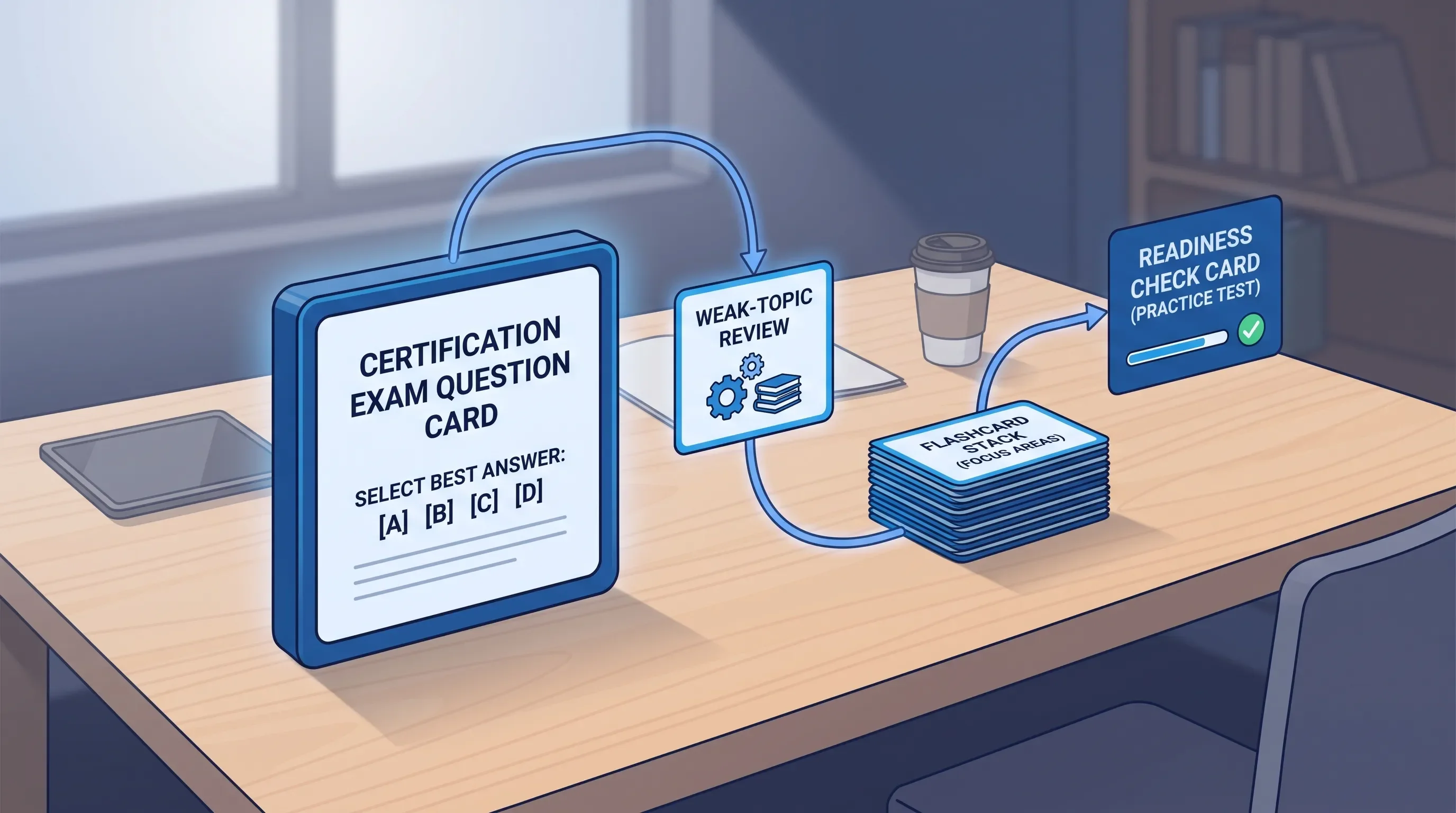
Think of a practice test as a dress rehearsal, not just a lighter version of the main show. It's your chance to pinpoint weak objectives, fine-tune your pacing, sharpen your recall, and practice making decisions—all before your score truly counts.
Too often, candidates mix these purposes up. If you're acing practice tests because you've seen the questions repeatedly, that's not real readiness. If you only reread notes for a written exam, you're missing out on vital recall training. The solution is to grasp the key differences between practice tests and written exams, then assign each a clear role in your study plan.
Practice Test vs. Written Test: The Core Differences
A practice test usually serves a formative purpose. Its goal is to improve your performance before the real exam. A written test, on the other hand, is generally summative. It measures whether you meet the required standard at a specific point in time.
In certification prep, "written test" doesn't always mean pen and paper. Many IT and cloud exams are computer-delivered, but they still test exam objectives through selected-response items, scenarios, case-style questions, simulations, or performance-based tasks.
| Difference | Practice Test | Written Test | Why it Matters |
|---|---|---|---|
| Main purpose | Diagnose and improve | Measure final readiness | You should review practice results to learn, not just celebrate or panic over the score. |
| Stakes | Low stakes | High stakes | Mistakes on practice guide your study, while mistakes on the written test affect your outcome. |
| Feedback | Often includes explanations | Usually limited or delayed | Practice is where you learn from your attempts. |
| Repeatability | Can be repeated | Usually scheduled and controlled | Repeated practice helps, but repeated exposure can inflate scores. |
| Scoring meaning | Depends on question quality and freshness | Based on the exam provider's rules | A practice score is a signal, not a guarantee of success. |
| Best use | Find gaps, build speed, test recall | Demonstrate competence under exam rules | You need both learning and final performance practice. |
A strong preparation plan doesn't ask, "Which one is better?" It asks, "What should I do with each one?"
Why Practice Tests Should Teach Before They Predict
A practice test offers the most value when it forces retrieval. This means you have to pull the answer from memory, apply a concept, or reason through a scenario before you see the explanation. This is far more effective than just recognizing familiar text in your notes.
Research on the testing effect supports this idea. In one well-known study, Roediger and Karpicke found that retrieval practice improved long-term retention more than repeated study alone. You can read the original journal article in Psychological Science. For certification candidates, the practical takeaway is simple: answering questions isn't just assessment. Done correctly, it's a powerful study method.
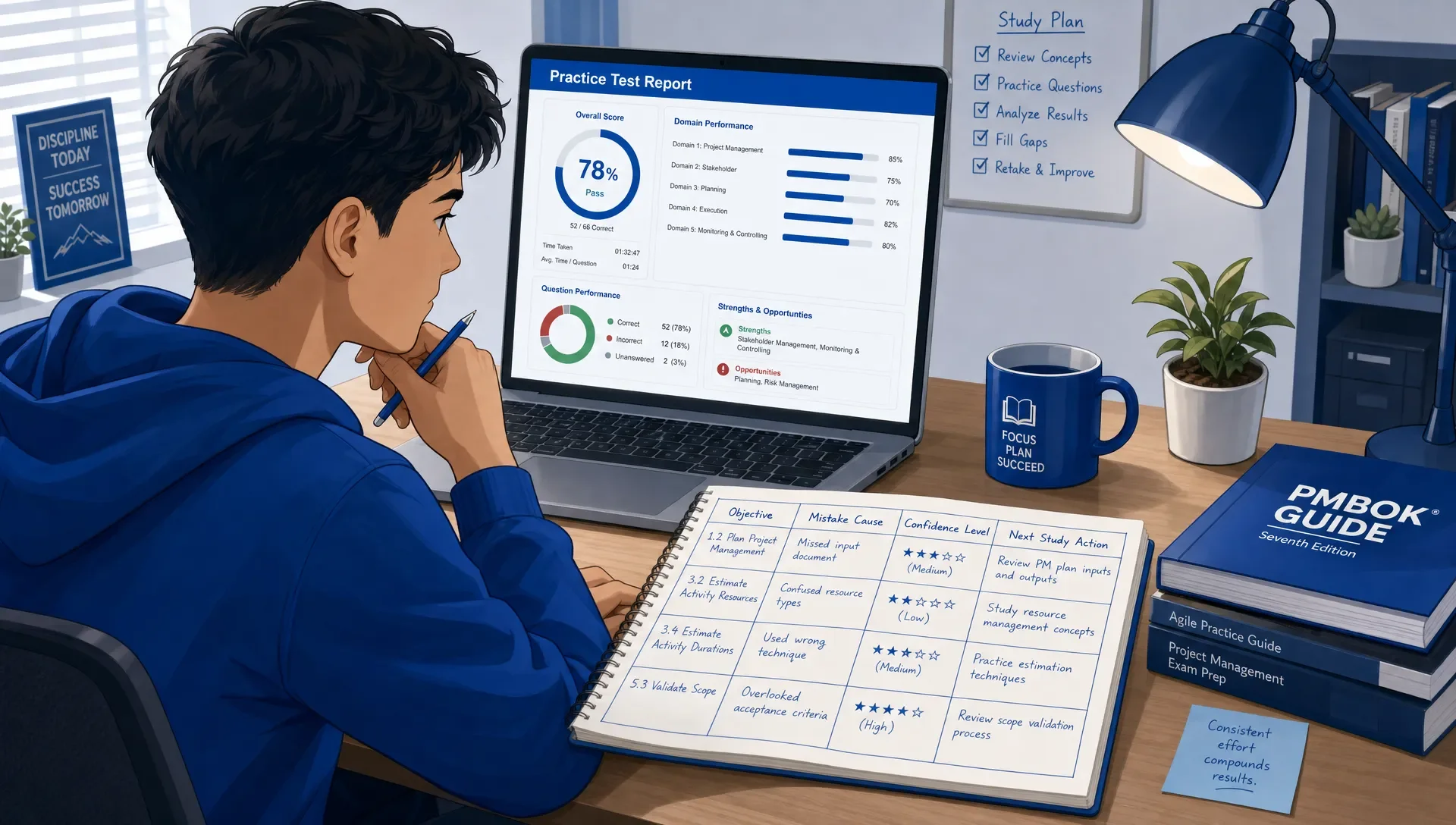
But practice tests only teach when you review them properly. The answer explanation matters. So does the reason you missed the question. Did you forget a definition? Misread a qualifier? Pick a technically true answer that didn't fit the scenario? Run out of time? Each cause needs a different fix.
This is why a good practice workflow includes objective-level review, not just a final score. MindMesh Academy designs its study process around this concept, offering study guides tied to exam objectives, practice questions with explanations, flashcards with spaced repetition, adaptive weakness-based practice, and readiness tracking.
Why Written Tests Measure Performance Under Constraints
The written test isn't trying to teach you during the exam. It's measuring your performance under controlled conditions. That changes everything about how you should prepare.
Official certification exams align with an exam blueprint or skills outline. For instance, Microsoft publishes objective-based study guidance for exams like AZ-900 on Microsoft Learn. AWS also provides official certification pages and exam guidance for credentials such as the AWS Certified Cloud Practitioner. These outlines are critical because the written test is built directly from what the provider says candidates must know or do.
A written test also adds pressure that practice can't fully reproduce. You have a fixed appointment, a strict time limit, identity checks, specific exam rules, and limited access to feedback. You can't pause to look up a concept. You can't ask why an option is wrong. You simply have to choose the best answer with the information given.
This means your preparation needs to go beyond just content knowledge. You'll need timing discipline, confidence under uncertainty, and enough practice with exam-style wording so you don't waste mental energy just decoding the format.
Question Format Differences That Change How You Study
The most important practice test and written test differences often show up in question format. A simple recall question and a scenario-based question might test the same topic but demand entirely different thinking.
For example, a cloud fundamentals written test might ask you to choose the best service for a business requirement. A networking exam could ask you to interpret routing behavior. A security exam might ask which control best reduces a specific risk. In each case, knowing definitions helps, but it might not be enough.
| Question Feature | What it Looks Like in Practice | What it Demands on the Written Test | How to Prepare |
|---|---|---|---|
| Recall wording | "What does this term mean?" | Fast recognition of core facts | Use flashcards and quick review cycles. |
| Scenario wording | "A company needs… what should it choose?" | Apply concepts to a situation. | Explain why the right option fits and why the others don't. |
| Multiple response | "Choose two" or "select all that apply" | Precision and complete knowledge | Treat each option as true or false before choosing. |
| Performance-based tasks | Simulated or task-style prompts | Process knowledge, not just definitions | Practice workflows and objective-level skills. |
| Time pressure | Timed sets or full mocks | Controlled pacing across the whole exam | Track time per question and flag hard items for review. |
CompTIA, for example, includes performance-based questions as part of its exam approach, as detailed in its official testing information. If your written test includes task-style or scenario-heavy items, your practice test shouldn't be made only of short definition questions.
How to Use Practice Tests Before a Written Test
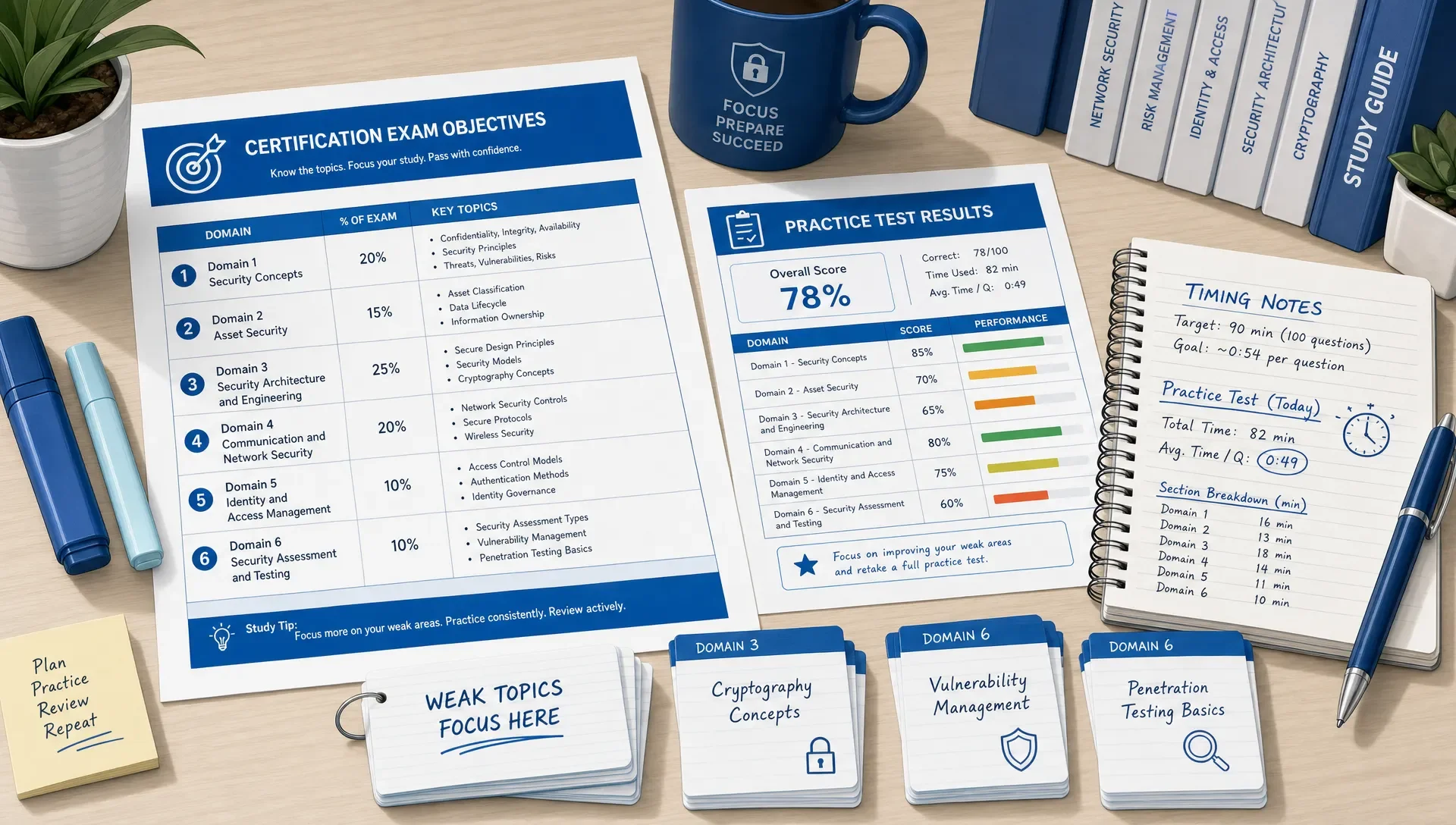
The best time to take a practice test depends on what you're trying to learn. Taking a full-length test too early can be discouraging and inefficient. Waiting until the night before the written test leaves you no time to fix weaknesses.
A better approach moves through stages. Start with a diagnostic, study by objective, drill weak areas, then finish with timed mixed practice.
| Prep Stage | Best Test Type | Goal | What to Do Next |
|---|---|---|---|
| Before deep study | Short diagnostic practice test | Find your starting point | Build a study plan around weak domains. |
| During study | Topic-specific quizzes | Reinforce one objective at a time | Review explanations and update notes. |
| After each topic block | Mixed question sets | Prevent memorizing by category | Compare performance across objectives. |
| Final phase | Timed full practice exam | Rehearse pacing and endurance | Review misses before scheduling the written test. |
| Last few days | Light mixed review | Keep recall sharp without burnout | Focus on high-value gaps, not brand-new topics. |
If you're preparing for a cloud certification, a structured AWS Certified Cloud Practitioner practice exam can help you rehearse exam-style questions while identifying weak areas. If you're still building the foundation, an objective-based AZ-900 Microsoft Azure Fundamentals study guide is a better starting point than jumping straight into full mock exams.
Sequence is key. Study first when you lack the concepts. Practice when you need retrieval. Simulate when you need pacing. Review when you need improvement.
What Practice Test Scores Really Mean
A practice test score is useful, but it's not the same as a written test result. Scores can be distorted by repeated exposure, overly easy questions, narrow coverage, or lucky guessing.
Instead of asking whether one score means you're ready, look for a pattern. Are you scoring well on first-seen questions? Are your weak objectives shrinking? Do you finish within the time limit without rushing? Can you explain the correct answer without reading the explanation back word for word?
A good readiness signal includes three parts: accuracy, consistency, and reasoning. Accuracy shows whether you're choosing the right answer. Consistency shows whether that result holds across fresh questions and mixed domains. Reasoning shows whether you truly understand the topic.
This is where many candidates waste practice tests. They take the test, check the percentage, skim the explanations, and move on. A deeper review is usually worth more than another rushed attempt. If you want a structured review process, MindMesh Academy's guide on how to review an exam practice test the right way breaks down how to track your score, timing, confidence, and error causes before reading explanations.
Common Mistakes When Treating Practice Tests Like Written Tests
One common mistake is using practice tests only to prove readiness. That makes every low score feel like failure. Practice tests should expose problems while you still have time to fix them.
Another mistake is retaking the same test until the score looks impressive. Repetition can be useful when you're reviewing reasoning, but it becomes misleading when you remember question wording instead of understanding the underlying concept.
Candidates also underestimate wording. Written tests often include qualifiers like "most likely," "best," "first," or "least." These words change the task. The correct option may not be the only true statement. It may be the best answer for the scenario.
Here are the mistakes that most often make practice scores unreliable:
- Retaking the same question set too soon and counting memory as mastery.
- Reviewing only the correct answer instead of analyzing the wrong options.
- Ignoring the exam objectives and studying whatever feels familiar.
- Practicing without a timer until the final week.
- Using definition-only questions for a scenario-heavy written test.
- Skipping performance-based or task-style practice when the exam expects applied skills.
The solution isn't to take fewer practice tests. It's to use them with more intention.
How to Build a Practice Test Written Test Study Plan
A strong plan connects content review, recall, and final exam rehearsal. It should not be a pile of disconnected notes, random quizzes, and last-minute full mocks.
Start with the written test objectives. These are your map. Then use a study guide to build the core knowledge for each objective. After each study block, answer practice questions without looking at your notes. Review every miss by cause, then use flashcards or targeted practice to close the gap.
As you get closer to the written test, switch from topic-specific sets to mixed timed sets. This matters because the real exam won't warn you which objective is being tested. Mixed practice trains recognition, switching, and stamina.
For security candidates, a CompTIA Security+ practice exam can support that final shift from learning individual domains to handling exam-style question sets. The goal isn't just to know more. It's to perform reliably under written test conditions.
Frequently Asked Questions
Is a practice test harder than a written test? Not always. Some practice tests are easier, some are harder, and some are simply different. What matters is whether the practice test matches the written test objectives, question style, timing pressure, and difficulty level closely enough to guide your prep.
Can I pass a written test by only taking practice tests? You might pass if you already know the material well, but it's risky. Practice tests work best when paired with objective-based study, explanation review, flashcards, and targeted practice on weak areas.
How many practice tests should I take before the written test? There's no universal number. A better target is consistent performance on fresh, mixed questions, plus clear improvement in weak objectives. One well-reviewed practice test can be more valuable than three rushed attempts with no analysis.
Should I review a practice test immediately? Yes, but don't just read the explanations passively. First, mark why you chose each answer, how confident you were, and whether timing affected you. Then read the explanation and connect each miss to an exam objective.
What is the biggest difference between practice test and written test strategy? In practice, your goal is learning from mistakes. On the written test, your goal is controlled execution. That means you should experiment and diagnose during practice, then use a steady pacing and decision strategy on exam day.
Do written tests always use multiple-choice questions? No. Many certification exams include multiple-choice questions, but some also include multiple response, case-based prompts, simulations, or performance-based question formats. Always check the official exam provider's current guidance.
Build Confidence Before the Written Test
The difference between a practice test and a written test matters because each one has a different job. Practice tests help you find gaps, strengthen recall, and rehearse exam behavior. Written tests measure whether you can apply what you know under real constraints.
Ready to put these strategies into action? Build a strong foundation for your AZ-900 exam with MindMesh Academy's Microsoft Azure Fundamentals practice exam. Our practice questions and detailed explanations will help you identify weak areas, understand tricky concepts, and track your progress so you can walk into your written test well-prepared.

Written by
Alvin Varughese
Founder, MindMesh Academy
Alvin Varughese is the founder of MindMesh Academy and an enterprise architecture leader. An electrical engineer by training, he moved from factory automation in South Africa to cloud architecture at GE Appliances and Humana (Fortune 50), and holds 20 professional certifications including AWS Solutions Architect Professional, Azure DevOps Engineer Expert, and Microsoft Agentic AI Business Solutions Architect. He built MindMesh Academy after interviewing too many highly certified candidates who couldn't answer basic questions: the goal is prep that makes you better at the job, not just able to pass the exam.