
8 Peer Learning Strategies to Master Certifications in 2026
8 Peer Learning Strategies to Master Certifications
You've spent weeks highlighting textbooks, watching video lessons, and taking notes for your certification exam. Then you sit down with a friend to "study together," and the session drifts into random questions, tool talk, and vague reassurance that you'll both "get more serious next week." The issue isn't usually motivation. It's structure.
This structure matters more than many learners realize. A 2019 Harvard study in Proceedings of the National Academy of Sciences found that students often felt they learned more from lectures, even though they performed better after active learning that included peer instruction. The study reported that actual learning and the feeling of learning were strongly anticorrelated. This explains why solo review can feel productive but leave weak spots untouched. In peer instruction, if students were initially correct, peers often aligned with that reasoning. If students were initially wrong, discussion still created "process gain" that improved group performance beyond what individuals managed alone.
For high-stakes certifications like AWS, CompTIA, Azure, or PMP, this offers a practical lesson. You don't need more passive review. You need peer learning strategies that demand explanation, correction, retrieval, and application.
A good study partner or group won't save you by simply being present. But the right system can turn every session into a practice lab for exam thinking, not just content exposure. Here are eight structured approaches to make peer sessions useful, efficient, and more likely to stick.
1. Study Groups and Collaborative Learning Circles
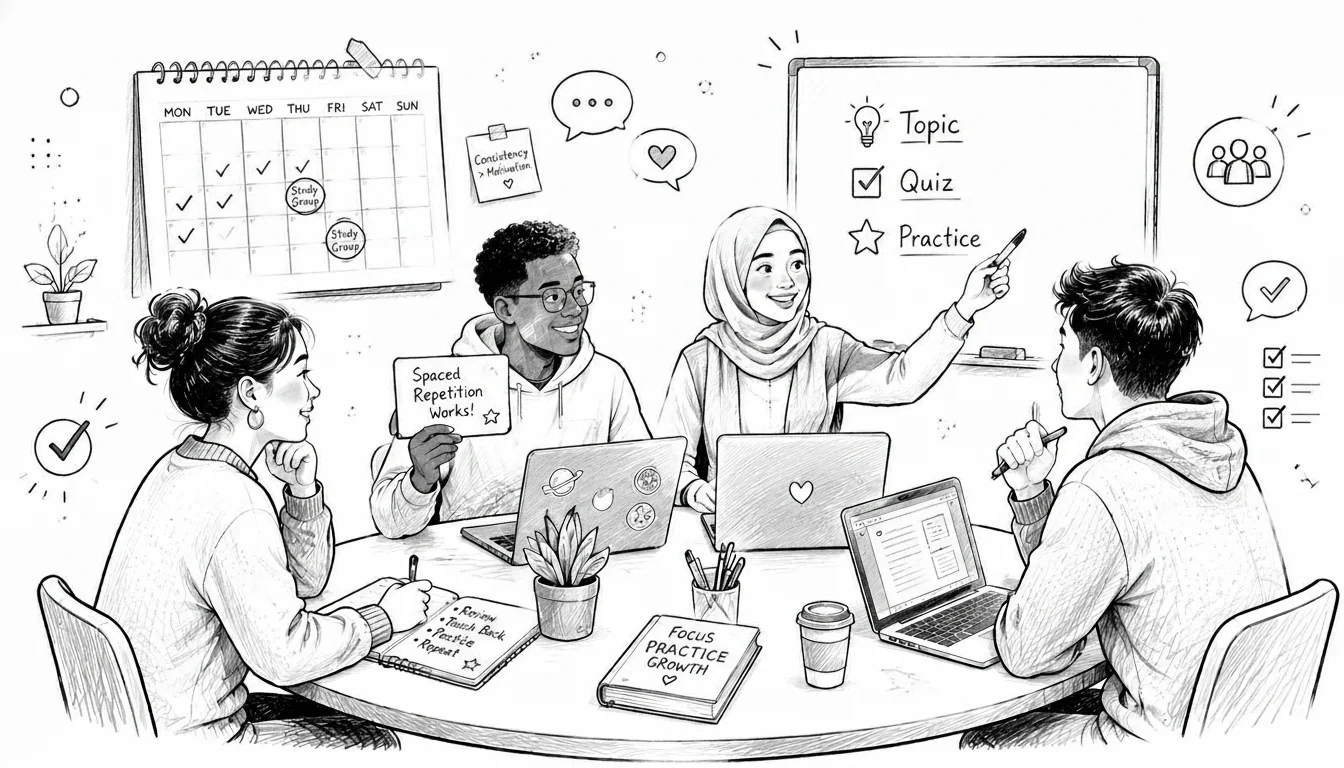
A study group works best when it moves beyond "who's free tonight?" and acts like a scheduled learning system. For certification prep, this means a fixed meeting time, a clear topic, and a shared output at the end of each session.
If you're preparing for AWS Cloud Practitioner, one person might bring IAM scenarios, another might cover pricing models, and a third might collect common distractors from practice questions. If your team is studying for PMP, one member can summarize process groups while another turns them into situational questions. The session becomes more productive when everyone arrives with a job.
Make the group do real work
Use shared tools to keep a record. A Slack channel, Discord server, Google Doc, or Miro board makes your thinking visible and easier to revisit. This matters because many groups discuss concepts once, feel better, then forget what confused them.
The most effective learning circles usually follow a repeatable rhythm:
- Open with a target: Choose one domain, such as AWS networking basics or CompTIA troubleshooting steps.
- Use a timed middle block: Spend the bulk of the session solving scenarios, not rereading notes.
- End with a capture step: Write down unresolved questions, corrected misunderstandings, and next assignments.
Coach's view: If your group can't produce a page of notes, a solved scenario set, or a list of corrections, you probably had a conversation, not a study session.
A workplace version works well too. Teams preparing for PMP or ServiceNow exams can create a recurring study circle during lunch or after work. One person facilitates, another tracks action items, and another brings sample problems. This small structure keeps the session from turning into passive co-working.
This approach also aligns with current organizational practices. A 2024 CIPD report on collaborative learning adoption noted that roughly one-third of organizations worldwide use collaborative and peer-based learning approaches. This shows that peer learning strategies are no longer fringe; they are becoming integral to how people train for real performance.
2. Peer Teaching and Explanation
If you truly want to understand a topic, teach it. Not in your head. Explain it out loud to another person, with examples simple enough for them to question you.
This is where many learners discover the gap between recognition and mastery. You might feel comfortable reading about shared responsibility in AWS or subnetting in Network+, but the moment a peer asks "Why?" or "When would this be the wrong choice?", weak understanding shows up fast.
Use small lessons, not long lectures
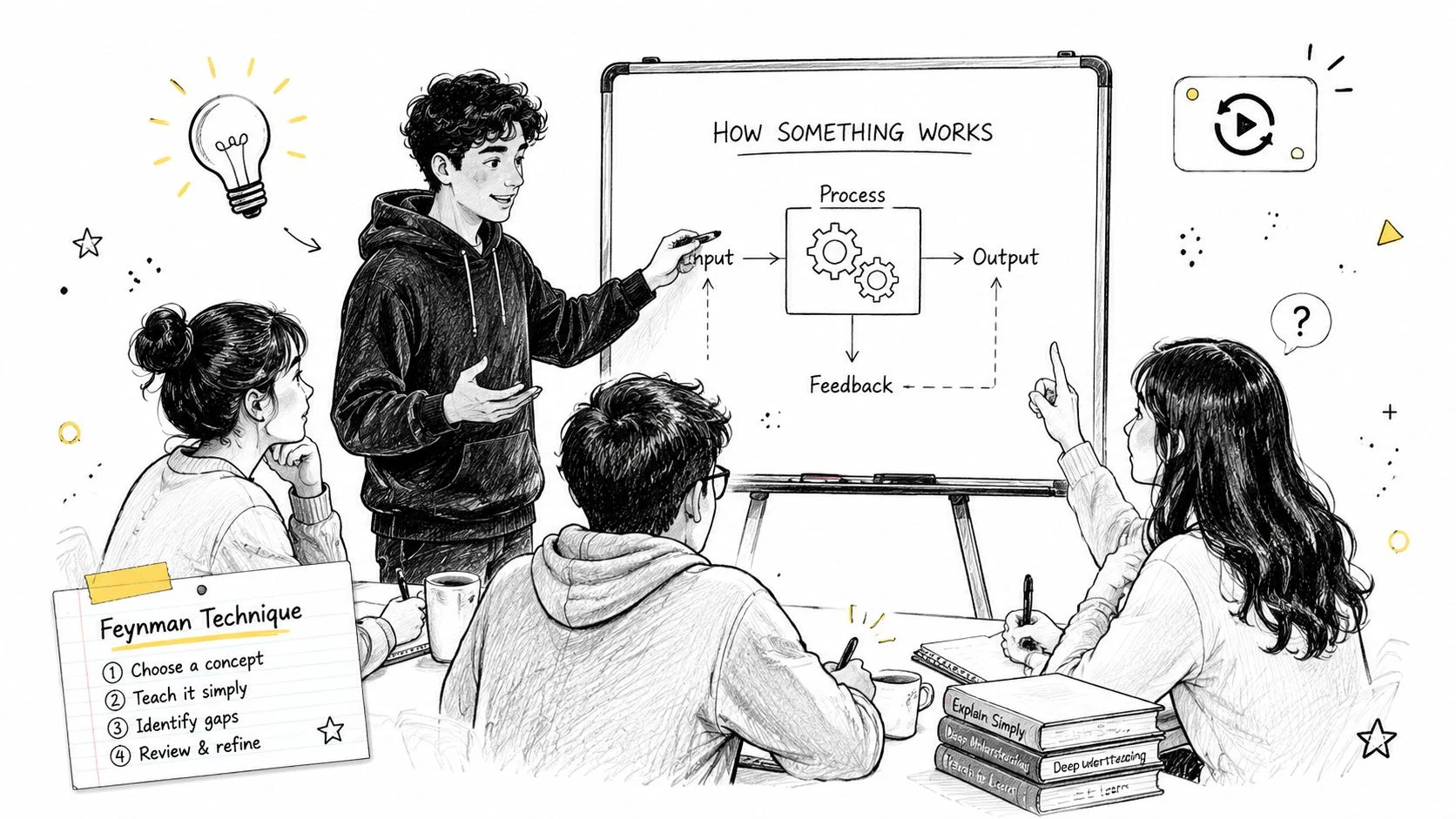
Keep the teaching block short. Pick one narrow topic per turn. A good example is explaining AWS regions versus availability zones in two minutes, or walking a partner through the difference between risk response strategies in PMP without reading from your notes.
The 2019 Harvard active-learning study supports this approach. Peer instruction improved outcomes even when learners didn't always feel it was helping. For certification prep, this is useful because teaching often feels slower than watching a polished video, yet it produces stronger understanding.
Try this simple format:
- Teach one concept: Explain it without slides first.
- Add one example: Use a real exam-style scenario.
- Invite interruption: Let your listener stop you the moment something sounds fuzzy.
- Verify after teaching: Check your explanation against a trusted reference, such as the MindMesh Academy AWS study guide.
A practical version for a study pair is "teach-back." One person explains EC2 purchasing options. The other paraphrases the explanation and asks one clarifying question. Then both compare what they said to the official framework or a trusted study guide.
Founders and operators often benefit from this dynamic because peer groups force clearer thinking under scrutiny. This same pattern appears in professional communities, as discussed by Founder Connects on peer groups for founders. For exam prep, the upside is similar: when you teach clearly, you expose your own gaps before the exam does.
Don't wait until you feel "ready to teach." Teaching is how many learners get ready.
3. Reciprocal Quizzing and Testing
A strong study partner shouldn't just encourage you. They should test you.
Reciprocal quizzing works because it combines retrieval practice with peer variation. When your partner writes questions, they often notice weak spots you skip over yourself. One person might focus on vocabulary, another on scenario logic, and another on common traps. This variety is useful because certification exams rarely reward memorizing a single phrasing.
Build a question loop
For AWS or Azure prep, create a shared bank where each person contributes a small set of questions every week. For PMP, ask for scenario-based prompts instead of pure definitions. For CompTIA, use short troubleshooting sequences where the learner must choose the next best action.
Keep the quality high:
- Write answerable questions: Avoid trivia and "gotcha" wording.
- Include a rationale: Every answer should explain why the correct choice fits and why another tempting option doesn't.
- Review before using: A second peer should check each question for accuracy.
- Mix difficulty levels: Include quick recall, applied reasoning, and longer scenario items.
Unstructured peer learning can spread incorrect ideas. In technical fields, where cloud services and best practices change quickly, poorly written peer questions can reinforce errors rather than correcting them. If your group creates quizzes, validate them against official documentation or a vetted resource.
A reliable model is to use a trusted question set as the benchmark, then let peers extend it. You can do this while you study for Cloud Practitioner certification and compare your group's question style against professionally written practice items.
Peer feedback improves when it's specific. If you want examples of how peers can respond with more substance than "good job" or "review this again," these effective peer feedback examples show the difference between vague comments and useful correction.
A good quiz exchange sounds like this
"Why is S3 the better answer here than EBS?"
"Because the question asks for object storage, but I also checked whether persistence and access pattern ruled out the other options."
That second sentence matters. It shows reasoning, not just recall.
4. Peer Code Review and Technical Problem-Solving
Some certifications test knowledge. Others test whether you can think through technical decisions under pressure. That's why peer code review and solution review matter, even when the exam isn't a live coding challenge.
For AWS Developer Associate, Azure Administrator, or even hands-on portions of broader technical prep, you learn a lot by inspecting another person's choices. Why did they use one IAM policy structure over another? Why did they store config values that way? Why did they select that network layout for a lab?
Review the decision, not just the syntax
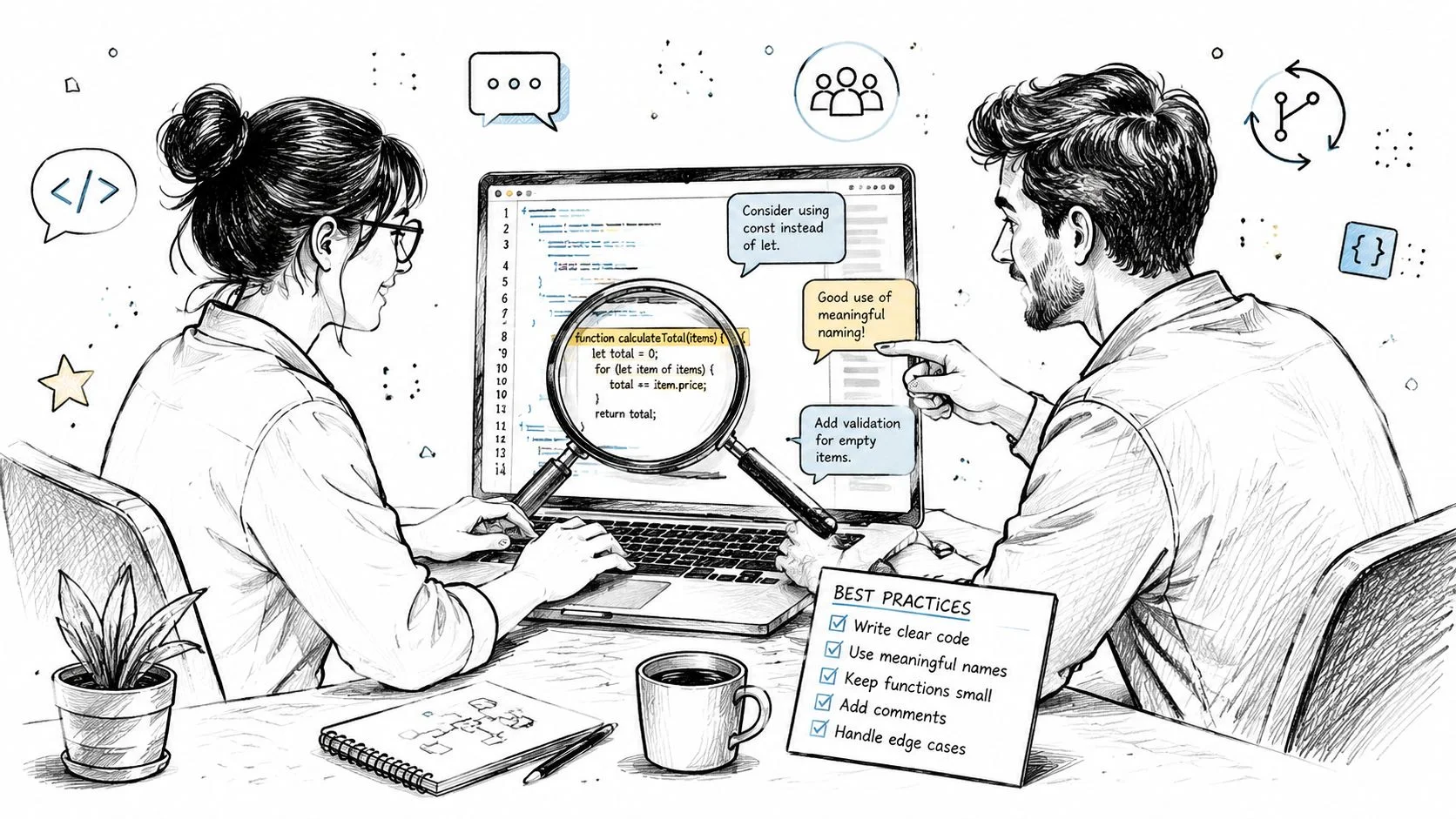
Put your practice labs in GitHub or GitLab. Then review them against a checklist tied to the exam domain. For example, if you're working through serverless topics, your checklist might ask whether the solution considered permissions, logging, scaling behavior, and cost implications.
This shifts the conversation from "your YAML is messy" to "your architecture choice wouldn't satisfy the requirement in a scenario question." That's much closer to how exam reasoning works.
Use comments like these:
- Explain the tradeoff: "This would work, but would the exam expect a managed service here?"
- Check the requirement match: "Did this design solve for least privilege?"
- Test the edge case: "What changes if traffic spikes or the region fails?"
- Ask for the alternative: "What would be your second-best answer if this service were removed?"
Peer review also helps surface mislearning, a real risk in technical study groups. Current advice often treats peer collaboration as harmless, but it isn't if nobody validates the solution. In fast-changing cloud environments, groups can reinforce outdated guidance unless they anchor the review in current documentation or vetted material such as MindMesh Academy's developer associate guide.
Here's a useful walkthrough format to model your sessions on:
A simple example: one learner builds an AWS Lambda plus API Gateway flow. Another reviews the design and asks whether the permissions are too broad, whether logs are captured, and whether another service would fit the use case better. Both people learn. One from building, one from evaluating.
5. Peer Mentoring and Guided Collaboration
A mentor relationship differs from a general study group. It's ongoing, directional, and more personal. One person has already gone farther down the path and helps another avoid preventable mistakes.
This doesn't mean the mentor needs to be an expert with years of experience. A learner who passed AWS Cloud Practitioner last quarter can still be a strong guide for someone just starting. They remember the confusion points, the pacing mistakes, and the resources that helped.
Set expectations early
Informal mentoring often fades because nobody defines the relationship's purpose. Fix that at the start. Decide what exam the mentee is pursuing, what timeline they're targeting, and what the mentor will do.
A useful mentoring agreement might include:
- A clear target: One certification path, not five at once.
- A regular check-in: Weekly or bi-weekly works better than random messaging.
- A problem list: The mentee brings blockers, not just updates.
- A transfer plan: The mentor gradually shifts responsibility back to the learner.
This works well inside companies too. Teams often have people who have already passed Azure, AWS, or PMP exams. Instead of leaving that knowledge informal, pair those employees with newer candidates and give the conversations structure. Much of the value comes from practical guidance, not from simply adding more content.
A broader workplace version of this model appears in many workplace mentorship programs. For certification prep, the same idea applies, but the mentor should focus on study habits, exam reasoning, and confidence under pressure.
A mentor shouldn't become a second search engine. They should help the learner make better study decisions.
The mentor also benefits. Teaching, questioning, and reviewing someone else's plan often refreshes their own understanding and sharpens how they explain technical material.
6. Cooperative Learning with Assigned Roles
Some groups fail because nobody knows what they're supposed to do. The loudest person dominates, the quietest person watches, and everyone leaves thinking the session was "fine." Assigned roles solve that.
This is one of the most practical peer learning strategies for mixed-skill groups. Give each person a job that requires a different kind of thinking. Then rotate roles so nobody gets stuck in one mode.
Try a role-based certification session
Let's say four people are preparing for AWS Solutions Architect Associate. You can split a session like this:
- Explainer: Teaches the concept of the day in plain language.
- Questioner: Challenges assumptions with exam-style questions.
- Example finder: Brings one real scenario where the concept applies.
- Recorder: Captures the group's final rules, corrections, and unresolved points.
For PMP, the same setup works with different content. One person explains stakeholder engagement, another turns it into situational questions, another brings a project example, and another captures the decision logic.
Why roles improve learning quality
Roles force equal participation and improve cognitive variety. The explainer organizes information. The questioner stresses it. The example finder grounds it. The recorder turns the conversation into reusable notes.
This helps because peer learning isn't just about getting more people on a call. It's about making everyone think in a different way. This is especially important in technical certifications, where some learners can recite terminology but struggle to apply it under scenario pressure.
A jigsaw variation also works well. Split a domain into parts such as storage, networking, security, and monitoring. Each learner becomes the mini-expert for one part, then teaches it back to the full group. By the end, the team covers more ground without one person carrying the entire session.
If you're leading a group at work, role cards in a shared document can help. Keep them short and concrete so nobody has to guess what "facilitator" means in practice.
7. Asynchronous Peer Learning Communities and Forums
Not every useful peer interaction needs to happen live. For busy professionals, asynchronous spaces are often more realistic than trying to coordinate everyone's calendars.
A strong async community works like a searchable study archive. Someone posts a question about IAM policies, another person explains the logic, a third adds an edge case, and the thread remains available for the next learner who encounters the same problem. Over time, this becomes a practical knowledge base.
Use async spaces with rules
Good places include Discord study servers, Reddit communities, Slack groups, Microsoft Learn communities, and vendor forums. However, quality varies. Some channels are full of vague confidence boosting. Others contain incorrect answers stated very confidently.
That's why the community needs a few habits:
- Ask with context: Include the exam, topic, and what you already tried.
- Answer with reasoning: Don't just post the letter choice or a short verdict.
- Use evidence checks: Direct people to official documentation or vetted prep materials when accuracy matters.
- Tag unresolved threads: If nobody confirms an answer, mark it for follow-up instead of treating the first reply as truth.
This matters even more in technical domains because mislearning spreads easily. Current guidance often assumes peer groups are low risk, but that's not always true. In cloud certification prep, an incorrect explanation can stick because it sounds plausible and comes from another seemingly confident learner.
One recent example outside the certification world still shows the practical upside of peer discussion. In a randomized trial on SMS-based peer chat groups for digital farmer extension, participants were more likely to adopt certain practices than people who only received one-way messages, according to this ScienceDirect abstract on peer learning chat groups. The details come from agriculture, not IT, but the lesson is familiar: discussion changes behavior more effectively than passive information alone. The study also noted that engagement dropped over time, a good reminder that communities need moderation and recurring prompts to stay useful.
8. Peer Accountability and Learning Contracts
Motivation rises and falls. A learning contract helps you keep moving when motivation drops.
This is a simple agreement between peers. You define what you'll study, when you'll check in, and how you'll handle missed commitments. It sounds basic, but it works because it transforms vague intention into a social obligation.
Write the contract down
Don't keep it verbal. A written note in Google Docs, Notion, or even a pinned Slack message is enough. Include the certification, the study window, and the next milestone. Then make each check-in about evidence, not feelings.
A useful contract usually includes:
- A specific exam goal: For example, pass AWS Cloud Practitioner before starting Solutions Architect.
- A study rhythm: Such as weekday review plus one weekend practice session.
- A reporting format: Share completed domains, quiz results, or problem areas before each check-in.
- A recovery rule: Decide what happens if one person falls behind.
Missed a week? Don't turn the next call into an apology session. Reset the plan, shrink the next milestone, and keep the contract alive.
This works for pairs and for small groups. In a trio, one person can drift without collapsing the system, and the group can still maintain momentum. For career changers especially, accountability helps because certification prep often competes with work, family, and general uncertainty.
There's also a broader market signal here. The global peer-to-peer learning network market reached a reported $2.8 billion in 2026 and is projected to reach $9.6 billion by 2034, with a 16.5% CAGR, according to Stratistics Market Research Consulting. That projection doesn't mean your personal plan will succeed. It does show that structured peer systems are expanding, especially through digital platforms that support matching, tracking, and guided collaboration.
For your exam prep, the simplest version still works. One partner. One written commitment. One recurring check-in. Done consistently, that can carry a long study cycle.
Peer Learning: 8-Strategy Comparison
| Strategy | Implementation complexity | Resource requirements | Expected outcomes | Ideal use cases | Key advantages |
|---|---|---|---|---|---|
| Study Groups and Collaborative Learning Circles | Moderate, scheduling & coordination | Low–moderate (meeting tools, shared docs) | Better consistency, broader understanding, peer feedback | Cohorts preparing for certifications; conceptual review | Diverse perspectives, immediate clarification, accountability |
| Peer Teaching and Explanation | Low–moderate, session prep needed | Low (materials, recording tools) | Strong retention for teachers; clearer understanding | Deep mastery of topics; small group knowledge transfer | High retention, gap detection, communication skill growth |
| Reciprocal Quizzing and Testing | Moderate, create & validate assessments | Moderate (question banks, spaced-rep tools) | Improved recall, identified weak areas, exam readiness | Exam practice, spaced-repetition study plans | Active recall, performance tracking, realistic exam simulation |
| Peer Code Review and Technical Problem-Solving | High, tooling & process setup | Moderate–high (repos, reviewer expertise) | Improved practical skills, code quality, real-world readiness | Hands-on labs, coding/infra certifications, projects | Multiple solutions exposure, industry practices, bug detection |
| Peer Mentoring and Guided Collaboration | High, matching & ongoing management | High (mentor time, tracking dashboards) | Personalized progress, higher completion and confidence | Complex certification paths; career-oriented preparation | Tailored guidance, accountability, career insights |
| Cooperative Learning with Assigned Roles | Moderate, define roles & train members | Low–moderate (role materials, facilitation) | Balanced participation, diverse cognitive engagement | Small-group sessions using jigsaw or role-based tasks | Equal participation, clear expectations, teamwork skills |
| Asynchronous Peer Learning Communities and Forums | Low–moderate, platform & moderation | Low (forum/Slack/Discord, moderators) | Searchable knowledge base, flexible engagement | Distributed learners, ongoing Q&A, resource sharing | Time-independent participation, searchable archives, scale |
| Peer Accountability and Learning Contracts | Moderate, create contracts and cadence | Low–moderate (tracking tools, partners) | Increased consistency, higher completion rates | Long-term certification journeys, habit formation | External motivation, reduced procrastination, goal clarity |
Build Your Collaborative Learning Blueprint
You don't have to study alone, but you need more than just company. Most failed study groups don't fail because people are lazy. They fail because nobody defined how the group should learn, how it should correct mistakes, or how it should turn discussion into retained knowledge.
That's why the strongest peer learning strategies are structured. A study circle gives you cadence. Peer teaching exposes weak understanding. Reciprocal quizzing sharpens recall. Code and solution review connect theory to hands-on judgment. Mentoring adds guidance. Assigned roles improve participation. Async communities keep support available between sessions. Learning contracts keep the entire system moving when energy drops.
An important caution here: peer learning isn't automatically beneficial. In technical certification prep, learners can reinforce outdated cloud practices, misunderstand service limits, or spread incorrect logic from poorly written practice questions. If your group doesn't validate answers, you're not just collaborating; you may be rehearsing errors. The fix is simple: use trusted references, compare explanations against current documentation, and treat correction as part of the method, not an interruption.
A major gap in this area is that much advice treats peer learning as a soft, feel-good idea instead of a rigorous exam tool. That misses the point. Certifications like AWS, Azure, CompTIA, and PMP reward applied understanding. They ask you to choose between plausible options, defend tradeoffs, and recognize when a partially correct answer is still the wrong answer. Structured peer work trains exactly that kind of thinking.
You also don't need to implement all eight strategies at once. Start smaller. Find one accountability partner and create a learning contract. Join one asynchronous community where people ask good questions. Once a week, teach a short topic out loud. Add reciprocal quizzing after that. If you're preparing for a hands-on exam path, layer in peer review of labs or architecture decisions.
That's how collaborative learning becomes practical. Not as a loose idea, but as a system you can repeat. Bit by bit, you move from passive consumption to active mastery.
MindMesh Academy fits well into that system. It combines trusted study materials, progress visibility, and exam-focused structure. If you want your peer sessions to produce better explanations, better questions, and better decisions, it helps to study using a platform built for that kind of learning. To put your learning to the test, start building your AWS Developer Associate foundation with our practice exam.

Written by
Alvin Varughese
Founder, MindMesh Academy
Alvin Varughese is the founder of MindMesh Academy and an enterprise architecture leader. An electrical engineer by training, he moved from factory automation in South Africa to cloud architecture at GE Appliances and Humana (Fortune 50), and holds 20 professional certifications including AWS Solutions Architect Professional, Azure DevOps Engineer Expert, and Microsoft Agentic AI Business Solutions Architect. He built MindMesh Academy after interviewing too many highly certified candidates who couldn't answer basic questions: the goal is prep that makes you better at the job, not just able to pass the exam.