10 Kinesthetic Learning Activities for Tech Cert Success
10 Kinesthetic Learning Activities for Tech Cert Success
You spend hours reading PDFs, watching video lessons, and reviewing flashcards. Then a scenario question appears. It asks which AWS service meets a resilience need, how to manage a project risk escalation, or the correct order for an incident workflow. Suddenly, the concepts feel distant. You've recognized the terms, but you haven't truly engaged with them.
This gap is common in tech certification prep. Passive review helps with recognition, but most exams demand more than just recognizing terms. They test your ability to apply knowledge. Exams ask you to choose, troubleshoot, sequence, compare, and justify. This is why many candidates struggle even after reviewing all the content.
Kinesthetic learning activities help bridge this gap. Research suggests learners retain up to 75% when actively participating through kinesthetic methods, compared to 10% with passive methods like reading or listening (SimpleK12 on kinesthetic learning). For certification study, this means practical action. If you want cloud architecture, troubleshooting logic, or project workflows to truly stick, you must move from consuming information to actively manipulating it.
This doesn't mean transforming your study space into a kindergarten. It means incorporating movement, interaction, and physical decision-making into your study, fitting adult schedules and technical material. If you already use active learning techniques, consider kinesthetic methods as the hands-on extension of those principles.
Here are 10 kinesthetic learning activities that prove effective for exams like AWS, PMP, CompTIA, Azure, and ITIL.
1. Hands-On Lab Environments and Virtual Sandboxes
You finish a chapter on IAM or subnetting, feel confident, then hesitate when a practice exam asks what breaks after a policy change. This gap typically appears because the concept remained theoretical. You never configured, tested, or fixed it yourself.
For tech certifications, labs are the fastest way to translate theory into usable recall under exam pressure. An AWS candidate should not stop at reading about security groups or S3 permissions. Build them. Break them. Check the result. Then rebuild them from memory.
This sequence matters because certification exams test applied judgment. AWS exams ask you to select services under specific constraints. CompTIA exams expect you to identify the setting that caused a failure. PMP candidates may not use cloud consoles, but they benefit from hands-on simulation by moving project inputs, dependencies, and change requests through a realistic workflow, rather than simply reviewing terms.
What to do each week
Begin with a guided lab to learn the setup correctly. Then, remove support as quickly as possible.
A practical weekly cycle includes:
- Run one guided lab: Use AWS Skill Builder, Microsoft Learn, TestOut, or another environment tied to your exam domain.
- Rebuild it cold: Repeat the same task the next day without notes or hints.
- Introduce one mistake on purpose: Use the wrong port, attach the wrong role, break DNS, or apply the wrong permission.
- Diagnose before checking the answer: Look at logs, error messages, status indicators, and configuration paths first.
- Write a short fix note: Record what failed, what symptom appeared, and what confirmed the repair.
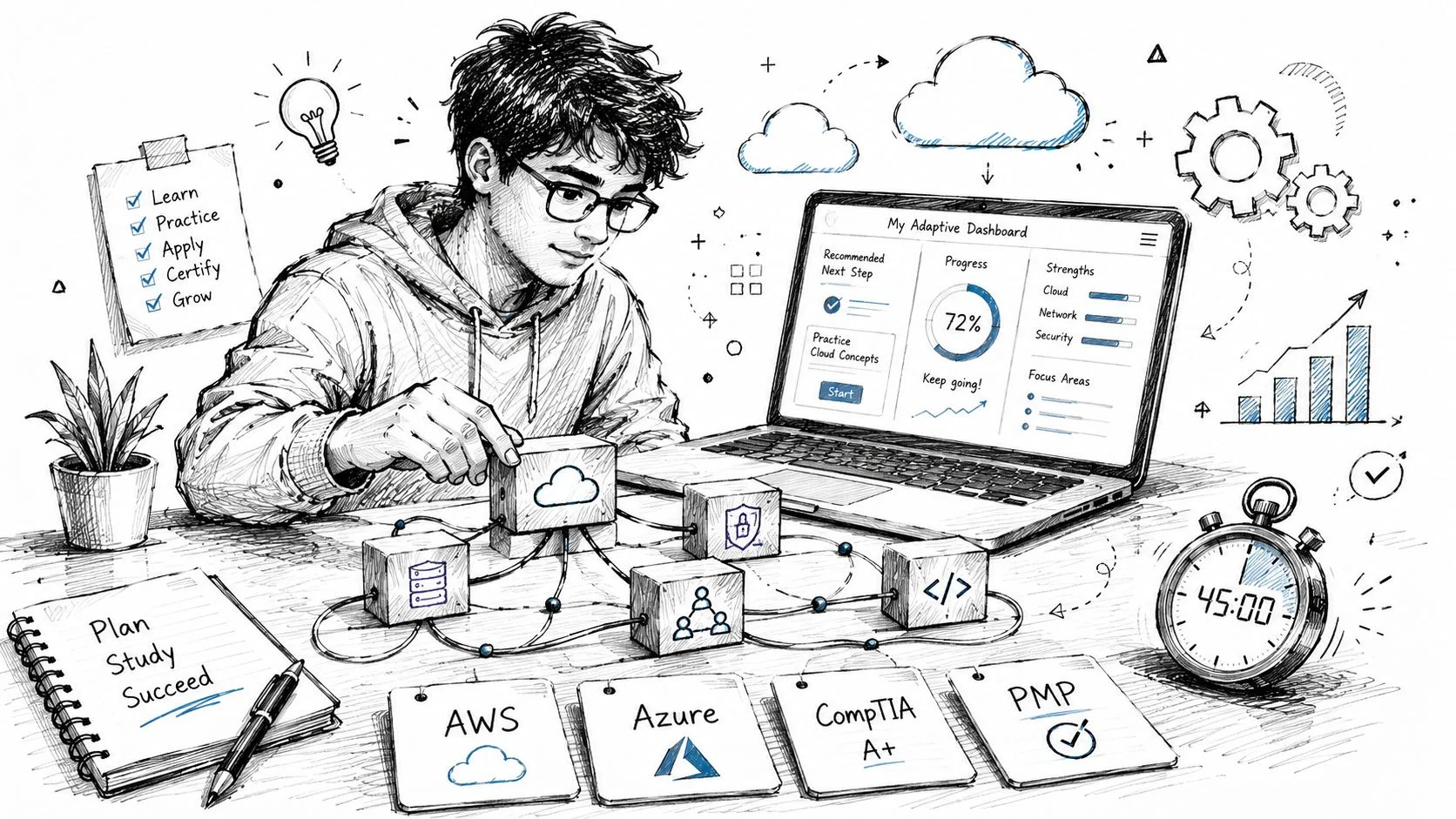
That last step often accelerates candidate improvement. A short failure log creates a personal troubleshooting library. It also pairs well with MindMesh Academy's adaptive dashboard, as recurring misses in practice questions can direct you back to the specific lab category you need to repeat.
A Cloud Practitioner learner can also combine lab repetitions with AWS Certified Solutions Architect Associate resources when moving beyond basic concepts into architecture decisions. The dashboard highlights weak domains, and labs translate those weaknesses into actions and correction loops.
Where candidates waste lab time
A common mistake is completing labs without active retrieval. Candidates click through a polished vendor lab once, get the green check mark, and move on. This builds familiarity, but familiarity is unreliable on exam day.
Instead, use a simple rule.
Practical rule: If you cannot reproduce the environment from a blank screen and explain why each setting matters, you are still rehearsing steps, not learning the system.
There's a real trade-off: labs take longer than reading, and sandbox credits or subscriptions can cost money. Even so, one focused 30-minute rebuild often does more for retention than an hour of passive review. For AWS, Azure, CompTIA, and even process-focused certifications, hands-on work provides abstract objectives with a physical sequence you can remember and apply.
2. Interactive Case Study Analysis and Problem-Solving Scenarios
Scenario-based study effectively bridges the gap between memorization and decision-making. Exams like AWS Solutions Architect Associate, PMP, and ITIL rarely ask for definitions alone. They present constraints, trade-offs, and imperfect options. You need to reason through these situations, actively engaging to slow down and sort the pieces.
An effective method is to print or write a scenario on paper, mark up requirements by hand, and physically sort constraints into groups like cost, performance, security, and operational overhead. This small physical step forces prioritization, preventing passive reading.
A better way to handle scenarios
Consider an AWS architecture prompt. Don't answer immediately. First, underline every hard requirement. Circle every soft preference. Then, use sticky notes for service options and arrange them until the architecture fits the constraints.
For instance, if a case involves a fictional company needing public web access, private databases, and controlled admin access, sketch the VPC, subnet split, entry points, and identity boundaries before looking at answer choices. If you're studying with AWS Certified Solutions Architect Associate resources, treat resource explanations as the final review step, not the starting point.
The trade-off
This method is slower than drilling questions. That's precisely why it's effective. You'll complete fewer items in one sitting, but you'll gain deeper judgment from each one.
- For PMP candidates: Lay out stakeholder, schedule, cost, and risk factors on separate cards, then reorder them based on the scenario.
- For ITIL learners: Write the incident symptoms, user impact, urgency, and likely next action on separate slips so you can sequence response decisions.
- For AWS candidates: Build a “requirements board” before choosing services.
The exam rewards your ability to separate signal from noise. Physical sorting helps you do that under pressure.
3. Collaborative Group Projects and Team-Based Learning
Imagine a study call for AWS Solutions Architect. One person picks an Application Load Balancer, another suggests API Gateway, and a third asks about failover if a subnet goes down. This kind of dynamic discussion is valuable. It forces decisions into the open, which is precisely what many certification candidates need.
Group work helps because exams in AWS, PMP, CompTIA, and ITIL rarely test isolated facts. They assess judgment under constraints. A team format makes you explain trade-offs, defend priorities, and identify weak reasoning before exam day.
How to structure a study group so it produces recall
Casual discussion often drifts. A better format assigns each person a specific role and a deliverable.
Use a three-person rotation:
- Architect: Proposes the design, plan, or response
- Challenger: Tests assumptions, risks, and edge cases
- Operator: Explains implementation, support steps, and failure handling
Then switch roles on the next scenario. That rotation matters. The architect learns to commit. The challenger learns to read for traps. The operator learns to connect theory to execution.
For example, an AWS group might design a CI/CD pipeline for a regulated workload, then justify service choices, rollback options, logging, and access controls. A PMP group might review a delayed project and assign one person to scope, one to stakeholder communication, and one to schedule recovery. A Security+ group might walk through a phishing incident and split responsibilities across detection, containment, and user response.
Make the output physical
The kinesthetic element isn't just “being in a group.” It's actively building something together.
Write the architecture on a whiteboard. Move service cards around the table. Create a shared incident timeline. Rearrange project tasks until the sequence holds up. Those small physical actions slow the conversation just enough to expose vague thinking.
I've seen candidates improve quickly once they stop saying, “I know it,” and start proving it in front of peers.
Use a tool that shows where the team is weak
Group sessions are most effective when tied to current weak domains, not random topics. If your dashboard shows repeated misses in deployment strategies, observability, or IAM boundaries, assign the next team exercise to that domain. Have the group produce a diagram or runbook by the end of the session.
The MindMesh Academy AWS certification guide provides a domain map. This makes it easier to choose scenarios that match the exam blueprint, rather than relying on whatever topic someone happens to recall that night.
Common failure points
Study groups lose value when no one owns the outcome. “Let's review a chapter together” sounds organized, but it often devolves into one person summarizing while everyone else nods.
Set a visible output for every meeting:
- one architecture diagram
- one incident flow
- one project recovery plan
- one five-minute defense from each person
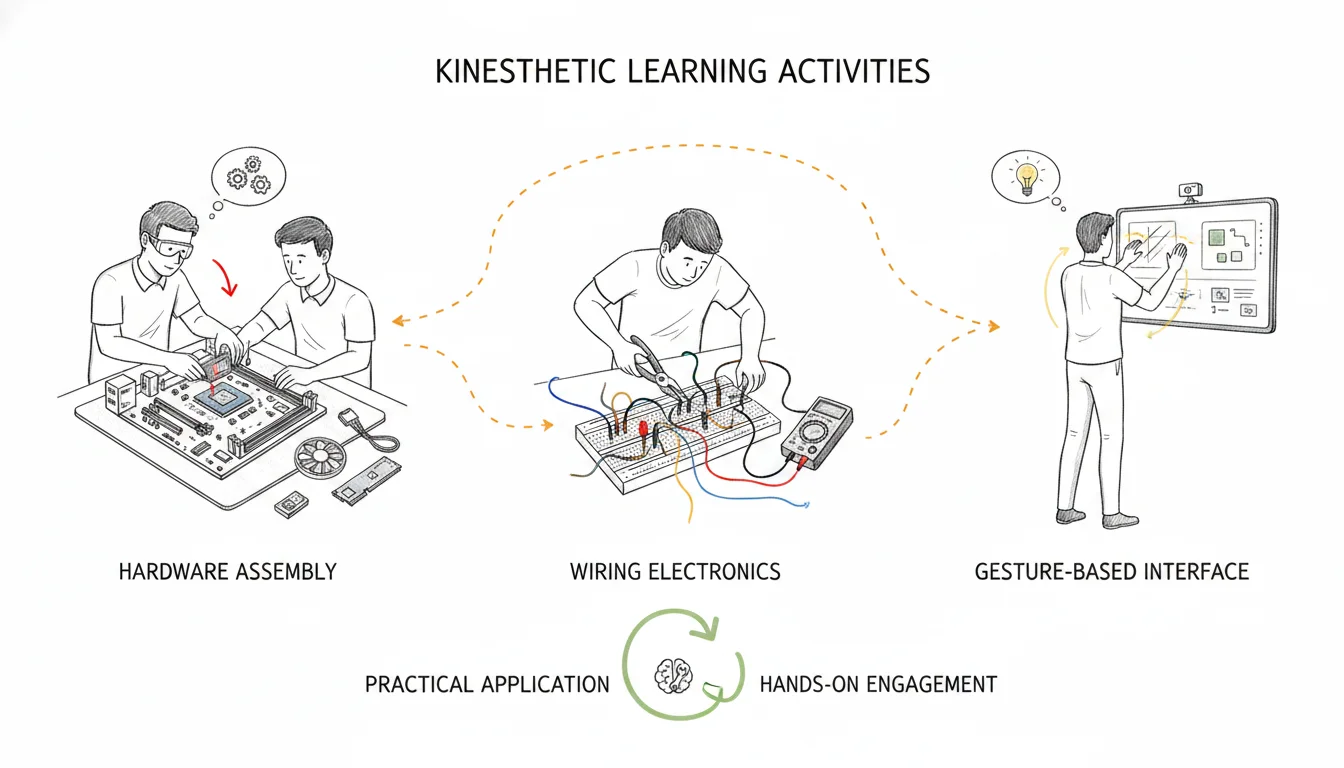
Adults don't require the child-development framing often found in discussions about kinesthetic learning. For certification prep, the practical lesson is simpler: physical collaboration increases attention, exposes weak logic, and makes recall more durable because you must act on the material, not just read it.
4. Gamified Learning with Points, Badges, and Leaderboards
You finish 40 practice questions after work, the app awards you a badge, yet you still miss the same IAM scenario the next night. This is a common failure mode. Game mechanics are only helpful when they prompt corrective action.
For certification prep, the useful aspect of gamification is a physical response tied to a weak signal. You tap an answer, see the miss, then take immediate action. Rebuild the architecture on a whiteboard. Reorder process steps from memory. Run the lab you've been avoiding. These small actions transform passive review into kinesthetic practice.
A good system tracks progress by exam domain and makes the next action clear. A generic streak counter is easy to admire but also easy to misuse. An AWS candidate needs to know if deployment strategies, logging, or incident response consistently cause issues in scenario questions. A PMP learner needs to see if risk, stakeholder engagement, or change control is slipping. A CompTIA candidate needs to identify if troubleshooting logic or port and protocol recall is hindering performance. The MindMesh Academy AWS certification guide supports this type of review by organizing study work around the blueprint, not just random question volume.
Use points, badges, and leaderboards as triggers for specific movement:
- Two misses on the same concept: stand up and explain the fix path out loud without notes
- New badge in a weak domain: complete one related hands-on task before starting another quiz set
- Leaderboard drop after a few days off: do a timed recovery block with sorting, mapping, or rebuild exercises
- Dashboard flags a pattern: switch from questions to a physical output such as a diagram, checklist, or incident sequence
The trade-off is simple. Gamification increases repetition but can also reward speed over judgment. I've seen candidates protect a streak instead of slowing down to examine why they chose the wrong AWS service, PMP response, or CompTIA troubleshooting step. If the reward system only counts completed questions, it trains activity. If it rewards corrected errors, stronger domain coverage, and follow-through on hands-on review, it trains for exam performance.
Keep the scoreboard, but ensure it serves a purpose. Track fewer repeated mistakes each week, faster recovery in weak domains, and better decisions on scenario-based questions. These are the signals that truly matter.
5. Role-Playing and Simulation Exercises
Role-playing might sound abstract until you apply it to stakeholder pressure, incident response, or client-facing explanations. Then it becomes one of the fastest ways to test your understanding of the material.
A PMP candidate can role-play a status meeting where a sponsor challenges a delayed milestone. An ITIL learner can simulate a service desk escalation. An AWS candidate can act as a consultant explaining why one architecture is more resilient or less operationally intensive than another. These are physical learning acts because you're speaking, responding, adapting, and making decisions in motion.
Try this with a partner
Set a timer for eight minutes. One person plays the customer, project sponsor, or business stakeholder. The other responds under realistic constraints.
Use prompts like these:
- AWS: “We need high availability, but we're cost-sensitive and have a small ops team.”
- PMP: “The project is behind. Why shouldn't we cut testing to recover schedule?”
- ITIL: “Users can't access the service. What gets triaged first, and who needs updating?”
The learner's job isn't to recite definitions. It's to translate exam knowledge into decisions and explanations.
Speak the answer the way you'd say it on the job. If your explanation collapses under one follow-up question, keep working the concept.
Why this works for certification prep
Many exam questions are essentially compressed conversations. They present a situation and ask what the practitioner should do next. Role-playing builds that exact skill.
Keep the debrief short and specific. What assumption did you make? What did you miss? Which term did you know but failed to apply? This is where the learning truly happens.
6. Physical Demonstrations, Experiments, and Hands-On Building
A candidate who consistently misses infrastructure questions often faces the same challenge: the diagram made sense on screen, but the system never became tangible enough to test, break, and rebuild.
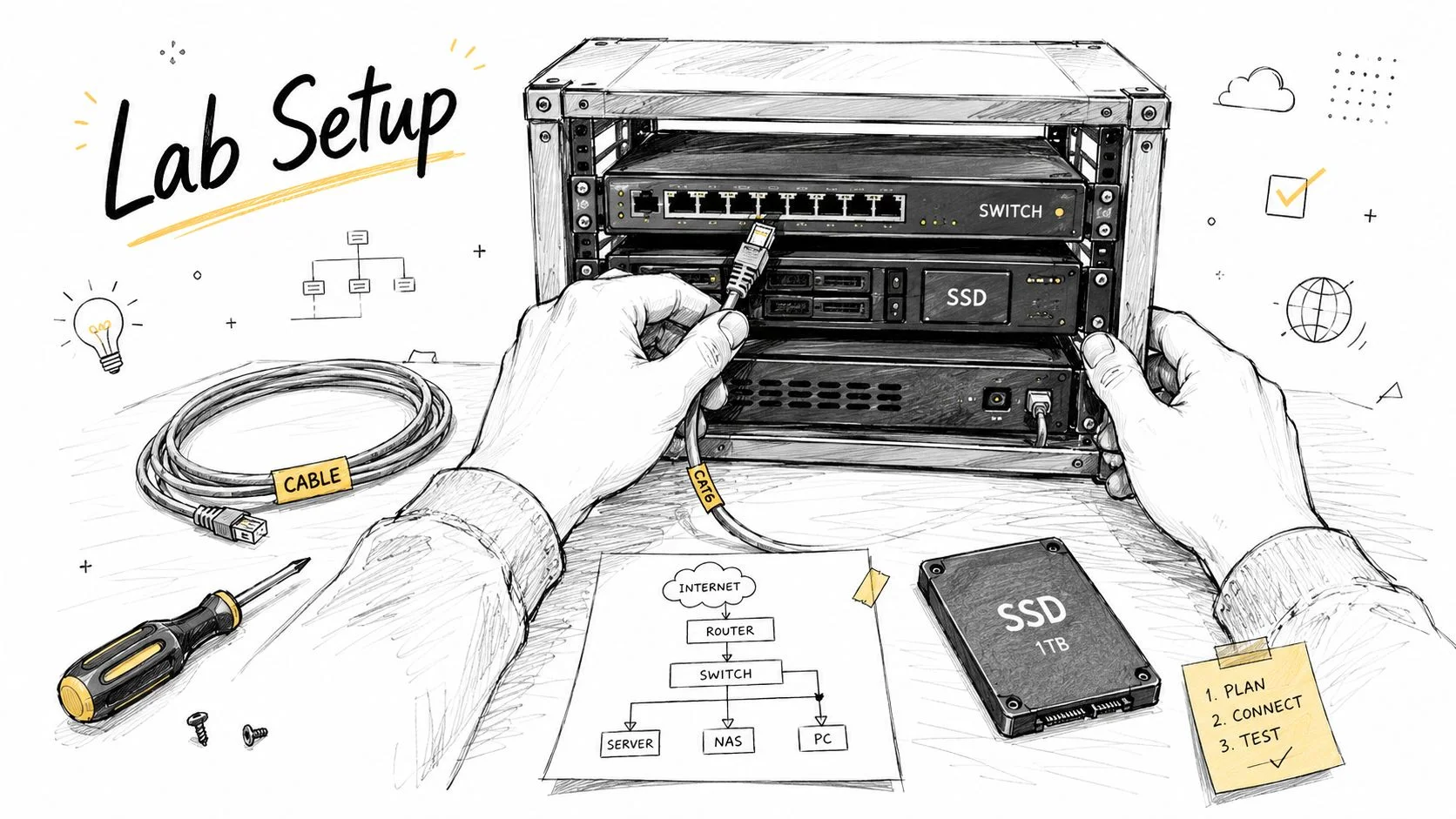
This gap quickly becomes apparent in certification prep. CompTIA A+ and Network+ learners need real contact with components, ports, cables, and failure points. AWS candidates also benefit, even if the exam content resides in the cloud. Physical representation helps you track traffic flow, trust boundaries, redundancy, and blast radius in a way a static diagram often cannot.
A desk model works well for this. Use index cards, sticky notes, blocks, or printed labels to build the service path by hand.
Build the architecture, then change it
Set up a simple three-tier application on your desk:
- User or client
- Load balancer
- Web or application tier
- Database
- Firewall, security group, or subnet boundary markers
Now change one requirement at a time. Make the app internet-facing. Move the database into a private subnet. Add a second Availability Zone. Remove direct access between two components and explain what still works.
For AWS learners, this transforms vague architecture terms into movement and constraint. For PMP candidates, it also helps with dependency logic: you can map task cards, move milestones, and show what slips when one deliverable is blocked. For CompTIA learners, the equivalent exercise is even more direct: route the cable, label the port, reseat the part, and explain why the device fails when one connection is incorrect.
Introduce a failure on purpose
Hands-on building becomes more useful when something breaks.
Pull one card out of the chain. Disconnect a cable. Swap the wrong component into the path. Then, diagnose the symptom before fixing it. This sequence matters because many exam questions test recognition of cause and effect, not just recall of a clean definition.
A simple drill works well:
- Build the system correctly
- Create one failure
- State the expected symptom
- Identify the likely root cause
- Rebuild it correctly from memory
This mirrors the pressure of certification questions better than passive review, forcing you to apply the concept, not just recognize the term.
Use it with your study tools
MindMesh Academy is useful here if you treat weak-topic data as a build list. If the dashboard shows repeated misses in VPC design, RAID levels, risk sequencing, or service dependencies, turn those topics into physical models the same day. Build the concept, change one condition, and explain the result out loud.
This video can help spark ideas for turning technical concepts into a more physical setup:
Low-tech setups appear simple, but they expose weak reasoning quickly. If you cannot rebuild the architecture, trace the connection, or show what fails when one part changes, the concept is not yet ready for exam pressure.
7. Teach-Back and Peer Instruction Methods
To truly understand if you know a topic or just recognize it, try teaching it without notes. This test is brutal yet efficient. A candidate who can explain route tables, RAID levels, risk responses, or change management in plain language typically has a firmer grasp than one who can only select the correct multiple-choice answer.
Teach-back is one of the most effective kinesthetic learning activities for adults because it combines speaking, pacing, gesturing, and retrieval. You're not consuming information; you're reconstructing it in real time.
A format that works well
Use a five-minute teach-back with one rule. No reading from slides or notes.
Pick one narrow concept:
- AWS shared responsibility model
- PMP risk register versus issue log
- CompTIA A+ boot sequence basics
- ITIL incident versus problem
Then explain it to a study partner or even to an empty room. If you get stuck, mark the exact point where your explanation broke.
A weak explanation is useful. It shows you exactly where your understanding turns into memorized vocabulary.
How to improve the method
Ask the listener to interrupt with practical questions: “When would that matter?” “What happens if that fails?” “Why use this instead of that?” These interruptions transform the teach-back from performance into diagnosis.
This is also where a dashboard-driven workflow helps. If MindMesh Academy flags a weak domain, don't just re-read it. Teach it back first, then review the gaps that surfaced during the explanation.
8. Interactive Whiteboarding and Visual Mapping Activities
A certification candidate might read through VPC design, incident flows, or access models three times and still miss how the pieces connect. Hand that same candidate a marker, and the gaps quickly become apparent.
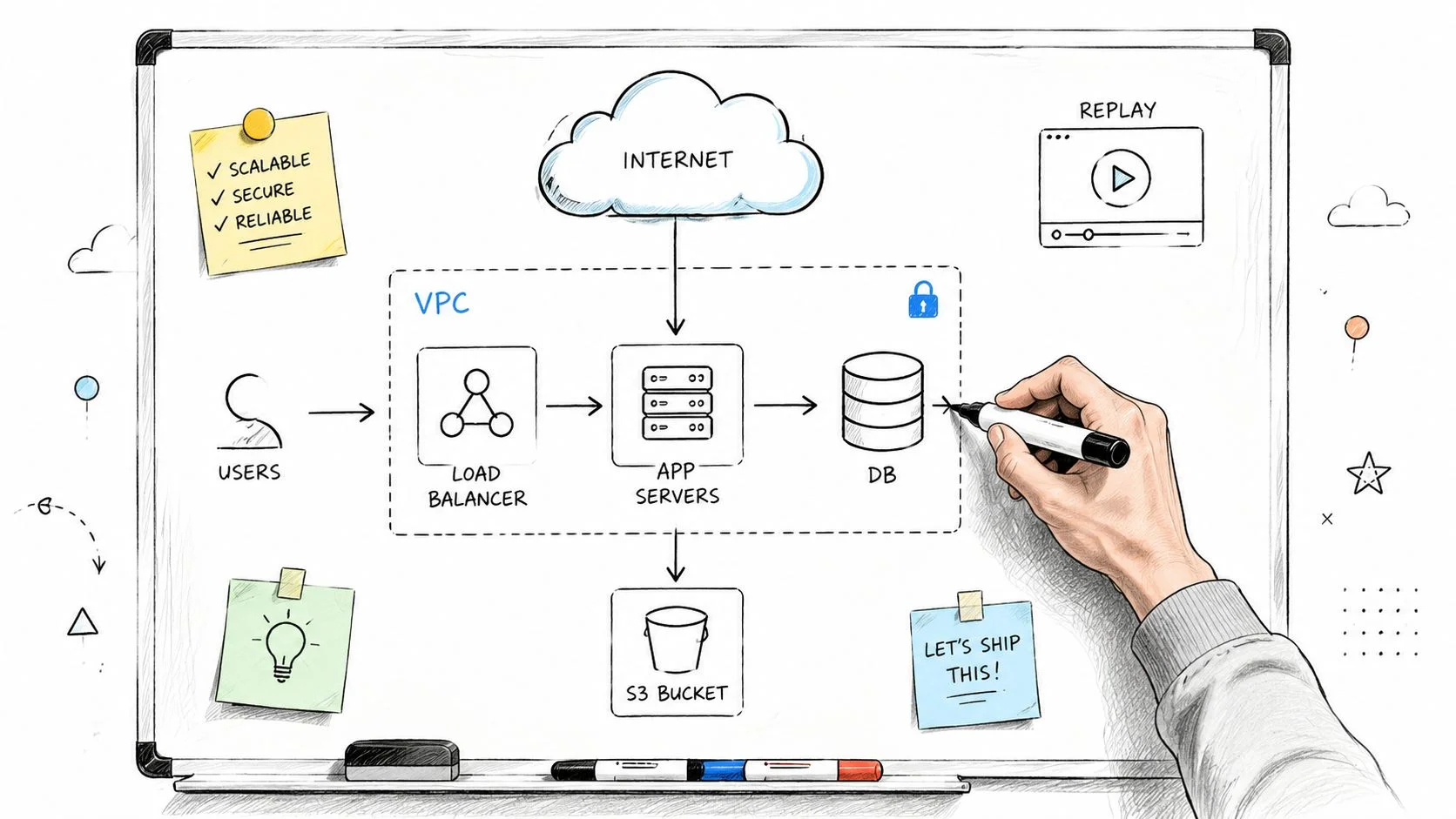
Whiteboarding works because it forces structure. You must place components in order, define boundaries, and show communication pathways. For AWS, PMP, and CompTIA learners, this matters because exam questions rarely test isolated facts; they test sequence, dependencies, and trade-offs.
It also fits real adult study conditions. A desk, a small whiteboard, a tablet, or a digital canvas is sufficient. The movement is modest, but the active interaction makes the method useful.
A whiteboard drill that holds up under exam pressure
Pick one exam objective and give yourself six minutes to draw it from memory. No notes open. No copying from a course slide.
Good options include:
- An AWS architecture with public and private subnets, security groups, and a load balancer
- A CompTIA Network+ path showing VLANs, firewall inspection points, and DNS flow
- A PMP process map that shows inputs, approvals, dependencies, and escalation points
- A ServiceNow workflow with trigger, assignment, approval, and closure states
Then explain the drawing out loud while pointing to each part. That physical tracing slows you down enough to catch missing links, especially around traffic flow, approvals, or failure handling.
Draw decisions, not just diagrams
Many tech certification candidates can sketch the right boxes yet still miss the exam question because they never marked the reason each box exists.
Add short annotations directly on the map:
- Public entry point
- Private workload
- Approval required
- Single point of failure
- Monitoring checkpoint
- Least privilege boundary
That changes the exercise from recall into analysis. It also mirrors how scenario-based questions are written. The test usually asks why one option is better, safer, faster, or lower risk than another.
One more practical rule helps: Redraw the same concept a day later in a different format. Turn an AWS architecture into a numbered request path. Turn a PMP workflow into swimlanes. Turn a security model into a trust-boundary map. If your understanding is solid, it survives the format change.
MindMesh Academy's adaptive dashboard fits well here because it provides a clear way to choose what to map next. If the dashboard consistently flags IAM, risk responses, or subnetting as weak, whiteboard those topics from memory first, then compare your sketch against the source material. This loop is efficient, revealing whether the problem is vocabulary, sequence, or decision logic.
9. Microlearning and Nano-Learning with Micro-Interactions
You have 12 minutes between a ticket queue, a meeting, and dinner. That's still enough time to advance an exam topic if the study block concludes with action, not passive review.
For tech certification candidates, microlearning works best when each short session includes a physical or decision-based response. Read one flashcard set on IAM policies, then sort example permissions into 'allow' or 'deny.' Review a PMP process input, then place it in the correct sequence from memory. Watch a short CompTIA troubleshooting clip, then state the next diagnostic step out loud before checking the answer. The movement is small, but the interaction forces retrieval and correction.
Use short cycles that end in output
A useful five-minute block might look like this:
- Two minutes: Review one narrow concept, such as S3 versioning, stakeholder registers, or RAID levels
- One minute: Answer one applied question or classify one scenario
- One minute: Rebuild the idea from memory by speaking, typing, or arranging steps
- One minute: Mark the result as clear, shaky, or guessed
That final rating matters. It gives the next session a starting point instead of leaving you with a vague sense that you "covered" the topic.
MindMesh Academy's adaptive dashboard is useful here because it helps you choose the next micro-block based on weak spots, not mood. If the dashboard consistently surfaces subnetting errors, turn your break-time study into repeated micro-drills on CIDR ranges, host counts, and quick classification. If it flags PMP risk responses, use those short windows to sort scenarios into 'avoid,' 'mitigate,' 'transfer,' or 'accept' until the decision becomes automatic.
There is a trade-off. Microlearning keeps concepts active, but it does not replace longer labs, full case analysis, or whiteboard reconstruction. AWS candidates still need time in a sandbox. PMP candidates still need to work through full situational questions. CompTIA candidates still need multi-step troubleshooting practice. Short bursts are best used to maintain recall, strengthen weak areas, and reduce the restart cost between deeper sessions.
Done well, these micro-interactions turn dead time into useful repetition. Done poorly, they become content snacking. Keep the unit small, require a response, and log what broke. That's what makes the method kinesthetic, not just short.
10. Reflection Journaling and Learning Portfolio Development
You finish a subnetting drill, an AWS IAM lab, or a PMP stakeholder question set and feel confident about the session. Two days later, the logic is blurry. Your score remains in the dashboard, but the reason you got answers right or wrong has vanished. Reflection fixes this loss if you treat it as active documentation, not just a feel-good recap.
For certification prep, a journal should capture decisions, errors, and corrections in a reusable format. Writing by hand, sketching an architecture, marking where a troubleshooting path broke, or rewriting a weak explanation from memory transforms reflection into a physical learning step. This makes it particularly useful for kinesthetic learners.
The format matters more than the tool. A paper notebook works. A digital note system works. MindMesh Academy's adaptive dashboard adds value by showing where performance is slipping, while your journal explains why. The dashboard might tell you IAM policy questions are weak. Your notes can reveal the actual pattern, such as confusing identity-based policies with resource-based policies, or missing the evaluation order under time pressure.
Use a short template after each session:
- Task completed
- Decision or answer I chose
- Why I chose it
- What I missed or misunderstood
- What I will repeat, rebuild, or test next
- One explanation I can now give clearly
That structure works well across cert tracks. AWS candidates should note why they picked one service, permission model, or architecture pattern over another. PMP candidates should record why one response fit the process, stakeholder need, or risk posture better than the alternatives. CompTIA candidates should log the symptom, likely cause, test performed, result, and confirmed fix. Over a few weeks, those notes become an error map instead of a pile of isolated misses.
A portfolio gives those notes lasting power. Keep screenshots from labs, quick topology sketches, failed command outputs, whiteboard photos, short teach-back summaries, and corrected scenario write-ups. This collection helps with exam review, and also after the exam when you need to explain what you practiced in an interview or on the job.
There's a trade-off. Reflection improves awareness and makes review sessions more targeted, but journaling alone doesn't build technical fluency. You still need labs for AWS, full situational sets for PMP, and multi-step troubleshooting repetitions for CompTIA. Reflection works best as the layer that connects these activities and prevents repeated mistakes.
Be careful with broad claims about kinesthetic methods and retention. While discussions on kinesthetic learning often argue that movement and active participation support memory, the evidence is less specific on long-term transfer of complex technical material after an exam. This limitation is noted in this discussion of kinesthetic learning and long-term concept transfer. This gap is precisely why a journal and portfolio are so important. They provide a record to revisit, refine, and test again, rather than trusting recall to hold on its own.
10-Item Kinesthetic Learning Activities Comparison
| Approach | Implementation complexity | Resource requirements | Expected outcomes | Ideal use cases | Key advantages |
|---|---|---|---|---|---|
| Hands‑On Lab Environments and Virtual Sandboxes | Moderate–High (infrastructure and provisioning) | Significant compute, licensing, lab orchestration tools | Practical task fluency and deployment experience | Performance‑based exam prep, cloud configuration practice | Real environment practice, immediate feedback, high retention |
| Interactive Case Study Analysis and Problem‑Solving Scenarios | Medium (scenario design and branching logic) | SME time, scenario authors, feedback channels | Improved decision‑making and cross‑domain application | Complex architecture decisions, multi‑domain exam scenarios | Develops critical thinking, contextual application, narrative engagement |
| Collaborative Group Projects and Team‑Based Learning | Medium (coordination and facilitation) | Collaboration tools, facilitator time, project templates | Teamwork skills, project deliverables, peer learning | Team simulations, real‑world project practice, workplace prep | Builds soft skills, accountability, diverse perspectives |
| Gamified Learning with Points, Badges, and Leaderboards | Low–Medium (game mechanics and UX) | Platform development, UX/design, reward system | Increased engagement and consistent practice habits | Spaced repetition enforcement, ongoing motivation for study | Motivates learners, visual progress, habit formation, easy integration with existing tools |
| Role‑Playing and Simulation Exercises | High (realism, facilitation or AI) | Skilled facilitators or advanced simulation tech, time | Enhanced communication, stress management, situational judgment | Incident response, client consultations, leadership scenarios | Builds confidence under pressure, develops soft and decision skills |
| Physical Demonstrations, Experiments, and Hands‑On Building | Medium–High (labs, equipment sourcing) | Physical equipment or high‑fidelity simulators, space | Kinesthetic mastery, troubleshooting intuition | Hardware/network certifications, hands‑on assembly tasks | Multi‑sensory learning, muscle memory, concrete understanding |
| Teach‑Back and Peer Instruction Methods | Low (structured formats and rubrics) | Peer groups, assessment rubrics, facilitator oversight | Deeper understanding and immediate gap identification | Study groups, concept reinforcement, review sessions | Strengthens retention via teaching, builds communication skills |
| Interactive Whiteboarding and Visual Mapping Activities | Low–Medium (tools and templates) | Digital whiteboard tools, templates, brief training | Clearer system diagrams and shared mental models | Architecture design, collaborative planning, visual explanations | Externalizes thinking, fosters collaboration, reusable artifacts |
| Microlearning and Nano‑Learning with Micro‑Interactions | Low–Medium (instructional microdesign) | Content micro‑creation, mobile‑ready platform, tagging | Higher completion rates, easier spaced repetition scheduling | Just‑in‑time reviews, mobile study, rapid concept drills | Low time cost, scalable updates, ideal for spaced repetition |
| Reflection Journaling and Learning Portfolio Development | Low (templates and prompts) | Portfolio platform, structured prompts, learner discipline | Metacognitive growth and documented competency evidence | Career development, long‑term consolidation, interview prep | Deepens reflection, tracks progress, creates shareable proof of skill |
Putting Action into Your Study Plan
Knowing about kinesthetic learning activities isn't the challenge; using them consistently is. Most tech certification learners already have ample resources. More videos, notes, or question banks typically won't solve the problem alone. What often changes performance is a better study behavior loop.
Start small. Pick one weak topic from your current certification path and match it to one physical method. If AWS networking feels abstract, whiteboard subnet design from memory. If PMP process flow keeps blurring, role-play a project issue meeting. If CompTIA troubleshooting feels too theoretical, build or simulate the problem and articulate the fix.
Then, set a time box around it. A 30-minute block is enough to test whether a method works for you. Spend 10 minutes reviewing the topic, 15 minutes on the hands-on activity, and 5 minutes logging what became clearer. That last step is important because it transforms a one-off exercise into a repeatable system.
MindMesh Academy's adaptive dashboard fits well here because it helps you stop guessing what to work on next. If the dashboard shows a weak domain, don't automatically respond with more passive reading. Instead, pair the weak domain with a kinesthetic action. Low score in identity and access management? Do a lab. Weakness in architecture trade-offs? Work a case study with sticky notes. Gaps in process recall? Teach the concept back out loud and record yourself.
This is also where habit design matters. Instead of planning a total study overhaul, attach one new action to something you already do. For a practical framework, explore ideas from transform your habits with stacking. Add a five-minute whiteboard recap after each quiz session. Add a short teach-back after each video lesson. Add one lab replay every Saturday morning. Small attachments stick better than grand motivational promises.
The best part of these methods is that they prepare you for more than just the exam. Certifications reward applied judgment, as does real-world work. When you sort a scenario physically, defend an architecture out loud, or rebuild a system without notes, you're training the same skills you'll use with teammates, users, and stakeholders later.
Passing the exam matters. Building durable understanding matters more. Kinesthetic learning activities help you achieve both, especially when used intentionally instead of treated like extra credit.
MindMesh Academy helps you turn study time into skill-building time. If you're preparing for AWS, Azure, CompTIA, PMP, ITIL, or ServiceNow, the platform gives you structured study paths, adaptive progress tracking, and practical resources that make weak areas visible before exam day. Put your kinesthetic learning into practice with MindMesh Academy's AWS Solutions Architect Associate practice exam if you want a prep system that supports not just passing, but understanding.

Written by
Alvin Varughese
Founder, MindMesh Academy
Alvin Varughese is the founder of MindMesh Academy and an enterprise architecture leader. An electrical engineer by training, he moved from factory automation in South Africa to cloud architecture at GE Appliances and Humana (Fortune 50), and holds 20 professional certifications including AWS Solutions Architect Professional, Azure DevOps Engineer Expert, and Microsoft Agentic AI Business Solutions Architect. He built MindMesh Academy after interviewing too many highly certified candidates who couldn't answer basic questions: the goal is prep that makes you better at the job, not just able to pass the exam.