
7 High Paying Certificate Programs for 2026
High-Paying IT Certifications: Strategies for Fast ROI
Looking for a salary jump? Start by focusing on outcome quality. Short certificate programs can deliver significant career boosts: ISM's overview of short certificate programs shows that 98% of certificate holders report positive outcomes, 62% report pay increases, and 42% report promotions or new roles. These programs often last 3 to 6 months and cost $500 to $5,000. For many working adults, they offer a faster path than a degree, but only if you choose the right credential and prepare to use it on the job.
I often see candidates chase headline salary lists without asking a critical question: How quickly can a certificate get you into a better role, and what obstacles lie between passing the exam and getting hired?
This article focuses on that question, not hype or generic “best certifications” fluff. We'll examine certificate paths that attract real attention in cloud, security, platform engineering, and delivery leadership. We'll also cover how to study efficiently and shorten the path from exam pass to interview.
If your employer considers broader technical upskilling for teams, consider F1Group Microsoft training services.
1. Foundation: Your Study Hub at MindMesh Academy
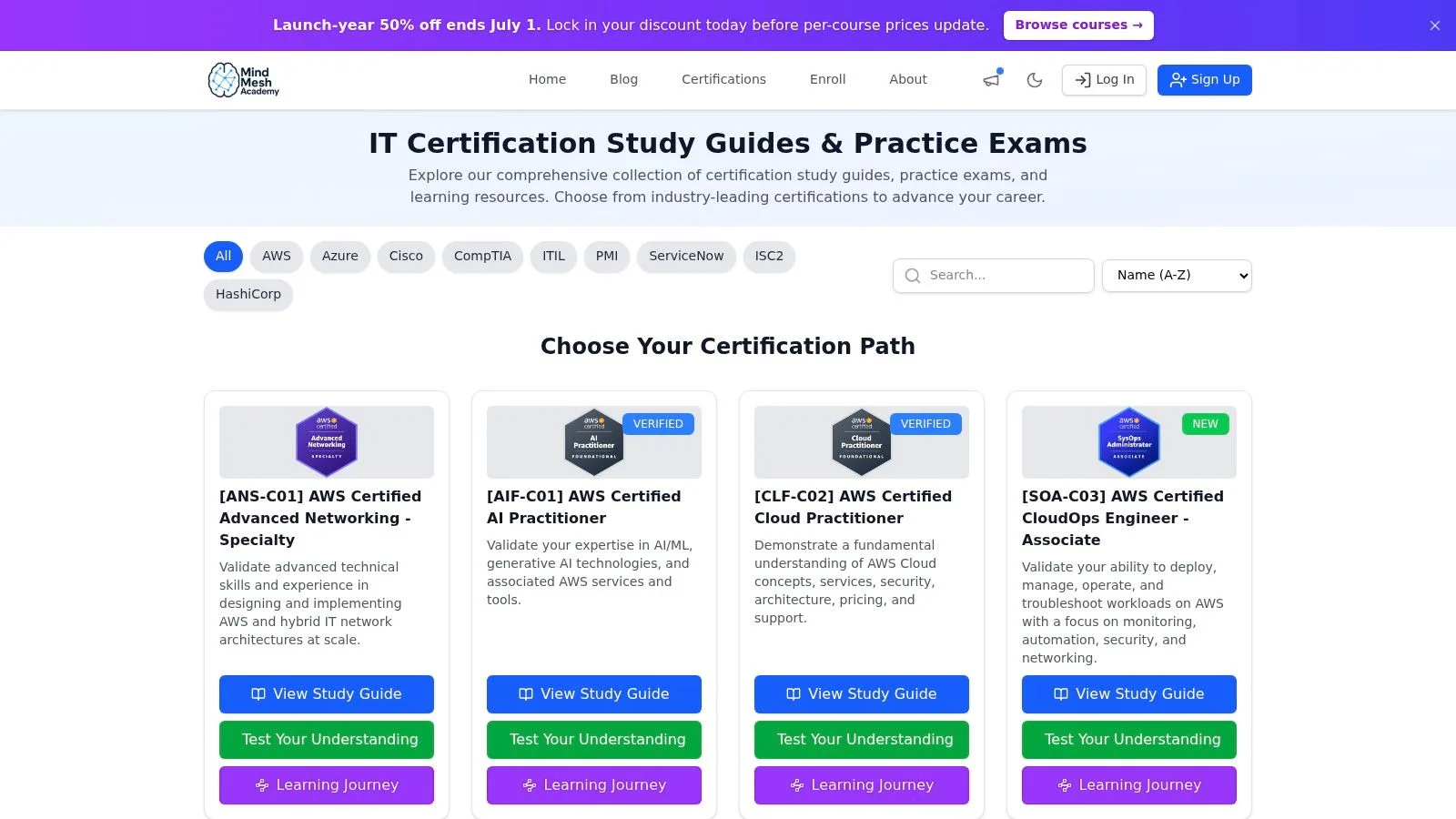
A certification plan succeeds or fails based on study efficiency. If your goal is higher pay in less time, start by building a preparation system. This system should help you compare different paths, identify knowledge gaps quickly, and avoid wasting weeks on irrelevant material. MindMesh Academy earns a place here because it supports this ROI-first approach across multiple certification tracks, rather than forcing you into a single-vendor lane.
The platform suits candidates who want structure without passively watching videos. It offers study guides, quizzes, flashcards, spaced repetition, adaptive learning paths, and progress tracking. This combination works well for exam preparation because common reasons for failure include weak recall, shallow coverage in specific domains, or overconfidence in topics you've only encountered once.
Why it works for ROI-focused prep
For high-value certification programs, a platform needs to do more than just help you pass. It should shorten your time-to-readiness and make the transition to real-world practice clear.
A few practical advantages stand out:
- Centralized decision-making: You can browse tech certifications across major vendors without piecing together fragmented study sources.
- Concept-first learning: The material focuses on understanding services, frameworks, and trade-offs, not just memorizing answer patterns. This approach pays off when an interview shifts from exam objectives to scenario questions.
- Progress visibility: Readiness tracking helps you spot weak domains early. This ensures you spend your lab time where it most improves your chances of passing and performing well in technical screens.
For cloud candidates, I recommend using expert-curated AWS certification resources as a starting point for mapping exam domains. Then, move quickly into hands-on practice in a sandbox account.
Practical rule: Use MindMesh Academy for retention, comprehensive coverage, and gap detection. Use labs, projects, and implementation exercises for job readiness.
There's a real trade-off. A subscription adds cost, and no preparation platform can replace actual experience. This limitation matters most for cloud architecture, security, and Kubernetes roles. Here, employers often test how you reason through failure scenarios, permissions design, incident response, or cluster operations.
The fastest route involves a layered plan. Use MindMesh Academy to organize the exam blueprint, keep older topics fresh with flashcards, and use quizzes to identify weak spots. Then, direct your limited practice time to the domains that could prevent you from passing or getting hired. This is a go-to-market strategy candidates often miss: study broadly enough to clear the exam, but practice narrowly enough to speak credibly in interviews soon after.
2. AWS Certified Solutions Architect Professional (SAP-C02)
The AWS Certified Solutions Architect Professional is a clear example of a credential that still commands attention when paired with actual architecture experience. Market salary roundups cited by Frontline Source Group's certification pay guide place this certification in the $150,000 to $180,000 range. This indicates where employers are willing to pay for rare cloud design skills, not just general familiarity.
This isn't an entry ticket. It signals a professional who already understands networking, IAM, resilience, migration patterns, and the trade-offs across cost, security, and scale.
Fastest route from study to interview
Treat this exam like an architecture review, not a trivia test. Its broad scope is exactly why many underestimate it.
Use expert-curated AWS certification resources to keep core services and decision patterns fresh. Then, spend your lab time on scenarios that combine multiple services. Multi-account design, hybrid connectivity, disaster recovery, and identity boundaries are areas where this exam becomes challenging for underprepared candidates.
A practical go-to-market plan includes:
- Building one portfolio architecture: Document a secure multi-tier workload, including networking, logging, IAM boundaries, backup, and cost controls.
- Practicing trade-off language: Hiring managers want to hear why you chose one pattern over another, not just a service name.
- Targeting the right titles: Cloud architect, senior cloud engineer, infrastructure architect, and platform engineer are better fits than generic “AWS specialist” searches.
Passing SAP-C02 helps most when your resume already shows implementation history. If your background is lighter, use the certification to support a project portfolio, not replace one.
The upside is strong. The downside is the time commitment. If you haven't designed production workloads before, this can lead to a long preparation cycle. In that case, pursuing a lower-level AWS path might get you to market faster.
3. Google Cloud Professional Cloud Architect (PCA)
The Google Cloud Professional Cloud Architect is one of the highest-ceiling cloud credentials. It's ideal if you target companies focused on data platforms, analytics, machine learning workloads, or multi-cloud architecture. The same market guide mentioned earlier places Google Certified Professional Cloud Architect salaries in the $175,000 to $200,000 range. This explains its consistent appearance in discussions about valuable certifications.
What makes PCA distinctive is its case-study mindset. You're expected to evaluate business context, not merely identify product features.
Where PCA pays off fastest
This certification is strongest in organizations where Google Cloud is a core component, not a side experiment. It resonates best with teams building around BigQuery, Kubernetes, modern data pipelines, and cloud-native application design.
The hiring shortcut is specialization. After passing PCA, don't market yourself as “cloud in general.” Instead, position yourself as someone who can solve one of these specific problems:
- Data platform design: Warehousing, analytics pipelines, secure data access, governance.
- Application modernization: Containerized services, migration planning, reliability design.
- Multi-cloud architecture: Helping teams that already run AWS or Azure integrate Google Cloud for specific workload patterns.
Study strategy that doesn't waste time
Read the exam guide carefully, then focus your studies around the case studies. Many candidates study services in isolation and then struggle when the exam asks for the best fit under specific business and operational constraints.
A more effective approach works better:
- Map products to use cases: Know when to choose a particular service and when to avoid it.
- Write short solution memos: A few paragraphs per scenario forces clearer thinking than simply watching more videos.
- Practice explaining constraints: Security, operations, migration effort, and cost all shape the “right” answer.
The trade-off is accessibility. If your current environment is heavily AWS or Azure, PCA requires more translation effort than people anticipate. However, if you seek a differentiator in multi-cloud or data-heavy environments, this credential can set you apart from generalist resumes.
4. Microsoft Certified Azure Solutions Architect Expert
The Microsoft Certified: Azure Solutions Architect Expert is one of the most practical enterprise certifications on this list. It's especially valuable in environments where Azure, Microsoft 365, Entra ID, Windows Server, and hybrid infrastructure all intersect. This overlap is precisely why this certification often translates into real interview interest faster than some flashier credentials.
The catch is the certification path itself. You don't just take one expert exam cold. There's a prerequisite step, followed by the architect-level exam.
Best use case for this path
If you work in mid-market or enterprise IT, Azure can be the shortest route from administrative work into architecture. Microsoft-heavy companies often need professionals who can connect identity, governance, networking, continuity, and migration decisions across a stack they already own.
This makes the Azure Solutions Architect Expert path strong for:
- Systems administrators moving into higher roles.
- Microsoft 365 or Windows infrastructure engineers.
- Cloud engineers working in hybrid environments.
To accelerate your preparation, start with the AZ-900 study guide if your Azure fundamentals are still inconsistent. Then, move into deeper design work. Even experienced administrators benefit from solidifying Azure terminology and service boundaries before tackling architecture scenarios.
Don't treat Azure Solutions Architect Expert as just an exam sequence. Treat it as proof that you can translate business requirements into governance, identity, networking, and recovery decisions within the Microsoft ecosystem.
The downside is maintenance effort. Microsoft regularly updates the skills measured, and the multi-exam path adds friction. The upside is strong enterprise alignment. If your day job already involves Microsoft platforms, few certifications offer a clearer path to greater responsibility and better pay.
5. (ISC)² CISSP
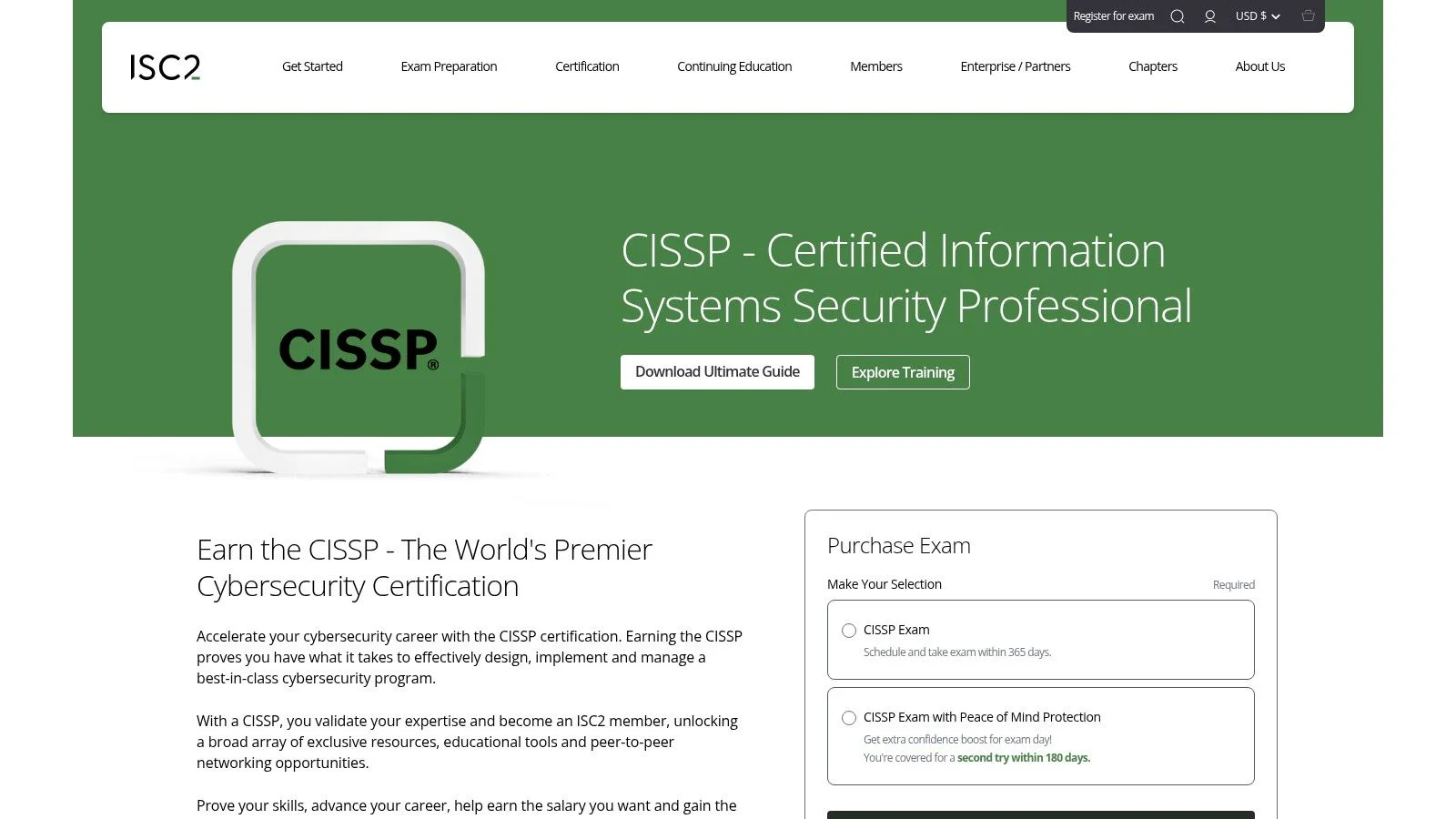
The CISSP from ISC2 still carries unusual weight because it signals good judgment across security domains, not just tool usage. Market guides cited earlier place CISSP salaries in the $130,000 to $165,000 range. This aligns with how often it appears in lead engineer, architect, consulting, and security management job descriptions.
This is not a certification to chase if you're early in your career and attempting a shortcut. CISSP rewards breadth, context, and professional maturity.
Who should pursue it now
CISSP makes the most sense for professionals already working in infrastructure, cloud, risk, security operations, governance, or compliance-heavy environments. It's especially useful when you want to shift from performing security tasks to owning security decisions.
Employers respect it for a simple reason: the exam covers security and risk management, architecture, operations, software security, and more. You can't easily bluff your way through such breadth.
A practical approach involves:
- Studying by domain, but crucially, connecting those domains. Real security work crosses boundaries.
- Using scenario thinking: Ask what the best risk decision is, not only what's technically possible.
- Translating your experience into business language. This helps both on the exam and in interviews.
Job-market speed versus difficulty
CISSP often provides strong signaling power, but the entry barrier is real. Experience verification matters, as does the ability to think at a policy and architecture level.
If your immediate goal is to “land something faster,” CISSP might not be your quickest move. If your goal is to “be taken seriously for senior security responsibility,” it's hard to beat.
Effective positioning after passing involves updating your resume to highlight governance, architecture input, risk ownership, and cross-functional security decisions. If you still describe yourself only in terms of tools, you'll undersell what the certification says about your capabilities.
6. Project Management Professional (PMP)
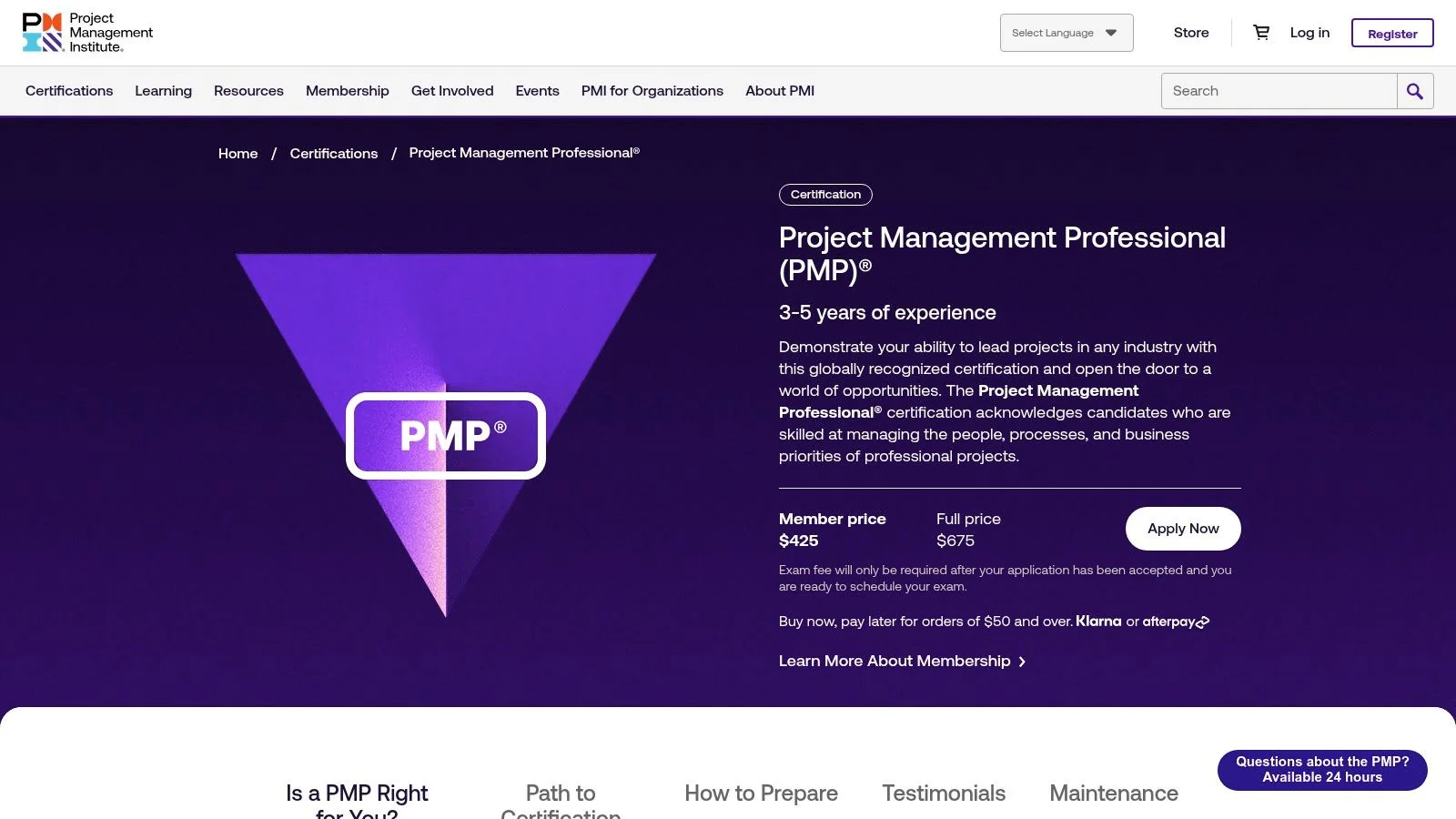
The Project Management Professional from PMI is the only non-purely technical credential on this list, and that's precisely why it belongs here. For experienced engineers, analysts, consultants, and team leads, PMP can expand your earning potential without forcing a complete career reset into another technical stack.
It's also one of the clearest examples where ROI depends on context. PMP tends to pay off fastest for people who already influence delivery, timelines, vendors, budgets, or cross-team execution. It's less useful if you have no ownership history and hope the badge alone will establish credibility.
Where PMP works best
PMP is strongest when paired with technical credibility. A cloud engineer with delivery ownership, a systems lead managing migrations, or an implementation consultant coordinating stakeholders can all use PMP as a practical promotion tool.
This is because the credential validates planning and execution across predictive, agile, and hybrid delivery approaches. In real organizations, this mix matters. Few teams run purely textbook delivery models.
Use this go-to-market approach:
- Rewrite your resume to focus on outcomes delivered: migration ownership, release coordination, stakeholder communication, risk handling.
- Apply for adjacent roles first: Technical project manager, program coordinator, implementation lead, delivery manager.
- Show operational fluency: Hiring managers want project managers who understand the work, not just the templates.
If you're technical and want to increase earnings without becoming a full-time people manager yet, PMP can be a smart bridge. It expands the types of roles you qualify for.
The downside is qualification friction and ongoing maintenance. The upside is portability. If you want a certification that can travel across industries while still complementing an IT background, PMP remains one of the safer bets.
7. Certified Kubernetes Administrator (CKA)
The Certified Kubernetes Administrator is the most hands-on option in this group. That alone gives it an advantage. Employers might debate multiple-choice exams, but a live command-line exam brings a different kind of credibility for SRE, DevOps, and platform roles.
It also aligns well with current hiring trends. Reporting summarized by TripleTen's analysis of best-paying jobs without a degree points to continued demand in infrastructure, security, and platform operations, rather than generic entry-level badges. This analysis also notes Cisco's report that 74% of organizations identified cybersecurity as a top risk in 2025. This broader shift helps explain why infrastructure-adjacent credentials like CKA remain relevant.
Why CKA can move you into the market quickly
CKA is valuable because it directly relates to real-world tasks. Cluster operations, troubleshooting, workloads, networking, storage, and day-two administration all appear in actual job descriptions.
For fast market entry, this certification works best when you package it with tangible artifacts:
- A homelab or cloud lab: Showcase manifests, troubleshooting notes, and operational decisions.
- GitHub proof: Keep Kubernetes configurations and deployment examples in a public repository if your work allows.
- Platform-language resume bullets: Use terms like cluster administration, observability, workload reliability, and service exposure.
The exam itself is stressful because it's performance-based. Time pressure is part of the challenge, which is also why it has strong signaling power.
Passive preparation doesn't work here. You won't brute-force CKA with flashcards alone. Daily CLI repetition, fixing broken clusters, and maintaining clean YAML habits matter more than watching another explainer video.
Top High-Paying Certificate Programs Comparison
Pay varies, but the pattern for faster ROI remains consistent. Certifications tied to architecture, security, delivery ownership, and production operations typically pay back faster than broad entry-level programs. This is because they map more directly to specific hiring needs.
Use the table below to compare potential salary upside against time-to-market. The right choice is usually the one you can finish, demonstrate with real work samples, and convert into interview opportunities within a reasonable timeframe.
| Certification / Product | ROI speed | Time to prepare | Resource requirements | Best fit | Job market signal |
|---|---|---|---|---|---|
| Foundation: Your Study Hub at MindMesh Academy | Fast if you are pursuing multiple certs | Short setup, then ongoing use | Subscription, study time, optional labs | Career changers and working professionals who need structure across several paths | Helps reduce wasted study time and keeps prep organized across 30+ certifications |
| AWS Certified Solutions Architect – Professional (SAP‑C02) | High for experienced AWS practitioners | 4 to 8 months | Strong AWS hands-on experience, training, exam fee | Engineers targeting senior cloud architecture roles | Strong signal for enterprise AWS design and complex environment decisions |
| Google Cloud Professional Cloud Architect (PCA) | High in GCP-heavy environments | 3 to 6 months | GCP practice, case-study prep, training, exam fee | Cloud engineers moving into GCP architecture, especially in data-focused teams | Good signal where GCP adoption is tied to analytics, AI, or platform modernization |
| Microsoft Certified: Azure Solutions Architect Expert | High in Microsoft-first companies | 6 to 9 months | AZ-104 level knowledge, Azure practice, training, exam fees | Engineers working in Azure enterprise environments | Clear value in organizations already committed to Microsoft infrastructure |
| (ISC)² CISSP, Certified Information Systems Security Professional | Strong long-term ROI, slower market entry if you lack experience | 6 to 12 months | Relevant work experience, training, endorsement, exam fee | Mid-career to senior security professionals | Widely recognized for security leadership, architecture, and governance roles |
| Project Management Professional (PMP), PMI | Strong for professionals already managing delivery | 3 to 6 months | Documented project experience, training, exam fee, ongoing PDUs | Project managers, delivery leads, technical managers | Broad hiring recognition across industries, especially for program ownership |
| Certified Kubernetes Administrator (CKA), CNCF/Linux Foundation | Fast for hands-on operators who can show lab proof | 2 to 4 months | Linux and CLI fluency, labs, exam fee | SRE, platform, DevOps, and infrastructure candidates | Strong practical signal because the exam tests live administration skills |
A practical way to interpret this comparison: AWS SAP-C02, Azure Solutions Architect Expert, and CISSP typically offer the highest upside. However, they also demand more existing experience. CKA and PMP often provide a faster payoff for the right candidate because the path from study to interview narrative is shorter. PCA sits in the middle: it pays well, but local demand depends heavily on how much GCP your target market uses.
MindMesh Academy is crucial here for one reason: it reduces the wasted effort between picking a certification and finishing it. If your goal is ROI, study efficiency matters almost as much as exam difficulty.
From Certification to Career: Your Next Step
The most effective high-paying certifications aren't always the most famous ones. They are the ones that address a real hiring bottleneck, align with your current experience, and help you quickly provide interview-ready proof of skill, ensuring the effort pays back.
That's why ROI matters more than list rankings. A senior infrastructure engineer might gain faster value from AWS SAP-C02, Azure Solutions Architect Expert, or CKA than from a broad entry-level certificate. A security professional with sufficient experience might benefit more from CISSP than from accumulating smaller security badges. A technical lead who already coordinates delivery might access better opportunities through PMP by formalizing work they're already doing.
Another aspect people often overlook is time-to-value after the exam. Mainstream coverage frequently focuses on program length or salary upside. However, as Indeed's discussion of six-month certificate programs makes clear, the bigger content gap is understanding what happens after accounting for exam fees, preparation time, potential lost wages, and local market conditions. This is the right way to think about your next career move. Fast completion doesn't always mean fast payoff.
A simple, practical rule applies: Pick one certification that aligns with your current career trajectory and one portfolio artifact that proves you can use it. For cloud, this might be an architecture diagram and implementation notes. For Kubernetes, it could be a public repository and lab walkthroughs. For PMP, it might be resume bullet points that show delivery ownership. For CISSP, it could be stronger positioning around governance, architecture, and risk.
Then, commit to a study system that minimizes wasted effort. Use structured preparation, spaced review, targeted practice, and hands-on exercises. This combination helps professionals pass exams faster and approach interviews with greater confidence.
Your next salary jump likely won't come from collecting more badges. It will come from choosing one certification with a credible payoff, preparing efficiently, and translating it into a stronger market story. Explore the preparation options at MindMesh Academy and start building toward the role you want.
MindMesh Academy helps you prepare with purpose, not panic. If you want structured prep for AWS, Azure, PMP, CompTIA, ServiceNow, and other career-building credentials, check out our AWS Solutions Architect Professional practice exams and other expert-curated study guides, quizzes, flashcards, and adaptive learning paths that help you close knowledge gaps and get exam-ready faster.

Written by
Alvin Varughese
Founder, MindMesh Academy
Alvin Varughese is the founder of MindMesh Academy and holds 20 professional certifications including Microsoft Agentic AI Business Solutions Architect, AWS Solutions Architect Professional, and Azure DevOps Engineer Expert. He's held senior engineering and architecture roles at Humana (Fortune 50) and GE Appliances. He built MindMesh Academy to share the study methods and first-principles approach that helped him pass each exam.