Your Complete Guide to the CompTIA Tech+ Practice Exam
The CompTIA Tech+ (CT+) exam marks the fundamental starting line for any IT career. This certification confirms you can configure hardware, support software, troubleshoot networks, and apply security fundamentals. These skills form the daily toolkit of an entry-level technician. Success requires more than memorizing answers; you must learn to think like a technologist. A CompTIA Tech+ practice exam functions as a simulator for real-world problems. At MindMesh Academy, we treat every practice attempt as a controlled experiment. Each test provides a chance to diagnose weaknesses, adapt your approach, and strengthen your technical reflexes.
Why Your Practice Exam Strategy Defines Your Success
Rushing through practice tests without a plan is like troubleshooting a network without a map. Success depends on reflection rather than simple repetition. Treat every CompTIA Tech+ practice exam as a lab session. Use them to analyze outcomes, identify failure points, and refine your technical approach.
Professionals who pass CompTIA certifications use practice exams as diagnostic tools. They find their blind spots, such as a misapplied subnet mask, a forgotten BIOS shortcut, or a misinterpreted command prompt question. This process builds knowledge and trains the mental stamina required in IT environments where time and accuracy matter under pressure.
Reflection Prompt: Before your next practice run, identify your weakest two domains—Hardware, Networking, Software, Security, or Troubleshooting. How will you structure your next week of study to target those directly?
From Weakness to Strength
Every review session is a chance to turn weakness into mastery. A Tech+ diagnostic reveals exactly why you missed a question.
By reallocating study time based on results, you move from scattershot learning to precision training. This domain-targeted practice can raise weak-area scores by 20–30 percent (verify these benchmarks against your study plan) in just a few sessions.
This discipline pays off when moving toward higher-level certifications like CompTIA A+ 220-1201/220-1202 or Network+ N10-009. The logic, structure, and pacing of the Tech+ exam mirror the same expectations found in advanced tracks—hands-on troubleshooting, multi-step reasoning, and clear documentation.
Finding Practice Exams That Mirror the Real Test
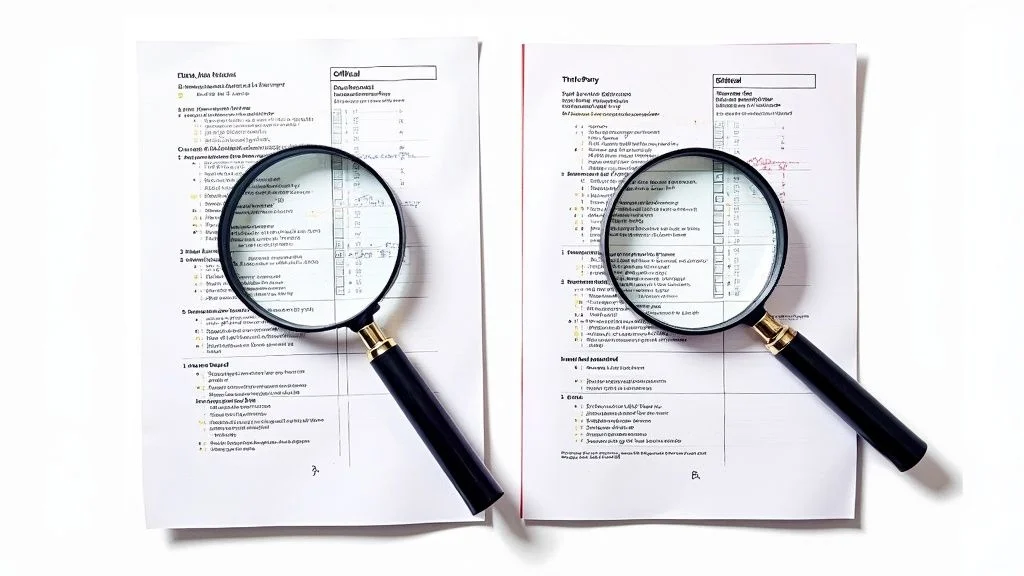
Practice tests vary significantly in quality. Some rely on outdated objectives, while others provide questions that are far too simple compared to the actual exam environment. To succeed, you need practice materials that mimic the exact experience of the current CompTIA Tech+ exam, including its specific pacing and technical difficulty levels.
Seek study resources that provide:
- Authentic question types—multiple-choice, drag-and-drop, and performance-based scenarios.
- Current objectives—mapped precisely to the latest CT+ exam domains.
- Detailed explanations—for both correct and incorrect answer responses.
- Performance tracking—to identify specific knowledge gaps and timing issues.
High-quality tools treat every single answer explanation as a focused learning opportunity. Learning why three options are incorrect often teaches you more than simply identifying the right answer in a list. Modern platforms, such as MindMesh Academy, provide data-driven dashboards to track your accuracy and speed across technical topics. These metrics help you decide when you are truly ready for the testing center.
Official vs. Third-Party Resources
| Resource Type | Typical Cost | Key Benefit | Best For |
|---|---|---|---|
| Official CompTIA CertMaster | $ – $$ | Direct alignment with official exam objectives. | Learners seeking absolute exam fidelity and confidence. |
| MindMesh Academy Practice Exams | $ | Adaptive questions, analytics, and integrated flashcards. | Learners prioritizing insight-driven memory retention and data tracking. |
| Books with Practice Tests | $ | Cost-effective bundled approach for offline study. | Students who prefer physical study materials and structured reading. |
| Free Online Quizzes | Free | Quick self-checks and introductory warm-ups. | Early-stage learners building initial familiarity with the subject matter. |
Editor’s Recommendation: Start with official CompTIA materials to establish a baseline of accuracy. Follow up with specialized tools like MindMesh Academy to master the material through repetition and data analysis.
You can even explore a CompTIA A+ 220-1201 practice exam to see how the testing style changes as you move into more advanced certifications.
Building a Study Routine That Works
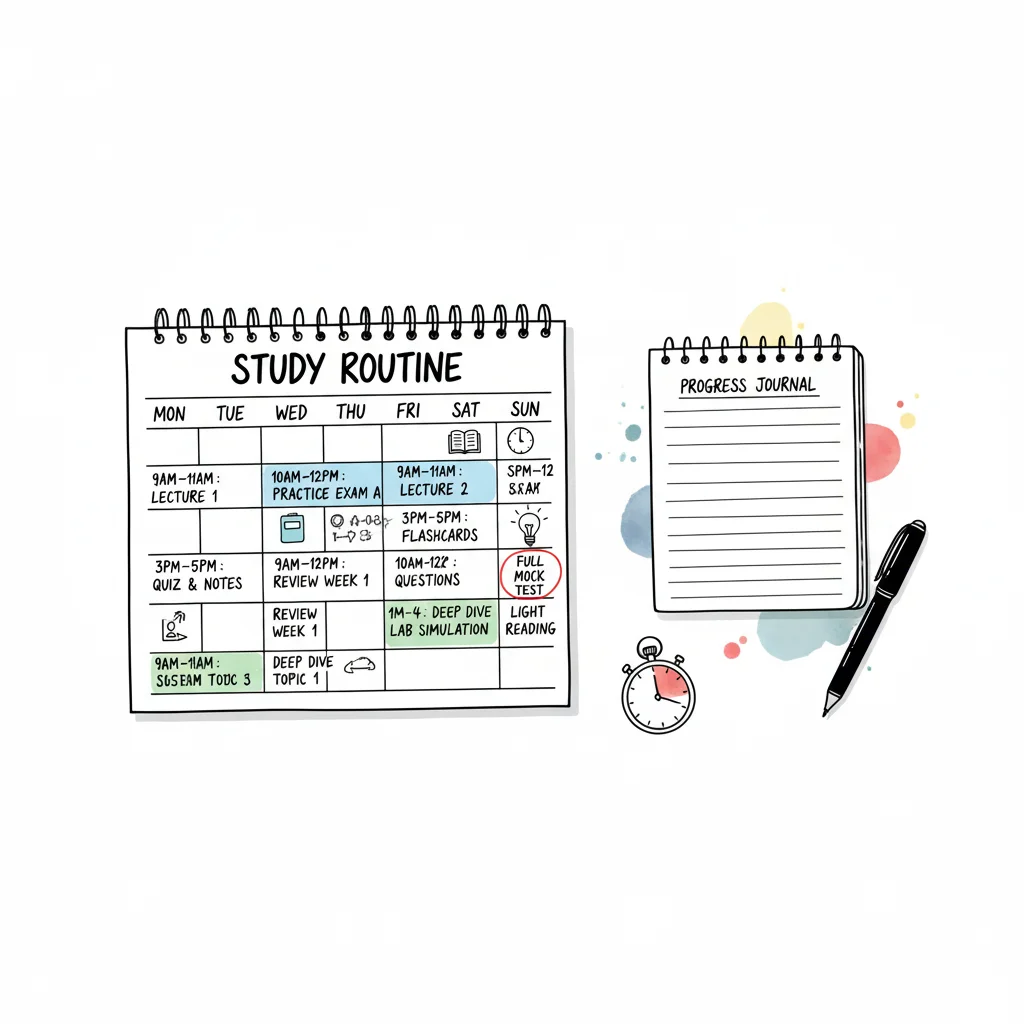
Taking exams without a clear structure often leads to burnout. Sustainable learning requires a predictable rhythm of study and constant feedback.
Start by taking a baseline test—your diagnostic “cold start.” Do not worry about the initial score; use it strictly as data. Once you identify your weak areas, follow this weekly cycle:
- Mon–Wed: Focus on a specific domain, such as Networking, Hardware, or Security.
- Thu: Take a domain-specific quiz to test your comprehension.
- Fri: Analyze your errors. Categorize them as Knowledge Gap, Misread, or Careless Mistake.
This cadence uses active recall and spaced repetition to ensure long-term retention of technical concepts.
Reflection Prompt:
Do you rewrite explanations in your own words when reviewing? This practice improves your recall significantly.
Pro Tip:
Replicate real conditions: 90 minutes, no notes, and no distractions. Each session builds the stamina needed for test day.
As you prepare, look for ways to enhance your study focus and energy. Minor adjustments in rest and concentration habits compound over weeks of preparation.
Simulate Real Exam Conditions
Two weeks before your test date, shift from content review to full simulation. Sit full-length, timed exams with zero interruptions. Mimic the testing center’s silence, structure, and pacing.
This training builds your cognitive endurance and minimizes surprises. When exam day arrives, your brain treats it like just another rehearsal.
Turning Mistakes Into Your Greatest Strengths
Finishing a CompTIA Tech+ practice exam is only the beginning. True progress happens during the review process.
Maintain a mistake log to record every missed or guessed question. Categorize each error by its root cause:
- Knowledge Gap — You lacked specific information. Re-study the topic and explain it out loud to verify your understanding.
- Misinterpretation — You rushed or overlooked qualifiers like NOT, EXCEPT, or BEST. Practice deconstructing how questions are phrased.
- Careless Error — Fatigue or stress led to simple oversights. Adjust your habits regarding sleep and exam pacing.
Crucial Reminder:
Document correct guesses in your log too. Confidence requires being able to explain the logic behind every answer.
Tracking these patterns builds meta-awareness. This diagnostic approach mirrors the troubleshooting logic used by IT professionals every day. To see how structured study pays off, view these career outcome reports for CompTIA certifications. Diligent reflection leads to growth in fields like cybersecurity (projected 22% growth) and cloud support (15%).
Your Final Week Strategy for Test-Day Confidence
The final week is for consolidation, not cramming. Take your last full-length Tech+ practice exam five to seven days before the official test date. Treat this as a full rehearsal. Start at the same time as your appointment, use strict time limits, and silence every device. Then spend that evening reviewing each rationale until you can teach it.
Taming Test-Day Nerves
Anxiety is normal; control is learned. Practice composure during every mock run:
- Box Breathing (4-4-4): Inhale 4 seconds, hold 4, then exhale 4.
- Flag and Move: If stuck on a question, mark the item and keep pace.
- Reset per Question: Do not let a single tough scenario derail your focus.
Read our guide on overcoming exam anxiety with confidence for more advice.
Advanced Strategy: Create a one-page brain dump of essential items like ports, OSI layers, command utilities, and key acronyms. Review it briefly the morning of your test, then let it go. Visualization primes recall.
View this week as a cooldown, not a sprint. Rest, hydrate, review intentionally, and walk in ready.
Answering Your Top CompTIA Tech+ Practice Exam Questions
How Many Practice Tests Should I Take?
Three to five high-quality, full-length exams usually works best:
- Baseline – identify your initial strengths and gaps.
- Mid-cycle exams – track progress during study.
- Final exam – mimic the actual test environment one week before your date.
Key Takeaway: Analyzing why you missed a question is more valuable than just clicking through dozens of tests.
What Score Should I Aim For?
The passing mark for CompTIA Tech+ is approximately 700 out of 900. You should aim for 85–90 percent on your practice attempts. This high target builds a safety margin for test-day anxiety or tricky wording. Reaching these scores consistently shows you can apply logic to new scenarios rather than just memorizing facts.
Are Free Practice Exams Good Enough?
Free quizzes serve as helpful warm-ups but rarely provide full exam readiness. Many are outdated or fail to match official exam objectives. Use them for quick topic checks. However, rely on premium simulations for detailed explanations and timing features. Real-world context helps; reading about cybersecurity for small businesses grounds theoretical security concepts in practical applications.
The MindMesh Method: Practice with Purpose
The MindMesh Academy cycle prepares learners from novice to certified in five steps:
- Take a Test: Start with cold-start diagnostics.
- Review Deeply: Analyze every incorrect answer.
- Reinforce: Study with flashcards and micro-quizzes.
- Retest: Follow spaced intervals (2, 5, and 10 days).
- Reflect: Track insights and evolving confidence.
This loop uses cognitive science, analytics, and exam simulation to turn practice into mastery.
Tech+ Today, Your Career Tomorrow
Earning your CompTIA Tech+ certification provides a solid foundation for technical problem-solving. Each reflection, review session, and diagnostic test prepares you for the troubleshooting challenges found in professional IT environments. These tests simulate the critical thinking required for technical support roles.
MindMesh Academy helps you build practical skills alongside your credentials. By using our practice exams, flashcards, data analytics, and guided study paths, you can develop the professional habits needed for a long-term career. We provide the tools to help you pass the current exam with confidence.
Begin your preparation at CompTIA A+ Core 1 Practice Exams to move closer to your certification goals and professional success.
Ready to Get Certified?
Prepare with expert-curated study guides, practice exams, and spaced repetition flashcards at MindMesh Academy. These resources help you pass with confidence.

Written by
Alvin Varughese
Founder, MindMesh Academy
Alvin Varughese is the founder of MindMesh Academy and an enterprise architecture leader. An electrical engineer by training, he moved from factory automation in South Africa to cloud architecture at GE Appliances and Humana (Fortune 50), and holds 20 professional certifications including AWS Solutions Architect Professional, Azure DevOps Engineer Expert, and Microsoft Agentic AI Business Solutions Architect. He built MindMesh Academy after interviewing too many highly certified candidates who couldn't answer basic questions: the goal is prep that makes you better at the job, not just able to pass the exam.