
7 Career Path Books You Should Know
7 Career Path Books You Should Know
You're probably in one of three situations right now. You're a student staring at a long menu of majors and job titles. You're working already, but your role feels too narrow, too unstable, or too disconnected from what you want next. Or you've started looking at certifications, training programs, and job postings, and the options blur together fast.
That's exactly where career path books help. This genre has been around far longer than online courses and career apps. In the U.S., one early milestone was Frank Parsons' Choosing a Vocation in 1909, a book often linked to the rise of formal career counseling and the practical model still used in modern guidance: explain the work, the training, and the likely outcomes, as reflected in broad benchmarks like the Occupational Outlook Handbook. In other words, career path books aren't just motivational reading. They're navigation tools.
That matters even more now because careers don't move in one straight line. Guidance products are still growing, with the career guidance platform market estimated at USD 4.19 billion in 2026 and projected to reach USD 8.32 billion by 2035, but books still do something digital tools often don't. They slow you down enough to think clearly.
If you're trying to master your career plan, these are seven career path books worth knowing, and why each one works best at a different decision stage.
1. Designing Your Life
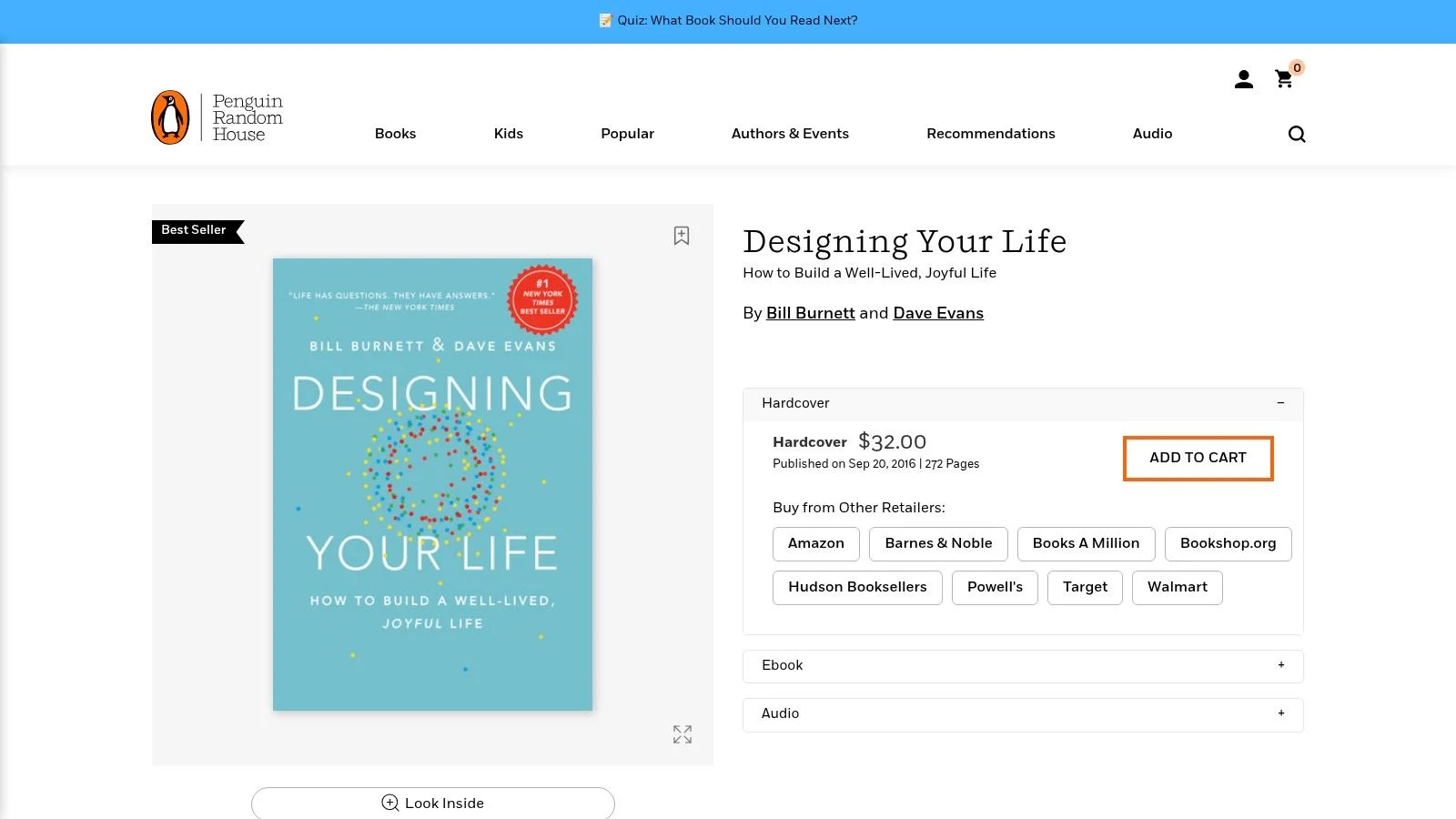
Designing Your Life is one of the best career path books for people who don't have a clear answer yet. If uncertainty, not lack of effort, is your problem, this book usually fits. It treats career choice less like a final declaration and more like a series of testable experiments.
This approach is useful for students, early-career professionals, and mid-career changers. Many people don't need more inspiration; they need a way to reduce ambiguity. This book provides that through structured exercises, multiple-path planning, and small tests you can run before making a major commitment.
Why it stands out
The signature idea is the “Odyssey Plan,” which asks you to sketch multiple possible five-year directions instead of betting everything on one answer. That alone makes it more practical than many career books. It helps readers stop asking, “What's my one perfect path?” and start asking, “Which option deserves a closer test?”
It also pushes you toward informational interviews, observation, and low-risk experiments. For someone considering cloud, data, cybersecurity, or support roles, that might mean combining conversations with short projects or IT certification programs before changing jobs.
Practical rule: If you're confused, don't force certainty. Build a few plausible paths and test them.
Best for and tradeoffs
This is a strong pick if you're changing direction, returning to work, or trying to connect your interests to realistic options. It's action-oriented without being pushy, and it works well when your real obstacle is overthinking.
Its limitation is simple. It won't do the tactical job-search work for you. If you need resume help, interview preparation, or a networking system, you'll likely pair it with a more tactical title later.
- Best for uncertainty: Good when you're still exploring rather than choosing between two final offers.
- Best for pivots: Useful for both first-path planning and mid-career redesign.
- Main drawback: You have to do the exercises. Skimming won't get much value.
2. So Good They Can't Ignore You
So Good They Can't Ignore You is the book I recommend when someone says, “I don't know what to specialize in, but I know I need a stronger position.” Its central argument is that strong careers often grow from valuable skills first, then freedom and satisfaction later.
That idea resonates with IT professionals because skill-building is visible. You can point to what you've learned, what you've built, and what problems you can solve. If your current plan is vague, this book helps sharpen it into something more concrete.
The useful lens for technical careers
Many career path books start with identity questions. This one starts closer to strategic advantage. That makes it especially practical for people combining technical ability, communication skills, and domain knowledge.
For example, some career paths that sound similar lead to different preparation demands and earnings. In the University of Illinois career-path resource, software developers are listed with a bachelor's degree and median pay of $109,020, while statisticians are shown with a master's degree and median pay of $95,570. That's exactly why a skill-first lens matters. Similar-sounding paths can require different training and offer different tradeoffs.
Build rare and useful capability first. Then use it to negotiate better work.
Where it helps and where it doesn't
This is a strong book for people choosing what to get good at. It's especially useful if you're deciding whether to deepen a specialty, add certifications, or build a broader skill stack around a technical core.
The catch is that it's less operational than some readers want. You won't get a detailed system for outreach, interviews, or offer evaluation. You'll get a way to think about why skill depth matters and how to avoid building a career on vague passion alone.
- Best for planners: Helpful when you're deciding what abilities deserve serious investment.
- Best for technical workers: Strong fit for people in roles where proof of competence matters.
- Main drawback: Less direct help with the mechanics of landing the next job.
3. What Color Is Your Parachute?
What Color Is Your Parachute? is one of the longest-running names in this space, and it still earns a place on a modern list because it does two jobs well. It helps you clarify what fits you, and it helps you act on that clarity.
Some career books are reflective but vague. Others are tactical but shallow. Parachute sits in the middle. That's why it remains useful for career changers, job returners, and people who know they need a move but haven't organized one yet.
What it does better than newer books
Its self-assessment framework, especially the Flower Exercise, gives readers a structured way to identify strengths, interests, values, preferred environments, and working patterns. Then it connects that reflection to practical steps like networking, resumes, and interviews.
That combination matters because many readers don't need another list of “top careers.” They need a way to connect self-knowledge to actual decisions. If you're preparing for a cloud entry role, for example, this book can help you clarify whether you want customer-facing work, hands-on technical work, or a path that blends both. Then you can pair that direction with specific preparation, such as Mindmesh Academy's AWS study guide.
Best use case
I'd hand this to someone who says, “I need both direction and a plan.” It's broader in scope than many modern career books, and that breadth is its strength.
Its main weakness is that some examples can feel traditional if you work in fast-moving digital roles. Hiring technology, platform shifts, and AI have changed how many jobs are described and performed. The U.S. Federal Reserve estimates that 80% of U.S. workers are in occupations where at least 10% of tasks could be affected by large language models, and 18.5% are in occupations with at least 50% of tasks exposed. So if you use this book, update its guidance with current role research.
- Best for career changers: Strong when you need both self-assessment and job-hunt execution.
- Best for returners: Useful if you've been away from the market and need a full reset.
- Main drawback: You may need to supplement it with newer, tech-specific context.
4. The 2-Hour Job Search
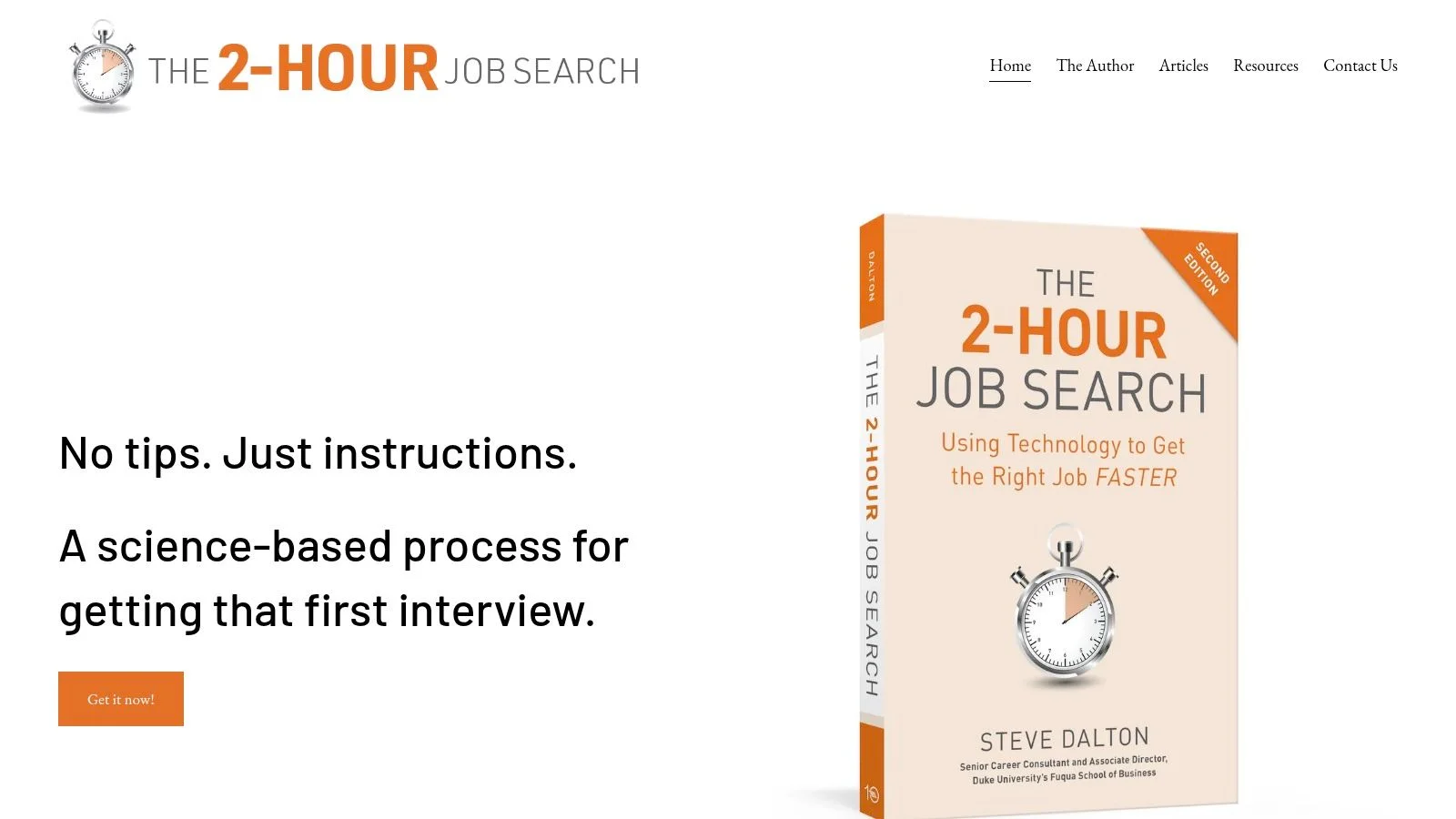
If most career path books help you choose a direction, The 2-Hour Job Search helps you move once you've chosen one. It's narrow by design, and that's the point. This book is about running a job search with structure instead of letting it sprawl.
That makes it a strong fit for busy professionals, new graduates, and career changers who already know the type of role they want. It's especially useful in tech-adjacent fields where referrals and informational conversations often shape who gets seen first.
Why the method works
The LAMP framework gives you a way to build and prioritize a target list instead of applying randomly. You identify employers, rank them, find relevant people, and reach out with discipline. The system is concrete enough that many readers can start the same day.
It also solves a common problem. People say they're networking, but what they're really doing is browsing job boards and sending generic notes. This book turns outreach into a repeatable process.
If you want a practical extension of that idea, it pairs well with guides on how to message recruiters on LinkedIn because the book's value increases when your outreach is targeted and respectful.
Most job searches don't fail because the candidate lacks effort. They fail because effort is scattered.
Who should skip it
If you're still asking broad questions like “What path fits me?” this isn't the first book to buy. It assumes you already have a direction and need a system for converting that direction into conversations and interviews.
That narrower scope is both the strength and the limitation. It won't help much with larger identity questions, but it's very good at helping a reader stop wandering and start acting.
- Best for execution: Useful once your target role or target company type is already clear.
- Best for networking: Especially strong for referral-driven searches.
- Main drawback: Not a broad career design book.
5. The First 90 Days
The First 90 Days belongs on a list of career path books because choosing a path is only half the problem. The other half is surviving the transition into the new role. A promotion, internal transfer, first leadership assignment, or lateral move into a more strategic job can all go wrong if you don't ramp up well.
This book focuses on transition execution. That's why I often recommend it to people who just landed a new role after months of planning and study. They've solved the entry problem. Now they need to perform.
What makes it practical
Its frameworks help readers diagnose the situation they're entering, identify early wins, map stakeholders, and create a learning plan. For an engineer moving into lead responsibilities, that might mean understanding team dynamics and delivery pressure before trying to “fix” everything in week one.
Many career articles stop at the offer letter, but real career progress happens after that. A strong transition plan can protect the momentum you worked hard to build.
Best use stage
This is not the first book for open-ended exploration. It's the book for the moment right after a move becomes real. That stage-specific focus matters because one of the biggest gaps in career guidance is matching resources to the decision stage itself. Broader research on career pathways emphasizes that modern work now includes school-to-work shifts, mobility, and later-life transitions rather than a single linear ladder.
A good career choice can still feel like a bad experience if the transition is unmanaged.
That's why this book is valuable. It helps turn a change into a stable start.
- Best for promotions and transfers: Strong after you've already said yes to a new role.
- Best for first-time leaders: Useful when technical strength alone won't carry the transition.
- Main drawback: It won't help much if you're still deciding what path to pursue.
6. The Startup of You Revised and Updated
The Startup of You is one of the more modern-feeling career path books because it treats a career as something you continuously adapt. The core mindset is simple: Build relationships, stay alert to change, and make smart bets that keep your options open.
That approach fits tech workers especially well because the market shifts fast. Roles evolve, tools change, and a job title can hide very different work from one company to another. A startup mindset helps you respond without feeling like every shift is a crisis.
Where it's strongest
This book shines when you're thinking beyond your next immediate move. It pushes you to see your network, reputation, and skill stack as assets you build over time. It also makes room for non-linear growth, project work, and changing opportunities.
That's useful if you're combining projects, certifications, and adjacent skills rather than climbing one narrow ladder. For example, someone exploring AI-adjacent roles might pair this long-view mindset with focused preparation through Mindmesh Academy certification study guides.
The bigger gap it helps address
Much public discussion still leans too heavily on degree-first, traditional models. But many readers now want lower-cost, skills-first pathways that include certifications, apprenticeships, and shorter training routes. That's one reason public-facing coverage increasingly discusses career paths beyond the standard four-year degree model.
This book doesn't solve that comparison directly, but it supports the mindset behind it. It encourages flexibility, opportunity scanning, and intelligent experimentation instead of one fixed script.
- Best for long-term agility: Helpful when you want a resilient strategy, not just a single next step.
- Best for non-linear careers: Works well for people moving across roles, functions, or industries.
- Main drawback: You'll still need a separate tactical book for resumes, interviews, and direct outreach.
7. Range
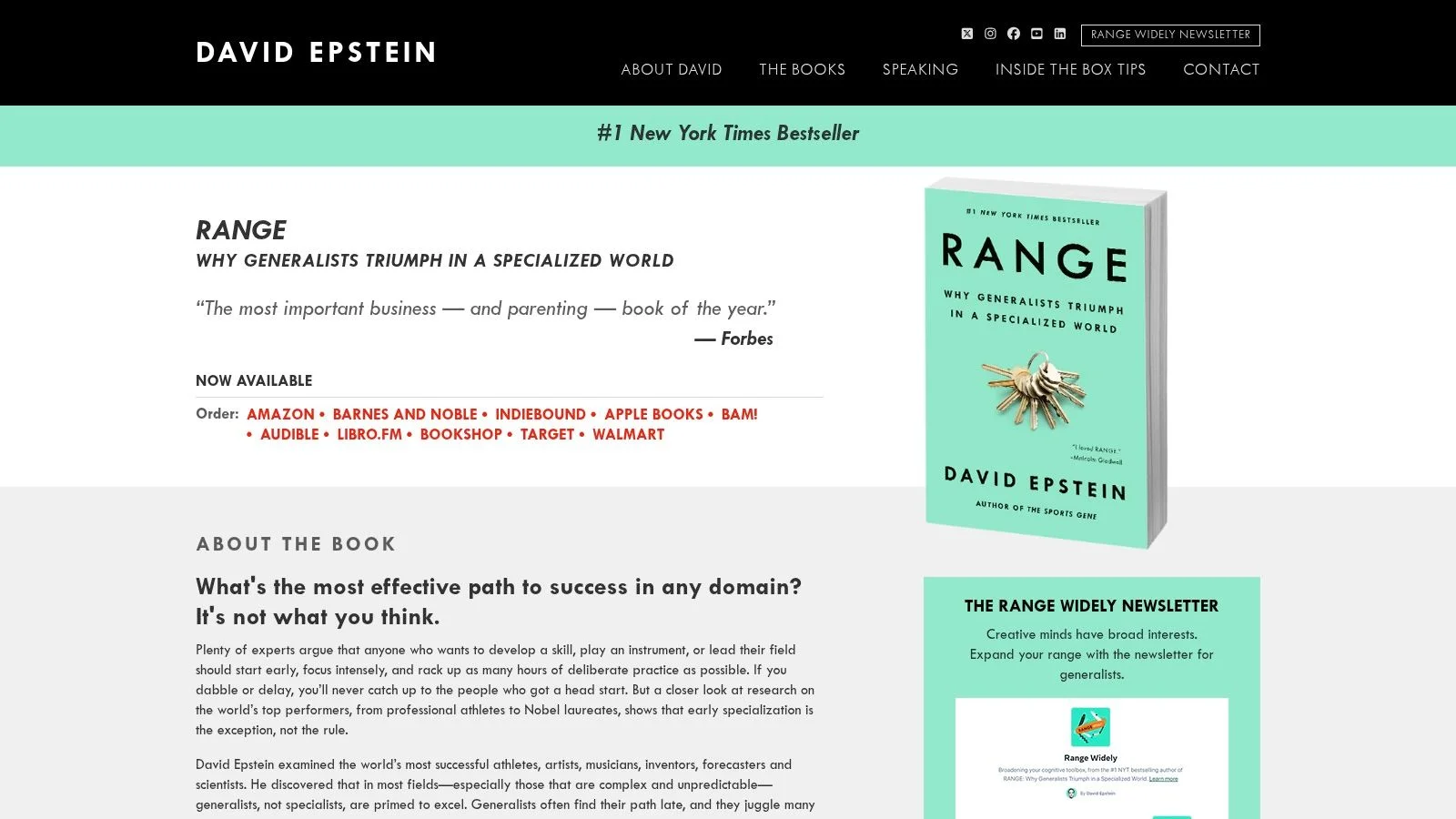
Range is the book I'd give to someone who worries they've been “too scattered.” It argues for the value of breadth, experimentation, and cross-domain learning. For many people in technology, that isn't a weakness. It's a realistic description of how careers now develop.
Non-linear careers are common, especially when people move between support, operations, cloud, data, security, product, or adjacent business roles. This prevalence makes breadth an advantage when tools change and employers value people who can connect different domains.
Why it belongs on this list
Most career path books assume the reader wants a clear lane. Range is more helpful when your path doesn't look clean on paper. It validates exploration without turning exploration into drift.
That makes it especially useful for professionals who've accumulated mixed experience and don't know whether to narrow or combine it. If you've done help desk work, some scripting, some cloud basics, and some project coordination, this book can help you see that combination as material to shape, not evidence of failure.
What it won't do
It won't give you a step-by-step job search system. It also won't tell you which certification to take next. Its job is different. It helps you interpret a broad background in a constructive way and resist the pressure to oversimplify your story.
Breadth isn't the opposite of seriousness. In many careers, it's what helps you adapt.
That's why it complements more tactical titles on this list so well.
- Best for generalists: Strong for readers whose background spans several domains.
- Best for reframing: Helpful when your resume feels less linear than you'd like.
- Main drawback: It's more mindset and evidence than direct job-search instruction.
7-Book Career Path Comparison
| Book | Implementation complexity | Resource requirements | Expected outcomes | Ideal use cases | Key advantages |
|---|---|---|---|---|---|
| Designing Your Life | Medium, structured exercises and prototyping | Time for worksheets, interviews and iterations; low cost | Multiple viable career prototypes and clearer direction | Career changers, students, mid‑career pivots seeking exploration | Action‑oriented design thinking; iterative testing |
| So Good They Can't Ignore You | Medium‑high, sustained deliberate practice | Significant time investment in skill development and deliberate practice | Build rare "career capital" enabling autonomy and influence | Professionals focused on skill stacking and certifications | Clear framework for prioritizing deep skill development |
| What Color Is Your Parachute? | Medium, self‑inventory plus job‑hunt tasks | Time for the Flower Exercise, networking, resume/interview work | Clarified values/strengths and practical job‑search readiness | Career changers, returners, job seekers needing tactical guidance | Comprehensive, time‑tested self‑assessment and job‑hunt playbook |
| The 2‑Hour Job Search | Low, time‑boxed, tactical system (LAMP) | Short focused work blocks, templates, outreach tools | Faster organized searches and more informational interviews/referrals | Busy professionals and new grads needing efficient job search | Highly tactical, easy to execute and time‑efficient |
| The First 90 Days | Medium, structured transition planning | Time for assessments, stakeholder mapping and checklists | Shorter ramp‑up, early wins and clearer transition strategy | New managers, promoted hires, internal transfers | Practical frameworks to accelerate on‑boarding and impact |
| The Startup of You | Medium, ongoing strategic networking and iteration | Time to build networks, scan opportunities and take risks | Greater career agility and optionality | Entrepreneurial‑minded professionals and fast‑moving tech roles | Entrepreneurial mindset; network‑intelligence tactics |
| Range | Low‑medium, encouraged experimentation and sampling | Time to explore varied domains and cross‑train | Broader skillset, adaptability, reduced overspecialization risk | Professionals weighing breadth vs depth; future‑proofing careers | Research‑backed support for breadth and non‑linear paths |
Final Thoughts
The best career path books don't all solve the same problem. That's why title lists often disappoint readers. They treat every book as if it should answer the same question, when real career decisions happen in stages.
If you're uncertain and need structured exploration, Designing Your Life is a strong starting point. If you need to decide what abilities are worth deep investment, So Good They Can't Ignore You gives a sharper lens. If you want both self-assessment and job-hunt mechanics, What Color Is Your Parachute? still holds up. If your direction is already clear and you need execution, The 2-Hour Job Search is one of the most practical choices here.
Then there are the stage-specific books people often overlook. The First 90 Days matters after the offer, when your real challenge is transition. The Startup of You matters when you need a durable strategy for a market that keeps moving. Range matters when your path looks wide, messy, or unconventional and you need to understand how breadth can become an advantage.
That stage-based view is the piece many articles skip. A student exploring first options shouldn't read the same book first as a systems administrator planning a pivot into cloud, or a newly promoted engineer trying to lead a team well. Choosing the right career path book depends less on which title is most famous and more on what decision you're making right now.
For IT professionals, this matters even more because skills, tools, and role boundaries keep shifting. Books can give you the thinking framework. Certifications, projects, and targeted study turn that framework into evidence. If that's the stage you're in, a platform like MindMesh Academy may fit as one practical resource alongside the books above, especially if you're translating a career plan into certification-based preparation. Read one book for the question you have. Not the question you think you should have. That's usually where clarity starts.
Ready to turn your career ideas into a concrete tech path? MindMesh Academy offers certification-focused study resources. Prepare with confidence for cloud, AI, or project management roles by starting with our AWS Cloud Practitioner practice exam.

Written by
Alvin Varughese
Founder, MindMesh Academy
Alvin Varughese is the founder of MindMesh Academy and an enterprise architecture leader. An electrical engineer by training, he moved from factory automation in South Africa to cloud architecture at GE Appliances and Humana (Fortune 50), and holds 20 professional certifications including AWS Solutions Architect Professional, Azure DevOps Engineer Expert, and Microsoft Agentic AI Business Solutions Architect. He built MindMesh Academy after interviewing too many highly certified candidates who couldn't answer basic questions: the goal is prep that makes you better at the job, not just able to pass the exam.