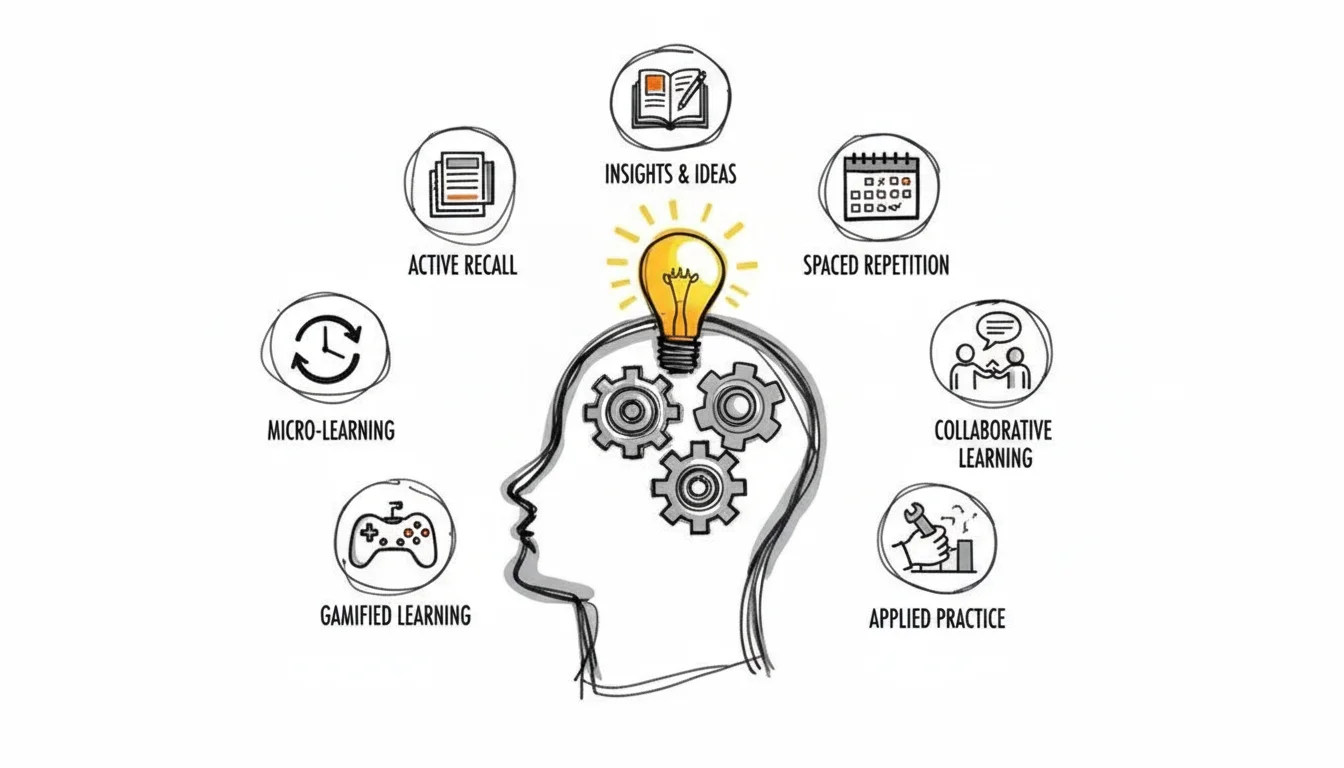
Top 10 Adult Learning Strategies for Tech Certs
Mastering Tech Certifications: 10 Adult Learning Strategies for IT Professionals
Studying for demanding technical certifications like AWS Certified Solutions Architect, PMP, CompTIA Security+, or Microsoft Azure Administrator involves more than just memorizing facts. True success depends on grasping complex technical concepts and knowing how to apply them in a professional setting. As an adult learner, you bring practical experience to your study sessions, yet you also juggle career responsibilities, family life, and personal time. This reality requires a specific and efficient approach to education. Using proven adult learning strategies transforms your preparation into an effective process for career growth, ensuring that every hour you spend with your books or labs contributes to your success.
These evidence-based methods align with how the adult brain processes and retains complicated information. Instead of relying on passive memorization, this guide from MindMesh Academy introduces 10 practical techniques to improve your results. These strategies—ranging from self-directed learning and spaced repetition to scenario-based simulations—respect your autonomy and build on the knowledge you already possess. For technical certifications, you must look past outdated study habits and adopt modern learning and development tactics that produce results. Your goal is to pass with confidence while mastering the material for long-term career use and real-world application. This list provides the tools to make your study time as productive as possible. To gain additional context on evolving educational methods, explore 12 effective learning and development strategies for 2025.
1. Andragogy (Self-Directed Learning): Taking Control of Your Certification Path
Adult learning, or andragogy, relies on a straightforward idea: adults find the most success when they take the lead in their own education. Children often learn through a teacher-led pedagogical model. Adults, however, need internal motivation and a specific reason to acquire new skills. This shift in perspective makes self-directed study a highly effective approach for career advancement. It encourages you to take full ownership of your progress.
Earning a tech certification requires you to stop being a passive observer. Instead of following a rigid syllabus created for the masses, you should build a custom path based on your current technical background and your future career goals. You are more than a student; you are the project manager of your professional development. This mindset helps you move past generic tutorials and focus on what truly matters for your specific role.
How to Implement Self-Directed Learning
To start, examine the specific exam objectives. If you are pursuing an AWS Solutions Architect or Azure Administrator credential, find the official exam guide. Break down every service, domain, and technical concept listed in the document. Compare these requirements against your current skills to see where you are strong and where you are lacking. Use this gap analysis to build a study plan that uses hands-on labs, documentation, and videos in a way that works for you.
- Focus on Relevance: Tie every technical concept to a task you might handle on the job. If you are studying for an AWS cert, do more than memorize Amazon S3 features. Build a small, secure website hosted on S3 to see the settings in action. If you are working toward a PMP, connect the process groups to projects you have actually managed in the past.
- Set Your Own Pace: Spend your time where it counts. If you already know basic operating system commands, move through them quickly. Save your energy for difficult topics like advanced database queries or network security configurations.
- Embrace Problem-Solving: Use practice tests to find your blind spots rather than just checking a score. Treat every wrong answer as a specific problem to solve. Figure out why the correct answer is right and master the underlying technical logic.
Reflection Prompt: What specific part of your target certification exam feels most daunting, and how can you proactively design your learning path to tackle it directly, rather than waiting for a course to cover it?
This self-directed method changes studying from a chore into a focused project that matches your professional goals. Committing to this kind of personalized development is a major part of a successful tech career. To go deeper, you can explore the principles of what is continuous learning.
2. Microlearning: Mastering Concepts in Short, Focused Bursts
Microlearning delivers educational content in small, highly-focused chunks. Instead of long study sessions that cause mental fatigue, you engage with modules lasting 2 to 10 minutes. Each teaches a single specific concept. This approach fits the demanding schedules of IT professionals. It takes advantage of how our brains retain information better over short, repeated intervals. It is a practical adult learning strategy for the modern professional.
For certification prep, break down complex domains into manageable micro-lessons. Do not try to master an entire cloud networking domain in one afternoon. Instead, spend five minutes learning how a specific routing table works. Follow that with ten minutes in a virtual lab applying that concept the next day. These small, consistent efforts prevent you from feeling overwhelmed by a massive syllabus.
How to Implement Microlearning
Deconstruct the official certification guide into its smallest testable components. Turn every individual exam objective into a short study session. Use a variety of media like short videos, digital flashcards, interactive quizzes, or even a single page of technical documentation. This variety reinforces the core idea quickly and keeps you engaged with the material.
- Target Single Objectives: Dedicate each micro-session to one specific skill or piece of technical knowledge. For a CompTIA Security+ certification, one session might cover just the definition of a DDoS attack. Another could focus on one Linux command-line tool for network analysis. For an Azure certification, focus on the specific features and use cases of one service like Azure Key Vault.
- Utilize "Dead Time": Turn your commute, lunch break, or waiting time into productive learning opportunities. Mobile apps for flashcards or short videos explaining a specific AWS service work well. You can complete a quick five-question quiz on your phone while waiting in line or sitting on a train.
- Implement Spaced Repetition: Revisit these micro-lessons over increasing time intervals to combat memory loss. Digital flashcard apps like Anki or Quizlet automate this process for you. This ensures concepts move from short-term memory into long-term retention effectively.
This approach transforms daunting topics into small, achievable wins. It builds momentum while fitting into busy work weeks. Progressing in ten-minute increments allows you to stay consistent without clearing your entire weekend for study.
3. Experiential Learning: Learning by Doing, Not Just Reading
Experiential learning works because adults learn better through direct experience than by watching a video. You act, see the result, and figure out why it happened. David Kolb defined this as a cycle where you move from having a concrete experience to reflecting on it, forming a theory, and then testing that theory. This method turns abstract concepts into physical skills.
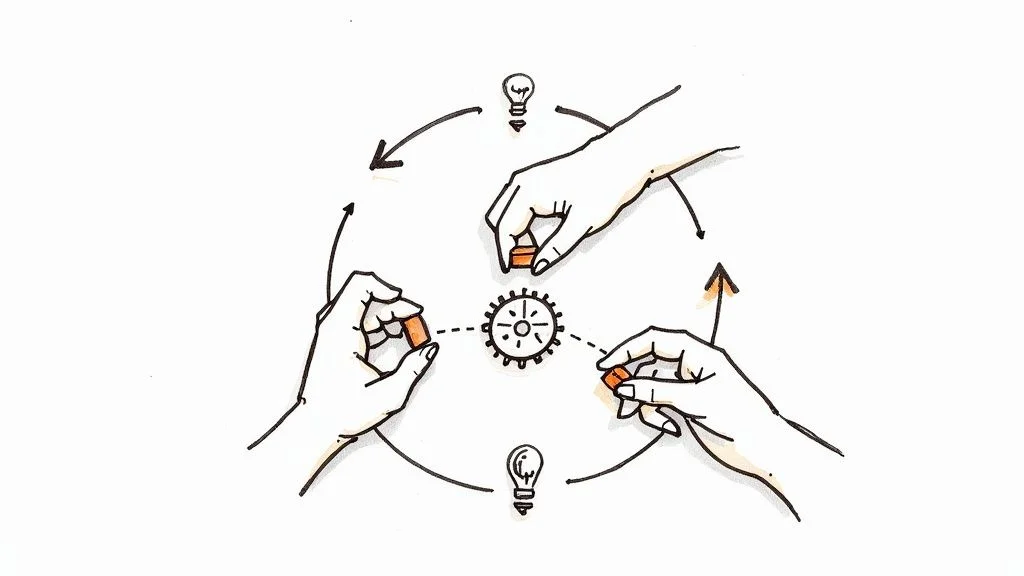
For tech certifications, theory is only half the battle. You can read about VPC peering or S3 buckets for the AWS Solutions Architect exam, but that knowledge often fades. If you actually build a three-tier application in a live environment, the details stick. Troubleshooting a broken deployment or fixing a slow query in Azure SQL creates mental "hooks" that help you remember how systems interact. When you configure network ACLs for the CompTIA Network+ N10-009 exam, you see how traffic flows in real time. This experience teaches lessons that a textbook cannot replicate.
How to Implement Experiential Learning
Shift from reading to doing as soon as possible. Spend less time on the textbook and more time in the console. Structure your study sessions around labs or projects that force you to use the exam's specific skills. You want to build, break, and repair things. The goal is to create a cycle of action and reflection where your problem-solving abilities grow with every mistake you fix.
- Build a Home Lab: Setup a virtual environment. Use Docker for containers or VMware for virtual machines. If you are studying cloud, use the AWS, Azure, or Google Cloud free tiers. Try to replicate a production setup, like a load balancer sitting in front of web servers. This teaches you about IP addressing better than any diagram.
- Contribute to Projects: Look for open-source work on GitHub or volunteer your time for a local nonprofit that needs IT help. If you work in tech already, ask to shadow a migration or help with a firewall update. This provides experience in a high-stakes setting where your choices have real consequences.
- Use Simulations: Use platforms like MindMesh Academy for interactive labs. These simulate the actual exam environment. After you finish a lab, ask yourself: what went wrong? Why did that command fail? Reflection turns a simple task into a permanent skill.
Reflection Prompt: Recall a technical problem you solved at work. How did you move from understanding to a working solution? Which steps were most critical to your learning during that process?
This hands-on method bridges the gap between theory and practical competence. This makes you certified and truly ready for the job with confidence in your abilities.
4. Peer Learning and Collaborative Learning: Harnessing Collective Intelligence
Peer learning uses social interaction. Adults often learn best through discussion, knowledge sharing, and collective problem-solving. This approach moves beyond solo study by using the diverse experiences and perspectives of fellow learners. It is a dynamic method because it creates a strong support system and improves understanding through active dialogue. When you talk through a problem, you often find solutions that a textbook might miss.
When preparing for a certification, you do not have to study alone. Engaging with a study group or an online community transforms passive study into an active, collaborative effort. You are explaining difficult concepts to others, defending your logic, and hearing alternative viewpoints. This process solidifies your own knowledge. It works well for certifications like the PMP, where different perspectives on project scenarios help, or for the CompTIA Network+ N10-009 where configuration challenges vary.
How to Implement Collaborative Learning
To apply this strategy, find or form a study group with peers preparing for the same exam. This could include colleagues, members of a professional community like a CompTIA forum, a local Cloud Meetup group, or a dedicated Discord server for ITIL practitioners. The goal is to create a structured environment for mutual support and accountability. By joining these groups, you gain access to shared resources and study tips that others have already tested.
- Establish Group Norms: Set clear expectations for meeting frequency, participation, and goals. Decide how you will handle disagreements and keep discussions on track to avoid wasted time. For example, assign specific topics to each member to present and lead.
- Rotate Facilitation Roles: Encourage shared ownership by having different members lead discussions on specific exam domains. This ensures everyone contributes and develops expertise in at least one area, perhaps focusing one week on AWS networking and the next on Azure security.
- Utilize Structured Protocols: Use formats like "teach-backs," where one person explains a complex topic (e.g., cloud networking subnets, PMP risk management strategies) and others ask clarifying questions. This process often reveals knowledge gaps for everyone involved and clarifies misunderstandings.
This collaborative approach builds a network of accountability and shared insight. It makes the path to certification less isolating and more effective while creating a richer learning experience.
5. Reflective Practice: Learning From Your Study Experiences
Reflective practice involves analyzing study sessions and hands-on lab work to pull out deeper understanding. Theorist Donald Schön popularized this idea, suggesting that raw experience counts for little without active thought. This method stands as a core adult learning strategy because it converts every action—success or failure—into a lesson you can use.
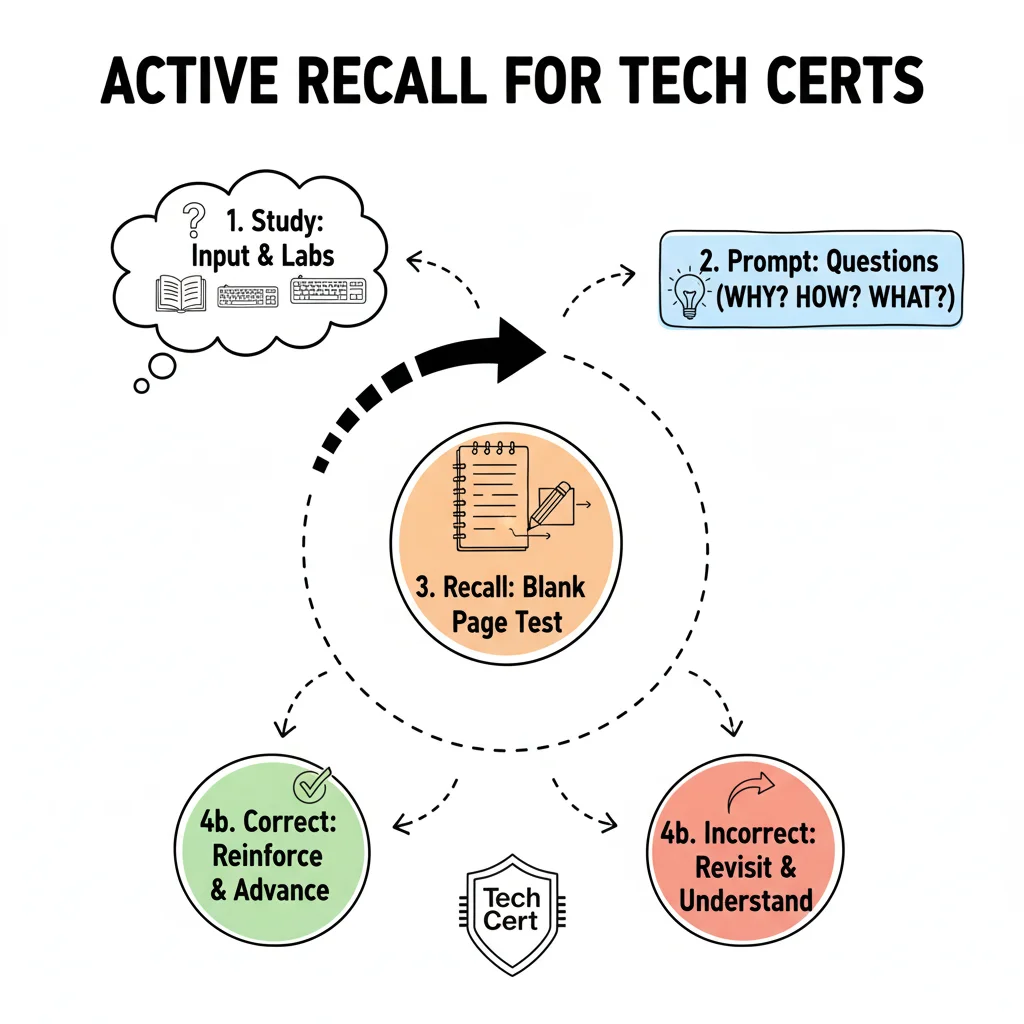
In the context of tech certifications, you move past just checking boxes on a lab manual or a practice test. You stop to ask why a specific command triggered the expected response. You question your assumptions when troubleshooting network connectivity within an Azure environment. You look for ways to solve the same problem more efficiently next time. This shift turns you into a participant who owns the material rather than a person who just consumes it.
How to Implement Reflective Practice
Start by building quick reflection rituals into your daily study habits. After you finish a difficult lab or a block of practice questions, spend five to ten minutes answering specific prompts. This mental exercise shifts technical concepts from your short-term memory into long-term storage. It forces your brain to process information by connecting new data to what you already know.
- Use Prompting Questions: End your session by asking: "What concept confused me the most today, and what specifically caused that friction?" You might ask how a firewall rule applies to a real-world security incident through a CompTIA Security+ perspective, or why you struggled to apply a specific Project Management Professional (PMP) principle during a mock scenario.
- Keep a Learning Journal: Use a notebook or a digital file to track your progress. Write down your technical breakthroughs, the obstacles that slowed you down, and new questions that come up during your certification preparation.
- Analyze Your Mistakes: If you miss a practice question, do not just memorize the correct choice. Document why you picked the wrong answer and identify the logic gap or missing knowledge that led you astray. This habit reveals core misunderstandings and stops you from repeating the same errors on the actual exam.
Reflection Prompt: Identify a complex technical topic from your current study materials. How would you explain it to someone who has no technical background? Which parts of that explanation forced you to rethink how well you actually understood the concept?
Systematically reviewing your learning habits changes a passive study session into a cycle of constant improvement. This approach prepares you to pass with confidence and develops the critical thinking skills you need for a long-term career in IT.
6. Blended Learning: Maximizing Flexibility and Interaction
Blended learning combines structured interaction from instructor-led sessions with the flexibility of digital resources. This approach recognizes that different technical concepts require different teaching methods. It works well for adult learning strategies because it fits into tight schedules without removing the benefit of expert guidance or peer collaboration.
For a certification candidate, your study plan should not rely on a single format. You might attend a live virtual workshop to perform hands-on labs for an AWS or Azure certification. In these sessions, an expert provides immediate feedback as you configure cloud instances. You then spend the following weeks reviewing self-paced video modules or taking quizzes to reinforce what you learned during the lab. This mix of group problem-solving and independent study helps IT professionals maintain progress while managing full-time jobs.
How to Implement Blended Learning
To use this strategy, find certification programs that offer hybrid models. If you are building your own curriculum, intentionally mix synchronous and asynchronous resources. You can join a live online study group once a week for Q&A and scenario-based troubleshooting. Between those meetings, use on-demand video courses, official documentation, and MindMesh Academy's practice labs for your daily, flexible learning.
- Connect different formats: Do not treat online videos and live sessions as disconnected tasks. Use online pre-work, such as watching a video on network topology, to prepare for a hands-on lab where you troubleshoot a virtual network. The lab results should then dictate which online modules you need to revisit for deeper understanding.
- Focus on interaction: Use live sessions for tasks that require real-time collaboration. This includes group troubleshooting, asking experts specific questions, or discussing architectural choices for a certification like the AWS Solutions Architect. Scenario-based work is most effective when you can bounce ideas off others.
- Use self-paced materials: Asynchronous tools like recorded lectures and documentation are best for learning core concepts. You can pause, rewind, and take notes at your own speed. This builds a base of knowledge before you enter a dynamic environment where you must apply those facts quickly.
This method provides enough structure to ensure accountability while allowing the flexibility needed to fit study sessions into a busy career.
7. Mentoring and Coaching: Accelerating Your Growth with Expert Guidance
Mentorship and coaching rely on a personalized relationship where an experienced professional guides your development. This model works because adults often learn most effectively through specific feedback and practical wisdom. Rather than struggling through technical hurdles alone, you gain an advisor who has already passed the exam and met similar professional objectives. This is one of the most effective adult learning strategies because it provides a direct line to expert knowledge and practical shortcuts.
For your certification path, a mentor might be a senior colleague who already holds the credential—perhaps a certified PMP who understands project management specifics or an AWS Certified Solutions Architect guiding your cloud development. A coach specializing in technical career growth is another option. These professionals offer more than technical answers; they suggest study methods, help you apply abstract concepts to daily tasks, and provide motivation when you hit a wall. This change shifts your preparation from a lonely task to a guided partnership.
How to Implement Mentoring and Coaching
To use this strategy, identify a mentor within your company, professional network, or local tech communities. Find someone with a career path you admire who has the specific skills you want to learn. Contact them with a clear request, stating your certification goals and explaining why their specific experience will help you succeed.
- Set Clear Goals: Start by defining the exact results you want to achieve. Do you need help with specific technical areas like Kubernetes orchestration for a Cloud Native certification, or do you need advice on how to use an ITIL certification to move into management once you earn it?
- Structure Your Interactions: Avoid relying on occasional, casual chats. Instead, schedule consistent, focused meetings with a set agenda. This respects your mentor’s time and ensures you address your most urgent technical challenges and questions.
- Be Proactive, Not Passive: A mentor acts as a guide, not a classroom teacher. Arrive at every session with specific problems you have tried to solve, your attempted fixes, and targeted questions. This shows your dedication and allows the mentor to provide high-quality feedback that helps you improve.
This approach provides specific support that no static course or textbook can offer. It speeds up your progress and helps you avoid mistakes that often slow down self-taught learners. The specific knowledge you gain from a mentor creates a distinct advantage when you take the exam and when you apply those skills in your actual job.
8. Problem-Based Learning (PBL): Solving Your Way to Certification
Problem-Based Learning (PBL) reverses the standard study flow. Instead of grinding through theory before trying to use it, you begin with a complex, authentic, real-world issue. This strategy forces you to figure out exactly what you do not know, find the right technical data, and build a working solution from scratch. It is an effective method because it replicates the day-to-day reality of an IT professional.
For technical certifications, this means moving past simple flashcards and passive video lectures. You stop acting like a student and start acting like a systems engineer or cloud architect facing a genuine technical obstacle. This builds practical understanding. Knowledge sticks when you apply it to a specific context, which is vital for exams like AWS, Azure, or CompTIA where performance-based questions and practical application are common.
How to Implement Problem-Based Learning
Find a realistic scenario tied to your specific exam objectives. If you are studying for a cybersecurity exam like CompTIA Security+, look for a case study involving a business data breach. Attempt to map out the response, identify the attack vector, and propose mitigation strategies. For a cloud certification like the AWS Solutions Architect, try designing a system for a startup that needs to stay cost-effective while remaining fault-tolerant. You learn by doing the research required to solve these specific, multi-layered puzzles.
- Start with a Real-World Scenario: Avoid looking at firewall rules or subnetting as isolated facts. Instead, try to design and secure a hybrid environment that connects a local office with an on-premises Active Directory to Azure AD for a remote workforce.
- Identify Knowledge Gaps: As you work through the problem, list every protocol, command, or tool you do not understand. This list becomes your custom study plan. You learn with a clear goal and immediate relevance rather than reading chapters in a linear, aimless way.
- Collaborate and Investigate: Use study groups to bounce ideas around and hear different perspectives on the same problem. Check official vendor documentation, browse forums like Stack Overflow, or build a home lab to test your theories. Treat the entire process like a technical investigation where you validate your ideas through testing.
This inquiry-driven approach changes certification prep from a chore into a challenge. It sharpens the critical thinking and hands-on skills you need for a career in technology. You can find more details on how to develop problem-solving skills to help with this process.
9. Spaced Repetition and Spaced Learning: Defeating the Forgetting Curve
Spaced repetition is a learning technique rooted in cognitive science designed to combat the natural human tendency to forget information over time. This approach interrupts the "forgetting curve" by reintroducing concepts at increasing intervals, reinforcing memory at the moment you are likely to forget it. It is one of the most effective adult learning strategies for moving knowledge from short-term to long-term memory with a focused time investment.
For your certification prep, this means replacing last-minute cramming with a structured, long-term review schedule. Instead of rereading a 50-page chapter on cloud networking, you would review specific flashcards or concepts related to AWS VPCs, Azure VNets, or ITIL service management processes at optimized times. This ensures that critical technical details, like CLI command syntax, API call structures, port numbers for CompTIA Network+, or specific cloud service limits, are ready by exam day.
How to Implement Spaced Repetition
The most effective way to apply this is by using digital tools that automate scheduling for you. Platforms like Anki or Quizlet use algorithms to present information right before it slips from your mind. Start by creating digital flashcards for key terms, commands, architectural concepts, and specific exam facts from your certification syllabus.
- Be Consistent: Spend 15-20 minutes daily on your spaced repetition review. Consistency is more important than the length of any single session. Aim for frequent, short engagements.
- Create Quality "Cards": Keep flashcards atomic, with one clear question and one specific answer per card. Use "What is the default CIDR block for a new AWS VPC?" or "Which ITIL process ensures services meet agreed-upon quality levels?"
- Embrace Active Recall: The goal is to retrieve the answer from memory before flipping the card. Do not just recognize the text. Force yourself to articulate or mentally confirm the answer first. This effortful retrieval builds strong neural pathways and lasting memory.
This method transforms review from a passive activity into a strategic process that maximizes retention with minimal daily effort. It is a vital tool for any IT professional studying for a difficult exam. To understand this technique, you can explore the details of how to retain information when studying.
10. Scenario-Based Learning and Simulations: Practicing Under Pressure
Scenario-based learning replaces abstract theory with realistic situations that reflect actual professional challenges. This method asks you to apply knowledge and manage the consequences of your choices in a controlled, safe setting. You learn by doing. Simply memorizing facts is insufficient for technical roles; you must apply skills in context. It is an effective adult learning strategy because it bridges the gap between knowing a concept and performing a task under pressure.
For certification preparation, this means looking past standard multiple-choice questions to engage with interactive labs. You are doing more than reading a manual on firewall configuration. Instead, you are working in a simulated network to troubleshoot a security breach for a CompTIA Security+ exam or setting Azure policies to protect sensitive resources. This hands-on practice is essential for passing the performance-based questions (PBQs) that dominate modern IT certification exams.
How to Implement Scenario-Based Learning
Find resources that offer hands-on labs and PBQs relevant to your specific exam. Many major providers, including Cisco, CompTIA, AWS, and Microsoft, provide virtual environments for this purpose. Treat these simulations as rehearsals for the job, rather than simple exam checkboxes.
- Ground in Reality: Focus on scenarios that replicate the daily tasks of your target role. This might include responding to a sudden system outage, migrating a legacy database to the cloud, or securing a complex application stack. Direct application ensures your new skills translate to the workplace.
- Embrace Mistakes: Simulations provide a low-stakes environment where failure is part of the process. Do not fear breaking things in the virtual lab. Analyze exactly what went wrong and why the system failed, then try a different approach. This iterative cycle is vital for understanding complex technical systems.
- Debrief and Reflect: Review your performance immediately after completing a scenario. Which specific decision produced the best result? What data did you miss or misinterpret during the process? What would you change if you faced the same issue tomorrow? This reflection solidifies your knowledge and improves your future decision-making process.
This problem-solving approach builds theoretical knowledge and the practical confidence to use it. By practicing in a simulated environment, you ensure you are prepared for the certification exam and the professional demands that follow in your career.
Comparison of 10 Adult Learning Strategies
| Approach | Implementation complexity | Resource requirements | Expected outcomes | Ideal use cases | Key advantages |
|---|---|---|---|---|---|
| Andragogy (Self-Directed Learning) | Medium — needs design for autonomy and facilitator support | Low–Medium — standard content, facilitator training, and learner tools | Higher motivation levels, professional relevance, critical thinking, and better retention | Professional development, self-paced courses, and adult education | Values prior experience; builds autonomy and practical real-world application |
| Microlearning | Low — focuses on short, specific module design | Low — simple content delivery via mobile platforms | Fast skill uptake, higher completion rates, and short-term retention improvements | Just-in-time training, quick refreshers, and training for busy professionals | Highly accessible and scalable with a very low cognitive load for the learner |
| Experiential Learning | High — needs structured hands-on experiences and defined reflection cycles | High — specialized facilities, equipment, mentors, and significant time | Practical technical skills, improved problem-solving abilities, and increased confidence | Apprenticeships, technical labs, simulations, and trade-focused bootcamps | Leads to lasting learning through direct action and reflective practice |
| Peer & Collaborative Learning | Medium — needs clear group structure and active facilitation | Low–Medium — digital collaboration platforms and group coordination | Enhanced team collaboration, exposure to diverse perspectives, and high engagement | Communities of practice, team-based projects, and certification study groups | Uses collective intelligence while building professional networks and communication |
| Reflective Practice & Learning | Low–Medium — needs specific design prompts and regular reflection routines | Low — time for reflection, journaling tools, and facilitator guidance | Improved professional judgment, self-awareness, and a path for continuous improvement | Clinical debriefs, post-project reviews, and professional coaching contexts | Connects specific experiences to theory to deepen the overall learning |
| Blended Learning | High — complex integration of different modalities and instructional sequencing | Medium–High — Learning Management Systems (LMS), content, staff, and tech support | Flexible access to materials, higher student engagement, and improved retention | Corporate training, higher education, and technical certification programs | Combines the strengths of in-person instruction with online learning methods |
| Mentoring & Coaching | Medium — requires matching, goal-setting, and program governance | High — access to skilled coaches, time, and management support | Accelerated professional development, transfer of tacit knowledge, and accountability | Leadership development, career mentoring, and training high-potential talent | Provides highly personalized guidance that results in a strong individual ROI |
| Problem-Based Learning (PBL) | High — needs authentic problem design and expert facilitation | High — skilled facilitators, time, and multidisciplinary resources | Strong critical thinking, deep conceptual understanding, and skill transferability | Medical training, engineering, business consulting, and design studios | Promotes inquiry and the integration of skills to solve real-world problems |
| Spaced Repetition & Spaced Learning | Medium — involves scheduling and specific algorithm setup | Low–Medium — specialized software, tools, and high-quality initial content | Significant long-term retention and efficient review while reducing memory decay | Language learning, technical certification prep, and medical education | Scientifically validated method that optimizes memory retention over time |
| Scenario-Based Learning & Simulations | Very high — needs complex scenario building and feedback design | Very high — simulation technology, subject experts, and development effort | Improved decision-making, better judgment, and safe practice of difficult skills | Aviation, healthcare, emergency response, and leadership crisis training | Offers realistic, immersive practice with immediate feedback on consequences |
Integrating These Strategies Into Your Study Plan
Passing your next tech certification exam requires more than reading a textbook. You must build a learning process that aligns with how the human brain functions. The ten adult learning strategies we covered—ranging from the self-direction of Andragogy to the practical nature of Scenario-Based Learning—provide a framework for a more efficient study routine. This toolkit is built specifically for the adult mind, prioritizing your existing work experience, autonomy, and the need for immediate application in the field.
Effective learning avoids the one-size-fits-all approach. The most successful candidates choose methods that fit their lifestyle, learning style, and the specific requirements of the exam objectives. You do not need to use all ten strategies at once. Instead, select the ones that work for your current situation and mix them to find the right balance for your goals. This flexibility allows you to adapt your study habits as you move through different phases of your preparation, such as initial research or final review sessions.
Creating Your Custom Learning Blend
Identify which strategies match your current schedule and professional objectives. A combination of several methods often provides the best results for specific learning goals.
- If you are short on time, use Microlearning paired with Spaced Repetition. These methods turn small pockets of free time into study sessions. This approach works well for memorizing specific CLI commands, port numbers, or API functions.
- Hands-on learners should prioritize Experiential Learning. Build a home lab using AWS, Azure, or Docker containers. Tackle Problem-Based Learning tasks that simulate IT outages or configuration errors to see how systems react.
- Social learners can form a study group for Peer Learning. This is effective for discussing ITIL frameworks, PMP scenarios, or architectural designs. A mentor can also help you clear hurdles in difficult subject areas.
When you choose your methods actively, you move from being a passive student to taking charge of your own education. This change in perspective is a major factor in being well-prepared for your exam. More importantly, it ensures you understand the material well enough to use it in your career.
From Plan to Action
To use these strategies well, you need a detailed study plan. A clear schedule ensures you have time for reading, reflection, and hands-on practice. You might look at guides for the best daily planner app to help organize your time, set specific milestones, and monitor your progress. Consistent effort leads to better results than cramming at the last minute.
Set milestones for finishing specific lab modules, completing practice exams, or scoring a certain percentage on self-assessments. These small wins keep your motivation high and provide tangible proof of your progress. By tracking your growth, you can identify which areas require more focus and adjust your strategy accordingly.
Mastering these strategies does more than help you earn a certificate. It establishes a repeatable process for learning in an industry that changes every year. The ability to learn new things quickly is a major professional advantage. It allows you to stay relevant as technology shifts and new tools emerge. Focus on the process, and you will build expertise that lasts throughout your career.
Ready to apply these strategies with a platform designed for professionals? MindMesh Academy creates certification paths using experiential learning and spaced repetition. These courses help IT pros master complex skills without wasting time. Explore our courses and start studying more effectively.

Written by
Alvin Varughese
Founder, MindMesh Academy
Alvin Varughese is the founder of MindMesh Academy and an enterprise architecture leader. An electrical engineer by training, he moved from factory automation in South Africa to cloud architecture at GE Appliances and Humana (Fortune 50), and holds 20 professional certifications including AWS Solutions Architect Professional, Azure DevOps Engineer Expert, and Microsoft Agentic AI Business Solutions Architect. He built MindMesh Academy after interviewing too many highly certified candidates who couldn't answer basic questions: the goal is prep that makes you better at the job, not just able to pass the exam.